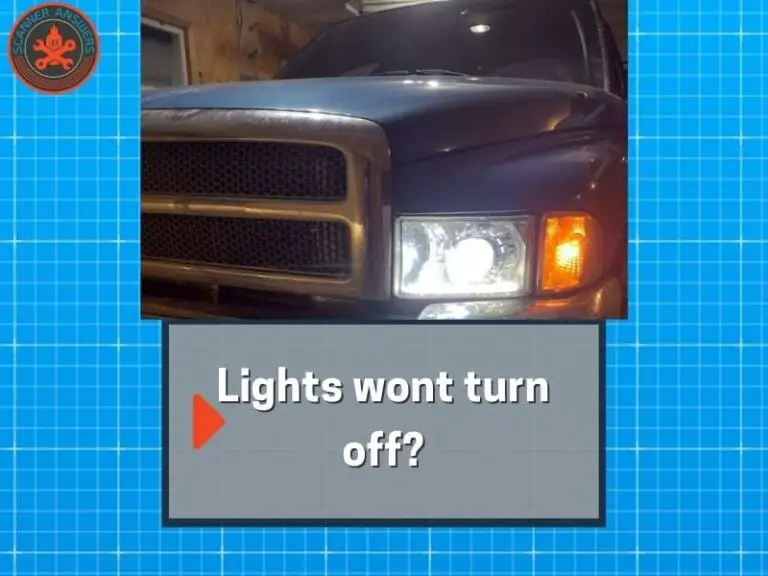
Car lights that won’t turn off usually point to an incorrect light setting, a stuck switch, a faulty relay, a door sensor issue, or an electrical fault.
If your car’s headlights, interior lights, brake lights, or hazard lights stay on after you park in a U.S. driveway, apartment parking lot, or office garage, start by identifying which lights remain illuminated. The correct fix depends on the lighting system involved. Some vehicles keep headlights on briefly after shutdown, while others use door switches and electronic controls to manage interior lighting.
Begin with simple, safe checks before replacing parts. Confirm the headlight setting, close every door and the trunk, turn off accessories, and check whether the lights respond to the ignition or lock buttons. If the lights remain on, the battery may drain while the vehicle is parked. Avoid touching exposed wiring or removing electrical components without the correct vehicle-specific instructions.
Car lights usually stay on because a switch or control system continues to supply power, a sensor reports the wrong condition, or a component has failed. The cause varies by vehicle and by the type of light involved.
Modern vehicles may control lighting through electronic modules rather than simple mechanical switches. That means a light that stays on does not automatically indicate a bad headlight bulb or a defective battery. Start with the easiest checks, then narrow the problem using the symptoms.
Source: carxplorer.com
Incorrect light setting
The headlight switch may be set to ON, PARKING LIGHTS, or an automatic mode that behaves differently from what you expect.
Normal delayed lighting
A follow-me-home or headlight-delay feature may keep exterior lights on briefly after you exit and lock the vehicle.
Faulty switch or relay
A worn switch or relay with contacts that remain closed can keep a lighting circuit powered.
Door or trunk sensor problem
A door-ajar signal or faulty latch switch can prevent interior lights from following their normal shutoff sequence.
Electrical or control-module fault
Damaged wiring, moisture, a short circuit, or a body control module problem can prevent the lights from switching off.
How Long Should Car Lights Stay On After Shutdown?
Some vehicles keep headlights or interior lights illuminated for a short period after the engine is switched off. The delay may continue until you lock the vehicle, open a door, or wait for a programmed timer to expire.
Check your owner’s manual for the normal delay period and how to change the setting. If the lights stay on substantially longer than the documented period, or never turn off, investigate the control settings and possible faults.
Normal behavior
The lights turn off according to the vehicle’s programmed delay or locking sequence.
Possible malfunction
The lights remain on indefinitely, ignore the controls, or behave differently from the owner’s manual description.
How to Fix Car Lights That Won’t Turn Off
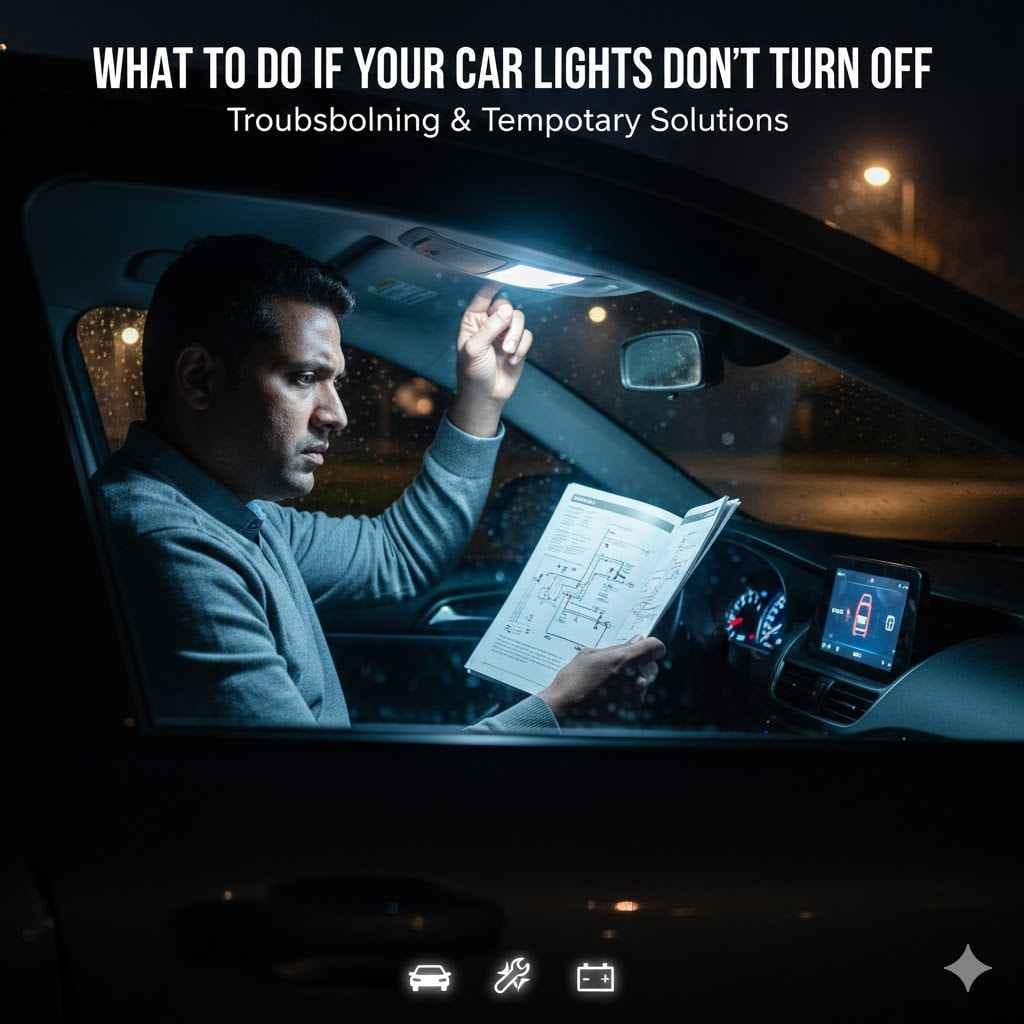
The safest first step is to check the normal controls and closures before investigating fuses, relays, or wiring. Park in a safe location, switch off the engine, engage the parking brake, and keep the vehicle away from moving traffic.
Use the following sequence for a general first check. Vehicle controls vary, so follow the owner’s manual whenever its instructions differ from these general steps.
Source: storage.googleapis.com
Step 1: Check the light switch
Move the headlight control to OFF if the vehicle provides that setting. If the vehicle uses automatic headlights, check the manual for the correct shutdown procedure.
Step 2: Turn off the ignition
Confirm the vehicle is fully switched off. Some vehicles have accessory or ignition modes that leave selected electrical systems active.
Step 3: Close every door and the trunk
Open and firmly close each door, the hatch, and the trunk. Check the dashboard for a door-ajar warning.
Step 4: Lock the vehicle
Lock the doors using the normal key fob or key procedure. Observe whether the lights switch off after the expected delay.
Step 5: Check the lighting settings
Look for courtesy lighting, parking-light settings, headlight delays, and any manual override for interior lamps.
Step 6: Stop if the problem continues
If the lights remain on, avoid random fuse removal or wire disconnection. Use vehicle-specific diagnostic information or contact a qualified automotive technician.
How to Tell Whether the Fix Worked
After changing a setting or closing a door, wait for the normal shutdown period specified in the owner’s manual. The lights should go out without repeatedly cycling the ignition or disconnecting electrical components.
If the lights turn off but return unexpectedly, record when the problem occurs. Whether it happens after rain, after opening a particular door, or only when the engine is running can help a technician identify the cause.
Successful result
The lights turn off normally, and the same fault does not return during ordinary vehicle shutdown.
Unresolved result
The lights remain on, return without a clear reason, flicker, or operate differently from the manufacturer’s description.
Headlights Won’t Turn Off
If the headlights stay on after you shut down the car, check the headlight switch, automatic lighting mode, and delayed-lighting feature first. If the vehicle’s documented shutdown procedure does not turn them off, a relay, switch, wiring circuit, or electronic control may be responsible.
Headlights and parking lights are not always controlled by the same circuit. Some vehicles can leave the parking lights on intentionally, including when a driver selects one-sided parking illumination. Confirm which lamps are lit before assuming the entire headlight system has failed.
Source: engineauditor.com
Automatic headlights
Check whether the control is set to AUTO and whether the manufacturer’s shutdown sequence has been completed. If the lights remain on beyond the normal delay, further diagnosis may be needed.
Stuck headlight relay
A relay with contacts that remain closed can continue supplying power after the control signal ends. A technician can test the relay and its control circuit.
Faulty headlight switch
A damaged switch can send an incorrect signal or fail to interrupt the lighting circuit.
Control-module or wiring issue
An electronic control fault, shorted wire, or water intrusion can cause headlights to remain powered.
Can You Pull the Headlight Fuse?
Do not remove a headlight fuse as a routine fix. Fuse layouts and circuit designs vary, and pulling the wrong fuse may disable other systems. Removing a fuse can also leave you without required lighting when you need to move the vehicle.
If the lights threaten to drain the battery, consult the owner’s manual for an approved temporary shutdown procedure or contact roadside assistance. Do not drive at night or in poor visibility with required headlights disabled.
Use the correct diagram
Only identify a fuse or relay from the exact vehicle’s manual or verified service information.
Know when to stop
If the fuse box is wet, damaged, hot, or unfamiliar, do not attempt electrical work yourself.
Interior Lights Won’t Turn Off
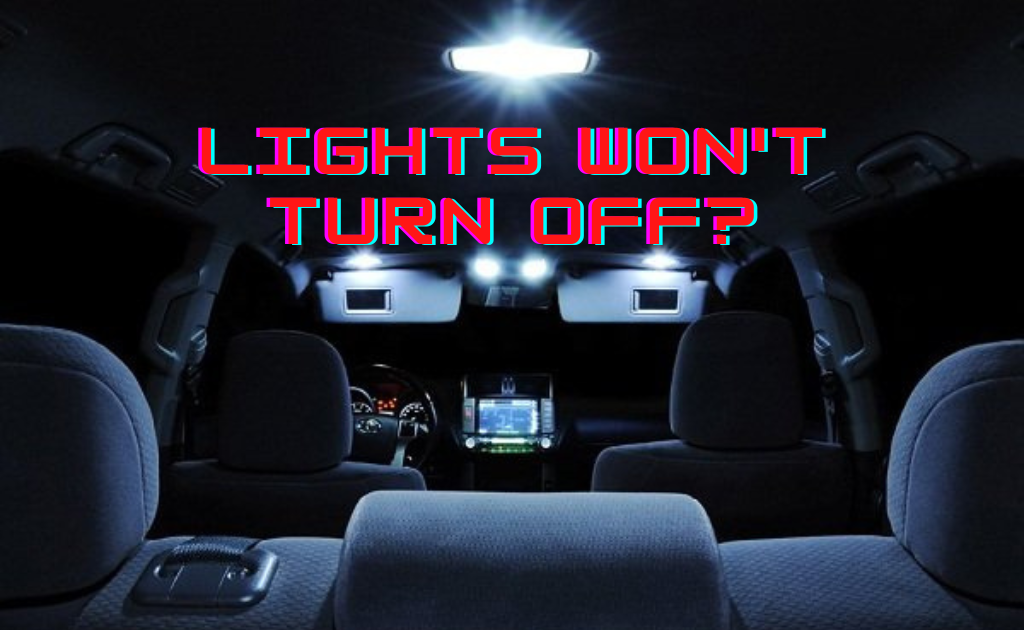
Interior lights that remain on commonly involve a dome-light override, a door-ajar signal, a trunk or hatch switch, or a delayed courtesy-light feature. Begin by checking the lamp switch and every door closure.
Many vehicles allow the driver to set cabin lights to ON, DOOR, or OFF. If the lamp is set to ON, closing the doors may not switch it off. Return it to the appropriate setting and wait for the normal delay.
Source: storage.googleapis.com
Dome-light override
Check whether the interior lamp has been manually set to remain illuminated.
Door-ajar sensor
Look for a door warning on the dashboard. A faulty latch sensor may report that a door is open even when it is securely closed.
Trunk or hatch switch
A trunk or liftgate that does not latch properly may keep its lamp or related courtesy lighting on.
Courtesy-light delay
Wait for the programmed shutoff period and check whether locking the vehicle changes the behavior.
What If the Door Warning Is Off but the Cabin Light Stays On?
The absence of a door-ajar warning does not rule out a sensor or lighting-control problem. Some vehicles use separate switches or control logic for different lamps, and a fault may affect only one part of the system.
If adjusting the interior lamp switch does not work, check the owner’s manual for a documented override or reset procedure. Avoid spraying cleaners into a latch or dismantling door trim without confirming the correct procedure.
One lamp stays on
A local lamp switch, fixture, or individual circuit may be involved.
Several cabin lamps stay on
A door-status input, courtesy-light timer, or body control system may need diagnosis.
Brake Lights Won’t Turn Off
Brake lights that stay illuminated after you release the brake pedal often indicate a brake-light switch problem, an incorrectly adjusted switch, or a pedal that is not returning fully. Some vehicles use a pedal stopper or switch mounting arrangement that can also cause trouble when damaged.
This problem deserves prompt attention because continuously illuminated brake lights can drain the battery and make it harder for drivers behind you to recognize when you are actually braking. Do not drive until the brake-light system works correctly.
Source: www.pinterest.com
Brake-light switch
The switch near the brake pedal may be stuck, misadjusted, or electrically faulty.
Brake pedal obstruction
An object near the pedal or a mechanical return problem may prevent the pedal from returning fully.
Damaged pedal stopper
On some vehicles, a broken stopper can prevent the brake-light switch from being released.
Wiring or control fault
A short circuit or electronic control problem may keep the brake lamps powered even when the pedal is released.
How to Check Brake Lights Safely
With the vehicle parked securely, switch off the ignition if the manufacturer’s procedure permits it and check that nothing obstructs the brake pedal. Do not crawl under the dashboard while the vehicle is running or attempt to alter the brake switch without the correct instructions.
If the brake lights remain on, arrange a repair. Avoid driving the vehicle because the fault affects an important safety signal. If necessary, ask roadside assistance to transport it to a repair facility.
Do not confuse the lamps
Rear running lights and brake lights may share a lamp assembly but use different circuits or brightness levels. Confirm which lights are actually illuminated.
Avoid improvised repairs
Do not wedge the brake pedal, bypass the switch, or disconnect wiring to make the lights go out.
Hazard Lights or Turn Signals Won’t Turn Off
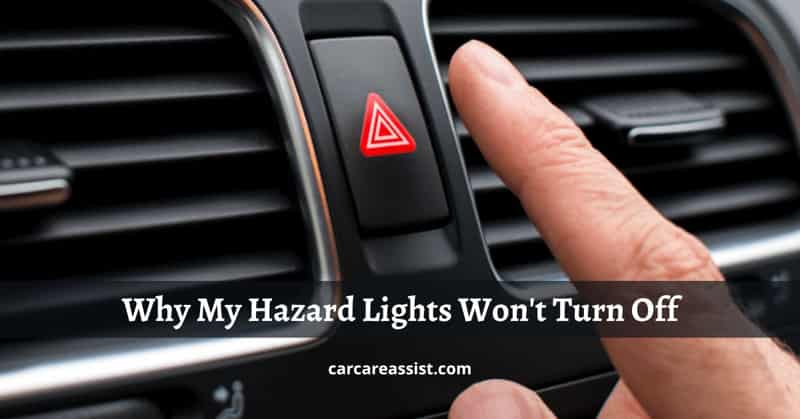
Hazard lights that keep flashing may be caused by an engaged hazard switch, a faulty switch assembly, a wiring problem, or an electronic control fault. A security or alarm system can also activate exterior lights on some vehicles.
First, press the hazard switch once and observe whether the flashing stops. If it does not, follow the owner’s manual for the vehicle’s alarm and lighting controls. Do not assume a faulty flasher relay is the cause because many modern vehicles control turn signals electronically.
Source: carcareassist.com
Hazard switch
A stuck or damaged switch may continue requesting flashing lights.
Alarm system
A security alarm may activate hazard lights as part of its warning sequence.
Electrical control fault
A malfunctioning switch circuit, wiring connection, or body control module may prevent the lights from stopping.
What If the Hazard Lights Keep Flashing After Locking the Car?
Check whether the vehicle’s alarm is active and whether the owner’s manual describes a normal confirmation flash or warning pattern. A brief lock confirmation is different from continuous flashing.
If the hazards continue indefinitely or activate repeatedly without input, the vehicle may have a switch, alarm, sensor, or control-system problem. If you cannot stop the flashing using the normal controls, arrange professional diagnosis.
Brief flash
A short flash during locking or unlocking may be normal confirmation behavior.
Continuous flashing
Persistent flashing suggests the hazard or alarm system needs further checking.
Could a Bad Relay, Fuse, or Battery Cause the Problem?
A stuck relay, electrical short, or faulty lighting control can keep lights on, but a weak battery alone is not usually the reason a lighting circuit refuses to shut off. In many cases, the lights remain powered first and the battery becomes discharged as a result.
A fuse protects a circuit against excessive current; it does not normally control whether the lights switch off. A blown fuse may disable a lighting circuit, while repeatedly replacing a blown fuse without finding the cause can leave an electrical fault unresolved.
Source: scanneranswers.com
Relay
A relay is an electrically operated switch. If its contacts stick closed, power may continue flowing through the circuit.
Fuse
A fuse that has failed can interrupt power, but replacing it is not a fix for a switch or control fault that remains present.
Battery
A battery may become weak after lights stay on for hours. Recharging or replacing the battery will not correct the original lighting fault.
Body control module
This electronic unit manages certain body functions, which may include interior lighting, locks, and exterior lighting, depending on the vehicle.
Should You Disconnect the Car Battery?
Disconnecting the battery can interrupt power to the lighting circuit on some vehicles, but it is not a universal or risk-free solution. Depending on the model, disconnection may affect electronic settings, security systems, stored diagnostic information, or battery-monitoring functions.
Do not disconnect a battery while the engine is running. Hybrid and electric vehicles may contain high-voltage systems that require specialized procedures. If the lights will not switch off and you cannot follow an approved vehicle-specific procedure, call roadside assistance or a qualified technician.
Follow vehicle-specific instructions
Use the owner’s manual for approved battery isolation procedures and any precautions involving battery sensors or electronic systems.
Seek help when uncertain
Avoid battery-terminal work if the battery is damaged, leaking, unusually hot, or connected to an unfamiliar electrical system.
How to Prevent Car Battery Drain When Lights Stay On
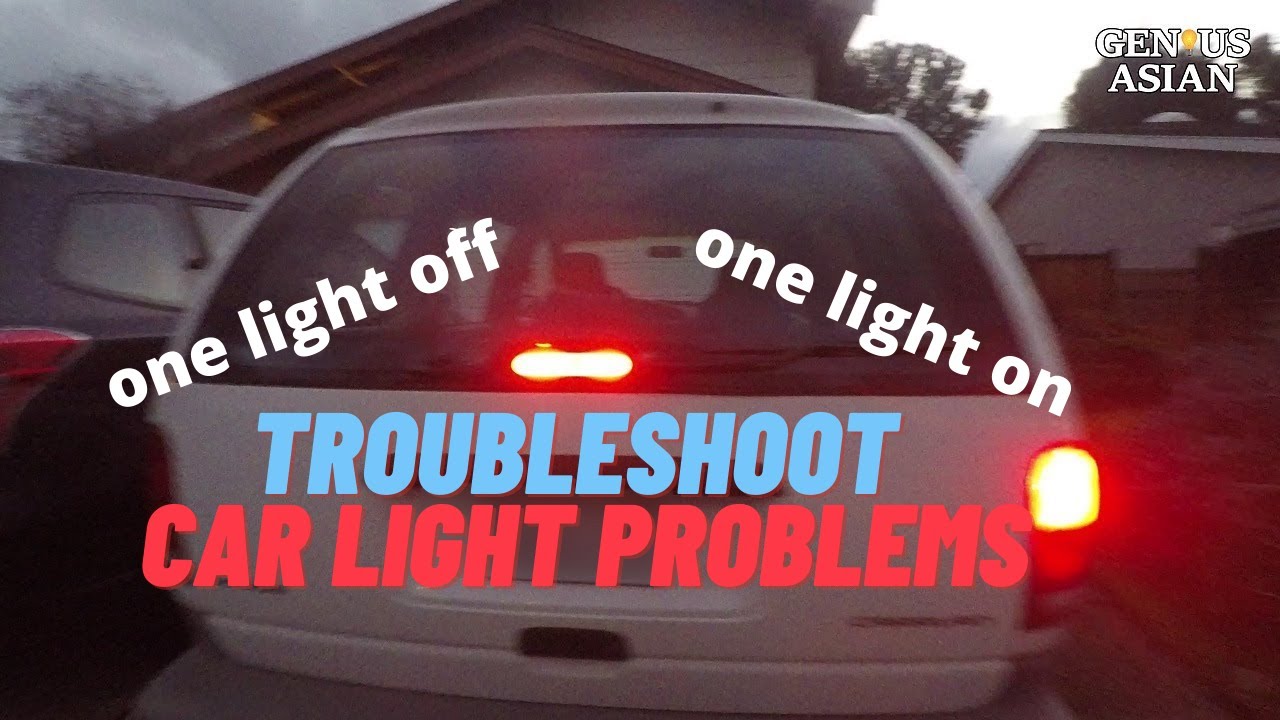
If the lights remain on after parking, address the problem promptly because continued electrical use can discharge the 12-volt battery. The amount of time before the battery becomes unable to start the car depends on battery condition, temperature, lamp type, and how much current the vehicle draws.
Do not rely on a fixed number of hours as a safe limit. A small interior lamp and a set of powerful exterior lights have different power demands, and a battery that is already weak may run down much sooner.
Source: YouTube > Genius Asian
Confirm that the lights are really off
After locking the vehicle, check the lamps from a safe position and wait through the normal shutdown delay.
Avoid repeated restart attempts
If the battery appears discharged, repeated attempts to start the vehicle may not help and can create additional inconvenience.
Use roadside assistance when needed
A qualified roadside technician can assess the battery and help determine whether a jump-start, battery service, or tow is appropriate.
Repair the original fault
Have the lighting circuit diagnosed so that the problem does not drain the replacement or recharged battery again.
What If the Car Won’t Start After the Lights Were Left On?
A discharged battery is a plausible cause if the lights remained on while the car was parked, but it is not the only possibility. Battery age, charging-system faults, and other electrical problems can also prevent starting.
Use only a jump-start procedure approved for your exact vehicle. Some vehicles have designated jump-start terminals, and hybrid or electric models may have additional precautions. If you are unsure, contact roadside assistance rather than connecting cables by guesswork.
Battery tests
A technician can test battery condition and charging performance instead of assuming that the battery needs replacement.
Follow-up diagnosis
Once the car starts, the persistent lighting problem still needs attention to prevent another discharge.
When to Call a Mechanic
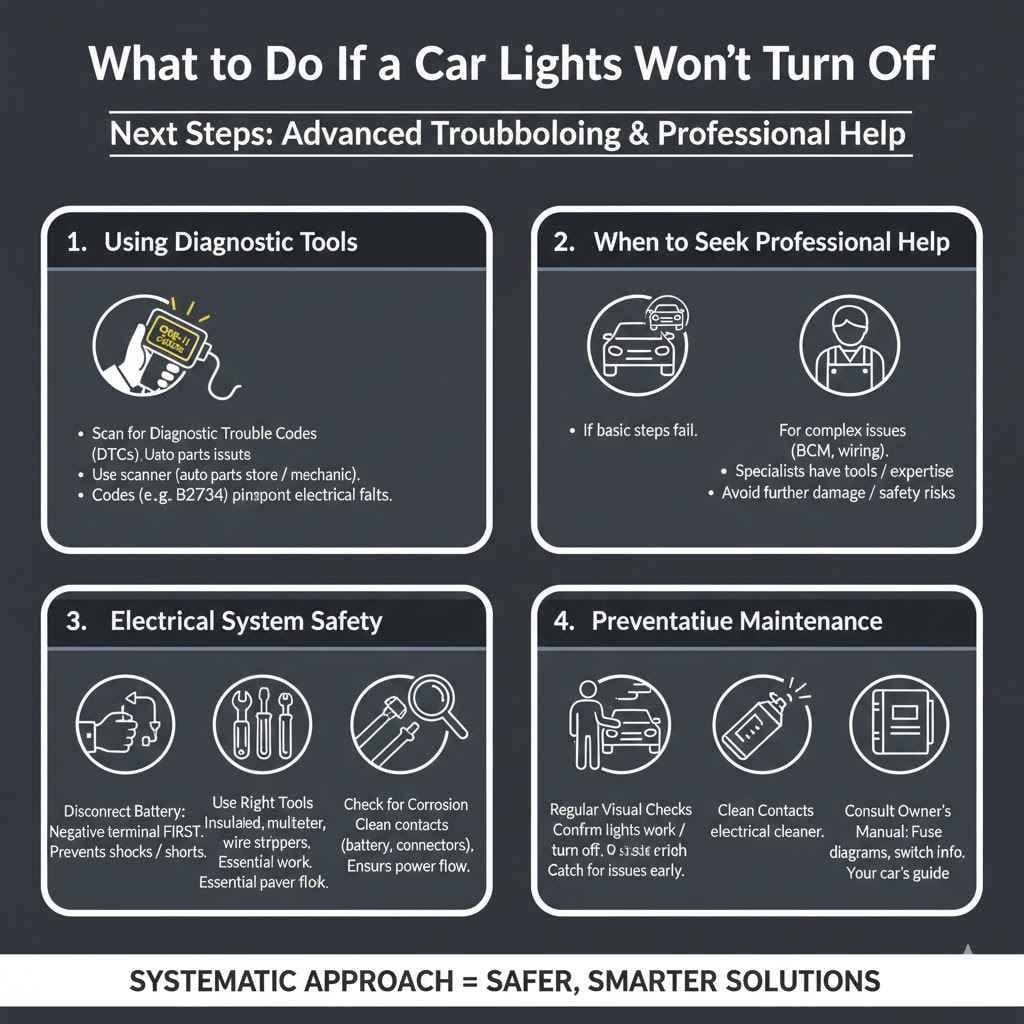
Call a qualified automotive technician when the lights remain on after basic checks, a fuse repeatedly blows, the lights flicker, the vehicle shows electrical warnings, or the problem returns after a temporary reset. Electrical diagnosis may require a wiring diagram, a multimeter, a scan tool, and model-specific service information.
Some lighting faults are straightforward switch or relay problems. Others involve interconnected control modules, security systems, or damaged wiring. Replacing parts without testing can waste money and leave the original fault unresolved.
Source: engineauditor.com
Electrical warning signs
Burning smells, smoke, melted plastic, hot wiring, or visible electrical damage require immediate caution. Switch off the vehicle if safe, keep clear of the affected area, and seek emergency help if a fire develops.
Safety-critical lighting
Do not drive with defective brake lights, required headlights, or other lighting that makes the vehicle unsafe or unlawful to operate.
Repeated battery discharge
A recurring dead battery may indicate an unresolved lighting fault or another parasitic electrical drain.
Hybrid and electric vehicles
Do not touch orange high-voltage cables or open high-voltage components. Use a technician trained for the vehicle’s electrical system.
What Information Should You Give the Technician?
A clear description of the symptoms can shorten diagnosis time. Tell the technician which lights remain on, whether the engine is running or off, how long the lights stay illuminated, and whether the problem began after a battery change, repair, heavy rain, or an impact.
Also mention any dashboard warnings, alarm activity, unusual flickering, or starting problems. If you have a photograph showing the lights and the vehicle’s current control settings, it may help explain the issue.
Vehicle details
Provide the make, model, model year, and relevant trim or lighting package.
Observed symptoms
Describe exactly which lamps remain illuminated and whether they respond to the switch, ignition, door closures, or locking.
Recent work
Mention recent electrical repairs, battery service, accessory installation, or water exposure.
Quick Troubleshooting Guide by Light Type
Use this table to narrow down the next step based on the light that stays on. These are common possibilities, not confirmed diagnoses; the exact circuit design depends on the vehicle.
Source: storage.googleapis.com
Headlights remain on
Check the headlight switch, automatic mode, and documented delay setting. If they remain on, arrange a relay, switch, wiring, or control-system diagnosis.
Interior or dome light remains on
Check the dome-light override, door and hatch closures, door-ajar warnings, and courtesy-light timer.
Brake lights remain on
Check for pedal obstruction without dismantling anything. Avoid driving until the brake-light system has been repaired.
Hazard lights keep flashing
Check the hazard switch and documented alarm controls. Persistent flashing may require electrical diagnosis.
Parking lights remain on
Check for an intentional parking-light setting and follow the manual’s shutdown procedure before suspecting a fault.
Which Checks Can You Do at Home?
Most drivers can safely check switch positions, close doors, inspect dashboard warnings, and consult the owner’s manual. These checks do not require opening electrical components.
Testing relays, measuring circuits, and diagnosing control modules require more care and may be best left to a technician. The safest troubleshooting process begins with observations rather than replacing parts at random.
Suitable basic checks
Inspect settings, close doors, observe normal light delays, and note the symptoms.
Checks that may require a professional
Electrical continuity tests, circuit isolation, relay testing, wiring repairs, and body control module diagnosis.
Frequently Asked Questions
Q
Why do my car headlights stay on after I turn off the engine?
Your vehicle may have a normal headlight-delay feature, an automatic lighting setting, a stuck headlight relay, a faulty switch, or an electrical control problem. Check the owner’s manual for the expected shutdown sequence. If the headlights never turn off, arrange further diagnosis and address the battery-drain risk.
Q
Can leaving car lights on overnight drain the battery?
Yes. Lights can draw enough power to discharge the 12-volt battery, potentially leaving the vehicle unable to start. The result depends on the type of lights, the time they remain on, battery condition, and other electrical loads. If this happens repeatedly, repair the lighting fault rather than relying on repeated jump-starts.
Q
Why do my car interior lights stay on when all doors are closed?
The dome-light switch may be set to ON, a door or trunk latch sensor may be reporting the wrong status, or the courtesy-light timer or body control system may be malfunctioning. Check the lamp setting and dashboard warnings, then consult the owner’s manual. If the light remains on, have the circuit inspected.
Q
Can a bad brake-light switch keep the brake lights on?
Yes. A stuck or misadjusted brake-light switch can keep the brake lights illuminated after you release the pedal. A damaged pedal stopper, wiring fault, or control-system problem can cause similar symptoms. Because brake lights are safety-critical, do not drive the vehicle until the fault has been corrected.
Q
Should I remove a fuse to turn off car lights that stay on?
Only consider a fuse-removal procedure if the vehicle manufacturer’s instructions specifically support it and you can identify the correct circuit. Removing the wrong fuse can disable other systems, and some vehicles use complex electronic lighting controls. If the lights threaten to drain the battery and you are unsure what to do, contact roadside assistance or a qualified mechanic.
✦ Wrapping Up
Conclusion
Car lights that will not turn off can result from a simple setting, a normal delay feature, a faulty switch, a stuck relay, a door sensor issue, or an electrical control problem. Identifying the exact light type is the fastest way to narrow down the cause without replacing parts unnecessarily.
Start by checking the controls, closing every door and the trunk, and confirming the manufacturer’s normal shutdown procedure. If the lights remain illuminated, take the battery-drain risk seriously and seek appropriate diagnosis. Treat brake-light failures, required headlight failures, and signs of electrical overheating as safety concerns rather than problems to postpone.
💡 Key Takeaway
Identify which lights are staying on, check the normal switch and shutdown settings, and consult your owner’s manual. If the lights will not turn off or the vehicle shows signs of an electrical fault, contact a qualified automotive technician or roadside assistance.