
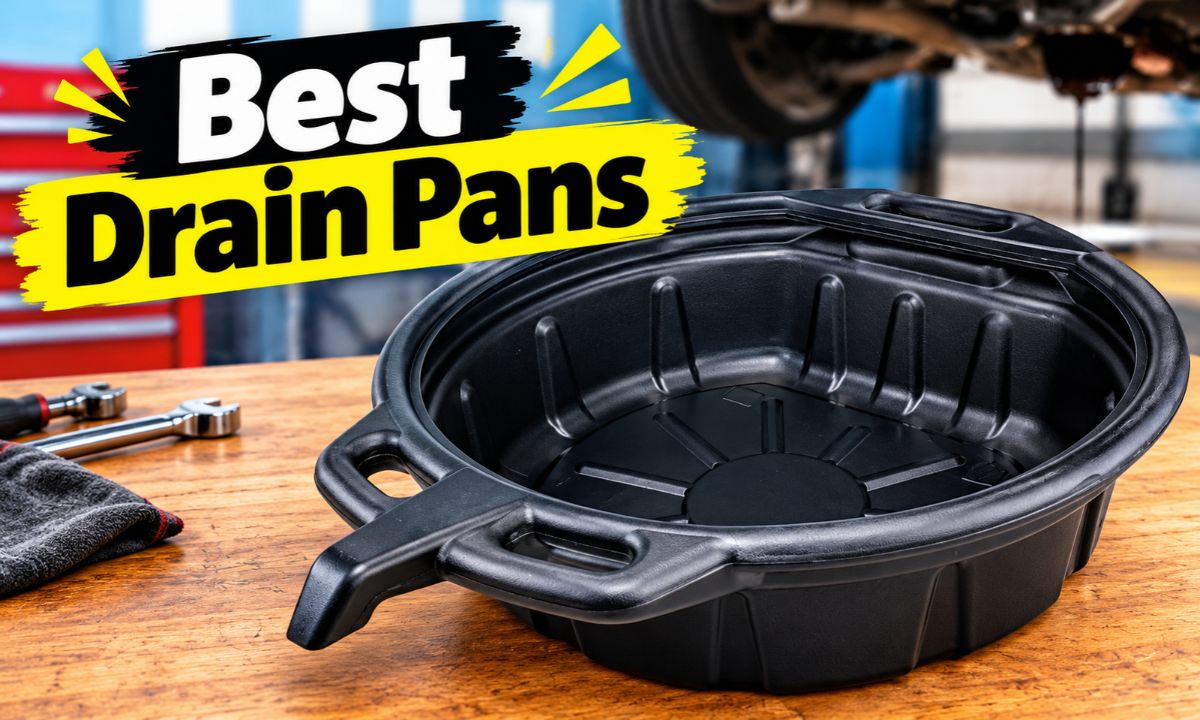
The Best Drain Pans match your job, hold the right amount of liquid, and help protect floors, cabinets, and garage spaces.
A small leak can turn into a big mess. In a busy American home, a leaking dishwasher can damage a kitchen floor. An air conditioner can drip into a closet or attic. An oil change in the garage can leave dark stains on the concrete. A good drain pan helps catch these fluids before they spread. But not every pan suits every job. Some fit under large AC units, while others catch used motor oil or protect the space below a dishwasher. In this guide, I compare three drain pans for these different needs. I also explain what each pan can and cannot do, so you can choose with care.
Table of Contents
Toggle🏆 Top 3 Products

DiversiTech 27 x 48 Inch AC Drain Pan
Its large footprint and rolled edges make it a useful choice for catching condensate beneath compatible air conditioning equipment.

NEIKO 20762A 2-Gallon Oil Drain Pan
Its stated 2-gallon capacity suits many routine oil changes when the pan fits under the vehicle and the oil flow.

Camco Dishwasher Drain Pan
Its shallow design and front opening make it a practical option for catching small dishwasher leaks while helping you spot trouble.
DiversiTech 27 x 48-Inch AC Drain Pan
The DiversiTech 6-2748L is a large plastic pan made for secondary condensate collection under compatible air conditioning equipment. It measures 27 by 48 inches, giving it a broad area to catch drips. Its rolled edges help form a raised boundary around the pan. The black finish gives it a plain, practical look that suits many utility spaces.
I would consider this model when planning protection below an indoor AC unit, air handler, or other compatible equipment that may release water. Its large size can help cover more of the space below the unit than a small drip tray. Still, size alone does not make a pan suitable for every installation. Check the equipment layout, drain arrangement, support surface, and local requirements before fitting it.
✅ Pros
- ✔The 27 x 48-inch size offers a broad collection area.
- ✔The plastic body avoids the rust that can affect some metal pans.
- ✔Rolled edges help keep collected water within the pan.
- ✔The black finish gives the pan a simple utility-room appearance.
- ✔It can help protect ceilings, floors, and nearby surfaces when installed correctly.
- ✔Its broad footprint may suit larger equipment than compact appliance trays.
- ✔It can serve as a secondary collection pan in a compatible AC setup.
⚠️ Cons
- ✖Its large size may not fit small closets or tight equipment spaces.
- ✖It is designed for condensate collection, not used motor oil or general chemical waste.
- ✖The pan alone does not stop leaks or replace a working condensate drain.
- ✖A suitable support surface and proper installation are still needed.
- ✖The dimensions may not suit every air handler or AC cabinet.
My Recommendation
I would choose the DiversiTech pan for a compatible air conditioning installation where broad secondary water collection matters. It is the strongest match of these three products for an HVAC job. Before buying, measure the unit and the available floor or platform space. Also check how the pan will drain, if a drain connection is part of the intended installation, and whether your local code calls for a specific setup. Do not treat a secondary pan as a substitute for fixing a blocked drain, cracked line, or faulty condensate pump. If the equipment needs a professionally installed safety switch or a specific drain arrangement, include that in the plan.
| Best For | Why |
|---|---|
| Home AC systems | Its broad footprint can collect condensate below compatible indoor equipment. |
| HVAC service work | It offers a large area for secondary collection when the installation allows it. |
| Utility rooms and equipment spaces | Its plastic body and raised edges suit planned water collection under suitable equipment. |
NEIKO 20762A 2-Gallon Oil Drain Pan
The NEIKO 20762A is a black plastic oil drain pan made for routine vehicle maintenance. Its listed capacity is 2 gallons, or about 8 liters. The anti-splash design aims to help control oil as it flows into the pan. Its main job is simple: catch used motor oil during a change and help keep the garage floor clean.
I would put this model on the shortlist for home mechanics who change their own oil. Its capacity may suit many cars, but you should check your engine’s oil capacity before starting. The pan must also fit under the drain plug and allow enough room to catch the full flow. A drain pan is only part of the job, so keep a sealed container ready for the used oil and take it to an approved recycling or collection site.
✅ Pros
- ✔The stated 2-gallon capacity suits many routine oil changes.
- ✔The plastic body is easy to move compared with many heavy metal containers.
- ✔The anti-splash design aims to reduce messy oil flow.
- ✔Its black color helps hide some marks from normal workshop use.
- ✔It can help protect garage floors and driveways from oil stains.
- ✔It is made for automotive fluid collection rather than household appliance leaks.
- ✔Its compact purpose makes it a useful addition to a home mechanic’s tool kit.
⚠️ Cons
- ✖The 2-gallon capacity may be too small for some engines or multiple fluid changes.
- ✖A low vehicle or tight drain-plug position may make access difficult.
- ✖The pan does not replace a sealed storage container for used oil.
- ✖Plastic can crack or deform if mishandled or exposed to unsuitable heat or chemicals.
- ✖Oil can still spill if the stream misses the pan or the container sits on an uneven surface.
My Recommendation
I recommend the NEIKO 20762A for drivers who perform their own oil changes and need a dedicated catch pan. It is the most direct match in this list for collecting used motor oil. Check your vehicle’s service guide to confirm the oil quantity, and leave room for the initial flow when you position the pan. Use stable ramps or approved jack stands when needed, and never rely on a jack alone to support a vehicle. Once the oil cools enough to handle safely, transfer it into a suitable sealed container and recycle it properly. Do not pour used oil onto the ground, into a storm drain, or into household plumbing.
| Best For | Why |
|---|---|
| DIY car owners | It provides a dedicated place to collect used engine oil during routine maintenance. |
| Home garages | Its stated 2-gallon capacity can suit many single-vehicle oil changes. |
| Basic automotive tool kits | It fills a clear role without needing a large workshop collection system. |
Camco Dishwasher Drain Pan With Front Opening
The Camco dishwasher drain pan is made to sit beneath a compatible dishwasher and help protect the floor and nearby cabinets from small leaks. Its listed interior dimensions are 23 5/8 by 20 1/2 inches. The exterior measures 24 by 20 1/2 inches, with a height of 1 inch. A front opening allows easier leak detection without relying on a fully enclosed tray.
I like the idea of a pan that helps make a leak easier to notice before it causes more damage. A shallow tray can catch a small amount of water, but it cannot hold a major leak for long. The front opening also means you should not assume that the pan will contain every drop in every situation. Measure the dishwasher base and check the cabinet layout before you buy, especially if the appliance sits in a tight space.
✅ Pros
- ✔It is designed for use beneath compatible dishwashers.
- ✔Its shallow profile can fit below many standard dishwasher installations.
- ✔The listed interior dimensions help buyers compare the fit with their appliance.
- ✔The front opening helps users look for signs of a leak.
- ✔It can help shield flooring from small drips and minor seepage.
- ✔Its stated American manufacturing origin may matter to shoppers seeking products made in the USA.
- ✔It serves a clear home-protection purpose without taking up extra room in the kitchen.
⚠️ Cons
- ✖Its 1-inch height limits how much water it can hold.
- ✖The front opening may allow water to escape rather than remain contained.
- ✖It cannot fix a leaking hose, damaged seal, or faulty dishwasher connection.
- ✖The listed dimensions may not fit every dishwasher or cabinet base.
- ✖It is not intended for collecting motor oil or serving as an AC condensate pan.
My Recommendation
I would choose the Camco pan for a homeowner who wants a simple layer of protection below a compatible dishwasher. It is especially useful when early leak detection matters, since the front opening helps you inspect the area. Measure the appliance base rather than relying on the dishwasher’s advertised width alone. Check the required clearance and installation instructions, too. The pan should not block appliance leveling feet or interfere with required mounting. Inspect the space from time to time, and address any water as soon as you find it. If the dishwasher leaks, stop using it until you identify and repair the cause.
| Best For | Why |
|---|---|
| Home kitchens | It adds a collection layer beneath a compatible dishwasher. |
| Leak checks | The front opening helps make the space under the appliance easier to inspect. |
| Floor protection | It can catch small drips before they reach the floor, provided the leak stays within the tray. |
Final Verdict: Which Should You Buy?
The DiversiTech 27 x 48-inch pan is my top choice for compatible AC condensate collection because it offers broad coverage. The NEIKO 20762A is the better fit for DIY oil changes, while the Camco pan suits dishwasher leak protection. Each serves a different job, so match the pan to your equipment, space, and fluid.
The Best Drain Pans help reduce mess and give you more control over leaks and routine maintenance. Measure first, check capacity, and follow safe installation and disposal steps. Choose the pan that fits your needs.
FAQs Of Best Drain Pans
Q What should I look for when buying a drain pan?
Q Can I use an oil drain pan under an air conditioner?
Q How much capacity should an oil drain pan have?
Q Will a dishwasher drain pan prevent all water damage?
Q How do I clean and maintain a drain pan?