
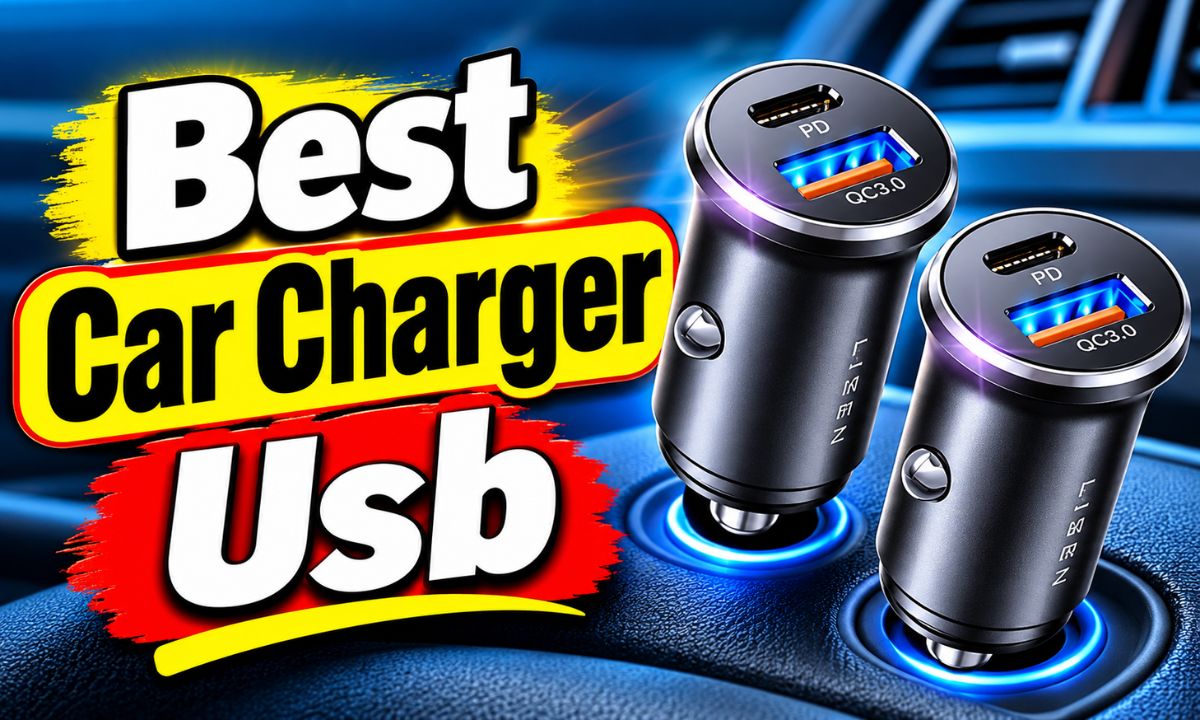
The best car charger usb is a multiport USB-C adapter that offers fast charging, useful ports, and broad device support.
Imagine driving to work on a busy American highway while your phone battery drops below 15%. You need GPS for the next turn, music for the drive, and enough battery for calls throughout the day. A weak car charger may not keep up. The same problem can happen on family road trips, long commutes, and weekend drives. I would look for a car charger with USB-C ports, useful power output, and enough room to charge more than one device. In this guide, I compare three options, including a four-port 90W adapter, a two-pack 69W charger, and a three-port 67W model. Each offers a different way to keep your devices ready while you travel.
Table of Contents
Toggle🏆 Top 3 Products

4-Port 90W USB-C Car Charger
Its four charging ports and advertised 90W output make it a useful choice for drivers who need to charge several devices.
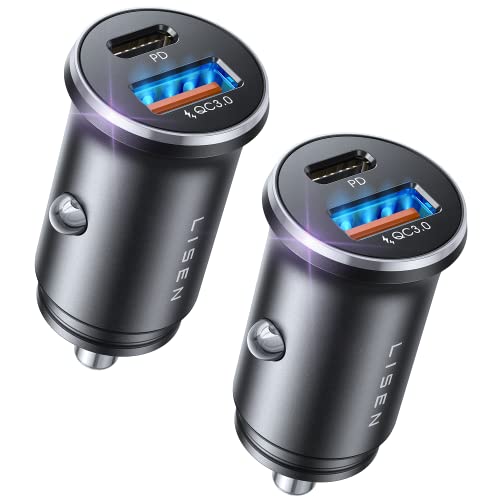
LISEN 69W USB-C Car Charger 2-Pack
The two-pack offers a handy way to equip two vehicles or keep a spare charger ready.

3-Port 67W USB-C Car Charger
Its three-port layout offers a practical balance for drivers who want USB-C and USB-A connections in one adapter.
4-Port 90W USB-C Car Charger Review
The first product on my list is a four-port USB-C car charger with an advertised total output of 90W. It has two USB-C ports and two USB-A ports. This layout gives drivers more ways to connect phones, tablets, and other USB-powered devices. I like the idea of having both newer and older USB connections in one small car accessory. It can help reduce the need to carry several separate car adapters.
This charger stands out for people who share a vehicle with family or friends. One person can connect an iPhone while another charges an Android phone. A passenger may also use a USB-A cable for an older device. The advertised 90W rating is a useful figure to consider, but it does not mean every connected device receives 90W. The actual charging speed depends on the charger, the connected devices, the cables, and how the total power gets shared.
✅ Pros
- ✔Four ports provide more connection options than a basic single-port charger.
- ✔Two USB-C ports support compatible modern charging cables.
- ✔Two USB-A ports help support older USB charging cables.
- ✔The advertised 90W output makes it an option for users who want a higher-power adapter.
- ✔Useful for families who share one vehicle.
- ✔Can charge several compatible devices from one 12V car socket.
- ✔Reduces the need to carry separate adapters for different cable types.
- ✔Works as a practical accessory for daily commutes and longer road trips.
- ✔Its mixed-port design can suit drivers with both older and newer devices.
⚠️ Cons
- ✖The total advertised output does not mean each port delivers 90W.
- ✖Charging speed may fall when several devices use the charger at once.
- ✖Drivers with only one phone may not need four ports.
- ✖The actual charging speed depends on device compatibility and cable quality.
- ✖The available space around the car socket may affect how well the adapter fits.
My Recommendation
I would put this model first for drivers who want one charger for several devices. Its four-port setup gives it a clear advantage when more than one passenger needs power. The two USB-C ports suit newer devices, while the two USB-A ports offer a useful option for older cables. The advertised 90W output also makes it worth considering for people who want a higher-output charging adapter. However, I would check the product listing for the exact power split between ports before using it to charge a device that needs a specific charging rate. I would also use good-quality cables that match the charging needs of my phone or tablet. For a family vehicle, shared car, or long-distance trip, this is my overall top pick among the three listed options.
| Best For | Why |
|---|---|
| Families and shared cars | Four ports allow several people to connect their devices at the same time. |
| Drivers with mixed devices | Two USB-C and two USB-A ports support different cable types. |
| Long road trips | The multiport layout can help keep phones and other compatible devices charged during travel. |
LISEN 69W USB-C Car Charger 2-Pack Review
The LISEN USB-C car charger offers an advertised 69W output and comes as a two-pack. Its design focuses on USB-C charging for drivers who use newer phones and compatible accessories. I like the practical benefit of getting two chargers in one purchase. Instead of moving one adapter between vehicles, you can keep one in each car. That can make daily travel easier for people who use more than one vehicle during the week.
This option may suit drivers who mainly charge their phones and do not need a large number of ports. Its USB-C design is aimed at users with compatible USB-C cables and devices. The advertised power rating is worth checking against the charging needs of your phone. Keep in mind that a charger cannot force a device to accept more power than it supports. Cable quality and the phone’s own charging limits also matter. The two-pack makes this model especially interesting for couples, families, and people who want a spare adapter.
✅ Pros
- ✔The two-pack provides two car chargers in one purchase.
- ✔Useful for drivers with two cars.
- ✔Can leave one charger in the main vehicle and keep the second as a spare.
- ✔The advertised 69W output makes it suitable for users seeking a higher-power USB-C option.
- ✔USB-C charging suits many newer phones and compatible devices.
- ✔A practical choice for people who prefer USB-C cables.
- ✔Useful for couples who travel in separate vehicles.
- ✔Can reduce the need to move a charger from one car to another.
- ✔Its focused charging design may suit people who do not need four or more ports.
⚠️ Cons
- ✖A two-pack may be unnecessary for someone who owns only one vehicle.
- ✖The USB-C-focused design may not suit people who need several USB-A connections.
- ✖The advertised 69W figure should not be treated as the guaranteed output for every connected device.
- ✖Users should check the exact number of ports and power distribution in the current listing.
- ✖Fast charging depends on the connected device and a suitable USB-C cable.
My Recommendation
I recommend considering the LISEN two-pack if you want to equip two cars without buying two separate charger sets. It is a practical option for households where one person drives a work vehicle and another uses a family car. It may also help people who want to keep a spare charger available. The advertised 69W output is appealing, but I would check the supported charging standards and the exact output details before buying. I would also make sure my phone supports the charging rate I want. If you mostly charge one phone at a time and prefer USB-C, this option deserves a place on your shortlist. It is not my first choice for a car full of passengers who all need separate charging ports, but the two-pack adds useful flexibility.
| Best For | Why |
|---|---|
| Two-car households | The package includes two chargers, so each vehicle can have its own adapter. |
| USB-C phone users | Its USB-C-focused design suits drivers who already use compatible USB-C charging cables. |
| Drivers who want a spare | The second charger gives you another adapter for backup or another vehicle. |
3-Port 67W USB-C and USB-A Car Charger
The third option is a three-port car charger with an advertised output of 67W. Its layout includes two USB-C ports and one USB-A port. This mix gives drivers a simple way to connect newer USB-C devices and older USB-A cables. I like this type of layout because it avoids making the charger too focused on just one cable standard. It can be a useful middle ground for drivers who want more than one port but do not need four.
This model may work well for everyday driving, commuting, and family travel. You could use its USB-C connections for compatible phones and tablets while keeping the USB-A port available for another device. The advertised 67W rating is a total power figure to review, not a promise that every port can supply that amount. Actual output depends on the number of connected devices and their charging needs. I would check the listing for its port-by-port power details before using it with a device that needs a certain charging rate.
✅ Pros
- ✔Three charging ports provide more flexibility than a single-port adapter.
- ✔Two USB-C ports support compatible modern charging cables.
- ✔One USB-A port helps support older charging cables.
- ✔The advertised 67W output offers a useful higher-power option.
- ✔A practical choice for drivers who need to charge two or three devices.
- ✔Its mixed-port layout suits households with different types of devices.
- ✔Can reduce the need to carry a separate USB-A car adapter.
- ✔Useful for daily commutes and longer journeys.
- ✔Offers a middle ground between a basic charger and a four-port model.
⚠️ Cons
- ✖It has fewer ports than the four-port 90W model.
- ✖The total advertised 67W output may be shared between connected devices.
- ✖It may not suit drivers who need several USB-A connections.
- ✖The charging speed depends on device support and cable quality.
- ✖The three-port layout may be more than a single-phone user needs.
My Recommendation
I would consider this three-port charger if I wanted a balance between port count and everyday use. Two USB-C ports give it a modern feel, while the USB-A port adds support for older cables. It can be a sensible choice for a driver who charges a phone and a second device during the same trip. The advertised 67W rating also makes it worth comparing with the other two products. Before buying, I would review the port power details and confirm that the adapter fits the vehicle’s 12V socket. For many people, three ports are enough. If you want a simple charger for a phone, tablet, or passenger device, this model is a strong option to consider.
| Best For | Why |
|---|---|
| Daily commuters | Three ports offer useful charging options without requiring a four-port setup. |
| Mixed USB-C and USB-A users | The two USB-C ports and one USB-A port support different cable types. |
| Small families | The three connections can help charge several compatible devices during a drive. |
Final Verdict: Which Should You Buy?
After comparing all three options, I would choose the four-port 90W USB-C car charger as the overall pick. It offers two USB-C ports and two USB-A ports, which gives it the most flexible layout in this group. The LISEN 69W two-pack is a better fit for people who want chargers for two vehicles or need a spare. The three-port 67W model is a sensible middle choice for everyday charging. Before buying, check the current listing, port-level power, and device support.
The best car charger usb should match your phone, cables, and driving needs. Choose a charger with enough ports and a suitable power rating. A good match can make daily commutes and long road trips easier.
FAQs Of best car charger usb
Q What is the best car charger USB for everyday use?
Q Is a USB-C car charger better than a USB-A car charger?
Q Does a 90W car charger charge every phone at 90W?
Q Can I charge two phones at the same time in my car?
Q Can I leave a USB car charger plugged in all the time?