
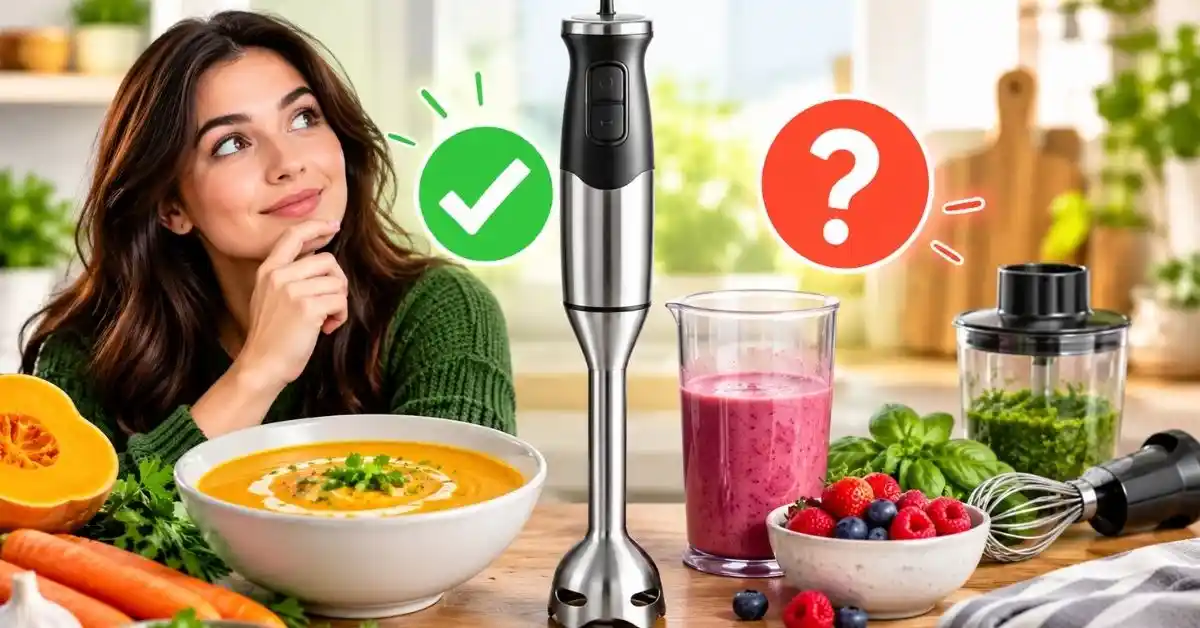
I used to think an immersion blender was one of those kitchen tools that sounded useful but would end up sitting in a drawer. Then I looked at what it can actually do. For soups, sauces, smoothies, dips, and quick blending jobs, it can save a surprising amount of time and cleanup.
So, are immersion blenders worth it? For many home cooks, yes. But it depends on what you cook, how often you blend, and whether you need a very smooth result. Here is what makes an immersion blender useful, where it falls short, and when I think it is worth buying.
Are Immersion Blenders Worth It for Everyday Cooking?
An immersion blender is worth it when you want to blend food right in the pot, bowl, or cup. You do not need to move hot soup into a countertop blender. That alone can make a big difference on busy days.
I also like the fact that an immersion blender takes up little space. It is easy to grab for a small job. You can use it, rinse the blending end, and put it away.
| Kitchen task | Immersion blender | My take |
| Pureeing soup | Excellent | One of its best uses |
| Making small sauces | Excellent | Fast and easy |
| Crushing ice | Poor | Use a proper blender |
| Making nut butter | Poor | Needs more power |
| Blending baby food | Good | Works well for small batches |
The biggest benefit is simple: less moving food around.
That matters most with hot soups and sauces. Instead of pouring a full pot into a blender, you can blend it where it is.
What Makes an Immersion Blender So Handy?
The small size is a major plus. A countertop blender can be bulky. An immersion blender can fit in a drawer or cabinet.
It is also useful when you only need to blend a small amount. There is little reason to dirty a large blender for one bowl of sauce.
| Feature | Why it helps |
| Small body | Easy to store |
| Stick design | Blend food in its container |
| Detachable shaft | Easier to clean |
| Speed control | Better control over texture |
There is also less setup. I find that this is often the difference between actually making a sauce and deciding it is too much work.
When Is an Immersion Blender Better Than a Regular Blender?
This is where the choice gets more interesting. An immersion blender is not a replacement for every countertop blender.
A regular blender usually wins when you need very smooth results, high power, or large batches. An immersion blender wins when you want speed, simple cleanup, and direct blending.
| Comparison | Immersion blender | Countertop blender |
| Storage | Easy | Takes more space |
| Cleanup | Usually quick | More parts to wash |
| Hot soup | Very convenient | Often needs careful transfer |
| Large batches | Less ideal | Better |
| Very smooth blends | Good, but limited | Usually better |
For example, I would pick an immersion blender for tomato soup. I would pick a countertop blender for a silky smoothie with frozen fruit.
That distinction makes the buying decision much easier.
Should You Buy an Immersion Blender Instead of a Countertop Blender?
If you can only buy one, think about your normal cooking habits.
If you often make soups, sauces, mashed vegetables, dips, or small batches, an immersion blender can be the more practical choice.
If smoothies, frozen drinks, ice, and large batches are common, a countertop blender makes more sense.
| Your main use | Better choice |
| Soups and sauces | Immersion blender |
| Daily smoothies | Countertop blender |
| Small portions | Immersion blender |
| Frozen drinks | Countertop blender |
| Large family batches | Countertop blender |
There is no need to buy a powerful countertop blender just because it can do more. If you rarely need those extra features, the smaller tool may serve you better.
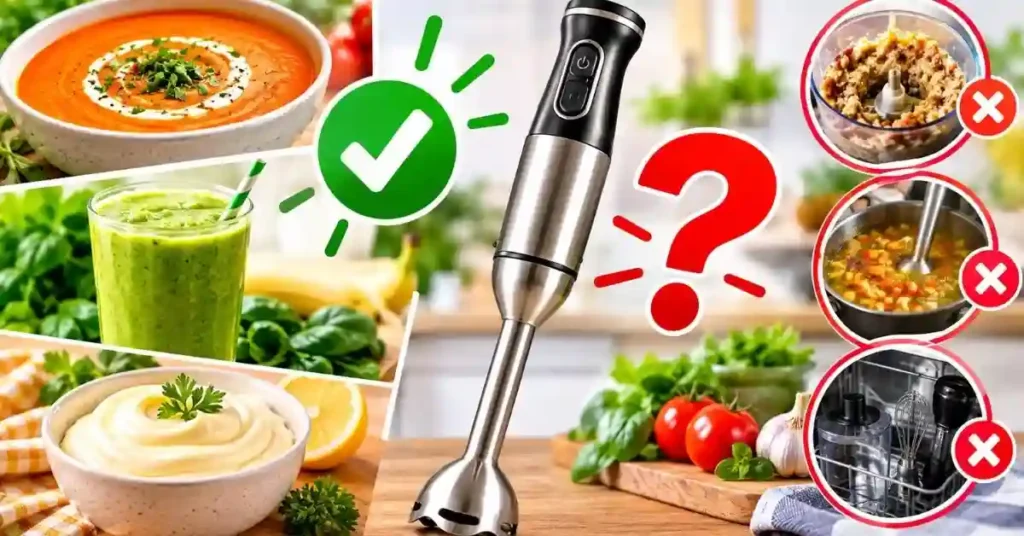
Are Immersion Blenders Good for Soup?
Yes. Soup is one of the best reasons to own an immersion blender.
This is where the design really makes sense. You can cook vegetables in a pot, add your stock, and blend the soup right there.
There is no need to lift a heavy, hot pot and pour it into a blender jar.
What I Would Watch for When Blending Hot Soup
Hot food needs care. Keep the blender head under the surface while it runs. This helps reduce splashing.
Do not lift the spinning blade out of the soup. Turn it off first, then move it.
| Problem | Safer approach |
| Soup splashes | Keep the blade submerged |
| Uneven texture | Move the blender slowly |
| Food sticks to the bottom | Lift and reposition while off |
| Hot liquid splatters | Use a tall pot when possible |
One small habit makes a big difference: blend in short bursts and check the texture as you go.
It is easy to overblend a soup when you are trying to make it perfectly smooth.
What Can You Make With an Immersion Blender?
An immersion blender can handle more than soup. Its best uses are often simple foods that do not need extreme power.
Common uses include:
- Tomato sauce
- Pureed vegetable soup
- Creamy sauces
- Dips
- Baby food
- Smooth mashed vegetables
- Small smoothies
- Mayonnaise
- Salad dressings
- Pancake or batter mixes
| Food | How well it works |
| Tomato sauce | Very well |
| Cream soup | Very well |
| Mayonnaise | Very well |
| Small smoothie | Well |
| Frozen fruit smoothie | Depends on model |
| Ice | Usually not ideal |
The key is to match the tool to the job.
An immersion blender is great at turning cooked, soft foods into a smooth mixture. It is less impressive when you ask it to break down hard or frozen ingredients.
Can an Immersion Blender Make Smoothies?
Yes, but there is a catch.
An immersion blender can make a small smoothie, especially with soft fruit and enough liquid. However, it may struggle with large chunks of frozen fruit or lots of ice.
The result may also be less silky than one made in a good countertop blender.
If smoothies are a daily habit, I would not buy an immersion blender as your main smoothie machine.
The Biggest Immersion Blender Mistakes to Avoid
The biggest mistake is expecting a small stick blender to behave like a full-size blender.
It has limits. Those limits become clear when you use hard foods, large amounts, or very thick mixtures.
| Mistake | Better approach |
| Using it on lots of ice | Use a blender made for ice |
| Filling a shallow bowl | Use a tall container |
| Running it non-stop | Use short blending bursts |
| Expecting silky texture every time | Blend longer or use a countertop blender |
| Ignoring splashes | Keep the blade submerged |
Another mistake is choosing based only on motor power.
More power can help, but the blade design, speed control, build quality, and attachments also matter.
A high watt number does not automatically mean a better kitchen tool.
Why Does My Immersion Blender Splash?
Splashes usually happen when the blade is too close to the surface.
The fix is simple. Keep the blending head below the food while it is running. Start at a low speed if your model allows it.
A tall, narrow container can also help with small amounts.
This was one of those little details that made much more sense once I thought about how the blade moves liquid. The goal is not just to turn it on. You want the food to move around the blade without flying out of the bowl.
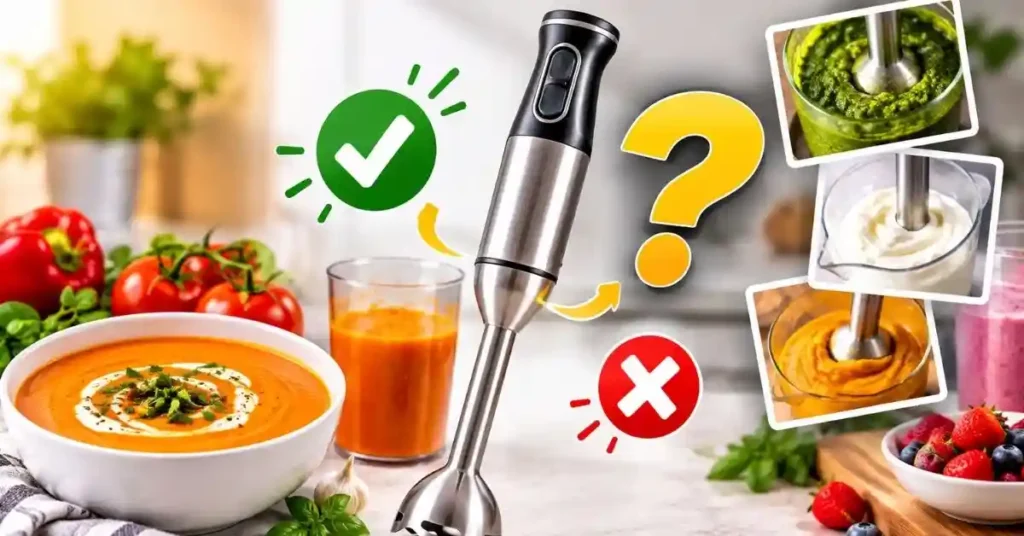
Are Cheap Immersion Blenders Worth It?
A cheap immersion blender can be worth it if you only need basic blending.
You do not always need premium features. For occasional soup or sauce making, a simple model may do the job well.
The problem comes when you use it often or ask it to handle thick foods. A flimsy build, weak speed control, or poor grip can become annoying very quickly.
| Buying level | Best for |
| Basic | Occasional simple blending |
| Mid-range | Frequent home cooking |
| Higher-end | Heavy use and extra attachments |
I would spend more for comfort and reliability rather than for a long list of attachments I may never use.
That is an easy trap with kitchen appliances. A box full of accessories looks useful until half of it never leaves the cabinet.
What Should You Look for in an Immersion Blender?
If you decide an immersion blender fits your kitchen, focus on the parts that affect daily use.
A comfortable grip matters. So does a blending shaft that is easy to remove and clean.
Variable speed is also useful. It gives you more control than a single-speed model.
| Feature | Why I value it |
| Variable speed | Better control |
| Detachable shaft | Easier cleaning |
| Comfortable grip | Less hand strain |
| Stainless steel shaft | Good for regular kitchen use |
| Simple controls | Faster everyday use |
Attachments can be useful, too. Some models include whisks, food processors, or blending cups.
But I would treat these as bonuses. The main job is still blending.
Is More Power Always Better?
No.
Power matters when blending thick or tough foods. But more power can also mean more noise, weight, and cost.
For normal home cooking, I would rather have a blender that feels easy to control than one that is simply powerful on paper.
Think about what you actually blend. That is a better guide than the biggest number on the package.
How Much Cleanup Does an Immersion Blender Really Need?
This is one of its strongest points.
With a countertop blender, you may need to wash the jar, lid, blade area, and base area. An immersion blender usually has fewer parts that touch the food.
| Cleanup task | Immersion blender |
| Rinse blade shaft | Usually quick |
| Wash large jar | Not needed |
| Clean lid | Not usually needed |
| Wipe motor body | Usually simple |
The exact cleaning method depends on the model. Some blending shafts are dishwasher safe, while others need hand washing.
Never put the motor housing in water.
For me, the real benefit is not that cleaning takes zero effort. It is that there is less to clean.
When Are Immersion Blenders Not Worth It?
There are clear cases where I would skip one.
If you already own a good blender and rarely make soup or sauces, an immersion blender may just become another gadget.
It is also not the best choice for demanding blending jobs.
| Situation | Verdict |
| You make soup often | Worth it |
| You make sauces often | Worth it |
| You have little storage space | Worth considering |
| You mainly make smoothies | Maybe not |
| You need lots of ice crushing | Not ideal |
| You already own a great blender | May be unnecessary |
This is the part that often gets missed. A useful appliance is not automatically a necessary appliance.
The best kitchen tools solve a problem you actually have.
Are Immersion Blenders Worth It for Small Kitchens?
Yes, especially if counter and cabinet space are limited.
An immersion blender has a much smaller footprint than most countertop blenders. That makes it useful in apartments, small kitchens, dorms, and compact cooking spaces.
It can also replace several small blending tasks without needing a permanent spot on the counter.
I would still avoid buying one simply because it is small. The real question is whether you will use it.
If you make soup twice a month and sauces often, it can earn its space. If you never blend food, even a tiny appliance is clutter.
My Honest Verdict: Are Immersion Blenders Worth It?
After looking at the everyday pros and cons, I think immersion blenders are worth it for the right cook.
Their biggest strengths are convenience, small size, quick cleanup, and the ability to blend food right in the cooking pot. Those benefits are hard to ignore if you make soups, sauces, dips, or purees.
They are less appealing if you need powerful ice crushing, large batches, or ultra-smooth smoothies. In those cases, a good countertop blender is still the better tool.
The biggest lesson is not to ask whether an immersion blender is good in general. Ask whether it fits your cooking style.
If you often find yourself thinking, “I wish I could blend this without dirtying another container,” an immersion blender may be exactly the simple kitchen tool you have been missing.
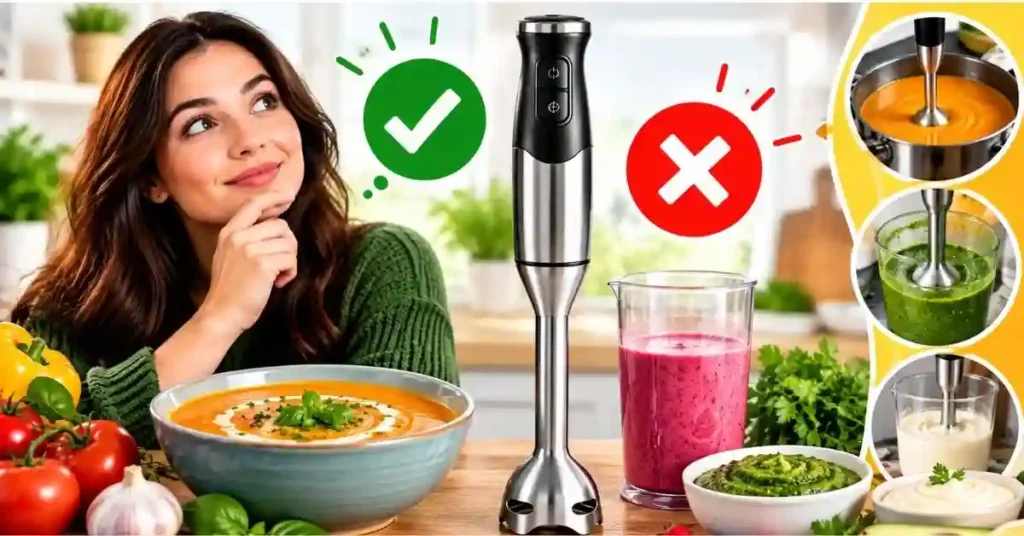
Frequently Asked Questions
Are immersion blenders worth it for soup?
Yes. An immersion blender can blend soup right in the pot. It saves time, cuts mess, and works well for smooth soups and sauces.
What are immersion blenders best used for?
Immersion blenders work well for soups, sauces, dips, purees, and small smoothies. They are best for quick jobs that need little cleanup.
Can an immersion blender replace a regular blender?
Not fully. An immersion blender is great for soups and small jobs. A regular blender is better for ice, frozen foods, and large batches.
Are cheap immersion blenders worth it?
They can be worth it for light use. If you blend often, a better model may offer more power, control, and comfort for daily tasks.
What should I look for in an immersion blender?
Look for good grip, speed control, easy cleaning, and a strong shaft. Extra tools can help, but they are not needed for basic blending.
To Get More About Home, Home and Kitchen Product You Can Visit Our Site. If You Found our Posts Helpful Leave a Comment Below