
**The Best Engine Degreasers remove oil, grease, and grime with less scrubbing when you choose the right cleaner for the job.**
A car can look clean on the outside but still have a greasy engine bay. After a long commute, a weekend road trip, or a few months of daily driving, oil film and road grime can build up around the engine. That mess can make routine checks harder. It can also leave your hands dirty when you inspect a hose or change a part. A good engine degreaser helps loosen that grime so you can wipe or rinse it away. I would start by matching the cleaner to the mess, the surface, and the cleaning method. The three products in this guide offer different ways to tackle that job.
Table of Contents
Toggle🏆 Top 3 Products

Gunk Original Engine Degreaser Spray
This spray is a practical pick for drivers who want a familiar, direct way to clean greasy engine parts.

3D Grand Blast Engine Degreaser
The one-gallon format suits frequent cleaning and gives home garages more product for larger jobs.
Chemical Guys Orange Degreaser
Its dilutable formula offers flexible use for people who clean engines, tires, tools, and other greasy parts.
Gunk Original Engine Degreaser Spray
Gunk Original Engine Degreaser is a straightforward option for cleaning oil and grease from engine parts. The product comes in a 15-ounce spray can, and this listing is for a case of six cans. The spray format makes it easy to direct cleaner toward dirty areas. It may suit drivers who prefer a ready-to-use product instead of mixing a cleaner with water. For many home garages, that simple approach makes engine cleaning less of a chore.
I would consider this product for greasy metal parts and routine engine bay cleanup. The listing says it removes tough oil and grease and rinses with water, but the exact results will depend on the age and thickness of the buildup. You should still protect sensitive electrical parts and follow the label directions. Do not assume every surface can handle the same cleaner. For a first engine cleaning project, a spray can also help you work on small sections at a time.
✅ Pros
- ✔Ready-to-use spray format avoids the need to mix a cleaning solution.
- ✔Designed to remove oil and grease from hardworking engines.
- ✔Spray delivery helps target specific dirty areas.
- ✔Water rinsing can help remove loosened grime when the surface and vehicle instructions allow it.
- ✔A case of six cans can suit a home garage that cleans several vehicles or parts.
- ✔Useful for spot cleaning instead of preparing a large bucket of cleaner.
- ✔The familiar spray format is easy to store with other car care supplies.
⚠️ Cons
- ✖The six-can pack may be more than a driver needs for one small job.
- ✖Aerosol cans can run out during a large or heavily soiled cleaning project.
- ✖The product still needs careful use around wiring, sensors, and other sensitive parts.
- ✖A spray can may offer less control over total product use than a diluted concentrate.
My Recommendation
I would choose Gunk Original Engine Degreaser for regular home garage jobs that call for a simple spray-and-clean approach. It is a good fit when you want to treat a few greasy spots without mixing a large batch of solution. The six-pack may also work for a household with more than one vehicle. For a full engine bay covered in thick grime, plan to use enough product and allow time for careful cleaning. Always test an inconspicuous area if surface compatibility is uncertain, and follow the product label before rinsing.
| Best For | Why |
|---|---|
| Routine engine cleanup | The spray can lets you apply cleaner to selected greasy areas. |
| Multi-vehicle households | A case of six cans provides several ready-to-use containers. |
| Drivers who avoid mixing products | The spray format removes the need to prepare a diluted solution. |
3D Grand Blast Engine Degreaser
3D Grand Blast Engine Degreaser comes in a one-gallon container and is made for heavy-duty cleaning jobs. The listing describes it as a biodegradable cleaner for engines, wheels, exhausts, and more. That wider use may appeal to people who clean several parts of a car during the same session. A gallon can also be useful when a small spray bottle would not cover the work at hand. Before use, check the label to confirm the right method for the surface you plan to clean.
I would look at Grand Blast when a garage needs a cleaner for more than one small engine bay task. The larger container may work well for repeated maintenance, though the amount used will depend on the level of dirt and the application method. The listing also describes the formula as fast-acting and non-staining. Those claims do not mean every finish is safe under every condition, so test first on an unseen spot. Protect painted areas, rubber, plastic, and electrical parts as the vehicle and product instructions require.
✅ Pros
- ✔One-gallon size can suit repeated cleaning sessions.
- ✔Designed for engine cleaning and other automotive grime.
- ✔The listed uses include wheels and exhausts, which may reduce the need for several separate cleaners.
- ✔The product is described as biodegradable by its listing.
- ✔A larger container may be practical for home garages and hobby mechanics.
- ✔The listing describes the formula as fast-acting.
- ✔The product is marketed as non-staining, though testing remains wise.
⚠️ Cons
- ✖The gallon container takes up more storage space than a small spray can.
- ✖You may need a separate spray bottle or applicator, depending on the directions and task.
- ✖The larger size may not be economical for someone who cleans an engine only once.
- ✖Biodegradable labeling does not mean the cleaner is harmless to every surface or safe to release into a storm drain.
My Recommendation
I would consider 3D Grand Blast for a home garage that regularly cleans engines and other greasy automotive parts. Its one-gallon format makes more sense for repeat work than for a single small spill. It may also suit people who prefer to keep one cleaner on hand for several approved tasks. Check the current label for dilution, dwell time, surface limits, and rinse directions. Use only the amount needed, and collect dirty runoff where required instead of letting oily waste enter a drain.
| Best For | Why |
|---|---|
| Frequent garage cleaning | The gallon size offers more product for repeated jobs. |
| Cleaning several automotive parts | The listing includes engines, wheels, and exhausts among its intended uses. |
| DIY mechanics | A larger container can be practical for regular maintenance projects. |
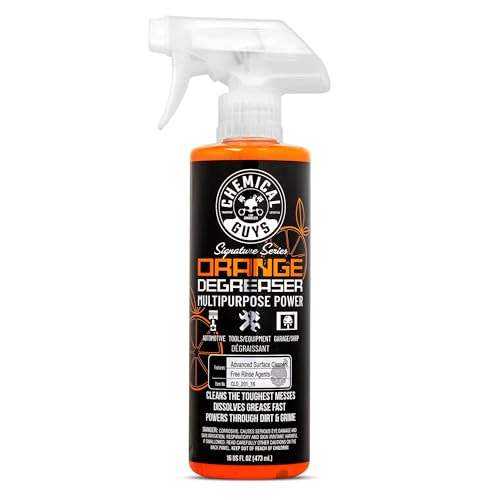
Chemical Guys Orange Degreaser
Chemical Guys Signature Series Orange Degreaser is a citrus-style cleaner sold in a 16-ounce bottle. The listing describes it as a heavy-duty degreaser for oil and grease on engines, tires, tools, and undercarriages. It also states that the product can be diluted. That flexibility may appeal to people who clean different kinds of grime and want to adjust their approach according to the label. The exact dilution and application method should always come from the product instructions.
I would consider this cleaner if you want one product for several approved garage tasks. A dilutable formula may help you manage how much cleaner you use, but a weaker mix may not suit heavy, old grease. Do not guess at a dilution ratio or assume that a citrus scent makes a cleaner gentle. Test the product on a hidden area first, and keep it away from surfaces that the label excludes. For engine work, protect sensitive components and use a controlled application rather than soaking the whole bay.
✅ Pros
- ✔Citrus-style formula offers an alternative to a basic aerosol degreaser.
- ✔The listing identifies engines, tires, tools, and undercarriages as intended uses.
- ✔ Dilution offers flexibility when the label allows different cleaning strengths.
- ✔A 16-ounce bottle is easy to store in a home garage.
- ✔One product may handle several approved cleaning tasks.
- ✔The bottle format can offer more control over dispensing than an aerosol can.
- ✔Useful for people who already maintain their own vehicles and garage tools.
⚠️ Cons
- ✖The 16-ounce bottle may not be enough for frequent large-scale cleaning.
- ✖You must follow the correct dilution instructions instead of guessing the ratio.
- ✖A concentrate or dilutable cleaner may require extra preparation before use.
- ✖Citrus-based branding does not guarantee compatibility with every finish, coating, or rubber part.
My Recommendation
I would choose Chemical Guys Orange Degreaser for a DIY garage that cleans more than just engine parts. Its listed uses include tires, tools, and undercarriages, while the dilutable formula can offer flexibility when used as directed. It is a useful option for someone who wants a multipurpose cleaner rather than a product limited to one task. For thick grease, use only the dilution and method approved by the label. Keep the cleaner off sensitive parts, test an inconspicuous area, and rinse or wipe as directed.
| Best For | Why |
|---|---|
| Multi-purpose garage cleaning | The listing includes engines, tires, tools, and undercarriages. |
| Drivers who prefer dilution options | The formula is described as dilutable for different approved uses. |
| Small home garages | The 16-ounce bottle is compact and easy to store. |
Final Verdict: Which Should You Buy?
For most drivers who want a simple spray for routine oil and grease cleanup, I would start with Gunk Original Engine Degreaser. Choose 3D Grand Blast if you clean engines and other automotive parts often and prefer a one-gallon container. Chemical Guys Orange Degreaser is worth considering when you want a dilutable cleaner for several listed garage tasks. Each product serves a different need, so the right pick depends on your cleaning habits and the surfaces involved.
The Best Engine Degreasers make engine bay care easier when you use them with care. Let the engine cool, protect sensitive parts, follow the label, and manage dirty runoff responsibly. Clean buildup can help you inspect your vehicle, but it cannot fix an oil leak or a damaged part.
FAQs Of Best Engine Degreasers
Q What is the best engine degreaser for most drivers?
Q Can I spray engine degreaser directly onto my engine?
Q Should I rinse engine degreaser off with water?
Q How often should I degrease my engine?
Q Are engine degreasers safe for plastic and rubber parts?