
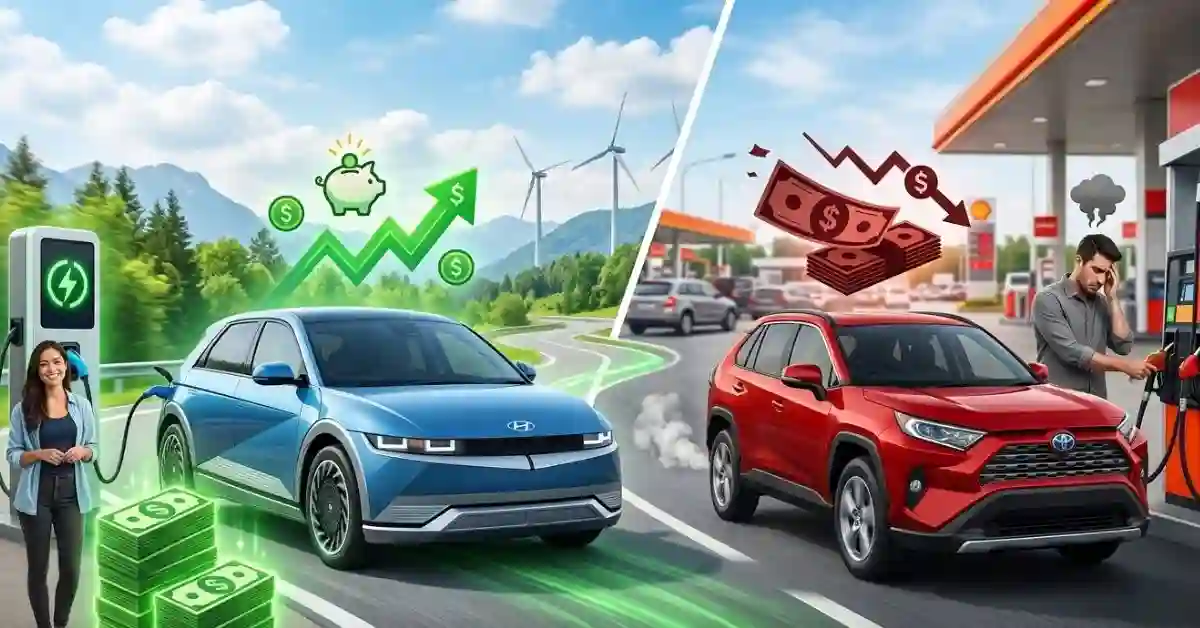
At first, I thought the answer to “Are electric cars cheaper?” would be simple. Electric cars often cost more to buy, so it seemed like a clear no. But once I looked past the sale price, the picture became much more mixed.
The big lesson is this: an electric car can cost less to run, but that does not mean every EV is cheaper to own. Charging cost, driving habits, battery size, maintenance, insurance, taxes, and the car’s purchase price all matter. Here is how I would break it down before spending my money.
Are Electric Cars Cheaper Than Gas Cars?
Yes, they can be. But the savings usually show up after you buy the car, not when you sign the purchase papers.
An EV has fewer moving parts than a gas car. There is no engine oil, spark plugs, fuel pump in the usual sense, or exhaust system to maintain. That can cut routine service costs.
The biggest daily saving can also come from energy. Charging at home can cost much less than buying gasoline or diesel, especially for drivers who travel a lot.
| Cost area | Electric car | Gas car |
| Energy | Electricity | Gasoline or diesel |
| Engine oil | None | Regular changes |
| Engine service | Low | More frequent |
| Brake wear | Often lower | Usually higher |
But there is a catch. Many electric cars still have a higher purchase price. If you only keep the car for a short time or drive very little, the fuel savings may not make up for that extra cost.
That is why I would never compare EVs and gas cars by sticker price alone.
Where Electric Cars Can Save You Money
The strongest EV savings tend to come from everyday running costs.
For example, imagine two cars that both travel 15,000 miles a year. One uses gasoline, while the other runs on electricity. Even a small difference in energy cost per mile can become meaningful over several years.
Charging Can Cost Less Than Fuel
Home charging is where the numbers can get interesting.
Suppose an EV uses about 30 kWh to travel 100 miles. At an electricity rate of $0.15 per kWh, that is about $4.50 for 100 miles.
A gas car that gets 30 mpg would need about 3.3 gallons for the same distance. At $3.50 per gallon, that is about $11.55.
That is a large gap.
| Example | EV | Gas car |
| Energy for 100 miles | 30 kWh | 3.3 gallons |
| Example energy price | $0.15/kWh | $3.50/gallon |
| Cost per 100 miles | $4.50 | $11.55 |
These are examples, not fixed prices. Your local electricity and fuel rates can change the result a lot.
Public fast charging can also be much more expensive than home charging. This is one thing I would check before buying an EV. If you cannot charge at home, the savings may be smaller than expected.
Maintenance Is Another Big Factor
This is one area where electric cars have a simple advantage.
A gas engine needs regular oil and filter changes. It also has many parts that can wear out or fail over time.
An EV still needs tires, brake checks, suspension work, cabin filters, and other basic service. But its electric motor and drivetrain are much simpler.
| Maintenance item | EV | Gas car |
| Oil change | Not needed | Needed |
| Spark plugs | Not needed | Often needed |
| Brake pads | Less frequent in many cases | Regular wear |
| Tires | Still needed | Still needed |
Regenerative braking can help an EV use less friction braking. When you lift off the accelerator, the motor can slow the car while sending some energy back to the battery.
That does not mean EV brakes never wear. They still need care. But brake pad life can be much longer in many EVs.
Are Electric Cars Cheaper to Fuel?
For many drivers, yes.
The important word is fuel. Electricity is not free, and charging losses mean the power drawn from the wall is higher than the energy that reaches the battery.
Still, an efficient EV can use energy very well.
Here is the part that surprised me when I looked at EV running costs: driving style matters more than many people expect. Fast highway driving, cold weather, heavy loads, and hard acceleration can all raise energy use.
| Driving condition | Likely EV effect |
| City driving | Often quite efficient |
| Fast highway driving | Uses more energy |
| Cold weather | Can reduce range |
| Heavy cargo | Can raise energy use |
So if you mostly drive around town and charge at home, an EV can make a lot of financial sense.
If you spend most of your time driving long highway trips and depend on expensive public chargers, the gap may shrink.
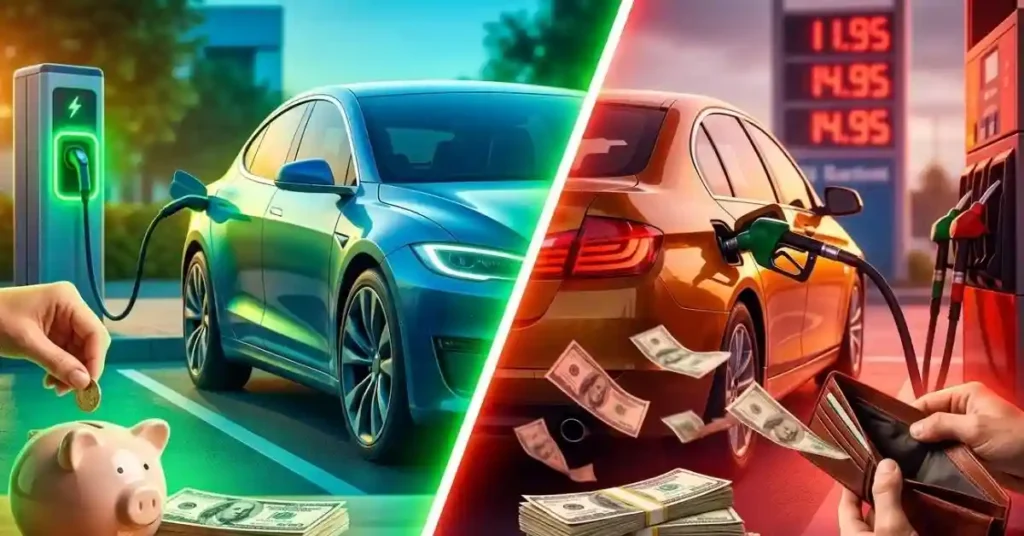
The Purchase Price Can Change Everything
This is where the answer to “Are electric cars cheaper?” gets more complicated.
A lower running cost does not automatically make a car cheaper overall.
Imagine an EV costs $8,000 more than a similar gas car. If you save $1,500 per year on fuel and maintenance, you may recover that extra cost in several years.
But if you only save $500 per year, it takes much longer.
| Purchase gap | Annual savings | Simple payback |
| $4,000 | $1,000 | 4 years |
| $8,000 | $1,500 | About 5.3 years |
| $10,000 | $1,000 | 10 years |
This is a simple example. It does not include financing, depreciation, taxes, insurance, charging equipment, or repairs.
Still, it shows why I would look at total cost of ownership, not just monthly fuel savings.
When an Electric Car May Not Be Cheaper
There are situations where buying an EV may not save money.
The first is low yearly mileage. If you only drive a few thousand miles each year, your fuel savings will be small.
The second is expensive charging. Home charging can be cheap, but public charging prices vary. If fast charging becomes your normal routine, your energy cost may be much higher.
Insurance Can Affect the Math
Insurance is easy to overlook.
EV insurance can vary by model, driver, location, repair cost, and insurer. Some EVs have expensive parts and complex systems, which may raise repair bills after a crash.
That does not mean every EV costs more to insure. It means you should get an insurance quote before buying one.
| Often overlooked cost | Why it matters |
| Insurance | Rates vary by model |
| Home charger | Installation may cost extra |
| Public charging | Can cost more than home charging |
| Depreciation | Changes your true ownership cost |
I would add the insurance quote to the shopping list, right beside the vehicle price.
Battery Replacement Is a Common Concern
Battery worries are probably one of the first things people mention when EV costs come up.
Modern EV batteries are built to last for many years, but battery degradation is real. Capacity can slowly decline with use and time.
A battery does not normally go from perfect to useless overnight. Think of it more like a phone battery that slowly holds less charge.
A major battery repair or replacement can be costly, though. That is why battery warranty terms matter when comparing used EVs.
Are Electric Cars Cheaper for Long-Term Ownership?
They can be, especially for drivers who keep their cars for many years.
Long-term ownership gives running-cost savings more time to add up. This is where an EV’s lower routine maintenance can become more valuable.
But depreciation can change the result. Some EV models lose value quickly, while others hold value better. The same is true for gas cars.
Used Electric Cars Can Be a Different Story
A used EV may offer a much lower entry price than a new one.
That can make the math more attractive. You may get many of the same energy and maintenance benefits without paying the full new-car premium.
But I would check the battery health and remaining warranty before buying a used EV.
| Used EV check | What I would look for |
| Battery health | Remaining usable capacity |
| Warranty | Years and mileage left |
| Charging | AC and DC charging function |
| Service history | Signs of proper care |
A cheap used EV is not automatically a good deal. The condition of the battery and the car matters far more than a low asking price.
Does Home Charging Make Electric Cars Cheaper?
In many cases, yes.
Home charging is one of the biggest reasons EV ownership can be convenient and affordable. You can plug in at night and start the next day with a charged battery.
You also avoid many trips to a gas station.
A basic home charging setup may be enough for some drivers. Others may want a faster Level 2 charger, which can require electrical work and installation.
What If You Cannot Charge at Home?
This is one of the biggest questions I would ask before buying an EV.
If you live in a house with a suitable parking spot, charging can be easy. Apartment living can be different.
| Charging situation | EV cost outlook |
| Home charging | Usually strongest savings |
| Workplace charging | Can be very useful |
| Public charging only | Savings may be smaller |
If your building has no charging option and public chargers are far away, the inconvenience may matter as much as the price.
Cheap transportation is not much help if charging turns every long trip into a planning exercise.
Are Electric Cars Cheaper to Maintain?
Usually, routine maintenance is one of the EV’s strongest financial advantages.
There is no internal combustion engine to service. That removes several common maintenance jobs.
However, EVs are not maintenance-free.
You still have tires, suspension parts, lights, wipers, fluids, brakes, air conditioning, and electronics. A damaged battery or high-voltage component can also be expensive to repair.
| EV benefit | What it means |
| Fewer moving parts | Fewer routine engine services |
| Regenerative braking | Can reduce brake wear |
| No engine oil | One regular cost disappears |
So I would describe an EV as lower maintenance, not zero maintenance.
What I Got Wrong About EV Costs at First
The biggest mistake people can make is looking at only one number.
I used to think the simple comparison was:
Gas price vs. electricity price.
It is not.
The better comparison is:
Purchase price + financing + energy + maintenance + insurance + taxes + charging costs + depreciation.
That sounds like a lot, but you do not need a complicated spreadsheet.
A Simple EV Cost Check
Before buying, I would write down these numbers:
- EV purchase price.
- Similar gas car price.
- Expected yearly miles.
- Local electricity price.
- Local fuel price.
- Home charger cost.
- Insurance quote.
- Expected ownership period.
Then compare the estimated cost over five years.
This method also prevents a common mistake: assuming every EV saves the same amount.
A Quick Example of EV vs. Gas Ownership
Let’s use simple numbers to see how the idea works.
Suppose an EV costs $40,000 and a similar gas car costs $32,000. The EV starts $8,000 higher.
Now suppose the EV saves $1,200 per year in energy and maintenance.
After five years, the estimated savings would be about $6,000.
That still does not fully cover the original $8,000 gap. But the result could change with fuel prices, electricity rates, mileage, tax benefits, resale value, or maintenance costs.
| Five-year factor | Why it matters |
| Energy savings | Helps the EV recover its higher price |
| Maintenance | Can add more EV savings |
| Resale value | Can change the final cost |
| Insurance | May reduce or increase the gap |
This is why there is no universal answer.
So, Are Electric Cars Cheaper?
For the right driver, yes.
An electric car can be cheaper to fuel and cheaper to maintain. The savings can become quite strong when you drive a lot and charge at home.
But an EV is not automatically cheaper just because electricity costs less than gasoline. A high purchase price, costly insurance, rapid depreciation, or heavy use of public fast chargers can change the math.
The smartest approach is to compare two similar cars over the years you plan to keep them.
My Bottom Line on Electric Car Costs
After looking at the full picture, I would not ask only, “Are electric cars cheaper?” I would ask, “Is this electric car cheaper for the way I drive?”
That small change in the question makes the decision much easier. If you drive often, can charge at home, and plan to keep the car for several years, an EV can be a very good money-saving choice.
If you drive very little, cannot charge at home, or are comparing an expensive EV with a much cheaper gas car, the savings may not be enough.
For me, the biggest lesson is simple: do the math before you buy. Look beyond the sticker price, and include charging, fuel, service, insurance, depreciation, and your real driving habits. That is where the true cost of an electric car becomes clear.
FAQ
Are electric cars cheaper to run than gas cars?
Yes, electric cars can cost less to run. Home charging and lower service costs can save money. Your driving, power rate, and fuel price also matter.
Are electric cars cheaper to maintain?
Yes, EVs often need less routine care than gas cars. They need no oil changes and may use brakes less. Tires, checks, and other repairs still cost money.
Is charging an electric car cheaper than gas?
Home charging is often cheaper than gas for the same trip. Public fast charging may cost more, so your charging setup can change the total savings.
Are electric cars cheaper in the long run?
They can be cheaper over time if you drive a lot and charge at home. A higher buy price may take years to recover through lower fuel and service costs.
What makes an electric car cheaper to own?
Low home charging rates, high yearly miles, and low service costs can help. Insurance, the car price, tax, and resale value also affect the final cost.
To Get More About Home, Home and Kitchen Product You Can Visit Our Site. If You Found our Posts Helpful Leave a Comment Below