

When I started looking into car battery brands to avoid, I found something that changed how I shop for batteries. There is no simple list of “bad brands.” The same brand can sell one battery that performs well and another that is a poor fit for the money.
That matters because a cheap battery can look like a great deal until it leaves you with a no-start problem. I now pay more attention to the exact battery model, group size, warranty, CCA, battery type, age, and test results. Consumer Reports also warns that buying by brand name alone can be a mistake.
Which Car Battery Brands Should You Be Careful With?
The short answer is that I would be most careful with ultra-budget battery lines, not simply a whole brand. Current Consumer Reports listings include low-cost lines such as Econocraft, Valucraft, TotalPro, and EverStart Value, some with much shorter warranties than their higher-tier versions.
That does not mean every battery from these brands will fail. It means I would look closely at the exact model before buying one.
| Battery line | What makes me cautious | Better question to ask |
| Econocraft | Some models have very short warranties | How long is the warranty? |
| Valucraft | Budget-focused line with 12-month examples | What is the tested life? |
| TotalPro | Some models have 12-month warranties | Is the price saving worth it? |
| EverStart Value | Lower-tier option with shorter warranty | Would a higher tier cost much more? |
For example, Consumer Reports currently lists the Econocraft 24F-E with a three-month warranty, while the Valucraft 24F-VL and TotalPro ProPower 24F-T show 12-month warranties. The same database lists higher-tier batteries with warranties of 30, 36, or even 48 months.
That warranty gap gets my attention.
Why I Don’t Trust a Battery Brand Name Alone
One of the biggest mistakes I made when learning about batteries was treating the logo on the case as the whole story.
It isn’t.
Large battery brands often sell several lines. One may be designed as a basic budget battery. Another may use AGM technology and carry a longer warranty. They can have very different specifications and prices.
Consumer Reports makes this point clearly. Its current testing covers many individual models, and its ratings are organized by battery group size.
The Same Brand Can Have Good and Bad Models
This is one reason I would not tell someone to avoid a whole brand without checking the exact model.
Consumer Reports previously found that major names such as DieHard, EverStart, and Interstate could rank very differently depending on battery size.
| What you see | What it really tells you |
| Famous brand | Not enough information |
| High CCA number | Useful, but not the whole story |
| Long warranty | Helpful protection |
| Exact model and group size | Much more useful |
So if someone asks me, “Which car battery brand should I avoid?” my first response is usually, “Show me the exact battery.”
That is a much better way to shop.
Budget Car Batteries I Would Think Twice About
There is nothing wrong with wanting a cheap battery. I understand it. Sometimes the car is old, money is tight, and you simply need the car running again.
But there is a point where saving a little today can make the purchase less attractive.
Econocraft Deserves Extra Attention
Econocraft is one of the clearest examples of a budget line I would inspect carefully.
Current Consumer Reports listings show several Econocraft batteries with very short warranties. The 24F-E and 35E models, for example, are listed with three-month warranties.
That does not prove that every Econocraft battery is unreliable. It does tell me that I would want a very good reason to choose one over a battery with much longer coverage.
Valucraft Is Another Budget Line to Check Closely
Valucraft also appears in Consumer Reports’ current battery database. A Valucraft 24F-VL and 65-VL are listed with 12-month warranties.
For a vehicle that I depend on every day, I would compare the price difference before buying.
A small extra cost can make more sense if it gives me better specifications, longer coverage, or better independent test results.
Don’t Assume Every EverStart Battery Is the Same
This is where things get interesting.
Current Consumer Reports data lists the EverStart Value 24F with a 12-month warranty. But the EverStart Platinum AGM 24F is listed with a 48-month warranty.
That is a huge difference within the same brand.
So I would not put “EverStart” on a blanket avoid list.
| Example | Listed warranty |
| EverStart Value 24F | 12 months |
| EverStart Maxx-24S | 36 months |
| EverStart Platinum AGM 24F | 48 months |
The lesson is simple: compare the battery line, not just the logo.
The Battery Specifications That Matter More Than the Brand
Once I stopped focusing so much on brand names, battery shopping became much easier.
There are a few numbers and details I now check before anything else.
Check the Correct Group Size
Your battery has to physically fit the vehicle.
Consumer Reports says the correct group number depends on the vehicle’s make, model, year, and engine. The group also relates to the battery’s size, terminal position, and mounting style.
| Check | Why it matters |
| Group size | Makes sure it fits |
| Terminal position | Connects cables correctly |
| Mounting style | Keeps battery secure |
| Battery type | Must match vehicle needs |
A cheap battery that does not fit correctly is not a bargain.
Don’t Chase the Biggest CCA Number
CCA means cold-cranking amps. It tells you how much starting power the battery can provide under cold testing conditions.
It is useful, but more is not automatically better for every car.
I would start with the specification recommended for the vehicle. Then I would compare battery quality, warranty, and price.
Look at Reserve Capacity Too
Reserve capacity is easy to overlook.
It gives you an idea of how long the battery can supply power if the charging system fails. It also matters if you accidentally leave lights or another accessory running. Consumer Reports includes reserve capacity in its battery testing.
That is one of those numbers I used to ignore. I would not ignore it now.
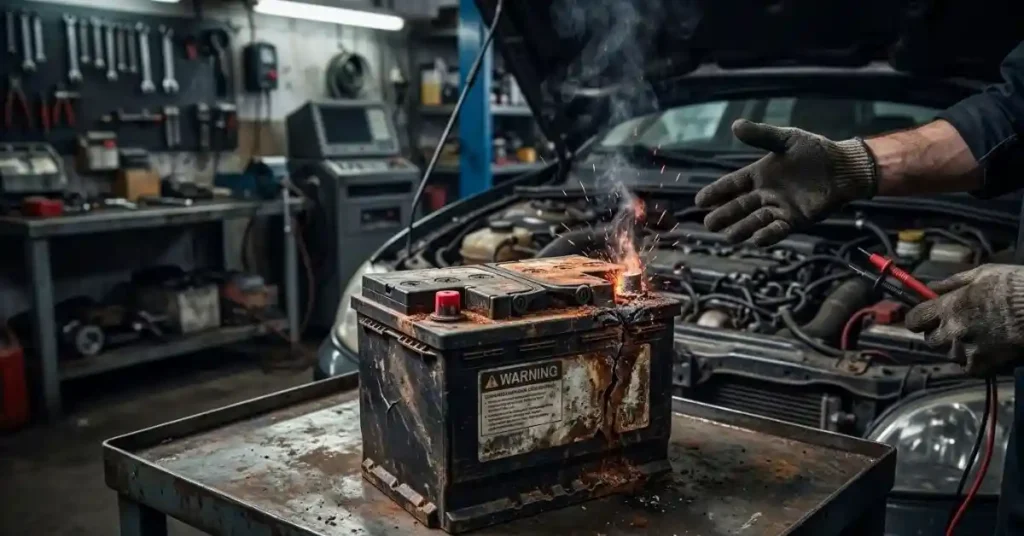
A Short Warranty Is a Warning Sign, Not Proof of Failure
This is an important distinction.
A short warranty does not prove a battery is bad. A long warranty does not prove it will last forever.
Still, warranty length tells me something about the value proposition.
Current Consumer Reports listings show examples ranging from three months to 48 months across different models.
| Warranty | How I view it |
| 3–12 months | Check very carefully |
| 18–24 months | Basic coverage |
| 30–36 months | More reassuring |
| 48 months | Stronger coverage |
I would also read the warranty terms. A warranty may not cover every type of battery problem.
AAA, for example, notes that its warranty excludes issues such as a battery that is merely discharged, improper installation, damage, freezing, overcharging, and neglect.
That taught me another useful lesson: a warranty is only as useful as its conditions.
Don’t Buy a Battery That Has Been Sitting Too Long
This is a mistake that is easy to miss.
A battery can look brand new and still have spent a long time sitting on a shelf.
Lead-acid batteries slowly lose charge when stored. A battery that sits for too long without proper care can suffer before you even install it.
When buying one, I like to check the manufacturing date or date code when possible. I also want the store to test the battery if there is any doubt.
Heat Is Hard on Car Batteries
Hot weather is another factor I learned to take seriously.
Consumer Reports says high temperatures can speed up plate corrosion and cause electrolyte loss. Its lab tests deliberately expose batteries to high temperatures to simulate harsh under-hood conditions.
That means a battery used in a very hot climate may face more stress than the same battery used in a cooler area.
| Condition | Battery concern |
| High heat | Faster battery wear |
| Many short trips | Less time to recharge |
| Long periods parked | Battery can discharge |
| Weak charging system | Battery may stay undercharged |
This is why I would never judge battery quality from one owner’s experience alone.
Some “Bad Battery” Problems Aren’t the Battery
This is probably the most useful lesson in the whole topic.
Sometimes people replace the battery and the problem comes right back.
That can happen when the real issue is elsewhere.
Check the Alternator Before Blaming the Battery
A weak alternator may fail to recharge the battery properly.
If you install a new battery and it keeps going flat, I would check the charging system before buying another battery.
Check for Parasitic Drain
A light, alarm, accessory, or electronic module can slowly drain a battery while the car is parked.
That can make a perfectly good battery look defective.
| Symptom | What I would check |
| New battery keeps dying | Charging system |
| Dead after sitting | Parasitic drain |
| Slow engine crank | Battery and cable condition |
| Battery works after a jump, then dies | Charging system |
This is why I now prefer a proper battery and charging-system test instead of guessing.
AGM vs. Standard Lead-Acid: Don’t Buy the Wrong Type
Some modern vehicles need more than a basic flooded lead-acid battery.
Vehicles with start-stop systems, high electrical loads, or specific factory requirements may need an AGM or EFB battery.
AGM batteries can also cost more.
I would not upgrade or downgrade the battery type just because one option looks cheaper.
| Battery type | Common reason to use it |
| Flooded lead-acid | Many standard vehicles |
| EFB | Some start-stop systems |
| AGM | Higher electrical demand and some start-stop systems |
The owner’s manual is the safer starting point.
Common Car Battery Buying Mistakes I Now Avoid
After looking through battery specifications and test information, a few mistakes stand out.
Paying for the Logo
A famous name does not guarantee that the exact model is right for your vehicle.
Consumer Reports currently tests individual batteries by group size rather than treating every battery from a brand as identical.
Buying the Cheapest Battery Without Comparing Coverage
Saving $30 can feel good.
Replacing the battery again much sooner feels less good.
Ignoring the Battery’s Age
A battery sitting in inventory is not necessarily the same as a fresh battery.
Choosing by CCA Alone
CCA matters, but so do battery life, reserve capacity, fit, battery type, and warranty.
| Mistake | Better approach |
| Buy by brand | Compare exact model |
| Buy by CCA alone | Check all key specs |
| Ignore warranty | Compare coverage |
| Pick the cheapest | Compare total value |
| Guess the battery size | Check the owner’s manual |
How I Would Choose a Car Battery Today
If I were standing in an auto-parts store today, I would keep the process simple.
First, I would confirm the group size and battery type required for the vehicle. Then I would compare two or three batteries that actually fit.
After that, I would check the warranty, CCA, reserve capacity, price, and independent test results when available.
Consumer Reports says it tests more than 100 individual car batteries each year and tests multiple units of each rated model. That makes independent testing much more useful to me than a pile of random online comments.
| My check | Why I check it |
| Exact group size | Fit |
| Battery type | Vehicle compatibility |
| Warranty | Long-term value |
| CCA | Starting power |
| Reserve capacity | Backup power |
| Test data | Real performance evidence |
So, Which Car Battery Brands Should You Avoid?
I would avoid making a permanent blacklist of entire brands.
The better approach is to be cautious with very low-cost battery lines that offer short warranties or weak value for your specific vehicle. Current examples worth checking carefully include Econocraft, Valucraft, TotalPro, and lower-tier versions such as EverStart Value.
At the same time, I would not automatically avoid a brand because one of its models has a poor reputation. Battery performance can vary by group size and exact model. Consumer Reports has documented that difference for major brands.
Final Thoughts
The biggest thing I learned about car battery brands to avoid is that the brand name is only part of the story. The exact model, group size, battery type, warranty, age, CCA, reserve capacity, and independent test results matter more.
If a very cheap battery saves a little money but gives you short coverage and fewer useful features, I would think twice. For a car I rely on every day, I would rather compare the whole package than gamble on the lowest price.

FAQs
1. What car battery brands should I avoid?
There is no fixed list of bad car battery brands. Check the exact model, warranty, age, CCA, and test data before you buy.
2. Is Econocraft a good car battery?
Econocraft is a budget battery line. Some models have short warranties, so compare the price, warranty, and battery specs with other options first.
3. Is EverStart a bad car battery brand?
Not always. EverStart has different battery lines with different specs and warranties. Check the exact model instead of judging the whole brand.
4. Does a longer battery warranty mean better quality?
Not always, but a long warranty can add value. Check the full terms, battery type, CCA, and test results before you choose a car battery.
5. What should I check before buying a car battery?
Check the group size, battery type, CCA, age, warranty, and reserve capacity. Also make sure the battery fits your car and meets its needs.
To Get More About Home, Car Tools Product You Can Visit Our Site. If You Found our Posts Helpful Leave a Comment Below