
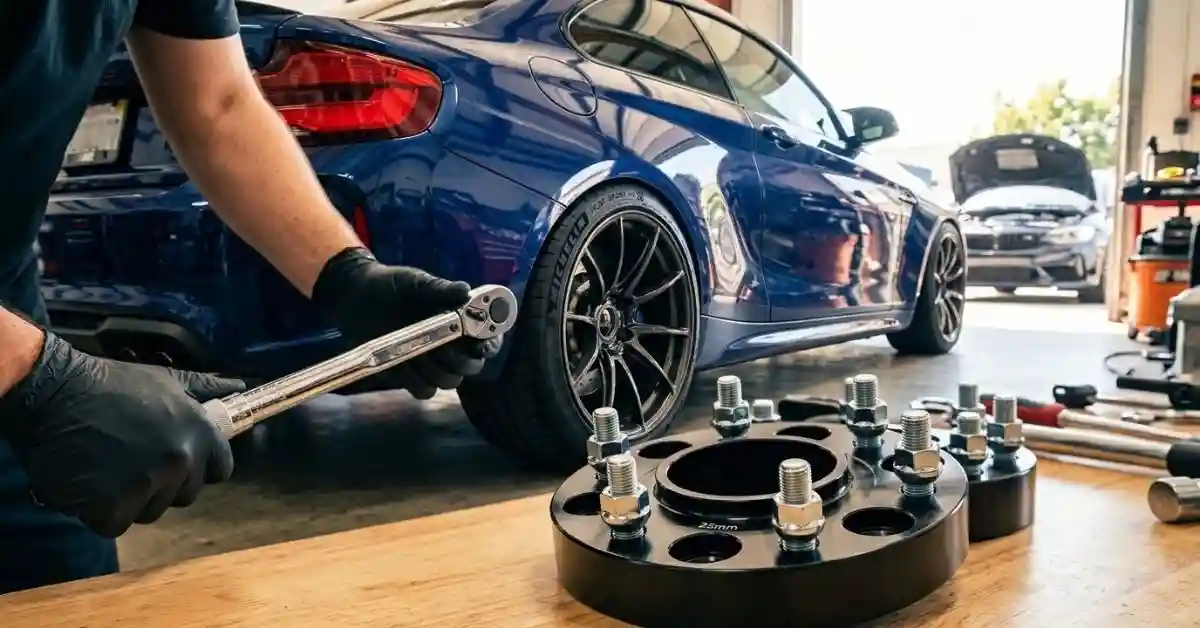
I used to think wheel spacers were pretty simple. Just a metal ring that pushes the wheel out a little, right? After looking closer at fitment, hub design, hardware, and installation, I learned that the small details matter a lot.
So, what are high quality wheel spacers? They are precisely made spacers that fit the vehicle hub and wheel correctly, use suitable materials and hardware, and maintain proper wheel centering. In this guide, I’ll explain what to look for, what to avoid, and where cheap spacers can cause trouble.
What Are High Quality Wheel Spacers?
High quality wheel spacers are precision-made parts that sit between the vehicle hub and wheel. Their job is to move the wheel farther outward from the hub.
A good spacer should do more than simply add thickness. It needs the correct bolt pattern, center bore, thickness, hub fit, wheel fit, and fasteners for the vehicle.
That last part is easy to overlook. A spacer that is 5 mm thick is not automatically safe just because it physically fits over the studs.
| Spacer feature | Why it matters |
| Correct bolt pattern | Keeps the spacer matched to the vehicle |
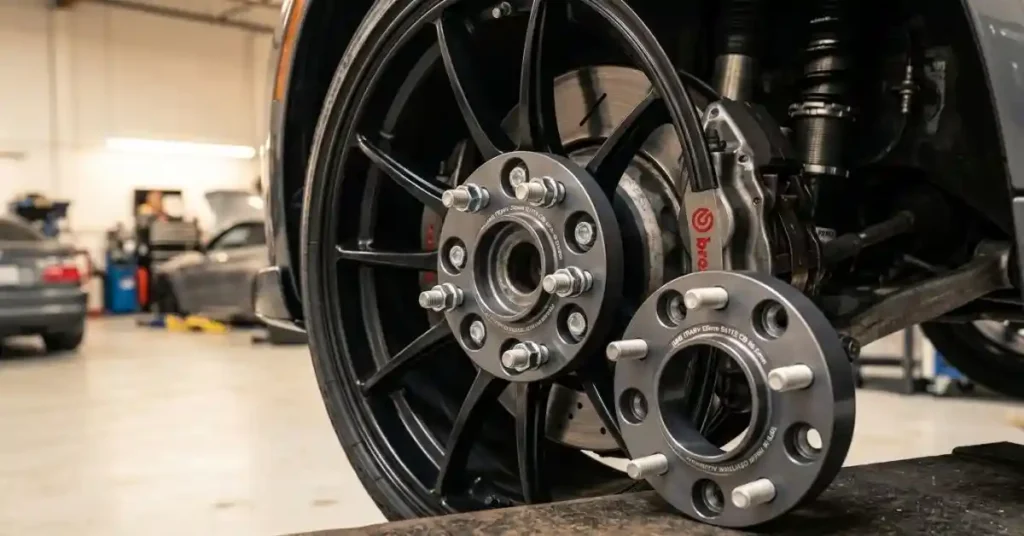
| Hub-centric design | Helps center the spacer and wheel |
| Proper hardware | Maintains secure wheel attachment |
| Accurate machining | Helps prevent fit and balance problems |
For example, Eibach describes its PRO-SPACER products as hub-centric and made from high-strength aluminum alloy. Its kits are also designed around specific vehicle measurements rather than being one-size-fits-all parts.
That is the basic difference I would look for: precision fit instead of simply looking for the cheapest ring with the right thickness.
Why Does Hub-Centric Design Matter So Much?
This is one of the biggest lessons I took from researching wheel spacers.
A hub-centric spacer is designed to fit closely over the vehicle’s hub. It also provides a matching center lip for the wheel, where applicable. This helps keep the wheel assembly centered.
Tire Rack notes that modern vehicles commonly use hub-centric wheel designs, and that spacers thicker than the hub height need to remain wheel- and hub-centric to help distribute forces properly.
Hub-Centric vs Lug-Centric Spacers
The names sound complicated, but the idea is simple.
| Type | Basic idea | What I would check |
| Hub-centric | Fits closely on the vehicle hub | Hub diameter and wheel center bore |
| Lug-centric | Relies more on lug hardware for centering | Correct hardware and careful installation |
| Universal spacer | Designed for many applications | Exact fit before buying |
I would not assume that a universal spacer is automatically bad. The bigger issue is whether it provides the correct fit for the actual vehicle and wheel.
If you are dealing with a hub-centric setup, a properly matched hub-centric spacer makes much more sense than trying to make a loose-fitting part work.
What Materials Make a Wheel Spacer High Quality?
Material matters because the spacer carries the wheel farther away from the original hub mounting surface.
High-quality spacers are commonly made from strong aluminum alloys. Some products use forged or precisely machined aluminum construction.
The important point is not simply the word “aluminum” on the product page. Manufacturing quality, dimensions, surface finish, and strength all matter.
| Material or build | What to consider |
| High-strength aluminum alloy | Light and strong when properly engineered |
| Forged aluminum | Can offer strong, precise construction |
| Poorly made cast part | Quality can vary greatly |
| Steel | Strong but usually heavier |
Eibach, for example, specifies high-strength aircraft-aluminum alloy for its PRO-SPACER products.
I would also pay attention to machining. The hub bore and wheel center lip should look clean and precise. Rough edges, damaged threads, poor surfaces, or obvious casting flaws would make me stop before installation.
Does Thicker Mean Better?
No.
A thicker spacer is not automatically a better spacer. In fact, increasing spacer thickness changes the wheel’s effective offset.
For example, adding a 20 mm spacer moves the wheel roughly 20 mm farther outward. That can change tire clearance, steering feel, suspension loading, and fender clearance.
The right thickness depends on the vehicle, wheel, tire, suspension, and desired clearance.
How Do I Know If a Wheel Spacer Fits Correctly?
This is where I would slow down and measure everything.
You need more than wheel diameter. Tire Rack points out that proper wheel fitment involves measurements such as bolt pattern, center bore, offset, width, and load capacity.
For a spacer, check:
- Vehicle bolt pattern
- Hub diameter
- Wheel center bore
- Spacer thickness
- Stud or bolt thread size
- Wheel and tire clearance
- Available thread engagement
- Brake and suspension clearance
| Measurement | Example question |
| Bolt pattern | Is it 5×114.3, 5×120, 6×139.7, etc.? |
| Center bore | Does the spacer fit the hub closely? |
| Thickness | How far will the wheel move outward? |
I learned that this is one area where guessing can get expensive. A spacer can look perfect in a photo and still be wrong for the car.
Eibach’s installation instructions specifically say to check the spacer’s center and bolt pattern against the vehicle and wheel. The spacer should sit flush and without play.
What Makes Spacer Hardware High Quality?
The hardware is just as important as the spacer itself.
This is one of those things people can overlook because the spacer gets all the attention. But the wheel still needs the correct way to attach securely.
Some bolt-on spacers use their own nuts or bolts to attach the spacer to the hub. The wheel then attaches to the spacer using the appropriate hardware.
Other slip-on designs work differently and may require longer wheel studs or bolts.
| Hardware concern | Why it matters |
| Correct thread pitch | Prevents improper engagement |
| Enough thread engagement | Helps secure the wheel |
| Correct seat type | Matches the wheel hardware |
| Proper torque | Provides the required clamping force |
Tire Rack stresses that wheel hardware must have sufficient thread engagement and that the correct torque specification should be used.
H&R also provides minimum thread-reach guidance for several common bolt sizes on its spacer systems. That shows why “the lug nut seems to fit” is not enough.
What Are the Most Common Wheel Spacer Mistakes?
I think this is the most useful part for anyone shopping for spacers.
Many problems do not start with the spacer itself. They start with a rushed measurement or installation.
Mistake 1: Buying by Thickness Alone
A person may search for a 10 mm or 20 mm spacer and stop there.
That’s risky.
The thickness is only one part of the fit. Bolt pattern, hub diameter, wheel bore, hardware, and clearance all matter too.
Mistake 2: Ignoring the Center Bore
A spacer can have the correct bolt pattern and still have the wrong center bore.
That’s a frustrating mistake because everything can look almost right.
Mistake 3: Reusing the Wrong Hardware
This is another big one.
The original hardware may not provide enough engagement after a spacer is installed. With bolt-on designs, the included hardware may have specific requirements too.
| Common mistake | Better approach |
| Buy by thickness | Match the complete fitment |
| Ignore center bore | Measure hub and wheel bore |
| Reuse any lug hardware | Verify thread, seat, and engagement |
| Tighten by feel | Use the specified torque |
Mistake 4: Using an Impact Gun as the Final Step
An impact gun is fast. That does not make it the right tool for final torque.
H&R specifically recommends a torque wrench for spacer installation rather than an impact screwdriver.
Tire Rack also recommends tightening wheel hardware with an accurate torque wrench using the correct pattern.
Can Cheap Wheel Spacers Cause Problems?
They can, especially when poor manufacturing or incorrect fitment is involved.
I would not judge a spacer by price alone. A cheap product can sometimes fit correctly, while an expensive-looking product can still be wrong for a particular vehicle.
The warning signs are more useful than the price tag.
Look for:
- Poorly machined hub bores
- Damaged threads
- Visible cracks or defects
- Incorrect dimensions
- Missing hardware
- Vague fitment information
- No clear installation instructions
- Hardware that does not match the application
| Warning sign | Why I would be concerned |
| Spacer has noticeable play | Fit may be incorrect |
| Hardware does not match | Thread or seating problem |
| Wheel cannot sit flush | Unsafe mounting condition |
| No fitment data | Hard to verify compatibility |
A properly made spacer should sit flat against a clean hub surface. Eibach’s instructions specifically call for checking that the spacer sits without play and that the mating surfaces are clean.
Do High Quality Wheel Spacers Need Special Installation?
Yes. This is not a part I would install casually.
Before fitting the spacer, the hub surface should be clean and free of rust, dirt, and debris. The spacer needs to sit flat against the hub.
Then the wheel needs to sit correctly against the spacer.
I would also rotate the wheel by hand after installation. You want to make sure nothing contacts the brake components, suspension, or other nearby parts.
| Installation check | What to look for |
| Hub surface | Clean and flat |
| Spacer seating | Flush with no play |
| Wheel seating | Full contact |
| Rotation | No rubbing or interference |
Eibach specifically instructs installers to clean the hub, check the bolt pattern and center fit, and confirm that the spacer and wheel seat correctly.
H&R likewise says to check for unobstructed wheel movement after installation.
Should Wheel Spacers Be Re-Torqued?
Yes, follow the spacer and vehicle manufacturer’s instructions.
This is one step I would not skip just because the wheels felt tight after installation.
H&R’s instructions call for checking and re-tightening the wheel nuts after about 100 km, using the applicable torque specification. Tire Rack similarly recommends re-torquing wheel hardware after the first 50–100 miles following wheel installation.
The exact procedure and torque should come from the vehicle, wheel, spacer, and hardware requirements.
And remember: torque is not something to guess.
Tire Rack notes that the vehicle owner’s manual or service information is the place to find the proper wheel torque specification.

How Do High Quality Wheel Spacers Affect Wheel Fitment?
A spacer effectively reduces wheel offset.
For example, if a wheel has a +45 mm offset and you add a 15 mm spacer, the effective offset becomes roughly +30 mm.
That means the wheel moves outward.
This can help solve clearance problems between the wheel and suspension. It can also give a wider stance. But moving the wheel outward can create new clearance issues on the fender side.
| Spacer change | Possible result |
| Small spacer | Slightly more outward wheel position |
| Larger spacer | More outward movement and clearance changes |
| Excessive spacing | Greater risk of rubbing or fitment issues |
This is why I would never choose spacer thickness based only on appearance.
Check the full suspension range. Turn the steering from lock to lock. Consider tire width. Check compression clearance too.
A wheel that looks fine while parked can rub when the suspension moves.
Are Wheel Spacers Good for Every Vehicle?
No.
They can be useful for certain wheel-fitment problems, but they are not automatically necessary.
For example, someone may need a little more clearance between a wheel and suspension component. Another person may want a different wheel position for appearance.
But adding a spacer also changes the wheel’s position and can affect clearance and load paths.
| Situation | Spacer may make sense? |
| Need modest wheel clearance | Potentially |
| Want to correct a specific fitment issue | Potentially |
| Buying only because they are cheap | I would reconsider |
| Unknown fitment measurements | No |
Tire Rack notes that correct wheel fitment involves several measurements rather than just wheel diameter or bolt pattern.
That’s the mindset I would use here: solve a known fitment problem instead of creating a new modification without checking the details.
What Should I Look for When Buying High Quality Wheel Spacers?
When I compare spacer options, I would start with fitment rather than brand or appearance.
The product should clearly state the application details.
Ideally, you want a spacer made for your exact vehicle and wheel setup, with clear specifications and suitable hardware.
My Wheel Spacer Checklist
| Check first | What I want to see |
| Hub fit | Precise, preferably hub-centric fit where appropriate |
| Material | Clearly specified strong material |
| Hardware | Correct and application-specific |
| Dimensions | Exact thickness and bore measurements |
| Instructions | Clear installation and torque guidance |
| Quality control | Clean machining and consistent finish |
I would also check whether the spacer manufacturer provides vehicle-specific fitment information.
Eibach, for example, lists exact bolt pattern, center bore, thread size, thickness, and application information for its products.
That level of information gives you something concrete to verify.
High Quality Wheel Spacers: Myths vs Reality
There are plenty of strong opinions about spacers. Some are useful. Some are oversimplified.
| Myth | Reality |
| All spacers are unsafe | Quality and correct fitment matter |
| Thicker is always better | Thickness changes offset and clearance |
| Any aluminum spacer is good | Machining and design also matter |
| Correct bolt pattern is enough | Hub and wheel fit matter too |
| Tight lugs mean proper installation | Correct torque and engagement matter |
One thing I would especially avoid is treating every spacer as identical.
A properly engineered, vehicle-specific spacer with suitable hardware is a very different proposition from a poorly made universal part that happens to have the same bolt pattern.
What Are High Quality Wheel Spacers Worth Paying For?
The biggest value is not the shiny finish or the number printed on the box.
It is precision.
A high-quality spacer should make it easy to answer basic questions:
- Does it fit my hub?
- Does it match my wheel?
- Is the bolt pattern correct?
- Is the thickness appropriate?
- Is the hardware correct?
- Is there enough thread engagement?
- Does everything clear the brakes and suspension?
- Can I install and torque it according to clear instructions?
If those answers are unclear, I would not install the spacer yet.
The few extra minutes spent measuring can save a lot of frustration later.
Final Thoughts on What Are High Quality Wheel Spacers?
For me, the biggest lesson is simple: high quality wheel spacers are about engineering and fit, not just thickness or price. A good spacer should match the hub, wheel, bolt pattern, hardware, and available clearance.
I would take my time with measurements, use the correct hardware, clean the mating surfaces, torque everything properly, and follow the spacer maker’s instructions. Wheel fitment is one area where “close enough” is not a habit I would want.
If a spacer is precisely made, correctly matched to the vehicle, and installed the right way, you can at least start from a sound setup. If the fitment is questionable, I would leave it alone and verify the measurements before driving.
Frequently Asked Questions
What makes high quality wheel spacers?
High quality wheel spacers use strong material, precise machining, and the right hub and bolt fit. Good hardware and clear fit data also matter.
Are hub-centric wheel spacers better?
Hub-centric wheel spacers fit the hub closely and help center the wheel. They can reduce fit issues when the spacer matches the car and wheel.
How do I choose the right wheel spacers?
Check the bolt pattern, hub size, wheel bore, spacer thickness, and hardware. Also check brake, tire, and suspension clearance before fitting them.
Are cheap wheel spacers safe?
Price alone does not show spacer quality. Check the material, fit, machining, hardware, and load data before you buy or install wheel spacers.
Do wheel spacers need special installation?
Yes. Clean the hub, seat the spacer flat, use the right hardware, and torque it to spec. Check the wheel again after driving the first 50–100 miles.
To Get More About Home, Car Accessories Product You Can Visit Our Site. If You Found our Posts Helpful Leave a Comment Below