
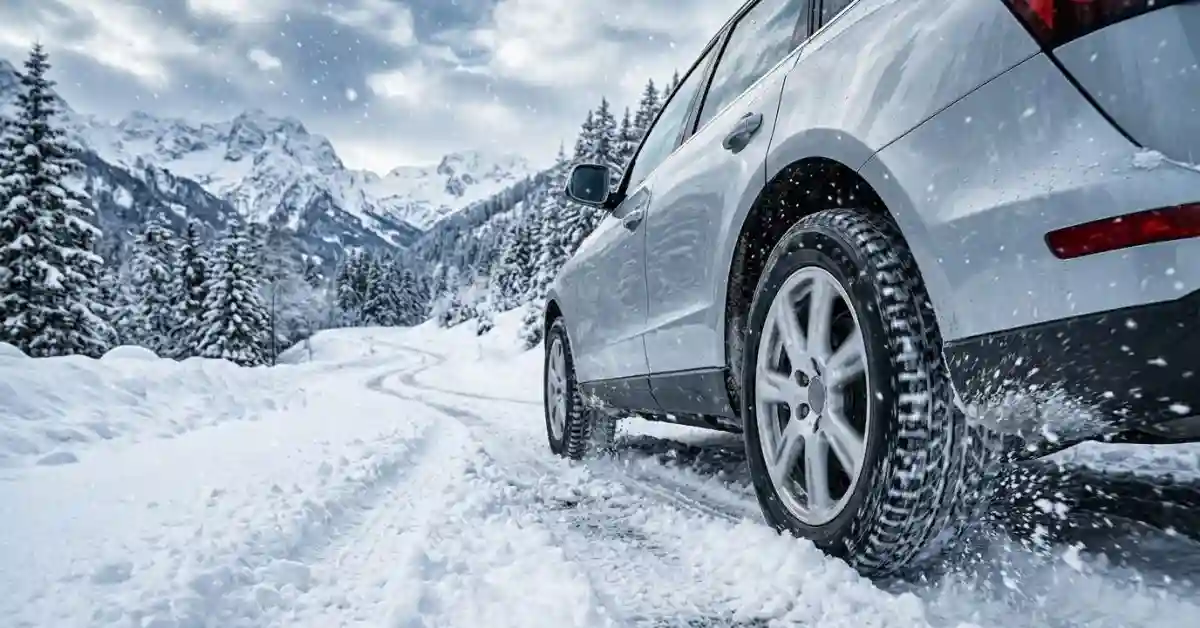
I used to think “all season” meant a tire could handle pretty much anything the weather threw at it. Snow changed that idea pretty quickly. The answer to Are All Season Tires Good in the Snow? is yes, but only up to a point.
A good all-season tire can handle light snow and cold, wet roads. But deep snow, ice, and frequent winter driving are different. After looking closely at tire testing, tread designs, and winter ratings, I found a few details that matter far more than the words “all season” on the sidewall.
Are All Season Tires Good in the Snow?
Yes, all-season tires can be good in light snow, but they are not the same as winter tires.
Modern all-season tires are built to work in dry, wet, and mildly cold weather. Many can handle a light snowfall without trouble. The real issue comes when snow gets deep or roads become icy.
Tire Rack notes that all-season tires can provide reasonable traction in light to moderate snow, but dedicated winter tires still perform better in regular winter conditions.
Here is the simple way I look at it:
| Winter condition | All-season tire |
| Cold rain | Usually very good |
| Light snow | Usually good |
| Moderate snow | Depends on the tire |
| Deep snow | Limited |
| Ice | Not ideal |
So, if you wake up to a thin layer of snow once or twice each winter, a good all-season tire may be enough.
If snow is a normal part of your daily drive, I would look beyond a basic all-season tire.
Why all-season tires can handle some snow
The tread has grooves and small cuts called sipes. These help the tire find grip on wet and lightly snow-covered roads.
The rubber compound also matters. A good all-season compound is made to work across a wide range of temperatures.
But there is a trade-off.
An all-season tire has to work during warm weather too. A dedicated winter tire can focus much more heavily on cold-weather grip.
Not All All-Season Tires Are Equal in Snow
This was one of the biggest things I learned while researching the topic.
“All-season” is a broad category. Two tires can both carry that name and have very different snow performance.
Some focus more on quiet highway driving. Others focus on handling. Some are designed with much stronger winter traction.
That means simply asking whether all season tires are good in the snow does not tell the whole story.
| All-season type | Snow focus | Typical use |
| Performance all-season | Lower | Dry and wet roads |
| Touring all-season | Moderate | Daily driving |
| 3PMSF all-season/all-weather | Higher | Frequent mild winter weather |
Tire Rack’s current guidance also points out that some all-season tires carry the Three-Peak Mountain Snowflake rating and offer much stronger winter traction than ordinary all-season tires.
That small symbol on the sidewall is worth checking.
What the 3PMSF symbol means
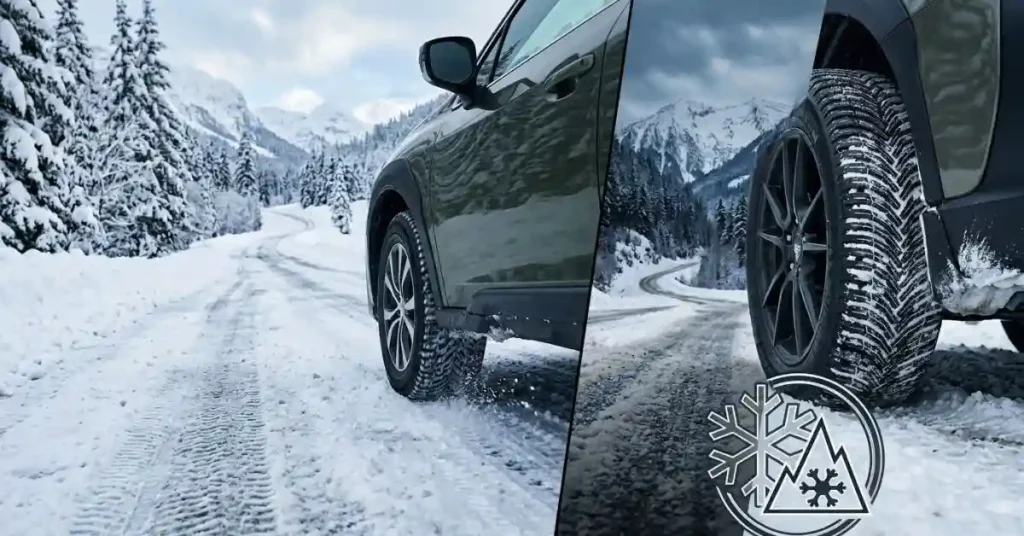
The Three-Peak Mountain Snowflake symbol, often called 3PMSF, looks like a snowflake inside a mountain.
It means the tire has met an industry-defined severe-snow traction requirement. It does not mean the tire is a dedicated winter tire.
This distinction is easy to miss.
A 3PMSF tire can be an all-weather tire that stays on your car all year. It can offer much better snow traction than a basic all-season tire.
But it still may not match a true winter tire on snow and ice.
| Sidewall marking | What it tells you |
| M+S | Tread meets a mud-and-snow design definition |
| 3PMSF | Tire meets a defined severe-snow traction standard |
| Winter tire | Designed specifically for cold, snow, and ice |
The M+S marking alone should not be treated as proof of strong winter performance. Tire Rack explains that M+S is mainly based on tread geometry, while 3PMSF represents a measured snow-traction threshold.
When All Season Tires Work Well in Snow
There are situations where I would feel much more comfortable with a quality all-season tire.
Think about a place where winter means a few snowy days, some cold rain, and mostly clear roads.
You may get two inches of snow overnight. A snowplow clears the main roads. The temperature rises later in the day. You mainly drive around town.
That is very different from driving through snow every morning for months.
| Driving situation | What makes sense |
| Occasional light snow | Quality all-season |
| Mild winter with mixed weather | Quality all-season or all-weather |
| Frequent snow | All-weather or winter tire |
| Frequent ice and deep snow | Dedicated winter tire |
Consumer Reports says all-season tires can handle modest snow and ice, while dedicated winter tires provide a clear advantage when winter conditions are frequent.
That distinction is important because “can handle snow” and “is the right tire for winter” are not the same thing.
Light snow is very different from packed snow
This is another detail that gets overlooked.
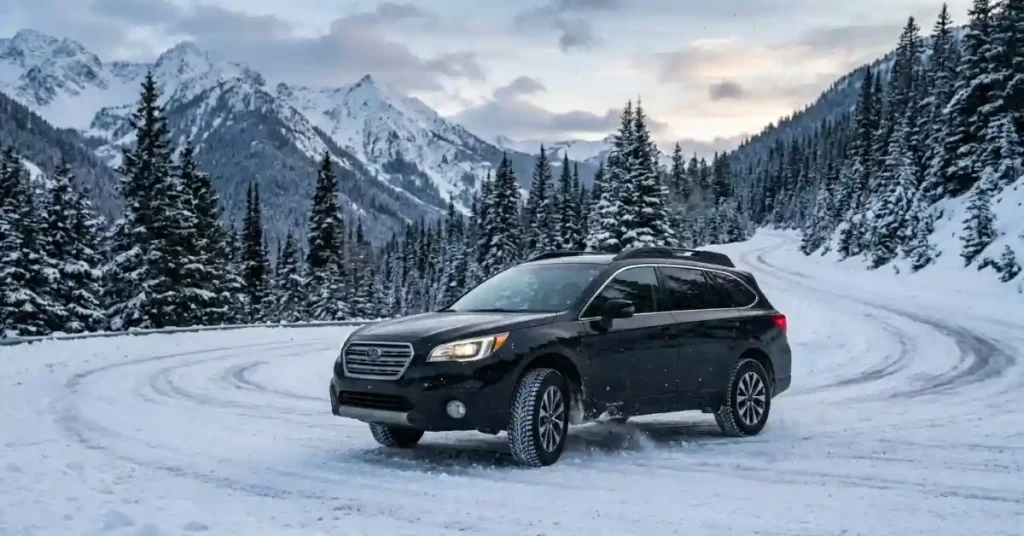
Fresh, shallow snow can be manageable. Packed snow is harder. Slush creates another challenge. Ice is harder still.
As the road becomes slippery, the tire needs more than simple tread depth. Rubber flexibility, tread design, siping, and the ability to maintain contact with the road all matter.
When All Season Tires Start to Struggle
The problems usually become obvious when snow gets deeper or temperatures stay very low.
A basic all-season tire may still move the car forward. That does not mean it can stop or turn as well as a winter tire.
That difference matters.
| Problem | Why it matters |
| Deep snow | Tread can struggle to clear snow |
| Packed snow | Less available grip |
| Ice | All-season tread is not optimized for it |
| Very cold weather | Winter compounds have an advantage |
Consumer Reports’ testing explains that dedicated winter tires use compounds that remain pliable in cold temperatures and tread features that create more biting edges on snow and ice.
This is why I would not judge a tire only by whether the car can climb a snowy driveway.
Stopping and cornering are just as important.
Your car can move but still lack grip
This is one of the easiest mistakes to make.
You pull away from a snowy parking lot without a problem and think, “These tires are great.”
Then you reach the first icy intersection.
The tires may suddenly feel very different.
That is why winter tire testing looks at more than simply getting moving. Snow braking, ice braking, cornering, and control all matter.
AWD Does Not Make All Season Tires Winter Tires
All-wheel drive can help a vehicle put power down on slippery roads.
It does not magically increase tire grip.
This is one of those things that sounds obvious but is easy to forget when driving an AWD SUV.
Your engine can send power to four wheels, but all four tires still have to grip the road when you brake or turn.
| Feature | Helps with | Does not replace |
| AWD | Getting moving | Winter tire grip |
| Traction control | Managing wheel slip | Better tire compound |
| ABS | Controlled braking | More road traction |
Consumer Reports notes that winter tires can be used on front-, rear-, or all-wheel-drive vehicles and recommends using four matching winter tires for balanced handling and grip.
So I would never use AWD as the main reason to ignore tire choice.
Tread Depth Matters More Than People Think
Even a good all-season tire loses winter ability as it wears.
This is easy to overlook because the tire may still look fine.
You might have plenty of tread for summer rain but much less confidence in snow.
Worn tread has less ability to create useful edges and move snow away from the contact area.
| Tire condition | Winter concern |
| New tread | Best chance of good snow grip |
| Moderate wear | Performance depends on design |
| Low tread | Snow traction can drop sharply |
This is also why two cars with the same tire model can behave very differently in winter.
One may have fresh tires. The other may have several seasons of wear.
Do not wait for the first big storm
This is a mistake I would avoid.
If your area gets regular snow, check the tires before winter arrives. Look at tread depth, tire age, pressure, and the sidewall markings.
Do not wait until a storm is coming to discover that your tires are worn.
All Season vs. All Weather vs. Winter Tires
The terminology can get confusing.
An all-weather tire is designed to stay on the vehicle all year but puts more emphasis on winter performance. Many carry the 3PMSF symbol.
A dedicated winter tire is designed specifically for cold-weather use.
| Tire type | Snow ability | Year-round use |
| All-season | Light to moderate | Yes |
| All-weather | Moderate to strong | Yes |
| Winter | Strongest winter focus | Seasonal |
Consumer Reports describes all-weather tires as a middle option that can come close to dedicated winter tires in winter traction, while Tire Rack also describes them as a useful middle ground between conventional all-season and winter tires.
That makes all-weather tires interesting for drivers who see real snow but do not want two sets of tires.
When an all-weather tire may make more sense
If your winter is too serious for a normal all-season tire but not severe enough to justify dedicated winter tires, an all-weather tire can be worth considering.
The 3PMSF marking gives you a useful starting point.
Still, I would check independent test results for the exact tire rather than assuming every 3PMSF tire performs the same.
Common Mistakes With All Season Tires in Snow
A few assumptions cause most of the trouble.
The first is believing that “all season” means “all weather.”
It does not.
The second is assuming a newer vehicle automatically handles snow well.
It helps to have modern traction systems, but tires still provide the actual contact with the road.
| Mistake | Better approach |
| Trusting “all season” alone | Check the tire’s winter rating |
| Ignoring tread wear | Inspect tread before winter |
| Relying only on AWD | Remember braking still needs grip |
| Driving normally on snow | Slow down and leave more space |
| Buying based only on price | Check winter test results |
Another mistake is driving as though a wet road and a snowy road require the same stopping distance.
They do not.
Even a good tire cannot defeat basic physics.
How to Get Better Snow Performance From All Season Tires
If you already have all-season tires and winter is approaching, there are a few simple things worth doing.
Start with tire pressure.
Cold weather lowers tire pressure, so check it when the tires are cold and follow the vehicle maker’s recommended pressure.
Then inspect the tread.
Look for uneven wear, cuts, cracks, and low tread. Uneven wear can also point to alignment or suspension problems.
Finally, change your driving habits.
| Habit | Why it helps |
| Slow down early | Gives you more control |
| Leave extra space | Allows longer stopping |
| Brake smoothly | Reduces sudden loss of grip |
| Avoid sharp inputs | Helps maintain stability |
I also would not make sudden steering or braking moves on snow just because the vehicle has electronic safety systems.
Those systems help, but they cannot create traction that the tire does not have.
So, Are All Season Tires Good in the Snow?
Are All Season Tires Good in the Snow? They can be, especially for light and occasional snow. But “good” depends heavily on the tire model, tread condition, snow depth, temperature, and how often you drive in winter weather.
For occasional snow, a quality all-season tire may be perfectly reasonable.
For regular snow, an all-weather tire with a 3PMSF rating gives you more winter capability while still working year-round.
For frequent deep snow, ice, or severe cold, dedicated winter tires offer the strongest winter-focused performance. Consumer Reports and Tire Rack both report a clear winter-performance advantage for dedicated winter tires.
A simple way to choose
Think about your actual winter, not the name printed on the tire.
If snow is an occasional inconvenience, you probably do not need the most aggressive winter setup.
If you regularly drive before roads are cleared, the equation changes.
If getting to work means driving through snow and ice several times each week, I would put much more weight on winter traction than on quietness or long tread life.
Final Thoughts
The biggest lesson for me is that all season tires are not automatically winter tires. They are designed to cover many conditions reasonably well, and some do surprisingly well in light snow.
But once winter becomes a major part of your driving, tire choice matters much more. Check the 3PMSF symbol, look at tread condition, and think honestly about how much snow and ice you face.
A little preparation can make winter driving much less stressful. And sometimes the smartest tire choice is simply the one that matches the weather you actually drive in, not the weather you hope to avoid.
FAQs About All Season Tires in Snow
Are all season tires good in the snow?
Yes, all season tires can handle light snow well. They may struggle in deep snow or ice. For frequent snow, winter or all-weather tires may give you more grip.
Are all season tires safe on icy roads?
All season tires can work on light ice, but they have less grip than winter tires. Slow down, leave more space, and avoid hard braking or sharp turns.
Do all season tires work in heavy snow?
All season tires can handle some snow, but heavy snow can be hard for them. A 3PMSF all-weather tire or winter tire is better for regular heavy snow.
Is AWD better than all season tires in snow?
AWD can help a car move on snow, but it does not replace good tires. All four tires still need grip to stop and turn. Winter tires can add more traction.
Are 3PMSF all season tires good for winter?
3PMSF all season tires offer better snow grip than basic all season tires. They can suit mild winters well. For severe snow and ice, winter tires still have an edge.
To Get More About Home, Car Accessories Product You Can Visit Our Site. If You Found our Posts Helpful Leave a Comment Below