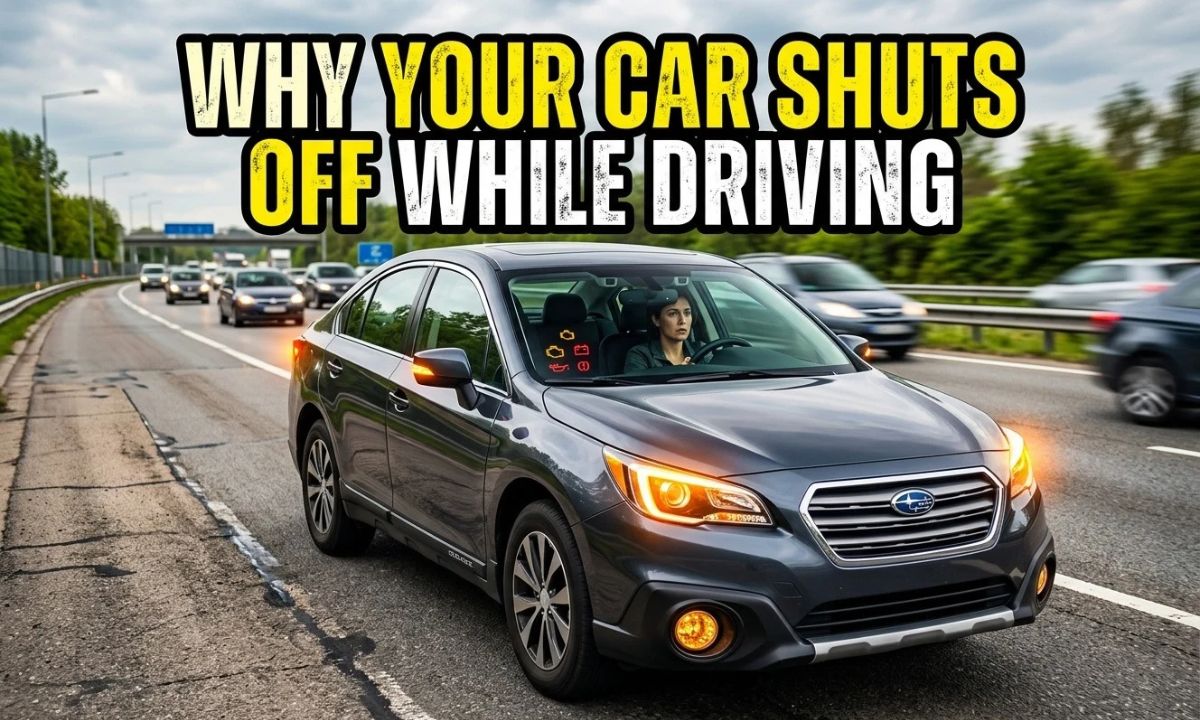
Your car may shut off while driving because of fuel delivery problems, a failing alternator, sensor faults, overheating, or ignition system failure.
For drivers across the United States, a car that suddenly stops running on an interstate, city street, or rural highway can create a serious safety hazard. The engine may lose power without warning, the dashboard lights may come on, and steering or braking may become harder. If this happens, focus on getting out of traffic safely before trying to identify the cause.
A vehicle that stalls while moving may have a problem with its fuel pump, battery connections, charging system, ignition components, engine sensors, or mechanical condition. The symptoms before the shutdown often provide useful clues, but no single symptom confirms a specific failed part. Understanding what happened just before the engine stopped can help you explain the problem to a mechanic and avoid unnecessary repairs.
Your first priority is to move away from moving traffic without making sudden maneuvers. A stalled engine can reduce or eliminate power assistance for the steering and brakes, although the steering and braking systems generally retain some mechanical capability. The amount of effort required depends on the vehicle.
If you are on a U.S. highway, use your hazard lights and move toward the shoulder, an exit, or another safe area when possible. Do not stop in a live travel lane to troubleshoot the engine. If the vehicle cannot be moved safely, call emergency services when there is immediate danger and follow their instructions.
Turn on your hazard lights
Alert nearby drivers that your vehicle has lost power. If the engine is still running intermittently, avoid sudden acceleration or abrupt steering.
Steer toward a safe location
Use the remaining vehicle momentum to reach a shoulder or other safe stopping area if conditions allow. Steering may require more effort when power assistance is lost.
Brake firmly and steadily
Do not pump the brake pedal unless your vehicle’s instructions or the braking situation call for it. If the engine stops, power brake assistance may be reduced after the reserve is used, so the pedal can become harder to press.
Secure the vehicle
Once stopped, apply the parking brake when appropriate and select Park for an automatic transmission or follow the vehicle’s instructions for a manual transmission. Stay aware of surrounding traffic.
Call for help when necessary
Arrange roadside assistance or a tow if the car will not restart, has severe warning signs, or cannot be driven safely. If you are stopped in a dangerous location, prioritize your safety over inspecting the vehicle.
Can You Restart the Car Immediately?
You may attempt a restart after reaching a safe location if there is no smoke, fire, fuel leak, severe overheating, or other sign of a potentially dangerous mechanical problem. Follow the owner’s manual and avoid repeated cranking.
If the engine starts again, that does not mean the problem is fixed. An intermittent fault can return without warning, so arrange an inspection before relying on the vehicle for another trip. Do not attempt to restart an engine that has overheated severely or appears to have seized.
A single restart attempt fails
Stop repeated attempts and arrange diagnostic assistance. Continued cranking can drain the battery and may worsen some faults.
The engine starts but stalls again
Do not continue driving in traffic. Repeated stalling can leave you without reliable engine power or power assistance.
Smoke, fire, or a strong fuel smell is present
Do not restart the engine. Move away from the vehicle when safe and contact emergency services if there is a fire or immediate danger.
The Most Common Reasons a Car Shuts Off While Driving
A moving vehicle needs a reliable supply of fuel, air, electrical power, and correctly timed ignition or combustion. If one of these systems fails, the engine may lose power, run roughly, or stop completely. Some failures develop gradually, while others occur suddenly.
The following causes are common diagnostic possibilities, not a ranking of failure rates. The right explanation depends on the vehicle’s design, maintenance history, warning signs, diagnostic trouble codes, and inspection results.
Fuel pump or fuel delivery failure
A weak or failed fuel pump, restricted fuel filter where serviceable, faulty pump relay, or fuel supply problem can prevent the engine from receiving enough fuel. The vehicle may hesitate, lose power under acceleration, or stall.
Alternator or charging system failure
The alternator normally supplies electrical power while the engine runs and replenishes the battery. If charging fails, voltage can fall until electronic engine controls or other systems stop functioning.
Ignition system problems
Failing ignition coils, damaged wiring, or other ignition faults can interrupt combustion. Depending on the fault, the engine may misfire, shake, lose power, or stop.
Crankshaft or camshaft position sensor failure
These sensors help the engine computer determine engine position and timing. An intermittent or failed signal can prevent correct ignition or fuel injection and may cause sudden stalling.
Loose battery terminals or electrical connections
A loose or corroded connection, damaged ground cable, failing relay, or wiring fault can interrupt power or sensor signals. The symptoms may be intermittent and difficult to reproduce.
Engine overheating
Severe overheating can cause engine performance problems and, in extreme cases, major mechanical damage. The engine may stop running, but an overheating-related shutdown should not be assumed without diagnosis.
Air intake or throttle control problems
A faulty electronic throttle body, intake leak, or airflow measurement problem can disrupt the air-fuel mixture or idle control. Stalling may occur during deceleration, at low speeds, or when the engine returns to idle.
Fuel contamination or incorrect fuel
Contaminated fuel, water in the fuel, or an unsuitable fuel can interfere with combustion. The timing and severity depend on the contamination and vehicle type.
Mechanical engine failure
Problems such as loss of oil pressure, a failed timing component, severe internal damage, or a seized engine can stop the vehicle. These possibilities require professional evaluation, especially if there are unusual knocking noises or serious warning lights.
Why an Engine Can Stop Even When the Gas Tank Is Not Empty
A full or partly full gas tank does not guarantee that fuel reaches the engine at the correct pressure. The pump, electrical supply to the pump, fuel pressure regulator where fitted, injectors, and related controls all play a role. A vehicle can therefore stall because of a fuel delivery fault even when the fuel gauge shows plenty of gas.
Fuel gauges can also be inaccurate. If the problem occurs on hills, during sharp turns, or when the tank is nearly empty, the fuel level and fuel pickup system may deserve attention. Those clues are useful, but they do not prove the fuel pump is defective.
Fuel gauge reads empty or nearly empty
The vehicle may have run out of fuel, or the gauge may be inaccurate. Refuel only when it is safe to do so and follow the vehicle’s instructions.
Power fades under acceleration
Insufficient fuel delivery is one possibility, but ignition faults, restricted airflow, and other engine problems can produce similar symptoms.
How to Match the Symptoms to a Possible Cause
The events immediately before the engine stops can help narrow the possibilities. Record whether the engine sputtered, lost electrical power, overheated, or stopped instantly. Also note whether the vehicle restarted and how long it took.
Use this table as an initial troubleshooting guide, not as a substitute for testing. Different failures can create the same symptoms, and a mechanic may need to scan the vehicle and test electrical circuits, fuel pressure, or engine signals.
Source: darlingspuds.co.uk
Engine sputters before stopping
Possible causes include fuel delivery problems, ignition misfires, contaminated fuel, or an airflow issue.
Engine stops suddenly without sputtering
Possible causes include an intermittent electrical connection, a crankshaft position sensor fault, ignition power loss, or another abrupt control-system failure.
Dashboard lights flicker or the instrument panel goes dark
Check for a charging system problem, loose battery connection, damaged wiring, or another electrical supply fault. Do not assume the alternator is responsible without testing.
Temperature warning appears or steam is visible
Treat this as a possible overheating emergency. Stop safely, shut the engine off, and do not open a hot cooling system.
Engine dies when slowing down or stopping
Possible causes include idle control or throttle problems, an intake leak, a sensor fault, or a transmission-related issue on some vehicles.
Engine restarts after sitting for a while
An intermittent sensor, fuel pump, relay, wiring, or heat-related electrical fault is possible. A successful restart does not establish which part failed.
What If the Dashboard Lights Come On After the Engine Stops?
Dashboard warning lights that illuminate after a stall do not automatically mean several components failed at once. When the engine stops but the ignition remains on, the oil pressure warning and battery or charging warning may illuminate because the engine is no longer running normally.
The sequence matters. A battery warning that appeared while the engine was still running may point toward a charging problem. An oil pressure warning that appeared before unusual engine noise or a shutdown needs urgent attention. Record which warnings appeared before the stall and which appeared afterward.
Check the sequence of warnings
Note whether the warning lights appeared before the engine lost power or only after it stopped.
Do not ignore an oil pressure warning
If the warning occurred while the engine was running, shut the engine off when safe and arrange professional diagnosis. Low oil pressure can cause serious engine damage.
Troubleshooting Steps Before Calling a Mechanic
Once the vehicle is safely parked, a few observations can help a mechanic diagnose the fault. You do not need to remove parts or perform electrical tests beside the road. Start with information you can gather without putting yourself at risk.
Never inspect the engine while standing in a live traffic lane. Avoid touching moving parts, hot components, exposed electrical wiring, or suspected fuel leaks. If the vehicle is in an unsafe location, skip the checks and request assistance.
Step 1: Record the conditions
Write down the speed, engine temperature, fuel level, road conditions, and whether you were accelerating, braking, turning, or idling when the engine stopped.
Step 2: Look for visible warning signs
From a safe position, note dashboard messages, smoke, fluid leaks, unusual smells, or obvious damage. Do not reach into the engine bay if it is hot or unsafe.
Step 3: Check whether electrical power remains
Observe whether the dashboard and headlights work normally. Dim or absent electrical power can indicate a battery, connection, charging, or wider electrical problem, but it does not identify the failed component.
Step 4: Consider the restart pattern
Tell the mechanic whether the engine cranks but does not start, does not crank at all, starts and stalls, or restarts only after a cooling period. These are different diagnostic conditions.
Step 5: Arrange a diagnostic inspection
Ask the shop to scan for stored diagnostic trouble codes and evaluate the systems suggested by the symptoms. Depending on the findings, this may involve charging-system tests, electrical checks, fuel pressure measurements, or sensor signal testing.
Should You Use an OBD-II Scanner?
An onboard diagnostics scanner can retrieve trouble codes from many vehicles sold in the United States. On most gasoline-powered passenger vehicles from the 1996 model year onward, standardized OBD-II diagnostics are available, although capabilities vary by vehicle and system.
A trouble code points toward a detected condition or circuit; it does not automatically prove that the named component needs replacement. Some intermittent faults may leave no useful code, and basic scanners may not access every vehicle module. Save the codes and their descriptions before clearing anything.
Record codes before clearing them
Stored codes and related freeze-frame information may help show the conditions when a fault was detected. Clearing them too early can remove useful evidence.
Do not replace parts based on a code alone
A sensor-related code may result from damaged wiring, a power supply issue, or a different underlying fault. Confirm the diagnosis with appropriate testing.
Why Your Car Shuts Off but Starts Again Later
A car that stalls and then restarts after several minutes may have an intermittent fault. Some electrical components and sensors behave differently as they heat up, while a weak fuel pump, failing relay, or poor connection may work temporarily before failing again.
The waiting period can offer a clue, but it is not a reliable way to identify the cause. A vehicle that starts again after cooling down may still stall on the next trip, potentially in a more dangerous location.
Heat-related sensor or ignition fault
A component may lose its signal as it heats up and work again after cooling. Diagnostic testing may need to reproduce the operating conditions.
Intermittent fuel delivery
A pump, relay, wiring connection, or related component may stop supplying adequate fuel and then work temporarily. Fuel pressure and electrical supply testing can help separate these possibilities.
Loose or damaged electrical connection
Vibration, movement, corrosion, or temperature changes may interrupt a connection. A qualified technician can check voltage drops and wiring integrity.
Charging system or battery connection issue
A weak charging system or unstable electrical connection may cause changing voltage and unpredictable operation. Battery and alternator testing can help determine whether the electrical supply is adequate.
Is It Safe to Keep Driving if the Car Restarts?
No, not when the cause of an unexpected shutdown is unknown and the fault could recur. Losing engine power in traffic can be dangerous, and a restart does not show that the fuel, ignition, electrical, or mechanical system is reliable.
Arrange towing when the engine has stalled repeatedly, warning signs remain, or the vehicle cannot maintain normal operation. If a qualified technician determines that the issue is minor and the vehicle is safe to operate, follow that specific advice rather than relying on the fact that it restarted.
Tow the vehicle
Choose towing if the engine repeatedly dies, the temperature or oil pressure warning indicates a serious problem, or the car has smoke, a fuel leak, or unusual mechanical noises.
Arrange prompt diagnosis
Even if the engine runs normally again, report the exact circumstances of the shutdown and any trouble codes to the repair shop.
How Fuel, Electrical, and Engine Problems Differ
Fuel, electrical, and engine faults can produce similar symptoms, but each system requires different checks. Comparing the conditions around the stall can help a repair shop choose which tests to perform first instead of replacing parts based on guesswork.
The comparison below describes typical clues rather than definitive diagnoses. Vehicle design, engine type, and the way the failure occurs can change the symptoms.
Fuel-related clues
Sputtering, hesitation under load, or a stall associated with a very low fuel level may justify checking fuel delivery. Similar symptoms can also result from ignition or airflow faults.
Electrical-related clues
A dark instrument panel, flickering lights, or several systems losing power at once can point toward an electrical supply or connection problem.
Engine-management clues
An abrupt shutdown, intermittent no-start condition, or relevant sensor codes may lead to checks of crankshaft and camshaft signals, wiring, and engine control systems.
Mechanical or cooling-related clues
Severe overheating, abnormal knocking, loss of oil pressure, or an engine that will not turn normally calls for immediate caution and professional inspection.
What If the Car Shuts Off When You Stop at a Red Light?
If the engine stalls as you slow down or stop, possible causes include an idle control problem, a dirty or malfunctioning throttle body, an intake vacuum leak, an engine sensor fault, or a transmission-related issue on some vehicles. The exact cause depends on whether the engine also stalls while moving at steady speed.
Some newer vehicles intentionally shut the engine off at stops through an automatic start-stop system. If the behavior matches the owner’s manual and the system restarts normally, it may be normal operation. A warning message, failure to restart, or unexpected loss of power needs further evaluation.
Compare idle and driving behavior
Tell the mechanic whether the engine runs normally at highway speed but stalls during braking or at idle.
Check for abnormal restart behavior
If an automatic start-stop system does not restart the engine as intended, follow the vehicle’s safety instructions and arrange service.
How Much Does It Cost to Fix a Car That Shuts Off While Driving?
Repair costs depend on the actual failure, the vehicle’s make and model, labor rates, parts availability, and whether additional damage has occurred. A loose connection may be relatively inexpensive to correct, while a fuel pump, alternator, timing component, or damaged engine can require substantially more work.
There is no dependable single price for an unexplained stall. A diagnostic fee may apply before the repair shop can identify the cause, and the initial diagnostic time may not cover every intermittent problem. Ask for a written estimate that separates diagnosis, parts, labor, and any recommended additional work.
Battery or electrical connection
Cleaning or securing a connection may cost less than replacing a major electrical component, but damaged cables, terminals, or other parts can increase the cost.
Alternator or charging system
The estimate depends on whether the problem is the alternator, wiring, belt, battery, or another charging-system component.
Fuel pump or fuel system
Costs vary with pump location, vehicle design, diagnostic needs, and whether related components require attention.
Sensor or ignition component
A sensor, coil, wiring repair, or related component may be less expensive than major mechanical work, but access and diagnosis can affect labor.
Internal engine damage
Severe mechanical damage can lead to extensive repairs or engine replacement. Confirm the diagnosis and compare repair options before approving major work.
How to Avoid Paying for Unnecessary Repairs
Ask the shop to explain which test confirmed the failure and how the result supports the recommended repair. If the mechanic suggests replacing several components at once, ask whether each replacement is necessary to correct the problem or is preventive maintenance.
For an expensive repair, a second opinion may be worthwhile if the vehicle can be transported safely. Keep the diagnostic codes, written estimates, service history, and details of previous shutdowns together so another technician can review the same evidence.
Request diagnostic findings
Ask for the trouble codes, relevant test results, and the reason the failed component is considered responsible.
Compare complete estimates
Compare parts, labor, diagnostic charges, warranty terms, and any additional repairs rather than looking only at the headline price.
Mistakes to Avoid When Your Car Stalls
The biggest mistakes are continuing to drive a vehicle that repeatedly loses power, assuming a warning light identifies the failed part, and attempting roadside repairs in unsafe conditions. A few precautions can prevent a mechanical problem from becoming a crash or causing more damage.
Do not keep driving because the engine restarted
Intermittent faults can return without warning. Have the vehicle inspected before relying on it for normal travel.
Do not open a hot radiator or coolant reservoir
Pressurized hot coolant can cause severe burns. Let the engine cool fully and follow the owner’s manual before any cooling-system inspection.
Do not disconnect the battery as a first troubleshooting step
Disconnecting the battery may erase diagnostic information or reset vehicle systems, and it will not repair the underlying cause. Follow the manufacturer’s service instructions.
Do not assume every dashboard light caused the stall
Some lights illuminate because the engine has already stopped. Note the order in which warnings appeared.
Do not replace parts based on guesses
Fuel pumps, alternators, and sensors can produce overlapping symptoms. Testing helps avoid unnecessary expense.
Do not inspect the vehicle beside fast-moving traffic
Use a safe location and roadside assistance when needed. Personal safety is more important than identifying the cause immediately.
When Is Towing the Safest Option?
Towing is the safer choice if the engine stalls repeatedly, the car cannot restart reliably, a critical warning remains on, the engine overheats, or you notice fuel leakage, smoke, or abnormal mechanical noises. A car that loses power unpredictably should not be driven to a repair shop simply because it is nearby.
Check your roadside assistance coverage, auto insurance policy, or vehicle warranty for towing benefits. Coverage and limits vary, so confirm the details before authorizing a service when circumstances permit.
Tow immediately
Arrange help for severe overheating, suspected oil pressure loss, a fuel leak, smoke, possible engine seizure, or repeated stalling.
Seek urgent assistance for a dangerous stop
If the vehicle is stranded in an active lane or another hazardous location, contact emergency services as appropriate rather than trying to diagnose it yourself.
Frequently Asked Questions
Q
Why does my car shut off while driving but start again?
An intermittent fuel pump, failing relay, sensor fault, ignition problem, loose electrical connection, or charging issue can cause a car to stall and later restart. Heat may also affect some failing components. Because these problems can recur, arrange a diagnostic inspection even if the engine runs normally again.
Q
Can a bad battery cause a car to shut off while driving?
Yes, in some circumstances, especially when battery terminals, cables, or electrical connections are loose or damaged. However, a healthy charging system normally supplies power while the engine runs, so a weak battery alone does not always explain a moving stall. A battery and charging-system test can help identify the actual fault.
Q
Can a bad alternator make a car shut off while driving?
Yes. If the alternator stops charging, the vehicle may continue running temporarily on battery power until voltage becomes too low for important electrical systems. Warning lights, dimming lights, or other electrical symptoms may appear, but testing is needed to distinguish an alternator fault from a bad connection, battery problem, or other electrical issue.
Q
Why does my car shut off while driving with no warning?
A sudden loss of an engine sensor signal, ignition power, fuel delivery, or electrical connection can stop the engine with little or no obvious warning. Some mechanical failures can also cause an abrupt shutdown. Record any dashboard messages, noises, or restart behavior and have the vehicle diagnosed.
Q
Why does my car stall when I slow down or stop?
Possible causes include throttle body or idle control problems, intake leaks, sensor faults, ignition issues, or certain transmission-related problems. If your vehicle has an automatic start-stop feature, check whether the behavior matches normal operation described in the owner’s manual. Unexpected stalling or failure to restart needs inspection.
Q
Will a car shut off if it is overheating?
Severe overheating can cause an engine to run poorly or sustain damage that stops it. However, many vehicles do not automatically shut down simply because the temperature is high. If the temperature warning appears, steam is visible, or the engine behaves abnormally, stop safely, turn the engine off, and do not open the hot cooling system.
Q
Should I drive my car to the mechanic if it keeps stalling?
No. Repeated stalling can leave you without reliable engine power or power assistance in traffic. Arrange a tow if the problem recurs, the engine will not run reliably, a critical warning remains on, or there are signs of overheating, fuel leakage, smoke, or mechanical damage.
✦ Wrapping Up
Conclusion
When a car shuts off while driving, the cause may be a fuel delivery problem, alternator or electrical fault, ignition failure, defective sensor, overheating, or serious mechanical damage. The symptoms before the shutdown can help narrow the possibilities, but a reliable diagnosis requires appropriate testing rather than guessing at replacement parts.
Get the vehicle to a safe location first, note the warning lights and conditions surrounding the stall, and avoid continuing to drive if the engine shuts off repeatedly or shows signs of a serious fault. A mechanic can use the vehicle’s diagnostic information and targeted tests to identify the problem and recommend the appropriate repair.
💡 Key Takeaway
If your car shuts off while driving, turn on your hazard lights, move to a safe location, and call for roadside assistance if necessary. Record what happened before the engine stopped and arrange a diagnostic inspection before driving the vehicle again.