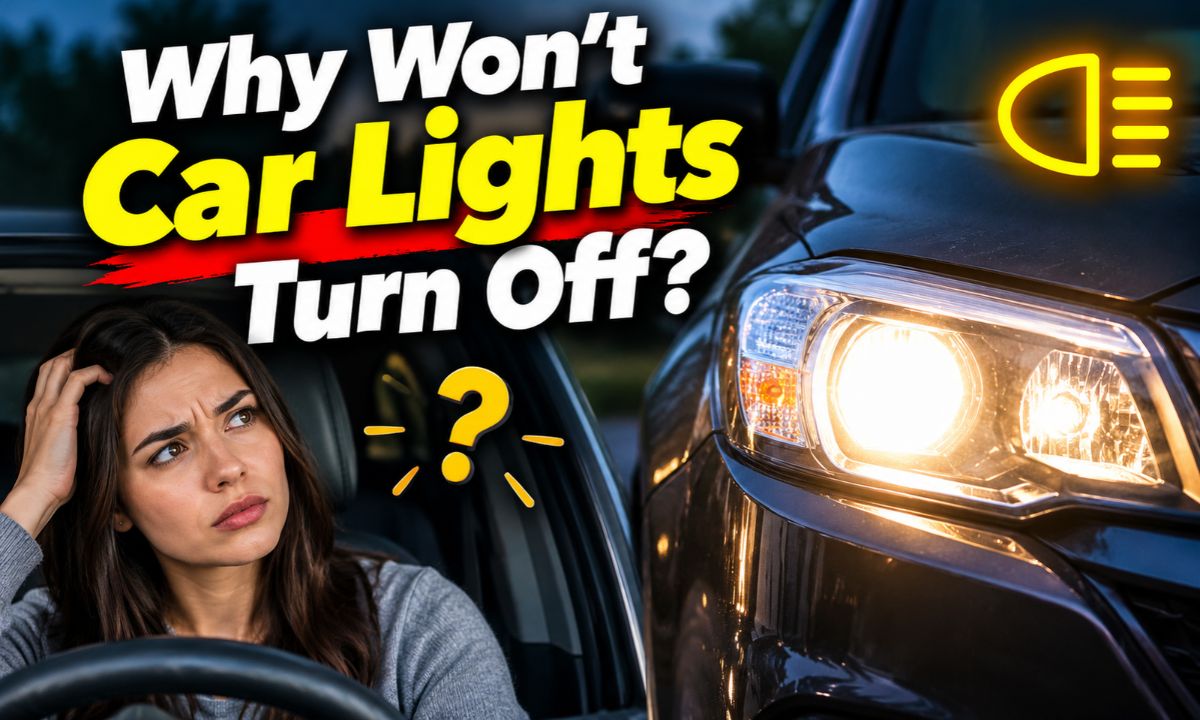
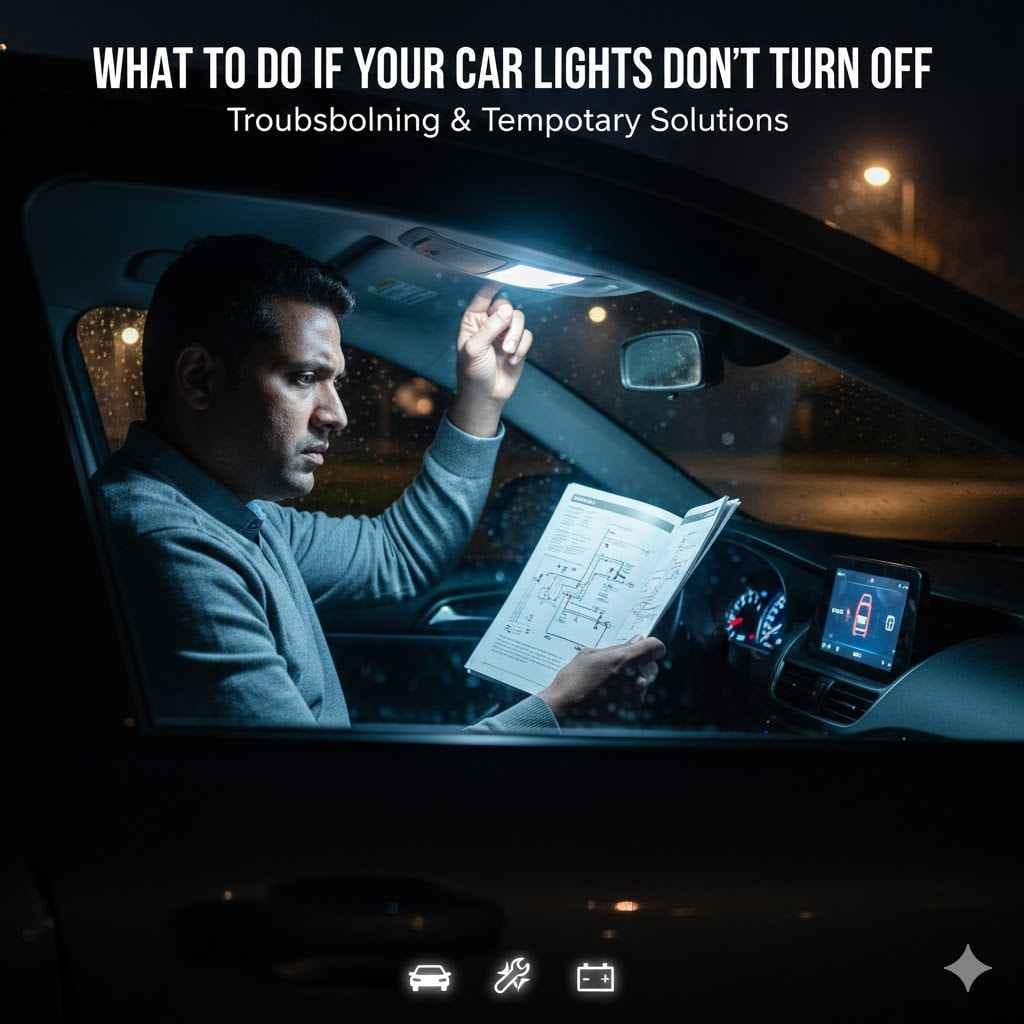
Car lights that won’t turn off usually point to an incorrect light setting, a faulty switch, a stuck relay, a door sensor problem, or an electrical fault.
If your headlights, brake lights, or interior lights stay on after you park in your driveway or a U.S. parking lot, start by identifying which lights remain illuminated. Some vehicles keep their lights on briefly after shutdown as a normal safety feature, while others may have a switch, sensor, or wiring problem. The difference matters because unnecessary lighting can drain your car battery and leave you unable to start the engine.
The safest troubleshooting approach is to check the owner’s manual, verify the light settings, and observe when the lights stay on. Avoid removing electrical components or disconnecting the battery without understanding your vehicle’s system. This guide explains common causes, practical checks, warning signs, and situations that call for a qualified automotive technician.
Car lights may stay on because the vehicle is receiving a signal to keep them illuminated or because an electrical component is not switching off correctly. The most likely cause depends on the type of light, the vehicle’s design, and whether the engine is running.
Many modern vehicles use electronic body control modules, automatic headlight sensors, door switches, and timed lighting features. A fault in one of these systems can keep lights on even when the ignition is off. Older vehicles may rely more heavily on mechanical switches, relays, and simpler wiring circuits.
Before replacing a part, determine whether the lights are operating as designed. Some headlights remain on for a short period after the driver locks the vehicle, and some interior lights stay illuminated until a door closes properly or a programmed delay expires.
Source: carxplorer.com
Incorrect light setting
The headlight switch may be set to ON, PARKING LIGHTS, or another position that keeps exterior lights illuminated.
Faulty switch or relay
A worn headlight switch or relay with contacts that remain closed may prevent the lights from switching off.
Door or latch sensor issue
A door, hatch, or trunk sensor may incorrectly report that an opening is still active, affecting interior lighting.
Electrical control problem
A body control module, damaged wire, or other circuit fault may keep a lighting circuit energized.
Normal automatic lighting delay
A programmed follow-me-home or courtesy-light feature may intentionally keep selected lights on after parking.
Determine Whether the Lights Are Supposed to Stay On
Park safely, turn off the ignition, close the doors, and lock the vehicle if appropriate. Wait for the lighting delay specified in the owner’s manual. Some models use a short delay, while others allow the driver to select a longer period.
If the lights switch off after the normal delay, the system may be functioning correctly. If they remain on well beyond the expected period, or if the battery is losing charge, continue with the checks below.
Check the owner’s manual
Look for automatic headlights, exterior lighting delays, welcome lighting, and courtesy-light settings.
Watch for warning signs
Lights that flicker, behave inconsistently, or remain on after all normal shutdown steps may indicate an electrical fault.
First Steps to Take When Your Car Lights Stay On
Start with low-risk checks before attempting repairs. These steps can help identify a simple setting issue and reduce the chance of draining the battery while you investigate.
If you notice smoke, a burning odor, melted plastic, unusually hot wiring, or sparks, stop troubleshooting. Do not touch exposed wiring or repeatedly operate the electrical system. Move away from the vehicle if there is a fire risk and contact emergency services when necessary.
Source: vehiclefreak.com
Step 1: Identify the affected lights
Determine whether the headlights, parking lights, brake lights, dashboard lights, dome lights, or cargo-area lights are staying on.
Step 2: Switch off the lighting controls
Turn the headlight switch to OFF if your vehicle provides that position. Check the owner’s manual if the lighting controls are electronic or integrated into another control.
Step 3: Shut down the vehicle correctly
Turn off the engine, remove the key if applicable, and follow the normal shutdown procedure for your model.
Step 4: Close all openings
Close each door, the trunk, the hatch, and the hood if equipped with a relevant sensor. Check that nothing prevents a door from latching.
Step 5: Allow the normal shutdown delay
Wait for the time described in the manual, then check whether the lights have switched off.
Step 6: Protect the battery
If the lights continue to stay on, avoid repeated starting attempts and arrange help if the vehicle may lose its battery charge.
What If the Lights Still Won’t Turn Off?
Do not keep switching controls randomly or pulling fuses until the lights go out. Modern vehicles can use shared circuits and electronic modules, so removing the wrong fuse may disable other functions or create additional faults.
Record which lights remain on, whether the engine is running, whether the ignition is off, and whether the problem began after a battery replacement, repair, collision, or heavy rain. These details can help a technician narrow down the cause.
Safe next step
Use the vehicle-specific manual and contact roadside assistance or a qualified automotive technician if the lighting circuit cannot be safely isolated.
Headlights Won’t Turn Off After the Car Is Shut Down
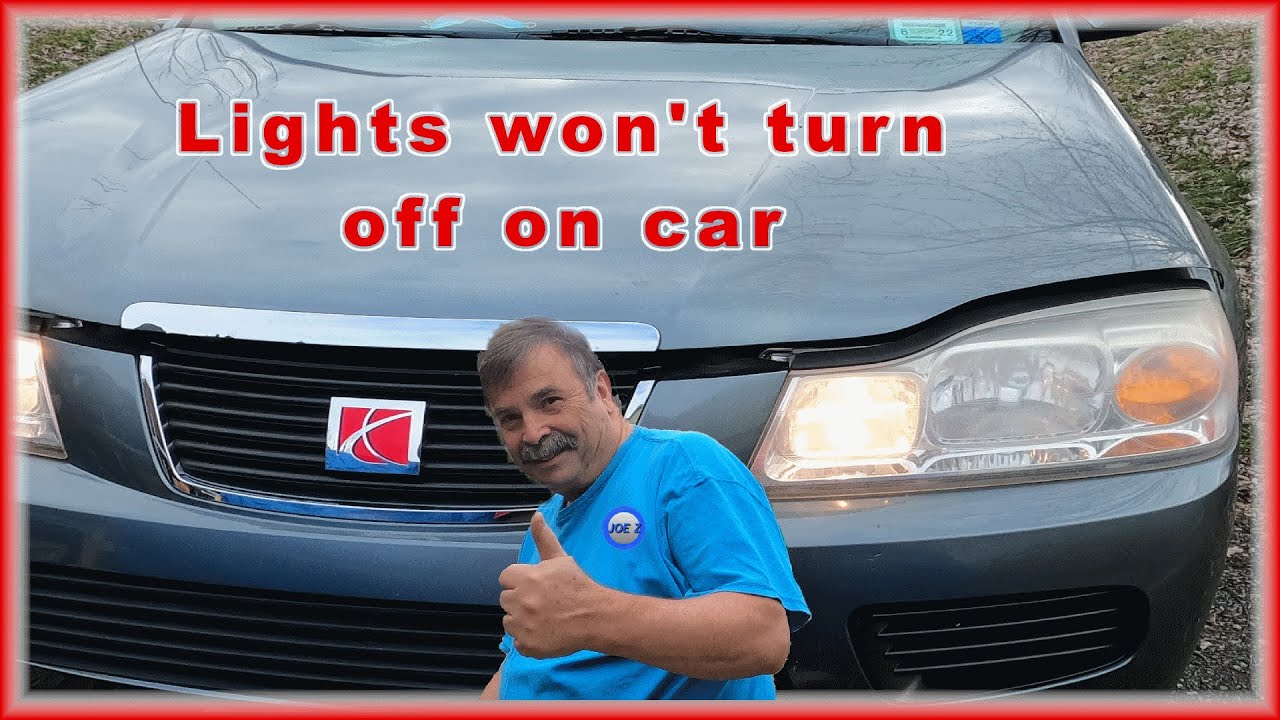
Headlights that remain on after the engine is switched off are commonly associated with the light switch, automatic headlight system, a lighting delay, or a faulty relay or control module. The first step is to distinguish normal delayed lighting from a circuit that remains powered.
If the headlights stay on continuously and the vehicle is parked, the battery may gradually discharge. Halogen headlights generally draw more current than small indicator lights, while the effect of LED headlights depends on their design and electrical load. There is no single safe waiting period because battery condition, temperature, and the lighting system all affect how quickly the vehicle may lose starting power.
Source: engineerine.com
Headlight switch left on
Move the switch to OFF or the setting specified by the manufacturer. Some vehicles have no conventional OFF position when automatic lighting is enabled.
Automatic headlight setting
Check the AUTO setting and the lighting preferences in the vehicle’s menu. Use the manual’s procedure to confirm whether the lights should turn off after shutdown.
Headlight relay stuck closed
A relay with contacts that remain closed can continue supplying power even when the control signal has ended. Testing or replacing the relay should follow the vehicle’s wiring information.
Body control module fault
An electronic module may continue commanding the lights on because of a fault, incorrect input, or communication issue.
Daytime running lights
Some daytime running lights operate under different conditions from the main headlights. Verify which lamps are illuminated before diagnosing a failure.
How to Check Headlights That Stay On
With the vehicle parked in a safe location, check the lighting switch and the owner’s manual’s automatic-lighting instructions. Close the doors, lock the vehicle, and wait through the documented delay.
If the headlights remain on, do not assume that replacing the headlight switch will solve the problem. A relay, wiring fault, sensor input, or electronic control issue can produce similar symptoms. A technician can use the wiring diagram and diagnostic equipment to test the circuit.
Success indicator
The headlights switch off according to the vehicle’s normal shutdown sequence and remain off when the car is parked.
When to seek help
Arrange diagnosis if the lights stay on despite correct settings, return unexpectedly, or are accompanied by warning messages or other electrical symptoms.
Brake Lights Won’t Turn Off
Brake lights that remain illuminated after you release the brake pedal often point to a brake pedal switch problem, a misadjusted switch, a damaged pedal stopper, or an issue with the pedal returning fully. This problem deserves prompt attention because brake lights can drain the battery and confuse drivers behind the vehicle.
The brake light switch detects pedal movement and signals the rear brake lamps to illuminate. Depending on the vehicle, it may also provide input to cruise control, transmission interlocks, or other electronic systems. A switch fault can therefore affect more than the lamps themselves.
Source: i.ytimg.com
Faulty brake pedal switch
A failed or incorrectly adjusted switch may continue signaling that the brake pedal is pressed.
Broken pedal stopper
Some vehicles use a small stopper or pad that allows the switch plunger to return to its proper position. If it breaks or falls out, the brake lights may stay on.
Pedal obstruction
A floor mat or object may prevent the brake pedal from returning fully. Check for obstruction only when the vehicle is parked safely.
Wiring or control fault
A short circuit, damaged connector, or electronic control problem can keep the brake lamps illuminated even when the switch appears to operate normally.
What to Do About Brake Lights That Stay On
Park the vehicle securely, switch off the ignition, and inspect the area around the brake pedal for obvious obstructions without reaching into moving mechanisms. If another person can safely observe the rear lamps while you press and release the pedal with the vehicle stationary, confirm whether the lights respond correctly.
Do not drive the vehicle until the brake lights operate properly. Constantly illuminated brake lights can prevent other drivers from recognizing when you are actually braking. If the lights will not switch off, arrange professional repair or roadside assistance.
Avoid bypassing the brake light switch or removing a fuse as a permanent workaround. Some vehicles depend on that switch for additional safety-related functions, and the correct repair depends on the specific model.
Likely repair
A technician may need to adjust or replace the brake light switch, restore a missing pedal stopper, correct an obstruction, or repair wiring.
Battery protection
If the brake lamps remain on while parked, seek assistance promptly to prevent a discharged battery.
Interior Car Lights Won’t Turn Off
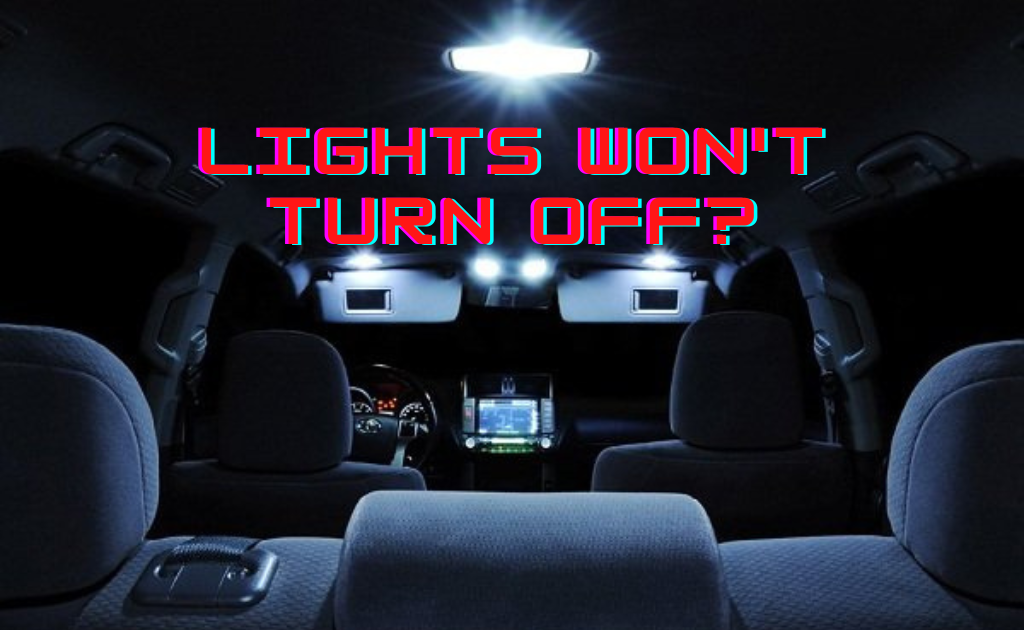
Interior lights that stay on after you leave the vehicle often involve the dome-light switch, a door or hatch latch sensor, a dimmer setting, or a courtesy-light delay. Many cars link the cabin lights to individual door sensors, so one faulty latch can keep the system awake.
Interior lights can include dome lamps, map lights, vanity mirror lights, glove-box lamps, trunk lights, and cargo-area lights. These lamps may use separate switches or circuits, which means one light staying on does not necessarily indicate that every interior lighting component has failed.
Source: engineauditor.com
Dome light switch in the wrong position
A dome lamp set to ON may remain illuminated even when every door is closed. Select DOOR or OFF if those settings are available.
Door not fully latched
A poorly closed door can keep the courtesy lights on. Check the instrument panel for a door-open warning and close the door normally.
Faulty door or hatch sensor
A sensor or latch switch may incorrectly report that a door, trunk, or hatch remains open.
Dimmer control setting
On some vehicles, turning the dashboard illumination control to a particular position can keep the interior lights on. Check the model-specific instructions.
Courtesy-light delay
The lights may remain on briefly after unlocking or opening a door as part of a normal entry or exit feature.
Troubleshooting Dome Lights and Map Lights
Set the dome-light switch to DOOR or OFF, if available, and check each door’s closure. Look for a dashboard warning that indicates a door or hatch remains open. If one specific door triggers the problem, its latch sensor or wiring may need inspection.
If a map light stays on while the dome light turns off, check whether the map light has its own push-button switch. Some models retain independent control of reading lamps, so the behavior of one light does not establish the condition of another.
If the lights stay on after the normal delay, do not assume that a new battery will solve the issue. Diagnose the circuit that is keeping them on before repeated battery replacements become necessary.
Check the cargo area
Inspect the trunk or hatch lighting if the cabin appears dark but the battery continues losing charge. A cargo lamp may remain hidden from view when the lid is partly closed.
Check vanity and glove-box lamps
If the vehicle has these lamps, a faulty switch or latch can leave them illuminated even when other interior lights turn off.
Dashboard Lights or Parking Lights Stay On
Dashboard illumination and parking lights can remain on because of a control setting, an exterior-lighting selection, an ignition-related issue, or a fault in the vehicle’s electrical control system. The exact cause depends on whether the engine is running, the ignition is off, and which lamps remain illuminated.
Parking lights may be designed to operate independently of the headlights on some vehicles. Dashboard illumination may also remain active while the ignition is in accessory mode. Check the vehicle’s manual before treating either behavior as a malfunction.
Source: askcarmechanic.com
Parking light setting
Confirm that the exterior-lighting control is not set to parking lights or a model-specific one-sided parking-light mode.
Ignition left in accessory mode
The accessory setting may keep selected dashboard displays and electrical circuits active after the engine stops.
Dimmer control
A dashboard brightness control may affect instrument illumination or, on certain vehicles, the interior courtesy lamps.
Electrical control issue
If the controls are correct and the lights remain on, a switch, relay, wiring problem, or control module may need testing.
Distinguish Dashboard Illumination From Warning Lights
Normal instrument illumination is different from a warning indicator. If a red brake warning, oil pressure warning, battery warning, or another warning remains on while the engine is running, consult the owner’s manual and respond according to the warning’s instructions. Some warnings are expected with the ignition on and the engine off.
Do not keep driving if a critical warning indicates low oil pressure, a serious braking issue, or another immediate safety problem. Pull over safely and obtain assistance when the manual calls for it.
Normal display behavior
Some displays and indicators illuminate briefly during startup checks or remain on in accessory mode.
Abnormal behavior
Illumination that persists after the vehicle’s normal shutdown procedure or appears with other electrical symptoms deserves diagnosis.
Common Causes and How to Recognize Them
Matching the symptom to the likely cause helps you decide whether a simple setting change is enough or whether the vehicle needs electrical diagnosis. The table below is a starting point, not a definitive diagnosis, because different vehicles can use different circuit designs.
Several faults can produce similar symptoms. For example, headlights that stay on may result from either a stuck relay or an electronic control problem. A technician may need to test the circuit rather than replace parts based on symptoms alone.
Source: autotoride.com
Use the symptom first
Identify the exact lamps that remain on and whether the engine, ignition, doors, and lighting controls are in their normal parked states.
Quick Troubleshooting Reference
Use this reference to prioritize checks. It does not establish which component has failed, and the repair procedure may differ by year, make, model, and trim.
Headlights remain on after shutdown
Check the lighting switch and programmed delay first. If the lights persist, investigate the relay, sensor inputs, wiring, and control module.
Brake lights remain on with the pedal released
Check for an obstructed pedal and have the brake light switch, pedal stopper, and circuit inspected. Avoid driving until the lamps work correctly.
Dome lights stay on with doors closed
Check the dome-light switch, dimmer position, door-open warning, and courtesy-light delay. A faulty latch sensor is another possibility.
Parking lights remain illuminated
Check the parking-light selection and ignition state. If the setting is correct, the switch, relay, or wiring may require diagnosis.
Several lighting systems remain on
Multiple affected circuits may indicate a shared control, power supply, grounding, wiring, or body control module problem.
Can Car Lights That Stay On Drain the Battery?
Yes. Lights that remain illuminated after parking can discharge a car battery, sometimes leaving too little power to start the engine. How quickly this happens depends on the current draw, battery capacity and condition, temperature, and how long the lights stay on.
A weak or aging battery may lose starting ability sooner than a healthy, fully charged battery. Cold weather can also reduce available battery performance. This is especially relevant during winter parking in many parts of the United States, when a marginal battery may already struggle to start the engine.
A rough theoretical estimate can be made by dividing usable battery capacity in amp-hours by the electrical load in amps. For example, if a hypothetical battery had 50 amp-hours of usable capacity and the lights drew 5 amps, the arithmetic would suggest 10 hours. This is not a reliable prediction of actual starting time because not all rated capacity is safely usable, loads may vary, and the engine may fail to start well before the battery is fully discharged.
Source: askcarmechanic.com
Avoid leaving the vehicle unattended
If the lights stay on continuously, do not assume the battery will remain capable of starting the car until morning.
Do not repeatedly crank the engine
Repeated starting attempts can consume additional battery power and make a low-charge situation worse.
Test the battery after the fault is repaired
A technician can check battery condition and charging-system operation if the vehicle has become difficult to start.
Repair the cause of the drain
Charging or replacing a battery does not correct a lighting circuit that continues to consume power.
Should You Disconnect the Battery to Turn the Lights Off?
Disconnecting the battery is not the best first step for most drivers. Modern vehicles can lose settings or require initialization after power is removed, and some models have specific battery disconnection procedures. Incorrect handling can also create short circuits or personal injury.
If the lights cannot be switched off and the battery is at risk, contact roadside assistance or a qualified technician for vehicle-specific advice. Do not disconnect a battery while the engine is running, and never allow a tool to bridge the battery terminals.
When professional help is preferable
Seek assistance when you do not know the correct procedure, the battery is difficult to access, the vehicle is a hybrid or electric model, or the electrical system shows signs of damage.
When to Call a Mechanic
Contact a qualified automotive technician when basic settings and closure checks do not solve the problem, especially if the lights remain on with the ignition off or the battery repeatedly loses charge. Electrical faults can be difficult to distinguish without a wiring diagram, a multimeter, or vehicle-specific diagnostic equipment.
Professional diagnosis is particularly important when multiple lights behave unexpectedly, the problem started after electrical work, fuses keep blowing, or a warning message appears. Replacing parts without testing can waste money and leave the original fault unresolved.
Burning smell, smoke, or hot wiring
Stop using the affected electrical system and keep clear of smoke, sparks, or fire hazards. Seek emergency assistance if a fire develops.
Brake lights remain on or fail to operate
Arrange prompt repair because brake lights are essential for communicating braking to other road users.
Repeatedly blown fuses
Do not install a higher-rated fuse or keep replacing a fuse that blows. The underlying fault must be identified.
Battery repeatedly goes flat
Ask a technician to check the lighting circuit, battery health, charging system, and possible parasitic electrical draw.
Several electrical systems malfunction
Unexpected lights, warning messages, locks, or other accessories may point to a shared electrical or control-system problem.
What Information to Give the Technician
A clear description of the symptom helps the technician narrow down the fault. Share the vehicle’s year, make, model, and trim, along with the exact lights that remain on and the conditions under which the problem occurs.
Mention any recent battery replacement, collision repair, aftermarket alarm or remote-start installation, lighting modification, or water intrusion. These details do not prove the cause, but they can help focus the inspection.
Describe the timing
Explain whether the lights remain on immediately after shutdown, turn off and then return, or stay on only after a particular door opens.
Describe the battery symptoms
Report slow cranking, clicking, a no-start condition, or repeated jump-start needs if any of these occur.
Common Mistakes to Avoid
The wrong troubleshooting step can create additional electrical problems or conceal the real cause. Keep the diagnosis focused on the affected lighting system and follow the vehicle‘s service information.
A simple setting issue should be ruled out first, but repeated symptoms or safety-related lighting faults should not be ignored.
Assuming every delay is a fault
Automatic headlights and courtesy lights may remain on for a programmed period. Check the owner’s manual before attempting repairs.
Replacing parts without testing
A stuck relay, faulty switch, damaged wire, and control module problem can produce similar symptoms. Confirm the fault before buying replacement parts.
Installing a larger fuse
A fuse with a higher rating can allow excessive current and increase the risk of wiring damage or fire. Use only the specified rating.
Ignoring a brake light problem
Brake lights that stay on can drain the battery and prevent other drivers from seeing when you actually brake.
Assuming a new battery will fix everything
A replacement battery may restore starting power temporarily, but it will not fix a lighting circuit that remains energized.
Treating every vehicle the same
Lighting controls, fuse locations, relay layouts, and electronic shutdown procedures vary by vehicle. Use the correct service information.
Do Not Use Improvised Electrical Bypasses
Avoid cutting wires, bridging relay terminals, bypassing switches, or removing unidentified fuses to force the lights off. These actions can disable safety functions, damage electronic modules, or create a short circuit.
If you cannot isolate the fault through normal controls and the documented procedures, stop and arrange professional diagnosis. Protecting the vehicle’s electrical system is more important than getting the lights to switch off through an improvised workaround.
Safer alternative
Use the owner’s manual for normal lighting controls and contact roadside assistance or an automotive electrician when the circuit remains energized.
Research Notes and Reader Question Gaps
This guide prioritizes the immediate troubleshooting task and distinguishes normal lighting delays from faults that can drain the battery or affect road safety. The explanations are based on general automotive electrical principles rather than hands-on testing of a specific vehicle.
The supplied image list and topic establish the intended subject and visual assets, but they do not provide verified diagnostic data for every vehicle. No vehicle-specific fault rate, repair price, measured battery-drain time, or universal shutdown delay is established here.
A live review of competing pages, current search results, and manufacturer service documents was not completed for this draft. Therefore, competitor coverage and observed search demand are not claimed as verified findings. The follow-up needs below are editorial inferences from the troubleshooting task, not measured future search demand.
Inferred next need: Can I drive with brake lights that stay on?
Reader stage: immediate safety decision. Priority: high. Answer: do not drive until the brake lights function correctly; arrange repair or assistance.
Inferred next need: Will leaving the headlights on drain the battery overnight?
Reader stage: after identifying the symptom. Priority: high. Answer: battery drain is possible, but the time to a no-start condition depends on battery condition and electrical load.
Inferred next need: Should I pull a fuse to turn the lights off?
Reader stage: attempted quick fix. Priority: high. Answer: avoid removing unidentified fuses; follow vehicle-specific service instructions or seek professional help.
Inferred next need: Why do my interior lights stay on when every door is closed?
Reader stage: fault isolation. Priority: medium. Answer: check the dome-light switch and delay settings, then consider latch sensors, wiring, or control-system faults.
Inferred next need: What if the lights return after the battery is replaced?
Reader stage: repair follow-up. Priority: medium. Answer: investigate the original lighting fault and test the charging system instead of assuming the battery was the only problem.
Evidence Boundaries and Recommended Follow-Up Research
A vehicle-specific service manual or manufacturer technical bulletin is the appropriate source for fuse assignments, relay locations, lighting delay settings, battery disconnection procedures, and diagnostic steps. Those details should be checked against the exact model year and equipment before being presented as universal instructions.
A fuller research audit would inspect three to five relevant troubleshooting pages, record their URLs and access dates, and compare their methods with manufacturer documentation. Any competitor gap should be labeled as observed only after those pages have actually been examined.
Documentation needed for exact repairs
Obtain the correct owner’s manual, wiring diagram, and manufacturer service information for the vehicle before recommending a specific fuse, relay, or switch procedure.
Frequently Asked Questions
Q
Why do my car headlights stay on after I turn off the engine?
Your headlights may stay on because of an automatic lighting delay, a switch setting, a stuck relay, a faulty sensor input, or an electrical control problem. Check the owner’s manual for the normal shutdown delay and confirm that the lighting switch is set correctly. If the headlights remain on beyond the expected period, arrange diagnosis to avoid draining the battery.
Q
Why won’t my brake lights turn off when the car is parked?
Common causes include a faulty or misadjusted brake pedal switch, a broken pedal stopper, an obstruction preventing the pedal from returning, or damaged wiring. Check for an obvious pedal obstruction while the vehicle is safely parked. If the brake lights remain on, do not drive until the system is repaired.
Q
Can I leave my car overnight if the lights won’t turn off?
Leaving the lights on overnight can discharge the battery and prevent the engine from starting. The outcome depends on the electrical load, battery condition, temperature, and duration. If the lights will not switch off using normal controls, seek vehicle-specific assistance rather than assuming the battery will last until morning.
Q
Will disconnecting the battery turn off car lights that stay on?
Disconnecting the battery may interrupt power to the lights, but it is not the preferred first troubleshooting step. Incorrect disconnection can cause injury, short circuits, lost settings, or additional issues on some vehicles. Follow the manufacturer’s procedure or ask a qualified technician or roadside assistance provider for help.
Q
Why do my car interior lights stay on even when all the doors are closed?
The dome-light switch may be set to ON, a dimmer control may be in a position that activates the lamps, or a door, trunk, or hatch sensor may incorrectly report an open opening. A courtesy-light delay may also be normal. If the lights remain on after the documented delay, the latch sensor, wiring, or control module may need inspection.
Q
Can a faulty relay keep car lights on?
Yes. A relay with contacts that remain closed can continue supplying power to a lighting circuit after the control signal ends. However, similar symptoms can result from a faulty switch, damaged wiring, or an electronic control problem. Testing the circuit is more reliable than replacing a relay based on symptoms alone.
Q
Should I pull the fuse if my car lights won’t turn off?
Do not pull an unidentified fuse or use fuse removal as a permanent fix. A fuse may serve multiple systems, and removing the wrong one can disable other functions. Use the vehicle-specific fuse diagram and service procedure, or contact a technician if the lights remain on and the battery is at risk.
✦ Wrapping Up
Conclusion
When car lights won’t turn off, start by identifying which lamps are affected and checking the normal lighting settings, ignition state, door closures, and programmed shutdown delay. These basic checks can resolve a simple setting issue without unnecessary repairs.
If the lights continue to stay on, likely causes include a faulty switch, stuck relay, door or brake pedal sensor problem, damaged wiring, or an electronic control fault. Persistent lighting can drain the battery, and brake lights that remain illuminated create a road-safety concern. Avoid improvised electrical repairs and seek professional help when the cause is unclear or warning signs appear.
💡 Key Takeaway
Identify the affected lights, check the owner’s manual and normal controls, and allow the specified shutdown delay. If the lights remain on, protect the battery and arrange a vehicle-specific electrical diagnosis. Do not drive with malfunctioning brake lights or continue troubleshooting if you notice smoke, burning smells, sparks, or hot wiring.