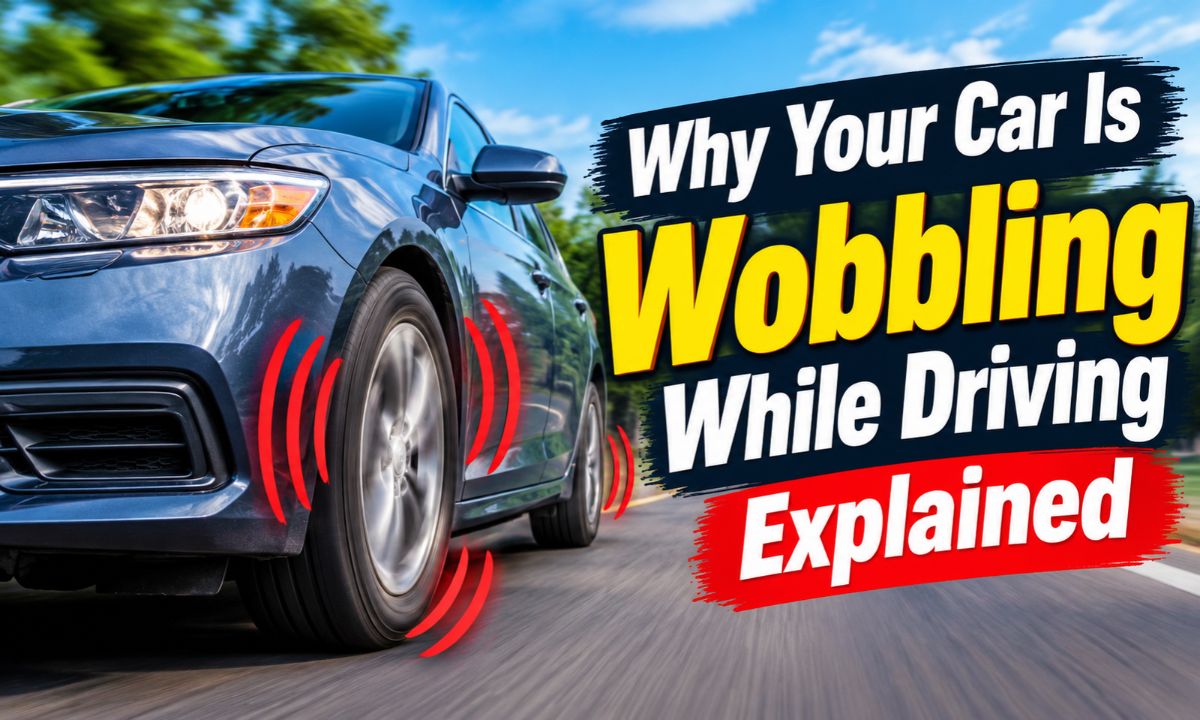
Your car may wobble while driving because of damaged tires, unbalanced wheels, loose steering parts, worn suspension, or brake problems.
On American roads, a wobbling car can turn a routine drive on an interstate, highway, or neighborhood street into a worrying experience. The shaking may start at low speeds, appear only when you accelerate, or grow stronger as you drive faster. The place where you feel it and the conditions that trigger it can help narrow down the cause.
Some causes are minor, such as a wheel that needs balancing. Others, including a tire with internal damage or a loose wheel, can put you at risk of losing control. If the wobble starts suddenly, becomes severe, or comes with loud banging, steering trouble, or visible tire damage, slow down gently if safe, pull over, and arrange roadside assistance rather than continuing to drive.
This guide explains the common reasons a car wobbles while driving, how to tell the possible causes apart, and which checks make sense first. You will also learn when a vehicle may need a tire shop, a mechanic, or immediate roadside help.
What Does It Mean When Your Car Wobbles While Driving?
A car wobble is a repeated side-to-side movement, shake, or vibration that you can feel through the steering wheel, seat, floor, or body of the vehicle. The movement may be small enough to feel like a buzz or strong enough to make the whole car seem unstable.
Wobbling is a symptom, not a diagnosis. Several parts can produce similar sensations, so the timing, location, and strength of the movement matter. A tire problem may cause a rhythmic shake, while a worn suspension joint may let a wheel move in ways it should not.
Start by noticing when the wobble occurs. Does it happen at a certain speed, while braking, during acceleration, or after hitting a pothole? These details can help a technician narrow the search without replacing parts based on guesswork.
Source: i.ytimg.com
Steering wheel wobble
A shake felt mainly through the steering wheel may point toward the front tires, wheel balance, bent wheels, brake issues, or worn steering and suspension parts.
Seat or floor vibration
A vibration felt through the seat or floor may come from rear tires, wheels, driveline parts, or the engine and transmission, depending on when it occurs.
Whole-car swaying
Side-to-side movement or a loose feeling may involve tire pressure, suspension wear, alignment, damaged components, or road conditions.
Repeated bouncing
A car that continues to bounce after a bump may have worn shocks or struts, damaged suspension parts, or tire problems.
Why the Speed and Timing Matter
A wheel rotates faster as road speed rises, so a tire or wheel defect may create a faster or stronger vibration at higher speeds. Some wheel imbalances are most noticeable within a certain speed range and may feel less obvious outside it.
A wobble that appears only when braking or accelerating offers a different clue. Braking adds force to the brake and suspension systems, while acceleration loads the engine, transmission, axles, and related joints. The trigger helps guide the inspection, but it cannot identify a failed part on its own.
At low speed
Look for visible tire damage, an out-of-round tire, a bent wheel, a loose component, or an obstruction affecting a rotating wheel.
At highway speed
Tire defects, wheel imbalance, wheel damage, and loose steering or suspension parts deserve attention.
During a turn
Worn wheel bearings, suspension joints, tires, or steering components may be involved, especially if there is noise or a change in handling.
1. Tire Problems Are a Common Cause of Car Wobbling
Tires are among the first things to inspect when a car starts wobbling. They are the only parts of the vehicle that normally touch the road, and any change in their shape, pressure, or condition can affect how the car moves.
A tire can have enough tread to look usable and still have a serious defect. Internal belt damage, a separated tread, uneven wear, or a bulge in the sidewall may cause vibration or an unstable feeling. Some damage is hard to see without removing the tire from the wheel.
If the wobble began after hitting a pothole, running over road debris, or striking a curb, tire and wheel damage becomes a particular concern. Do not assume the car only needs an alignment. The impact may have damaged more than one component.
Source: blog.1aauto.com
Uneven tire wear
Cupped, scalloped, or uneven tread wear can cause vibration and may point to poor wheel balance, alignment problems, worn suspension parts, or incorrect tire pressure.
Low tire pressure
An underinflated tire can flex more than intended and affect handling. Check pressure when the tires are cold and use the pressure listed on the driver’s door-jamb placard or in the owner’s manual.
Tire bulges or cuts
A sidewall bulge can indicate internal structural damage. Do not continue driving on a tire with a bulge, exposed cords, or a serious cut.
Tread separation
If part of the tread separates from the tire structure, the tire may develop a pronounced rhythmic wobble. This can lead to sudden tire failure.
Flat spots or irregular shape
A tire may develop temporary flat spots after sitting for a long time or permanent irregular wear from damage. A persistent or strong vibration needs professional inspection.
How to Check Your Tires Safely
Park on level ground away from traffic, switch off the engine, and allow the vehicle to settle. Walk around the car and look for bulges, cuts, missing tread, objects embedded in the tire, and obvious differences in tire shape.
Use a reliable tire pressure gauge when the tires are cold. Compare each reading with the vehicle maker’s recommended pressure rather than the maximum pressure printed on the tire sidewall. The sidewall maximum is not the normal target pressure for everyday driving.
Do not crawl beneath a vehicle supported only by a jack or put your hands near moving wheels. If you find damage or cannot tell whether the tire is safe, contact a tire shop or roadside service.
Safe to inspect
Visible tread wear, tire pressure, obvious sidewall damage, and missing wheel nuts can be checked from a safe position while the car is parked.
Requires professional help
Internal tire damage, tread separation, wheel runout, and uncertain structural defects need suitable equipment and trained inspection.
2. Unbalanced Wheels Can Cause Wobbling at Higher Speeds
A wheel and tire assembly that is not balanced can create a repeating vibration as it spins. Even a small difference in mass around the wheel can produce a noticeable shake at certain speeds.
This problem often becomes easier to feel as road speed rises. The steering wheel may shake if the front wheels are involved, while a rear wheel imbalance may be felt more through the seat or floor. These are useful clues, not firm rules.
Wheel balance problems can develop after tire replacement, a lost wheel weight, damage from road debris, or the buildup of packed mud or snow inside a wheel. A technician can measure the imbalance with a balancing machine and add or reposition weights as needed.
Source: carxplorer.com
Common sign
The car feels relatively smooth at lower speeds but begins to vibrate within a particular speed range.
Likely next step
Have the tires and wheels inspected and balanced. Ask the shop to check for tire defects and bent wheels rather than balancing a damaged assembly without further inspection.
Important limitation
Balancing will not repair a damaged tire, bent rim, worn wheel bearing, loose suspension joint, or alignment problem.
Wheel Balance Versus Wheel Alignment
Wheel balance concerns how evenly the weight of a tire and wheel assembly is distributed as it rotates. Alignment concerns the angles at which the wheels sit and track in relation to the vehicle and road.
An imbalance commonly causes a speed-related vibration. Poor alignment more often contributes to uneven tire wear, a steering wheel that sits off-center, or a vehicle that pulls to one side. Both problems can occur together, so a shop should inspect the symptoms rather than assume one service will fix everything.
Choose balancing when
A technician confirms an imbalance or the vibration began after tire or wheel work and the assembly has no unresolved damage.
Choose alignment inspection when
The car pulls, the steering wheel is off-center, or the tires show uneven wear that may be related to wheel angles.
3. Bent Wheels and Damaged Rims Can Make a Car Shake
A bent wheel can cause a wobble because the tire no longer follows a true circular path. A wheel may also have a crack or other structural damage that makes it unsafe even if the tire itself looks normal.
Potholes are a common source of wheel damage on U.S. roads, especially when the impact is hard or the tire has a low profile. A curb strike can also bend a rim or damage suspension parts. The resulting vibration may start immediately or become noticeable after the impact.
A damaged wheel can resemble a balance problem, but adding weights will not correct a wheel that is physically bent. A shop can measure wheel runout, inspect the tire, and determine whether the wheel can be repaired safely or needs replacement.
Source: carxplorer.com
Look for visible rim damage
Cracks, large dents, or a visibly distorted wheel require professional assessment. Do not try to straighten a wheel yourself.
Pay attention after impacts
A new wobble after a pothole or curb strike deserves prompt inspection, even if the car still moves under its own power.
Check for related damage
The impact may also affect the tire, wheel bearing, tie rod, control arm, or alignment.
Can You Keep Driving With a Bent Rim?
There is no universal safe distance for driving on a bent rim. The answer depends on the damage, tire condition, air retention, and how the vehicle handles. A cracked wheel, a severe bend, air loss, or strong wobbling is a reason to stop and arrange assistance.
Even a wheel that holds air can place extra stress on the tire and suspension. Have it assessed before returning to normal highway driving.
Stop and seek assistance
Do this if the wheel is cracked, the tire is losing air, the car shakes severely, or steering control has changed.
Arrange an inspection
If the impact caused a mild but persistent vibration, avoid high speeds and have the tire, wheel, and suspension checked promptly.
4. Worn Suspension Parts Can Make the Car Feel Unstable
The suspension helps each wheel follow the road while keeping the vehicle stable. It includes parts such as shocks or struts, control arms, bushings, ball joints, and related links. When these parts wear out or break, a wheel may move in ways that affect handling.
Suspension trouble can feel like a wobble, sway, bounce, or loose movement over bumps. You may also hear clunks when driving over rough pavement or notice uneven tire wear. A change in steering response is another warning sign.
Suspension parts do not all fail in the same way. A worn shock absorber may allow extra bouncing, while a damaged ball joint or control arm can affect wheel position and control. Some failures can be dangerous, so a strong wobble should not be treated as a comfort issue alone.
Source: i.ytimg.com
Worn shocks or struts
The vehicle may bounce more than expected after bumps, feel less settled, or show uneven tire wear.
Damaged control arm bushings
The wheel may shift under braking or acceleration, sometimes causing clunks or changes in steering feel.
Worn ball joints
Excess movement at a ball joint can affect wheel control and may become a serious safety problem if the joint fails.
Loose suspension links
Worn links or joints can cause knocking, body movement, or reduced stability, especially over uneven roads.
When Suspension Wobble Needs Urgent Attention
A car that suddenly develops severe steering looseness, a wheel that appears to sit at an odd angle, or a loud clunk with major handling changes should not be driven to a repair shop. Arrange a tow or roadside inspection.
A gradual increase in bouncing or mild clunks still needs an inspection soon. Suspension problems can also damage tires, so delaying repairs may add to the cost and make the vehicle less predictable.
Do not rely on a bounce test alone
Pressing down on a parked car cannot reliably identify every worn shock, strut, ball joint, or bushing.
Request a full inspection
Ask the technician to check suspension joints, bushings, dampers, wheel movement, tire wear, and related steering parts.
5. Steering Problems Can Cause a Wobbling Front End
The steering system directs the front wheels and helps the driver keep the car on course. Worn tie rods, loose steering joints, or damaged steering components can allow unwanted movement that feels like a wobble.
You may notice a steering wheel that shakes, has unusual free play, or no longer responds as expected. The car may wander within its lane or feel difficult to keep straight. These symptoms deserve attention because steering faults can affect your ability to control the vehicle.
A steering wobble can overlap with wheel imbalance or suspension wear. The steering system should therefore be inspected alongside the tires and suspension instead of treating each symptom as a separate issue.
Source: image6.slideserve.com
Worn tie rods
Excess play in a tie rod or its joint can affect steering precision and wheel alignment.
Loose steering connections
Worn or damaged joints and connections may cause vague steering, knocking, or unexpected movement.
Steering system damage
A damaged steering rack or related component may affect steering effort, response, or control and requires professional diagnosis.
What to Do if the Steering Wheel Starts Shaking
Keep both hands on the wheel, avoid sudden movements, and reduce speed gradually if traffic and road conditions allow. If the steering feels loose, the car veers sharply, or the wobble becomes severe, move to a safe place and stop.
Do not attempt to diagnose steering joints by crawling under a car at the roadside. A mechanic can safely raise the vehicle and check for play, damage, and loose fasteners using the proper procedure.
Urgent warning
Sudden loss of steering control, major free play, or a wheel that visibly shifts requires stopping and arranging a tow.
Useful information for the mechanic
Describe when the shake occurs, whether the car pulls to either side, and whether the issue began after a pothole or repair.
6. Brake Problems May Cause Wobbling When You Slow Down
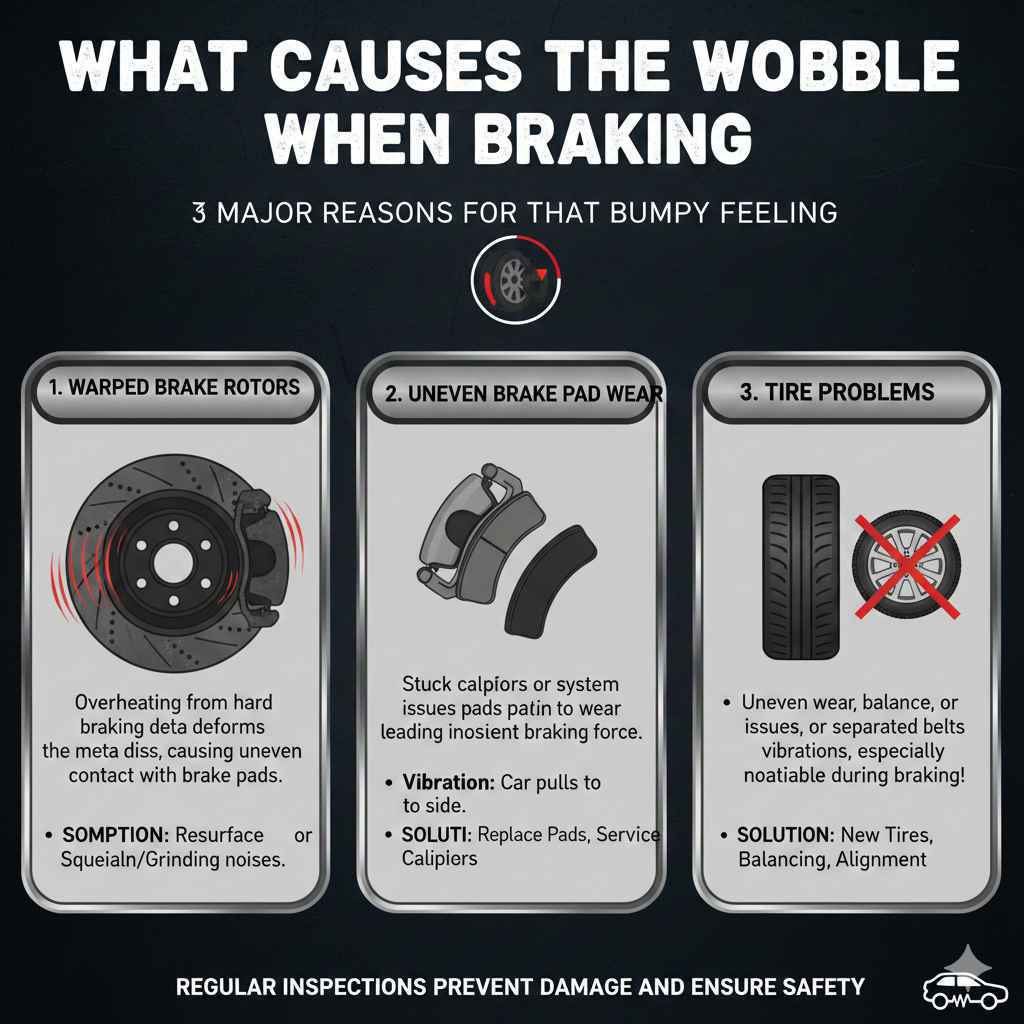
If the car wobbles mainly when you press the brake pedal, the brake system deserves a close inspection. A common cause is uneven brake rotor thickness or variation in the rotor’s surface, which can produce changes in braking force as the wheel turns.
Drivers often describe this as warped rotors. However, similar symptoms can come from uneven brake pad deposits, rotor mounting problems, worn suspension parts, or loose wheel components. The sensation alone cannot confirm that the rotor is warped.
A brake-related vibration may be felt through the pedal, steering wheel, or vehicle body. If the car also pulls to one side, the pedal feels unusually soft, braking performance drops, or a grinding sound develops, stop driving when safe and seek urgent help.
Source: cdn.thedailyautomotive.com
Steering wheel shakes during braking
Possible causes include front brake rotor variation, uneven brake contact, wheel issues, or front suspension wear.
Brake pedal pulses
Pulsation may result from rotor thickness variation or other brake conditions. Some vehicles also produce normal pedal pulsation when ABS activates during a hard stop or on slippery surfaces.
Vehicle pulls during braking
Uneven braking force, a sticking caliper, tire problems, or suspension faults may cause the car to pull.
Grinding or burning smell
These signs may indicate a serious brake issue. Stop safely and arrange an inspection rather than continuing the trip.
Why You Should Not Ignore Brake Vibration
Brakes are critical safety components. A vibration that occurs only during braking may seem less urgent than a wobble that happens all the time, but the vehicle may have a fault that affects stopping distance or directional control.
Have a technician inspect the rotors, pads, calipers, wheel fasteners, tires, and suspension as needed. Replacing rotors without finding the underlying cause can lead to repeat problems.
Stop driving
Stop when safe if braking is weak, the car pulls sharply, a brake warning appears with abnormal behavior, or grinding and severe vibration occur.
Book a brake inspection
A mild but repeatable vibration under braking still needs diagnosis before the problem worsens.
7. Worn Wheel Bearings Can Cause Vibration and Wheel Movement
A wheel bearing allows the wheel to rotate with low friction while supporting vehicle weight. When a bearing wears or becomes damaged, it may produce a humming, growling, or rumbling sound that changes with road speed.
Some bearing faults also cause vibration or excess wheel movement. The noise may change as the vehicle turns because the load on the bearing changes. However, tire noise, uneven tread, and other mechanical problems can produce similar sounds.
A severely damaged bearing can affect wheel stability and, in extreme cases, lead to loss of control or wheel separation. Do not ignore a growing rumble paired with wobbling, looseness, or abnormal handling.
Listen for changing noise
A humming or growling sound that rises with road speed can be a clue, especially when paired with vibration.
Watch for handling changes
New wheel looseness, severe vibration, or a wheel that appears unstable needs urgent inspection.
Avoid home road tests
Do not weave across lanes or make sharp turns to provoke a bearing noise. Such tests can put you and others at risk.
Can a Bad Wheel Bearing Make a Car Wobble at Low Speed?
Yes, a badly worn bearing can contribute to wheel movement and vibration at low speeds, but low-speed wobbling has many other possible causes. Tire damage, a bent wheel, loose wheel fasteners, and damaged suspension parts should also be considered.
A technician can check bearing condition, wheel play, noise, and related components. The correct inspection method depends on the vehicle’s design, so a lack of obvious noise does not rule out a bearing fault.
Seek urgent help
Arrange a tow if a suspected bearing problem comes with severe wobbling, obvious looseness, grinding, or loss of control.
8. Engine or Transmission Mounts May Cause Wobbling During Acceleration
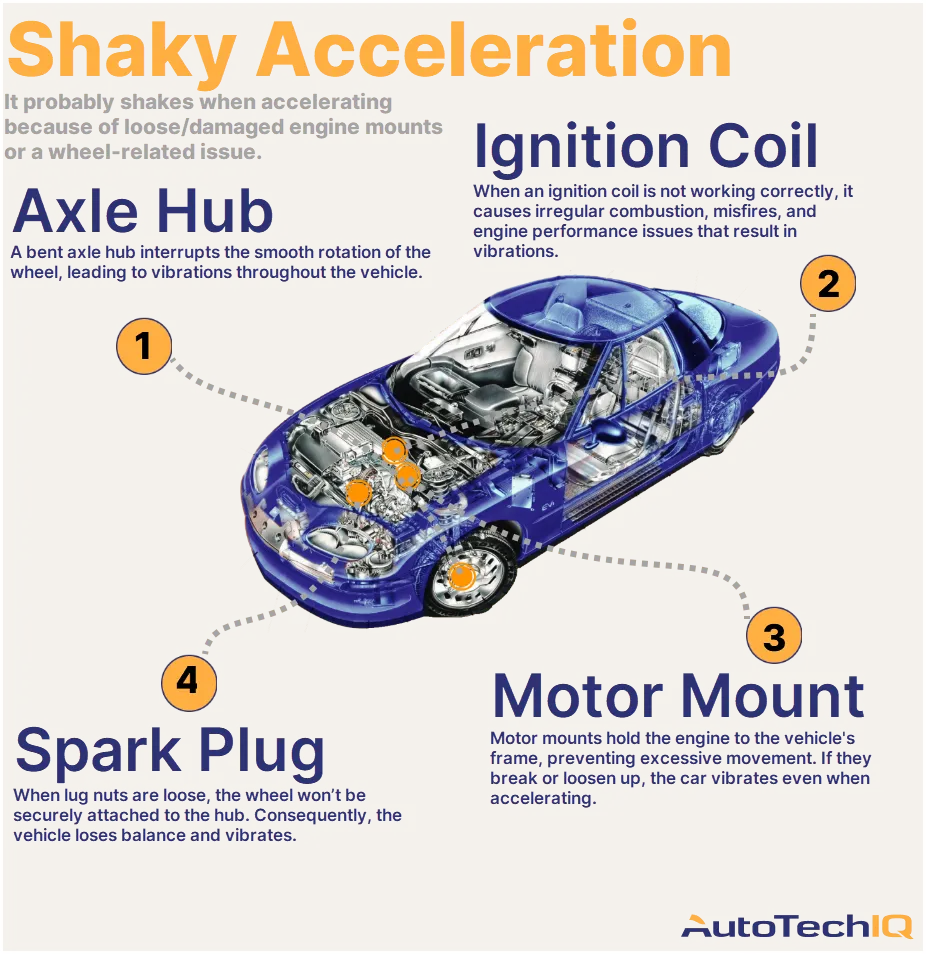
If the car shakes mainly while accelerating, the problem may involve the engine, transmission, or drivetrain rather than wheel balance alone. Engine and transmission mounts help hold these assemblies in place while limiting the vibration they transfer to the body.
Worn or broken mounts may allow too much movement when the engine produces more torque. The result can feel like a shudder, thump, or vibration when pulling away from a stop or changing between drive and reverse.
A mount fault is not the only explanation. A misfiring engine, worn axle joint, damaged driveshaft, or transmission issue can also cause shaking under load. The repair depends on whether the vibration follows engine speed, road speed, or the amount of acceleration.
Engine mount wear
Excess engine movement, clunks during gear changes, or vibration that becomes stronger under load may point toward worn mounts.
Transmission mount wear
A damaged mount may cause body vibration or a thump when the drivetrain changes load.
Engine misfire
An engine that runs unevenly may shake during acceleration or at idle. A flashing check-engine light can signal a fault that needs prompt attention.
How Engine-Speed Vibration Differs From Wheel Vibration
Wheel-related vibration usually follows road speed because the wheels rotate faster as the car moves faster. Engine-related vibration may change with engine speed, even when the car is not moving.
Do not rev the engine aggressively or shift gears repeatedly to test the problem. Tell the mechanic whether the vibration occurs at idle, during acceleration, at a steady cruise, or only while the transmission changes gears. Those details help guide diagnosis.
Vibration at idle
Possible causes include an engine misfire, worn mounts, rough engine operation, or another engine-management problem.
Vibration only under load
Possible causes include mounts, axle joints, driveline parts, or engine performance faults.
9. Damaged CV Axles or Driveshaft Parts Can Cause a Wobble
The drivetrain transfers engine power to the wheels. Depending on the vehicle, it may include CV axles, driveshafts, universal joints, and other rotating components. Wear or damage in these parts can cause shaking, particularly during acceleration.
A front-wheel-drive vehicle with a worn outer CV joint may click during tight turns. An inner CV joint or another axle problem can cause vibration under acceleration. Rear-wheel-drive and all-wheel-drive vehicles may develop vibration from a damaged driveshaft, worn joint, or related driveline fault.
The location of the vibration does not always identify the failed part. Drivetrain faults can be felt through the seat, floor, steering wheel, or entire vehicle. A mechanic may need to inspect the joints, shafts, boots, mounts, and related components.
Shaking during acceleration
A vibration that grows under engine load and eases when you release the accelerator may indicate an axle or driveline problem, although other causes remain possible.
Clicking during turns
Repeated clicking while turning can be a clue to an outer CV joint problem, especially if a protective boot is damaged and grease has escaped.
Thumping under load
A thump when accelerating or changing direction may involve a joint, mount, or loose driveline component.
When Drivetrain Vibration Becomes Dangerous
A small vibration may have several possible explanations, but a sudden increase in shaking, loud metallic banging, or a major change in vehicle control calls for immediate attention. A damaged rotating component can deteriorate further under load.
Do not get under the vehicle to inspect an axle or driveshaft while it is running. If the car vibrates severely, makes loud mechanical noises, or feels unstable, stop in a safe place and arrange a tow.
Describe the trigger
Tell the mechanic whether the wobble occurs during acceleration, coasting, turning, or shifting between gears.
Ask for inspection of axle joints, driveshafts where fitted, mounts, wheel bearings, tires, and suspension components.
10. Loose Wheel Nuts Are a Serious Safety Risk
Loose wheel nuts or bolts can allow a wheel to move against the hub. This can cause wobbling, knocking, vibration, and damage to the wheel mounting surfaces. If the problem progresses, the wheel may detach.
This issue deserves special attention if the wobble starts soon after a tire change, rotation, brake repair, or other work that required wheel removal. Improper tightening, damaged threads, dirty mounting surfaces, or unsuitable hardware can all contribute to wheel-fastener problems.
If a wheel looks tilted, you hear repeated knocking from a wheel, or you suspect the wheel is loose, stop driving. Do not try to solve the problem by continuing to a shop at highway speed.
Warning signs
New wobbling after wheel service, a rhythmic clunk, visible wheel movement, or missing wheel nuts or bolts requires immediate attention.
Correct repair
A technician should inspect the fasteners, wheel, hub, and mounting surfaces and tighten the hardware to the vehicle maker’s specified torque.
Avoid guesswork
Do not assume that tightening one visible nut will fix the problem. Damaged threads or mounting surfaces may require repair or replacement.
Why Proper Wheel Torque Matters
Wheel fasteners must be tightened to the specification for the vehicle and wheel setup. Too little clamping force can allow movement, while excessive or uneven tightening can damage parts or create other service problems.
A torque wrench and the correct service procedure help ensure proper tightening. If you are unsure whether a wheel is secure, have it inspected rather than attempting a roadside repair in traffic.
After tire service
Follow the shop’s instructions and the vehicle manufacturer’s guidance for any required follow-up checks.
If a wheel may be loose
Stop in a safe place and arrange professional assistance. Do not continue driving to see whether the vibration gets worse.
11. Poor Wheel Alignment Can Contribute to Instability
Wheel alignment sets the angles of the wheels to the vehicle and to one another. When those angles fall outside the intended range, the car may pull to one side, the steering wheel may sit off-center, or the tires may wear unevenly.
Alignment problems often follow impacts with potholes or curbs, but worn suspension parts can also cause alignment to change. If the suspension has a loose joint or damaged control arm, an alignment alone may not hold until the underlying fault is repaired.
Poor alignment is not the only explanation for a wobble. A car can pull because of tire pressure differences, tire construction problems, brake faults, or road slope. A proper inspection should separate these possibilities.
Car pulls to one side
Check for unequal tire pressure and seek an inspection if the pull persists. Tire, brake, alignment, and suspension issues may be involved.
Steering wheel is off-center
This can point toward alignment issues, but it may also follow steering or suspension damage.
Uneven tire wear
Feathered edges or wear concentrated on one side of the tread may indicate alignment or suspension problems.
Should You Get an Alignment After Hitting a Pothole?
An alignment check may be useful after a hard impact, particularly if the car begins pulling, the steering wheel sits crooked, or the tires develop unusual wear. However, the technician should first inspect the tire, wheel, steering, and suspension for damage.
If the wheel is bent or a steering joint is damaged, an alignment cannot make the vehicle safe by itself. Repair any damaged components first, then check the alignment as needed.
Inspect before adjusting
Confirm that the tires, wheels, steering, and suspension are suitable for alignment work.
Check the result
Ask for the alignment readings and whether any parts were found outside the adjustable range.
12. Quick Diagnostic Guide: Match the Wobble to Its Symptoms
The pattern of the wobble can help you choose the next inspection, but no single symptom proves which part has failed. Use the following table to organize what you notice and explain it clearly to a technician.
Safety comes first. If the vehicle is hard to control, the wobble is severe, or you see signs of tire or wheel damage, do not perform additional driving tests to gather more information.
Speed-related vibration
A wobble that grows with road speed may involve tire damage, wheel imbalance, a bent wheel, or a rotating drivetrain component.
Braking-related vibration
A shake that appears when braking may involve rotor thickness variation, brake components, tire or wheel problems, or worn suspension parts.
Acceleration-related vibration
Shaking under load may involve engine or transmission mounts, CV joints, driveshaft components, or engine misfires.
Unequal tire pressure, alignment issues, tire defects, brake faults, or damaged suspension parts may be responsible.
Noise with wobbling
Clunks, grinding, clicking, or humming help guide the inspection but must be interpreted alongside the vehicle’s handling and other symptoms.
A Practical Symptom Comparison
This table ranks possible inspection areas by the symptom reported, not by a confirmed diagnosis. Several faults can produce the same vibration, and more than one problem may be present.
Wobble after a pothole impact
Prioritize inspection of the tire, wheel, steering, and suspension before returning to normal speeds.
Wobble after new tires were installed
Ask the shop to check wheel balance, correct mounting, tire condition, and wheel-fastener torque.
Wobble that started during braking
Have the brake system, wheel mounting, tires, and suspension checked.
Wobble with a flashing check-engine light
A flashing light can indicate a serious engine misfire. Reduce engine load, pull over safely, and seek prompt assistance.
13. What to Do First When Your Car Starts Wobbling
The safest response depends on how severe the wobble is and whether the car remains under control. Do not keep driving simply to see if the vibration disappears. A damaged tire, loose wheel, or steering fault can become worse without much warning.
If the wobble is sudden or strong, keep a firm grip on the steering wheel, avoid sharp braking or abrupt steering if possible, and gradually reduce speed when the road and traffic allow. Move to a safe stopping place away from moving traffic.
Once parked safely, switch off the engine and look for obvious tire damage from a safe position. If the car is on a busy road, a narrow shoulder, or another unsafe location, stay away from traffic and contact roadside assistance or emergency services as appropriate.
Step 1: Assess control
If steering or braking feels abnormal, the car shakes violently, or you hear a loud bang, stop driving as soon as it is safe.
Step 2: Check visible warning signs
Look for a flat tire, sidewall bulge, missing wheel hardware, smoke, fluid leaks, or a visibly damaged wheel without putting yourself near traffic.
Step 3: Check tire pressure only when safe
If there is no visible damage and the car is safely parked, compare cold tire pressures with the manufacturer’s recommended values. Do not drive on a visibly damaged tire to reach an air pump.
Step 4: Arrange the right help
Use roadside assistance or a tow for severe or unexplained wobbling. For mild, stable symptoms with no warning signs, contact a repair shop for advice before deciding whether the vehicle can be driven there.
Step 5: Record the symptoms
Note the speed range, road conditions, braking or acceleration trigger, warning lights, recent impacts, and any recent tire or brake work.
When Is It Safe to Drive to a Repair Shop?
There is no universal rule that makes a wobbling car safe to drive at a particular speed or for a particular distance. A mild vibration may result from a balance problem, but the same broad symptom can also come from a damaged tire or loose wheel.
If the vehicle remains fully controllable, there is no visible tire or wheel damage, braking feels normal, and the wobble is slight and stable, call a qualified repair shop and describe the symptoms before deciding whether to drive. If the cause is uncertain or the wobble is getting worse, towing is the safer choice.
Do not drive
Avoid driving with a bulging or separating tire, suspected loose wheel, severe wobble, major steering play, serious brake symptoms, or a wheel bearing or suspension fault that may compromise control.
Seek prompt diagnosis
A mild but recurring vibration, uneven tire wear, or a steering wheel that shakes at certain speeds should be checked before long-distance or highway travel.
14. How Mechanics Diagnose a Wobbling Car
A good diagnosis starts with the driver’s description and a safe inspection, not with replacing the first part that seems likely to be faulty. A technician will consider the vehicle’s symptoms, recent repairs, mileage, road impacts, tire condition, and any warning lights.
The shop may inspect tire pressure and tread, look for damage, measure wheel balance and runout, check wheel-fastener torque, examine suspension and steering joints, and test the brakes. Depending on the symptom, the technician may also inspect wheel bearings, axles, driveshafts, engine mounts, and engine operation.
Some problems require more than a quick visual check. Internal tire damage, intermittent vibration, and faults that appear only under load may need specialized equipment or a controlled diagnostic test. A road test should be performed by a qualified technician only when the vehicle is considered safe to operate.
Tire and wheel inspection
The technician checks tire condition, pressure, balance, wheel shape, mounting, and signs of damage.
Steering and suspension inspection
Joints, bushings, control arms, shocks, struts, and other components are checked for wear, looseness, or damage.
Brake inspection
The technician evaluates pads, rotors, calipers, and related parts if the wobble appears during braking.
Drivetrain and engine checks
If the vibration follows acceleration or engine speed, the shop may examine mounts, axle joints, shafts, and engine performance.
How to Avoid Paying for the Wrong Repair
Ask the shop to explain what it found and how the finding relates to the wobble. For example, if wheel balancing is recommended, ask whether the technician also checked for tire damage or a bent wheel.
Request an estimate that separates required safety repairs from maintenance that can wait. If the diagnosis remains unclear, a second opinion may help, especially when the proposed repair is costly and the evidence is not explained.
Do not ask a shop to replace parts solely because they are common causes of vibration. The aim is to identify the failed component, correct any related damage, and confirm that the vehicle is safe to use.
Ask for findings
Request a clear explanation of the inspection results, any measurements taken, and the evidence supporting the diagnosis.
Check related components
A new tire, rotor, or suspension part may not solve the problem if another damaged component caused the symptom.
Confirm the repair
After the repair, the shop should verify the result using an appropriate procedure and confirm that no unresolved safety issue remains.
15. Common Mistakes to Avoid When Your Car Wobbles
The biggest mistake is treating every wobble as a wheel balance problem. Balance issues are common, but tire damage, loose wheel hardware, steering faults, suspension wear, and drivetrain problems can produce similar symptoms.
Another mistake is continuing to drive because the vibration disappears at a different speed. A symptom that comes and goes can still signal a mechanical fault. Some tire and wheel problems are most noticeable only within a certain speed range.
It is also risky to perform aggressive tests on public roads. Sudden braking, sharp turns, weaving between lanes, or speeding up to reproduce a wobble can make the vehicle harder to control and put other road users at risk.
Mistake: Assuming alignment fixes every wobble
Alignment changes wheel angles. It does not repair a damaged tire, loose wheel, worn bearing, or defective suspension joint.
Mistake: Ignoring visible tire damage
A sidewall bulge, exposed cords, deep cut, or tread separation calls for stopping and arranging assistance.
Mistake: Replacing parts without diagnosis
Guesswork can waste money and leave the original safety problem unresolved.
Mistake: Using the tire sidewall pressure as the target
Use the recommended cold pressure on the vehicle placard or in the owner’s manual, not the tire’s maximum pressure marking.
Mistake: Crawling under an unsupported car
Never place yourself under a vehicle supported only by a jack. Proper lifting equipment and safe procedures are essential.
Why a Small Wobble Still Deserves Attention
A mild vibration does not always mean a major failure is imminent, but it should not be ignored when it persists or changes. A small tire or wheel problem may be straightforward to repair, while continued use can worsen damage or affect other components.
Arrange an inspection before a long interstate trip if the car has a new vibration, unexplained pulling, or unusual tire wear. Early diagnosis can help avoid an unexpected breakdown and reduce the risk of a more expensive repair.
Act early
Book an inspection when the wobble is new, recurring, or getting stronger.
Prioritize safety
Choose roadside assistance rather than a test drive when the symptoms suggest tire, wheel, steering, suspension, or brake damage.
Frequently Asked Questions
Q
Why does my car wobble only at high speeds?
A wobble that appears at higher speeds may result from unbalanced wheels, tire damage, a bent rim, or worn steering and suspension parts. Some faults become more noticeable within a certain speed range because rotating forces increase as the wheels spin faster.
Have the tires and wheels inspected before continuing highway travel. If the wobble is severe, begins suddenly, or affects steering control, slow down safely, stop, and arrange a tow.
Q
Why does my car wobble when I accelerate?
Shaking during acceleration may come from worn engine or transmission mounts, damaged CV joints, axle or driveshaft problems, or an engine misfire. Tire and wheel faults can also remain noticeable while accelerating.
Notice whether the vibration follows road speed, engine speed, or the amount of acceleration. Share that information with a mechanic, and stop driving if the wobble becomes severe or the vehicle feels unsafe.
Q
Why does my car wobble when I brake?
A wobble during braking can be caused by brake rotor thickness variation, uneven brake pad deposits, a sticking caliper, wheel problems, or worn suspension components. A shaking steering wheel often directs attention toward the front wheels and brakes, but it does not confirm a specific failure.
Have the braking system inspected promptly. If braking feels weak, the car pulls sharply, grinding occurs, or the vibration is severe, stop driving when safe and arrange assistance.
Q
Can low tire pressure make a car wobble?
Yes. A tire with low pressure can flex more than intended and affect handling, especially if the pressure difference between tires is large. A tire that is losing air because of a puncture or structural defect can also cause unstable movement.
Check the tires when cold and use the pressure specified by the vehicle manufacturer. If a tire is visibly damaged, badly deflated, or has a sidewall bulge, do not drive on it to reach an air pump or repair shop.
Q
Is it safe to drive a car that wobbles?
It depends on the cause and severity, and you cannot reliably determine safety from the vibration alone. A mild wheel imbalance may not immediately affect control, but a damaged tire, loose wheel, failing bearing, or steering fault can create a serious risk.
Do not drive with severe or sudden wobbling, visible tire damage, suspected loose wheel hardware, major steering changes, or serious brake symptoms. Pull over safely and arrange roadside assistance or towing. If the symptom is mild and stable, contact a repair shop before deciding whether to drive there.
✦ Wrapping Up
Conclusion
A car that wobbles while driving may have a tire problem, unbalanced wheel, bent rim, worn suspension or steering parts, brake fault, wheel bearing issue, or drivetrain defect. The best clue is often when the wobble happens and where you feel it, but those details guide an inspection rather than prove a diagnosis.
Start with safety. If the wobble is sudden, severe, or paired with tire damage, loud mechanical noise, poor braking, or loose steering, stop driving and arrange assistance. For a mild but persistent vibration, have a qualified technician inspect the tires, wheels, brakes, steering, suspension, and drivetrain as the symptoms require.
A careful diagnosis can prevent unnecessary part replacement and help you avoid a breakdown on a busy American highway. Do not wait for a small wobble to become a major handling problem.
💡 Key Takeaway
If your car is wobbling now, pull over if the movement is severe or control feels uncertain. Check for obvious tire damage only when safely parked, then arrange a professional inspection before returning to normal driving.