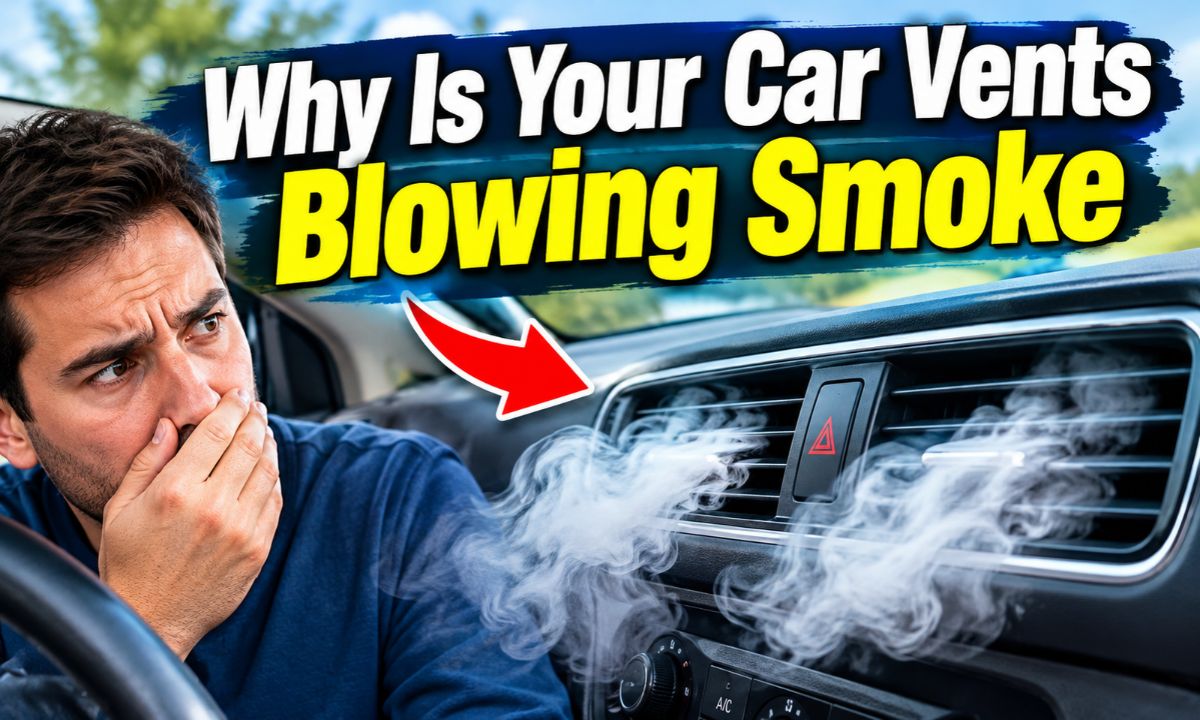
Car vents usually blow smoke-like vapor because of moisture, AC issues, coolant leaks, electrical problems, or outside smoke entering the cabin.
Drivers across the United States may notice a strange white cloud, mist, or smoke-like stream coming from their dashboard vents and immediately worry about a serious vehicle problem. In many cases, the cause is not actual smoke from the engine, but condensation from the air conditioning system or normal temperature changes inside the ventilation system.
However, true smoke from car vents should never be ignored. A burning smell, oily odor, sweet coolant smell, reduced visibility, or signs of overheating can point to problems that require attention. The safest approach is to identify the type of vapor, check related symptoms, and avoid continuing to drive if there is a possible fire or coolant issue.
What Does Smoke Coming From Car Vents Usually Mean
The first step is to determine whether the substance is smoke, steam, or water vapor. Many drivers use the word smoke for any cloud coming from the vents, but these problems have different causes. A thin white mist that disappears quickly is often harmless condensation from the air conditioning system.
Actual smoke usually has a smell and may leave irritation in the eyes or throat. It can come from electrical wiring, heated materials, fluids contacting hot surfaces, or a failing HVAC component. The color, smell, and timing of the smoke provide important clues.
White vapor
Often related to AC condensation or temperature differences. It should usually disappear quickly and should not smell burnt.
Gray or dark smoke
May indicate overheating materials, electrical problems, or smoke entering from another vehicle or engine area.
Smoke with odor
A burning, sweet, chemical, or musty smell can help identify the source.
Why Color and Smell Matter
Color alone does not always identify the problem, but smell often narrows the possibilities. A sweet smell can be linked with engine coolant, while a burnt plastic smell may suggest an electrical concern. A musty smell often points toward moisture buildup in the HVAC system.
Check when it happens
Note whether the smoke appears only with AC use, heater use, startup, or after driving for a long time.
Common Causes of Smoke or Vapor From Car Air Vents
Several vehicle systems connect near the dashboard vents, including the air conditioning system, heater core, blower motor, wiring, and air ducts. A problem in any connected area can make it appear that the vents themselves are producing smoke.
Finding the cause requires checking the most common and safest possibilities first. Simple condensation problems are common, while electrical or coolant-related problems need faster attention.
AC system condensation
Cold AC parts can create moisture. When humid air meets cold air, visible mist may appear briefly from vents.
Dirty cabin air filter
A clogged filter can restrict airflow and allow moisture or odors to build inside the ventilation system.
Heater core leak
A damaged heater core can allow coolant vapor into the cabin and may create a sweet smell or foggy windows.
Electrical overheating
Damaged wiring, a failing blower motor, or overheated electrical parts can create real smoke.
AC Condensation Versus Real Smoke
Air conditioning systems remove heat and moisture from cabin air. Under humid conditions, the cooled air leaving the vents may look like smoke because tiny water droplets become visible. This is generally harmless if the vapor has no unusual smell and stops after conditions change.
Real smoke behaves differently. It often continues, carries an odor, and may appear alongside electrical issues, unusual sounds, or dashboard warning signs.
Usually normal
Short-lived white mist with no smell and normal vehicle operation.
Needs checking
Persistent smoke, burning odor, heat from vents, or electrical symptoms.
How to Troubleshoot Car Vents Blowing Smoke Safely
The safest troubleshooting method starts with observation rather than taking parts apart. A driver can collect useful information by checking when the smoke appears, what it smells like, and whether other vehicle systems are affected.
Avoid touching hot components or continuing to drive when smoke appears to increase. If there is a possible electrical fire, stop the vehicle in a safe location, turn off the ignition, and seek professional assistance.
Step 1: Turn off the HVAC system
Switch off the AC or heater and see whether the smoke stops. This helps separate HVAC problems from other sources.
Step 2: Identify the smell
Notice whether the odor is sweet, burnt, oily, chemical, or musty.
Step 3: Check warning signs
Look for overheating, coolant loss, electrical warnings, or unusual sounds.
Step 4: Inspect simple maintenance items
A cabin air filter or blocked drain may contribute to moisture and odor problems.
When You Should Stop Driving
Stop driving if smoke has a strong burning smell, becomes thick, comes with electrical problems, or appears together with engine overheating. Continuing to operate a vehicle with an electrical or coolant problem can increase repair costs and safety risks.
Emergency signs
Flames, heavy smoke, melting smells, loss of power, or rising engine temperature require immediate action.
Common Mistakes Drivers Make When They See Smoke
Many drivers assume every white cloud means engine failure or assume every small mist is harmless. Both reactions can lead to mistakes. The correct response depends on the source, smell, and related symptoms.
Ignoring repeated smoke is the most serious mistake. A problem that starts as a minor odor or small vapor cloud can become more expensive if a damaged component continues to operate.
Ignoring smells
A smell often provides earlier warning than visible smoke.
Using the AC without checking
Repeated smoke-like vapor should be investigated if it changes from normal behavior.
Trying unsafe repairs
Electrical and cooling system repairs may require proper tools and knowledge.
How Different Symptoms Point to Different Problems
The combination of symptoms is more useful than a single sign. For example, white vapor with no smell and normal temperature usually suggests condensation, while a sweet smell with foggy windows may suggest a coolant-related issue.
Use the table below as a basic guide, not as a final diagnosis. Vehicle designs vary, and a proper inspection may be needed.
Mist only
Often linked to AC moisture and temperature changes.
Burning smell
May involve electrical parts or overheated materials.
Sweet smell
May indicate coolant entering areas where it should not.
Frequently Asked Questions
Q
Is white smoke from car AC vents normal?
A short burst of white mist without smell can be normal because of AC condensation. Persistent vapor or unusual odors should be checked.
Q
Why do my vents smell like something is burning?
A burning smell may come from electrical parts, debris near hot components, or overheating materials. Turn off the system and inspect the issue before continued use.
Q
Can a bad heater core cause smoke from vents?
A leaking heater core can create vapor inside the cabin and may produce a sweet coolant smell. It usually needs professional repair.
Q
Should I drive if smoke is coming from dashboard vents?
Do not continue driving if smoke is thick, smells burnt, or appears with overheating or electrical problems. Safety should come first.
Q
Can a dirty cabin air filter cause vent smoke?
A dirty filter usually causes poor airflow and odors rather than true smoke, but it can contribute to moisture-related issues.
✦ Wrapping Up
Conclusion
Car vents blowing smoke can have simple explanations like AC condensation, but it can also signal problems involving coolant, wiring, or HVAC components. The key is to identify whether the cloud is harmless vapor or actual smoke.
Pay attention to smell, color, timing, and other warning signs. A careful check can prevent unnecessary repairs, while serious symptoms should be handled by a qualified technician.
💡 Key Takeaway
If your car vents release smoke-like material, turn off the HVAC system, check the symptoms, and avoid driving until dangerous causes have been ruled out.