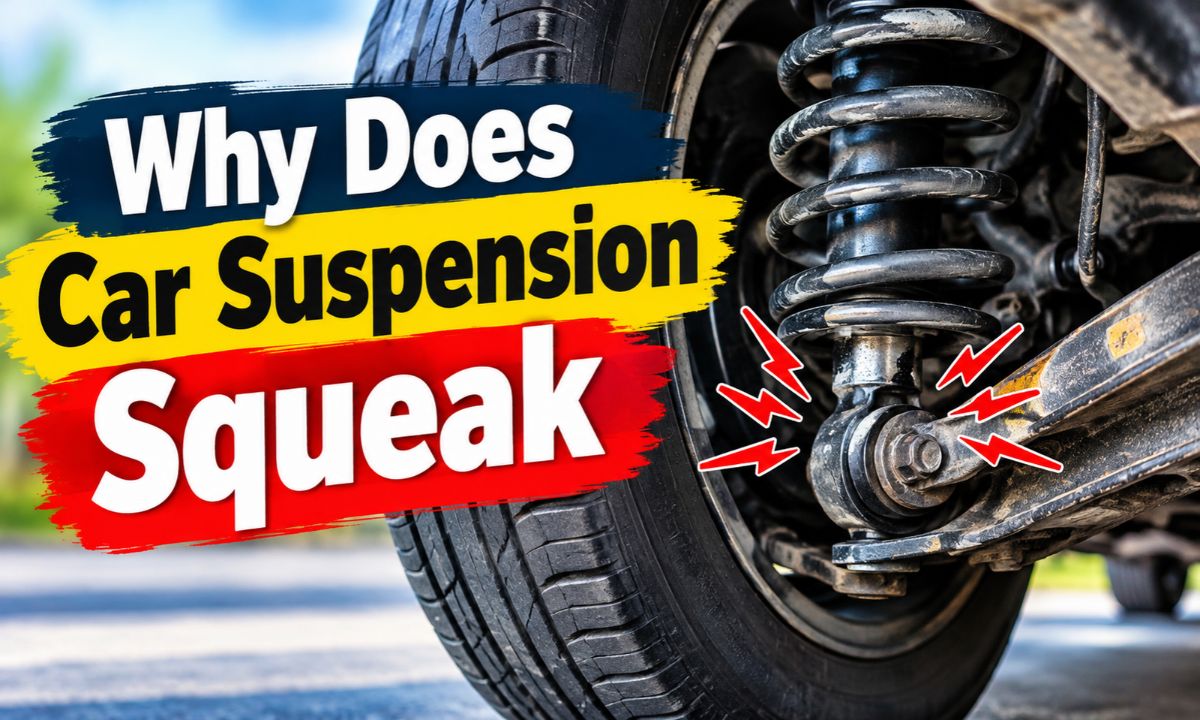
Car suspension squeaks usually come from dry or worn bushings, ball joints, sway bar parts, or damaged struts. The right fix depends on where the sound starts and when it occurs.
If your car squeaks when you pull out of your driveway, cross a speed bump, or turn into a parking spot, the suspension may be the source. In the United States, daily driving can expose suspension parts to potholes, rough pavement, winter road salt, rain, and wide changes in temperature. These conditions can wear rubber parts and allow moisture or dirt to affect moving joints.
A squeak does not always mean a major repair is needed. A worn rubber bushing may make noise as it twists, while a loose joint or damaged strut mount may create sounds that need prompt attention. The key is to notice when the noise happens, check for other symptoms, and avoid guessing at a repair before the cause is clear.
This guide explains the most common causes, the warning signs to watch for, and the safe steps you can take before visiting a repair shop. It also explains when lubrication may help, why some noises need replacement parts, and how to decide whether your car is safe to drive.
Car suspension squeaks when parts rub, twist, or move against one another and create vibration. The suspension connects the wheels to the vehicle body while helping the tires stay in contact with the road. It uses springs, dampers, joints, bushings, and links that must move in a controlled way.
Many suspension parts use rubber or other flexible materials to reduce vibration. These parts can harden, crack, or wear over time. Metal joints may also lose proper lubrication or develop excess movement, which can produce a squeak, creak, groan, or knock.
The sound may change with weather, road conditions, vehicle load, or steering angle. For example, a rubber bushing may squeak more in cold weather, while a worn joint may make noise as the suspension moves through its range. These patterns offer clues, not a final diagnosis.
Squeaking over bumps
Possible causes include control arm bushings, sway bar bushings, strut mounts, or worn suspension joints.
Squeaking while turning
Possible causes include a strut mount, ball joint, steering joint, or another part that moves as the wheels turn.
Squeaking when entering a driveway
The suspension may be twisting as the car crosses an uneven surface, placing extra movement on its bushings and joints.
Squeaking with a clunk or loose feel
A worn or loose component may be allowing unwanted movement and needs prompt inspection.
Is a Suspension Squeak Always Serious?
No. Some squeaks come from minor friction or a component that needs an approved service procedure. However, a sound that begins suddenly, grows louder, or occurs with changes in handling deserves more attention.
A suspension part can wear without making much noise, and a loud squeak does not always mean the part is unsafe. A mechanic should inspect the relevant parts and check for looseness, damage, and abnormal movement before deciding what to replace.
Lower concern
A brief squeak over one type of bump with no change in steering, braking, tire wear, or handling still warrants monitoring.
Higher concern
A squeak with a clunk, wandering steering, excessive body movement, a visibly damaged part, or a change in ride height needs prompt professional assessment.
Common Causes of Squeaky Car Suspension
Several suspension parts can make similar sounds, so the best starting point is to match the noise to the conditions in which it occurs. The most likely cause depends on the vehicle design, mileage, maintenance history, and visible condition of its parts.
The causes below are common possibilities rather than a guaranteed diagnosis. A noise that seems to come from the front wheel may travel through the frame, making the source harder to locate by ear alone.
Worn control arm bushings
Rubber bushings cushion the connection between a control arm and the vehicle frame. When they crack, harden, or separate, they may squeak as the suspension moves.
Dry or worn ball joints
Ball joints let suspension parts pivot. A worn joint may squeak or creak, but looseness, play, or damage can pose a serious safety risk.
Sway bar bushings and links
These parts help control body roll during turns. Worn bushings may squeak as the sway bar twists, while damaged links may clunk or rattle.
Struts and shock absorbers
Damaged mounts, worn internal parts, or related suspension joints can cause squeaks or creaks. Oil leaking from a damper may indicate a problem, but not every damp-looking surface proves failure.
Strut mounts and bearings
Some front strut mounts include bearings that allow the assembly to rotate during steering. Wear or binding can cause groaning, squeaking, or popping while turning.
Coil springs and spring seats
A damaged spring, worn spring seat, or shifted isolator may rub as the suspension compresses. A broken spring can also affect ride height and damage a tire.
Other parts mistaken for suspension faults
Brake hardware, a loose heat shield, a worn steering component, or a rubber door seal can produce similar noises. The sound must be traced to its actual source.
Control Arm Bushings: A Common Source of Creaks
Control arm bushings absorb movement between metal suspension parts and help keep wheel alignment stable. Their rubber material flexes each time the wheel rises or falls, so aging rubber may begin to squeak when it twists under load.
Look for visible cracks, separation, or unusual movement only from a safe viewing position. A bushing can be worn internally even when its outer surface looks acceptable, so a visual check cannot rule out a fault.
The proper repair depends on the vehicle and bushing design. Some bushings can be replaced separately, while others are serviced as part of a complete control arm assembly. The repair may also require a wheel alignment.
Typical clue
A rubbery creak over driveway ramps, speed bumps, or uneven pavement.
Common repair
Replace the worn bushing or the applicable suspension assembly after confirming the source.
Ball Joints and Steering-Related Parts
Ball joints carry suspension loads while allowing controlled movement. When their protective boots fail or internal surfaces wear, contamination and loss of lubrication can contribute to noise and wear.
Do not assume that a ball joint only needs grease because it squeaks. Many modern joints are sealed and are not designed for routine lubrication. A worn joint may need replacement even if its noise temporarily changes after moisture or lubricant reaches it.
If steering feels loose, the vehicle wanders, a wheel appears out of position, or a squeak comes with a sharp clunk, arrange an inspection promptly. If control feels impaired or a joint may be close to failure, do not drive the car to the shop.
Typical clue
A creak during steering or suspension movement, sometimes accompanied by looseness or uneven tire wear.
Common repair
Inspect joint play and the protective boot, then replace the faulty component as required by the vehicle design.
Sway Bar Bushings and End Links
A sway bar links the suspension sides to help reduce body roll during cornering. Rubber bushings hold the bar in place while allowing it to twist, and the end links connect the bar to suspension components.
When these parts wear, the car may squeak or creak over small bumps and uneven roads. Damaged links more often produce a rattle or clunk, although the exact sound varies by design and condition.
A mechanic can inspect the bushings, link joints, fasteners, and mounting points. Replacing a confirmed worn part is more reliable than spraying lubricant onto the assembly without checking whether the product is approved for the material.
Typical clue
A noise over uneven pavement or when one wheel rises higher than the other.
Common repair
Replace worn bushings or links and tighten or repair mounting hardware according to the service procedure.
How to Identify the Source of the Squeak
Start by recording when the noise occurs instead of immediately replacing parts. The most useful clues are the road surface, vehicle speed, steering angle, weather, and whether the car is moving or parked.
These observations help a mechanic reproduce the sound and narrow the inspection. They cannot confirm a failed component on their own because several parts may move at the same time.
Step 1: Note When the Sound Happens
Drive only if the vehicle feels stable, steering works normally, and there are no warning signs of a dangerous fault. On a familiar, quiet route, note whether the sound happens over bumps, while turning, when braking, or as the car moves from a stop.
Do not create sharp turns, drive over obstacles, or repeatedly hit bumps to reproduce the noise. If the car has a steering problem, a loose wheel, or an obvious suspension defect, skip the road test and arrange an inspection.
Over bumps
Ask the mechanic to check bushings, sway bar parts, strut mounts, springs, and suspension joints.
During turns
Include the strut mount bearings, ball joints, steering joints, and related parts in the inspection.
During braking
Have both suspension and brake hardware checked, since brake-related noise can sound similar.
While parked and steering
A controlled check by a qualified technician may help isolate a steering or strut mount issue. Do not place hands near moving components.
Step 2: Check for Visible Warning Signs
Park on level ground, switch off the engine, set the parking brake, and let hot parts cool. From outside the vehicle, compare the ride height on each side and look for a visibly damaged spring, a tire rubbing against another part, or fluid on a shock absorber or strut.
Do not crawl under the vehicle or reach into the wheel well if the car is unstable or if a wheel or suspension part appears damaged. Springs store substantial energy, and a suspension assembly can move unexpectedly. Leave close inspections to a qualified mechanic.
Uneven ride height
A broken spring, damaged suspension part, or another fault may be lowering one corner.
Visible damage
Cracked rubber, a torn joint boot, a broken spring, or loose hardware needs professional assessment.
Uneven tire wear
Suspension wear or incorrect wheel alignment may be involved, but tire pressure and other causes also need checking.
Step 3: Tell Suspension Noise Apart From Other Sounds
Not every squeak near a wheel comes from the suspension. Brake pads and hardware can squeal, a wheel bearing may hum or growl, and steering components can make noises that seem to come from the suspension.
A squeak that changes when you apply the brake should prompt a brake inspection. A noise that rises with road speed, especially a hum or growl, may point toward a wheel bearing or tire issue rather than a rubber suspension bushing.
If the sound comes from the engine bay, changes with engine speed, or occurs when the car is stationary without suspension movement, other systems may be involved. Share these details with the mechanic rather than asking for a specific part to be replaced.
Brake squeal
May occur when braking and can come from pad material, wear indicators, or brake hardware.
Wheel bearing noise
Often presents as a hum, growl, or rumble that changes with vehicle speed or turning load.
Belt or engine noise
May occur with the engine running and may change with engine speed rather than wheel movement.
Expert Fixes for a Squeaky Suspension
The correct fix is the one that addresses the failed or noisy part, not simply the one that makes the sound disappear for a short time. A mechanic should inspect the suspension, confirm the cause, and follow the vehicle maker’s repair instructions.
Some problems call for cleaning or approved lubrication. Others need replacement parts, new fasteners, alignment, or additional repairs. The distinction matters because a quiet suspension is not necessarily a safe suspension.
Fix 1: Lubricate Only Approved Service Points
Some suspension designs use serviceable joints or bushings that call for a specified lubricant. If the manufacturer permits lubrication, applying the correct product at the correct point may reduce friction and noise.
Many modern ball joints and other joints are sealed. Rubber bushings also vary in material and design, so petroleum-based products or general-purpose sprays may damage some parts or affect their operation. Check the service manual before applying anything.
Do not spray lubricant onto brake rotors, pads, tires, belts, or other surfaces where reduced friction can create a hazard. If the squeak returns quickly, the component may be worn or the source may have been misidentified.
Best use
A manufacturer-approved procedure for a confirmed serviceable component.
Not a repair for
Cracked bushings, worn sealed joints, broken springs, damaged mounts, or other failed components.
Fix 2: Replace Worn Bushings
When a bushing has cracked, separated, hardened, or developed excessive movement, replacement is often the lasting solution. Depending on the design, the shop may replace one bushing or the full control arm or sway bar assembly.
The repair must follow the correct procedure for bolt torque and suspension position. Some bonded rubber bushings need their fasteners tightened at a specified suspension height to avoid putting the rubber under constant twist at normal ride height.
After the repair, the technician should check wheel alignment if the work affects alignment settings or if the vehicle maker calls for it. A successful repair should address the original noise without creating a new handling or tire-wear problem.
Lasting solution
Replace the confirmed damaged part with a suitable component and install it using the correct procedure.
Fix 3: Replace Worn Ball Joints or Steering Joints
A ball joint or steering joint with excessive play, damage, or wear must be assessed against the vehicle maker’s limits. If replacement is required, the shop should use the correct component and fasteners and follow the prescribed installation steps.
These joints affect wheel control, so this is not a suitable repair to postpone simply because the car still moves. Depending on the fault, continued driving can worsen the damage and increase the risk of losing control.
If a technician finds serious joint looseness or a component close to failure, ask whether the vehicle must be towed. Do not assume it is safe to drive just because the squeak is intermittent.
Repair goal
Restore the joint’s proper movement and load-bearing function, then verify steering and alignment as needed.
Fix 4: Inspect Struts, Shocks, and Mounts
A damaged strut mount, worn bearing, defective shock absorber, or broken spring may need replacement. The mechanic should determine which part is faulty rather than automatically replacing every component near the noise.
Shock absorbers and struts help control spring movement. If the vehicle bounces excessively after bumps, feels unstable, or shows uneven tire contact, the problem may extend beyond a simple squeak.
Strut removal can involve compressed coil springs that store dangerous energy. Use a properly equipped repair facility for this work unless you have the correct tools, training, and service information. Incorrect handling can cause serious injury.
Check before replacing
Inspect for leakage, damage, abnormal movement, worn mounts, spring damage, and other symptoms.
After repair
Check alignment and related suspension parts according to the vehicle’s service requirements.
Fix 5: Repair Sway Bar Bushings and Links
Worn sway bar bushings may be replaced with the correct parts and installed with approved lubricant if the design requires it. End links with worn joints or damaged boots usually need replacement rather than an attempt to silence them with spray.
The shop should inspect mounting brackets, fasteners, and nearby components. A loose bracket or damaged mount can cause noise even when the rubber itself is not the main problem.
Check the complete assembly
Inspect bushings, links, brackets, fasteners, and nearby suspension parts before deciding on the repair.
Can Weather, Dirt, or Road Salt Cause Suspension Squeaks?
Yes. Weather and road conditions can change how a suspension sounds, especially when rubber parts are aging or exposed to moisture and grit. A noise that appears after rain or on a cold morning may become quieter later, but that change does not prove the parts are in good condition.
In parts of the United States, winter road salt can speed corrosion on exposed metal parts and fasteners. Potholes and rough pavement can also place extra loads on joints, bushings, springs, and dampers.
Cleaning away loose dirt from accessible exterior areas may help with general maintenance, but do not direct high-pressure water at seals or bearings or assume that washing will cure a worn component. A recurring noise should be inspected if it persists or comes with other symptoms.
Why the Noise May Be Worse in Cold Weather
Cold temperatures can change the flexibility of rubber and the behavior of lubricants. Aging bushings may become noisier as they flex, while moisture or surface corrosion can affect other moving parts.
If the sound appears only during the first few minutes of a cold drive and then fades, record the pattern and mention it at the next inspection. If the noise is new, severe, or linked to poor handling, do not wait for warmer weather to see whether it disappears.
Temporary pattern
The sound changes with temperature but no other symptoms are present; monitor it and arrange an inspection if it persists.
Persistent pattern
The squeak continues in different conditions or grows louder; have the suspension and related systems checked.
How Road Salt and Potholes Affect Suspension Parts
Road salt and moisture can contribute to corrosion on suspension hardware. Deep potholes can bend or damage parts, affect alignment, or worsen existing wear.
After a hard pothole impact, check for a visibly damaged tire, a bulge in the sidewall, a bent wheel, or a new change in steering. If the vehicle pulls sharply, vibrates severely, or appears unstable, stop driving in a safe place and arrange professional help.
Preventive care
Follow the vehicle maker’s maintenance guidance and rinse road salt from accessible areas when practical.
After an impact
Arrange an inspection if a new squeak, pull, vibration, or tire problem appears.
When Is a Squeaky Suspension Unsafe to Drive?
A mild squeak without any other symptoms may not require an emergency stop, but you should not judge safety by sound alone. Suspension parts help control wheel movement, tire contact, steering response, and vehicle stability.
Stop in a safe location and seek roadside assistance if you notice severe steering changes, a wheel that appears displaced, a broken spring near a tire, a tire rubbing against the body, or a sudden loss of vehicle control. Do not continue driving to see whether the sound gets worse.
A vehicle with a suspected failed ball joint, damaged steering linkage, or badly broken suspension part may need towing. A qualified mechanic can determine whether the car can be driven safely after inspection.
Steering feels loose or unpredictable
A joint, steering component, tire, or alignment problem may affect control. Stop driving if control is impaired.
The car leans or sits unusually low
A broken spring or other suspension fault may be present. Avoid driving if the tire can contact the body or the vehicle is unstable.
A new clunk accompanies the squeak
Excess movement or loose hardware may be involved. Arrange prompt inspection and avoid driving if the handling has changed.
The vehicle bounces or sways excessively
A damper, spring, tire, or other component may be affecting stability. Get the vehicle checked before normal use.
The tire shows damage after an impact
A sidewall bulge, exposed cord, or severe cut needs immediate attention. Do not drive on a tire with serious structural damage.
Can You Drive With a Squeaky Suspension?
Possibly, if the noise is mild, the car handles normally, and no damage or other warning signs are present. However, a remote description cannot confirm that a suspension joint or mounting point is safe.
Arrange an inspection soon if the squeak is new or keeps returning. If the noise comes with steering problems, severe bouncing, wheel movement, or visible damage, do not drive the vehicle until a qualified professional has assessed it.
Drive cautiously only when appropriate
A mild isolated noise with normal handling may allow a short trip to a repair shop, provided there are no warning signs and the vehicle remains stable.
Choose towing when in doubt
If a safety-critical component may have failed or the vehicle feels unsafe, use roadside assistance rather than risking further travel.
How Much Does It Cost to Fix a Squeaky Suspension?
The cost depends on the failed part, vehicle design, local labor rates, parts quality, and whether related work is needed. A simple service procedure may cost much less than replacing a control arm, strut assembly, or several worn joints.
There is no reliable single price for every squeaky suspension. A shop must identify the source and inspect for related damage before giving a meaningful estimate. The figures on a quote may also differ based on whether the repair uses original equipment parts or compatible aftermarket components.
Ask for a written estimate that separates diagnosis, parts, labor, alignment, and any additional work. This makes it easier to compare repair options without choosing a cheaper fix that leaves the actual problem unresolved.
Inspection or diagnosis
The shop identifies the noise source and checks for worn or damaged parts. Some shops apply a diagnostic fee that may or may not be credited toward repair.
Bushing replacement
Cost varies with access, whether the bushing is sold separately, and whether a complete arm or assembly is required.
Ball joint or link replacement
The design, fasteners, corrosion, and labor needed to access the component affect the final price.
Strut or shock replacement
Parts, spring handling, mount condition, and whether one or more components need replacement affect the bill.
Wheel alignment
An alignment may be needed after certain suspension repairs. Ask whether it is included in the quote.
How to Review a Repair Estimate
Ask the mechanic to show you the damaged part or explain the test that confirmed the fault. A clear estimate should identify the component, the proposed repair, and any related work that is required by the service procedure.
If several parts are recommended, ask which ones are unsafe, which are worn but can be scheduled later, and what evidence supports each recommendation. Safety-critical repairs should take priority over cosmetic concerns or minor noises.
A second opinion can help when the cause remains uncertain or the estimate includes many parts without a clear explanation. Do not delay urgent repairs simply to shop for a lower price.
Request clear details
Ask for the exact part, the reason it failed, the labor charge, the warranty terms, and any alignment requirement.
Compare like with like
Check that quotes cover the same parts, labor, diagnostic work, and required follow-up procedures.
Mistakes to Avoid When Fixing a Squeaky Suspension
The biggest mistake is treating the sound instead of finding the cause. A spray may quiet one contact point while a worn joint, cracked bushing, or loose mount remains in place.
Another common error is replacing parts based only on where the noise seems to come from. Suspension components transfer sound through metal structures, and several parts may move together. A proper diagnosis reduces the risk of paying for repairs that do not solve the problem.
Using any lubricant on rubber
Some products can harm rubber or plastic. Use only a product approved for the specific component and service procedure.
Ignoring a new clunk or steering change
These symptoms may point to excessive movement or a safety-related fault. Arrange prompt inspection.
Replacing shocks without checking mounts
A squeak may come from a mount, bearing, spring seat, or nearby joint rather than the damper itself.
Assuming every squeak is a suspension problem
Brake hardware, wheel bearings, steering parts, and other components can produce similar noises.
Working beneath a car supported only by a jack
A jack alone is not a safe support for underbody work. Use correctly rated equipment on a suitable surface and follow the vehicle’s support instructions.
Skipping alignment when required
Some repairs change alignment settings. Follow the manufacturer’s procedure and confirm whether an alignment is needed.
Why a Temporary Fix Can Be Misleading
A squeak may fade after rain, washing, or the application of a lubricant. That change only shows that the sound has changed; it does not prove that a worn part is repaired.
If the sound returns, note when it happens and arrange a proper inspection. If the vehicle also pulls, bounces, clunks, or feels unstable, treat the additional symptoms as more important than the noise itself.
Use the right test
Confirm the cause through inspection and appropriate mechanical checks instead of relying on sound alone.
How to Prevent Suspension Squeaks From Returning
You cannot prevent every suspension noise, but routine care can help identify wear before it leads to more damage. Follow the maintenance schedule in your owner’s manual and ask for a suspension inspection when the car is serviced, especially if you drive on rough roads.
Keep tire pressure at the vehicle maker’s recommended level and respond to new vibration, pulling, or uneven tire wear. Correct tire pressure does not repair suspension parts, but it helps maintain proper tire performance and makes other handling changes easier to notice.
After driving on heavily salted roads, wash accessible exterior areas when practical and safe. Do not remove protective coatings or spray chemicals into joints without guidance, since some products can damage rubber, plastic, seals, or brake components.
Follow the maintenance schedule
Use the owner’s manual for inspection intervals and any model-specific lubrication or service requirements.
Address pothole impacts
Have new noises, vibration, pulling, or tire damage checked after a hard impact.
Inspect tires regularly
Look for uneven wear, cuts, bulges, and incorrect pressure. These signs can point to tire, alignment, or suspension concerns.
Repair faults early
A worn component may place extra stress on nearby parts. Confirm the cause before deciding what needs replacement.
Keep service records
Record the date, mileage, symptoms, inspection findings, and repairs to help identify recurring problems.
What to Do After a Suspension Repair
After the repair, ask the shop to confirm that the original noise is gone under the conditions that caused it. The technician should also check that the affected parts are secure and that the steering, ride height, and handling are normal.
A brief road test may be appropriate when the vehicle has been confirmed safe to drive. If the noise returns, report the conditions rather than assuming the repair failed; the original diagnosis may have identified only one of several worn parts.
Keep the invoice and ask whether the repair has a parts or labor warranty. If the same noise returns soon after the work, contact the shop and explain what changed.
Check the result
Confirm that the original symptom has been addressed and that no new vibration, pulling, or noise has appeared.
Keep documentation
Save the diagnosis, parts list, alignment report when applicable, and warranty details.
A Quick Guide to Suspension Squeak Symptoms and Repairs
Use this table to organize your observations before you contact a repair shop. It lists possible causes, not confirmed diagnoses, because different suspension designs can produce similar sounds.
How to use the guide
Match the noise pattern to the closest description, then share any additional symptoms with the mechanic.
Common Symptoms at a Glance
A pattern can help narrow the search, but the final repair should follow an inspection. If safety-related symptoms are present, stop driving and seek professional help.
Squeak over speed bumps
Possible causes: control arm bushings, sway bar bushings, strut mounts, springs, or joints. Next step: inspect suspension movement and rubber components.
Creak while turning
Possible causes: strut mount bearing, ball joint, steering joint, or related hardware. Next step: have the steering and suspension checked.
Noise after rain
Possible causes: moisture affecting friction or an existing worn component. Next step: monitor the pattern but inspect persistent or recurring noise.
Squeak with a clunk
Possible causes: excessive movement, loose hardware, or a damaged joint. Next step: arrange prompt inspection and avoid driving if handling has changed.
Noise with excessive bouncing
Possible causes: worn dampers, damaged springs, mounts, or other suspension faults. Next step: have the vehicle checked before normal use.
Squeal mainly during braking
Possible causes: brake pads or hardware rather than suspension. Next step: request a brake inspection.
Frequently Asked Questions
Q
Why does my car suspension squeak over bumps?
A squeak over bumps may come from worn control arm bushings, sway bar bushings, strut mounts, ball joints, or spring seats. These parts move or flex as the wheels rise and fall, and wear can create friction or unwanted movement.
The sound alone cannot identify the failed part. Note whether the noise comes from the front or rear and whether you also hear clunks or feel changes in handling. A mechanic can inspect the suspension and confirm the cause.
Q
Can I fix a squeaky suspension with WD-40?
Do not assume that WD-40 or another general-purpose spray is the right fix. Some suspension parts require a specific lubricant, while many sealed joints are not designed for routine lubrication. Certain products can also damage rubber or plastic parts.
Check the vehicle service information before applying any product. Never spray lubricant onto brakes, tires, belts, or other friction surfaces. If the noise comes from a worn or damaged component, the correct repair may be replacement rather than lubrication.
Q
Why does my suspension squeak only in cold weather?
Cold temperatures can change rubber flexibility and lubricant behavior, which may make worn bushings or joints noisier. Moisture and surface corrosion can also affect some moving parts.
A sound that fades as the vehicle warms up is a useful diagnostic clue, but it does not prove that the suspension is healthy. Arrange an inspection if the noise persists, grows louder, or comes with a change in steering or ride quality.
Q
Can bad shocks or struts cause a squeaking noise?
Yes, but the noise may come from a strut mount, bearing, spring seat, or nearby joint rather than the shock absorber or strut itself. Worn dampers can also cause excessive bouncing, poor body control, or uneven tire wear.
A mechanic should inspect the whole assembly before recommending replacement. Work involving coil springs can be dangerous because they store substantial energy, so use proper tools and training or leave the repair to a qualified shop.
Q
Will a squeaky suspension fail a vehicle inspection?
It depends on the state, the type of inspection, and the underlying fault. A squeak by itself may not be a failure, but a damaged joint, unsafe steering component, broken spring, or other serious defect may violate applicable inspection standards.
Inspection rules differ across the United States, and some areas do not require routine safety inspections for every passenger vehicle. Check your state’s current requirements and have any suspected safety defect assessed rather than relying on the sound alone.
Q
Should I replace both shocks or struts if only one squeaks?
The answer depends on the vehicle maker’s guidance, the condition of the other unit, and the type of suspension. Shocks and struts on the same axle are often replaced in pairs to help maintain balanced damping, but the diagnosis and repair plan should be based on the actual parts and their condition.
A squeak may come from a mount or bushing instead of the damper. Ask the shop to identify the source and explain whether replacing one part or a pair is appropriate for your vehicle.
Q
Can worn suspension parts damage my tires?
Yes. Worn bushings, ball joints, control arms, or other parts can affect wheel alignment and allow unwanted wheel movement. This can contribute to uneven tire wear, although incorrect tire pressure, tire defects, and alignment problems can also cause it.
Check your tires regularly and have unusual wear inspected. If a tire has a sidewall bulge, exposed cord, or serious structural damage, do not continue driving on it.
✦ Wrapping Up
Conclusion
A squeaky car suspension often points to friction or wear in bushings, ball joints, sway bar parts, strut mounts, springs, or related components. The sound may be mild, but its timing and any changes in steering, ride height, tire wear, or handling help determine how urgently the car needs attention.
Start by noting when the noise occurs and checking for visible warning signs from a safe position. Avoid applying random lubricants or replacing parts based on sound alone. A qualified mechanic can inspect the relevant components, confirm the cause, and recommend the correct repair.
If the car pulls sharply, feels unstable, has a visibly broken spring, or shows signs of a serious joint or steering fault, stop driving and arrange professional assistance. Fixing the actual problem is more important than simply making the suspension quiet.
💡 Key Takeaway
Write down when the squeak happens, note any clunks or steering changes, and arrange a suspension inspection. If the vehicle feels unstable or has visible damage, do not drive it until it has been checked.