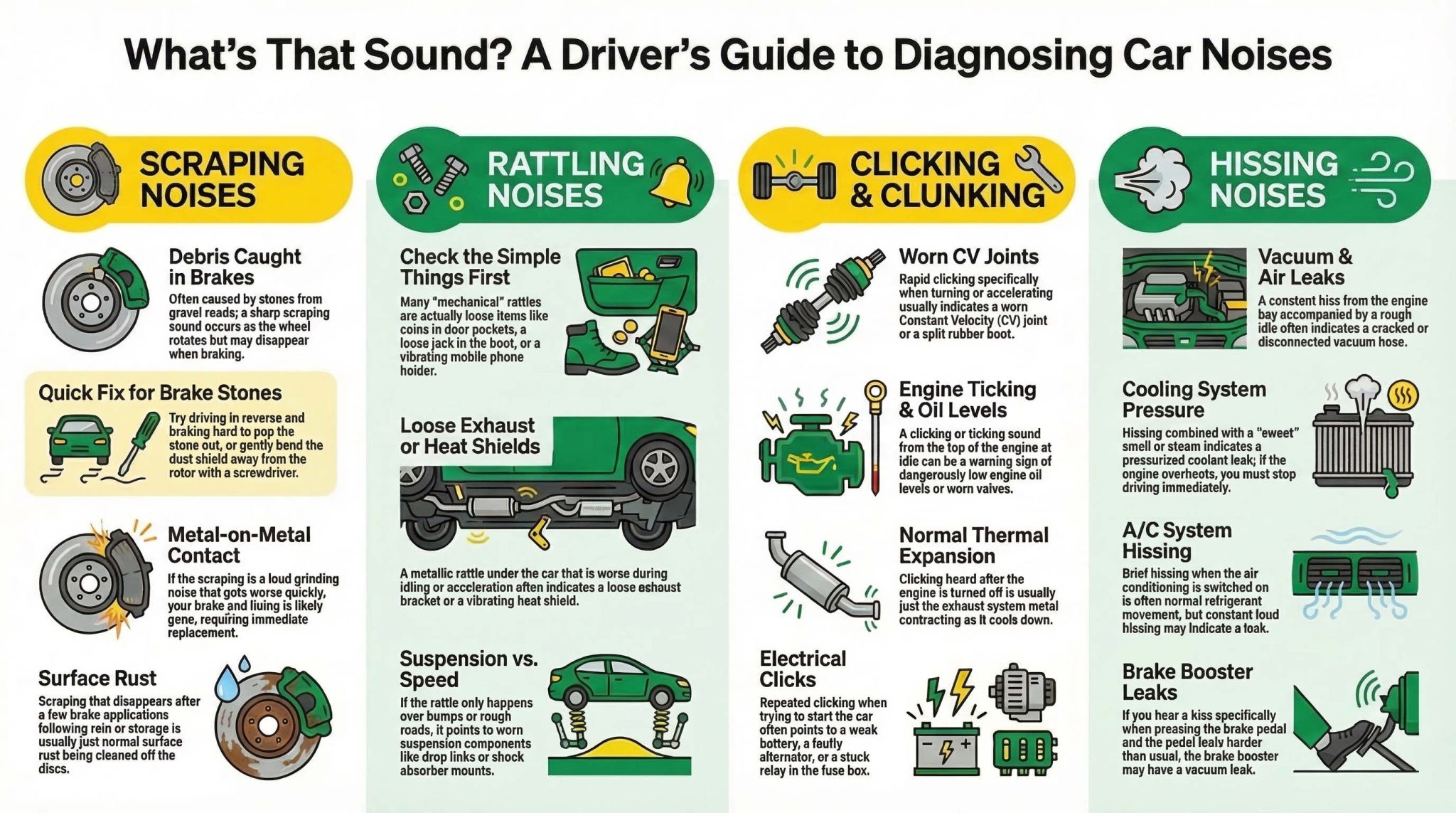
A car that sounds louder than usual may have an exhaust leak, worn muffler, loose heat shield, engine problem, tire noise, or failing belt. The sound’s location, timing, and type help narrow down the cause.
Across the United States, drivers rely on their cars for daily commutes, school runs, road trips, and trips to the grocery store. A change in engine or road noise can be easy to spot on a familiar drive. If your car suddenly sounds louder than normal, do not assume that it is just getting older. A small exhaust leak or loose part can cause extra noise, while some engine sounds may point to a problem that needs prompt care.
Start by noticing when the sound occurs. Does it happen at startup, while idling at a stoplight, when you press the gas, or as the tires roll over the road? A deep rumble often points toward the exhaust, while a sharp squeal may come from a belt or another moving part. These clues do not prove a fault, but they can help you decide whether to stop driving, arrange an inspection, or perform a simple visual check.
A car usually gets louder when sound escapes from a damaged part, a moving component wears out, or the engine works harder than normal. The exhaust system is a common place to start because it carries hot gases away from the engine and helps reduce noise. A hole, cracked pipe, loose joint, or damaged muffler can let more sound escape.
Other causes include a loose heat shield, worn engine mounts, a damaged belt, low engine oil, uneven tire wear, or a problem with a wheel bearing. Some of these faults create noise without changing how the car drives. Others can affect power, steering, braking, or engine health.
The most useful clue is the change from your car’s normal sound. A gradual increase in tire or exhaust noise may have a different cause from a sudden bang, metallic knock, or loud roar. Record when the sound happens and whether it changes with engine speed or road speed, but do not keep driving to gather more clues if the car shows signs of a serious fault.
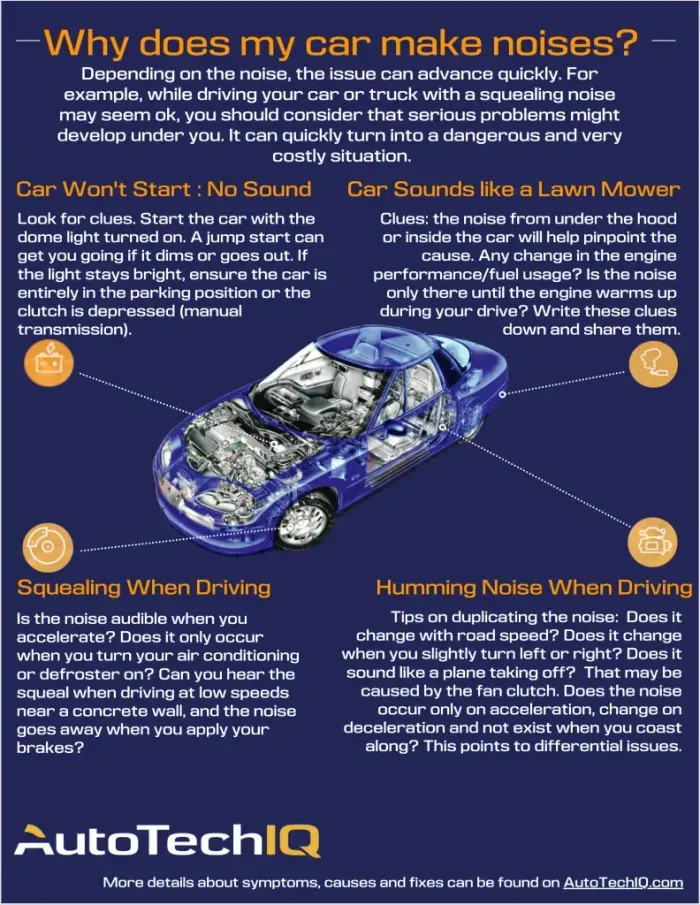
Source: autotechiq.com
A deep rumble
Check for a leaking exhaust joint, damaged muffler, or loose exhaust pipe.
A metallic rattle
A loose heat shield, exhaust bracket, or other vibrating part may be responsible.
A high-pitched squeal
A worn belt or pulley may be making noise, although brake components can also squeal.
A growl that follows road speed
Uneven tires, a wheel bearing, or a drivetrain component may need inspection.
Does the Noise Come From the Engine or the Road?
Engine-related sounds often change with engine speed. If the car gets louder when you gently press the gas while parked, the engine or exhaust may be involved. Only perform this observation outdoors, in Park or Neutral as appropriate, with the parking brake set, and without revving a cold or malfunctioning engine.
Road-related sounds often change as the vehicle moves faster. A hum that grows with speed may come from tires or wheel bearings. A clunk over bumps may point toward suspension parts. These clues can overlap, so a mechanic may need to inspect the vehicle to confirm the source.
Changes with engine speed
Consider the exhaust, engine, belts, pulleys, and engine mounts.
Changes with road speed
Consider tires, wheel bearings, brakes, and drivetrain parts.
Changes over bumps
Consider loose underbody parts or worn suspension components.
Common Causes of a Louder Car and How to Fix Them
The right fix starts with identifying the type of sound and checking for related symptoms. An exhaust leak needs a different repair from a worn tire or an engine knock. Use the following causes as a guide, not as a final diagnosis.
Source: fordfast.com
Exhaust leak
A crack, failed gasket, damaged flex pipe, or loose joint can make the car louder and may allow harmful exhaust gases to escape.
Damaged muffler
Rust, impact damage, or internal wear can reduce the muffler’s ability to control exhaust sound.
Loose heat shield
A thin metal shield around the exhaust or catalytic converter can vibrate and create a metallic rattle.
Engine lubrication or mechanical fault
Low oil, worn parts, or an internal engine problem may cause ticking, tapping, or knocking.
Worn belt or pulley
A damaged belt or failing pulley may produce a squeal, chirp, or grinding sound.
Tire or wheel problem
Uneven tread wear, incorrect tire pressure, a damaged tire, or a worn wheel bearing may increase road noise.
1. Exhaust Leaks
An exhaust leak is one of the first things to consider when a car develops a deep rumble or a sudden increase in engine noise. The exhaust system routes combustion gases through pipes and noise-control parts before releasing them outside the vehicle. A leak can let gases escape before they reach the muffler, making the car sound much louder.
A leak near the engine may sound like a sharp puff or ticking noise, especially during a cold start. A leak farther back may produce a deeper roar. You might also notice an exhaust smell, a drop in fuel economy, or reduced engine performance, although these signs do not occur with every leak.
The safest fix is to have a mechanic inspect the pipes, joints, gaskets, and flex section. The damaged gasket or pipe may need replacement, or a loose connection may need proper repair. Do not use household sealants or temporary patches as a substitute for a suitable exhaust repair.
What to check
Look for visible damage or rust only when the vehicle is parked safely and the exhaust is fully cool. Do not reach beneath an unsupported vehicle.
When to stop
If exhaust fumes enter the cabin, pull over safely, turn off the engine, get everyone out into fresh air, and seek help. Carbon monoxide can be deadly and has no smell.
2. A Worn or Damaged Muffler
The muffler helps reduce exhaust noise. If it rusts through, develops a crack, or suffers impact damage, the car may produce a louder growl or roar. A damaged muffler may also rattle if its internal parts break loose.
A muffler problem can look similar to an exhaust leak because both affect the same system. A mechanic can inspect the muffler and nearby pipes to determine whether one part or several parts need repair. Replacing the muffler alone will not solve a leak farther forward in the exhaust system.
The repair may involve replacing the muffler, a section of pipe, or a damaged connection. The correct part should fit the vehicle and maintain the required emissions equipment. Avoid removing noise-control parts to make the car louder, since this may violate local rules and increase noise pollution.
Likely clue
The car has a deeper exhaust note than before, even when the engine otherwise seems to run normally.
Practical fix
Ask for an exhaust inspection that checks the muffler, pipes, hangers, and joints together.
3. A Loose Heat Shield or Exhaust Hanger
Heat shields protect nearby parts from exhaust heat. Exhaust hangers support the pipes and muffler. If a shield rusts loose or a hanger breaks, the affected part may vibrate against the body or another component.
This often creates a tinny rattle at idle, during acceleration, or while driving over bumps. The sound may come and go as engine vibration changes. A loose part can sometimes sound much more serious than it is, but a damaged exhaust support should still be repaired before the pipe shifts or suffers further damage.
Have the loose shield, bracket, or hanger secured or replaced with a suitable part. Do not remove a heat shield simply because it rattles. It helps protect nearby components from heat, and removing it may create a new safety problem.
Useful clue
The noise is metallic and seems to come from underneath the car, especially at certain engine speeds.
Repair approach
Ask a technician to inspect the shield, mounting points, hangers, and pipe clearance.
4. Low Engine Oil or Internal Engine Wear
An engine that suddenly develops a ticking, tapping, or heavy knocking sound needs careful attention. Low oil can reduce lubrication and contribute to wear. Other possible causes include worn valve-train parts, damaged bearings, or problems with the timing system.
First, look at the dashboard. If the red oil pressure warning appears while the engine is running, stop as soon as it is safe and switch off the engine. Do not continue driving to reach a repair shop. Low oil pressure can cause serious damage in a short time.
If no urgent warning appears and the car is safely parked on level ground, check the oil according to the owner’s manual. Some vehicles require a dipstick, while others display an electronic oil level. Add only the specified oil if the level is low, and do not overfill. A correct oil level does not rule out low oil pressure or internal damage.
A heavy knock that follows engine speed, especially with vibration or loss of power, calls for an immediate stop and professional assessment. Do not keep starting the engine to see whether the noise disappears.
Light ticking
Possible causes include normal injector operation on some engines, valve-train noise, or an exhaust leak. Compare the sound with the manufacturer’s guidance.
Deep metallic knocking
Treat this as a potentially serious mechanical problem, especially if it starts suddenly or grows louder.
Oil warning light
Stop safely and shut the engine off. Arrange assistance rather than driving on.
5. Worn Belts and Failing Pulleys
A squeal or chirp from the engine bay may come from a worn accessory belt, a pulley, or a tensioner. These parts help drive systems such as the alternator and, on some vehicles, the water pump or air-conditioning compressor. A failing bearing can also create a whine or grinding noise.
The sound may change when the air conditioner is switched on because the compressor adds a load to the system. However, that change does not prove that the compressor is faulty. A belt, tensioner, pulley, or another component may be responsible.
With the engine switched off and cool, you may be able to see obvious belt damage from a safe position. Do not put fingers, clothing, tools, or your head near moving belts and pulleys. Have a technician check belt condition, tension, pulley alignment, and bearing movement before replacing parts.
Common sound
A high-pitched squeal, chirp, or whine that seems to come from the front or side of the engine.
Possible consequence
If a belt-driven component fails, charging, cooling, or other systems may stop working, depending on the vehicle design.
6. Uneven or Damaged Tires
Tires can make a car sound louder even when the engine and exhaust are healthy. Uneven tread wear, tire damage, an unsuitable tire type, or incorrect pressure can create a hum, roar, or rhythmic thumping. Some tread patterns naturally make more road noise than others, especially on rough pavement.
Check tire pressure when the tires are cold and use the pressure listed on the driver’s door-jamb label or in the owner’s manual. Do not use the maximum pressure molded into the tire sidewall as the normal target. Inspect the tread for cuts, bulges, exposed cords, or unusual wear, but do not drive on a tire that appears unsafe.
If the tread has a scalloped or cupped pattern, the cause may involve tire wear, alignment, balance, suspension, or wheel-bearing problems. A tire rotation or alignment may help in some cases, but the underlying cause should be identified first. A damaged tire may need replacement.
Hum that grows with speed
Tire tread or a wheel bearing may be responsible.
Thumping or vibration
Check for tire damage, uneven wear, or a wheel problem. Stop if the vehicle shakes severely.
7. Worn Wheel Bearings
A wheel bearing allows a wheel to rotate with low friction. As it wears, it may create a steady hum, growl, or rumble that changes with road speed. The noise can sometimes change while turning, but this is not a reliable way to identify which bearing has failed.
Wheel-bearing noise can resemble tire noise, so a visual check may not be enough. A technician can inspect the wheel, bearing, and related suspension parts. Avoid trying to diagnose the problem by making sharp turns or weaving across traffic.
A badly worn bearing may affect wheel control and can become dangerous. If the sound is loud, rapidly worsening, or accompanied by wheel wobble, steering changes, or grinding, stop driving and arrange a tow.
Possible clue
A steady growl or hum that increases with vehicle speed.
Best response
Arrange an inspection rather than replacing a bearing based on sound alone.
8. Loose Engine Mounts or Exhaust Contact
Engine mounts help hold the engine in place and reduce the vibration felt in the cabin. Worn or broken mounts can allow more movement when the engine starts, idles, or changes load. The extra movement may cause a thud, clunk, or vibration, and it can let the exhaust touch another part of the vehicle.
You may notice the noise when shifting between Drive and Reverse, starting the engine, or accelerating from a stop. Similar symptoms can also come from transmission mounts, suspension parts, or loose exhaust supports. The sound alone cannot confirm which part has failed.
A mechanic can inspect the mounts and check for excessive movement or contact between components. Do not place your hands near the engine or ask someone to rev the engine while you lean over moving parts. Mount repairs should restore proper support and clearance rather than simply masking the sound.
Typical symptom
A clunk or strong vibration during startup, gear changes, or changes in engine load.
Repair
Replace damaged mounts or correct contact between the exhaust and nearby parts after confirming the cause.
Use the Sound to Narrow Down the Problem
The timing and quality of a sound can help narrow the list of possible causes. No single sound proves that a particular part has failed, but matching several clues is more useful than guessing from noise alone.
Use this table as a first check. If the noise comes with a warning light, smoke, strong vibration, exhaust fumes, or loss of control, safety takes priority over further diagnosis.
Source: carxplorer.com
Startup noise
Consider an exhaust leak, belt issue, starter problem, or engine lubrication concern, depending on whether the sound occurs before or after the engine starts.
Noise at idle
Consider an exhaust leak, loose heat shield, engine mount, or engine-related fault.
Noise under acceleration
Consider an exhaust leak, belt or pulley issue, engine problem, or drivetrain noise.
Noise while braking
Consider worn brake pads, rotor contact, or another brake issue rather than assuming the engine is at fault.
Noise over bumps
Consider loose body or exhaust parts and suspension components.
Noise Diagnosis Table
Compare the sound with the conditions in the table below. The possible causes are starting points for inspection, not confirmed diagnoses.
Deep rumble or roar
Most relevant checks: exhaust pipe, muffler, joints, and other exhaust components.
Metallic rattle
Most relevant checks: heat shields, exhaust hangers, loose brackets, and other parts that may vibrate.
Sharp squeal
Most relevant checks: accessory belt, pulleys, tensioner, or brakes if the noise occurs during braking.
Deep engine knock
Most relevant checks: engine oil level, oil pressure warning, and internal mechanical condition. Stop if the knock is severe.
Speed-related hum
Most relevant checks: tire wear and pressure, wheel bearings, and drivetrain components.
Clunk during gear changes
Most relevant checks: engine mounts, transmission mounts, drivetrain joints, and exhaust clearance.
Why Acceleration Can Make a Car Sound Louder
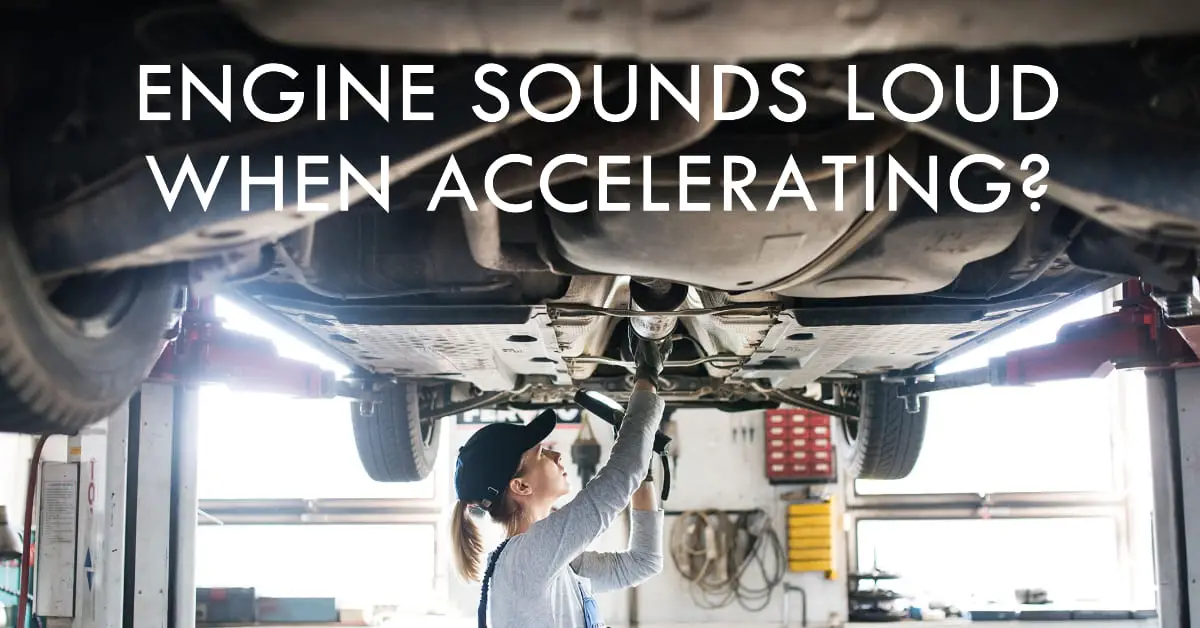
When you press the accelerator, the engine often produces more power and moves more exhaust gas. The engine may naturally become louder, especially at high engine speeds or under a heavy load. A continuously variable transmission may also hold the engine at a steady, relatively high speed during acceleration, which can sound unfamiliar to some drivers.
A new roar, sharp ticking, grinding sound, or heavy knock is different from normal engine noise. If the sound has changed from the vehicle’s usual behavior, have it checked rather than assuming that stronger acceleration is the only cause.
May be normal
A smooth increase in engine sound under load, with no new vibration, warning lights, or performance changes.
Needs attention
A sudden roar, new metallic noise, loss of power, misfiring, or exhaust smell during acceleration.
How to Check a Louder Car Safely at Home
You can collect useful clues without taking the car apart. A basic check should focus on the dashboard, fluid level where appropriate, tires, and visible damage. Do not perform an inspection that requires reaching under a running vehicle or touching hot components.
Source: i.ytimg.com
Step 1: Check for Warning Signs
Look at the dashboard before deciding whether to move the car. An oil pressure warning, overheating warning, brake warning with braking problems, or another serious alert may indicate that continued driving is unsafe. If the engine is knocking heavily, smoke is present, or the car has lost control or power, stop safely and shut it off.
If you smell exhaust inside the cabin, get everyone into fresh air and do not continue driving the vehicle. Arrange professional help. Opening a window is not a safe fix for a possible carbon monoxide problem.
Stop and seek assistance
Severe knocking, an oil pressure warning, overheating, exhaust fumes in the cabin, smoke from an unknown source, or signs of a loose wheel.
Step 2: Note When the Noise Happens
If the vehicle is safe to inspect, write down whether the sound occurs at startup, at idle, during acceleration, while braking, or at a certain road speed. Also note whether it began suddenly or became louder over several weeks.
Avoid deliberate high-speed tests, hard acceleration, sharp turns, or repeated engine starts to reproduce a troubling sound. If the noise only occurs while driving, tell the mechanic the conditions under which you noticed it.
Record the pattern
Note the sound, when it occurs, any dashboard warnings, and changes in steering, braking, or engine performance.
Step 3: Inspect the Tires and Visible Parts
Park on level ground away from traffic, switch off the engine, set the parking brake, and allow hot parts to cool. Check the tires for cuts, bulges, exposed cords, and uneven tread wear. Use a tire pressure gauge when the tires are cold and compare the readings with the vehicle’s specified pressure.
From a safe standing position, look for hanging exhaust parts, obvious damage, or fluid beneath the car. A puddle does not always identify the source, and some fluids can be hard to distinguish. Do not slide underneath the vehicle or reach near the exhaust, fan, belts, or other moving parts.
Good sign
No obvious tire damage, loose visible parts, new warning lights, or changes in how the vehicle operates.
Still uncertain
A car can have an exhaust leak, wheel-bearing fault, or internal engine problem even when nothing looks wrong from outside.
Step 4: Check Engine Oil If It Is Safe
Use the owner’s manual to find the correct oil-check procedure. Many vehicles need to be parked on level ground with the engine switched off for a specified period. Some newer models use an electronic level display instead of a dipstick.
If the oil level is low, add the correct specification in small amounts and recheck it. Never exceed the full mark. If the oil pressure warning is on, the engine is making a heavy knock, or the level drops again soon after topping up, do not treat adding oil as a complete repair.
Do not guess
Use the oil grade and procedure specified for the exact vehicle.
Do not keep driving
Low oil pressure or a severe engine noise requires prompt professional attention.
Step 5: Arrange a Targeted Inspection
Give the mechanic a clear description of the sound, when it started, and what makes it change. Mention recent repairs, a hard impact, a pothole strike, new tires, or recent work on the exhaust. These details can help focus the inspection.
Ask the shop to confirm the source before replacing parts. Depending on the symptoms, the inspection may include an exhaust leak check, engine scan, oil pressure test, belt and pulley inspection, tire assessment, or wheel-bearing and suspension checks. The correct tests depend on the vehicle and the symptoms.
Useful information
Vehicle year, make, model, engine type, warning lights, sound location, and conditions that trigger the noise.
When Is a Louder Car Unsafe to Drive?
A louder car is not always an emergency, but some symptoms mean you should stop driving. The key is whether the sound points to a fault that could damage the engine, expose people to exhaust gases, or affect control of the vehicle.
Choose a safe place to pull over if the car develops a severe metallic knock, loses power suddenly, overheats, shakes violently, or shows an oil pressure warning. Switch off the engine when appropriate and arrange roadside assistance or a tow. Do not restart the engine simply to check whether the noise has gone away.
Source: automadesimply.com
Possible carbon monoxide exposure
Exhaust fumes inside the cabin require immediate action. Leave the vehicle, get into fresh air, and seek emergency help if anyone has symptoms such as headache, dizziness, nausea, weakness, or confusion.
Severe engine noise
A heavy knock with an oil warning, smoke, overheating, or loss of power may indicate a serious engine fault. Stop and arrange a tow.
Wheel or tire concern
A bulging tire, strong wheel wobble, severe grinding, or sudden steering change means you should not continue driving.
Brake-related noise
Grinding with reduced braking, a soft pedal, pulling, or a brake warning requires stopping as soon as it is safe and arranging professional assistance.
Can I Drive to a Repair Shop?
That depends on the sound and the other symptoms. A mild, stable rattle with normal braking, steering, engine temperature, and no warning lights may allow a short, cautious trip to a shop after you have assessed the risk. However, a remote diagnosis cannot confirm that a vehicle is safe to drive.
Do not drive the car if you suspect an exhaust leak that is allowing fumes into the cabin, an oil pressure problem, severe engine knocking, a damaged tire, or a failing wheel bearing with signs of instability. A tow may cost more at first, but it can prevent further damage or a crash.
A short trip may be reasonable
Only when the noise is mild, the car operates normally, no serious warning is present, and there is no sign of a safety-critical fault.
Choose a tow
When the cause may threaten engine health, steering, braking, wheel security, or cabin air quality.
How Much Can It Cost to Fix a Loud Car?
Repair costs depend on the failed part, vehicle design, local labor rates, parts availability, and the amount of extra damage. A loose bracket may need a small repair, while an internal engine problem can require major work. Without a diagnosis and vehicle details, a single price would be misleading.
Drivers in the United States may also face different labor rates and parts costs from one region to another. Ask the repair shop for a written estimate that separates diagnosis, parts, labor, taxes, and any related repairs. If the quote includes several parts, ask which findings show that each part has failed.
Source: barrysautobody.com
Relative Repair Complexity
This comparison describes general repair complexity, not guaranteed prices. The actual cost depends on the exact fault and vehicle.
Often simpler
Securing a loose shield or hanger, correcting tire pressure, or replacing a confirmed damaged exhaust gasket when access is straightforward.
May require moderate work
Replacing a muffler or exhaust section, repairing a belt or tensioner, replacing a damaged tire, or correcting a wheel alignment problem.
Potentially complex
Replacing a wheel bearing on a vehicle with difficult access, diagnosing a drivetrain fault, or repairing internal engine damage.
How to Avoid Paying for the Wrong Repair
Ask the shop to explain how the diagnosis matches the sound. For example, a mechanic who recommends a muffler should be able to show the damaged part or explain the test result that supports the repair. If the noise may come from a bearing, tire, or engine component, ask what ruled out the other likely causes.
A second opinion can be useful when a repair is expensive and the cause is not clear. It should not delay urgent repairs when the vehicle is unsafe to drive. Keep the written diagnosis and repair invoice so you can compare any recurring noise with the work already completed.
Request evidence
Ask for the confirmed fault, the recommended fix, and the reason the repair addresses the noise.
Compare like with like
Check whether estimates include the same parts, labor, diagnostic work, and related repairs.
Ask about the warranty
Confirm the coverage for the replacement part and the shop’s labor before authorizing work.
Common Mistakes to Avoid When Diagnosing Car Noise
A loud sound can tempt drivers to replace the part that seems most likely to have failed. That approach can lead to wasted money because several faults can produce similar noises. A careful diagnosis looks at the sound, its timing, the vehicle’s behavior, and any supporting evidence.
Source: i.pinimg.com
Do Not Assume Every Loud Sound Comes From the Engine
Noise travels through the body and frame, so a sound that seems to come from the engine bay may actually start near the exhaust, a wheel, or a suspension part. A road-speed hum is especially likely to need tire, wheel-bearing, or drivetrain checks. Confirming the source is more useful than replacing the nearest part.
Better approach
Record the operating conditions and have the shop inspect systems that match those clues.
Do Not Ignore Warning Lights
A car can still move while an important component is failing. Continuing to drive with an oil pressure warning, overheating, or a severe brake problem may turn a repairable fault into a much larger problem. Warning lights and changes in handling matter as much as the sound itself.
Better approach
Follow the owner’s manual and stop when the warning or symptom indicates a serious risk.
Do Not Work Beneath an Unsupported Car
A vehicle jack is meant to lift a car, not serve as the only support while someone works underneath it. A car can fall and cause fatal injuries. Hot exhaust parts and moving engine components create additional risks.
Better approach
Limit home checks to safe visual inspections. Leave underbody diagnosis to a properly equipped shop unless you have suitable support equipment, training, and a safe work area.
Do Not Use Temporary Fixes to Hide a Serious Fault
Household sealants, improvised exhaust patches, and removed heat shields do not replace a sound repair. An exhaust leak can expose people to harmful gases, while a loose shield can protect nearby parts from dangerous heat. Fix the failed component using a repair method suitable for the vehicle.
Better approach
Choose a repair based on the confirmed cause and the vehicle manufacturer’s requirements.
How to Prevent Your Car From Getting Louder Over Time
Routine maintenance can help catch some noise problems before they become expensive. It cannot prevent every part from wearing out, but regular checks make it easier to spot damaged tires, fluid problems, loose components, and early signs of mechanical trouble.
Follow the maintenance schedule in the owner’s manual instead of relying on a generic service interval. Driving conditions, vehicle design, and the type of engine can change what the car needs. A vehicle used on rough roads, for frequent short trips, or for heavy towing may need attention under a different schedule than one used mainly for steady highway travel.
Check tires regularly
Use the recommended cold pressure, inspect tread wear, and address damage or uneven wear promptly.
Keep up with oil service
Use the specified oil and follow the vehicle’s maintenance schedule. Investigate repeated low oil levels or oil warnings.
Inspect the exhaust when symptoms appear
Rust, impact damage, loose hangers, and leaks can cause extra noise and should be addressed.
Respond to new sounds early
A mild rattle or hum may be easier to diagnose before it develops into severe vibration or component damage.
Review repairs after service
If a noise begins after tire, brake, exhaust, or engine work, contact the shop and describe the change.
Does Cold Weather Make a Car Louder?
A car can sound different during a cold start. Engine oil is colder, metal parts have contracted slightly, and the engine may run at a higher idle speed for a short time. Some exhaust leaks, belt noises, and valve-train sounds may be more noticeable when the vehicle is cold.
A sound that fades as the engine warms up is not automatically harmless. A new metallic knock, severe rattle, persistent squeal, or exhaust smell still deserves attention. If a noise is new or becomes worse over time, have the cause checked rather than blaming the weather.
Potentially normal
A brief change in idle speed and engine sound that matches the manufacturer’s normal cold-start behavior.
Needs checking
A new or persistent noise, warning light, smoke, strong vibration, or reduced performance.
What to Tell a Mechanic About a Loud Car
A clear description helps a mechanic narrow down the cause and choose the right tests. You do not need to know the failed part before making an appointment. Describe what changed and what happens when the sound occurs.
Include the vehicle’s year, make, model, and engine type if known. Explain whether the noise started suddenly, follows engine or road speed, changes when braking, or appears after a recent repair. Mention warning lights, fluid loss, smoke, odors, vibration, or changes in fuel economy and power.
Sound type
Describe it as a rumble, roar, rattle, squeal, ticking, knocking, humming, grinding, or clunking sound.
Timing
State whether it happens during a cold start, at idle, while accelerating, at highway speed, while turning, or when braking.
Location
Say whether it seems to come from the engine bay, underneath the vehicle, near a wheel, or inside the cabin.
Recent changes
Mention recent maintenance, pothole impacts, tire changes, exhaust repairs, or other work.
Should You Record the Sound?
A short recording can help a mechanic understand what you mean, especially when the noise comes and goes. Record only if you can do so safely, such as while the car is parked and switched off or with a passenger handling the phone during an otherwise safe situation. Never use a phone while driving to capture the noise.
A recording cannot reliably reveal every fault. Microphones change the sound, road and wind noise can mask details, and several mechanical problems can sound alike. Use the clip as supporting information, not as proof that a specific part has failed.
Useful recording
A brief clip with the car safely parked, plus a note describing when the noise normally happens.
Important limit
Do not recreate a dangerous noise or drive an unsafe car just to obtain a recording.
Frequently Asked Questions
Q
Why did my car suddenly get louder?
A sudden increase in noise may come from an exhaust leak, damaged muffler, loose heat shield, broken belt, tire damage, or an engine problem. The type of sound and when it occurs help narrow down the cause. If the change comes with severe knocking, smoke, overheating, an oil warning, or exhaust fumes inside the cabin, stop driving and arrange professional help.
Q
Why is my car louder when I accelerate?
Engine noise normally rises as engine speed and load increase. However, a new roar or metallic sound under acceleration may point to an exhaust leak, loose exhaust component, belt or pulley issue, engine fault, or drivetrain problem. If the sound is severe or comes with loss of power, warning lights, or vibration, stop safely and have the car inspected.
Q
Can low engine oil make a car sound louder?
Yes. Low oil can reduce lubrication and contribute to ticking, tapping, or knocking sounds. However, these sounds can have other causes, and a normal oil level does not rule out an oil pressure problem. If the oil pressure warning appears or the engine makes a heavy knock, switch off the engine as soon as it is safe and arrange assistance.
Q
Can an exhaust leak make my car louder inside?
Yes. Exhaust leaks can increase noise inside or outside the vehicle, depending on their location and the way sound travels through the body. An exhaust leak may also allow harmful gases to enter the cabin. If you smell exhaust fumes inside, leave the vehicle, get into fresh air, and do not drive it until the problem has been addressed.
Q
Why does my car sound like a race car all of a sudden?
A sudden deep roar may result from a damaged muffler, a disconnected exhaust pipe, or a leak that allows exhaust gases to escape before the noise-control parts. A change in engine behavior can also increase noise. Have the exhaust system inspected, and avoid driving if fumes enter the cabin or the vehicle shows signs of a serious mechanical fault.
Q
Why is my car louder at highway speed?
At highway speed, tire noise, wheel-bearing wear, wind noise, and drivetrain sounds can become more noticeable. Uneven tread wear or a damaged tire may cause a hum or rumble that grows with speed. Do not weave across lanes or make sharp turns to test the sound. If there is strong vibration, wheel wobble, grinding, or a sudden change in handling, stop safely and arrange a tow.
Q
Can I make my car quieter without replacing parts?
Sometimes. Correct tire pressure may reduce noise caused by underinflation, and securing a confirmed loose bracket may resolve a rattle. However, a damaged muffler, exhaust leak, worn bearing, or internal engine problem needs a suitable repair. Do not remove heat shields, block exhaust outlets, or use improvised patches to hide the sound.
Q
Is it normal for a car to sound louder when it is cold?
Some vehicles idle faster and sound louder for a short time after a cold start. Cold oil and changes in engine operating conditions can also affect sound. A new metallic knock, persistent squeal, strong rattle, exhaust smell, or warning light should not be dismissed as normal cold-weather behavior.
✦ Wrapping Up
Conclusion
A car that sounds louder than usual may have a simple loose part or a fault that needs urgent attention. Exhaust leaks, damaged mufflers, loose heat shields, engine problems, worn belts, uneven tires, and failing wheel bearings can all change the way a car sounds. The most useful clues are the type of noise, when it occurs, and whether the car also shows warning lights, vibration, loss of power, or changes in handling.
Start with safety. Stop driving if the engine knocks heavily, the oil pressure warning appears, the car overheats, exhaust fumes enter the cabin, or the vehicle develops severe wheel, steering, or braking symptoms. For less urgent noises, check the tires and dashboard, record the symptoms, and arrange an inspection that confirms the source before parts are replaced.
💡 Key Takeaway
Write down when the noise occurs, check for warning lights and visible tire damage, and arrange a targeted inspection. Do not drive the car if the sound or accompanying symptoms suggest a safety-critical fault.