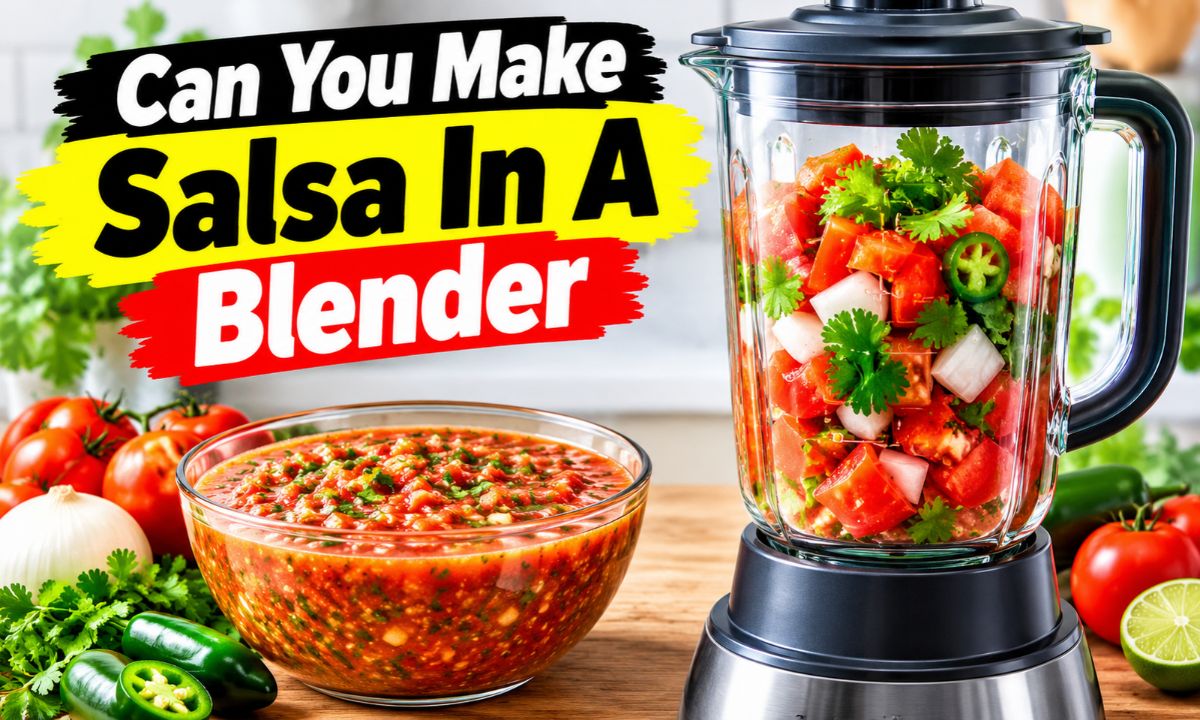
Yes, you can make fresh salsa in a blender by pulsing tomatoes, onion, peppers, lime juice, and seasonings until you reach your preferred texture.
In American kitchens, salsa is a common dip for tortilla chips, tacos, burritos, quesadillas, and grilled meats. You do not need to chop every ingredient by hand to make a fresh batch at home. A regular countertop blender can turn fresh or canned tomatoes, onion, peppers, cilantro, and lime juice into a flavorful salsa in just a few minutes.
The main trick is to avoid blending for too long. Salsa should have some body, and a few short pulses can give you better control than running the blender continuously. The type of tomato, the amount of liquid, and the power of your blender all affect the final result, so small adjustments help you get the texture you want.
A blender cuts and mixes ingredients with fast-spinning blades. This makes it useful for salsa because tomatoes release juice as they break down, while onion, peppers, and herbs spread through the mixture. With the right technique, you can make a dip that tastes fresh without spending much time chopping.
A blender does not produce the same texture as hand-chopping unless you control how long it runs. Continuous blending can turn firm tomatoes into a thin puree. Short pulses break down the larger pieces in stages, giving you more control over the amount of texture that remains.
The goal is not to make every batch perfectly smooth. Some people prefer salsa that clings to a tortilla chip, while others like a loose, smooth dip similar to the salsa served at many Mexican American restaurants. Both styles are possible with a blender.
Source: oliviaskitchen.com
Smooth salsa
Blend for longer in short intervals until the tomatoes and other ingredients form a mostly even mixture.
Chunky salsa
Pulse briefly and stop while small pieces of tomato, onion, and pepper remain visible.
Restaurant-style salsa
Use tomatoes, onion, cilantro, lime juice, and chili to make a pourable dip with a little texture.
Can You Use a Regular Kitchen Blender?
Yes. A standard countertop blender is usually suitable for a small batch of salsa. A high-powered model is not required because ripe tomatoes are soft and release liquid easily. A smaller blender may need more frequent pauses so the ingredients can move toward the blades.
A food processor can also make salsa, especially if you want a chunky result. However, you do not need to buy another appliance just for this task if you already own a blender.
For a large blender jar
Make sure the ingredients cover the blade area well enough to blend evenly, but never fill the jar beyond its marked limit.
For a personal blender
Use small batches and follow the manufacturer’s instructions. Avoid forcing large tomato pieces into a narrow jar.
Ingredients You Need for Blender Salsa
You can make a basic salsa with a few everyday ingredients. Tomatoes provide the main body, onion adds a sharp taste, chili brings heat, cilantro adds a fresh herbal note, and lime juice gives the mixture a bright finish. Salt helps bring these flavors together.
Fresh ingredients work well, but canned tomatoes can be a practical choice when fresh tomatoes are bland, expensive, or out of season. Canned tomatoes also provide a consistent starting point for a smooth dip. Choose plain canned tomatoes rather than a seasoned pasta sauce or another product with flavors you do not want in your salsa.
The amounts below make a useful starting point for a small household batch. The exact yield depends on the size and juiciness of the tomatoes, so treat the quantities as a guide rather than a fixed rule.
Source: fromvalerieskitchen.com
Tomatoes
Use about 1 pound of ripe fresh tomatoes or one 14.5-ounce can of diced tomatoes. Roma tomatoes often have a firmer texture, while very juicy tomatoes may create a thinner salsa.
Onion
Start with about one-quarter of a small onion. White or yellow onion works well, and red onion can provide a sharper color and flavor.
Jalapeño
Use half a jalapeño for a mild starting point or more if you want extra heat. Remove the seeds and inner ribs to reduce the heat, though this will not remove all of it.
Cilantro
Add a small handful of fresh cilantro leaves. Use less or leave it out if you dislike its flavor.
Lime juice
Start with 1 tablespoon of fresh lime juice, then add more after tasting. Lime brightens the flavor but too much can make the salsa overly sharp.
Salt
Begin with a small pinch, blend, and taste. Canned tomatoes may already contain salt, so adjust carefully.
Optional seasonings
A small garlic clove, a pinch of ground cumin, or a little black pepper can add depth without changing the basic method.
Fresh Tomatoes or Canned Tomatoes?
Fresh tomatoes are useful when you want a bright, garden-fresh taste. Ripe tomatoes tend to break down easily, but their water content varies. If your tomatoes are very juicy, the finished salsa may need draining or a little more solid ingredient.
Canned tomatoes offer convenience and can work well for a smooth, restaurant-style dip. Drain some of the liquid if you prefer a thick salsa. If the can contains added salt, taste the finished mixture before adding more.
You can also combine fresh and canned tomatoes. This approach lets you use fresh tomato pieces for flavor and texture while canned tomatoes provide a consistent base.
Choose fresh tomatoes
When they are ripe, flavorful, and easy to prepare.
Choose canned tomatoes
When you want convenience, consistent texture, or a quick batch from pantry ingredients.
How to Make Salsa in a Blender Step by Step
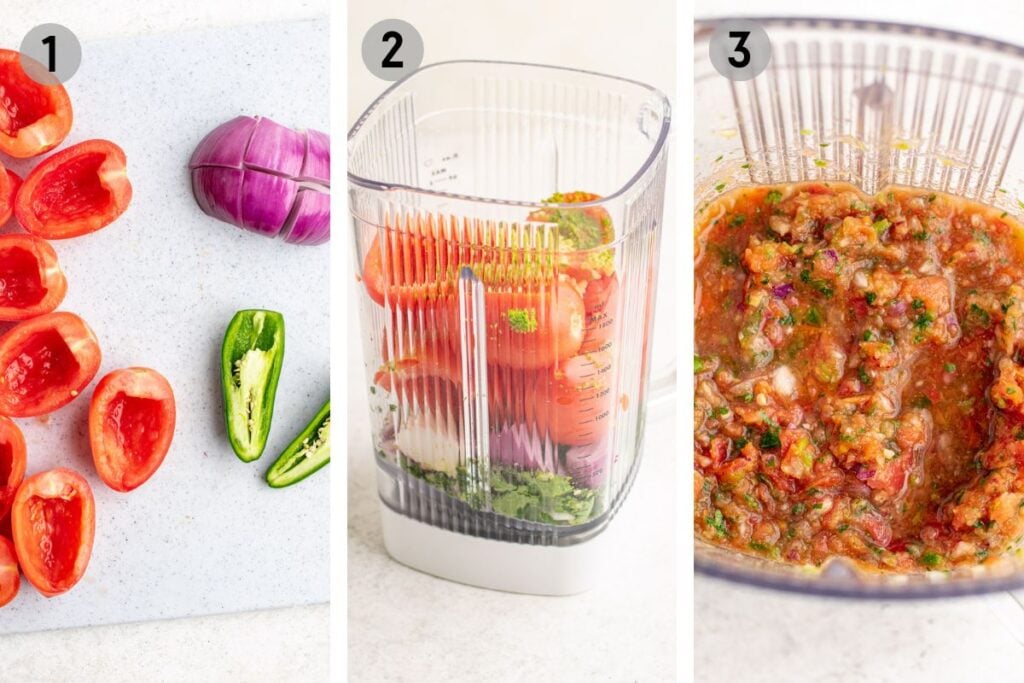
The easiest way to make blender salsa is to prepare the ingredients first, add them to the jar, and pulse in short bursts. This method helps you avoid turning the mixture into tomato juice. You can always blend more, but it is difficult to restore large pieces after they have been pureed.
Before starting, check that the blender jar, lid, and blade assembly are clean and correctly fitted. Cut large tomatoes and onion into pieces that fit comfortably in the jar. Remove any spoiled parts, wash fresh produce under running water, and wash your hands before handling the ingredients.
Source: mantitlement.com
Step 1: Prepare the Tomatoes
Wash fresh tomatoes under running water and remove the stems. Cut large tomatoes into quarters or smaller pieces so they can move around the jar more easily. You do not need to peel ripe tomatoes for ordinary fresh salsa.
If the tomatoes are unusually watery, remove some of the seeds and loose liquid or plan to drain the salsa after blending. For canned tomatoes, drain part of the liquid if you want a thicker dip.
For a thicker salsa
Start with firmer tomatoes and limit the amount of extra liquid you add.
For a smoother salsa
Keep enough tomato liquid in the mixture to help the ingredients circulate around the blades.
Step 2: Chop the Onion and Pepper
Cut the onion into small chunks and remove the stem from the jalapeño. If you want less heat, remove the seeds and inner ribs before cutting the pepper. Avoid touching your eyes while handling hot peppers, and wash your hands and cutting board after preparation.
Start with less onion and chili than you think you need. Their flavors spread through the salsa quickly, and you can add more later if the first blend tastes too mild.
For mild salsa
Use a small amount of pepper and remove its seeds and inner ribs.
For hot salsa
Add more jalapeño in small amounts, tasting between additions.
Step 3: Add the Ingredients to the Blender
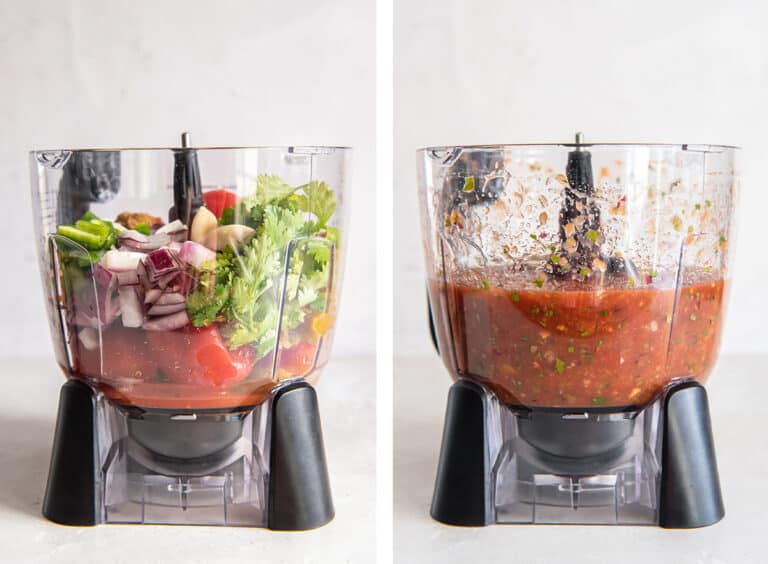
Place the tomatoes, onion, pepper, cilantro, lime juice, and a small amount of salt in the blender jar. Add garlic or other seasonings if desired. Keep the ingredients below the jar’s maximum fill line.
Tomatoes release liquid as the blades cut them, so you usually do not need to add water. Extra water can dilute the flavor and make the salsa harder to scoop onto a chip.
Avoid overfilling
Work in batches if the amount of produce exceeds the blender’s capacity.
Skip extra water at first
Blend the tomatoes and other ingredients before deciding whether more liquid is needed.
Step 4: Pulse Until the Texture Looks Right
Secure the lid, then use short pulses to break down the ingredients. Pause between pulses and check the texture through the jar. If larger pieces remain near the top, stop the motor and use a spatula to move them toward the blades only after the blades have fully stopped.
For chunky salsa, stop as soon as the ingredients are chopped into small pieces. For a smoother result, blend in brief intervals until the mixture looks even. Follow the blender’s instructions for pulse settings and avoid running it longer than the manual allows.
Chunky texture
Use a few short pulses and leave visible pieces of tomato and onion.
Medium texture
Pulse several times, checking the mixture after each burst.
Smooth texture
Blend for longer in short intervals until few or no large pieces remain.
Step 5: Taste and Adjust the Flavor
Transfer a small amount to a clean spoon and taste it. Add salt if the flavor seems flat, lime juice if it needs brightness, or more cilantro if you want a stronger herbal taste. If the salsa is too hot, mix in more tomato rather than adding large amounts of another seasoning.
Pulse briefly after each adjustment. This spreads the added ingredient through the mixture without making you lose control of the texture.
Too bland
Try a small pinch of salt or a little more lime juice, then taste again.
Too sharp
Add more tomato or a small amount of finely chopped onion to soften the balance.
Too hot
Add more tomato and other mild ingredients to dilute the chili.
Step 6: Serve or Chill the Salsa
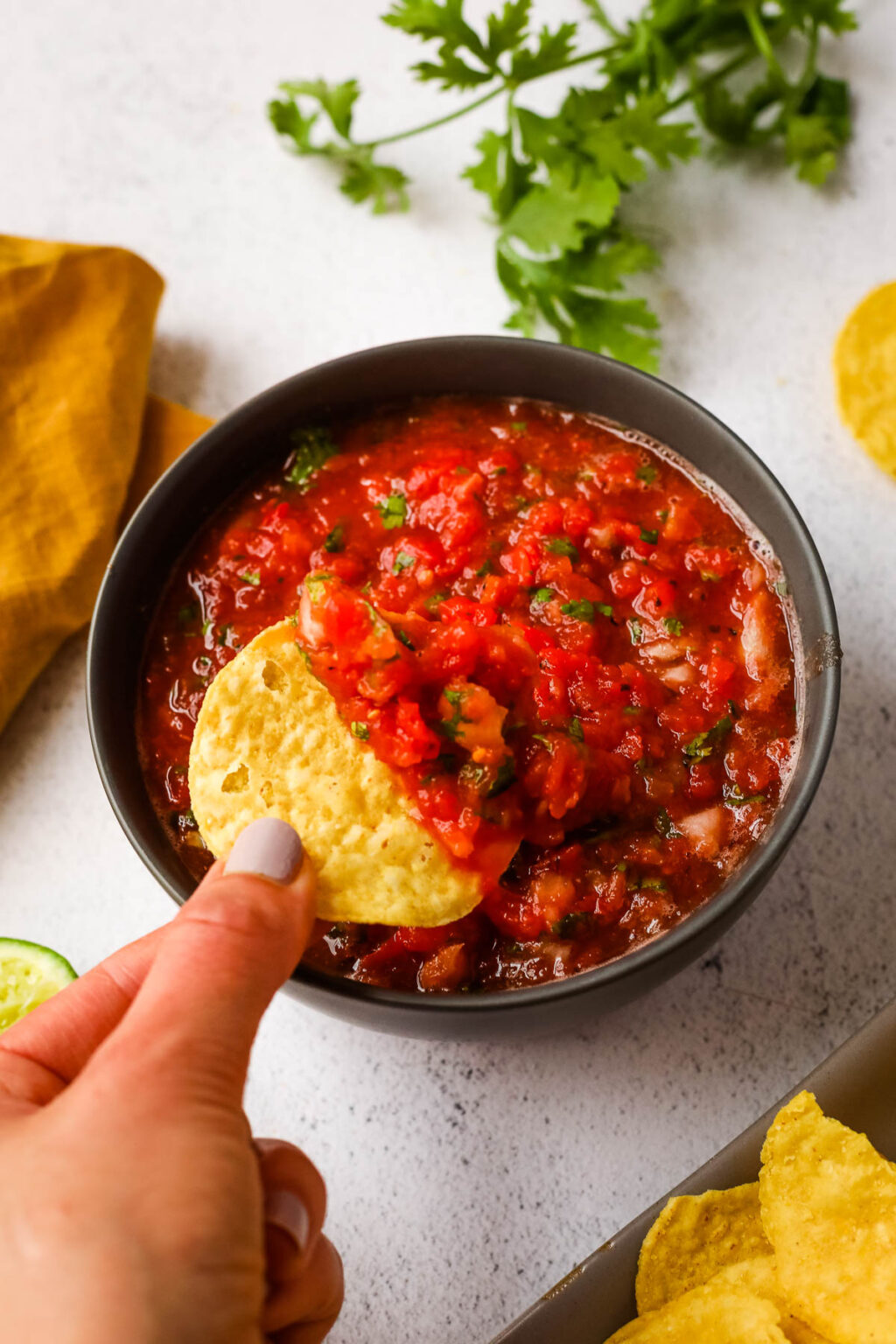
Serve the salsa with tortilla chips, tacos, burritos, quesadillas, eggs, or grilled chicken. If you prefer a cooler and more settled flavor, place it in a clean covered container and refrigerate it before serving.
Keep the salsa refrigerated when you are not serving it. Do not leave it at room temperature for long periods, especially at parties or outdoor gatherings.
For immediate serving
Taste once more and serve with clean utensils.
For later use
Transfer it to a clean, covered container and refrigerate promptly.
How Long Should You Blend Salsa?
There is no single blending time that works for every blender and every recipe. A powerful blender may break down soft tomatoes quickly, while a small or less powerful model may need more pauses. The best guide is the appearance of the salsa rather than a fixed number of seconds.
Use the pulse function when possible because it gives you a chance to check the texture after each burst. If the mixture is not moving, stop the blender and follow the manual’s guidance before redistributing the ingredients. Never place a spoon, spatula, or hand inside a running blender.
Source: therecipecritic.com
For chunky salsa
Stop once the ingredients are chopped into small, distinct pieces.
For medium salsa
Continue pulsing until the mixture is mostly combined but still has visible texture.
For smooth salsa
Use short blending intervals until the salsa is nearly uniform.
Signs That Your Salsa Is Ready
Ready salsa has a balanced flavor and a texture suited to the way you plan to serve it. The tomatoes should be broken down enough to hold the onion, herbs, and pepper throughout the mixture. You should not see large, unwanted chunks of raw onion or pepper unless you deliberately want them.
The salsa should also be easy to scoop or pour without looking like a glass of tomato juice. A little separation during storage can be normal because fresh produce releases liquid. Stir the salsa before serving and adjust its thickness if needed.
Look
The color should be fairly even, with any remaining pieces matching your preferred texture.
Smell
The salsa should smell fresh, with clear tomato, herb, and citrus notes rather than a spoiled or unusual odor.
Taste
The tomato flavor should come through, with enough salt, acidity, and chili to suit your preference.
How to Make Thick, Chunky, or Restaurant-Style Salsa
You can change the final texture without changing the basic recipe. The biggest factors are the water content of the tomatoes, the length of blending, and whether you drain excess liquid. Decide how you plan to serve the salsa before you start, because a dip for chips may need a different texture from a thin sauce for a cooked dish.
Source: i.pinimg.com
How to Make Thick Salsa
Thick salsa needs less free liquid and enough solid ingredients to hold together. Use firm tomatoes when possible, drain some liquid from canned tomatoes, and avoid adding water. Pulse only until the ingredients combine.
If the salsa is already too thin, stop blending and let it settle briefly in the refrigerator. You can carefully pour off some of the liquid or stir in additional chopped tomato. Avoid adding large amounts of dry seasoning just to absorb water, because this can make the flavor harsh.
Drain excess liquid
Remove some juice from watery tomatoes or canned tomatoes before blending.
Add solid ingredients
Mix in finely chopped tomato or onion after blending if you want more body.
How to Make Chunky Salsa in a Blender
A blender can make chunky salsa, but you need to stop before the ingredients become a puree. Add the firmer ingredients in manageable pieces and use very short pulses. Check the mixture after every pulse rather than blending continuously.
Another useful approach is to blend most of the tomatoes with the lime juice and seasonings, then fold in finely chopped tomato, onion, or pepper by hand. This gives you a flavorful base while keeping some pieces intact.
Use short pulses
Run the blender briefly, then inspect the mixture before continuing.
Finish by hand
Stir in chopped ingredients after blending to add texture without overprocessing the whole batch.
How to Make Restaurant-Style Salsa
For a restaurant-style salsa, use ripe tomatoes or canned diced tomatoes, a small amount of onion, jalapeño, cilantro, lime juice, and salt. Blend until the mixture is mostly smooth but not watery. Taste it and make small changes to the seasoning.
The exact taste of restaurant salsa varies by restaurant and recipe. Some versions use cooked or roasted tomatoes, while others use raw tomatoes or canned tomatoes. A home blender can reproduce the general texture, but the ingredients and preparation method determine the flavor.
For a fresh taste
Use raw tomatoes, cilantro, onion, and lime juice.
For a deeper taste
Try roasted tomatoes or roasted peppers, allowing them to cool before blending.
Common Blender Salsa Problems and How to Fix Them
Most salsa problems come from excess liquid, too much blending, or an imbalance in seasoning. Make one change at a time so you can tell what improves the result. If the salsa tastes good but looks different from what you expected, adjust the texture before changing the flavor.
Source: iheartvegetables.com
Why Is My Blender Salsa Watery?
Watery salsa usually comes from juicy tomatoes, too much canned tomato liquid, or added water. Blending for a long time can also break down the produce more fully and release more juice. This does not automatically mean the salsa is spoiled; it may simply need a texture adjustment.
Drain off some liquid or fold in chopped tomato to make the salsa thicker. For the next batch, use less liquid and stop blending as soon as the ingredients reach the desired texture.
Immediate fix
Pour off a little excess liquid or stir in additional chopped tomato.
Prevention
Drain canned tomatoes as needed and avoid adding water before blending.
Why Does My Salsa Taste Too Bitter?
A bitter taste can come from the ingredients, too much of a strong seasoning, or damaged produce. Cilantro stems are edible, but a large amount of stems or other strongly flavored ingredients may change the balance. Garlic can also become overpowering when you add too much.
Taste the salsa before adding more seasoning. If the bitterness is mild, add more tomato and adjust the salt and lime juice gradually. If the salsa smells spoiled or has other signs of spoilage, do not try to cover the taste with seasoning; discard it.
Reduce strong flavors
Add more tomato to balance an overly strong garlic, onion, or herb taste.
Check produce quality
Use fresh ingredients without mold, decay, or unusual odors.
Why Is My Salsa Too Spicy?
The heat of jalapeños varies, so the same quantity can produce different results from one batch to the next. Chili seeds are not the only source of heat; the inner ribs also contain capsaicin, the compound responsible for the burning sensation.
Add more tomato or another mild ingredient to dilute the heat. A small amount of lime juice may help balance the overall flavor, but it will not remove capsaicin. For future batches, begin with less pepper and increase it gradually.
For the current batch
Mix in more tomato and taste again before making other changes.
For future batches
Start with a small amount of chili and add more only after tasting.
Why Are There Large Pieces Left in the Blender?
Large pieces may remain when the jar is too full, the ingredients are cut too large, or there is not enough liquid for them to circulate. The blade may also be unable to draw the ingredients down into the cutting area.
Stop the blender before checking the contents. If needed, move the ingredients toward the blades with a spatula only after the blades have stopped completely. Blend in smaller batches if the ingredients still fail to circulate.
Cut ingredients smaller
Prepare large tomatoes and onions in manageable pieces before adding them.
Reduce the batch size
Leave room for ingredients to move around the jar.
Blender Salsa vs. Food Processor Salsa
Both a blender and a food processor can make salsa, but each appliance handles ingredients differently. A blender is often convenient for a smooth or pourable salsa because its jar and blade design encourage ingredients to move through the cutting area. A food processor is often easier to use when you want chopped pieces to remain distinct.
The outcome still depends on the appliance model, batch size, and technique. A blender with a good pulse function can make chunky salsa, and a food processor can produce a smooth mixture if you run it long enough. Choose the appliance you already have unless the texture you want proves difficult to achieve.
Source: forfoodiefriends.com
Blender
Useful for smooth salsa, quick mixing, and a pourable consistency. Short pulses help preserve some texture.
Food processor
Useful for chopped salsa with visible pieces. Pulse carefully to prevent the ingredients from becoming too fine.
Knife and cutting board
Useful when you want precise control over each piece and do not mind spending more time on preparation.
Which Method Should You Choose?
Use a blender if speed and a smooth texture matter most. Choose a food processor if you prefer a chopped dip with more distinct pieces. Hand-chopping makes sense when appearance and precise texture matter more than convenience.
There is no need to use more than one appliance for a basic salsa recipe. A blender and a spoon are enough for most small batches, especially when you blend only part of the tomatoes and stir in chopped ingredients at the end.
Choose the blender
When you want a quick, smooth, or restaurant-style dip.
Choose the food processor
When you want more control over a chopped texture.
How to Store Homemade Blender Salsa Safely
Homemade salsa made with fresh tomatoes, onion, peppers, and herbs is perishable. Put it in a clean, covered container and refrigerate it promptly at 40 degrees Fahrenheit or below. Do not assume that lime juice or salt makes fresh salsa shelf-stable.
For food safety, follow the USDA’s general rule for perishable food: refrigerate it within two hours, or within one hour when the surrounding temperature is above 90 degrees Fahrenheit. These limits include time spent on the table during a meal or outdoor gathering. Discard salsa that has been left out beyond the applicable limit.
For the best quality, make a batch you can use within a few days. The exact safe storage period can vary with ingredients, handling, and preparation, so do not rely on smell or appearance alone to determine safety. When in doubt, throw it out.
Source: simplejoy.com
Use a clean container
Transfer salsa to a clean, covered food container rather than storing it in a jar that has been used for dipping.
Keep it cold
Store the salsa in the refrigerator at 40 degrees Fahrenheit or below.
Avoid double dipping
Use a clean serving spoon instead of returning a used chip or spoon to the storage container.
Do not can it casually
Fresh blender salsa is not automatically safe for room-temperature storage. Home canning requires a tested recipe and the correct processing method.
Can You Freeze Blender Salsa?
You can freeze many tomato-based salsa mixtures, but freezing changes the texture of fresh vegetables. After thawing, tomatoes and onions may release more liquid and become softer. Frozen salsa is often more suitable for cooked dishes than for a crisp, fresh dip.
Place the salsa in a freezer-safe container, leave suitable space for expansion, and label it with the date. Thaw it in the refrigerator rather than on the counter. Stir after thawing and drain extra liquid if needed.
Best use after freezing
Try thawed salsa in soups, cooked sauces, or dishes where a softer texture is acceptable.
For fresh dipping
Make a smaller refrigerated batch when you want the best crisp texture.
Ways to Serve Blender Salsa
Fresh salsa works with more than tortilla chips. Its mix of tomato, lime, herbs, and chili can add a bright finish to simple meals. Choose the thickness and heat level based on what you are serving.
If you are making salsa for a group, keep the chili level moderate and offer extra hot sauce or chopped jalapeño on the side. This lets each person adjust the heat without changing the entire batch.
Source: theblondcook.com
Tortilla chips
Serve a medium-thick salsa that clings to chips without making them soggy too quickly.
Tacos and burritos
Use a smooth or lightly chunky salsa to add moisture and fresh flavor.
Eggs and breakfast bowls
Spoon a small amount over scrambled eggs, breakfast potatoes, or a bean bowl.
Grilled foods
Serve salsa with grilled chicken, fish, vegetables, or other dishes that benefit from a fresh, acidic topping.
Rice and beans
Mix a little salsa into cooked rice or spoon it over beans for added flavor.
Can You Make Salsa Without Cilantro?
Yes. Cilantro is optional, and leaving it out will not stop the blender from making a good salsa. Some people dislike cilantro’s flavor, while others may not have fresh herbs on hand.
You can leave it out or use a small amount of another fresh herb that suits the dish. Parsley will taste different from cilantro, so do not expect an exact match. You can also add a little extra lime juice or onion if the salsa needs more freshness.
Leave it out
Use the basic tomato, onion, pepper, lime, and salt mixture.
Adjust the balance
Taste before adding extra lime or onion, since both can change the flavor quickly.
Frequently Asked Questions
Q
Can You Make Salsa In A Blender Without Water?
Yes. Tomatoes usually release enough liquid to help the ingredients blend, so added water is often unnecessary. Start with the tomatoes, onion, pepper, herbs, lime juice, and seasonings, then pulse the mixture. If the ingredients do not move, stop the blender and check the batch size before considering a small amount of liquid.
Q
Can You Put Raw Tomatoes in a Blender?
Yes. Wash fresh tomatoes under running water, remove their stems, and cut large ones into pieces before blending. Raw tomatoes are a common base for fresh salsa. If you prefer a deeper flavor, you can roast the tomatoes first and let them cool before blending.
Q
Can You Make Salsa in a Blender Without Jalapeños?
Yes. Leave out the jalapeños for a mild salsa, or use a small amount of a different pepper if you want a particular flavor. The tomatoes, onion, cilantro, lime juice, and salt can still provide a balanced dip. Taste before serving and adjust the seasoning to suit your preference.
Q
Why Does My Blender Salsa Foam?
Foam can form when fast-moving blades incorporate air into the tomato mixture. Long blending can also make the salsa more uniform and release more liquid. Use short pulses, allow the mixture to settle briefly, and avoid blending longer than necessary.
Q
How Long Does Homemade Blender Salsa Last in the Fridge?
Homemade fresh salsa is perishable and should be kept refrigerated at 40 degrees Fahrenheit or below. For the best quality, make only as much as you expect to use within a few days and keep it in a clean, covered container. Refrigerate it within two hours, or within one hour when temperatures exceed 90 degrees Fahrenheit, and discard it if it has been left out beyond those limits.
Q
Can You Make Salsa in a Blender With Canned Tomatoes?
Yes. Plain canned diced tomatoes are convenient for blender salsa and can provide a consistent texture throughout the year. Drain some of the liquid if you want a thicker dip, and check whether the tomatoes contain added salt before seasoning. Pulse the ingredients until the salsa reaches your preferred consistency.
Q
Is a Blender Better Than a Food Processor for Salsa?
Neither appliance is always better. A blender is convenient for smooth, pourable salsa, while a food processor often makes it easier to retain distinct chopped pieces. Both can make different textures when you control the blending time and batch size. Use the appliance you already own and adjust the method to suit the result you want.
✦ Wrapping Up
Conclusion
Yes, you can make fresh salsa in a blender with simple ingredients and very little preparation. Tomatoes, onion, jalapeño, cilantro, lime juice, and salt provide a useful starting point, while optional garlic and spices let you change the flavor. Fresh or canned tomatoes can both work, depending on the texture and taste you prefer.
The key is to pulse the ingredients rather than blend them continuously from the start. Use less liquid for thick salsa, stop early for a chunky texture, and taste the mixture before adding more seasoning. Store the finished salsa in the refrigerator and handle it like any other perishable fresh food.
💡 Key Takeaway
Start with tomatoes, a little onion, jalapeño, cilantro, lime juice, and salt. Pulse in short bursts, taste, adjust the seasoning, and stop as soon as the salsa reaches your preferred texture.