
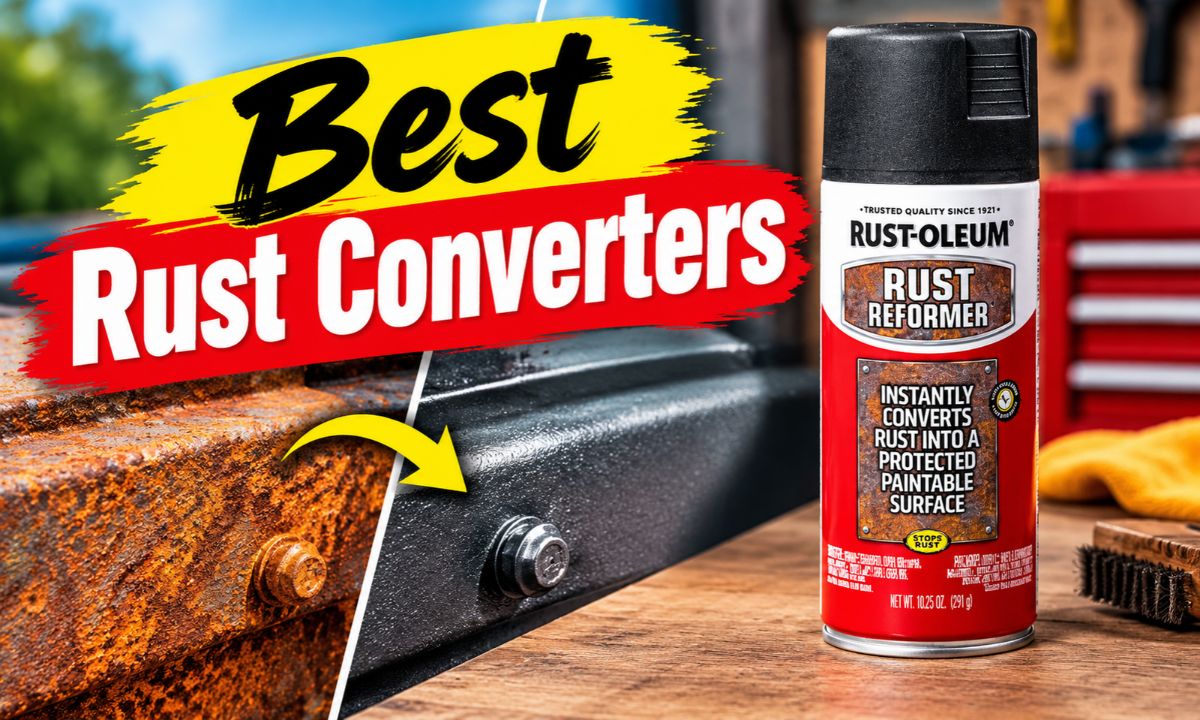
**Corroseal Rust Converter is my top overall pick for large metal repairs, while Rust-Oleum Reformer suits quick spray-on jobs.**
Rust can show up on a truck frame, an old trailer, a metal fence, or a garden tool. In many parts of the United States, rain, road salt, snow, and damp air can make the problem worse. A wire brush can remove loose rust, but it may not reach every spot. That is where a rust converter can help. It treats suitable rust and helps prepare the metal for paint. I compared three options for different jobs, from large repairs to small touch-ups. This guide to the Best Rust Converters explains their main uses, key benefits, limits, and what to check before you buy.
Table of Contents
Toggle🏆 Top 3 Products
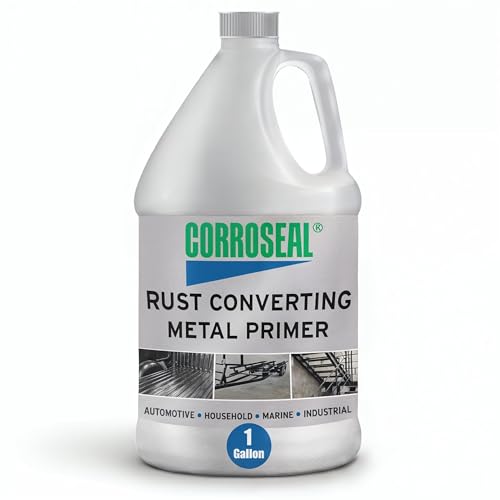
Corroseal Rust Converter & Metal Primer
Its gallon size and combined rust treatment and primer role make it a strong choice for larger metal projects.

2-in-1 Rust Converter & Metal Primer
Its combined converter and primer design suits buyers who want one product for treating and preparing rusty metal.

Rust-Oleum Stops Rust Reformer Spray
Its spray format offers a simple way to treat suitable rusty spots without handling a large liquid container.
Corroseal Rust Converter and Metal Primer
Corroseal Rust Converter and Metal Primer is my first choice for people who need to treat a larger area of rusty metal. The one-gallon container suits projects that may use more product than a small spray can can provide. Its main purpose is to treat suitable rust and help prepare the surface for a later paint finish. It may fit jobs on trucks, trailers, metal equipment, and other rusty parts when the product label allows that use.
I like the idea of combining rust treatment and primer in one product because it can simplify a repair plan. Still, the metal needs proper preparation before application. Remove loose rust, dirt, oil, and flaking paint first, then follow the label for coverage, drying time, and any topcoat rules. I would not treat the product as a fix for deep pits, thin metal, holes, or rust damage that affects the strength of a frame.
✅ Pros
- ✔The gallon container can suit larger repair areas.
- ✔Combines rust treatment and a metal primer role.
- ✔Can help prepare suitable rusty metal for a paint system.
- ✔May work well for planned trailer and vehicle metal projects when the label permits.
- ✔Can reduce the need to buy a separate rust treatment and primer for compatible jobs.
- ✔Liquid application gives the user control over coverage with suitable tools.
- ✔Useful for people who prefer to treat several metal parts in one work session.
⚠️ Cons
- ✖A gallon may be more product than a small repair needs.
- ✖Liquid application can take more setup and cleanup than a spray can.
- ✖It still needs proper surface preparation and the correct drying conditions.
- ✖The final finish may need a compatible topcoat for appearance and added protection.
- ✖It cannot restore metal that has lost too much thickness or strength.
My Recommendation
I would choose Corroseal for a larger project where I need to treat several suitable rusty metal areas. The gallon size makes more sense when the job covers a truck component, trailer parts, or metal equipment rather than one small spot. It earns my top overall position because it combines treatment and primer functions in a format suited to broader work. Before buying, I would check the current label for approved surfaces, coverage, application steps, and topcoat needs. For a tiny repair, a spray may be easier and create less waste.
| Best For | Why |
|---|---|
| Large metal projects | The gallon size can cover more area than a small spot-treatment product. |
| Trailer and vehicle repairs | It offers rust treatment and a primer role for suitable metal surfaces when permitted by the label. |
| DIY equipment upkeep | It can suit people who want to treat several rusty parts in one planned session. |
2-in-1 Rust Converter and Metal Primer
This 35-ounce rust converter is marketed as a 2-in-1 treatment and metal primer. Its black rust reformer finish may suit people who want a dark base on a rusty metal part before a final coating. The listed uses include vehicle chassis parts, trailers, and truck frames, but I would confirm that the label approves the exact surface and conditions in my project. The container size sits between a small spray product and a full gallon, which may appeal to buyers with a medium repair.
The main draw is convenience. A combined converter and primer can help simplify the steps needed to prepare suitable rusty metal for paint. The listing also mentions heat resistance and UV resistance, but I would check the product instructions for the exact limits and whether an extra topcoat is required. I would prepare the metal with care and never rely on a rust converter alone to repair a weak or badly corroded vehicle frame.
✅ Pros
- ✔Combines rust converter and metal primer functions.
- ✔The 35-ounce size can suit medium repair jobs.
- ✔Black finish may provide a useful base for a compatible coating system.
- ✔Designed for rust treatment on suitable automotive and trailer metal.
- ✔May reduce the need to buy separate treatment and primer products.
- ✔A liquid product can help cover irregular metal shapes with suitable application tools.
- ✔The listed heat and UV resistance claims may appeal to users working on exposed metal, subject to label limits.
⚠️ Cons
- ✖The exact coverage per container must be checked before planning a large job.
- ✖The black finish may not suit every final color or appearance.
- ✖Heat and UV resistance do not mean the product suits every high-temperature or outdoor use.
- ✖The label may require a compatible topcoat for long-term exposure.
- ✖It cannot replace metal repair when corrosion has caused holes or structural weakness.
My Recommendation
I would consider this option for a medium-sized project where a combined converter and primer is useful. It may fit a rusty metal component, a trailer part, or another approved surface where the black finish is acceptable. Its position depends on the current label, clear application instructions, coverage, and compatibility with the planned topcoat. Since I do not have verified hands-on test results for this product, I would not claim that it lasts longer than the other options. Check the technical details before using it on a vehicle chassis or any part that affects safety.
| Best For | Why |
|---|---|
| Medium repair jobs | The 35-ounce container may be a practical size for projects larger than a small touch-up. |
| Black base coatings | The listed black finish may suit a dark base under a compatible final coating. |
| DIY metal maintenance | The 2-in-1 design may simplify treatment and primer steps on approved surfaces. |
Rust-Oleum Stops Rust Reformer Spray
Rust-Oleum Stops Rust Reformer is a spray product for people who want a direct way to treat suitable rusty metal. The listing describes a black coating that converts rust into a paintable surface and helps prevent further corrosion. Its spray format can be handy for small repairs, brackets, metal tools, and other accessible areas that match the label directions. The comfort tip and any-angle spray design can also make application easier when the part has bends or awkward edges.
I would look at this option first for a quick touch-up rather than a large metal restoration project. A spray can is easy to store and does not require pouring liquid into a separate tray. Even so, the spray needs good surface preparation, steady application, and proper ventilation. The stated fast-drying feature can help shorten the wait before the next step, but I would follow the label for actual drying and recoating times instead of guessing.
✅ Pros
- ✔Spray format is handy for small repair areas.
- ✔The black finish can provide a simple base for compatible paint.
- ✔Designed to treat suitable rusty metal and help limit further corrosion.
- ✔The comfort tip may make spraying more comfortable.
- ✔The any-angle design can help reach awkward spots.
- ✔Fast-drying claims may make the product useful for repairs with limited work time.
- ✔A single spray can is easy to store for future small jobs.
⚠️ Cons
- ✖A spray can may run out quickly on large surfaces.
- ✖Overspray can reach nearby paint, glass, concrete, or other objects.
- ✖Spray mist calls for suitable ventilation and protective equipment.
- ✖A dark finish may need another coating if a different final color is desired.
- ✖It does not fix holes, severe pitting, or weakened metal.
My Recommendation
I would pick Rust-Oleum Stops Rust Reformer for small, accessible rust spots where a spray can offers a clear advantage. It is a practical option for touch-ups and light DIY work on approved metal surfaces. I would protect nearby parts from overspray and check the label to see whether the treated surface needs a separate topcoat. For a large trailer, a full vehicle frame, or a wide metal panel, I would compare coverage and total cost with a liquid product before deciding. This is my favorite format for convenience, not a claim that it is the strongest treatment in every setting.
| Best For | Why |
|---|---|
| Small rust spots | A spray can makes it easy to focus on a limited area. |
| Awkward metal shapes | The listed spray design can help reach edges and uneven surfaces. |
| Quick DIY touch-ups | The ready-to-use format avoids the need to pour or mix a larger quantity. |
Final Verdict: Which Should You Buy?
Corroseal Rust Converter and Metal Primer is my best overall choice among these three products for larger projects. Its gallon size and combined treatment and primer role make it a sensible option for suitable rusty metal. The 2-in-1 converter is worth considering for medium jobs, while Rust-Oleum Stops Rust Reformer Spray is my preferred format for small touch-ups. Compare the label, coverage, surface limits, and topcoat rules before you buy.
The Best Rust Converters can help prepare rusty metal for a better paint job, but surface prep still matters. Remove loose rust, follow the instructions, and use the right protective gear. For serious car frame corrosion, repair the damaged metal rather than relying on a coating alone.
FAQs Of Best Rust Converters
Q What is a rust converter?
Q Which of the Best Rust Converters should I choose?
Q Can I apply a rust converter without removing rust first?
Q Do I need to paint over a rust converter?
Q Can I use rust converters on a car frame?