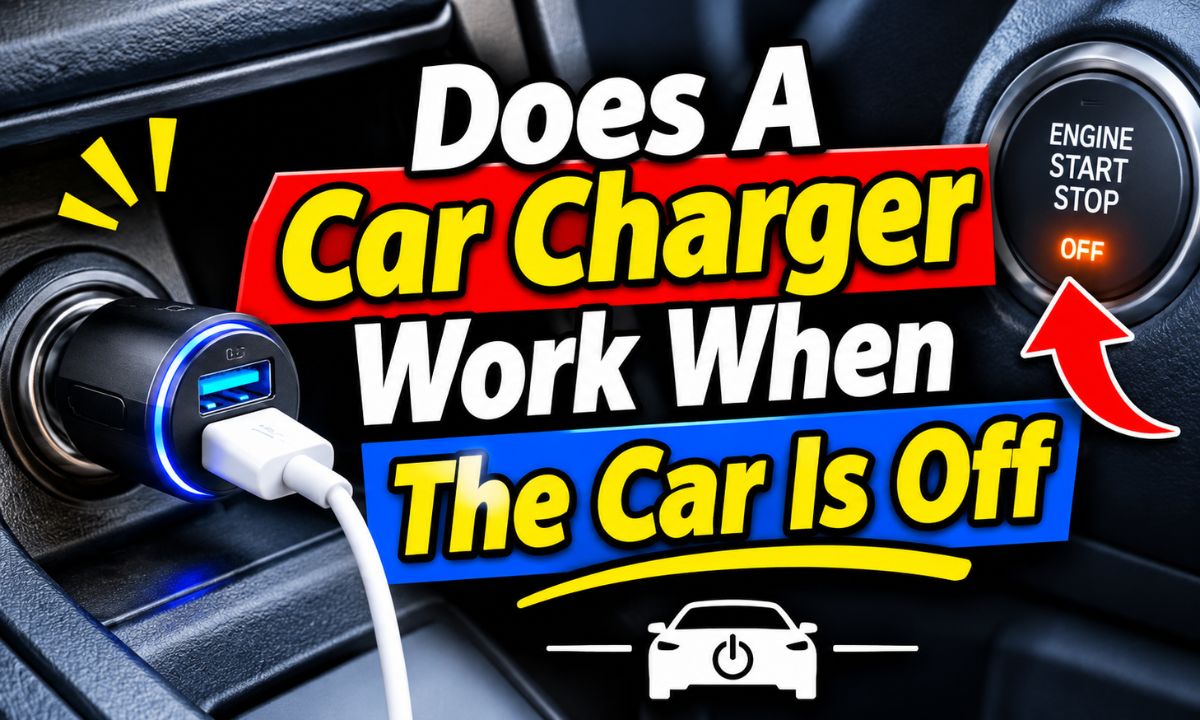
Yes, a car charger can work when the car is off, but only if the vehicle keeps its 12V outlet or USB port powered after shutdown.
Across the United States, drivers often use car chargers during road trips, daily commutes, school pickups, and long waits in parking lots. Sometimes, a phone needs power while the vehicle is parked. The good news is that some cars allow this. However, others turn off their charging ports as soon as the ignition is switched off.
The main factor is how your vehicle supplies power to its electrical outlets. Some 12V sockets stay connected to the battery at all times. Others work only when the ignition is in ACC or ON mode. Some vehicles also shut down their outlets after a short delay to protect the battery.
You should also think about how long you plan to charge your phone. A short charge may use little energy, but a larger device or a long charging session can reduce the power available to start your car. Knowing how your outlet works can help you charge your devices without getting an unpleasant surprise when you turn the key.
Yes, it can. Whether it works depends on the electrical design of your car. A charger plugged into a live 12V outlet can supply power even when the engine is not running. If the outlet switches off with the ignition, the charger will stop working.
Most car phone chargers do not create power on their own. They use electricity from the vehicle’s battery and convert it into the voltage needed by a phone or another device. Therefore, the charger needs an active power source before it can do its job.
Some vehicles keep their outlets active for a limited time after shutdown. Others provide constant power until the driver locks the doors or the vehicle’s battery management system switches the circuit off. The exact behavior can vary by make, model, year, and outlet location.
Source: thesupercarkids.com
Switched power outlet
This outlet usually works when the ignition is in ACC or ON mode. It stops supplying power after the vehicle shuts down.
Constant-power outlet
This outlet can continue supplying electricity when the engine is off. It may allow a phone to keep charging while the car is parked.
Delayed power outlet
Some vehicles keep the outlet active for a short time after shutdown. The system then cuts power to protect the starter battery.
Why Do Some Cars Keep Their Chargers Working?
Some vehicle makers design their electrical systems to support accessories when the engine is off. This can be useful when a driver wants to charge a phone, power a small device, or use an accessory while parked.
The vehicle may also use a battery management system to monitor voltage. If the battery charge gets too low, the system may shut down certain electrical features. This helps preserve enough energy for the vehicle to start.
Do not assume that every outlet in the same vehicle works the same way. A front USB port may turn off with the ignition, while a rear accessory socket may stay active longer. Check each port separately if you need to know how it behaves.
Vehicle design
The manufacturer decides which outlets receive constant power and which depend on the ignition.
Battery protection
Some vehicles use automatic shutdown features to reduce the risk of excessive battery discharge.
How Does A Car Charger Get Power When The Engine Is Off?
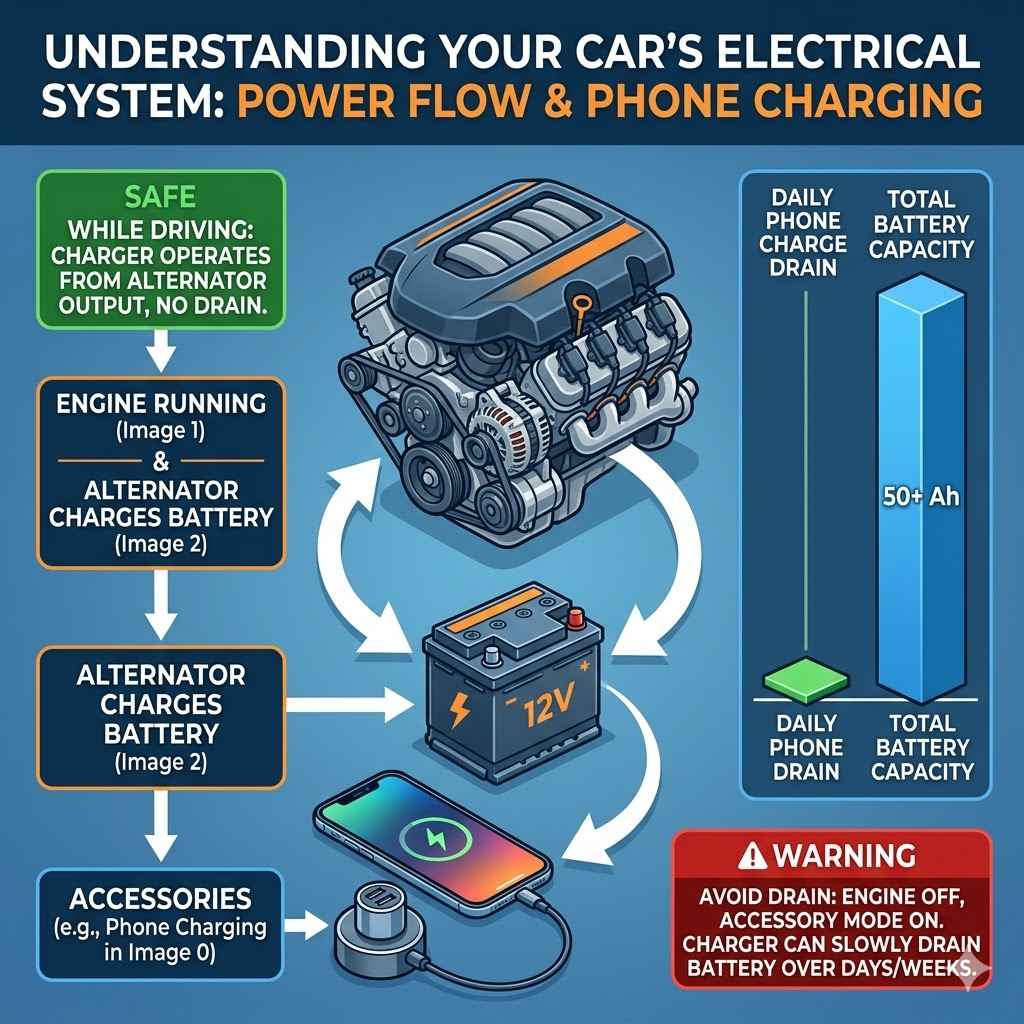
A car charger gets power from the vehicle’s 12V electrical system. When the engine is running, the alternator in a conventional gasoline or diesel vehicle supplies electrical energy and helps recharge the battery. When the engine is off, the battery becomes the main source of power for accessories that remain active.
The car battery stores electrical energy for starting the engine and running certain systems. It can also supply power to a phone charger, interior lights, security systems, and other accessories when the vehicle is parked.
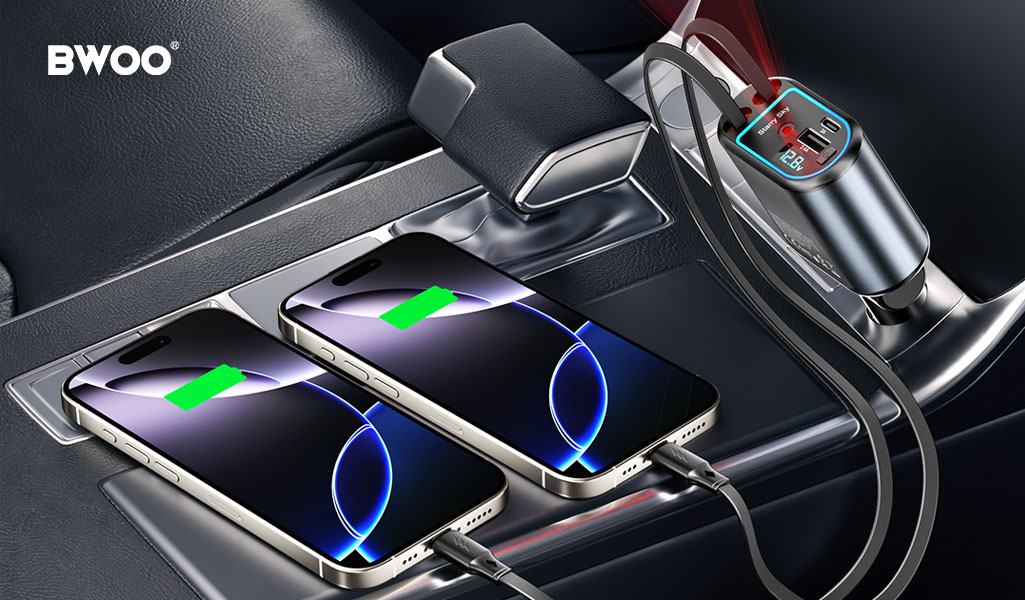
A typical USB car adapter changes the vehicle’s DC voltage into a suitable USB output. The phone then manages the charging process through its own charging circuitry. If the 12V socket loses power, the adapter cannot continue supplying electricity.
Source: bwoohk.com
Car battery
Stores electricity and supplies power to the vehicle’s starter and electrical accessories.
Alternator
In a conventional vehicle, produces electrical power while the engine runs and helps recharge the battery.
12V accessory socket
Provides an electrical connection for compatible chargers and other approved accessories.
USB car adapter
Converts the socket’s electrical supply into a USB charging output for compatible devices.
What Happens When You Turn Off The Engine?
When you switch off the engine, the alternator stops producing electricity. The vehicle battery can still power electrical systems, but it no longer receives the same charging support from the running engine.
If the accessory socket remains active, a connected charger can continue using battery energy. If the vehicle disconnects the socket, the charger loses its power source and stops charging the phone.
This is why a phone may continue charging for several minutes after you leave the vehicle. It does not necessarily mean that the socket will stay active all night.
Engine running
The alternator supplies electrical power and helps maintain the battery’s charge.
Engine switched off
The battery supplies power to any accessory circuits that remain active.
Outlet switched off
The charger stops receiving power from that outlet.
Will Charging Your Phone With The Car Off Drain The Battery?
Yes, charging a phone with the engine off uses energy from your car battery if the outlet stays powered. However, the amount of energy used depends on the phone, charger, charging time, and condition of the vehicle battery.
A small phone charger generally uses less power than larger accessories such as portable refrigerators, air compressors, or vacuum cleaners. Still, repeated or extended charging can reduce the battery’s available charge.
The risk is greater if your car battery is old, weak, damaged, or already undercharged. Cold weather can also make it harder for a weak battery to start an engine. Therefore, a charging session that causes no trouble in a healthy battery may be more of a problem in an older vehicle.
The American Automobile Association has discussed accessory-related battery drain, including devices connected to accessory sockets that remain powered after the ignition is off. The important lesson is that the outlet’s behavior matters as much as the charger itself.
Source: cdn.thedailyautomotive.com
Short phone charging
A short session usually uses less energy than running a large accessory for hours, but it still draws from the battery.
Long charging sessions
Leaving a phone or other device connected for many hours can reduce the battery’s available starting power.
Older batteries
A weak battery has less reserve capacity, so additional electrical use may create a starting problem sooner.
Multiple accessories
Charging several devices at once increases the total electrical load on the vehicle.
Can A Phone Charger Drain A Car Battery Overnight?
It is possible if the charger remains connected to a powered outlet. However, the actual risk depends on the charger’s standby consumption, whether a phone is connected, the charging time, and the condition of the battery.
A charger that stays plugged in without a phone may still use a small amount of power. Some models have indicator lights or electronic circuits that remain active whenever the outlet supplies electricity.
If your car has a constant-power socket, avoid making overnight charging a regular habit. Unplug the charger when you finish, especially if the vehicle will remain parked for several days.
Phone connected
The charger supplies power to the phone and draws energy from the vehicle battery.
Charger left empty
Some chargers still use a small amount of standby power, depending on their design.
Switched outlet
If the outlet shuts down after ignition-off, the charger cannot continue drawing power from that socket.
Which Accessories Can Drain The Battery Faster?
Not every device uses the same amount of electricity. A small phone charger has a different power demand from a portable cooler or tire inflator. Larger devices can use much more energy and may create a greater risk when the engine is off.
Always check the power rating of an accessory before connecting it. The vehicle owner’s manual also lists the outlet’s limits. Never assume that a socket can safely handle every device with a 12V plug.
Phone charger
Usually a relatively small electrical load, although it still uses battery power when the outlet stays active.
Dash camera
Can continue recording while parked and may use power for an extended period.
Portable cooler
May draw power for long periods and can place a greater load on the battery.
Air compressor
Can draw substantial current while operating and should be used within the vehicle’s stated outlet limits.
How To Check If Your Car Charger Works With The Engine Off
You can check your car charger without special tools. The easiest method is to connect a phone and see whether it continues charging after the engine is switched off. This helps you learn whether the outlet remains active.
Before testing, park in a safe place, shift into Park, apply the parking brake, and switch off the engine. Do not perform the test in a location where you may block traffic or create another safety risk.
Keep in mind that some vehicles use delayed power shutdown. A charger that works for a few minutes after shutdown may stop later. Wait long enough to see whether the outlet remains active after the vehicle completes its normal shutdown process.
Source: thesupercarkids.com
Step 1: Find the outlet
Locate the 12V socket or USB port you normally use for charging.
Step 2: Connect your charger
Plug in a compatible charger and connect your phone or another small device.
Step 3: Switch off the engine
Turn the vehicle off completely rather than leaving it in ACC or ON mode.
Step 4: Check the charging status
Look at the phone’s charging symbol or the charger’s indicator light.
Step 5: Wait and check again
Allow for any delayed power shutdown and see whether charging continues.
How To Read Your Test Results
If the phone stops charging as soon as the vehicle shuts down, the outlet is probably controlled by the ignition. This is common in vehicles designed to switch off accessory power after shutdown.
If charging continues, the outlet is still receiving electricity. It may have constant power or a delayed shutdown feature. Repeat the check after a longer wait to tell the difference.
If the charger light stays on but the phone does not charge, the outlet may still have power while the charger, cable, or phone has a separate problem. Test with a known working cable and compatible device before blaming the car.
Phone stops charging immediately
The outlet may switch off with the ignition.
Phone charges for a short time
The vehicle may use delayed accessory power.
Phone keeps charging
The outlet may remain active while the vehicle is parked.
Charger light is on but phone does not charge
Check the cable, USB connection, phone settings, and charger condition.
Check The Owner’s Manual
Your owner’s manual is the best place to confirm how your particular vehicle handles accessory power. Look under headings such as Power Outlets, USB Ports, Accessory Mode, Electrical Equipment, or Battery Protection.
The manual may explain whether an outlet works only in ACC mode, stays active after shutdown, or switches off after a set period. It may also list a maximum current or power rating.
Do not rely only on advice for another vehicle with the same brand. Outlet behavior can change between model years, trim levels, and outlet locations.
Find the correct model year
Use the manual for your exact vehicle rather than a general guide for the brand.
Check each outlet
The front, rear, and cargo-area sockets may have different power settings.
Read the battery warnings
Follow the manufacturer’s instructions about accessory use when the engine is off.
Does A Car Charger Work In ACC Mode?
Yes, many car chargers work when the ignition is in ACC mode. ACC means accessory mode. It allows certain electrical features, such as the radio and selected power outlets, to operate without running the engine.
However, ACC mode does not mean the vehicle is charging its battery. In a conventional gasoline or diesel car, the alternator usually does not provide its normal charging output when the engine is stopped. The 12V battery supplies the power used by active accessories.
Some push-button vehicles require a specific sequence to enter accessory mode. The steps can vary, so check your owner’s manual. Avoid leaving the car in ACC mode for a long time because the battery can lose charge.
Source: bwoohk.com
OFF mode
The vehicle’s accessory circuits are generally shut down, although some systems may remain active.
ACC mode
Selected accessories and charging outlets may receive power without the engine running.
ON mode
More electrical systems may be active, increasing the load on the battery if the engine is not running.
Engine running
The alternator in a conventional vehicle supplies electrical power and helps recharge the battery.
Is ACC Mode Safe For Charging A Phone?
Using ACC mode for a short phone charge is generally a normal accessory function when permitted by the vehicle manufacturer. The main concern is how much battery energy the vehicle uses while the engine is off.
A brief charging session is different from leaving the ignition in ACC for several hours. The longer the vehicle stays in this mode, the more opportunity there is for the battery to lose charge.
Some vehicles automatically exit ACC mode after a period of time. This feature can help, but it does not guarantee that the battery cannot become discharged. Toyota owner’s manuals, for example, warn that automatic power-off functions cannot entirely prevent battery discharge.
Keep the session short
Avoid using ACC mode for longer than necessary.
Switch off unused accessories
Turn off interior lights, audio systems, and other devices that you do not need.
Watch for warning messages
If the vehicle displays a low-battery warning, stop using unnecessary electrical accessories.
What Is The Difference Between A 12V Charger And A USB Car Charger?
A 12V car charger usually refers to an adapter that plugs into the vehicle’s accessory socket. A USB car charger is commonly the same type of adapter, but it provides one or more USB charging ports for phones and other compatible devices.
Both types depend on the vehicle’s electrical supply. The number of USB ports or the advertised charging speed does not determine whether the charger works with the engine off. The outlet’s power behavior is the deciding factor.
Some cars have built-in USB ports instead of a separate adapter. These ports may have different power settings. One may support phone charging, while another may be designed mainly for data transfer or connection to the infotainment system.
Source: cdn.thedailyautomotive.com
12V accessory charger
Plugs into a round vehicle power socket and converts the available power into a suitable output.
USB-A car charger
Provides a USB-A connection for compatible charging cables.
USB-C car charger
Provides a USB-C connection and may support faster charging when the charger, cable, and phone are compatible.
Built-in USB port
Is installed in the vehicle and may operate according to the vehicle’s accessory power settings.
Does A Fast Car Charger Work When The Car Is Off?
Yes, a fast car charger can work with the engine off if its power outlet remains active. Fast charging does not change the basic electrical connection between the vehicle battery and the charger.
However, fast charging may draw more power than a basic low-power charging setup, depending on the phone’s charging rate. The actual power draw changes as the phone battery fills and as the phone controls its charging process.
Check the charger rating, cable rating, and phone compatibility. Never exceed the vehicle outlet’s stated power or current limit just to get a faster charge.
Check USB compatibility
Make sure the phone supports the charging standard offered by the adapter.
Check outlet capacity
Compare the charger’s power requirements with the vehicle’s stated outlet limits.
Avoid extended parked charging
Fast charging still uses energy from the vehicle battery when the engine is off.
Why Is Your Car Charger Not Working When The Car Is Off?
If your charger stops working after you switch off the engine, the most likely reason is that the vehicle has turned off the accessory outlet. This may be normal behavior rather than a fault.
However, a damaged adapter, loose connection, blown fuse, or faulty cable can also stop charging. Check the simple causes first before assuming that the vehicle has an electrical problem.
Avoid replacing fuses with higher-rated ones or modifying vehicle wiring to keep an outlet powered. These changes can overload a circuit and create a fire risk.
Source: thesupercarkids.com
Symptom: Charger light goes off
Possible cause: The vehicle has switched off the outlet. Check whether the outlet works with the ignition in ACC mode.
Symptom: Charger light stays on but phone does not charge
Possible cause: A damaged cable, incompatible adapter, dirty connector, or phone charging issue.
Symptom: Charger works in one socket but not another
Possible cause: The outlets use different power settings or one socket has a circuit problem.
Symptom: No power even with the engine running
Possible cause: A blown fuse, faulty socket, damaged adapter, or electrical fault.
Check The Charger And Cable
Start by checking the charger itself. Look for cracks, bent contacts, loose parts, or signs of overheating. A damaged adapter should not remain connected to the vehicle.
Next, test the phone with another compatible cable. If the phone charges normally with a different cable, the original cable may be faulty.
You can also test the charger in another compatible vehicle or power source. This helps separate a charger problem from a vehicle outlet problem.
Inspect the adapter
Look for visible damage, unusual heat, or loose electrical contacts.
Try another cable
Use a compatible cable that you know works correctly.
Test another device
Check whether another compatible phone or device receives power.
Check The Vehicle Fuse
A blown fuse can stop a 12V socket or USB power circuit from working. Your owner’s manual or fuse-box diagram can help you locate the correct circuit.
If you find a blown fuse, replace it only with the same type and rating specified by the manufacturer. If the replacement fuse blows again, stop using the outlet and have the circuit inspected by a qualified automotive technician.
Do not bridge a fuse, install a larger fuse, or insert metal objects into the socket. These actions can damage wiring and create a fire hazard.
Find the correct fuse
Use the vehicle’s fuse diagram rather than guessing.
Use the correct rating
Install only the specified replacement fuse.
Get help if it fails again
Repeated fuse failure may indicate a short circuit or another electrical problem.
Can You Keep A Car Charger Plugged In All The Time?
You can often leave a car charger plugged into a switched outlet without causing a problem because the outlet stops supplying power when the vehicle shuts down. However, this does not apply to every car.
A charger connected to a constant-power outlet may continue drawing a small amount of electricity even when no phone is attached. The amount depends on the charger’s design and standby consumption.
The simplest habit is to unplug the adapter when you leave the vehicle. This reduces unnecessary electrical use and keeps the socket free from accessories that could become damaged or loose.
Source: bwoohk.com
Unplug unused chargers
Remove the adapter when you no longer need it, particularly if your outlet stays powered.
Avoid cheap or damaged adapters
Use a compatible charger from a reliable manufacturer and stop using one that becomes unusually hot.
Check the outlet rating
Do not connect accessories that exceed the socket’s power or current limit.
Inspect loose connections
A poorly fitted plug can create heat and unreliable electrical contact.
Should You Unplug Your Charger Before Leaving For A Trip?
Yes, unplugging the charger is a sensible step before leaving your car unused for several days. It removes the charger from the electrical circuit and avoids unnecessary standby consumption from a live socket.
This is especially useful if you have a constant-power outlet, an older battery, or several accessories connected to the vehicle. It is a simple habit that helps reduce avoidable battery drain.
For longer storage, follow the vehicle manufacturer’s battery storage instructions. A battery maintainer may be suitable for some vehicles, but it must be compatible with the battery type and the manufacturer’s recommendations.
Remove chargers, portable coolers, and other unnecessary devices.
Before vehicle storage
Follow the manufacturer’s instructions for battery care and long-term parking.
How To Charge Your Phone Safely With The Car Off
You can reduce the risk of battery problems by keeping parked charging sessions short and using a compatible charger. Start by confirming that your outlet is designed to remain powered after shutdown.
Park safely before charging. Keep the phone and cable away from the pedals, steering wheel, gear selector, and other controls. A loose phone or cable can become a distraction or interfere with safe vehicle operation.
Never leave a phone charging unattended in an extremely hot vehicle. High cabin temperatures can affect phone battery health and may create additional risks. Remove the phone if it becomes unusually hot.
Source: cdn.thedailyautomotive.com
Use a compatible charger
Choose an adapter designed for your phone and the vehicle’s electrical system.
Keep charging sessions short
Avoid using the vehicle battery for long charging sessions when the engine is off.
Keep cables secure
Place cables where they cannot interfere with driving controls or passenger movement.
Watch for excess heat
Disconnect a charger or phone that becomes unusually hot, smells unusual, or shows signs of damage.
Turn off unnecessary accessories
Reduce the total electrical load while the vehicle is parked.
What If You Need To Charge A Phone For A Long Time?
If you need to charge a phone for several hours, a wall outlet or a properly charged portable power bank is usually a better choice than relying on the vehicle’s starter battery.
A portable power bank stores its own energy and can charge a phone without using the car battery. Check its capacity, output rating, and condition before use.
If you must use the vehicle’s outlet, confirm its operating instructions and avoid leaving a large electrical load connected for an extended period. For a parked vehicle, protecting the starting battery should take priority.
Portable power bank
Useful for charging a phone without drawing power from the car’s starter battery.
Wall charger
A better option when a suitable electrical outlet is available.
Vehicle charging
Best kept for shorter sessions when the engine is off and the outlet remains active.
Does The Answer Change For Hybrid And Electric Cars?
Yes, hybrid and electric vehicles can handle accessory power differently from conventional gasoline cars. Their 12V electrical systems may receive energy through a DC-to-DC converter rather than a traditional alternator.
A hybrid vehicle may sometimes activate its gasoline engine or electrical system to maintain the 12V battery, depending on its design and operating mode. An electric vehicle may use energy from its larger traction battery to support its low-voltage electrical system.
However, this does not mean that every USB port or 12V socket stays powered after shutdown. The vehicle’s settings, software, and battery protection systems still determine when an outlet operates.
Source: bwoohk.com
Hybrid vehicles
May use a DC-to-DC converter to support the 12V system when the hybrid system is active.
Electric vehicles
May supply low-voltage accessories through their electrical power management system.
Plug-in hybrid vehicles
Can have different accessory power settings depending on whether the vehicle is on, charging, or fully shut down.
Can An Electric Car Charge A Phone When It Is Parked?
Some electric cars allow selected USB ports or accessory outlets to operate while parked. Others shut down these features when the vehicle enters its normal sleep mode.
The large traction battery does not mean that every accessory can draw power continuously. The vehicle controls low-voltage power to protect its electrical systems and maintain the energy needed for normal operation.
Check the electric vehicle owner’s manual for parked accessory settings. Do not assume that a charging port remains active simply because the main battery still has plenty of energy.
Check parked mode
Find out whether the vehicle supports accessory operation after shutdown.
Check power settings
Some models provide specific options for USB ports or accessory power.
Follow battery guidance
Use the manufacturer’s instructions for long-term parking and accessory use.
Common Mistakes To Avoid When Charging With The Engine Off
Most problems come from assuming that every vehicle outlet works in the same way. A few simple checks can help prevent unnecessary battery drain, damaged accessories, and electrical problems.
You should also remember that an outlet’s ability to provide power does not mean it can support every device safely. The vehicle’s manual sets the limits for each socket.
Source: thesupercarkids.com
Assuming every socket stays powered
Different outlets may have different power settings. Test the exact outlet you plan to use.
Leaving the ignition in ACC for hours
This can discharge the battery even if the charger itself uses little power.
Using several high-power devices
Multiple accessories can exceed the outlet’s stated capacity.
Ignoring battery warnings
A low-voltage warning means you should stop using unnecessary electrical accessories.
Using damaged charging equipment
Cracked adapters, loose plugs, and damaged cables can create heat or electrical faults.
Get professional help if your car repeatedly has a dead battery, even after you unplug all accessories. A faulty charging system, weak battery, or unwanted electrical current draw may be responsible.
An automotive technician can test the battery, alternator where fitted, charging system, and parasitic electrical draw. Parasitic draw means electricity continues to leave the battery when the vehicle should be resting.
Do not attempt to modify the wiring or bypass battery protection systems to keep a charger active. A qualified technician can explain whether a properly fused accessory circuit or another approved setup is suitable for your vehicle.
Repeated dead battery
Have the battery and vehicle electrical system tested.
Burning smell or hot socket
Disconnect the accessory and stop using the outlet until it has been inspected.
Repeated blown fuses
Ask a qualified technician to find the cause instead of installing a larger fuse.
Unexpected electrical behavior
Get the vehicle checked if outlets or other electrical systems turn on and off without a clear reason.
Frequently Asked Questions
Q
Can I charge my phone in the car without starting the engine?
Yes. You can charge your phone without starting the engine if the vehicle’s USB port or 12V accessory socket supplies power while the engine is off. Some cars allow this in ACC mode, while others keep selected outlets active after shutdown.
Remember that the vehicle battery supplies the electricity during this time. Keep the session short and unplug the charger when you finish.
Q
Will leaving a USB car charger plugged in drain my battery?
It depends on the outlet and charger. If the USB charger is connected to a switched outlet that shuts down with the ignition, it generally cannot keep drawing power from that outlet after shutdown.
If the outlet remains active, the charger may use a small amount of standby electricity. Unplugging it is the simplest way to avoid unnecessary power use.
Q
How long can I charge my phone with the car engine off?
There is no single safe time limit for every vehicle. The answer depends on battery condition, battery capacity, charger power, phone charging needs, and other active electrical systems.
A short session is generally less demanding than several hours of charging. If the vehicle has a weak battery or displays a battery warning, stop charging and preserve power for starting the car.
Q
Does a car charger work when the key is removed?
It can. Some vehicles have constant-power accessory outlets that remain active after the key is removed. Others switch off the outlets as soon as the ignition is turned off.
Test the outlet with a compatible phone charger or check your owner’s manual to confirm its behavior.
Q
Does a car charger work when the engine is off but the ignition is on?
Yes, many car chargers work when the ignition is in ACC or ON mode, even though the engine is not running. However, the vehicle battery supplies the power in this situation.
Leaving the ignition on for a long time can discharge the battery. Use accessory mode only when needed and switch off the vehicle properly afterward.
Q
Can I leave my phone charging in the car overnight?
It is better to avoid overnight charging through a constant-power vehicle outlet. The phone and charger may continue using energy from the starter battery, which can reduce the power available to start the vehicle.
Use a wall charger or portable power bank instead when possible. Also, never leave a phone charging unattended in a very hot vehicle.
Q
Why does my car USB port stop working after I turn off the engine?
Many vehicles shut down their USB ports when the ignition is switched off. This helps reduce unnecessary battery use and may be part of the vehicle’s normal power management system.
Some models keep certain ports active for a short period. Check the owner’s manual to find out whether your vehicle supports delayed or constant accessory power.
✦ Wrapping Up
Conclusion
A car charger can work when the car is off, but the result depends on the vehicle’s electrical system. If the 12V socket or USB port remains powered, your phone can continue charging without the engine running. If the vehicle shuts down the outlet, charging stops.
The biggest concern is battery drain. When the engine is off, an active charger gets its power from the vehicle battery. A short phone charging session may use relatively little energy, but extended use, several connected devices, or an older battery can increase the risk of a starting problem.
The best approach is to check your owner’s manual, test the outlet, and unplug accessories when they are not needed. If your battery keeps going flat or your outlet becomes unusually hot, have the electrical system inspected by a qualified technician.
💡 Key Takeaway
Before your next parked charging session, connect your phone, switch off the engine, and check whether charging continues. Confirm the outlet’s behavior, keep charging time short, and unplug the charger before leaving your vehicle for an extended period.