
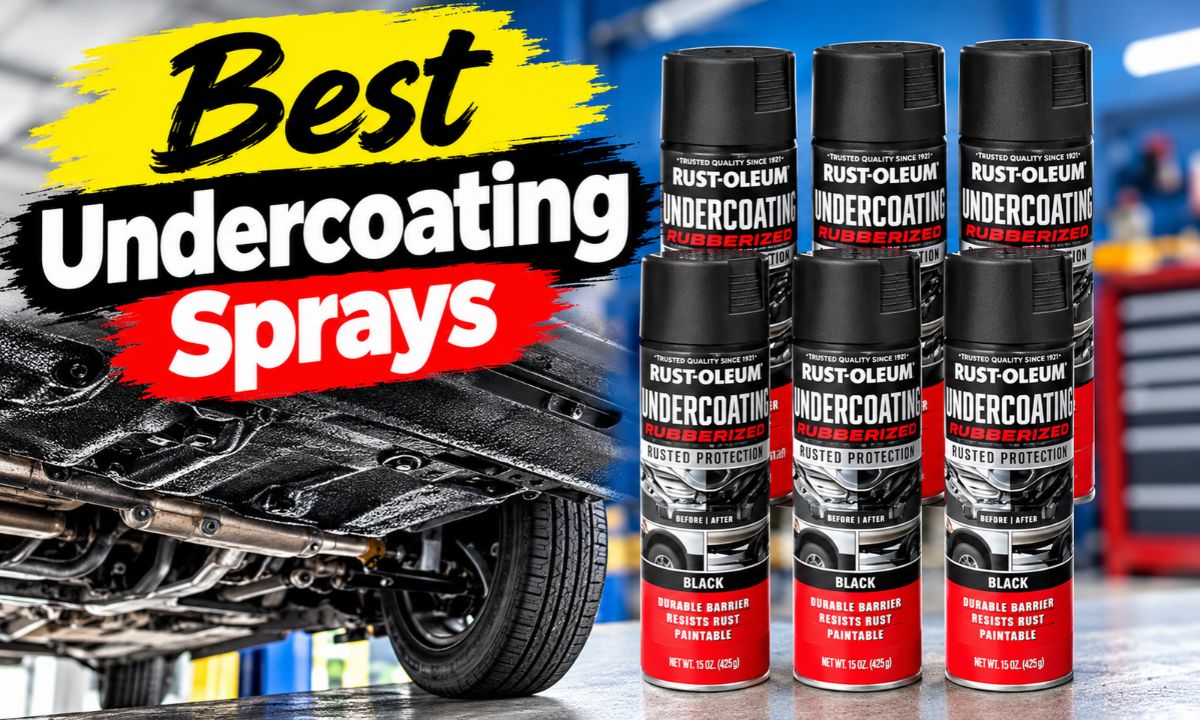
The Best Undercoating Sprays help shield vehicle undersides from moisture, road grime, and rust when you choose the right formula.
American drivers face many road hazards. Winter roads can bring salt and slush. Coastal roads can expose cars to salty air. Gravel roads can send small stones against exposed metal. Even a daily drive to work can leave dirt and water under your car. I would start by checking the frame, wheel wells, and other exposed metal before choosing an undercoating spray. Rust prevention works best when you prepare the surface and use the right product. Rust-Oleum suits many simple DIY jobs, B’Laster Surface Shield offers a lanolin-based option, and the InoKraft kit helps drivers who want to spray their own coating with a separate gun.
Table of Contents
Toggle🏆 Top 3 Products

B’Laster Surface Shield Rust Prevention Spray
Its lanolin-based formula makes it a strong choice for drivers who want a rust inhibitor for exposed metal and vehicle undersides.

Rust-Oleum Rubberized Undercoating Spray
This two-can pack is a practical option for DIY users who want a rubberized coating for suitable automotive surfaces.

InoKraft Undercoating Spray Gun Kit
Its spray gun, suction cup, flexible wand, and straight hose give DIY users a reusable application setup for compatible coatings.
Rust-Oleum Rubberized Undercoating Spray
Rust-Oleum Rubberized Undercoating Spray is a simple option for car owners who want to coat suitable areas beneath a vehicle. This listing includes two 15-ounce cans in black. The rubberized formula is designed to create a protective layer on compatible automotive surfaces. It may also help reduce some road noise when applied to suitable areas.
I would consider this product for small DIY jobs rather than assume two cans will cover an entire vehicle. Coverage depends on the surface, the thickness of the coat, and the amount of product lost during spraying. Clean the surface well and remove loose rust before application. Always check the current label for approved surfaces, drying time, and safety instructions.
✅ Pros
- ✔The aerosol format is easy to handle for small jobs.
- ✔The two-can pack gives you more material than a single can.
- ✔The black finish suits many dark vehicle undersides.
- ✔The rubberized coating can help protect compatible surfaces from moisture and road grime.
- ✔It can help reduce some road noise when used on suitable areas.
- ✔The cans are useful for touch-ups and small repair projects.
- ✔No separate spray gun is needed for normal aerosol application.
⚠️ Cons
- ✖Two 15-ounce cans may not cover a full vehicle.
- ✖Aerosol spray can be hard to control in tight spaces or strong wind.
- ✖The coating is not a cure for existing rust or damaged metal.
- ✖It is not suitable for every part beneath a car, including components excluded by the label.
- ✖The black finish can hide surface details after application.
My Recommendation
I would choose Rust-Oleum for small jobs on suitable automotive surfaces, especially when I want a ready-to-use spray instead of a spray gun and a separate coating supply. It is a practical option for touch-ups and selected areas that need a protective layer. Before buying, I would estimate the area to cover and read the label to confirm that the product fits the intended job. For heavy rust, I would first assess the metal and remove loose corrosion rather than spray over it.
| Best For | Why |
|---|---|
| Small DIY jobs | The aerosol cans make it simple to coat limited areas without special spray equipment. |
| Touch-ups on suitable metal | The rubberized coating can add a protective layer after proper surface preparation. |
| Drivers who want a black finish | The black coating suits many dark underbody areas, provided the label approves the surface. |
InoKraft Undercoating Spray Gun Kit
The InoKraft Undercoating Spray Gun Kit is different from a can of undercoating. It is an application tool made for compatible coatings, such as certain underseals, truck bed liners, rubberized undercoatings, and rust-proofing products. The kit includes a suction-feed cup, a flexible 360-degree wand, and a straight hose. These parts can help users reach areas that are hard to access with a standard aerosol can.
I would look at this kit if I planned to handle more than one coating project. It does not replace the coating itself, so you must buy a compatible product separately unless the seller states otherwise. The spray gun also needs the correct setup and suitable air supply for its design. Check the instructions and coating requirements before use, since material thickness and equipment settings can affect the spray pattern.
✅ Pros
- ✔The spray gun offers an alternative to repeated aerosol purchases.
- ✔The suction-feed cup holds compatible coating material for application.
- ✔The flexible wand can help reach some narrow or awkward spaces.
- ✔The straight hose offers another way to direct the spray.
- ✔The kit is designed for use with several types of compatible automotive coatings.
- ✔It may suit repeated maintenance jobs on cars and trucks.
- ✔A separate application tool can offer more control for some users than an aerosol can.
⚠️ Cons
- ✖The kit is an application tool, not a ready-to-use coating.
- ✖You must confirm coating compatibility before filling the cup.
- ✖The spray gun may need a suitable air supply and correct setup.
- ✖Cleaning the tool after use adds time to each job.
- ✖Beginners may need practice to get an even coat without runs or missed areas.
My Recommendation
I would pick the InoKraft kit for a DIY user who plans to apply compatible coatings more than once. The wand and hose can make access easier in some areas, while the gun provides a way to apply material from a separate container. I would not buy it just to coat one small spot unless I already owned the needed equipment and coating. Before starting, I would check the air supply needs, wear the required protective gear, and practice on a safe test surface.
| Best For | Why |
|---|---|
| Repeat DIY projects | A reusable application tool may make sense if you plan to coat several vehicles or complete future jobs. |
| Hard-to-reach areas | The flexible wand and straight hose can help direct compatible coatings into selected spaces. |
| Users with coating equipment experience | A prepared user can select the right material, set up the tool, and clean it after each job. |
B’Laster Surface Shield Lanolin Rust Spray
B’Laster Surface Shield is a lanolin-based rust prevention spray made for vehicles and metal surfaces. This listing contains six cans, which may suit a driver who wants to treat several areas or keep supplies ready for future maintenance. Lanolin-based products form a protective film that helps limit contact between metal and moisture. This type of coating differs from a rubberized undercoat because it focuses on corrosion control rather than creating a thick, hard shell.
I would consider Surface Shield for a vehicle that faces wet roads, winter salt, or damp storage conditions. The seller lists protection of up to two years, but real results depend on the climate, surface condition, use, and upkeep. A film-based product may need inspection and reapplication as it wears or washes away. Read the label to learn where it can go and how to apply it safely, especially near brakes, exhaust parts, belts, and other components that must stay free of coating.
✅ Pros
- ✔The lanolin-based formula is designed to help prevent corrosion on suitable metal.
- ✔The six-can pack provides supplies for multiple areas or maintenance sessions.
- ✔It offers an alternative to thick rubberized undercoating.
- ✔The protective film can reach some uneven metal surfaces when applied correctly.
- ✔It may suit vehicles exposed to road salt and moisture.
- ✔The formula can be useful for routine rust-prevention maintenance.
- ✔The product is marketed for vehicle use as well as other suitable metal surfaces.
⚠️ Cons
- ✖The six-can pack may be more than a single-car owner needs.
- ✖The seller’s up-to-two-year claim is not a guarantee for every climate or vehicle.
- ✖A film-based coating may need checks and repeat application.
- ✖The product can leave a film on surfaces, so careful masking and application matter.
- ✖It does not repair deeply rusted or weakened metal.
My Recommendation
I would put B’Laster Surface Shield near the top of my list for drivers who want a film-based rust inhibitor rather than a thick rubberized coating. It is especially worth considering for vehicles that see wet weather or salted winter roads. The six-pack makes more sense if you maintain more than one vehicle or plan repeat treatments. I would inspect the underside first, apply the product only where the label allows, and check the coating through the year instead of assuming it will last for a fixed period.
| Best For | Why |
|---|---|
| Vehicles exposed to road salt | The lanolin-based film is designed to help protect suitable metal from moisture and corrosion. |
| Owners maintaining several vehicles | The six-can pack gives you more product for repeat jobs and multiple vehicles. |
| Drivers who prefer a film coating | It offers a different approach from a thick rubberized undercoat and suits some rust-prevention plans. |
Final Verdict: Which Should You Buy?
For a film-based rust inhibitor, I would choose B’Laster Surface Shield. Rust-Oleum is a good option for small jobs that call for a rubberized coating, while the InoKraft kit suits people who plan to spray compatible coatings more often. The Best Undercoating Sprays depend on your vehicle, surface condition, and local weather.
Before you buy, inspect the underside, prep the surface, and follow the label. The right Best Undercoating Sprays can help protect suitable metal, but no coating replaces regular checks and timely rust repairs.
FAQs Of Best Undercoating Sprays
Q What are the Best Undercoating Sprays for rust prevention?
Q Is rubberized undercoating better than lanolin spray?
Q Can I spray undercoating over rust?
Q How often should I reapply undercoating spray?
Q Can I apply undercoating spray at home?