
I once opened a bag of cheap flour and thought, “Why does this taste dull?” That small moment led me to this Buying Guide for Grain Mills. I started grinding at home and saw a big change. The smell was rich. The taste felt alive.
I have used a hand mill and a mixer mill in my own kitchen. Each one feels very different. If you ask what to look for in a grain mill, I had the same doubt. In this guide, I will show the two types of grain mills, share my mistakes, and help you pick from the top home grain mills with ease.
What Is a Grain Mill and Why I Started Using One
A grain mill is a tool that grinds whole grains into flour or meal. It can be hand or electric, but both do the same job. I started using one when store flour began to taste dull to me. Fresh flour tastes better and keeps more of the grain’s natural goodness.
People use grain mills for fresh taste and better control over food. When you grind at home, the flour smells warm and clean. I noticed my bread had a soft feel and a rich smell right away. Fresh flour gives better taste and a more natural feel to simple meals.
For me, the biggest change was in smell and texture. The dough felt soft, like it had life in it. Even simple bread tasted full and fresh. After that, store flour felt dry and flat, like old spice.
What Are the Two Types of Grain Mills?
There are two main types of grain mills: manual and electric. Each one works in a simple way, but they feel very different to use. I learned this after trying both at home. One is slow and hands-on. The other is fast and easy.
Manual Grain Mills
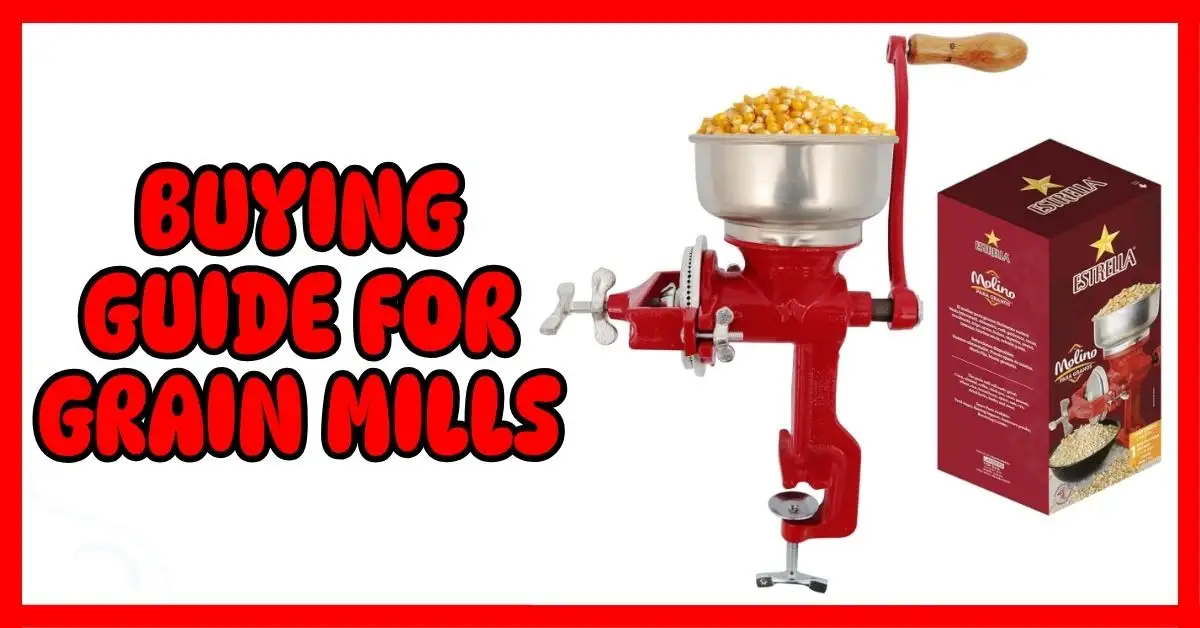
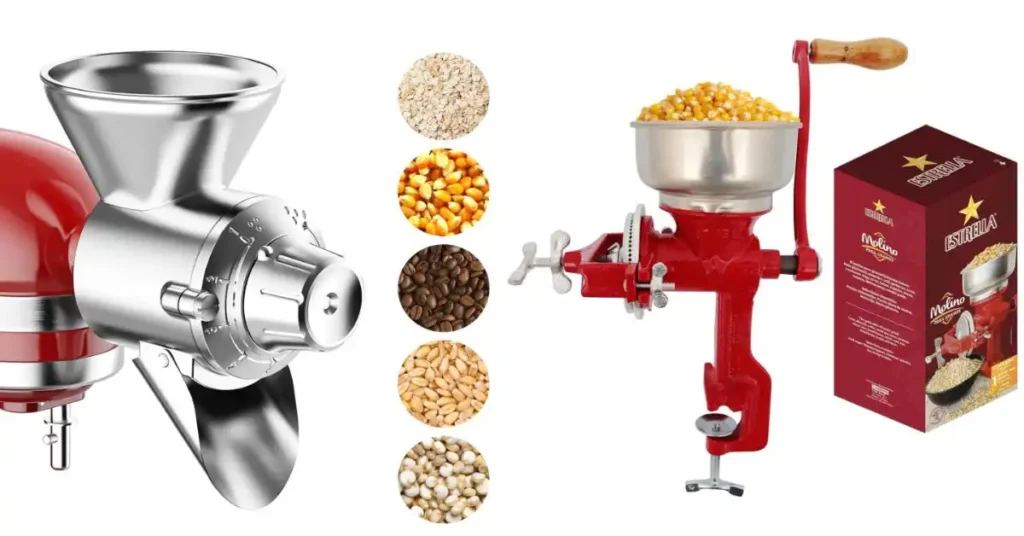
Manual grain mills use a hand crank to crush grains. You turn the handle, and the grains break between metal plates. I used one like the Estrella style, and it felt very old-school. It made me slow down and focus.
These mills are best for cornmeal, coarse flour, and simple home use. They also work well when there is no power. I liked the control, but it takes effort and time.
Pros:
- No electricity needed
- Strong and long lasting
- Good for coarse grind
Cons:
- Slow work
- Needs hand effort
- Not for fine flour
Electric Grain Mills
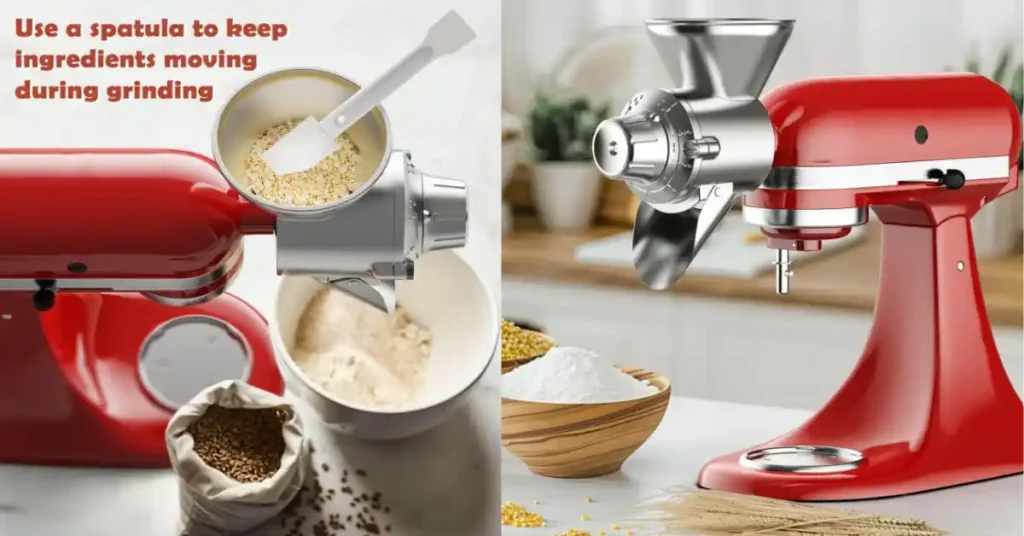
Electric grain mills use a motor or mixer to grind grains. You just add grains and switch it on. I tried a KitchenAid type attachment, and it saved a lot of time. It felt smooth and fast.
These mills are best for fine flour and daily use. They are easy and quick, which helps when you cook often. But they need power, and they feel less traditional.
Pros:
- Very fast
- Easy to use
- Good for fine flour
Cons:
- Needs electricity
- Can cost more
- Less traditional feel
👉🏿👉🏻 Check Latest Price and Offer at Amazon 👈🏻👈🏿
👉🏿👉🏻 Check Latest Price and Offer at Amazon 👈🏻👈🏿
What to Look for in a Grain Mill (Buyer’s Checklist)
When I first bought a grain mill, I did not know what to check. I only wanted fresh flour. Later, I learned small details make a big difference. Choosing a grain mill is like picking a good kitchen tool. Simple and solid always wins.
1. Grinding Texture (Coarse vs Fine)
Grinding texture is very important. It changes how your flour works in food. Some mills give only coarse grind. Some can go fine.
I once used a mill that could not make soft flour. That changed how I cook. Fine grind is better for baking. Coarse grind is better for rustic food.
2. Power Source (Manual vs Electric)
This is a big choice. Manual mills use hand power. Electric mills use a motor or mixer.
Manual feels slow but simple. Electric is fast and easy. I use both, and the difference is clear. One takes time, the other saves time.
3. Build Quality (Cast Iron vs Aluminum vs Steel)
Build quality decides how long the mill lasts. Cast iron is heavy and strong. Aluminum is lighter. Steel is balanced and tough.
My cast iron mill feels very strong. It is heavy, but very steady. Light ones are easy to move, but feel less solid.
4. Grain Compatibility
Not all mills handle all grains. Some work only with dry grains. Some cannot take oily seeds.
I learned this after a jam in my own mill. Always check before use. It saves time and damage.
5. Ease of Use and Cleaning
A good mill should be easy to use. It should also be easy to clean. If it is hard, you will stop using it.
I prefer simple parts that open fast. Cleaning takes a few minutes. That keeps the tool in daily use.
6. Capacity and Speed
Capacity is how much you grind at once. Speed is how fast it works. Both matter for daily cooking.
Small mills are fine for home use. Big ones help with large batches. Slow grinding is fine, but not when you are in a rush.
7. Mounting & Storage
How the mill sits is important. Some clamp to a table. Some sit on a counter. Some attach to a mixer.
I once used a loose clamp mill. It moved while grinding. A stable setup makes work easy and safe.
Mistakes I Made When Buying My First Grain Mill
When I bought my first grain mill, I thought it would be easy. I just picked the cheapest one. I was wrong. It worked, but the result was not good. This is part of my Buying Guide for Grain Mills experience, learned the hard way.
The first mistake was buying based on price only. I wanted to save money. But the mill was weak. The grind was uneven. I learned that a good grain mill is about quality, not just cost.
The second mistake was expecting fine flour from a manual mill. I used a hand grinder like the Estrella style. It gave coarse meal, not soft flour. I did not know this at first. Manual mills are simple, but they are not for fine baking flour.
The third mistake was ignoring grain limits. I tried oily seeds without checking. The mill got stuck. I had to stop and clean it. Each mill has rules. If you follow them, it works better.
The last mistake was choosing the wrong type for daily use. Manual grinding is slow. It feels nice, but not on busy days. Some days I needed speed. That is when I saw why electric mills are better for daily cooking.
Top Home Grain Mills
When I first looked for a grain mill, I got confused fast. There were too many brands and claims. But real use is very different from ads. I tested both manual and electric mills at home. The right one depends on how you cook each day.
Best Manual Grain Mill
A manual grain mill is best for slow, simple cooking. You turn a handle to grind the grain. I used an Estrella-style grinder, and it felt very basic but strong. It made me slow down in a good way.
This type is good for cornmeal and coarse flour. It also works when there is no power. I liked it for small meals. But it is slow and takes effort.
Best Electric Grain Mill for Home Use
An electric grain mill is best for speed. It uses a motor or mixer to grind grains. I tried a KitchenAid attachment, and it felt very easy to use. It saved a lot of time.
This type is good for fine flour and daily cooking. You just switch it on and it works fast. I could bake more because it was quick. It is simple and smooth.
Best for Beginners
A beginner mill should be easy to use. It should not feel hard or confusing. My first try was not simple, so I learned this the hard way.
The best choice is one that is easy to set up and clean. It should work without stress. Simple tools help you stay consistent.
Best for Traditional Cooking
A manual mill is best for traditional cooking. It gives a slow and real kitchen feel. I used it for simple meals, and it felt very natural.
It works well for corn dishes and rustic food. The slow grind feels calm. It is not about speed. It is about tradition and taste.
Buying Guide for Grain Mills USA, UK, and Canada
When I started learning about grain mills, I noticed one thing fast. Where you live changes what works best. I saw this while testing tools and reading real user feedback. A good grain mill is not the same for everyone. It depends on space, power, and daily use.
USA Buyers
In the USA, you have many choices. You can find both manual and electric mills easily. I noticed electric models are very popular here, especially mixer attachments.
Homes also have more kitchen space. So bigger or electric mills fit well. Manual mills still work, but many people use them for backup use.
UK Buyers
In the UK, kitchen space is often small. So compact mills work better. I learned this from people who cook in tight spaces every day.
Power setup is also important. Not all electric mills match UK plugs. Small and simple mills are usually the best fit for daily cooking.
Canada Buyers
In Canada, storage matters more than people think. Cold weather can affect how you store grains. I saw many people use sealed containers for safety.
You also get good access to grains like wheat and oats. Electric mills are common, but manual ones help during power cuts. It feels like a mix of comfort and backup planning.
What Should You Look for When Buying Grain Products?
When I first started using a grain mill, I thought all grains were the same. I was wrong. The grain you buy changes taste and smell. It also changes how food feels. I learned this after trying fresh grains and old store flour at home.
Whole grains are better than pre-processed ones. Whole grains keep more nutrients inside. They also taste richer. I noticed my bread had more flavor when I used whole wheat. Pre-processed flour is easy, but it loses freshness fast.
Storage is also very important. I used to keep grains in simple bags. They went stale quickly. Now I use sealed containers. The grains stay fresh much longer. It keeps air and moisture out.
Freshness matters more than brand. I saw this clearly when I switched to simple whole grains. The taste was better than fancy packaged flour. Fresh grain feels alive, like fresh food should. If the grain is fresh, your mill will do the rest.
Manual vs Electric Grain Mills (My Honest Verdict)
When I first used grain mills, I tried both types. I wanted to see what fits real home cooking. After testing them, I learned a simple truth. The best one depends on your daily needs, not just the tool.
Manual grain mills feel slow but very real. You turn the handle by hand. I used an Estrella-style mill, and it felt calm to use. It is simple, but it takes effort.
Electric grain mills feel very fast. I used a KitchenAid attachment, and it saved time. It grinds in minutes. It feels smooth and easy in daily cooking.
Here is my honest view. Manual mills are best for tradition and strong build. Electric mills are best for speed and easy use. Both are good, but they fit different people.
If you enjoy slow cooking, manual feels right. If you cook often and want quick flour, electric is better. I think of it like this. Manual is slow cooking by hand. Electric is quick help in the kitchen.

Final Verdict
There is no one best grain mill for everyone. It depends on how you cook. I learned this after using both manual and electric mills at home. Each one fits a different need.
If you like slow cooking, a manual mill is a good fit. It is strong and simple. I use mine when I want a calm kitchen day. It feels hands-on and steady.
If you want speed, an electric mill is better. It works fast and gives fine flour. I use it when I cook often or bake in a hurry. It saves a lot of time.
My simple advice is this. Do not copy others. Pick what fits your daily life. It is like walking vs driving. Both work. You just choose what suits your day.

FAQs
What is the best grain mill for home use?
The best grain mill depends on your daily needs. If you grind small amounts, a manual mill works fine. It is simple and does not need power. I used one when I started, and it felt slow but steady.
If you want speed, go for an electric mill. It makes flour fast and with less effort. I now use electric most of the time for baking. It saves a lot of time in the kitchen.
Are manual grain mills worth it?
Yes, they are worth it for simple or small use. They do not need electricity. That is helpful during power cuts. I once used mine in a blackout, and it still worked. That felt very useful.
But they take effort. You turn the handle by hand. So they are best for small jobs, not big baking days.
Can a grain mill make fine flour?
Yes, it can make fine flour. Electric mills do it better and faster. The flour comes out soft and smooth. I saw a clear difference when I compared both types.
Manual mills can also make fine flour. But you may need to grind more than once. It takes more time and effort.
What grains can you grind at home?
You can grind many dry grains. Wheat is the most common. You can also use rice, oats, and corn. I often switch grains depending on what I cook. It feels fresh and simple.
Some seeds also work, like millet or quinoa. But oily seeds may not work in every mill. Always check your model first.
Is fresh ground flour healthier?
Yes, fresh flour is often better. It keeps more natural nutrients. You grind it right before use. I noticed better taste in bread and roti. It feels more fresh and rich.
Store flour sits longer and loses some freshness. Fresh grinding gives you more control over quality.
How much should I spend on a grain mill?
It depends on how often you use it. Simple manual mills are cheap. They are good for light use. I started with one like that before upgrading.
Electric mills cost more. But they save time and effort. If you bake often, they are worth it. Think simple: more use means better machine.
To Get More About Home and Kitchen Product You Can Visit Our Site. If You Found our Posts Helpful Leave a Comment Below