
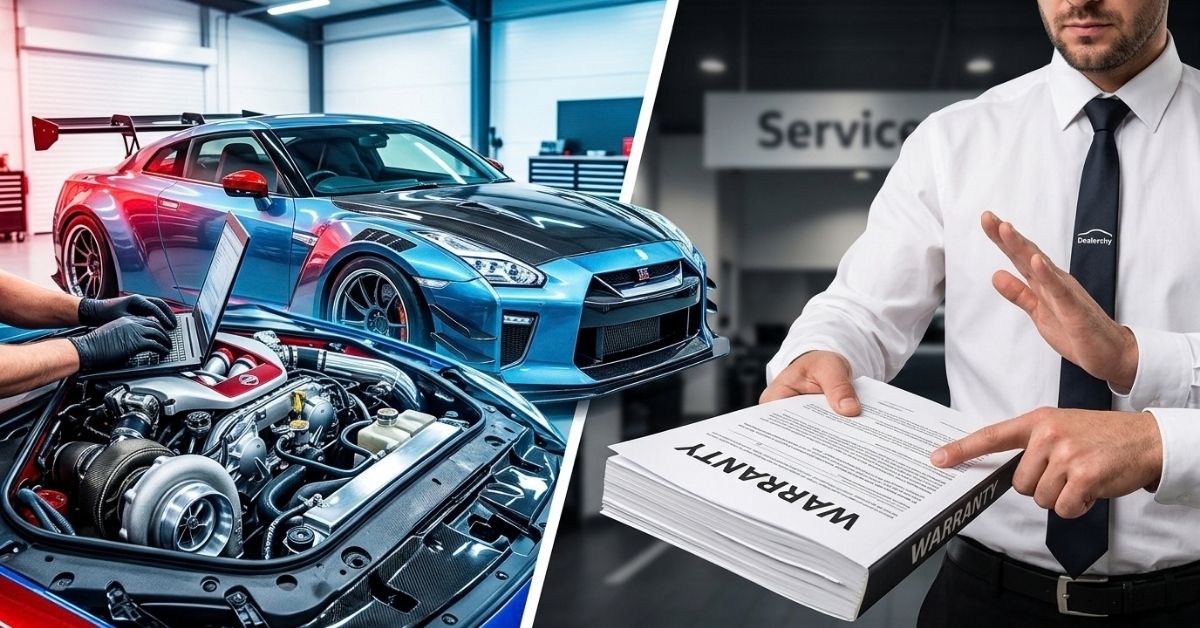
If you are thinking about an ECU tune, remap, piggyback system, or other performance mod, the warranty question can feel like a big red warning light. I used to think that one modification could simply make the whole factory warranty disappear. That is not usually how warranty coverage works.
So, will car tuning void your warranty? Not automatically. In the U.S., a manufacturer generally cannot reject every warranty claim just because you used an aftermarket part or service. But it can deny a claim when it says the tune or modification caused the failure or damage.
That difference is the part many people miss. In this guide, I’ll break down how tuning affects engine, transmission, electrical, and other warranty claims, what the Magnuson-Moss Warranty Act means, and what I would check before tuning a car that is still covered.
Will Car Tuning Void Your Warranty?
A tune does not normally erase every warranty right on the entire car. The real issue is what failed and whether the modification caused or contributed to that failure.
This is also how many manufacturer warranty terms are written. For example, GM warns that damage to the engine, transmission, emissions system, drivetrain, or other components caused by aftermarket performance products may not be covered.
| Situation | Likely warranty question |
| Tuned engine has a major failure | Did the tune cause or contribute to the failure? |
| Power window stops working | Is the electrical fault related to the tune? |
| Factory seat develops a defect | Is there any connection to the tune? |
That last example is important.
If your ECU was tuned and your heated seat stops working, it would be difficult to see a natural connection between those two things. A warranty claim should not simply become invalid because the vehicle has a modification.
The exact result depends on your warranty contract, vehicle, country, and the facts of the failure.
What Does Car Tuning Actually Change?
Before worrying about the warranty, it helps to understand what a tune does.
An ECU tune changes software settings inside the engine control system. Depending on the vehicle and tune, it may alter things such as:
- Ignition timing
- Fuel delivery
- Boost pressure
- Throttle response
- Torque limits
- Air-fuel targets
- Transmission behavior
A mild tune may make a car feel quicker without dramatically changing the hardware. A more aggressive tune can ask the engine and drivetrain to work much harder.
That is where the warranty risk becomes more serious.
Why Does an ECU Tune Matter to a Warranty?
A modern engine is a system. More boost can mean more cylinder pressure. More torque can put extra load on a clutch, gearbox, driveshaft, or differential.
The modification itself is one question. The extra stress it creates is another.
GM’s current warranty materials make this point clearly. They warn that engine performance modifications can raise horsepower and torque to levels that may damage or shorten the life of the engine, transmission, emissions system, or drivetrain.
| Tune change | Possible added concern |
| More boost | Higher engine and turbo load |
| More torque | More drivetrain stress |
| Higher rev limit | Greater mechanical stress |
| Aggressive ignition changes | Heat and combustion concerns |
This does not mean every tuned car will break. It means the relationship between the modification and the failed component can become much easier for a manufacturer to argue.
What the Magnuson-Moss Warranty Act Means for Car Owners
This is where a lot of online advice gets confusing.
In the United States, the Magnuson-Moss Warranty Act limits how companies can condition warranty coverage on particular parts or services. The FTC says a company generally cannot void a warranty simply because you used a third-party part or independent repair service.
But there is an important catch.
The FTC also explains that a company can refuse warranty coverage for defects or damage caused by third-party parts or services.
So the law is not a magic shield against every tuning-related warranty dispute.
Does Magnuson-Moss Protect a Tuned Car?
It can protect against an overly broad claim that says:
“You modified the car, so absolutely nothing is covered.”
That is very different from a manufacturer saying:
“This particular engine failure was caused by the modification.”
The second situation is much more relevant to a tuning dispute.
| Warranty claim | What matters |
| Unrelated component failed | Connection to tune |
| Engine failed after aggressive tune | Cause of failure |
| Transmission failed after torque increase | Modification and load |
| Tune caused electrical fault | Evidence of connection |
The FTC has repeatedly stated that manufacturers generally cannot require consumers to use only branded parts or authorized repair services to keep warranty coverage.
Still, that does not mean an aftermarket modification must be covered when it causes damage.
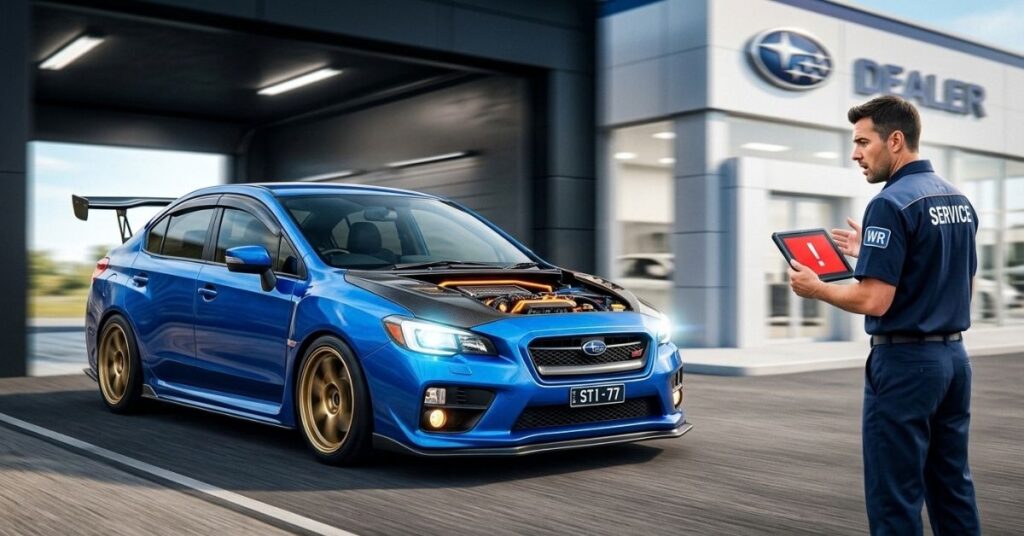
Can a Dealer Deny an Engine Warranty Claim After a Tune?
Yes, a dealer or manufacturer may deny a claim if it determines that the tune caused the problem and the warranty terms allow that exclusion.
This is one of the areas where I would be very careful.
Imagine you install an aggressive turbo tune. A few months later, the engine develops a serious internal failure. The dealer sees evidence of altered calibration.
That is very different from installing an aftermarket phone charger and later having a broken door handle.
| Failure | Tuning connection |
| Blown engine after aggressive tune | Potentially strong |
| Failed turbo under increased boost | Potentially strong |
| Broken transmission after torque increase | Potentially strong |
| Failed power window | Usually less obvious |
The important word is connection.
A warranty dispute is not just about whether a modification exists. It can also involve whether that modification caused or contributed to the specific failure being claimed.
What About Transmission and Drivetrain Warranty?
This is an area I would take especially seriously with high-torque tunes.
A tune can change more than engine power. On some vehicles, tuning can also affect transmission torque management and shift behavior.
That can matter because the transmission, clutch, axles, driveshaft, and differential all have limits.
More Torque Can Mean More Warranty Risk
Suppose the factory engine makes 300 lb-ft of torque and a tune pushes it substantially higher.
The engine may handle it. But that does not automatically mean every part of the drivetrain was designed for the new load.
| Modification | Component to watch |
| High-torque tune | Transmission |
| Manual performance tune | Clutch |
| Increased launch torque | Axles and differential |
| Higher boost | Turbo and engine |
This is why “the tune only changes software” is not quite the whole story.
Software can change the physical forces that hardware experiences.
Does Returning the Car to Stock Restore the Warranty?
This is one of the biggest questions people ask, and there is no universal yes-or-no answer.
Flashing the original calibration back into the ECU may return the car to its factory software settings. But it does not necessarily erase the history of modifications or undo physical damage.
Some vehicles can record information about programming or operating conditions. Manufacturer diagnostic systems may also provide information during a warranty investigation.
So I would not treat a stock reflash as a guaranteed warranty reset.
Should You Remove the Tune Before Dealer Service?
It depends on why you are going to the dealer.
For routine maintenance, the situation may be different from a major engine or transmission failure. But if you are trying to conceal a modification during a warranty investigation, that can create another problem.
My practical approach would be simple: know your warranty terms before tuning rather than trying to hide the tune afterward.
| Approach | Practical concern |
| Read warranty first | Know the actual rules |
| Ask dealer in writing | Create a clear record |
| Keep stock software | Easier to restore factory setup |
| Hide a modification | Can complicate a dispute |
Which Car Modifications Carry the Most Warranty Risk?
Not every modification has the same relationship to warranty coverage.
A cosmetic change is generally a different issue from a modification that directly changes engine output.
The closer the modification is to the failed component, the more important the connection becomes.
High-Impact Performance Mods
These can include:
- ECU tuning
- Turbo upgrades
- Supercharger kits
- Nitrous systems
- Fuel system changes
- Aggressive transmission tuning
Lower-Connection Modifications
Things such as wheels, interior changes, or unrelated accessories may have little connection to an engine or infotainment failure.
That does not mean every modification is automatically covered. It means the warranty question should be tied to the component and failure.
Ford, for example, states that its new-vehicle warranty continues to apply to original components when they have not been altered or affected by modifications, while damage attributed to a non-genuine component may not be covered.
| Modification | Main warranty concern |
| ECU tune | Engine and drivetrain |
| Exhaust | Emissions and related systems |
| Wheels | Suspension or wheel-related damage |
| Audio upgrade | Electrical system if connected |
What Mistakes Can Make a Tuning Warranty Dispute Worse?
The biggest mistake is assuming that all tunes are equal.
A conservative calibration from a reputable tuner is not the same thing as pushing factory hardware to its limit.
Another mistake is ignoring the manufacturer’s warranty booklet.
I have found that people often rely on forum comments like “the dealer can’t void your warranty.” That statement is too broad to be useful.
The better question is: what does my warranty cover, and what does it exclude?
| Common mistake | Better approach |
| Trusting forum advice | Read your warranty |
| Assuming a tune is harmless | Understand the extra load |
| Ignoring manufacturer terms | Check modification exclusions |
| Assuming stock means invisible | Keep records and be honest |
The FTC’s guidance is useful here because it separates an illegal blanket warranty restriction from a legitimate denial based on damage caused by an aftermarket part or service.
How to Protect Your Warranty Before Tuning Your Car
If the car is still under warranty, I would slow down before flashing anything.
You do not need to be a lawyer or mechanic. A little preparation can save a very expensive headache.
Read the Actual Warranty Booklet
Search for terms such as:
- Modification
- Alteration
- Aftermarket
- Calibration
- Performance
- Engine
- Powertrain
- Software
- Damage caused by modification
Do not rely only on a salesperson’s verbal answer.
Ask Specific Questions
Instead of asking, “Will tuning void my warranty?”
Ask:
“If I install an aftermarket ECU calibration, which warranty components would no longer be covered, and under what circumstances?”
That question is much harder to answer with a vague yes or no.
| Before tuning | Why it helps |
| Read warranty | Know exclusions |
| Ask dealer in writing | Create documentation |
| Save factory calibration | Preserve original setup |
| Research tuner | Reduce tuning mistakes |
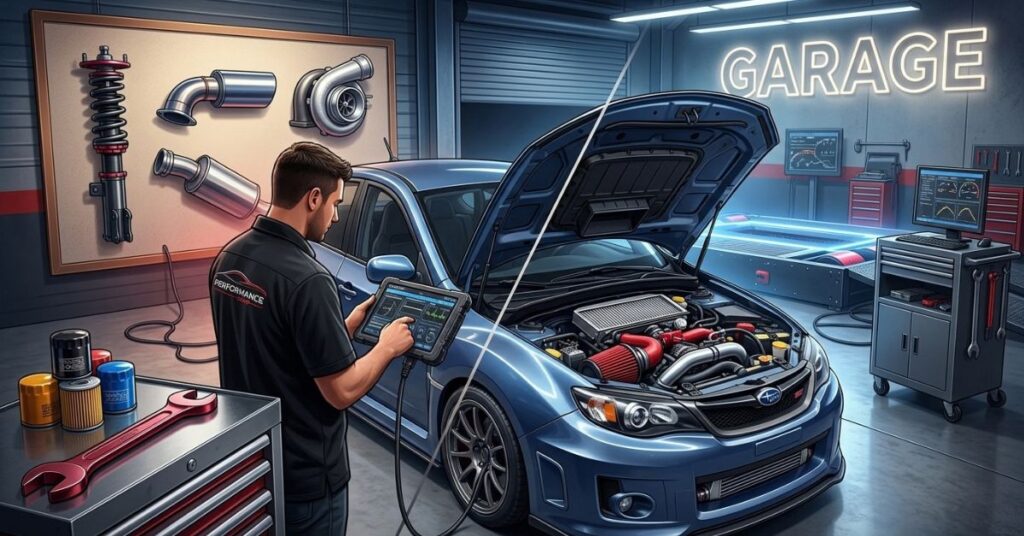
What If the Dealer Says the Entire Warranty Is Void?
Do not immediately assume the dealer is right.
Ask them to explain which component is excluded and why.
If the answer is simply, “You tuned it, so the whole warranty is gone,” ask for the reason in writing.
The FTC says companies generally cannot void an entire warranty simply because a consumer used third-party parts or services. At the same time, companies can deny coverage for damage caused by those parts or services.
That distinction is worth remembering.
Keep Every Document
Save:
- Your original warranty booklet
- Tune invoice
- Tuner’s calibration details
- Dealer repair orders
- Diagnostic reports
- Photos of modifications
- Emails about warranty coverage
A paper trail is much more useful than trying to remember a conversation six months later.
Does Car Tuning Affect Emissions Warranty Too?
It can.
This is an area where tuning can create another layer of concern beyond the normal powertrain warranty.
Performance software that changes emissions controls may violate applicable emissions rules. Ford Performance, for example, warns that altering, removing, or disabling certified emissions-control hardware or software can be prohibited under applicable laws.
So a tune should not be judged only by horsepower gains.
| Tuning change | Possible issue |
| More power calibration | Powertrain warranty |
| Emissions system changes | Emissions compliance |
| Removed emissions equipment | Legal and warranty concerns |
| Fault-code suppression | Compliance and diagnostics |
If the vehicle is driven on public roads, check the rules that apply where you live.
What I Would Check Before Tuning a Warranty Car
If I were making the decision today, I would use a simple checklist.
First, I would find the exact warranty document for the vehicle. Then I would identify the sections covering modifications and powertrain damage.
Next, I would ask the dealer a specific question in writing. I would also ask the tuner what changes the calibration makes, rather than simply asking how much horsepower it adds.
Finally, I would consider how much warranty protection I am willing to risk for the performance gain.
That last point is personal. A modest tune may be worth considering to one owner and completely unsuitable to another.
My Simple Pre-Tune Checklist
| Check | What to look for |
| Warranty | Modification exclusions |
| Tune | Boost, torque and fuel changes |
| Vehicle | Factory hardware limits |
| Emissions | Road-use compliance |
| Dealer | Written warranty response |
Final Thoughts
So, will car tuning void your warranty? Usually, the answer is more complicated than a simple yes or no. A tune does not automatically mean every part of the vehicle loses warranty coverage. But if the manufacturer can link a failure to the tune or another modification, that particular repair may not be covered.
The biggest lesson I would take away is to check the warranty before making the modification. Keep your records, understand what the tune changes, and do not assume that returning the ECU to stock will magically erase everything. A little homework is much cheaper than discovering the warranty issue after an engine or transmission repair.
FAQ
Will car tuning void your warranty?
No, car tuning does not always void your full warranty. A maker may deny a claim if the tune caused the fault. Check your warranty terms first.
Can a dealer deny a warranty claim after an ECU tune?
Yes, a dealer may deny a claim if it links the ECU tune to the fault. Ask for the reason in writing and keep all repair records.
Does returning a tuned car to stock restore the warranty?
Not always. A stock reflash may restore the factory tune, but it may not erase all signs of past tuning or fix damage caused by the tune.
Does car tuning affect engine warranty coverage?
It can. If a tune adds more boost, heat, or torque and the engine fails, the maker may say the tune caused or helped cause the fault.
What are your rights if tuning affects your car warranty?
In the U.S., a maker cannot simply void your whole warranty due to an aftermarket part. But it may deny damage linked to that part or tune.
To Get More About Home, Car Accessories Product You Can Visit Our Site. If You Found our Posts Helpful Leave a Comment Below