
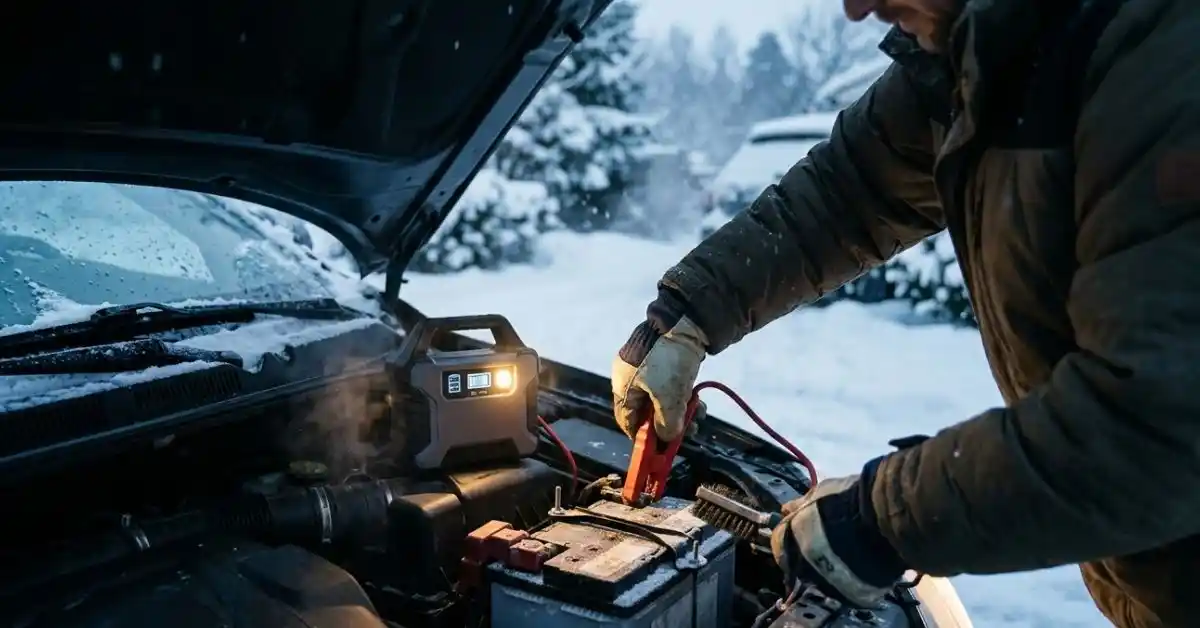
Winter has a funny way of exposing problems your car seemed to hide all year. One morning, everything works. The next, you turn the key and hear that weak, slow crank. I have learned that Winter Car Battery Maintenance is much easier when you deal with small warning signs before a cold morning turns them into a no-start problem.
The good news is that you do not need to be a mechanic to look after your battery. A few simple checks, better driving habits, and knowing when a battery is near the end of its life can save a lot of stress. Here is what I have learned about keeping a car battery healthy when the temperature drops.
Why Cold Weather Is So Hard on Your Car Battery
Cold weather does not usually “kill” a healthy battery overnight. What it does is reduce the battery’s available power while also making the engine harder to start.
That combination is what causes trouble. Your battery has less energy available, but your car may need more energy to crank the engine.
| What Happens in Winter | Why It Matters |
| Battery power drops | Less energy is available for starting |
| Engine oil gets thicker | The starter may work harder |
| Short trips become common | The battery may not fully recharge |
| Accessories get more use | Lights and heaters add electrical demand |
I used to think that a battery was either good or dead. In real life, there is often a long middle stage. The battery still starts the car most days, but it becomes slower, weaker, and less reliable.
Winter is usually when that weakness becomes obvious.
A Weak Battery Can Feel Fine Until the Temperature Drops
This is one mistake I learned the hard way. A battery can start your car without much trouble during warm weather and still struggle badly when winter arrives.
That is why I do not wait for a complete failure before checking the battery. If it is already showing signs of weakness, cold weather can push it over the edge.
A battery that is several years old deserves extra attention before winter.
The First Signs Your Battery May Struggle in Winter
Your car often gives you clues before the battery stops doing its job. The problem is that these signs can be easy to ignore when the car still starts.
I now pay more attention to changes in how the car starts rather than waiting for a warning light.
| Symptom | Possible Cause |
| Slow engine crank | Weak battery or poor connection |
| Dim lights at startup | Low battery charge |
| Clicking sound | Battery may lack enough power |
| Electronics reset | Low voltage during starting |
| Hard starts after sitting | Battery losing charge |
A single slow start does not always mean you need a new battery. Very cold weather can affect even a healthy one.
But if the same problem keeps coming back, I would not ignore it.
Check the Battery Before Winter Gets Serious
The best time for a battery check is before the coldest part of winter arrives.
Many people wait until the car refuses to start. By then, the problem has already made itself very clear.
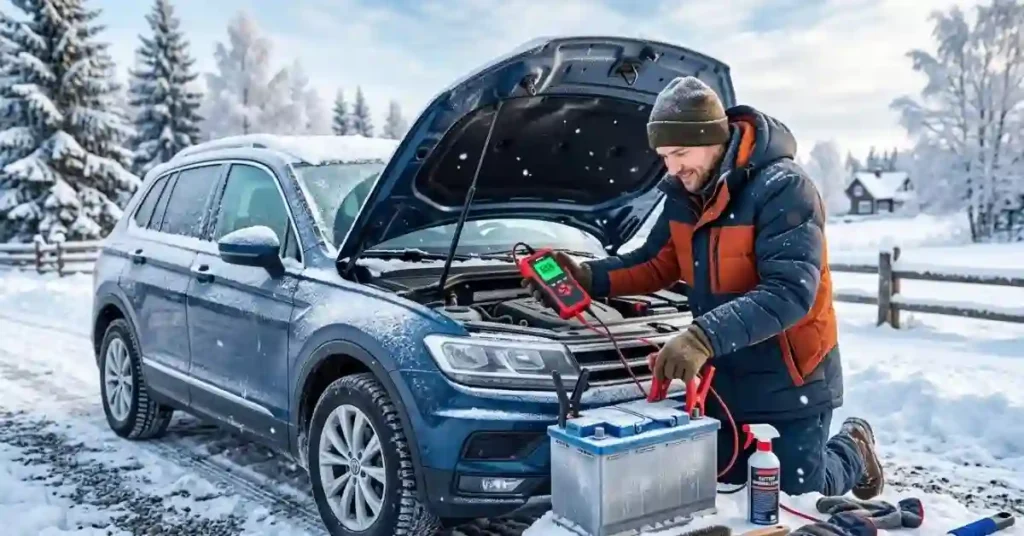
If you have a multimeter, you can check battery voltage when the car has been sitting and when it is running. A voltage reading alone does not tell the whole story, though. A battery can show a normal voltage and still perform poorly under load.
That is why a proper battery load or health test can be useful, especially for an older battery.
Winter Car Battery Maintenance Starts With Clean Connections
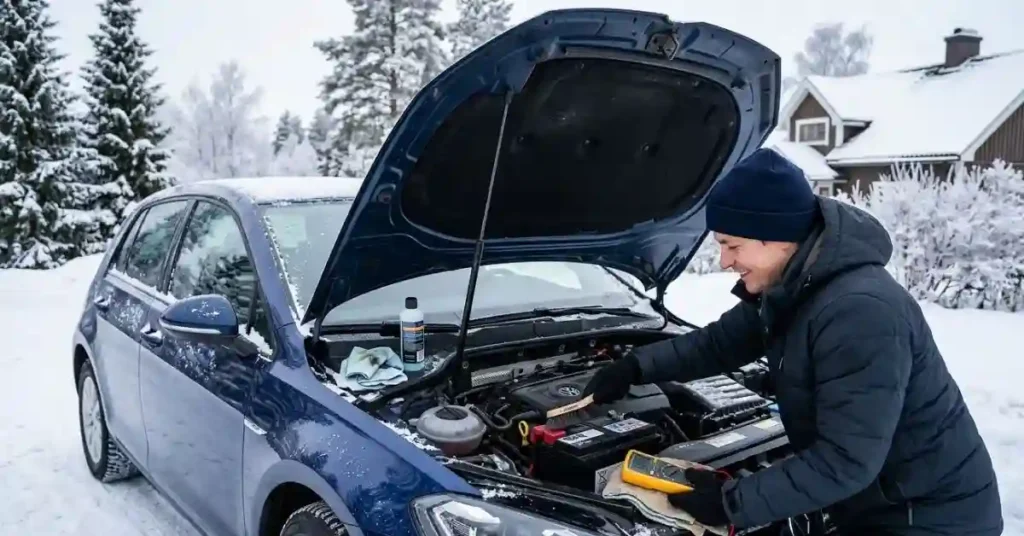
One of the simplest things to check is also one of the easiest to forget: the battery terminals.
Corrosion and loose connections can create starting problems even when the battery itself is still in decent shape. I have seen people assume they needed a new battery when the real issue was a poor connection.
Before cleaning or working around a battery, follow your vehicle manual and use proper care. Batteries and their electrical systems can be hazardous if handled incorrectly.
Look for:
- Loose terminal clamps
- Visible corrosion
- Damaged cables
- Dirt around the battery case
- Signs of swelling or leakage
If anything looks badly damaged or unusual, it is better to have it inspected.
Keep the Battery Secure
A battery should not move around inside its tray.
This sounds obvious, but it is worth checking. A loose battery can put stress on the case, terminals, and cables.
I also check that the battery hold-down is secure whenever I inspect the terminals. It takes very little time and can help prevent problems later.
| Battery Check | What to Look For |
| Terminals | Clean and firmly attached |
| Cables | No obvious damage |
| Battery case | No swelling or cracks |
| Hold-down | Battery does not move |
| Surrounding area | Clean and dry |
Avoid Too Many Short Trips in Cold Weather
This is one of the biggest lessons I learned about winter driving.
Starting the engine uses battery power. The alternator then needs time to replace that energy. If you repeatedly take very short trips, especially in cold weather, the battery may not get enough time to recover.
Modern cars also use plenty of electrical power. Lights, fans, heated features, and other systems can increase the demand.
| Driving Pattern | Effect on the Battery |
| Regular longer drives | Helps restore battery charge |
| Many very short trips | May leave the battery undercharged |
| Car parked for long periods | Battery may slowly lose charge |
| Frequent cold starts | Adds extra strain |
This does not mean every drive needs to be long. The goal is simply to avoid a routine where the battery is constantly used but rarely gets a good chance to recharge.
Do Not Rely on Idling Alone
I have heard plenty of people say they will just start the car and let it idle for a few minutes to charge the battery.
That is not always the best answer.
The charging system and battery needs can vary by vehicle. A proper drive is often more useful than simply letting the car sit and idle. It also makes sense to follow the guidance in your owner’s manual.
If the battery repeatedly goes flat, a few minutes of idling will not fix the real problem.
Check Your Battery’s Age Before It Becomes an Emergency
Battery age matters more than many drivers realize.
Even if your battery still works, its ability to store and deliver power can decline over time. Winter can reveal that loss quickly.
I like to check the date information on the battery before winter. If it is getting older and has started showing weak symptoms, I would rather test it early than gamble on another cold season.
| Battery Situation | Smart Move |
| New and starting well | Keep up normal checks |
| Older but reliable | Test before winter |
| Slow starts are increasing | Check battery and charging system |
| Repeated loss of charge | Find the cause quickly |
| Visible battery damage | Get it inspected |
The exact lifespan varies. Climate, driving habits, electrical load, and battery quality can all make a difference.
That is why I avoid saying that every battery must be replaced after one exact number of years.
Keep an Eye on the Charging System Too
A weak battery is not always the real cause of a starting problem.
The alternator and charging system play a major role in keeping the battery charged. If the charging system is not working correctly, replacing the battery alone may only give you a temporary fix.
I learned this lesson after seeing people replace a battery and then wonder why the same problem came back.
If you notice repeated low battery warnings, frequent jump-start needs, or other electrical problems, it makes sense to check both the battery and charging system.
Watch for Battery Drain While the Car Is Parked
A battery can also lose power when the car is not being driven.
Some power use is normal. Modern cars have systems that stay active even after you park.
However, an electrical fault or unusual drain can slowly empty the battery. If the car regularly struggles after sitting but works fine after driving, that pattern is worth investigating.
Do not keep jump-starting the car and assume the problem has been solved.
Use a Battery Charger or Maintainer When It Makes Sense
For cars that sit unused for long periods, a suitable battery charger or maintainer can help keep the battery at a healthy charge.
This can be especially useful for seasonal vehicles or cars that are rarely driven during winter.
The key is to use equipment designed for your battery type and follow the instructions from both the vehicle and charger manufacturer.
I would not treat every battery problem with a charger. If the battery cannot hold a charge, repeatedly charging it may only hide the fact that it is failing.
| Situation | Better Approach |
| Car driven often | Normal charging system may be enough |
| Car sits for weeks | Consider a suitable maintainer |
| Battery went flat once | Check why it happened |
| Battery keeps going flat | Test for a fault or failing battery |
| Very old weak battery | Test before relying on it |
Common Winter Car Battery Maintenance Mistakes I Would Avoid
Some battery advice sounds useful but can create more trouble when taken too literally.
The biggest mistake is waiting until the battery completely fails.
Another mistake is assuming that every winter starting issue comes from the battery. Cold weather can also expose problems with the starter, charging system, cables, or other parts.
| Common Mistake | Better Approach |
| Waiting for a no-start | Check the battery early |
| Ignoring slow cranking | Test the system before winter |
| Replacing the battery blindly | Check charging and connections |
| Taking only short trips | Give the battery time to recharge |
| Repeatedly jump-starting | Find the underlying problem |
Do Not Ignore a Battery Warning Light
A battery-shaped warning light can be confusing.
In many vehicles, it can point to a problem with the charging system rather than simply telling you that the battery needs replacement.
If that warning appears while driving, I would take it seriously and check the vehicle manual or have the system inspected.
Ignoring it can eventually leave you with a car that will not restart.
Should You Warm Up Your Car to Protect the Battery?
Not really, at least not in the way many people think.
Starting a car and leaving it running for a long time just to “warm the battery” is not a magic solution.
Your best defense is to begin with a healthy, charged battery. Keep the terminals in good condition. Avoid letting the car sit for long periods with a weak battery. Deal with warning signs early.
If you live in an area with severe cold, follow your vehicle maker’s recommendations. Some vehicles and climates may benefit from extra winter equipment or specific storage practices.
My Simple Winter Battery Routine
Over time, I found that a simple routine works better than trying to remember everything after the first cold morning.
Before winter, I check the battery’s general condition, its connections, and its age. If it has been acting weak, I test it instead of guessing.
During winter, I pay attention to how the engine cranks. A change in starting speed can tell you a lot.
My routine is simple:
- Check the battery before the coldest weather.
- Inspect the terminals and cables.
- Make sure the battery is secure.
- Avoid a long pattern of ultra-short trips.
- Investigate repeated starting problems.
- Test older batteries before trusting them through winter.
That routine is not complicated, but it covers most of the issues that people often discover too late.
What to Do If Your Car Battery Dies on a Cold Morning
First, stay calm.
A dead or weak battery can have several causes. If you have access to roadside help, that may be the easiest option.
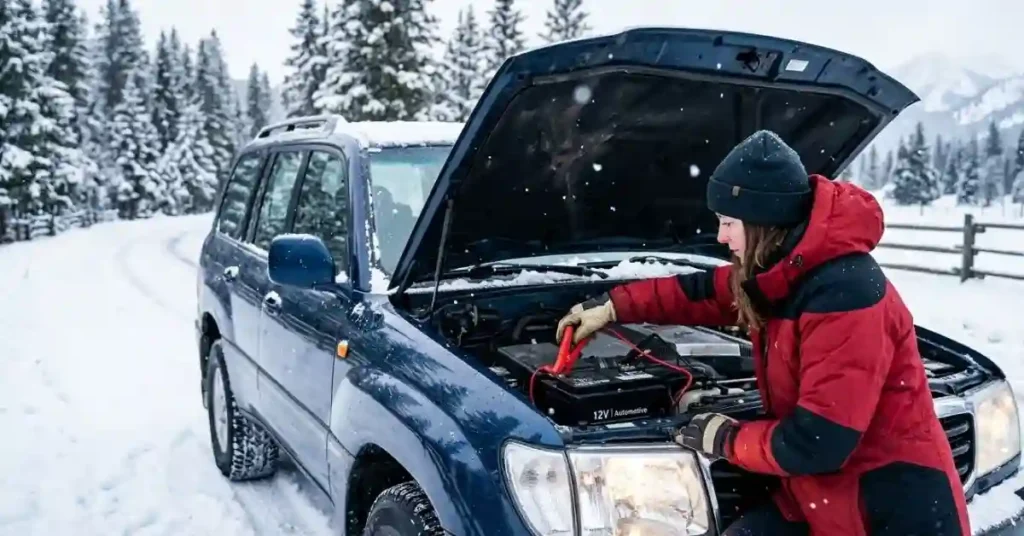
If you know how to safely jump-start your specific vehicle, follow the instructions in the owner’s manual. Battery systems can differ, and some modern vehicles have special procedures or jump points.
After the car starts, do not assume everything is fine.
Ask yourself why the battery went flat. Was a light left on? Has the battery been getting weaker? Has the car been sitting for a long time? Could there be a charging issue?
That small bit of detective work can prevent the same problem tomorrow morning.
Winter Car Battery Maintenance Myths Worth Ignoring
There are plenty of simple claims about car batteries, but real life is usually more complicated.
A new battery can still fail. An old battery can sometimes work well. A jump-start does not diagnose the problem. And cold weather may expose a weakness without being the original cause.
| Myth | Reality |
| Cold instantly kills every battery | Cold often exposes an existing weakness |
| A jump-start fixes the problem | It only gets the car started |
| Every no-start means a dead battery | Other parts can cause similar symptoms |
| Voltage tells the full story | Battery health also depends on performance |
| New batteries need no attention | Connections and charging still matter |
The biggest lesson for me has been to avoid guessing.
Testing is usually better than replacing parts based only on one symptom.
Final Thoughts
Winter Car Battery Maintenance is mostly about being early rather than being clever. A healthy battery, clean connections, and decent charging habits can prevent many cold-weather surprises.
My honest advice is simple: do not wait for the morning your car refuses to start. If the battery is older, the engine is cranking slowly, or the car has been sitting for long periods, check it now. A few minutes of attention before winter can save a very annoying start to the day.
Winter Car Battery Maintenance FAQs
How do you maintain a car battery in winter?
Keep the battery clean and charged. Check the terminals, cables, and battery age. Also, avoid too many short trips when the weather is very cold.
Does cold weather drain a car battery?
Yes, cold weather can reduce battery power. It also makes the engine harder to start. A weak battery may fail faster on a very cold morning.
How often should I check my car battery in winter?
Check your car battery before winter starts. If it is old or shows weak starts, test it more often. This can help you spot trouble before the battery fails.
Should I use a battery charger in winter?
A battery charger or maintainer can help if your car sits for long periods. Use one made for your battery type and follow the maker’s safety guide.
How can I stop my car battery from dying in winter?
Keep the battery charged and the terminals clean. Limit very short trips, watch for slow starts, and test an older battery before cold weather gets worse.
To Get More About Home, Home and Kitchen Product You Can Visit Our Site. If You Found our Posts Helpful Leave a Comment Below