
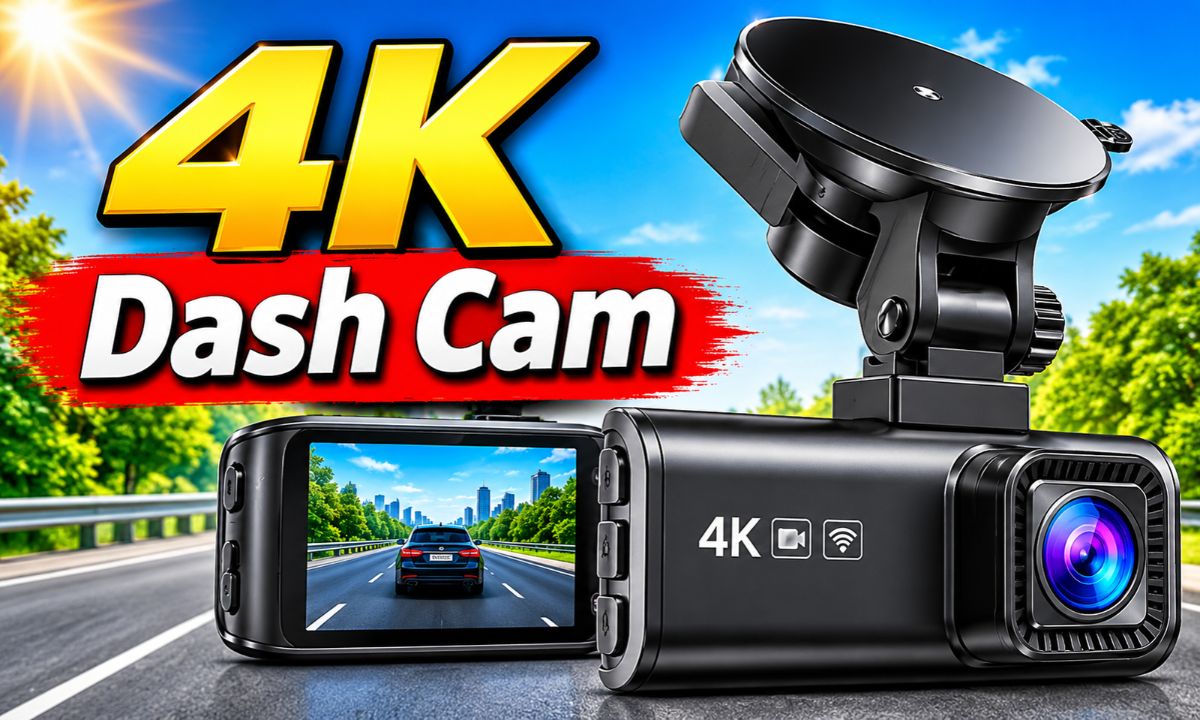
A good 4K dash cam records sharp road footage, helps capture incidents, and adds peace of mind during daily drives.
Think about driving to work on a busy American highway, parking outside a grocery store, or taking a long family road trip. Another driver may cut you off, a car may hit yours in a parking lot, or someone may damage your vehicle while you are away. Without video, it can be hard to explain what happened. A 4K dash cam can record useful details and help you keep a clear record of your trips. I looked at three different options, including front and rear cameras, a compact screen-free model, and a feature-rich camera with remote access. Each one serves a different type of driver.
Table of Contents
Toggle🏆 Top 3 Products

REDTIGER F7NP 4K Front and Rear Dash Cam
This is my leading choice because it combines front and rear recording, a STARVIS 2 sensor, included memory card, and fast Wi-Fi.

70mai A810 Lite 4K Front and Rear Dash Cam
It is a strong choice for drivers who want GPS, Wi-Fi 6, remote access options, and useful parking features.

galphi Mini 4K Front Dash Cam
Its compact screen-free design suits drivers who want a simple front camera with app control and an included memory card.
REDTIGER F7NP 4K Front And Rear Dash Cam
The REDTIGER F7NP is a strong option if you want more than a basic front camera. It records from the front and rear, so you can keep footage of traffic ahead and events behind your vehicle. This can help during daily commutes, highway trips, and busy city drives. Its STARVIS 2 sensor is another useful feature, as the camera focuses on capturing clearer images in different light conditions. I like the idea of having both views in one system because road incidents do not always happen in front of the driver.
The F7NP also includes Wi-Fi, WDR night vision, a wide viewing angle, and G-sensor incident detection. Its 5.8GHz Wi-Fi connection is listed with download speeds of up to 20MB/s, which can make moving video to a phone more convenient. A free memory card is included, so you have a storage option when you start setting up the camera. The product also supports 24-hour parking mode, but you need a compatible hardwire kit for that feature. Overall, this 4K dash cam offers a useful mix of front and rear coverage and everyday recording tools.
✅ Pros
- ✔ Records both front and rear views, giving you wider coverage than a front-only camera.
- ✔ Uses a STARVIS 2 sensor, a useful feature for drivers who want better low-light image capture.
- ✔ Includes a memory card, reducing the need to buy storage before installation.
- ✔ Offers 5.8GHz Wi-Fi for wireless video transfer to a compatible phone.
- ✔ Lists download speeds of up to 20MB/s, which may help when saving longer video clips.
- ✔ Includes WDR night vision to help balance bright and dark areas in recorded scenes.
- ✔ Has G-sensor incident detection to help identify sudden events.
- ✔ Supports loop recording, allowing the camera to manage older footage as storage fills.
- ✔ Offers a wide viewing angle to capture more of the road around the vehicle.
- ✔ Supports 24-hour parking mode when paired with the required hardwire kit.
- ✔ Provides a practical setup for drivers who want front and rear video in one system.
- ✔ Can suit commuters, family vehicles, and drivers who spend long hours on the road.
⚠️ Cons
- ✖ The rear camera needs extra installation work and cable routing.
- ✖ A hardwire kit is needed for the advertised 24-hour parking mode.
- ✖ Wi-Fi video transfers still require a compatible phone and app setup.
- ✖ Wireless transfer may take longer with large files or a weak connection.
- ✖ A front and rear system can take more time to install than a small front-only camera.
- ✖ You should check the exact memory card capacity and recording settings before relying on long-term storage.
My Recommendation
I would put the REDTIGER F7NP near the top of the list for drivers who want complete road coverage without buying two separate camera systems. Its front and rear recording setup is useful in daily traffic, while the STARVIS 2 sensor and WDR night vision add features worth considering for evening drives. The included memory card also makes the initial setup easier. It is especially appealing if you often drive in busy areas, use highways, or park in public spaces. However, I would plan for the rear camera installation and the extra cost of a hardwire kit if parking mode matters to you. Before buying, check the current package details, memory card capacity, app compatibility, and supported rear-camera resolution.
| Best For | Why |
|---|---|
| Daily Commuters | Front and rear recording can provide a useful video record of busy daily traffic. |
| Night Drivers | The STARVIS 2 sensor and WDR night vision offer features designed to help with low-light recording. |
| Parking Protection | It supports 24-hour parking mode when you install the required compatible hardwire kit. |
galphi Mini 4K Wi-Fi Front Dash Cam
The galphi mini 4K dash cam takes a different approach from larger camera systems. It has a compact, screen-free design and relies on app control instead of a built-in display. This can be appealing if you want a camera that takes up less visual space on your windshield. Its front-facing setup is designed to record the road ahead with a listed 160-degree viewing angle. For a driver who mainly wants a simple record of daily trips, this design may be easier to fit into a vehicle.
The product includes a 32GB memory card and lists 5GHz Wi-Fi, G-sensor detection, loop recording, night vision, and 24-hour parking monitoring. These features cover many basic needs for a daily-use dash camera. App control gives you a way to access camera settings and recordings from a compatible phone. However, this model records from the front rather than offering a separate rear camera. Its parking monitoring feature also needs careful checking, as you should confirm the power requirements and any extra accessories before depending on it.
✅ Pros
- ✔ Uses a compact mini design that can take up less space on the windshield.
- ✔ Records front-facing 4K video for drivers who mainly need road footage.
- ✔ Has a screen-free design for a cleaner and less cluttered cabin.
- ✔ Offers app control for compatible smartphones.
- ✔ Includes a 32GB memory card to get started with recording.
- ✔ Lists 5GHz Wi-Fi for wireless connection and video access.
- ✔ Provides a 160-degree viewing angle to cover a broad section of the road ahead.
- ✔ Includes G-sensor detection for sudden movements and possible incidents.
- ✔ Supports loop recording to manage storage as the card fills.
- ✔ Lists night vision as a feature for low-light recording.
- ✔ Offers parking monitoring for drivers who want recording support while parked, subject to power requirements.
- ✔ Can be a practical option for people who prefer a simple front-camera setup.
⚠️ Cons
- ✖ Does not include a separate rear camera for recording traffic behind the vehicle.
- ✖ The screen-free design means you need a compatible phone to view footage and change settings.
- ✖ The included 32GB card may provide limited recording time at high video quality.
- ✖ Parking monitoring may require additional power accessories or a suitable installation.
- ✖ A phone app is necessary for convenient access to many camera functions.
- ✖ The actual night footage quality should be checked before relying on it for difficult driving conditions.
My Recommendation
I would recommend the galphi mini camera to drivers who want a small front-facing system rather than a larger dual-camera setup. Its screen-free design can suit a neat dashboard and windshield layout. The included 32GB card is helpful, and the app-based controls give you a way to manage footage without reaching for a camera display. It may work well for everyday commuting, local errands, and drivers who want basic video evidence if something happens on the road. However, I would choose a front and rear model if you want footage of vehicles approaching from behind. I would also confirm how the parking monitor receives power and whether you need an extra hardwire kit before making a purchase.
| Best For | Why |
|---|---|
| Small Cars | Its mini, screen-free design may fit well in vehicles where windshield space is limited. |
| Simple Daily Recording | Front-facing 4K recording, loop recording, and G-sensor detection cover useful everyday needs. |
| Phone App Users | App control and 5GHz Wi-Fi offer a phone-based way to manage camera footage. |
70mai A810 Lite 4K Front And Rear Dash Cam
The 70mai A810 Lite is worth considering if you want a 4K dash cam with front and rear recording and several connected features. It lists 5GHz Wi-Fi 6, GPS tracking, HDR night vision, voice control, and emergency video locking. These features make it more than a basic camera that simply records when you start the car. GPS can add location information to supported footage, while emergency locking can help protect important clips from normal loop recording. I see this as a useful mix for drivers who want more control over their road recordings.
One of its main talking points is the listed 4G LTE remote access feature. This can be useful for checking on a vehicle remotely, but buyers should confirm the required hardware, network compatibility, service costs, and subscription terms before purchasing. The camera also lists 24-hour parking mode, loop recording, and voice control. These features may suit people who leave their cars parked in public areas or want easier control while driving. It is a feature-rich option, although its connected functions may require more setup than a simple plug-in camera.
✅ Pros
- ✔ Offers front and rear recording for broader coverage around the vehicle.
- ✔ Lists 4K front video recording for detailed road footage.
- ✔ Includes 5GHz Wi-Fi 6 for wireless connectivity with compatible devices.
- ✔ Offers GPS tracking for supported location and driving information.
- ✔ Lists 4G LTE remote access for drivers interested in connected vehicle monitoring.
- ✔ Includes HDR night vision as a feature for handling difficult lighting conditions.
- ✔ Supports 24-hour parking mode, subject to the required power setup.
- ✔ Provides voice control for selected camera functions.
- ✔ Includes emergency video locking to help preserve important recordings.
- ✔ Supports loop recording for ongoing video capture.
- ✔ Combines several connected and recording features in one camera system.
- ✔ May appeal to drivers who want more than basic road recording.
⚠️ Cons
- ✖ The 4G LTE feature may require extra hardware, a compatible mobile network, and a paid data plan.
- ✖ Remote access availability can depend on regional network support.
- ✖ Front and rear installation requires time and careful cable routing.
- ✖ Parking mode may need a separate hardwire kit or compatible power accessory.
- ✖ Connected features can make the initial setup more involved.
- ✖ Buyers should check the exact package contents and rear-camera specifications before ordering.
My Recommendation
I would consider the 70mai A810 Lite if you want a connected front and rear dash camera with GPS, Wi-Fi 6, voice control, and emergency locking. It offers an appealing range of features for drivers who take frequent trips or want more information with their video files. The 4G LTE remote access feature is especially interesting for people who want to check on a parked vehicle, but I would not buy it based on that feature alone. First, confirm which accessories you need, whether your carrier supports the connection, and whether ongoing data charges apply. If those details fit your needs, this model could be a useful choice. If you only need reliable front and rear recording, the REDTIGER may be a simpler option to compare.
| Best For | Why |
|---|---|
| Connected Car Owners | Its listed 4G LTE remote access feature may support remote checks when the required service and hardware are available. |
| Frequent Travelers | GPS tracking, front and rear recording, and emergency video locking provide useful trip-recording features. |
| Feature-Focused Drivers | Wi-Fi 6, HDR night vision, voice control, and parking mode offer several useful functions in one system. |
Final Verdict: Which Should You Buy?
The REDTIGER F7NP is my overall pick from these three options. Its front and rear recording, STARVIS 2 sensor, WDR night vision, included memory card, and fast Wi-Fi make it a balanced choice for many drivers. The 70mai A810 Lite is a strong alternative if you want GPS, Wi-Fi 6, voice control, and possible 4G LTE remote access. The galphi mini is better suited to people who prefer a compact, front-only camera with app control.
The best 4K dash cam is the one that fits your car, budget, and daily driving needs. Compare the recording features, storage, installation requirements, and parking power before ordering. A good camera can help you keep a useful record of the road, whether you drive to work, run errands, or take long trips.
FAQs Of 4K dash cam
Q Is a 4K dash cam worth buying?
Q Is a 4K dash cam better than a 1080p dash cam?
Q Do I need a front and rear 4K dash cam?
Q Does a 4K dash cam work while the car is parked?
Q How much memory does a 4K dash cam need?
Q Can a 4K dash cam record license plates at night?
Q Can I watch dash cam videos on my phone?
Q Does a 4K dash cam need an internet connection?
Q Can I install a 4K dash cam myself?
Q How long does a dash cam keep its recordings?