
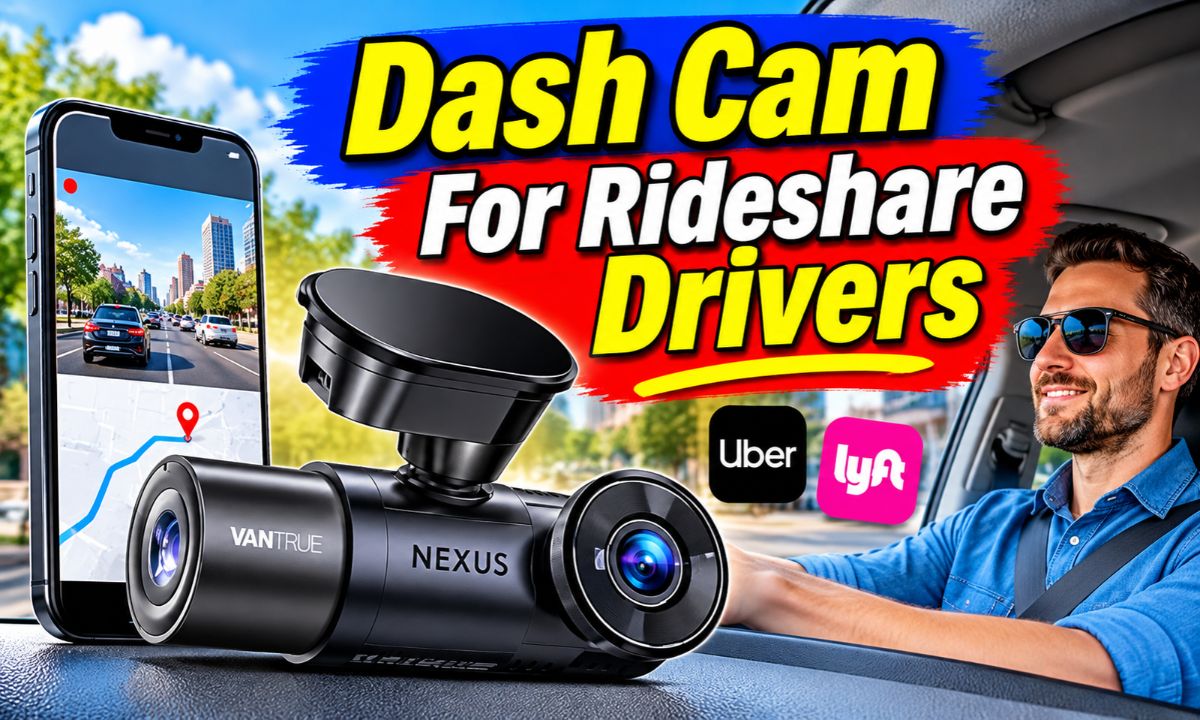
The best dash cam for rideshare drivers records clear road and cabin footage, offers night vision, and saves key clips.
Driving for Uber or Lyft can mean long hours, busy roads, and many new passengers. You might pick someone up outside a crowded shopping mall, drive through downtown traffic, or finish a late-night trip on a quiet road. Most rides go well, but a crash, road dispute, or passenger complaint can create stress. A good dash camera can help you keep a record of what happens on the road and inside your car. I would focus on clear video, reliable recording, and a cabin view when choosing a dash cam for rideshare drivers. These features can make a real difference during daily work.
Table of Contents
Toggle🏆 Top 3 Products

70mai T800E 4K Three-Channel Dash Cam
Its three-camera setup offers front, rear, and cabin coverage, making it a strong choice for drivers who want to monitor more than the road ahead.

Vantrue N2X 2.7K Front and Cabin Dash Cam
Its front and interior cameras, STARVIS 2 sensor, and infrared night vision make it a practical option for rideshare work.

AProX 4K Three-Channel Dash Cam
It offers three-channel recording, a free 128GB card, and support for larger storage cards.
70mai T800E 4K Three-Channel Dash Cam Review
The 70mai T800E is an interesting choice for drivers who want to record more than the road ahead. This camera uses a three-channel setup with front, rear, and inside coverage. That layout can be useful when you drive for Uber, Lyft, or another rideshare service. You can keep an eye on traffic ahead while also recording the passenger area and the view behind your vehicle. For me, this broad coverage is its main selling point.
The listed features include 4K recording, GPS, Wi-Fi 6, voice control, night vision, parking monitoring, and loop recording. It also comes with a 64GB memory card, so you have a starting point for saving video. GPS can add useful trip information to supported recordings, while Wi-Fi can make file access easier. The T800E deserves attention if you want a dash cam for rideshare drivers that covers several parts of the car instead of relying on one front camera.
✅ Pros
- ✔ Three-channel recording provides front, rear, and cabin coverage.
- ✔ The listed 4K front camera resolution offers a detailed recording option.
- ✔ An inside camera can record activity in the passenger cabin.
- ✔ A rear camera adds another view when traffic approaches from behind.
- ✔ GPS can provide location information with compatible recordings.
- ✔ Wi-Fi 6 offers a wireless way to connect with supported devices.
- ✔ Voice control can help reduce the need to touch the camera while driving.
- ✔ Night vision is useful for drivers who accept evening and late-night rides.
- ✔ Loop recording helps manage storage by replacing older footage when the card fills.
- ✔ The parking monitor adds a feature for monitoring the vehicle when parked, subject to its power and setup requirements.
- ✔ The included 64GB card gives buyers storage to start with.
- ✔ Its multiple camera views can help document different parts of a driving incident.
⚠️ Cons
- ✖ A three-camera setup can take more time to install and position than a basic front camera.
- ✖ The included 64GB card may feel limited for drivers who record for many hours each day.
- ✖ The full feature set may require extra setup and learning before regular use.
- ✖ Parking monitoring may require a compatible hardwire kit or another suitable power solution.
- ✖ The cabin camera needs careful positioning to capture the passenger area without distracting the driver.
- ✖ A multi-camera system can add more cables around the windshield and cabin.
My Recommendation
I would put the 70mai T800E near the top of the list for drivers who want broad camera coverage. Its front, rear, and inside views address several common needs in rideshare work. The cabin camera is especially useful because a road-only camera cannot show what happens inside the vehicle. The rear camera also gives you another angle when another driver approaches or strikes your car from behind. GPS, Wi-Fi 6, and voice control add useful options for daily use. The 64GB card is a good starting point, although frequent drivers may want to review storage needs before relying on it for long shifts. Check the exact camera resolutions, included accessories, wiring needs, and phone compatibility before ordering. I would also confirm whether the parking monitor needs a separate power kit. Overall, this is a strong dash cam for rideshare drivers who value three-way coverage over a simpler design.
| Best For | Why |
|---|---|
| Full Vehicle Coverage | The three-channel setup records the front, rear, and passenger cabin. |
| Frequent Rideshare Drivers | GPS, Wi-Fi 6, voice control, and loop recording offer useful daily features. |
| Night Drivers | Night vision and cabin recording provide useful options for evening trips. |
Vantrue N2X 2.7K Front and Cabin Dash Cam Review
The Vantrue N2X is designed for drivers who want to record the road and the inside of their vehicle. It uses a front and cabin camera layout rather than a three-channel front, rear, and interior setup. This makes it worth considering if passenger-area recording matters more to you than having a separate rear camera. For Uber and Lyft drivers, the inside view can be useful when a passenger makes a complaint or an unusual event takes place during a trip. The camera is also listed with a 2.7K front recording resolution.
One of its main features is the STARVIS 2 IMX675 sensor. The product listing also names HDR, infrared night vision, an F/1.8 aperture, 5G Wi-Fi, GPS, and 60fps recording. These features give the N2X a strong feature set for drivers who work in different light conditions. Its app and voice controls can also make everyday operation easier. I like the focus on front and cabin recording because those are two important views for many rideshare drivers.
✅ Pros
- ✔ The front and inside camera layout suits rideshare drivers who want passenger-area footage.
- ✔ The listed 2.7K front resolution offers more detail than many basic HD cameras.
- ✔ The STARVIS 2 IMX675 sensor is a notable image sensor feature.
- ✔ HDR support can help manage scenes with bright and dark areas.
- ✔ Infrared night vision supports cabin recording in low-light conditions.
- ✔ The F/1.8 aperture is designed to let more light reach the camera sensor.
- ✔ 5G Wi-Fi offers wireless connectivity with compatible devices.
- ✔ GPS can add location data to supported recordings.
- ✔ The listed 60fps option can provide smoother footage in supported recording modes.
- ✔ App control gives drivers another way to manage supported camera settings.
- ✔ Voice control can reduce the need for manual interaction while driving.
- ✔ The G-sensor can help detect sudden movement and protect important recordings.
- ✔ The listed 24/7 parking mode adds monitoring options when the vehicle is parked, with suitable power.
⚠️ Cons
- ✖ It does not offer a separate rear camera in the listed front-and-inside configuration.
- ✖ Drivers who want front, rear, and cabin views may prefer a three-channel system.
- ✖ A 24/7 parking mode may need an additional hardwire kit or compatible power setup.
- ✖ The 2.7K resolution is not the same as a 4K front camera.
- ✖ Wireless features depend on compatible phones and the camera app.
- ✖ Infrared cabin footage may look different from normal color video.
My Recommendation
I would recommend the Vantrue N2X to rideshare drivers who place a high value on front and cabin recording. The interior view is important when passengers enter and leave throughout the day. Its STARVIS 2 sensor, HDR, infrared night vision, and F/1.8 aperture also make it worth a close look if you often drive after sunset. GPS, 5G Wi-Fi, app control, and voice control add useful convenience. The G-sensor is another helpful feature because it can protect important footage after a sudden impact. However, I would not choose it if a dedicated rear camera is a must-have. The 70mai and AProX options provide three-channel coverage, while the N2X focuses on the front and cabin. Check the exact included accessories, storage requirements, and parking-mode power needs before buying. For drivers who want a focused two-camera setup, this dash cam for rideshare drivers is a strong option.
| Best For | Why |
|---|---|
| Uber and Lyft Drivers | The front and interior cameras record two important areas during passenger trips. |
| Night Shifts | STARVIS 2, HDR, and infrared night vision are useful low-light features. |
| App-Based Control | The listed 5G Wi-Fi, GPS, app control, and voice control offer added convenience. |
AProX 4K Three-Channel Dash Cam Review
The AProX three-channel dash cam is another option for drivers who want several camera views in one system. Its listed setup combines 4K front, 4K rear, and 1080P cabin recording. This arrangement is appealing for rideshare work because it can capture the road ahead, the road behind, and the passenger area. It also comes with a free 128GB memory card. That larger starting capacity can be useful for drivers who spend many hours on the road and want more room for recorded clips.
The product listing names AProX HD night vision, 5.8GHz Wi-Fi 6, GPS, a G-sensor, and 24-hour parking mode. It also states that the camera supports memory cards up to 512GB. These features give drivers several ways to manage and store their footage. I would pay special attention to the three-channel resolution details when comparing it with other models. The front and rear cameras are listed at 4K, while the cabin camera uses 1080P. That combination makes it a useful option for drivers who want strong road coverage and a separate passenger view.
✅ Pros
- ✔ Three-channel recording covers the front, rear, and cabin.
- ✔ The listed 4K front camera resolution provides a detailed road view.
- ✔ The 4K rear camera adds a detailed view behind the vehicle.
- ✔ The 1080P cabin camera records the passenger area.
- ✔ The included 128GB card offers more starting storage than a 64GB card.
- ✔ Support for cards up to 512GB gives drivers room to expand storage.
- ✔ 5.8GHz Wi-Fi 6 offers wireless connectivity with supported devices.
- ✔ The listed transfer speed reaches up to 20MB/s under suitable conditions.
- ✔ GPS can provide location information with supported video files.
- ✔ The G-sensor can detect sudden impacts and help protect important footage.
- ✔ HD night vision is listed as a feature for low-light recording.
- ✔ The 24-hour parking mode adds a monitoring option when the vehicle is parked and properly powered.
- ✔ Its three-camera design can help document events from several angles.
⚠️ Cons
- ✖ The cabin camera records at 1080P rather than the listed 4K resolution of the front and rear cameras.
- ✖ Three-camera installation can take more time than installing a simple front dash cam.
- ✖ The 24-hour parking mode may require a separate hardwire kit or suitable power accessory.
- ✖ The advertised wireless transfer speed depends on the device, connection, and file conditions.
- ✖ A larger storage card may be an extra purchase after the included 128GB card.
- ✖ The camera system may require more setup to position all three views correctly.
My Recommendation
I would consider the AProX if you want front, rear, and cabin recording without buying a separate camera for each area. Its listed 4K front and rear cameras are the main reasons to consider it. The included 128GB card is another practical advantage because it gives you more starting storage. Support for up to 512GB also gives you an upgrade path if you record for long shifts. The 1080P cabin camera should be enough for many general interior recording needs, but it is worth remembering that it does not share the same listed resolution as the front and rear cameras. GPS, Wi-Fi 6, night vision, and a G-sensor add useful features. I would compare the exact power requirements and included wiring accessories before relying on parking mode. This is a good dash cam for rideshare drivers who want three views, larger included storage, and strong front and rear recording options. It is especially worth comparing against the 70mai T800E if cabin and rear coverage are both priorities.
| Best For | Why |
|---|---|
| Front and Rear Detail | The listed front and rear cameras both offer 4K recording. |
| Long Driving Shifts | The included 128GB card provides a useful starting storage capacity. |
| Three-Way Coverage | The system records the front road view, rear road view, and passenger cabin. |
Final Verdict: Which Should You Buy?
The 70mai T800E is my overall choice because its three-channel setup records the front, rear, and cabin, while its listed 4K recording, GPS, Wi-Fi 6, voice control, and night vision offer a useful feature mix. The Vantrue N2X is a strong alternative for drivers who want front and cabin recording with STARVIS 2 and infrared night vision. The AProX stands out with 4K front and rear cameras and an included 128GB card.
The best dash cam for rideshare drivers should fit your car, work hours, storage needs, and local recording rules. Compare camera views and power needs before buying. A well-placed camera can help you keep a useful record of your rides.
FAQs Of dash cam for rideshare drivers
Q Do Uber and Lyft drivers need a dash cam?
Q Should a rideshare dash cam record inside the car?
Q What is the best dash cam setup for Uber and Lyft drivers?
Q Is night vision important for rideshare drivers?
Q How much storage does a rideshare dash cam need?
Q Can I use a dash cam with the rideshare app?