
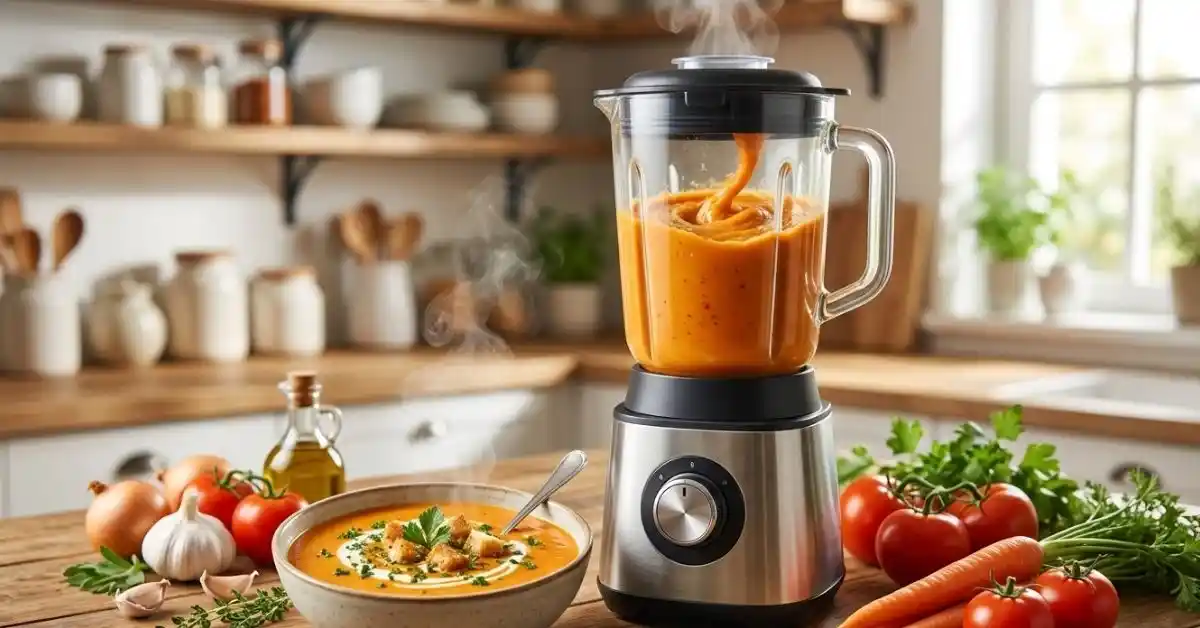
Making soup in a blender is one of my favorite kitchen shortcuts. It can turn cooked vegetables, broth, and a few simple extras into a smooth, warm meal with very little work. You do not need a special soup maker to get good results.
The key is knowing what your blender can handle and how to blend hot food safely. I have found that the small details matter most, such as letting food cool a bit, blending in batches, and adding enough liquid. Here is the simple method I use, plus the mistakes worth avoiding.
How to Make Soup in a Blender From Start to Finish
The basic method is simple: cook the ingredients, add them to the blender with broth, blend until smooth, and heat the soup if needed. You can make creamy vegetable soup, tomato soup, pumpkin soup, or many other types this way.
A blender works best when the vegetables are already soft. Raw, hard vegetables can strain the motor and may not give you the smooth texture you want.
| Step | What to Do |
| 1 | Cook vegetables until soft |
| 2 | Add vegetables and broth to blender |
| 3 | Blend in small batches |
| 4 | Adjust liquid and seasoning |
| 5 | Heat and serve |
1. Cook the Soup Ingredients First
Start by cooking your vegetables in a pot. You can sauté onions and garlic first for more flavor. Then add your main vegetables and broth.
Cook until the vegetables are fork-tender. If a fork slides through them with little effort, they are usually ready to blend.
Good choices include:
- Carrots
- Potatoes
- Tomatoes
- Pumpkin
- Squash
- Cauliflower
- Broccoli
- Sweet potatoes
2. Let Hot Soup Cool Before Blending
This is one step I would not skip.
Very hot soup can create steam inside a closed blender jar. That steam can build pressure and force the lid upward when you open or start the blender.
Let the soup cool for a short time before blending. Check your blender manual too, as some models are not made for hot liquids.
| Blender Type | Hot Soup Use |
| Regular blender | Check the manual first |
| High-speed blender | Often handles warm foods well |
| Immersion blender | Useful right in the pot |
3. Blend in Small Batches
Do not fill the blender to the top with hot soup.
Add a small amount of soup, secure the lid, and blend at a low speed first. Increase the speed as needed.
This gives you better control and helps reduce splashing.
What Ingredients Work Best in Blender Soup?
Almost any cooked vegetable can become soup. Still, some ingredients give a better texture than others.
I like to build soup around one main vegetable, then add aromatics, broth, and a few flavor boosters. This keeps the recipe simple without making the soup bland.
| Ingredient | What It Adds |
| Carrot | Sweet flavor and color |
| Potato | Body and thickness |
| Tomato | Tangy, fresh flavor |
| Pumpkin | Rich texture |
| Cauliflower | Creamy texture |
| Onion | Deep savory flavor |
Use Broth to Control the Texture
Broth is not just there for flavor. It also controls how thick the soup becomes.
Start with less broth than you think you need. You can always add more after blending.
If the soup is too thick, add warm broth a little at a time. If it is too thin, simmer it in a pot until some liquid cooks away.
Add Cream Only If You Need It
You do not always need cream for creamy soup.
Blended potatoes, beans, cauliflower, pumpkin, or squash can make soup feel thick and smooth on their own.
If you want a richer taste, you can add a small amount of cream, milk, coconut milk, or another suitable ingredient after blending.
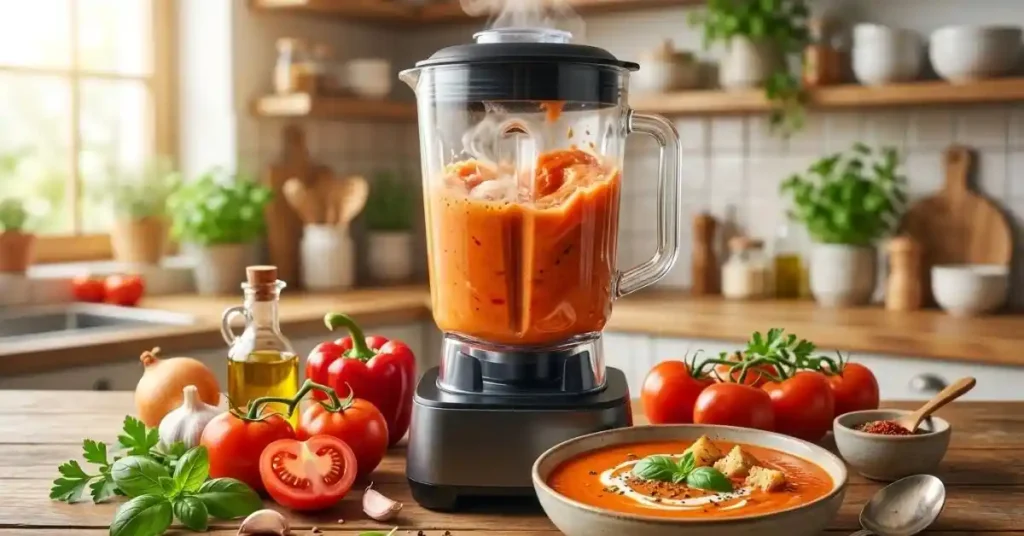
Can You Make Soup Directly in a Blender?
Yes, but it depends on the blender.
Some high-speed blenders are designed to blend and heat food through friction. A normal blender may only blend the ingredients and will not cook them.
That difference is important. A blender is not automatically a soup cooker.
| Blender Setup | Can It Cook Soup? |
| Standard blender | Usually no |
| Immersion blender | No |
| Heating blender | Yes, if designed for it |
If your blender does not have a heating function, cook the ingredients first. Then blend them and return the soup to the pot to heat it.
Blender Soup vs. Immersion Blender Soup
Both methods can work well. I tend to prefer a regular blender when I want an extra-smooth texture and an immersion blender when I want less cleanup.
| Feature | Countertop Blender | Immersion Blender |
| Smooth texture | Excellent | Very good |
| Cleanup | More parts | Easy |
| Blend in pot | No | Yes |
A countertop blender can also create a very smooth soup in a short time. The trade-off is moving hot food from the pot to the blender.
How to Make a Basic Vegetable Soup in a Blender
Here is a simple formula you can use with many vegetables.
Start with about 4 cups of cooked vegetables. Add around 2 cups of broth, then blend. You can add more broth later to get the texture you like.
For more flavor, cook one chopped onion and a clove or two of garlic before adding the vegetables.
| Base | Flavor Add-On |
| Carrot | Ginger |
| Tomato | Basil |
| Pumpkin | Nutmeg |
| Potato | Black pepper |
| Cauliflower | Garlic |
Season gradually. It is much easier to add salt than to fix an overly salty soup.
A Simple Carrot Soup Example
For a quick carrot soup, cook chopped carrots and onion in broth until soft. Let the mixture cool slightly.
Transfer part of it to the blender. Add enough broth to help the blades move freely. Blend until smooth.
Taste it. Add salt, pepper, and a little ginger if you like. Add more broth if the soup feels too thick.
Then warm it in the pot before serving.
Common Mistakes When Making Soup in a Blender
The biggest problems are usually easy to fix. I have learned that soup texture often comes down to how much liquid you use and how well you cook the vegetables.
| Mistake | Better Approach |
| Filling blender too much | Blend in batches |
| Using very hot soup | Let it cool first |
| Adding too much broth | Add liquid slowly |
| Blending hard vegetables | Cook until soft |
| Starting at high speed | Start low |
Mistake: Adding Too Much Liquid
This is probably the easiest mistake to make.
You may think more broth will help the blender. It can, but too much will leave you with thin soup.
Start with a modest amount. Blend. Then add more as needed.
Mistake: Blending Tough Vegetables
A blender is powerful, but it is not magic.
Hard carrots, raw potatoes, and other firm vegetables may not blend well. They can also leave small chunks in the soup.
Cook them until soft first.
Mistake: Blending Too Long
Longer does not always mean better.
Once the soup is smooth, stop. Over-blending can warm the soup and may change its texture.
How to Fix Soup That Is Too Thick or Too Thin
A blender makes it easy to change soup texture. The trick is to make small changes instead of trying to fix everything at once.
| Problem | Quick Fix |
| Too thick | Add warm broth |
| Too thin | Simmer in pot |
| Too chunky | Blend again |
| Too bland | Add seasoning |
| Too salty | Add unsalted liquid or more base |
If your soup is too thick, add warm broth one spoonful at a time. Blend briefly after each addition.
If it is too thin, pour it into a pot and simmer it uncovered. This lets extra water escape.
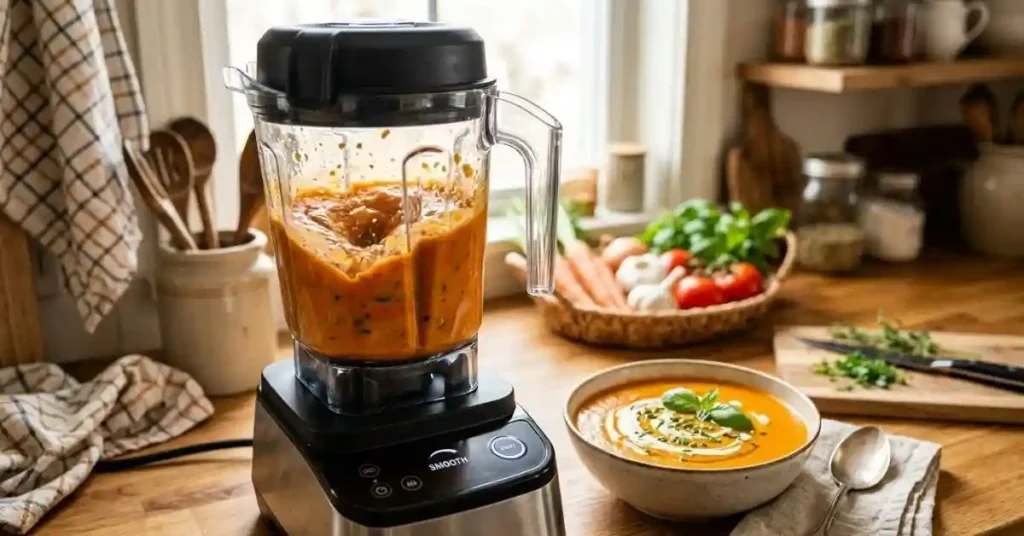
How to Make Blender Soup Extra Smooth
For a silky soup, cook the vegetables until very soft. Then blend them well.
You can also strain the soup through a fine mesh strainer if you want an especially smooth finish. This is more work, though, and most everyday soups do not need it.
I find that getting the cooking stage right usually makes a bigger difference than blending for an extra-long time.
Add Fat for a Richer Texture
A small amount of olive oil, butter, cream, or coconut milk can make blended soup feel richer.
You do not need much. Add a little, blend, taste, and adjust.
This is also a good way to balance sharp or acidic flavors in tomato-based soup.
Can You Blend Soup With Meat or Beans?
Yes, but the result depends on what you want.
Cooked beans blend very well and can make soup thick and filling. Cooked meat can also be blended, but it may create a heavier or less pleasant texture.
For most smooth soups, vegetables and beans are easier to blend.
| Ingredient | Blending Result |
| Cooked beans | Thick and creamy |
| Cooked vegetables | Smooth |
| Cooked chicken | Can become dense |
| Cooked lentils | Smooth and hearty |
If you want meat in your soup, I usually recommend blending the vegetable base first and adding small pieces of cooked meat afterward.
How to Make Soup in a Blender Without a Mess
The blender can save time, but transferring soup can get messy.
Use a ladle rather than pouring a full pot into the blender. Keep the blender on a stable surface and do not overfill it.
Wipe the outside of the blender jar after each batch. It is much easier to clean small spills right away than dried soup later.
My Simple Cleanup Habit
I rinse the blender jar as soon as I finish. Then I add warm water and a little dish soap and blend briefly if the blender maker says this is safe for the model.
After that, I rinse it well.
Always follow the care instructions for your specific blender.
Is a Blender Good for Homemade Soup?
Yes. A blender is a very useful tool for homemade soup, especially if you like smooth textures.
It can turn basic cooked vegetables into a soup that feels much more polished. You also have full control over the salt, seasoning, thickness, and ingredients.
The main thing to remember is that the blender usually does the blending, not the cooking.
| Best For | Why |
| Smooth vegetable soup | Blends vegetables well |
| Tomato soup | Creates a smooth base |
| Pumpkin soup | Gives a creamy texture |
| Bean soup | Adds body |
| Leftover cooked vegetables | Reduces food waste |
Final Thoughts on How to Make Soup in a Blender
Learning how to make soup in a blender is less about a strict recipe and more about getting a few basics right. Cook the vegetables well, use enough broth, blend in safe batches, and adjust the texture at the end.
My biggest lesson is to avoid rushing the blending step. A little care with heat, liquid, and batch size makes the whole process easier. Once you get comfortable with the method, you can turn many simple ingredients into a warm homemade soup without much fuss.
FAQ
1. Can you make soup in a blender?
Yes, you can make soup in a blender. Cook the food first, then blend it with broth. Let hot soup cool a bit before blending for safety.
2. Can you put hot soup in a blender?
Some blenders can handle hot soup, but not all can. Check your blender guide first. Let soup cool a bit and blend in small batches.
3. How do you make creamy soup in a blender?
Cook the veggies until soft, then blend them with broth. Add cream, milk, or cooked potato for a smooth and rich soup without much work.
4. Can a blender cook soup?
A normal blender cannot cook soup. It only blends the food. Some special soup blenders can heat and cook soup as they blend.
5. What soup is best to make in a blender?
Carrot, tomato, pumpkin, potato, and squash soups work well in a blender. Cook the food until soft for a smooth, creamy blend.
To Get More About Home, Home and Kitchen Product You Can Visit Our Site. If You Found our Posts Helpful Leave a Comment Below