
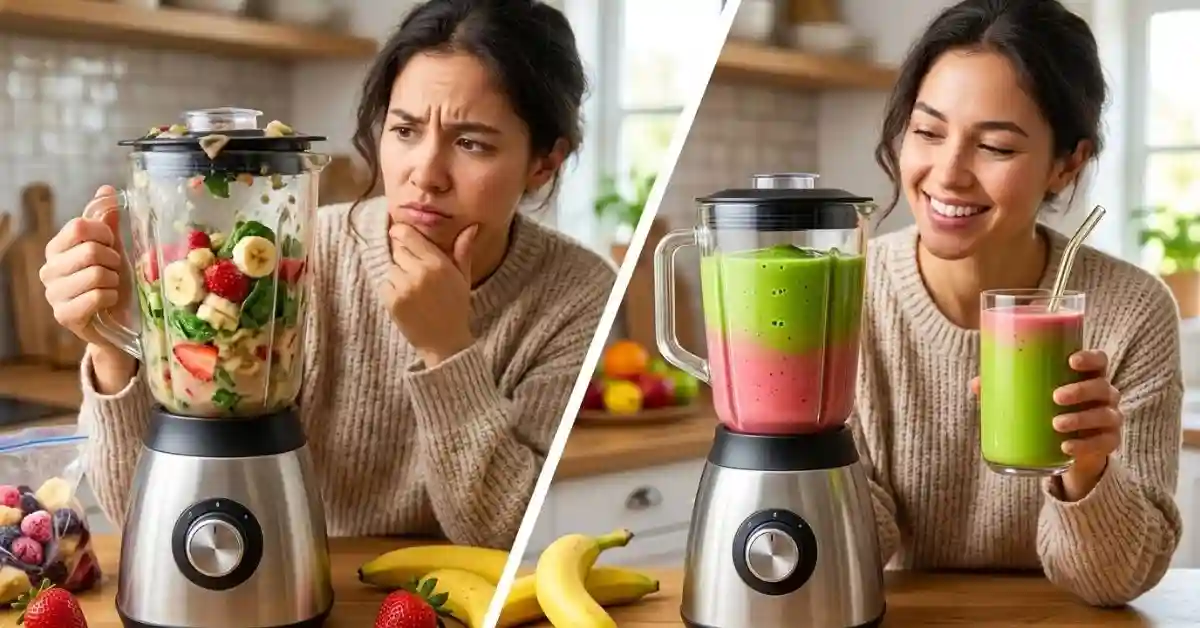
If you’re wondering, “Why is my blender not blending smoothly?”, the problem is often simpler than it seems. In many cases, the blender itself is fine. The issue may be the amount of food, too little liquid, the wrong blending order, or a blade that cannot move freely.
I’ve learned that smooth blending is less about simply turning the blender to high speed and more about giving the blades the right conditions to work. In this guide, I’ll walk through the common causes, the fixes that make the biggest difference, and the mistakes that can leave you with chunks in your smoothie or soup.
Why Is My Blender Not Blending Smoothly?
The most common reason is poor food movement around the blades. A blender needs enough liquid and space for the ingredients to move. If the jar is too full, the food can sit above the blades instead of moving through them.
Another common issue is ingredient size. Large, hard pieces can slow the blades down. Frozen fruit, ice, nuts, and raw vegetables need more help than soft foods.
| Symptom | Likely cause |
| Large chunks remain | Ingredients are too large |
| Blender spins but food stays still | Not enough liquid |
| Bottom blends but top does not | Jar is too full |
| Blender keeps stopping | Motor is under heavy load |
| Smoothie has small bits | Hard or frozen foods need more blending |
Is Too Little Liquid Making My Blender Struggle?
Yes. This is one of the first things I check.
The blades need liquid to pull ingredients downward and create a steady flow. With a very thick mixture, the blades may spin inside a small pocket while the food around them barely moves.
This is common with thick smoothies, nut butter, hummus, frozen desserts, and thick sauces.
Add liquid a little at a time. Water, milk, juice, broth, or another suitable liquid can help, depending on the recipe.
Do not add a large amount at once. You may turn a thick recipe into a watery one.
Can an Overfilled Blender Cause Uneven Blending?
It can. A full jar may look convenient, but it can stop ingredients from circulating.
I find it works better to blend smaller batches when the mixture is very thick. The blades then have more room to pull food down and move it around.
Check the maximum fill line on your blender jar. For thick foods, staying below that line can give you better results.
Are Your Ingredients Too Big or Too Hard?
Ingredient size has a big effect on blending. A blender blade may be sharp and fast, but it still has to break down the food.
Large carrot pieces, whole frozen strawberries, big ice cubes, and hard nuts can make the process much harder.
| Ingredient | Better approach |
| Raw carrots | Cut into small pieces |
| Frozen fruit | Use smaller pieces when possible |
| Ice | Use the blender’s recommended ice setting |
| Nuts | Blend in suitable batches |
| Leafy greens | Tear or chop large leaves |
Why Does My Blender Leave Frozen Fruit Chunks?
Frozen fruit can stick together and form a hard mass.
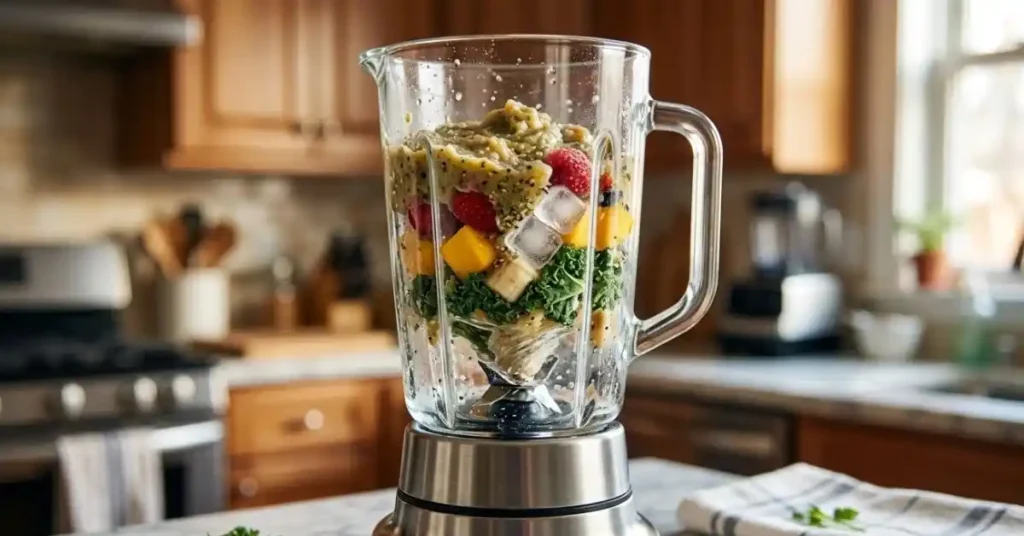
If the fruit is packed tightly around the blades, the blades may have trouble pulling it down. This can create a cycle where the bottom becomes smooth while frozen pieces stay near the top.
Try adding some liquid first. Then add softer ingredients and frozen fruit. If needed, stop the blender and move the mixture with a spatula only after the blender is switched off and unplugged.
Never put your hand near moving blades.
Why Does My Blender Struggle With Ice?
Ice is hard and can quickly expose the limits of a blender.
Large amounts of ice can also block movement in the jar. Check your blender manual for its recommended ice use. Some blenders are built for crushing ice, while others are better suited to softer foods.
If the blender is not designed for heavy ice crushing, forcing it can put extra stress on the motor.
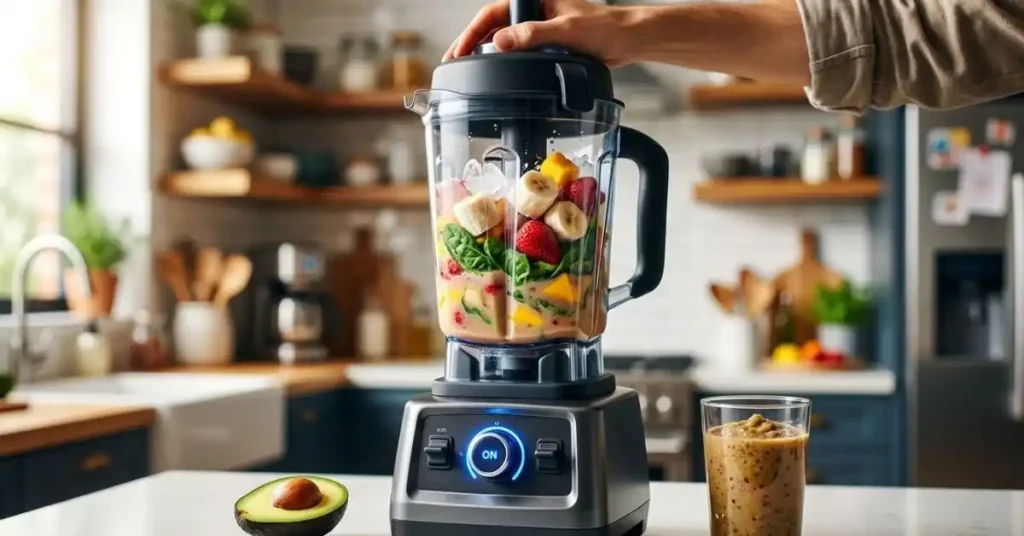
Does the Order of Ingredients Matter?
Yes, and this is an easy detail to miss.
For many smoothies, putting liquid near the blades helps create movement. Softer ingredients can then follow, with harder or frozen ingredients near the top.
The exact order can vary by blender, so the manual is worth checking.
| Poor setup | Better setup |
| Dry food at the bottom | Add liquid first |
| Large chunks packed tightly | Use smaller pieces |
| All frozen food at once | Mix soft and frozen ingredients |
| Jar packed to the top | Leave room for movement |
What Should Go Into a Blender First?
For many liquid-based recipes, start with the liquid. Then add soft foods, followed by harder foods.
For example, a smoothie might use:
- Liquid
- Soft fruit
- Greens
- Yogurt or other soft ingredients
- Frozen fruit
- Ice, if needed
This is not a rule for every recipe. Some blender models use a different blending pattern, so follow the instructions for your model when available.
Could the Blender Blade Be the Problem?
Yes. If your blending habits have not changed but the results suddenly get worse, inspect the blade area.
Food can build up around the blade assembly. A damaged or worn blade can also affect performance.
Never test the sharp edge with your fingers. Instead, inspect the blade visually after the blender is unplugged and safely empty.
| Blade issue | What you may notice |
| Food buildup | Weak or uneven blending |
| Damaged blade | Poor cutting action |
| Blade does not move freely | Unusual performance |
| Worn assembly | Results get worse over time |
Can a Dull Blender Blade Stop Smooth Blending?
It can contribute to poor results, especially when the food is hard.
However, do not assume the blade is dull just because the blender leaves chunks. Poor liquid levels, overloading, and ingredient size are often the real causes.
If the blade assembly looks damaged or does not work as it should, check the manufacturer’s replacement and maintenance instructions.
Is the Blender Jar Causing the Problem?
Sometimes the jar itself affects how well ingredients move.
The shape of the jar, the blade position, and the amount of food inside all affect circulation. A narrow, packed jar may behave very differently from a wider jar.
A mixture can also stick to the sides. When this happens, the blades may keep spinning without pulling the food back into the blending path.
If your blender has a tamper designed for that model, it can help move thick food toward the blades. Never use a random utensil while the blender is running.
Why Does My Blender Blend the Bottom but Not the Top?
This is one of the clearest signs of poor circulation.
The blades may be doing their job at the bottom while the food above them stays in place. This often happens with thick mixtures or an overfilled jar.
A simple fix is to stop the blender, unplug it, and reduce the amount of food. Add a little liquid if the recipe allows it.
For thick mixtures, smaller batches can make a surprisingly big difference.
What Is Blender Cavitation?
Cavitation happens when the blades create a pocket where little or no food reaches them.
You may hear the motor running while the food barely moves. The mixture can look like it is stuck in a hole around the blades.
This is especially common with thick foods.
Adding a small amount of liquid or changing the food load can help restore movement. Some blenders also have pulse or lower-speed settings that can help break up a stuck mixture.
Should I Use Low Speed or High Speed?
High speed is not always the answer.
Starting too fast with a thick mixture can sometimes leave food stuck around the sides while the blades spin underneath it.
A short pulse or lower speed can help start movement. Once the food begins circulating, you can increase the speed if your recipe calls for it.
| Situation | Try this |
| Thick mixture is stuck | Start slower |
| Large pieces remain | Use short pulses |
| Smooth mixture is circulating | Increase speed if needed |
| Blender is straining | Stop and reduce the load |
When Should I Use the Pulse Setting?
Pulse can help break up ingredients and restart movement.
It is useful when food collects around the sides or when larger pieces need to move back toward the blades.
Pulse is not a magic fix, though. If the jar is overloaded or the mixture is too dry, pulsing alone may not solve the problem.
Why Is My Blender Not Blending Smoothly Even After Adding Liquid?
If adding liquid does not help, look at the other parts of the setup.
The ingredients may still be too hard. The jar may be too full. The blade assembly may have a problem. Or the blender may simply be reaching its practical limit with that recipe.
This is where random troubleshooting can waste time.
I prefer checking one thing at a time. That makes it much easier to find the real cause.
| Check | What to do |
| Liquid | Add a small amount if suitable |
| Food size | Cut large pieces smaller |
| Load | Remove some ingredients |
| Blade | Inspect after unplugging |
| Motor | Stop if it overheats or strains |
Common Blender Mistakes That Leave Chunks
Some blending problems come from habits that seem harmless.
One mistake is filling the jar as much as possible. Another is adding frozen ingredients without enough liquid. I also see people expect a short blend cycle to handle foods that need more preparation.
The biggest lesson is simple: do not make the blender fight the recipe.
Mistake: Filling the Jar to the Top
More food does not always mean faster blending.
A crowded jar leaves less room for ingredients to circulate. This can create uneven results even when the blender has a strong motor.
Mistake: Adding Only Frozen Ingredients
Frozen food can quickly form a dense mass.
Mixing frozen ingredients with liquid and softer ingredients often creates better movement. Again, the best method depends on the recipe and blender.
Mistake: Cutting Nothing
A blender is not a food storage container. Large pieces can make the motor work harder and may blend unevenly.
Cutting firm foods into smaller pieces is a simple step that often saves time.
Mistake: Running the Blender Too Long
Long blending does not always fix a bad setup.
If the food is not circulating, running the blender longer may only heat the mixture or put extra stress on the motor.
Stop, inspect the mixture, and change the setup instead.
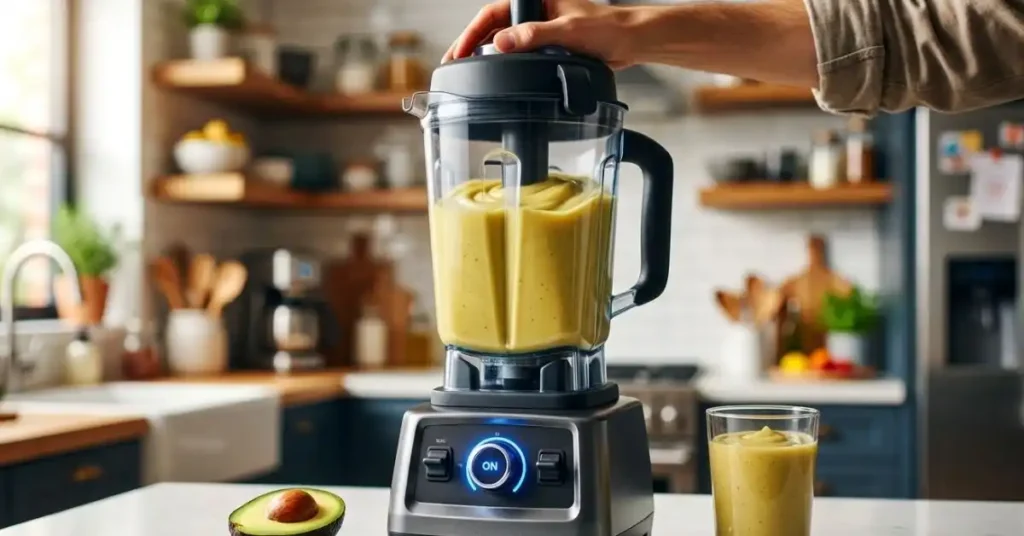
Can a Weak Blender Cause Poor Blending?
Yes. Blender power and blade design matter, but wattage alone does not tell the whole story.
A blender made for smoothies may handle frozen fruit well. A basic blender may work better with soft fruits, liquids, and simple sauces.
If you regularly blend very thick or hard foods, your blender may simply not be suited to that job.
That does not mean the blender is broken. It may just have limits.
When Should I Stop Using My Blender?
Some signs should not be ignored.
If the blender smells like burning, makes a new grinding sound, shows visible damage, or repeatedly stops during normal use, stop using it.
Unplug it and let it cool if it has become hot. Then check the manufacturer’s instructions.
Do not keep running a blender that sounds or behaves abnormally just to see if it improves.
| Warning sign | Safe response |
| Burning smell | Stop and unplug it |
| Strange grinding | Stop using it |
| Visible damage | Do not operate it |
| Repeated shutdowns | Let it cool and check the manual |
| Damaged cord | Do not use it |
My Simple Blender Troubleshooting Routine
When my blender gives me a rough result, I do not immediately blame the machine.
I start with the mixture. Is it too thick? Is the jar too full? Are the pieces too large? Is there enough liquid?
Then I check the blender itself.
Step 1: Stop the Blender
Turn it off and unplug it before touching the contents or checking the blade area.
Step 2: Check the Mixture
Look for dry pockets, large chunks, or food stuck to the sides.
Step 3: Reduce the Load
Remove some food if the jar is crowded.
Step 4: Add Liquid if the Recipe Allows It
Add a small amount and blend again.
Step 5: Check the Blade Area
Make sure food is not blocking the blade assembly. Do this only with the blender unplugged.
Step 6: Try a Different Setting
Use pulse or a lower speed to get the ingredients moving before increasing speed.
This routine takes less time than repeatedly running the blender and hoping the texture improves.
What If My Smoothie Still Is Not Smooth?
If everything seems correct and the smoothie still has bits, look at the ingredients.
Some foods naturally stay slightly grainy. Berry seeds, fibrous greens, nuts, and certain fruit skins can remain noticeable even after strong blending.
A blender can reduce these ingredients, but it cannot always make every recipe perfectly silky.
For a smoother drink, use softer ingredients, remove tough skins or stems when suitable, and blend in smaller batches.
| Desired texture | Helpful choice |
| Very smooth smoothie | More liquid and soft ingredients |
| Thick smoothie | Use enough liquid for circulation |
| Smooth soup | Cook firm vegetables until soft |
| Nut-based mixture | Use a suitable blender and small batches |
Final Thoughts
If you’re asking, “Why is my blender not blending smoothly?”, start with the simple things. Check the liquid, ingredient size, jar load, and food movement before assuming the blender is broken.
The biggest lesson is that a blender needs the right setup. Give the blades enough room, avoid overloading the jar, prepare hard ingredients well, and stop using the machine if it shows signs of damage. In many cases, a few small changes can turn a frustrating blend into a smooth one.
FAQ
Why is my blender not blending smoothly?
Your blender may lack liquid, have too much food, or contain large chunks. Add a little liquid, reduce the load, and cut hard foods into small pieces.
Why does my blender leave chunks?
Large or frozen foods can stay near the top and miss the blades. Cut them smaller and add enough liquid to help the food move around the jar.
Can too much food stop a blender from blending?
Yes. An overfilled blender can block food from moving. Remove some of the mix and blend in smaller batches for a smoother result.
Why does my blender spin but not blend?
The blades may spin in an air pocket when the mix is too thick. Add a little liquid, reduce the load, and use a short pulse to restart the flow.
How can I make my blender blend more smoothly?
Use enough liquid, cut hard foods into small pieces, and avoid overfilling the jar. Start slow, then raise the speed as the mix begins to move.
To Get More About Home, Home and Kitchen Product You Can Visit Our Site. If You Found our Posts Helpful Leave a Comment Below