
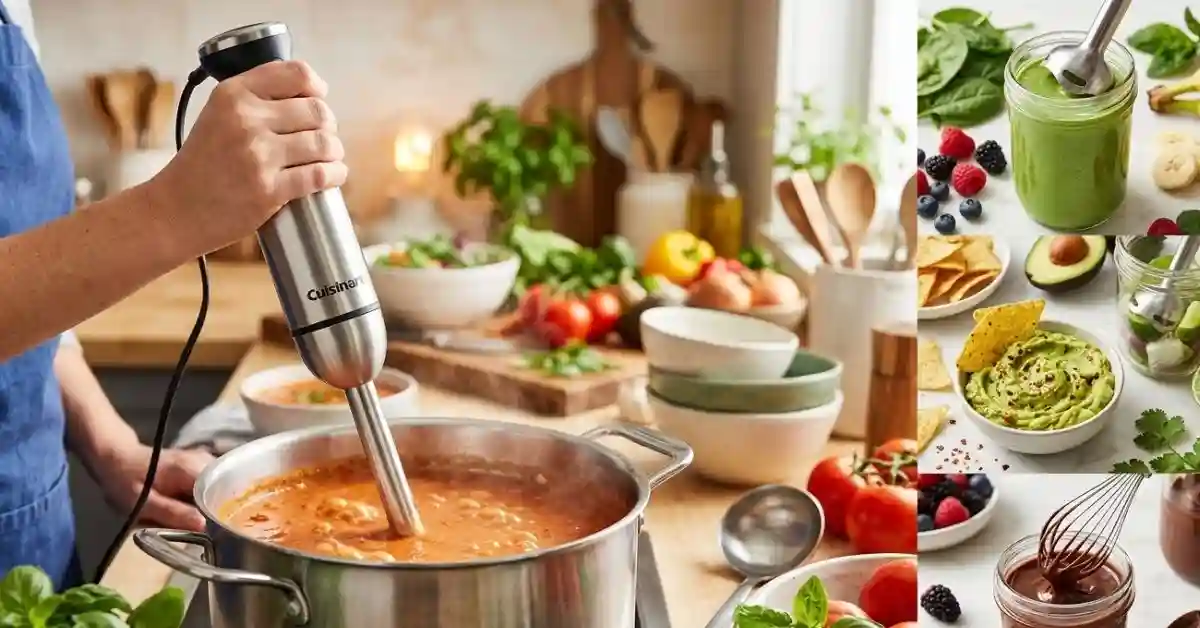
I used to think an immersion blender was just a smaller version of a regular blender. Then I started using one for soups, sauces, and quick kitchen jobs. I soon found that its biggest benefit is not power. It is convenience.
So, what is an immersion blender used for? It is mainly used to blend, puree, mix, and smooth food right in the pot, bowl, or cup. You can make creamy soup, smooth sauce, baby food, smoothies, and more without moving hot food into a countertop blender.
That simple change can save time and dishes. It can also make some kitchen tasks much less messy. But an immersion blender is not perfect for every job. Here is what I learned about where it works best, where it struggles, and how to use one well.
What Is an Immersion Blender Used for?
An immersion blender is used to blend food directly in its container. It has a long shaft with a small blade at the end. You place the blade into the food and turn it on.
This makes it useful for foods that need a smooth or blended texture.
| Kitchen task | How an immersion blender helps |
| Pureeing soup | Blends soup right in the pot |
| Making sauces | Smooths sauces without extra dishes |
| Mixing smoothies | Blends soft fruit and liquids |
| Making baby food | Turns cooked food into a soft puree |
The biggest advantage is simple: you do not need to transfer the food first.
That matters most when you are working with soup or sauce. Pouring hot food into a countertop blender can be awkward. With an immersion blender, you can often blend it right in the cooking pot.
Is an immersion blender the same as a hand blender?
Yes. In most cases, immersion blender and hand blender mean the same type of appliance.
You may also see names such as stick blender or handheld blender. The design is usually similar. The motor sits in your hand, while the blending blade reaches down into the food.
How an Immersion Blender Makes Soup Easier
Soup is one of the best uses for an immersion blender.
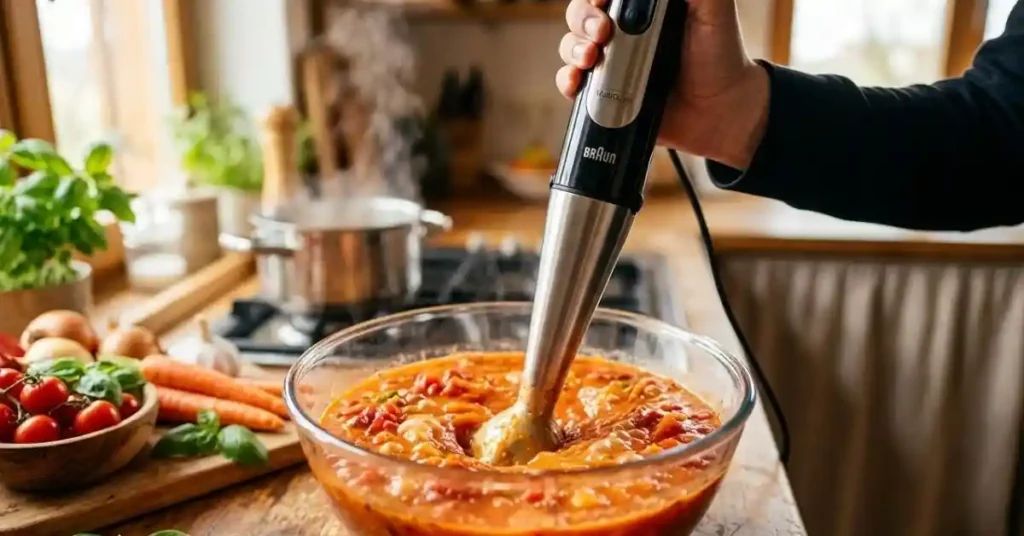
I find it especially handy for vegetable soups. Once the vegetables are cooked and soft, I can blend them in the same pot. There is no need to scoop the soup into another container.
For a smooth soup, move the blender slowly through the pot. Keep the blade below the surface. This helps reduce splashing.
| Soup type | Immersion blender result |
| Tomato soup | Very smooth and creamy |
| Potato soup | Smooth, thick, and rich |
| Vegetable soup | Easy to puree |
| Bean soup | Can be blended, but may stay slightly textured |
One lesson I learned is that not every soup needs to be completely smooth. Sometimes a few short pulses work better than running the blender nonstop.
That gives you more control over the texture.
Can you use an immersion blender in hot soup?
Yes, many immersion blenders are designed for blending hot foods. However, you should always check the instructions for your specific model.
The key is to avoid lifting the running blade above the surface. Hot liquid can splash quickly.
I also prefer to start at a low speed when possible. It gives me better control and makes the first few seconds less messy.
Making Sauces and Gravies With an Immersion Blender
An immersion blender is also useful for sauces, gravies, and purees.
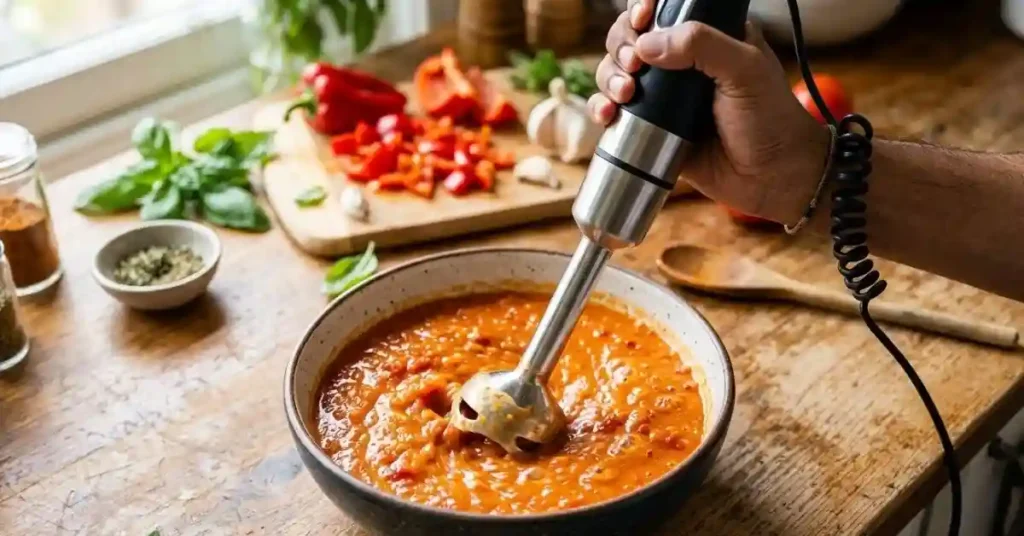
It can help smooth out a tomato sauce or blend cooked vegetables into a thicker sauce. It is also handy when a sauce looks a little lumpy and needs a quick fix.
| Sauce or mixture | Useful for |
| Tomato sauce | Smoothing cooked tomatoes |
| Gravy | Breaking up some soft lumps |
| Cheese sauce | Blending a smooth base |
| Vegetable puree | Creating a smooth texture |
There is one catch. An immersion blender will not magically remove every lump.
Hard chunks, burnt bits, or large pieces of food can still cause problems. I learned that it works best when the food is already soft enough for the blade to break down.
Can You Use an Immersion Blender for Smoothies?
Yes, but there are limits.
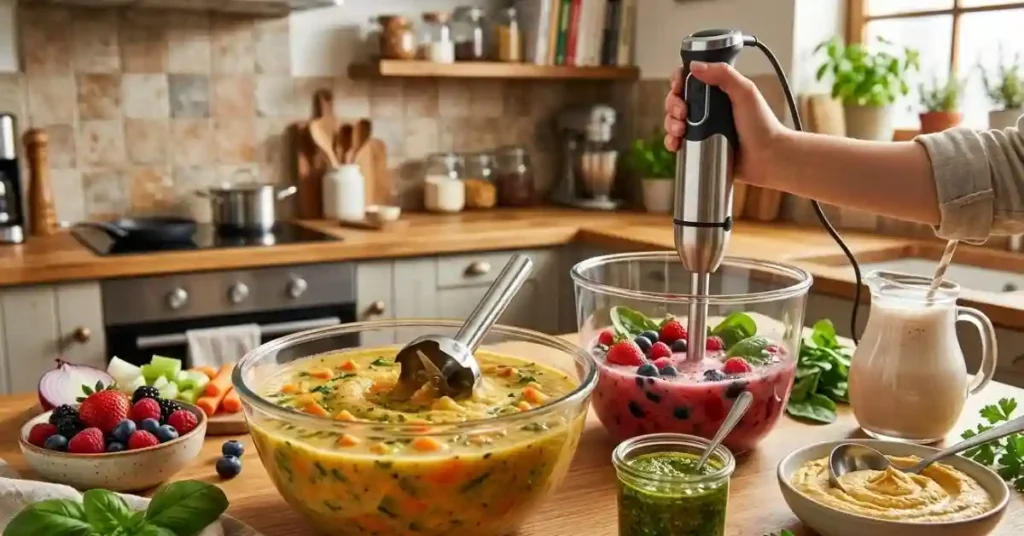
An immersion blender can make a quick smoothie when you have soft fruit, yogurt, milk, or another liquid. A tall cup works well because it gives the blade room to move.
However, I would not treat a stick blender like a high-powered countertop blender.
| Smoothie ingredient | How well it works |
| Banana | Excellent |
| Soft berries | Good |
| Yogurt | Excellent |
| Ice cubes | Not ideal |
Hard ice and frozen chunks can be tough on a small immersion blender. Some models may handle certain frozen foods, but you should follow the manufacturer’s instructions.
For a basic soft-fruit smoothie, though, an immersion blender can be quick and convenient.
What container should you use for smoothies?
Use a tall, narrow container that is large enough for the food to move around.
A very shallow bowl can lead to splashing. A container that is too small can also make blending awkward.
This is one of those small details that makes a big difference in daily use.
Blending Baby Food and Soft Purees
Another useful job is making soft food purees.
Cooked vegetables, fruits, beans, and other soft foods can often be blended into a smoother texture. You can also control how much you blend.
| Food | Possible result |
| Cooked carrots | Smooth puree |
| Cooked potatoes | Soft puree |
| Cooked apples | Fruit puree |
| Cooked peas | Soft puree |
For very young children, food texture and safety matter. Always follow age-appropriate feeding guidance and make sure the food is suitable before serving it.
The blender itself is only a tool. It does not decide whether a food is safe or suitable.
Other Foods You Can Make With an Immersion Blender
The uses go beyond soup and smoothies.
Once I started looking at the immersion blender as a quick blending tool rather than a mini countertop blender, more uses became obvious.
You can use it for:
- Hummus
- Bean dips
- Salsa
- Pesto
- Fruit puree
- Pancake batter
- Salad dressings
- Mayonnaise
- Whipped mixtures
- Mashed vegetable blends
The exact results depend on the blender, blade design, food texture, and amount.
A powerful model with extra attachments may handle more tasks than a basic model.
Can an immersion blender make whipped cream?
Some immersion blenders can help with whipped cream when they include a whisk attachment.
The regular blending blade is not the right tool for every whisking job. If your model comes with a whisk, use that attachment and follow its instructions.
This is a good example of why attachments matter more than I first thought.
What an Immersion Blender Is Not Good For
An immersion blender is versatile, but it has limits.
One mistake I made early on was expecting it to do everything a countertop blender could do. That is not realistic.
| Job | Better choice |
| Crushing lots of ice | Countertop blender |
| Grinding hard foods | Food processor or grinder |
| Large batches | Countertop blender |
| Small soup batches | Immersion blender |
The small blade is great for control and convenience. It is not always the best choice for hard or very dry ingredients.
If the food is extremely thick, hard, or dry, the blender may struggle. In some cases, you can also put extra stress on the motor.
Common Immersion Blender Mistakes I Learned to Avoid
The appliance itself is simple. Using it well takes a little practice.
Here are some mistakes worth avoiding.
Starting at full speed
Starting at the highest speed can cause a mess, especially with thin liquids.
I prefer to start slowly when the food allows it. Then I increase the speed as needed.
Moving the blade too fast
You do not need to whip the blender around the container.
Slow, steady movement often gives better results. Move the blade through different parts of the food instead of staying in one spot.
Blending with the blade partly above the food
This is one of the easiest ways to create splashes.
Keep the blending head submerged when the motor is running.
Using it on food that is too hard
Soft cooked food is much easier for an immersion blender to handle.
| Mistake | Better approach |
| Starting too fast | Begin slowly |
| Lifting the blade | Keep it submerged |
| Blending hard chunks | Soften food first |
| Overfilling the container | Blend smaller amounts |
These small habits make the appliance easier and safer to use.
Immersion Blender vs. Regular Blender
Both appliances blend food, but they work in different ways.
A countertop blender usually gives you more power and capacity. An immersion blender gives you more freedom to blend directly in a pot or container.
| Feature | Immersion blender | Countertop blender |
| Direct blending | Excellent | No |
| Large batches | Limited | Excellent |
| Easy storage | Usually easy | Takes more space |
| Hot soup | Convenient | Requires transfer |
For everyday cooking, I see them as different tools rather than direct replacements.
If you often make large smoothies, crushed-ice drinks, or big batches, a countertop blender may make more sense.
If you often make soup, sauces, or small portions, an immersion blender can be much more convenient.
What Makes a Good Immersion Blender?
If you are thinking about buying one, look beyond motor power.
The design of the blending shaft, grip, speed control, cleaning process, and included attachments can all affect daily use.
| Feature | Why it matters |
| Variable speed | Gives better control |
| Detachable shaft | Makes cleaning easier |
| Comfortable grip | Helps during longer blending |
| Whisk attachment | Adds more kitchen uses |
I also think cleaning deserves more attention than it gets.
If a blender is annoying to clean, you may stop using it. A model that rinses and cleans easily is more likely to become a regular kitchen tool.
How to Clean an Immersion Blender
Cleaning is usually simple, but you should follow the care instructions for your model.
First, unplug the appliance before handling the blade or removing parts.
If the shaft is detachable and dishwasher-safe, you may be able to wash it in the dishwasher. Otherwise, wash it by hand as directed.
Do not put the motor housing into water unless the manufacturer specifically says it is safe.
A quick rinse right after use can also help prevent food from drying onto the blade.
A simple cleaning habit that saves time
I try not to leave the blending head sitting with food stuck to it.
The longer food dries on the blade, the harder it becomes to clean. A quick rinse soon after blending can save a lot of scrubbing later.
Is an Immersion Blender Worth Having?
For the right kitchen, yes.
I would not buy one just because it can replace every blender. It cannot. I would buy one because it makes certain jobs much easier.
If you make soups, sauces, purees, dips, or small smoothies, an immersion blender can save both time and dishes.
It also takes up far less counter space than many countertop blenders.
The best part is often the simplest one: blend where you cook.
Final Thoughts on What Is an Immersion Blender Used for?
So, what is an immersion blender used for? It is mainly a quick tool for blending and pureeing food right in the pot, bowl, or cup. It is especially useful for soups, sauces, purees, dips, and soft smoothies.
The biggest lesson I learned is not to expect it to replace a powerful countertop blender. Instead, use it for the jobs where its small size and direct blending design give it an advantage.
If you cook soups or sauces often, I think an immersion blender is one of those simple kitchen tools that can earn its place very quickly. It is not flashy, but it can make everyday cooking a lot easier.
Frequently Asked Questions
What is an immersion blender used for?
An immersion blender is used to blend soups, sauces, dips, purees, and soft smoothies. It blends food right in the pot or bowl.
Can an immersion blender blend hot soup?
Yes, many immersion blenders can blend hot soup. Keep the blade under the soup to help stop splashes, and follow the maker’s guide.
Can an immersion blender make smoothies?
Yes, an immersion blender can make simple smoothies with soft fruit, milk, or yogurt. It may not handle ice or hard frozen foods well.
Is an immersion blender the same as a hand blender?
Yes, an immersion blender is also called a hand blender or stick blender. These names usually refer to the same type of kitchen tool.
What should you not use an immersion blender for?
Avoid using an immersion blender on hard foods, large ice cubes, or very dry mixes unless the maker says it is safe. A full blender may work better.
To Get More About Home, Home and Kitchen Product You Can Visit Our Site. If You Found our Posts Helpful Leave a Comment Below