
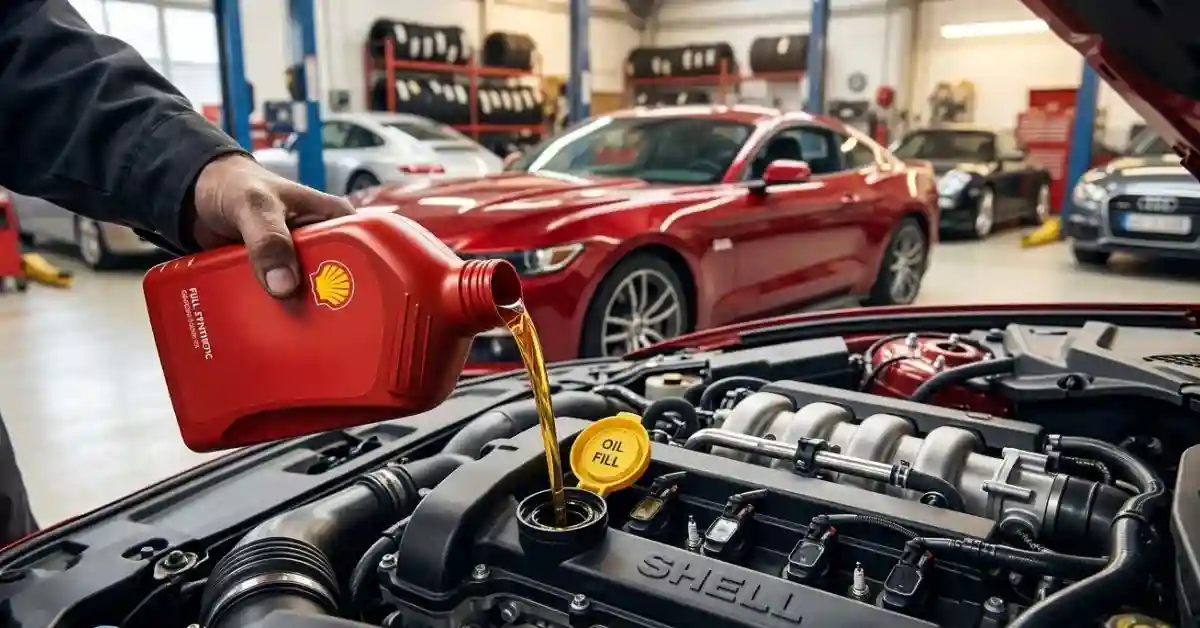
If you are asking, “Does Shell make oil for gas engines?”, the short answer is yes. Shell makes several motor oils designed for gasoline engines, including products in its Shell Helix range. Some are also made for diesel and gas-fueled engines.
I looked into this because engine oil labels can get confusing fast. A bottle may say gasoline, diesel, gas, synthetic, mineral, or several engine standards at once. The important lesson is that you should not pick oil by brand alone. The oil must also match your engine’s required viscosity and specifications.
Does Shell Make Oil Specifically for Gasoline Engines?
Yes. Shell makes engine oils that are suitable for gasoline engines.
The Shell Helix range is one of Shell’s main passenger-car oil families. Shell lists several Helix oils for gasoline engines, with different viscosities, base oils, and performance levels.
| Shell oil type | Gasoline engine use | General position |
| Shell Helix HX3 | Yes | Basic mineral oil |
| Shell Helix HX5 | Yes | Mineral oil |
| Shell Helix HX6/HX7 | Yes | Synthetic technology |
| Shell Helix Ultra | Yes | Fully synthetic |
One thing that stood out to me is how broad the range is. Shell does not make just one “gas engine oil.” It makes different oils for different engine designs and requirements.
That matters because a modern small turbo engine may need a very different oil from an older high-mileage engine.
Shell Helix Is Not Just for Diesel Engines
This is one area where people often get mixed up.
Some Shell products are marketed for diesel engines, but that does not mean Shell oil is only for diesel vehicles. Shell also lists many Helix products for gasoline engines. For example, Shell Helix HX7 5W-30 is listed for gasoline, diesel, and gas engines.
Shell Helix Ultra 5W-30 is also listed for gasoline and diesel applications.
So if you own a gasoline car, Shell absolutely has suitable oil options.
What Kind of Shell Oil Is Best for a Gasoline Engine?
There is no single Shell oil that is best for every gasoline engine.
This was one of the biggest things I learned while looking into engine oils. It is easy to think that the most expensive synthetic oil must be the best choice. In practice, the right specification and viscosity matter more.
| What your car needs | What to check |
| Viscosity | 0W-20, 5W-30, 5W-40, etc. |
| Oil standard | API or ACEA rating |
| Manufacturer approval | Required car-maker approval |
| Oil type | Mineral, synthetic technology, or full synthetic |
Your owner’s manual should be the first place you check.
If your engine calls for 0W-20, I would not switch to 20W-50 just because you found a Shell bottle at a good price. A thicker oil is not automatically better.
Why Viscosity Matters
Viscosity tells you how the oil behaves at different temperatures.
For example, 5W-30 is designed to flow differently from 20W-50. The first number relates to cold-temperature behavior, while the second number describes the oil’s viscosity at operating temperature.
| Example | General idea |
| 0W-20 | Very low viscosity |
| 5W-30 | Common modern-car grade |
| 10W-40 | Thicker, often used in older designs |
| 20W-50 | Much thicker oil |
But don’t use this table as a reason to choose an oil by yourself.
The manufacturer’s recommendation still wins.
Does Shell Make Full Synthetic Oil for Gas Engines?
Yes. Shell makes fully synthetic oils for gasoline engines.
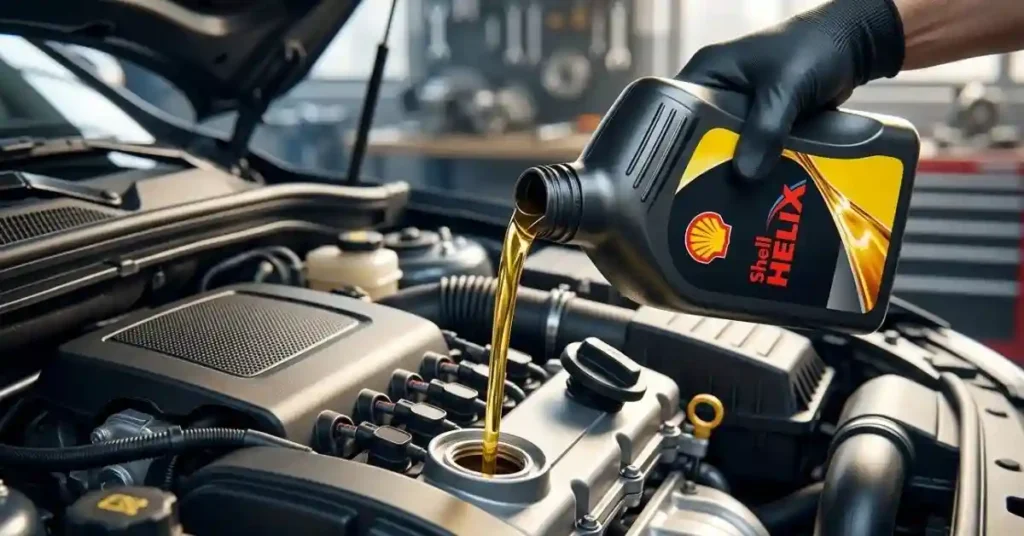
The Shell Helix Ultra line is one example. Shell describes Helix Ultra as a fully synthetic motor oil range and lists specific products for gasoline engines.
Shell also uses its PurePlus Technology in Helix Ultra products. According to Shell, this technology creates base oils from natural gas rather than using conventional crude-oil-derived base oil.
That sounds unusual at first, but the basic idea is simple.
Shell takes natural gas through a gas-to-liquids process and turns it into a high-purity base oil. It then blends that base oil with additives to create the finished lubricant.
What Is Shell PurePlus Oil?
Shell PurePlus is not simply “natural gas in a bottle.”
It is a process used to create a base oil.
| Part | Purpose |
| Natural gas | Starting material |
| GTL process | Converts gas into liquid products |
| Base oil | Main lubricant component |
| Additives | Add cleaning and protection properties |
Shell says its PurePlus base oil is used in Shell Helix Ultra products.
This is a useful distinction because people sometimes assume all synthetic oils are made in exactly the same way. They are not.
Is Shell Helix Good for Gasoline Engines?
Shell Helix can be a good choice for a gasoline engine when the specific product matches the vehicle’s requirements.
That last part is important.
For example, Shell lists Helix HX7 10W-40 for gasoline, diesel, and gas engines. It also lists API and ACEA specifications and several manufacturer approvals.
Shell Helix Ultra products can have even more specific approvals and performance requirements.
So I would judge a Shell oil using this order:
- Does it have the correct viscosity?
- Does it meet the required API or ACEA standard?
- Does it meet the car maker’s approval?
- Is it suitable for the engine and fuel type?
- Is the product genuine and appropriate for your market?
The brand comes after those checks.
Shell Gasoline Oil vs Regular Engine Oil
The phrase “gas engine oil” can cause another bit of confusion.
In everyday car talk, people usually mean a gasoline engine when they say “gas engine.” But “gas engine” can also mean an engine that runs on gaseous fuel, such as natural gas.
Those are not exactly the same application.
| Engine type | Fuel | Oil selection |
| Gasoline engine | Petrol/gasoline | Use gasoline-rated oil |
| Diesel engine | Diesel | Use diesel-rated oil |
| Natural-gas engine | Natural gas | Use oil designed for that application |
Shell does make oils for gaseous-fuel engines too. Its industrial and marine ranges include products designed for gas engines.
For a normal gasoline passenger car, however, you are usually looking at the Shell Helix passenger-car range.
Does Shell Make Its Own Engine Oil?
Yes, Shell is deeply involved in the lubricant business.
Shell says it operates across the lubricant supply chain, including manufacturing base oils, blending base oils with additives, and distributing and selling finished lubricants.
That does not mean every bottle in every country is made in one Shell factory.
Manufacturing and supply can vary by product and market.
This is another thing I think buyers often misunderstand. Seeing a different “Made in…” statement on two Shell bottles does not automatically mean one is fake.
The important details are the product identity, packaging, specifications, and legitimate source.
Does Shell Make the Base Oil Too?
In some cases, yes.
Shell operates base-oil production, and its Pearl GTL facility in Qatar produces base oils along with other GTL products.
Shell also has technology and manufacturing activities related to conventional base oils.
So Shell is not simply buying finished oil and putting its name on the bottle.
Shell Mineral Oil vs Synthetic Oil for Gasoline Cars
This is where your car’s age and specifications become useful.
Shell offers both mineral and synthetic technology motor oils, as well as fully synthetic products.
| Oil type | Common reason to consider it |
| Mineral | Older or simpler engine designs |
| Synthetic technology | Balanced everyday protection |
| Fully synthetic | Modern or demanding engines |
For example, Shell describes HX5 as a mineral motor oil and HX7 as a synthetic technology motor oil.
I would not assume that an older car automatically needs cheap mineral oil, though. Some older engines run very well on modern synthetic oils if the viscosity and specifications are right.
Likewise, putting a premium synthetic oil into an engine that specifically requires something else does not magically make it correct.
Common Mistakes When Choosing Shell Oil
I have found that oil selection becomes much easier once you stop looking only at the front of the bottle.
The useful information is often on the back.
Mistake 1: Choosing by Brand Alone
Shell is a major lubricant brand, but that does not mean every Shell oil fits every engine.
Better approach: Check your owner’s manual first.
Mistake 2: Thinking Thicker Oil Is Always Better
This is a very common idea.
People sometimes believe that thicker oil gives stronger protection. It can be useful in certain engines, but thicker is not automatically better.
Better approach: Use the viscosity your manufacturer recommends.
Mistake 3: Ignoring Oil Specifications
Two 5W-30 oils can have very different specifications.
| What to check | Why it matters |
| SAE grade | Viscosity |
| API rating | Performance category |
| ACEA rating | European performance standard |
| OEM approval | Vehicle maker requirement |
The specification can matter just as much as the viscosity.
Mistake 4: Buying Based Only on Price
The cheapest bottle is not always the best value.
At the same time, the most expensive bottle is not automatically the right one.
The goal is simple: buy the correct oil, not simply the most expensive oil.

How I Would Pick Shell Oil for a Gasoline Car
If I were standing in an auto-parts store with a Shell oil bottle in my hand, I would take a few seconds before buying it.
I would check the owner’s manual and compare the required specifications with the bottle.
| Step | What I would check |
| 1 | Required viscosity |
| 2 | Required API/ACEA rating |
| 3 | Manufacturer approval |
| 4 | Engine and fuel type |
| 5 | Correct product for the market |
This simple habit prevents a lot of guesswork.
Shell also provides a LubeMatch tool for helping users find an appropriate lubricant for their vehicle. Shell links to this tool from its product pages.
Still, I would use the owner’s manual as the final reference when the two seem unclear.
Is Shell Oil Safe for Older Gasoline Engines?
It can be, but older engines need a little more thought.
Shell makes several oils aimed at older or high-mileage engines. Some products also come in thicker grades that Shell says can help reduce leaks in older, high-mileage engines.
But I would not use thicker oil simply because the odometer has a big number on it.
| Situation | Sensible first step |
| Older engine, no oil issues | Follow the manual |
| Small oil leaks | Check for the real leak source |
| High oil consumption | Inspect engine condition |
| High-mileage engine | Consider high-mileage oil if suitable |
Oil can sometimes help manage symptoms, but it cannot repair worn seals, damaged rings, or mechanical problems.
That was one lesson worth keeping in mind: oil is maintenance, not a magic repair fluid.
What About Shell Oil for Turbo Gasoline Engines?
Turbocharged gasoline engines can place high demands on engine oil.
The turbo gets extremely hot, and modern turbo engines can also have very specific oil requirements.
This is one situation where I would be especially careful about choosing oil by viscosity alone.
Look for the exact manufacturer approval or specification listed in your owner’s manual.
Shell makes modern synthetic products with various specifications and approvals, but the correct product depends on the engine.
If your turbo engine calls for a specific low-viscosity oil or OEM approval, match that requirement rather than guessing.
Does Shell Oil Help Keep a Gasoline Engine Clean?
Yes, several Shell Helix products are designed with cleaning and deposit-control features.
Shell says its Helix range uses Active Cleansing Technology, while Helix Ultra combines this approach with PurePlus base oil.
That matters because deposits can build up over time.
| Engine oil concern | What good oil should help with |
| Sludge | Keep deposits under control |
| Wear | Protect moving parts |
| Corrosion | Reduce harmful effects |
| Deposits | Help keep engine parts cleaner |
Of course, oil quality is only part of the picture.
Regular oil changes, the correct oil level, a good filter, and proper engine maintenance still matter.
So, Does Shell Make Oil for Gas Engines?
Yes. Shell makes many oils for gasoline engines, including mineral, synthetic technology, and fully synthetic products. Shell’s Helix range includes oils specifically listed for gasoline engines, while some products are suitable for gasoline and diesel applications.
The bigger question is not whether Shell makes oil for your engine. It is which Shell oil is correct for your engine.
That means checking the viscosity, API or ACEA specification, manufacturer approval, and vehicle requirements before buying.
Final Thoughts
After digging into Shell’s oil range, my biggest takeaway is simple: Shell definitely makes oil for gas-powered gasoline engines, but there is no one Shell oil that fits every car.
I would focus less on the brand name and more on the details printed on the bottle. If the Shell oil matches your engine’s required viscosity and specifications, it can be a perfectly sensible choice. If it does not, even a premium oil is the wrong oil.

FAQ
Does Shell make oil for gas engines?
Yes, Shell makes motor oil for gasoline engines. Shell Helix oils come in many grades, so check your car manual before you choose one.
Is Shell Helix good for gasoline engines?
Yes, many Shell Helix oils suit gasoline engines. Check the oil grade and API or ACEA spec to make sure it fits your car.
Does Shell make full synthetic oil for gas engines?
Yes, Shell makes full synthetic oils for gas engines. Shell Helix Ultra is one key range. Pick the grade and spec your car maker lists.
What Shell oil is best for a gasoline engine?
The best Shell oil depends on your car. Check the manual for the right grade, such as 0W-20 or 5W-30, plus the needed oil spec.
Can I use Shell oil in an older gas engine?
Yes, you can use Shell oil in many older gas engines. Match the oil grade and spec to the engine, and check for high oil use or leaks.
To Get More About Home, Engine Oil Product You Can Visit Our Site. If You Found our Posts Helpful Leave a Comment Below