
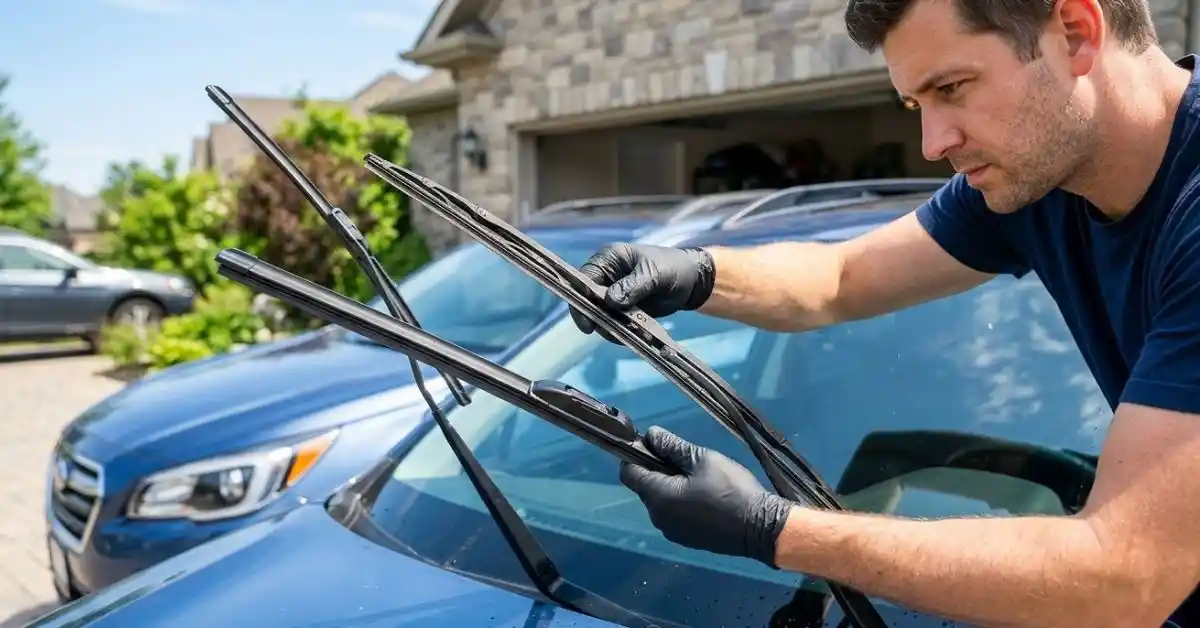
Changing windshield wipers looks like a small car job, but I’ve learned that the wrong blade or one rushed step can make a simple task annoying. A bad wiper can leave streaks, skip across the glass, or make a lot of noise when you need a clear view most.
In this guide, I’ll show you how to change windshield wipers without making it harder than it needs to be. I’ll also cover how to pick the right size, remove old blades, fit new ones, avoid common mistakes, and check that the new wipers are safe before driving.
How Do I Know When to Change Windshield Wipers?
The easiest sign is poor cleaning. If the wipers leave streaks, miss parts of the windshield, or smear water instead of clearing it, I would check the blades first. These signs often mean the rubber has worn, hardened, cracked, or picked up dirt.
I also pay attention to sound and movement. A healthy wiper should move smoothly across wet glass. If it chatters, skips, squeaks, or leaves a wide dirty area, it may be time for a new blade.
| Symptom | Likely cause |
| Streaks remain | Worn or dirty rubber |
| Wiper skips | Hard or damaged blade |
| Squeaking | Dry glass or worn rubber |
| Missed area | Wrong blade size or poor contact |
Should I Change Both Wipers at the Same Time?
Usually, yes. The two front wipers often work under similar weather and road conditions, so they can wear at a similar rate.
That said, I would not replace a good blade just because the other one failed. If one blade is clearly newer and works well, replacing only the damaged one can make sense. Still, changing both makes it easier to keep even wiping performance.
The rear wiper is different. It often uses a different blade style and size, so do not assume all three blades are interchangeable.
What Do I Need Before Changing Windshield Wipers?
You do not need a big toolbox for this job. In many cars, your hands are enough. The key is knowing the correct blade size and connector before you start.
I would check the car owner’s manual first. If that is not handy, the old blade size may be printed on the package from the previous replacement, or a parts store’s vehicle lookup can help.
| Item | Why it matters |
| Correct wiper blade | Must fit your vehicle |
| Clean cloth | Helps clean the wiper arm |
| Owner’s manual | Confirms blade size and fitting |
| Towel | Protects glass if the arm drops |
How Do I Find the Correct Wiper Size?
Do not guess based on how the blade looks. Driver and passenger wipers are often different lengths.
For example, one side may need a longer blade than the other. Some cars also use a special rear blade. The safest approach is to confirm the exact size for your make, model, and year.
| Check | What to confirm |
| Driver side | Correct length and connector |
| Passenger side | Correct length and connector |
| Rear side | Correct rear blade if fitted |
I made this mistake easy to avoid: never assume that two blades with the same length use the same connector. The length can be right while the fitting is wrong.
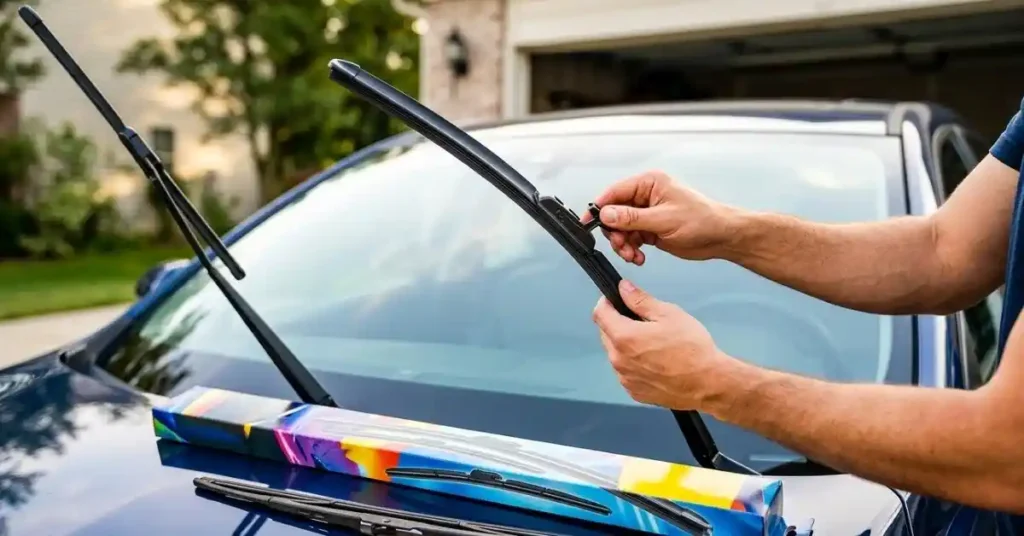
How to Change Windshield Wipers Step by Step
Once you have the correct blades, the actual job is fairly quick. I like to work on one side at a time so I do not mix up different blade sizes.
Before starting, turn the car off and make sure the wipers are not in an automatic cycle. Keep your fingers away from the moving parts.
Step 1: Lift the Wiper Arm
Gently lift the wiper arm away from the windshield. It should stay in an upright position while you work.
This is where I would slow down. The metal arm is spring-loaded. If it snaps back onto bare glass, it can crack or chip the windshield.
Place a folded towel on the windshield below the arm before removing the blade. It is a simple safety step and costs almost nothing.
Step 2: Find the Wiper Connector
Look at the point where the blade attaches to the arm. You may see a small tab, button, clip, or locking piece.
Many modern cars use a hook-style fitting, but not every vehicle does. Some use push-button or side-pin designs.
| Connector type | What you may see |
| Hook | Curved end on the wiper arm |
| Push button | Button on top of the blade |
| Side pin | Small pin near the connector |
Do not force the blade if it does not move. A connector can look simple but still have a locking tab that needs to be pressed.
Step 3: Remove the Old Wiper
Release the locking tab or clip, then slide the old blade away from the arm. The exact motion depends on the connector.
Keep the blade under control as you remove it. Once the blade is free, do not leave the bare metal arm hanging over the windshield.
This is one of those jobs where forcing something usually makes it worse. If it will not release, stop and look closely at the connector.
Step 4: Clean the Wiper Arm
With the old blade off, wipe the metal or plastic arm with a clean cloth. Dirt can collect around the fitting.
I would not use this moment to bend or reshape the arm. If the arm looks bent, loose, rusty, or damaged, the blade may not sit correctly even if the new rubber is perfect.
Step 5: Attach the New Wiper
Take the new blade and line up its connector with the wiper arm. Slide or press it into place according to the connector design.
You should normally hear or feel a click when the locking piece engages.
Give the blade a gentle pull after fitting it. It should stay firmly attached. Do not skip this check. A blade that looks fitted may still be loose if the locking tab did not engage.
Step 6: Lower the Arm Carefully
Hold the wiper arm as you lower it. Do not let it fall onto the windshield.
Then repeat the process on the other front wiper. If your car has a rear wiper, check its fitting separately before removing it.
What Mistakes Should I Avoid When Changing Wipers?
Most problems I see with wiper replacement come from rushing. The blade itself is simple. The small details are where things can go wrong.
| Mistake | Better approach |
| Guessing the blade size | Check the vehicle fit |
| Letting the arm snap down | Use a towel and lower it by hand |
| Forcing the connector | Find the locking tab first |
| Skipping the pull test | Check that the blade is locked |
| Testing on dry glass | Wet the windshield first |
Do Not Test New Wipers on a Dry Windshield
This is easy to overlook. Wipers are designed to move water across the glass.
If you test them on completely dry glass, you can create extra friction and noise. Use windshield washer fluid or plenty of water instead.
Also, check the windshield before testing. Small bits of sand, leaves, and dirt can scratch glass or damage the new rubber.
Do Not Assume More Pressure Means Better Wiping
A wiper needs good contact with the glass, but pushing the arm down by hand is not a proper fix for poor wiping.
If a new blade still leaves a large unwiped area, check the blade size, connector, blade position, and wiper arm. The arm itself may have an issue.
Why Are My New Windshield Wipers Still Streaking?
New blades can streak for reasons that have nothing to do with the blade.
The windshield may have oil, road film, dust, wax, or other residue. I would clean the glass before deciding that the new wipers are bad.
| Problem after replacement | First thing to check |
| Light streaks | Clean the windshield |
| One section stays dirty | Blade contact and size |
| Loud chatter | Glass condition and blade fit |
| Blade lifts from glass | Arm or blade issue |
Clean the Windshield Before Blaming the Blade
A dirty windshield can fool you. A new rubber blade can still spread grime across the glass if the surface is coated with road film.
Use proper glass cleaner or washer fluid and a clean cloth. Pay extra attention to the area where the blade normally rests.
If the blade rubber itself is dirty, wipe it gently with a damp cloth. Do not use harsh chemicals that may damage the rubber.

How Often Should Windshield Wipers Be Replaced?
There is no perfect replacement date for every car. Climate, sunlight, rain, dust, snow, and how often you drive all affect blade life.
Instead of changing them only by calendar date, I prefer to watch their performance. A car driven often in strong sun may need blades sooner than a car that spends most of its time parked in a garage.
| Driving condition | What to watch |
| Strong sun | Hardened or cracked rubber |
| Heavy rain | Streaks and missed areas |
| Dusty roads | Dirty or rough wiping |
| Rare driving | Inspect before rainy trips |
What Can Shorten Wiper Blade Life?
Heat and sunlight can be rough on rubber. Dirt can also wear the blade as it moves across the windshield.
Another problem is using the wipers to clear heavy debris. Leaves, ice, or thick dirt should be removed by hand first. The wiper is not a windshield scraper.
Can I Change Windshield Wipers Without Tools?
In many vehicles, yes. Most common blade connectors are designed for quick replacement by hand.
Still, “no tools needed” does not mean “no care needed.” The important part is identifying the connector and releasing it correctly.
If the blade uses a small retaining clip or a vehicle-specific fitting, the manual may show the exact removal method. I would rather spend two extra minutes checking than break a plastic clip.
What If the Wiper Arm Will Not Stay Up?
Some cars have wiper arms that do not lift very far because the hood or windshield shape gets in the way. Some vehicles also have special service positions.
If the arm will not move normally, do not force it. Check the owner’s manual for the correct wiper service position.
This is especially important on newer vehicles. The wiper mechanism may sit partly under the hood, so the normal lifting method may not work.
What If the New Wiper Does Not Fit?
Stop before applying more force. A new blade that does not fit may simply have the wrong adapter installed.
Some replacement blades come with several connector adapters. You may need to remove one and install another before attaching the blade.
| Fit problem | Possible reason |
| Connector too large | Wrong adapter |
| Blade will not lock | Adapter not seated |
| Blade is loose | Locking tab not engaged |
| Arm will not enter | Incorrect connector |
I would also compare the old and new connectors side by side. That simple check can quickly reveal whether you have the wrong fitting.
A Quick Final Check After Changing Wipers
Before driving in rain, I would do one careful test. Spray washer fluid onto the windshield and run each wiper through a normal cycle.
Watch the entire blade as it moves. It should stay attached, move smoothly, and clear water without leaving a large dirty strip.
Then check the connector once more. If anything looks loose, fix it before driving.
The final check matters more than saving one minute. A loose wiper can become a serious problem once you are on a wet highway.
My Biggest Lessons From Changing Windshield Wipers
The main lesson is simple: do not rush the small steps. Finding the right size, protecting the glass, releasing the connector correctly, and checking the lock can prevent most problems.
I also would not judge a new blade only by its appearance. What matters is how it contacts the glass and how clearly it wipes when the windshield is wet.
If your wipers are streaking or skipping, start with the basics. Clean the glass, inspect the rubber, confirm the blade size, and check the connector. Sometimes the fix is much simpler than it first seems.
Replacing windshield wipers is one of those car jobs that can feel intimidating until you do it once. Take your time, protect the windshield, and never force a fitting that does not make sense.
FAQs About How to Change Windshield Wipers
1. How do I change windshield wipers?
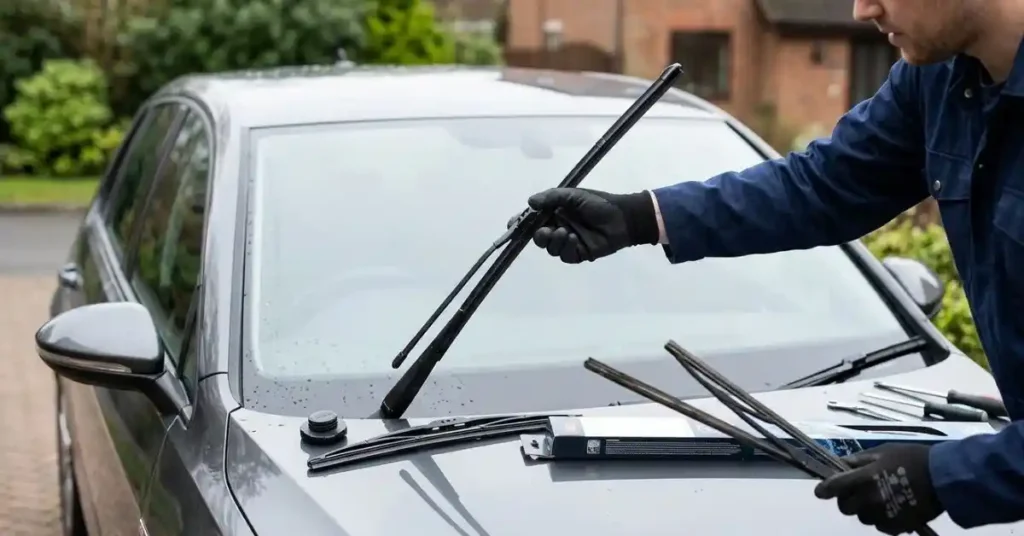
Lift the wiper arm, unlock the old blade, and slide it off. Fit the new blade until it clicks. Lower the arm with care.
2. How do I know what windshield wiper size I need?
Check your car manual or a trusted parts guide for the right wiper size. The driver and front passenger blades may use different sizes.
3. How often should I change windshield wipers?
Change windshield wipers when they streak, skip, squeak, or leave wet spots. Sun, heat, rain, and dirt can also wear blades fast.
4. Can I change windshield wipers without tools?
Yes, most windshield wipers can be changed by hand. Check the blade lock first, as the clip or hook can vary by car.
5. Why are my new windshield wipers leaving streaks?
Clean the glass and check the blade fit first. Dirt, road film, a poor fit, or a bent wiper arm can cause streaks even with new blades.
To Get More About Home, Car Accessories Product You Can Visit Our Site. If You Found our Posts Helpful Leave a Comment Below