
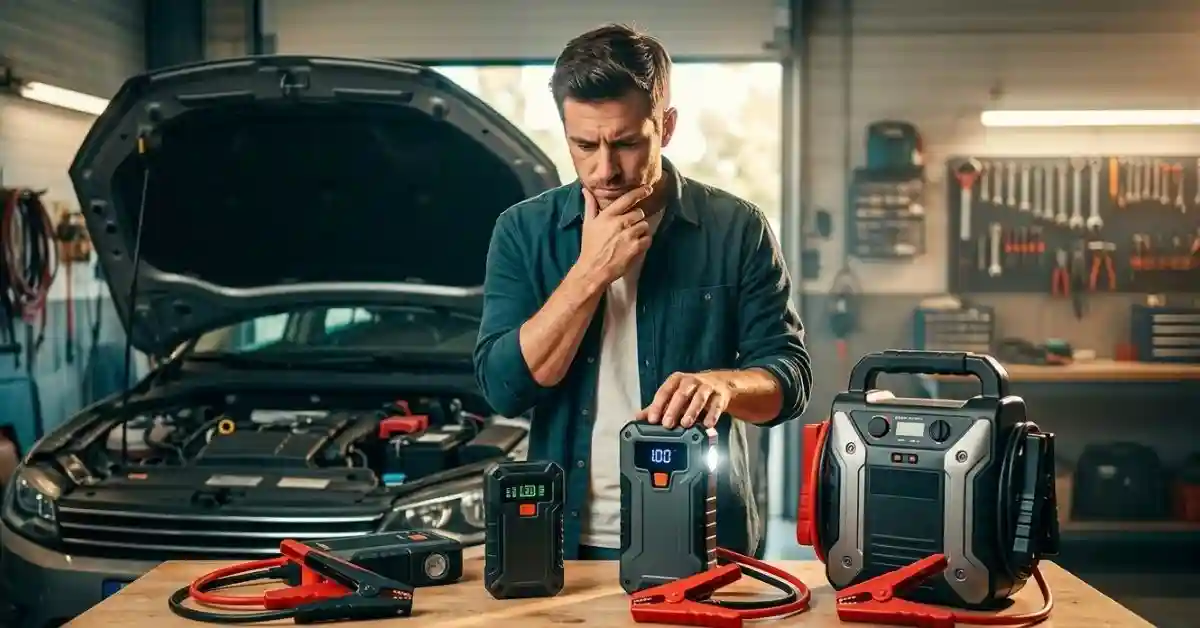
Choosing the right jump starter can save you from a dead-battery headache when you are far from home. I learned that the hard way while looking at different models. The biggest mistake is to focus only on the huge peak-amp number printed on the box.
When I researched how to choose a jump starter, I found that battery type, engine size, safety features, cable length, size, and real starting power matter more. In this guide, I will show you what I look for and what I would avoid.
How to Choose Jump Starter Without Overthinking It
The best jump starter is one that can safely start your vehicle, fits your engine size, and has enough battery power for more than one attempt. I would rather carry a well-built 1,000-amp unit that suits my car than buy a huge model based on a flashy number.
A jump starter is basically a portable battery pack made to send a strong burst of power to a weak or dead car battery. That sounds simple, but the specs can be confusing.
| What to check | Why it matters |
| Starting power | Helps turn the engine |
| Battery capacity | Affects how many starts you may get |
| Engine rating | Shows what vehicle size it can handle |
Start With Your Engine Size
Engine size is one of the first things I check. A small gas engine does not need the same starting power as a large truck engine.
For example, a compact 4-cylinder car is much easier to start than a large diesel pickup. If you drive a truck, SUV, van, or diesel vehicle, I would choose a stronger jump starter with plenty of reserve power.
| Vehicle type | What I would look for |
| Small car | Compact unit with a suitable engine rating |
| SUV or truck | Higher starting power and larger battery |
| Diesel truck | Heavy-duty model made for diesel engines |
I also avoid buying based only on the phrase “up to X liters.” That rating can vary by brand and test method. I always compare the jump starter’s stated gas and diesel engine limits with my actual vehicle.
Peak Amps vs Starting Amps: What Really Matters?
Peak amps show the highest burst of current a jump starter may provide for a very short time. Starting amps are more useful because they describe power during the starting process.
This is one of the details I misunderstood at first. A unit with a giant peak number is not automatically better than another unit with a lower number.
| Rating | What it tells you | My view |
| Peak amps | Short power burst | Useful, but not enough |
| Starting amps | Power during starting | More useful |
| Engine rating | Vehicle size supported | Very important |
When I compare models, I look at all three. If a product lists only an impressive peak-amp number but gives little detail about starting power, I become cautious.
The goal is not to win an amp-number contest. The goal is to start your vehicle when the battery is weak.
Why a Bigger Number Is Not Always Better
A jump starter can have a high advertised peak current and still be a poor fit for your needs. The quality of the battery cells, cables, clamps, electronics, and safety system also matters.
This is why I would not choose a model just because it says 2,000, 3,000, or even 4,000 peak amps. Those numbers need context.
Choose the Right Battery Capacity
Battery capacity tells you how much energy the jump starter stores. It is often shown in mAh or Wh.
A larger capacity can be useful if you expect to make several jump attempts or charge phones and other devices. But more capacity usually means a larger and heavier unit.
For occasional emergency use, I prefer a balance between capacity and portability.
| Capacity choice | Best for |
| Smaller | Emergency car use and easy storage |
| Medium | Cars, SUVs, and regular travel |
| Larger | Trucks, repeated starts, and more devices |
One lesson I learned is that the biggest unit is not always the one I would want in the glove box. If it is too heavy, I am less likely to carry it.
How Many Amps Do You Need for a Car?
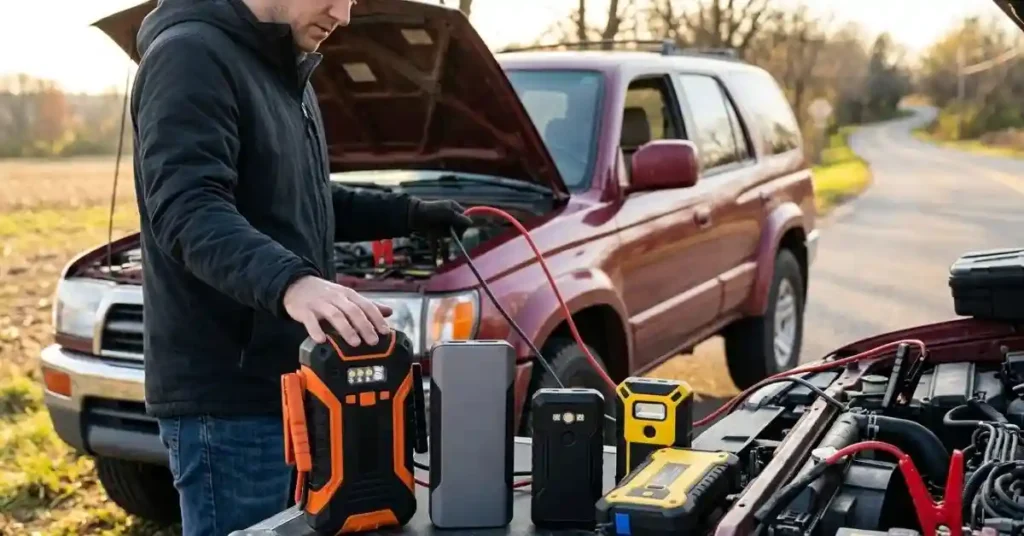
For a typical small gas car, a jump starter rated around 500 to 1,000 starting amps may be enough, depending on the vehicle and battery condition. Larger engines need more reserve, while diesel engines often need much more starting power.
I would always check the vehicle maker’s engine size and the jump starter maker’s gas or diesel rating before buying.
| Engine situation | Safer buying approach |
| Small gas engine | Compact jump starter |
| Large gas engine | Higher-output model |
| Diesel engine | Heavy-duty model with strong starting rating |
Cold weather is another reason I like having extra power. A weak battery can struggle more when temperatures drop, so a jump starter with some reserve gives me more breathing room.
Look Closely at the Clamps and Cables
The clamps are easy to ignore when shopping online, but they are one of the parts I care about most. Good clamps should grip the battery posts firmly and have enough metal contact to transfer power well.
Cable length also matters. Very short cables can make a simple jump awkward, especially when the battery sits in a tight corner.
| Clamp feature | Why I like it |
| Strong spring | Keeps a firm grip |
| Good metal contact | Helps transfer current |
| Insulated handles | Adds protection during use |
I would also avoid treating thin cables as a minor issue. A powerful jump starter needs cables and clamps that can handle the current safely.
Safety Features I Would Not Skip
Modern jump starters often include reverse-polarity protection, short-circuit protection, over-current protection, and spark-resistant designs. These features are not just marketing extras.
Reverse polarity is especially important. It helps protect you and the vehicle if the clamps are connected to the wrong battery terminals.
| Safety feature | What it helps prevent |
| Reverse-polarity protection | Wrong clamp connection |
| Short-circuit protection | Electrical shorts |
| Over-current protection | Excess current |
I still check the positive and negative terminals before connecting anything. Safety electronics are helpful, but they are not a reason to stop paying attention.
Can You Use a Jump Starter on the Wrong Battery?
You should not assume every jump starter works with every battery system. Most portable units are made for common 12-volt vehicle batteries, but you should confirm the voltage before connecting one.
Never guess with electrical equipment. Check the vehicle manual and the jump starter instructions first.
Does a Jump Starter Need to Be Fully Charged?
No, it may not need to be at 100% for every jump, but I prefer to keep mine well charged. A low charge level can reduce the chance of a successful start, especially with a large engine or very weak battery.
This is a simple habit that is easy to forget. A jump starter can sit in a trunk for months and slowly lose charge.
| Habit | Why it helps |
| Charge before long trips | Gives you more backup |
| Check it every few months | Finds a low battery early |
| Recharge after use | Keeps it ready |
I would treat a jump starter like a spare tire. It is not useful if you discover it is dead when you actually need it.
Portable Size Matters More Than I Expected
A jump starter has to live somewhere in your vehicle. That makes size and weight more important than they first appear.
A large heavy-duty unit may make sense for a work truck. For a small sedan, I would rather have a compact model that fits neatly in the trunk or storage area.
The sweet spot is a unit that is powerful enough for your engine but small enough that you will actually keep it with you.
Extra Features: Which Ones Are Worth It?
Many jump starters now work as portable power banks. Some have USB ports, LED lights, air compressors, or digital displays.
I find a built-in flashlight useful during a nighttime emergency. USB charging can also be handy when a phone battery is low.
But I would not pay a lot more for features I will rarely use.
| Extra feature | Practical value |
| LED flashlight | High for roadside emergencies |
| USB charging | Useful while traveling |
| Air compressor | Useful if you need tire inflation |
| Digital display | Helpful for checking charge |
The key is to buy the jump starter first and the extras second. A weak jump starter with ten extra features is still a weak choice.
Lithium-Ion vs Older Jump Starter Designs
Most modern portable jump starters use lithium-based battery packs because they can store a lot of energy in a small package. That makes them much easier to carry than many older, bulky jump boxes.
Lithium units can also sit unused for a while, but they still need care. Extreme heat inside a parked vehicle can be hard on batteries, so I avoid leaving electronics in a hot car for long periods when I can.
If the manufacturer gives storage temperature advice, I follow it.
Common Jump Starter Mistakes I Would Avoid
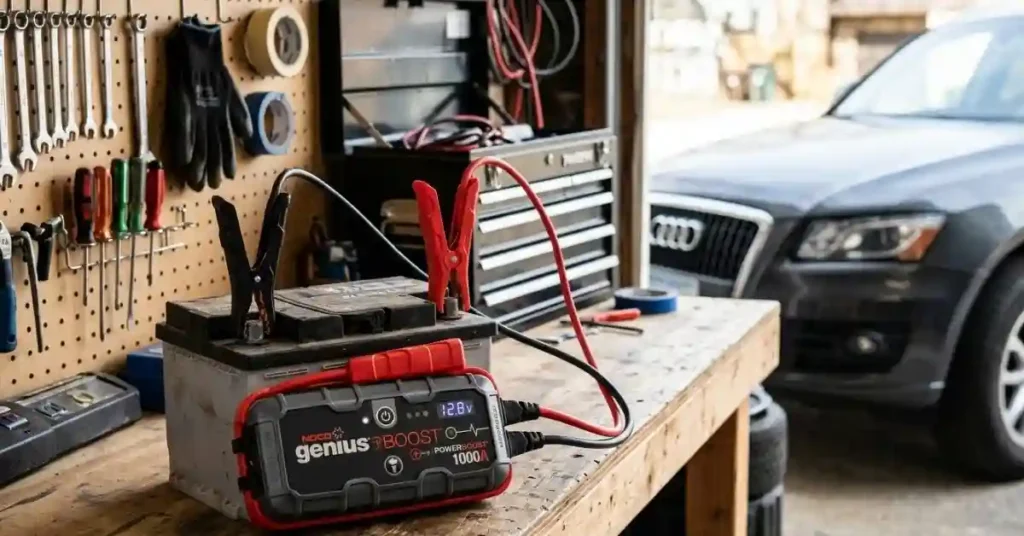
Buying the wrong size is only one problem. I have found that people often overlook simple details because the big amp number gets all the attention.
| Mistake | Better approach |
| Buying by peak amps only | Check starting amps and engine rating |
| Ignoring diesel needs | Check the diesel rating |
| Forgetting to charge it | Check it every few months |
| Choosing the biggest model | Match size to your vehicle |
| Ignoring clamp quality | Inspect clamps and cables |
Another common mistake is waiting until the battery is completely dead before testing the jump starter. I would rather learn how the unit works at home than figure it out beside a dark road in bad weather.
What I Check Before Buying a Jump Starter
When I narrow down several models, I use a simple checklist. It keeps me from getting distracted by flashy advertising.
First, I check the vehicle’s engine size and fuel type. Then I look at the jump starter’s gas and diesel ratings, starting amps, peak amps, battery capacity, clamp design, cable length, and safety features.
After that, I check the physical size and weight. Finally, I look at the instructions and warranty.
| Buying check | My priority |
| Vehicle compatibility | Essential |
| Starting power | Essential |
| Safety features | Essential |
| Battery capacity | Important |
| Size and weight | Important |
| Extra features | Nice to have |
This process takes only a few minutes. It also helps avoid buying a unit that looks powerful but does not match the vehicle.
What If the Jump Starter Does Not Start the Car?
A jump starter cannot fix every starting problem. Sometimes the car will not start because of a bad starter, alternator, damaged cable, fuel issue, or another electrical fault.
If the engine does not turn over after a proper jump attempt, I would stop repeating the process.
| Problem | What I would check |
| No response | Clamp connection and battery terminals |
| Clicking sound | Battery condition and connections |
| Engine turns but will not start | Possible non-battery problem |
Dirty battery terminals can also cause trouble. If the clamps cannot make good contact, even a strong jump starter may struggle.
A jump starter is a battery backup tool. It is not a repair tool.
Should You Buy a Jump Starter or Jumper Cables?
Jumper cables are cheaper and very simple, but they require another vehicle or a suitable power source. A jump starter carries its own power, so you can use it without asking another driver for help.
For me, that independence is the biggest advantage.
| Option | Main advantage |
| Jumper cables | Cheap and simple |
| Portable jump starter | Works without another car |
I still think jumper cables are worth keeping in a vehicle. But if you travel alone, a portable jump starter gives you another layer of protection.
My Simple Rule for Choosing One
If I had to reduce the whole buying process to one rule, it would be this: choose a jump starter based on your actual vehicle, then add enough power for a reasonable safety margin.
Do not buy based only on the largest number on the package. Check the engine rating, starting power, battery capacity, clamps, safety system, and size.
The best jump starter is not necessarily the biggest or most expensive one. It is the one that fits your vehicle and is charged when you need it.
Final Thoughts
Learning how to choose a jump starter changed the way I look at these products. The peak-amp number may catch your eye, but compatibility, starting power, safety, and build quality matter much more.
My biggest advice is simple: check your engine size, choose a jump starter with enough reserve power, and keep it charged. A little preparation now can save a very annoying roadside problem later.
FAQs
1. How do I choose a jump starter for my car?
Choose a jump starter that matches your engine size. Check starting amps, battery capacity, safety features, and the maker’s gas or diesel rating.
2. How many amps should a jump starter have?
A small gas car may need about 500–1,000 starting amps. Larger engines and diesel vehicles need more power, so check the engine rating first.
3. Is peak amp rating important when choosing a jump starter?
Peak amps show a short power burst. Starting amps are more useful for real use. Check both, along with the engine size rating, before you buy.
4. What safety features should a jump starter have?
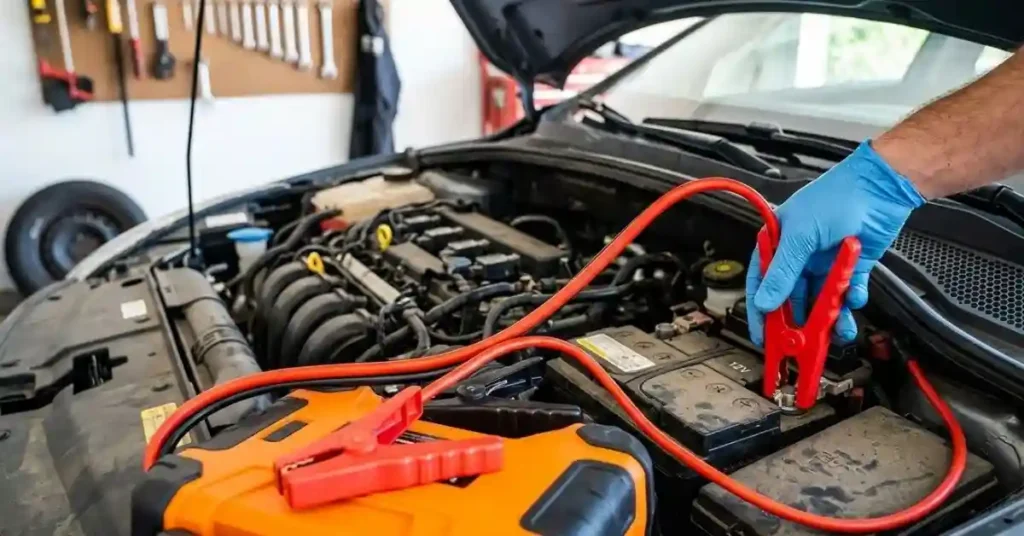
Look for reverse-polarity, short-circuit, and over-current protection. Strong clamps and good cables also help make a jump safer and easier.
5. Should I choose a large or compact jump starter?
Choose one that fits your vehicle and is easy to carry. A truck may need a larger unit, while a small car can often use a compact model.
To Get More About Home, Car Tools Product You Can Visit Our Site. If You Found our Posts Helpful Leave a Comment Below