
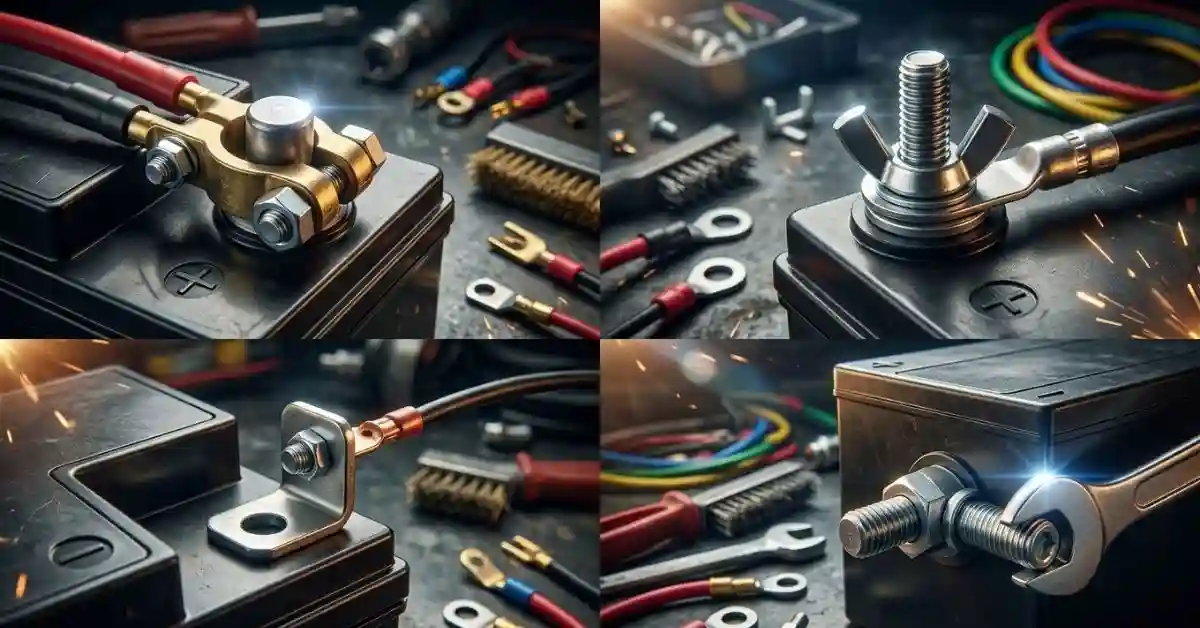
I used to think a battery terminal was simply the little post where the cable connects. Then I worked with different batteries and found out how many shapes and sizes are out there. Picking the wrong one can lead to a loose fit, poor starting, or a cable that simply will not connect.
In this guide to Types of Battery Terminals, I’ll break down the common terminal styles, where they are used, and how to tell them apart. I’ll also cover the small details that can save you from buying the wrong terminal.
Why There Are So Many Types of Battery Terminals
Battery terminals vary because batteries serve many different jobs. A car battery, marine battery, motorcycle battery, and deep-cycle battery may all use different connection styles.
The terminal also has to match the battery post and the cable end. That sounds simple, but this is where many mistakes happen.
| Battery use | Common terminal style | Main reason |
| Most cars | SAE top post | Easy and common |
| Some European cars | DIN or European post | Smaller tapered post |
| Marine batteries | Stud or threaded post | Strong cable connection |
| Some older cars | Side post | Saves space |
| Small batteries | Threaded insert or bolt | Compact connection |
The battery’s terminal style can also affect how easy it is to replace a cable. Some types are simple to clamp. Others need a nut, bolt, or special connector.
The Main Types of Battery Terminals
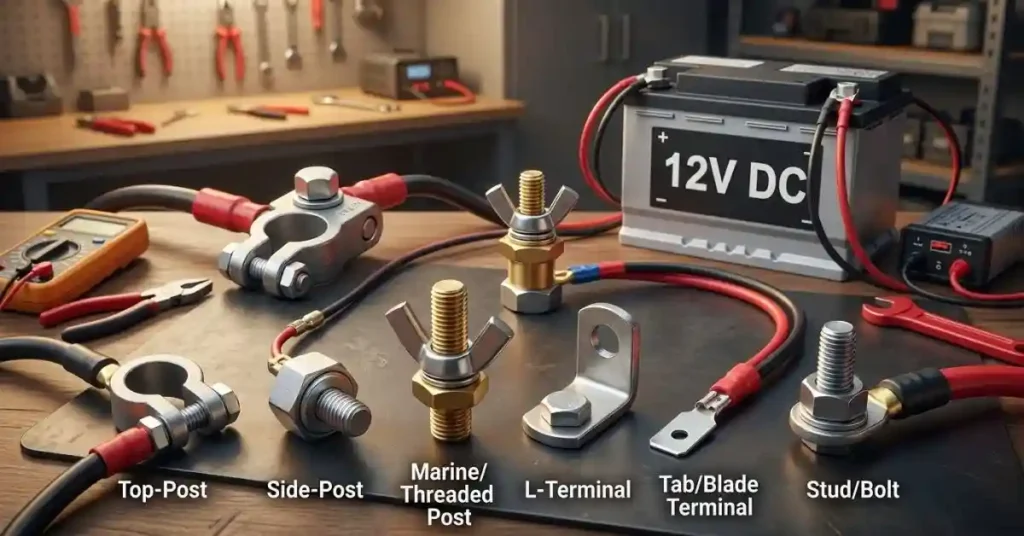
There is no single terminal that fits every battery. The most common types include top-post, side-post, DIN, JIS, stud, and dual-terminal designs.
Once I started looking at the actual connection instead of just the battery size, the differences became much easier to spot.
SAE Top Post Battery Terminals
The SAE top post is one of the most common battery terminal types in vehicles in North America. It uses two round posts on top of the battery.
The positive post is usually larger than the negative post. The cable clamp is made to fit over the tapered post and tighten around it.
This is the style most people picture when they hear “car battery terminal.”
| SAE top post feature | What it means |
| Two posts on top | Cables connect from above |
| Positive post is larger | Helps prevent reversed connections |
| Tapered posts | Clamps grip as they tighten |
One thing I learned the hard way is that a clamp can look tight but still make a poor connection. Corrosion, dirt, or a damaged clamp can keep the metal surfaces from making good contact.
Side Post Battery Terminals
Side-post batteries place the connections on the side rather than the top. The cable usually attaches with a special bolt.
This design can help when space above the battery is tight. It also gives the battery a cleaner top surface.
The downside is that the connection style is less universal. If you are replacing a side-post cable, you need the right bolt and terminal setup.
DIN Battery Terminals
DIN terminals are common on many European vehicles. They can look similar to top posts, but their size and shape differ from standard SAE posts.
This is an easy detail to miss when buying a replacement battery.
A clamp made for an SAE post may not fit a DIN post correctly. The battery may look almost identical, yet the terminal connection can be wrong.
JIS Battery Terminals
JIS stands for Japanese Industrial Standards. JIS-style battery posts are often found on Japanese vehicles and some powersports applications.
They are generally smaller than standard SAE posts.
That difference matters. A clamp that fits a standard post may feel loose on a smaller JIS post.
| Terminal type | Common clue | Main concern |
| SAE | Larger tapered top posts | Very common |
| DIN | Smaller European-style posts | Needs matching clamp |
| JIS | Smaller Japanese-style posts | SAE clamp may be loose |
Stud and Threaded Battery Terminals
Some batteries use threaded studs instead of simple tapered posts. These are common on marine, RV, industrial, and deep-cycle batteries.
The cable terminal often has a hole that slides over the stud. A nut then holds it in place.
I like this design when several accessories need to connect to one battery. You can often stack suitable ring terminals on the stud, provided the setup follows the battery maker’s limits and is properly secured.
Marine Battery Studs
Marine batteries often use threaded posts or studs because boats may have several electrical loads.
A typical setup may include the starter, electronics, lights, pumps, and other equipment. A secure threaded connection can make cable management easier.
The key is to use the correct hardware. A random nut or washer is not always a good substitute for the hardware designed for the battery.
Threaded Insert Terminals
Some batteries have an internal threaded insert. A bolt screws into the battery terminal instead of a clamp fitting over a post.
This style is useful where a low-profile connection is needed.
It is also common on some specialty batteries and smaller power systems.
Dual Battery Terminals
Dual-terminal batteries have more than one way to connect. For example, a battery may have both traditional top posts and additional threaded connections.
This can be useful when a battery needs to serve more than one purpose.
You might use one connection for the main vehicle cables and another for an accessory circuit.
| Dual-terminal benefit | Practical use |
| More connection options | Different cable styles |
| Extra accessory point | Smaller electrical loads |
| Flexible installation | Vehicles or equipment with added wiring |
Still, more connection points do not mean you should connect everything without a plan. Every cable needs the right size, fuse protection where needed, and a solid connection.
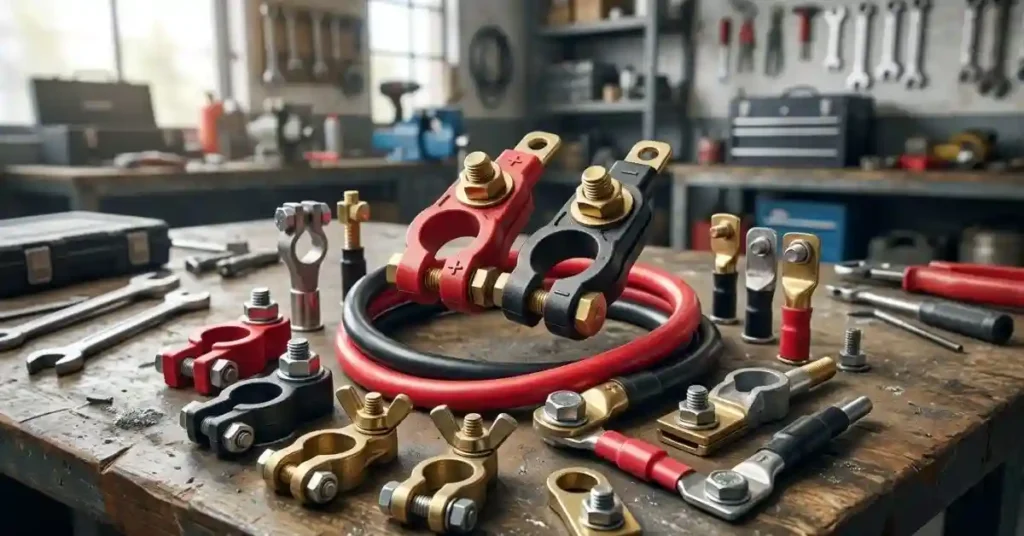
Battery Terminal Types by Vehicle and Equipment
Looking at where a battery is used can help narrow down the terminal type.
Cars, trucks, motorcycles, boats, RVs, and solar systems do not always use the same connection style.
Car and Truck Battery Terminals
Most conventional car and truck batteries use SAE top posts, although side posts and other designs are also found.
Modern vehicles can have many electrical systems. A weak terminal connection can cause odd symptoms that seem unrelated to the battery.
You may see slow cranking, flickering lights, or intermittent electrical issues.
That is why I check the terminal connection before assuming the battery itself has failed.
Motorcycle Battery Terminals
Motorcycle batteries are smaller and often use threaded terminals or small bolts.
The cable may sit on a flat metal tab with a screw passing through it. Some batteries use other compact designs.
| Equipment | Terminal style often seen |
| Car | SAE top post |
| Motorcycle | Small threaded or bolt terminal |
| Boat | Stud or threaded terminal |
| RV | Stud, post, or heavy-duty terminal |
| Deep-cycle system | Stud or threaded connection |
Always check the exact battery before ordering a replacement terminal. Vehicle type alone is not enough.
Marine and Deep-Cycle Battery Terminals
Deep-cycle and marine batteries can use several terminal designs. Stud terminals are common because these batteries often power multiple loads.
The important part is not just the terminal shape. Cable size matters too.
A heavy cable needs a terminal made to handle its wire size and current demand.
How to Tell Which Battery Terminal You Have
You do not always need a part number to identify a battery terminal. Start by looking at the battery itself.
Check where the connection sits, what shape it has, and how the cable attaches.
| What you see | Likely terminal type |
| Large tapered post on top | SAE top post |
| Small tapered post on top | JIS or similar style |
| Cable attaches to battery side | Side post |
| Threaded metal stud | Stud terminal |
| Bolt screws into terminal | Threaded insert |
| More than one connection style | Dual terminal |
If you are unsure, compare the old battery with the replacement battery. The terminal position, post size, and connection method should all match.
Battery Terminal Ends Are Not the Same as Battery Posts
This is one of the most useful things I learned.
The battery post is part of the battery. The battery terminal end is the connector attached to the cable.
People often use the words as if they mean the same thing. They do not.
For example, a car can have SAE battery posts but use aftermarket brass cable terminals. The post and cable terminal must still match.
Common Cable Terminal Styles
Cable ends come in many forms. Some clamp over posts, while others use a hole for a stud or bolt.
| Cable terminal | Used with |
| Clamp-style terminal | Tapered battery post |
| Ring terminal | Threaded stud |
| Lug terminal | Heavy cable connection |
| Side-post cable | Side-post battery |
This distinction becomes very important when replacing damaged battery terminals. Buying a terminal based only on the battery’s name can lead to the wrong part.
Common Battery Terminal Problems I Have Seen
Battery terminals are simple, but small problems can cause big headaches.
Corrosion is the obvious one. Loose clamps are another. I have also seen people tighten a terminal as much as possible when the real problem was the wrong terminal size.
Corrosion Around the Terminal
White, blue, or green buildup around a terminal can point to corrosion.
Corrosion can increase electrical resistance and weaken the connection.
Do not just scrape off the visible crust and assume the job is done. The cable end and battery post both need a clean, solid contact surface.
Loose Battery Terminal
A loose terminal can cause intermittent electrical problems.
| Problem | What to check |
| Slow cranking | Terminal tightness and corrosion |
| Lights flicker | Battery connections |
| Power cuts out | Cable and terminal fit |
| Terminal keeps moving | Correct size and clamp condition |
A terminal should not spin freely around the battery post. If it does, stop and check the fit.
Wrong Terminal Size
This is one of the easiest mistakes to make.
An SAE clamp may seem close enough to a smaller post. It is not. “Almost fits” is not a proper electrical connection.
The same goes for threaded terminals. The bolt size, thread, cable lug, and battery connection all need to work together.
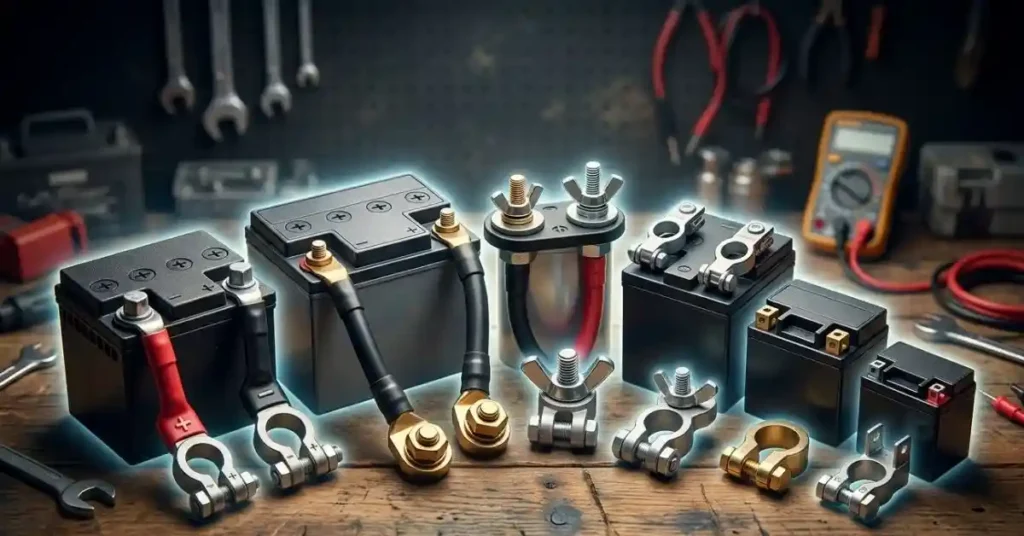
Mistakes to Avoid With Battery Terminals
I have found that most terminal problems come from rushing the simple parts.
Here are the mistakes worth avoiding.
| Mistake | Better approach |
| Guessing the terminal type | Check the old battery |
| Using a loose clamp | Match the post size |
| Ignoring corrosion | Clean the contact surfaces |
| Over-tightening | Follow the battery maker’s torque guide |
| Adding too many cables | Use proper distribution and fusing |
Another common mistake is forcing a terminal onto a post. If it needs excessive force, it may simply be the wrong part.
Also, disconnecting and reconnecting a battery should be done with care. Follow the vehicle or equipment manual, especially on modern vehicles with sensitive electronics.
How Terminal Material Can Affect the Connection
Battery terminals can be made from different metals and alloys. Lead, lead alloy, copper, brass, and plated materials are all used in battery connection systems.
The exact material matters less than having a terminal that is designed for the job and makes a clean, secure connection.
Brass Battery Terminals
Brass terminals are popular in some aftermarket applications. They can be strong and resistant to corrosion.
They also tend to make good contact when properly fitted.
Lead Battery Terminals
Traditional lead-based terminal designs are common on automotive batteries.
They are soft enough to clamp well, but they can be damaged by rough handling or excessive tightening.
The lesson here is simple: tight does not mean as tight as possible.
Are All Battery Terminals Interchangeable?
No. Battery terminals are not universally interchangeable.
The battery post shape, diameter, location, cable size, and connection method all matter.
For example, a top-post cable terminal is not a direct replacement for a side-post connector. A standard SAE clamp may also be wrong for a smaller JIS post.
| Before buying | Why it matters |
| Post size | Prevents loose fit |
| Terminal location | Ensures cable can reach |
| Cable gauge | Matches the electrical load |
| Connection style | Ensures proper attachment |
| Polarity | Prevents incorrect connections |
When in doubt, take a clear photo of the battery and terminal. Better yet, record the battery model and terminal measurements.
What I Check Before Replacing a Battery Terminal
After dealing with different terminal styles, I now check a few things before buying anything.
First, I look at the battery post. Then I check how the cable attaches. After that, I look at the cable itself.
I also check whether the cable end is damaged. A new terminal will not fix a badly corroded cable or a broken conductor.
My quick checklist is:
- Identify the battery terminal style.
- Check the positive and negative post sizes.
- Check the cable gauge.
- Look for corrosion.
- Check the cable end for damage.
- Match the replacement terminal to the battery.
- Follow the battery and vehicle maker’s instructions.
That small check can prevent a surprisingly annoying repair.
Final Thoughts
The biggest lesson I learned about Types of Battery Terminals is that appearance can be misleading. Two batteries may look almost the same but use different post sizes or connection styles.
SAE top posts, side posts, JIS posts, DIN terminals, threaded studs, and dual-terminal designs each have their place. The safest approach is to identify the exact connection before buying a replacement.
If you are replacing a terminal, do not rely only on the battery’s brand or size. Check the post, cable, terminal shape, and connection method. A few minutes of checking can save you from a loose connection and another trip to the parts store.
FAQs About Types of Battery Terminals
1. What are the main Types of Battery Terminals?
The main Types of Battery Terminals include SAE top posts, side posts, DIN, JIS, threaded studs, and dual terminals. Each type fits a different battery and cable setup.
2. How do I identify my battery terminal type?
Check the battery post shape, size, and location. Also see how the cable connects. These clues can help you identify SAE, JIS, DIN, side-post, or stud terminals.
3. Are SAE and JIS battery terminals the same?
No. SAE and JIS battery terminals differ in size. A JIS post is often smaller, so an SAE battery terminal may fit poorly or feel loose.
4. Which battery terminals are common in cars?
SAE top-post battery terminals are common in many cars. Some vehicles use side-post, DIN, or JIS terminals, so check the old battery before buying a new terminal.
5. Can I replace a battery terminal with any type?
No. The new battery terminal must match the battery post and cable. Check the size, shape, cable fit, and connection style before you replace it.
To Get More About Home, Car Tools Product You Can Visit Our Site. If You Found our Posts Helpful Leave a Comment Below