A car that accelerates slowly may have a clogged air filter, weak fuel delivery, worn spark plugs, a transmission fault, a sensor problem, or an exhaust restriction.
Across the United States, drivers depend on their cars to merge onto busy highways, cross large intersections, and keep up with traffic on local roads. When a vehicle suddenly loses power or takes too long to gain speed, even a familiar trip can become stressful. The cause may be a simple maintenance issue, but a serious engine or transmission fault can produce similar symptoms.
The best way to find the cause is to look at when the problem occurs, check for warning lights, and start with safe, simple observations. A car that hesitates when cold may need a different diagnosis from one that revs loudly without gaining speed. This guide explains the common causes, the checks you can make at home, the repairs a mechanic may recommend, and the warning signs that mean you should stop driving.
Slow acceleration means your car takes longer than expected to gain speed when you press the accelerator. You may notice a delay when leaving a stoplight, trouble merging onto a highway, weak power on hills, or a sudden loss of pulling force while passing another vehicle.
A small delay is not always a fault. Cold weather, a steep hill, extra passengers, heavy cargo, and air conditioning can affect how a vehicle responds. Some vehicles also use transmission settings that favor fuel economy over quick acceleration.
The key question is whether the behavior is normal for your car or a new change. If the vehicle once accelerated normally but now struggles under the same conditions, investigate the change instead of assuming the car is simply getting older.
Source: oards.com
Engine hesitation
The engine pauses, stumbles, or shakes when you press the accelerator. Possible causes include ignition faults, fuel delivery problems, or incorrect sensor readings.
Weak pulling power
The engine runs, but the car struggles to gain speed on hills or under load. Airflow restrictions, fuel problems, exhaust restrictions, and mechanical wear may contribute.
High engine speed with little movement
The engine revs higher, but road speed does not rise as expected. A slipping transmission or clutch may be responsible.
Delayed response
The car takes a moment to respond after you press the pedal. Electronic throttle controls, transmission behavior, or engine management faults may be involved.
Slow Acceleration Versus Normal Power Limits
A small engine may need more time to climb a hill than a larger engine. An automatic transmission may also downshift before the engine delivers more power. These changes can be normal when the car responds smoothly and no warning signs appear.
By contrast, repeated stumbling, severe power loss, unusual noises, or a sudden drop in performance deserve attention. Compare the symptoms with the vehicle’s usual behavior rather than comparing it with a different model.
Likely normal
Smooth but modest acceleration with a heavy load or on a steep grade, provided the vehicle remains safe to control.
Needs investigation
A new loss of power, repeated hesitation, abnormal engine speed, warning lights, or a noticeable change in fuel use.
Common Reasons Your Car Is Slow To Accelerate
The most useful starting point is to identify which system may be limiting the car’s power. A gasoline engine needs the right amount of air and fuel, correctly timed ignition, good compression, and a clear path for exhaust gases. The transmission and brakes must also let the car turn engine power into forward motion.
Several faults can create nearly identical symptoms. For example, weak acceleration may result from a dirty air filter, but it can also come from a failing fuel pump or an exhaust restriction. Treat each cause as a possibility until an inspection or test confirms it.
Source: media-blog.zutobi.com
Restricted air intake
A heavily clogged engine air filter or blocked intake can reduce airflow. Inspect the filter according to the owner’s manual and replace it if it is dirty or damaged.
Fuel delivery problems
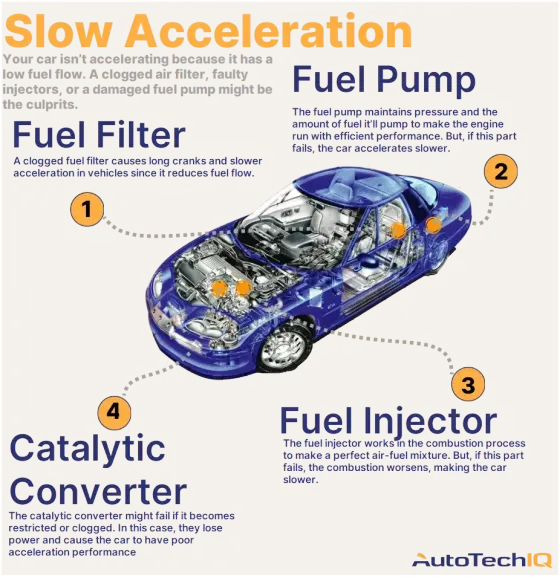
A weak fuel pump, restricted fuel filter where separately serviceable, faulty pressure regulator, or dirty injector can prevent the engine from receiving enough fuel under load.
Ignition system faults
Worn spark plugs, damaged ignition coils, or related faults can cause misfires. The engine may shake, hesitate, or struggle when accelerating.
Sensor or throttle problems
A faulty airflow sensor, accelerator pedal sensor, throttle position sensor, or electronic throttle body can affect the engine’s response.
Transmission or clutch trouble
A slipping clutch in a manual car or a transmission fault in an automatic can prevent engine power from reaching the wheels as expected.
Exhaust restriction
A damaged or restricted catalytic converter or another blocked exhaust component can limit engine output, particularly as engine demand increases.
Mechanical engine problems
Low compression, incorrect valve timing, or a timing system fault can reduce power. These problems usually need professional testing.
Dragging brakes or wheel problems
A stuck brake caliper or another source of rolling resistance can make the vehicle feel sluggish. A hot wheel, burning odor, or unusual pulling can signal a problem.
Why a Dirty Air Filter Can Reduce Power
The engine air filter catches dust and debris before they enter the engine. If it becomes heavily restricted, airflow may be reduced, especially when the engine needs more air during acceleration.
Some modern engine controls can adjust to airflow changes, so a dirty filter does not cause dramatic power loss in every vehicle. Still, checking the filter is a sensible early step because it is usually easy to access and inspect.
Use the correct replacement part for your vehicle and install it in the right direction if the design requires it. Do not run the engine without its filter to test performance, because unfiltered air can carry damaging debris into the engine.
What to check
Look for heavy dust buildup, leaves, a collapsed filter, or a filter that does not fit its housing.
What to avoid
Do not assume a new filter will fix severe power loss without checking for other causes.
How Fuel Problems Affect Acceleration
An engine may idle normally but struggle when you demand more power. That happens because acceleration increases the engine’s need for fuel, and a weak pump or restricted delivery system may fail to meet that demand.
Fuel problems can cause hesitation, surging, difficult starting, or stalling. The symptoms overlap with ignition and sensor faults, so a technician may measure fuel pressure and delivery under the conditions specified by the manufacturer.
Avoid opening fuel lines or attempting improvised fuel pressure tests at home. Gasoline is highly flammable, and modern fuel systems can retain pressure even when the engine is off.
Possible clue
The engine loses power during hard acceleration or on hills, particularly if the problem is getting worse.
Best next step
Have the fuel system tested before replacing the pump, injectors, or other expensive components.
Check the Warning Lights Before Anything Else
Dashboard warning lights can help you decide how urgently your car needs attention. A steady check engine light means the engine control system has detected a problem, but the light alone does not identify the failed part.
A flashing check engine light often signals an active misfire that can damage the catalytic converter. If it flashes while the engine runs roughly or loses power, reduce engine load, pull over somewhere safe, and arrange professional help rather than continuing to drive normally.
Other warnings can be just as important. An oil pressure warning, an overheating warning, or a transmission temperature warning may require you to stop promptly and follow the owner’s manual. Do not keep driving just because the car can still move.
Source: image7.slideserve.com
Steady check engine light
Read the diagnostic codes with a compatible scanner or arrange a diagnostic check. The vehicle may still need prompt service, even if it seems to drive normally.
Flashing check engine light
A severe misfire may be occurring. Avoid hard acceleration and stop driving if the engine shakes, power drops, or the flashing continues.
Oil pressure or temperature warning
Stop in a safe place as soon as you can. Follow the manual’s instructions and do not restart an overheated engine until it has been assessed and cooled as directed.
Transmission warning
Check the owner’s manual for the correct response. Reduced power, slipping, or abnormal shifting can require towing or urgent inspection.
What an OBD-II Code Can and Cannot Tell You
Most gasoline passenger vehicles sold in the United States from the 1996 model year onward use standardized OBD-II diagnostics. A compatible scan tool can read many powertrain fault codes and, on supported vehicles, additional data that helps narrow the cause.
A code usually points to a system or a condition, not automatic proof that one specific part has failed. For example, an airflow-related code may result from a sensor problem, an intake leak, wiring trouble, or another fault affecting the reading.
Record the exact code and any available freeze-frame data before clearing anything. Freeze-frame data can preserve operating conditions from when a fault was detected, which may help a technician reproduce the issue.
Useful information
The exact code, whether the light is steady or flashing, when the symptom began, and whether the engine runs roughly.
Common mistake
Replacing a sensor solely because its name appears in a code description without checking wiring, air leaks, and related systems.
Diagnose the Problem in a Safe Order
Start with observations that do not require you to take the car apart. Write down when the problem occurs, check for warning lights, and review recent maintenance or repairs. This basic information can help separate a simple service issue from a fault that needs specialist equipment.
Do not test a car’s acceleration by racing the engine, making sudden maneuvers, or attempting high-speed runs on public roads. If the vehicle cannot keep pace with traffic, use a safe place to stop and arrange assistance.
Source: shunauto.com
Step 1: Record When the Problem Happens
Note whether acceleration is poor when the engine is cold, after it warms up, from a complete stop, at highway speed, or while climbing a hill. Also note whether the problem started suddenly or developed over several weeks.
A fault that appears only under heavy load may involve fuel delivery, ignition, exhaust flow, or transmission operation. A delay that follows a recent repair may be linked to a disconnected hose, incorrect installation, or a disturbed electrical connection.
From a stop
Consider throttle response, engine hesitation, transmission engagement, and brake drag.
At highway speed
Consider misfires under load, fuel delivery, exhaust restriction, transmission behavior, and electronic power limits.
Only when cold
Record the temperature and how long the issue lasts. Cold operation can change engine and transmission behavior, but persistent rough running still deserves diagnosis.
Step 2: Check Tires and Visible Conditions
Check tire pressure when the tires are cold and compare each reading with the pressure listed on the driver’s door-jamb placard or in the owner’s manual. The number printed on a tire sidewall is generally a maximum pressure marking, not the vehicle’s normal target pressure.
Look for a visibly damaged tire, a severely underinflated tire, unusual wear, or something obstructing a wheel. Check that the floor mats do not interfere with the accelerator pedal, and remove any loose item that could block pedal movement.
If a wheel looks damaged or a tire loses pressure rapidly, do not drive on it. Tire and wheel problems can affect both performance and control.
Tire pressure
Use a reliable pressure gauge and the vehicle’s specified cold pressure.
Pedal clearance
Confirm that the accelerator moves freely and that no floor mat or object is caught near it.
Step 3: Review Maintenance and Recent Repairs
Look at the maintenance schedule for the engine air filter, spark plugs, and other service items. The correct interval depends on the vehicle, engine, driving conditions, and manufacturer guidance.
If the problem began immediately after an oil change, air filter replacement, battery service, or engine repair, tell the technician exactly what was done. A loose intake duct, unplugged sensor, or other installation issue may be easier to find when the timing is known.
Do not assume that a recent repair caused the issue simply because the timing matches. Use the information as a diagnostic clue, not as proof.
Gather records
Note the date and mileage of the last service, parts replaced, warning lights, and any diagnostic work already performed.
Step 4: Read Diagnostic Codes
If a warning light is on and the vehicle is safe to leave parked, retrieve the diagnostic codes with a suitable scan tool or have a repair shop scan the vehicle. Save the codes before clearing them.
A scan tool can also show whether certain engine data looks plausible, depending on the vehicle and tool. Live data may help identify a problem, but interpreting it correctly often requires service information and experience.
If a code appears
Use the code as a starting point for testing rather than ordering a replacement part immediately.
If no code appears
Continue diagnosis if the symptoms remain. Mechanical, brake, transmission, and some intermittent problems may not produce an obvious engine code.
Step 5: Arrange Targeted Testing
If simple checks do not reveal the cause, a qualified technician may need to test fuel pressure, ignition performance, intake leaks, exhaust restriction, compression, electronic throttle operation, or transmission behavior. The right test depends on the symptoms and the vehicle’s service information.
Ask the shop to explain which test supports the diagnosis and whether the proposed repair addresses a confirmed fault. This helps you understand why a part needs replacement and reduces the chance of paying for repeated guesswork.
Good diagnostic process
The technician records symptoms, checks codes, performs relevant tests, and explains the evidence behind the repair recommendation.
Weak diagnostic process
The technician replaces several unrelated parts without explaining the test results or confirming that the original problem has been resolved.
Why Engine RPM and Road Speed Matter
Watching how engine speed changes can help separate an engine power problem from a transmission problem, but you should observe this only during normal, safe driving if the car remains fully controllable. Do not perform risky road tests just to collect information.
RPM means revolutions per minute, a measure of how fast the engine crankshaft turns. Road speed shows how quickly the vehicle moves, and the relationship between these values depends on the selected gear, transmission design, torque converter, clutch, and tire size.
Source: i.ytimg.com
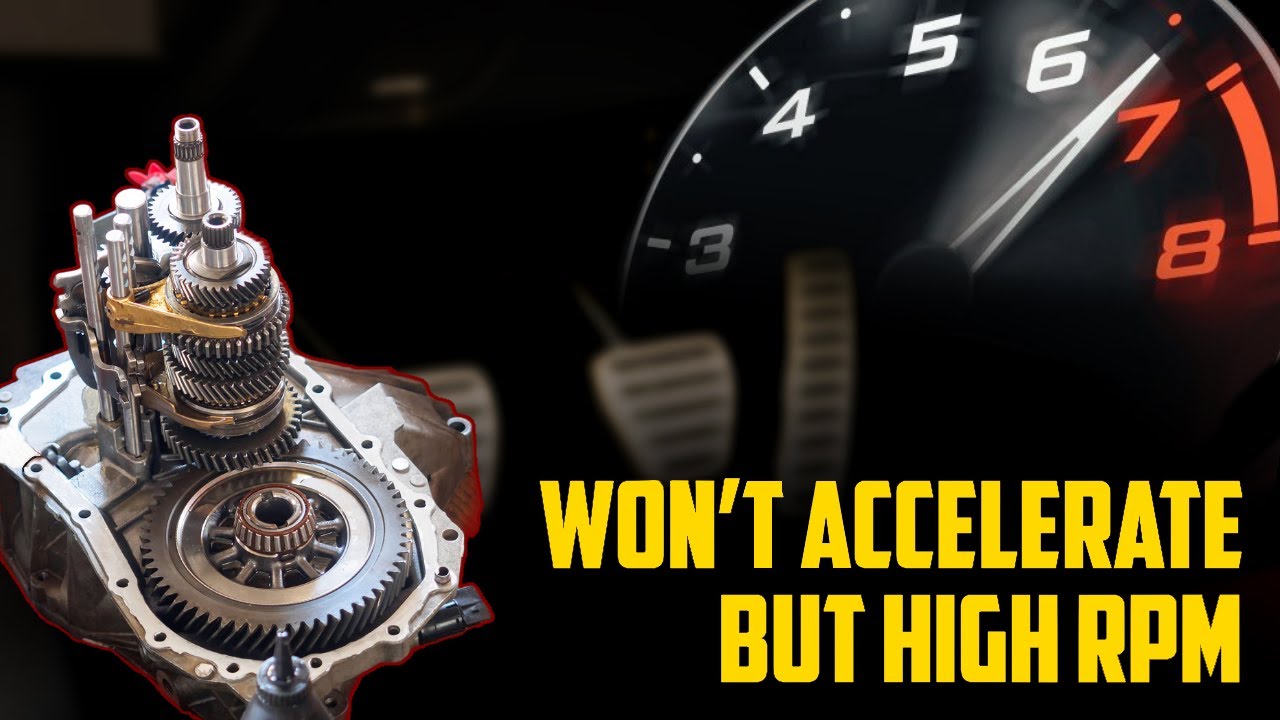
RPM rises but speed barely increases
This pattern can indicate a slipping clutch or transmission. It can also occur during a normal gear change, so repeated slipping under steady conditions needs assessment.
RPM struggles to rise and the car feels weak
The engine may not be producing enough power because of an air, fuel, ignition, exhaust, or mechanical fault.
RPM rises and falls while speed changes unevenly
The transmission may be shifting repeatedly, or the engine may be surging. Diagnostic checks are needed to separate the causes.
The engine revs normally but the vehicle feels held back
A dragging brake, driveline issue, tire problem, or transmission fault may be creating resistance or preventing normal power delivery.
Manual Transmission Clutch Slip
A worn clutch can fail to transfer engine power fully to the transmission. You may notice rising engine speed without matching acceleration, a burning odor, or a change in the point where the clutch engages.
Avoid holding the car on a hill with the clutch or repeatedly revving it to confirm the problem. These actions can create more heat and worsen the damage. A mechanic can inspect the clutch system and determine whether the clutch assembly or another component is responsible.
Common clue
The engine speed increases under load while road speed responds poorly.
Next step
Arrange an inspection if the symptom repeats, especially if a burning smell or loss of drive appears.
Automatic Transmission Problems
An automatic transmission may cause slow acceleration if it slips, delays engagement, struggles to select a gear, or enters a protective reduced-power mode. Low or incorrect transmission fluid can be a cause on some designs, but many newer vehicles use specific fluid types and procedures that make casual checks unsuitable.
Follow the owner’s manual for fluid inspection and service. Some transmissions have no conventional dipstick, and checking the fluid may require a specified temperature, level surface, and service procedure. Never add generic transmission fluid without confirming the exact specification.
Watch for
Delayed engagement, slipping, harsh shifts, unusual noises, or a transmission warning.
Avoid
Driving repeatedly while the transmission slips or adding an unapproved fluid to try to restore performance.
Can Bad Spark Plugs or Ignition Coils Cause Slow Acceleration?
Yes. Spark plugs and ignition coils can cause poor acceleration when they fail to ignite the air-fuel mixture correctly. The result may be a misfire, which means one or more cylinders do not produce power as expected.
A misfiring engine may shake at idle, stumble when you press the accelerator, use more fuel, or feel weak while climbing a hill. Some misfires appear only under heavy load, so a car that idles smoothly may still have an ignition problem.
Spark plug replacement intervals vary by engine and plug type. Check the maintenance schedule rather than assuming all vehicles need new plugs at the same mileage. A technician can inspect the plugs, check ignition components, and use diagnostic data to determine whether a misfire is present.
Source: autotechiq.com
How to Recognize an Ignition Problem
Repeated shaking, stumbling, or a flashing check engine light raises concern about a misfire. A code identifying a misfire in a particular cylinder helps narrow the diagnosis, but it does not automatically prove that the spark plug or ignition coil is defective.
Fuel delivery, injector faults, compression problems, wiring issues, and other engine faults can also cause misfires. Proper diagnosis checks the likely causes before parts are replaced.
Possible repair
Replacing worn spark plugs or a confirmed faulty ignition coil may restore performance.
Safety limit
A flashing warning light with rough running or severe power loss calls for stopping safely and arranging service.
Why Your Car Loses Power at Highway Speeds
A car that accelerates normally around town but loses power on the highway may have a problem that becomes noticeable only when the engine works harder. Fuel delivery, ignition under load, exhaust restriction, and transmission faults are important possibilities.
A restricted catalytic converter can limit exhaust flow and reduce power. However, a weak engine, faulty sensor, or fuel delivery problem can create similar symptoms, so replacing the catalytic converter without testing may waste money.
Some vehicles also reduce engine power when the control system detects a fault. This behavior may be called reduced-power mode or limp mode, depending on the manufacturer. The system may limit throttle response or engine output to protect certain components or maintain a safer operating condition.
What Is Limp Mode?
Limp mode is a protective operating strategy used by some vehicles when the control system detects a problem that could affect operation or component protection. The exact response depends on the vehicle, and not every reduced-power condition is officially called limp mode.
You may notice limited acceleration, restricted engine speed, unusual shifting, or a warning message. The correct response is to check the owner’s manual, stop if the car is unsafe to drive, and arrange a diagnostic inspection.
Do not force the engine
Avoid full-throttle attempts to overcome reduced power. They may increase the risk of damage or make the vehicle harder to control.
Record the warning
Write down any dashboard message and diagnostic codes so the technician can identify the affected system.
Why the Problem May Appear Only Under Load
During acceleration, the engine often needs more fuel and air and must produce more torque. A component that works well at idle may fail to meet demand under load, which explains why some faults appear only on hills or at highway speeds.
A safe diagnostic process may include reviewing stored data and carrying out manufacturer-approved tests. High-speed testing on public roads is not an appropriate home troubleshooting method.
Possible causes
Fuel pressure loss, ignition breakdown, exhaust restriction, transmission slip, or an electronic control fault.
Useful information
Note the road conditions, engine temperature, warning lights, and whether the problem occurs at a particular load or speed.
Could Bad Gas or Low Fuel Cause Slow Acceleration?
Yes. Contaminated fuel, incorrect fuel for the vehicle, or a fuel delivery problem can affect engine performance. Low fuel may also expose an existing issue in the fuel system, although a low tank alone does not prove that the pump is failing.
If the problem began soon after refueling, keep the receipt and record the station, fuel grade, and time. Poor fuel quality is one possibility, but ignition, sensor, and mechanical faults may occur at the same time by coincidence.
Use the fuel type specified by the manufacturer. A higher octane rating is not a universal fix for weak acceleration, and adding random cleaners or additives may not address the real cause. If you suspect contaminated fuel, avoid continued driving when the engine runs poorly and seek professional advice.
What to Do After Suspected Bad Fuel
If the car starts to misfire, stall, or lose power soon after refueling, stop in a safe place if the symptoms are severe. Do not open the fuel tank or attempt to drain it yourself unless you have the correct equipment, training, and safe procedures.
A repair shop can assess the symptoms, check relevant diagnostic data, and determine whether the fuel needs to be sampled or removed. Save your fuel receipt in case you need to discuss the issue with the retailer or a relevant consumer protection agency.
Keep records
Save the receipt and note the mileage, fuel grade, warning lights, and the time symptoms started.
Avoid guessing
Do not assume that adding more fuel, premium fuel, or an additive will resolve contamination.
How Much Does It Cost to Fix Slow Acceleration?
Repair costs depend on the failed part, vehicle design, local labor rates, diagnostic time, and whether related components have also been damaged. A routine air filter replacement may cost far less than a fuel pump, transmission repair, or internal engine repair.
There is no single reliable price for slow acceleration because it is a symptom rather than a diagnosis. Any estimate should identify the suspected cause, the tests completed, the parts and labor included, and whether additional work may be needed after inspection.
The figures below are relative planning examples, not verified current national prices or quotes. They show how repair complexity can vary, but actual costs must be confirmed with a repair shop for your specific vehicle and location.
Lower-complexity service
An air filter replacement or a routine maintenance item is often less involved than repairs to the fuel system or transmission.
Moderate diagnostic or repair work
Spark plugs, an ignition coil, a sensor, or a related intake repair can vary in cost according to access, engine design, and the confirmed fault.
Major repair
Fuel pump replacement, catalytic converter replacement, clutch work, transmission repair, or internal engine work may involve substantially more labor and parts.
How to Avoid Paying for Unneeded Repairs
Ask the shop to explain the diagnosis before approving a major repair. Request the diagnostic codes, the test results that support the finding, and a written estimate that separates parts, labor, diagnostic fees, and any additional recommended work.
If the estimate is high and the vehicle is safe to leave parked, a second opinion can help. Share the original test results rather than asking another shop to replace the same part without independent confirmation.
Compare the cost of the repair with the vehicle’s age, condition, expected future maintenance, and value to you. The cheapest immediate repair is not always the best choice if the underlying cause remains unresolved.
Ask what failed
Request a clear explanation of the confirmed fault and the evidence used to identify it.
Ask what happens next
Find out whether the repair should solve the symptom, whether follow-up testing is needed, and what warranty applies to the work.
Mistakes to Avoid When Troubleshooting Slow Acceleration
The biggest mistake is replacing parts based on a guess. Several faults can produce the same symptom, and changing one component without testing may leave the original problem untouched.
Another mistake is continuing to drive a vehicle that cannot accelerate safely. Losing power while joining a highway or crossing an intersection can create a dangerous situation, even if the engine still runs.
Ignoring a flashing warning light
A flashing check engine light can indicate a damaging misfire. Stop safely and arrange service if it flashes with rough running or power loss.
Clearing codes before recording them
Erasing codes may remove useful diagnostic information. Save the codes and available freeze-frame data first.
Using the wrong parts or fluids
Use the specifications for the exact vehicle, engine, and transmission. Incorrect fluids or poorly matched parts can create additional problems.
Testing acceleration at high speed
Do not make aggressive passes, race the engine, or test the vehicle in traffic. Use professional diagnostic procedures instead.
Assuming every sluggish car needs premium fuel
Fuel octane must match the manufacturer’s requirements. A higher grade does not repair a clogged filter, misfire, or transmission fault.
Ignoring brake drag
A dragging brake can reduce acceleration and produce excess heat. Do not touch a hot wheel or brake component to check its temperature.
Replacing a catalytic converter without testing
Confirm that exhaust restriction or converter failure is present. Other engine problems can mimic the same symptoms.
When Should You Stop Driving?
Stop driving when the car cannot maintain a safe speed, loses power suddenly, or shows signs of a potentially serious mechanical fault. Pull over to a safe location away from moving traffic when possible, and call for roadside assistance if the vehicle cannot be driven safely.
Do not continue a trip simply because the destination is close. Engine overheating, loss of oil pressure, severe misfiring, fuel leaks, and transmission failure can turn a manageable repair into a larger problem or create a safety hazard.
Sudden severe power loss
Move out of traffic safely if possible. If the car cannot keep up with traffic or respond reliably, arrange a tow.
Overheating or oil pressure warning
Stop safely and follow the owner’s manual. Do not open a hot cooling system or continue running an engine with an oil pressure warning.
Fuel smell or visible leak
Stop the engine when safe, avoid flames and sparks, move away from the vehicle if there is a fire risk, and contact emergency services if necessary.
Smoke, burning odor, or a very hot wheel
Stop in a safe location and arrange inspection. These symptoms can indicate overheating, a brake problem, or another fault that should not be ignored.
Flashing check engine light with rough running
Avoid continued driving because an active misfire can damage the exhaust after-treatment system. Arrange professional assistance.
What to Tell the Mechanic
A clear symptom report helps the repair shop choose the right tests. Explain when the problem began, whether it happens at low or high speed, and whether the engine shakes, revs freely, stalls, or produces unusual noises.
Share all dashboard messages, diagnostic codes, recent repairs, and refueling details. Mention whether the problem is getting worse and whether it happens only when the engine is cold or under heavy load.
Vehicle details
Provide the make, model, model year, engine type, mileage, and transmission type.
Symptom details
Describe the conditions, warning lights, unusual sounds, odors, and changes in engine speed.
Previous work
List recent repairs, maintenance, battery disconnection, and any parts already replaced.
A Practical Decision Table for Slow Acceleration
Use the table below to organize your observations before arranging a repair. The symptoms suggest possible causes, but they do not establish a diagnosis. More than one fault can exist at the same time.
Engine shakes when accelerating
Possible causes include a misfire, fuel delivery problem, injector fault, or mechanical engine issue. Check warning lights and arrange diagnosis.
Engine revs but speed does not rise normally
Possible causes include clutch slip or transmission slip. Avoid repeated acceleration tests and arrange an inspection.
Car feels weak on hills
Possible causes include restricted airflow, weak fuel delivery, ignition faults, exhaust restriction, or a powertrain problem.
Acceleration became poor after refueling
Contaminated or incorrect fuel is one possibility. Keep the receipt and seek assistance if the engine runs poorly.
Warning light appears with power loss
Read the relevant diagnostic codes when safe, but follow the owner’s manual and stop driving if the warning indicates a serious problem.
Car feels held back and a wheel smells hot
A dragging brake is possible. Stop safely and have the brake system inspected without touching hot components.
Problem started after maintenance
A loose hose, disconnected sensor, or installation problem may be involved. Review the recent work and ask for a targeted inspection.
Research Notes and Next-Question Gap Map
This guide uses established automotive principles to explain how air, fuel, ignition, exhaust, transmission, braking, and electronic control faults can affect acceleration. The symptom-to-cause matches are diagnostic possibilities, not the results of a hands-on inspection or vehicle test.
No specific vehicle, diagnostic code, service manual, or repair estimate was supplied for this article. Therefore, model-specific service procedures, exact repair prices, and a definitive diagnosis cannot be established from the information available. For a particular car, the owner’s manual and manufacturer service information should guide the next steps.
The following gap map identifies useful next questions inferred from the main troubleshooting task. These are not verified search-volume findings or claims about live search demand. No competing pages were inspected for this article, so competitor coverage is marked as not checked rather than assumed to be missing.
Question: Why does my car rev but not accelerate?
Reader stage: diagnosis. Basis: inferred next need from the difference between engine speed and road speed. Competitor coverage: not checked. Reader benefit: helps distinguish possible clutch or transmission slip from an engine power problem. Evidence needed: vehicle-specific transmission tests and inspection.
Question: Can I drive with a check engine light and poor acceleration?
Reader stage: immediate safety decision. Basis: inferred next need from warning-light symptoms. Competitor coverage: not checked. Reader benefit: helps the driver recognize when to stop and arrange assistance. Evidence basis: vehicle warning instructions and established misfire risks.
Question: How can I tell if the fuel pump is failing?
Reader stage: diagnosis. Basis: inferred next need from fuel-related symptoms. Competitor coverage: not checked. Reader benefit: explains why fuel pressure and delivery tests are more useful than replacing parts by guesswork. Evidence needed: manufacturer testing procedures for the specific vehicle.
Question: Why is acceleration poor only on hills or highways?
Reader stage: symptom assessment. Basis: inferred next need from load-related power loss. Competitor coverage: not checked. Reader benefit: directs attention toward faults that appear when engine demand rises. Evidence needed: diagnostic data and tests under approved conditions.
Question: How much will a slow-acceleration repair cost?
Reader stage: repair planning. Basis: inferred next need from the decision to seek service. Competitor coverage: not checked. Reader benefit: encourages itemized estimates and confirmed diagnoses. Evidence needed: current quotes for the vehicle, location, parts, and labor.
Frequently Asked Questions
Q
Why is my car slow to accelerate but runs smoothly at idle?
A car can idle smoothly while struggling under load because acceleration demands more fuel, air, ignition performance, and engine power. Possible causes include a weak fuel pump, restricted exhaust, an ignition fault that appears under load, or a transmission problem. Diagnostic testing is needed to identify the actual cause.
Q
Can a dirty air filter make a car accelerate slowly?
Yes, a heavily restricted air filter can limit airflow and contribute to poor performance. The effect depends on the engine and its control system, so a dirty filter does not explain every case of slow acceleration. Inspect it according to the owner’s manual, and investigate other causes if the problem continues.
Q
Why does my car rev high but move slowly?
If engine speed rises without a matching increase in road speed, a slipping clutch or transmission may be responsible. A normal gear change can also raise engine speed briefly, so the pattern matters. If the symptom repeats or comes with a burning smell, delayed engagement, or abnormal shifting, arrange an inspection.
Q
Can bad spark plugs cause poor acceleration?
Yes, worn spark plugs or faulty ignition coils can cause misfires that reduce engine power. You may notice shaking, hesitation, increased fuel use, or a flashing check engine light. Other faults can cause the same symptoms, so confirm the cause before replacing ignition parts.
Q
Can low transmission fluid cause slow acceleration?
Low transmission fluid can cause slipping or poor operation in some vehicles, but the correct fluid level and checking procedure vary by design. Some transmissions do not have a conventional dipstick. Follow the owner’s manual and avoid adding fluid unless the correct specification and procedure are known.
Q
Does slow acceleration always mean the engine is failing?
No. Slow acceleration can result from a routine maintenance issue, a sensor fault, fuel delivery trouble, transmission slip, dragging brakes, or normal operating conditions such as a steep hill and heavy load. Internal engine damage is only one possibility, and diagnostic testing can help separate these causes.
Q
Should I keep driving if my car suddenly loses power?
Do not continue a normal trip if the car cannot accelerate safely or keep up with traffic. Pull over when safe and arrange roadside assistance if needed. Stop promptly for serious warnings such as overheating, low oil pressure, fuel leaks, or a flashing check engine light accompanied by rough running.
✦ Wrapping Up
Conclusion
A car that accelerates slowly may have a simple maintenance problem or a fault that needs urgent repair. Airflow restrictions, fuel delivery issues, worn ignition parts, faulty sensors, exhaust restrictions, transmission slip, and dragging brakes are all possible causes. The most useful clue is how the car behaves when the problem occurs.
Begin with safe observations, warning lights, tire pressure, maintenance records, and recent repairs. Use diagnostic codes to guide testing rather than treating them as automatic proof of a failed part. If the cause remains unclear, a qualified technician can test the relevant systems and explain which repair is supported by the results.
Safety comes first. A car that cannot respond reliably in traffic, overheats, loses oil pressure, leaks fuel, or runs with a severe misfire should not be driven normally. Arrange professional help before the problem becomes more dangerous or causes additional damage.
💡 Key Takeaway
Write down when the acceleration problem occurs, note any warning lights, and check the owner’s manual. If the loss of power is sudden or severe, stop driving safely and arrange professional diagnosis.