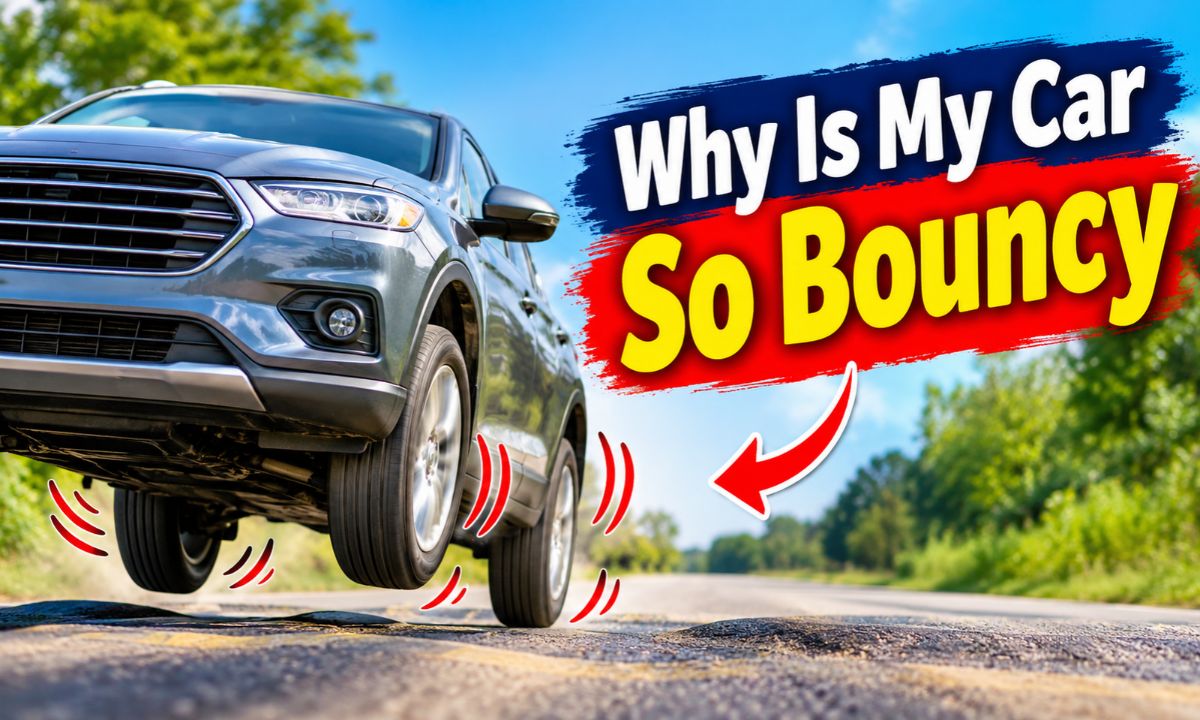
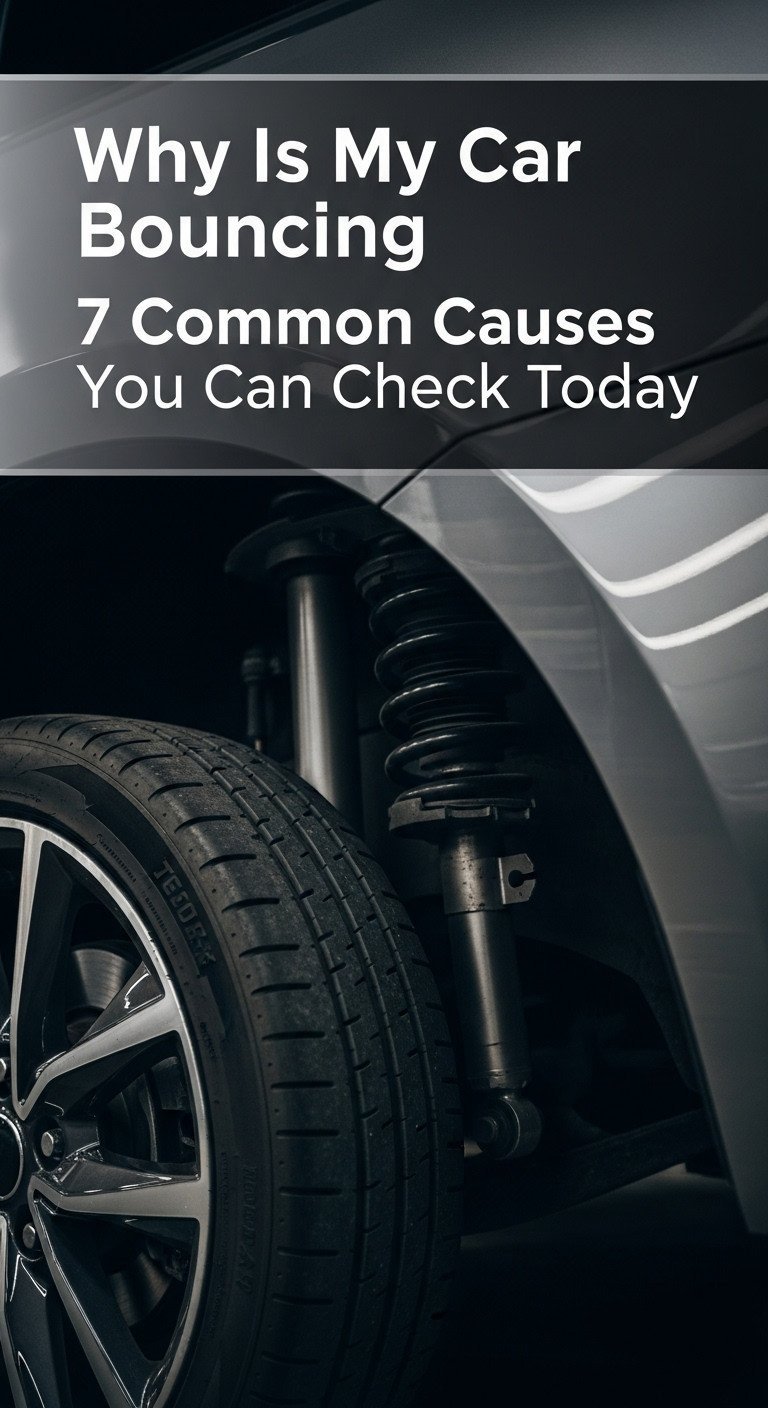
A car that bounces too much often has worn shocks or struts, damaged springs, incorrect tire pressure, or loose suspension parts. A sudden change in ride quality needs prompt attention because it can affect steering and braking.
If your car keeps bouncing after a pothole or feels like a boat on a wavy road, something may be wrong with its suspension. Drivers across the United States face rough pavement, winter potholes, uneven rural roads, and highway bumps that can wear down suspension parts over time. A small amount of movement over a bump is normal, but repeated bouncing or poor control is not something to ignore.
The first step is to notice when the bouncing happens. Does the car keep moving up and down after a bump, feel soft on the highway, dip when you brake, or lean too much in turns? These clues can help narrow down the cause. You can check a few things at home, but a mechanic should inspect the suspension if the car feels unstable, makes new clunking sounds, or has a sudden change in ride height.
A car bounces when its suspension moves up and down in response to bumps. The suspension uses springs to support the vehicle and absorb road impacts. Shocks or struts then help control that movement so the car can settle instead of continuing to bob up and down.
Think of the springs as cushions and the shocks as movement controls. If the springs compress after a bump but the dampers cannot control their movement, the car may keep bouncing. If a spring breaks or another part becomes loose, the ride can also feel uneven or unstable.
Some movement is expected on rough roads, gravel, speed bumps, and potholes. The warning sign is excessive movement that continues after the road becomes smooth, appears suddenly, or comes with poor steering, unusual tire wear, or strange noises.
Source: carxplorer.com
Normal suspension movement
The car rises and falls over a bump, then settles without repeated bouncing or loss of control.
Possible suspension trouble
The car continues to bob, sways on turns, dips sharply under braking, or feels loose at highway speeds.
Possible tire trouble
The ride changes after hitting a pothole, the steering wheel vibrates, or one tire looks damaged or underinflated.
Why Does the Suspension Matter for Safety?
The suspension helps the tires stay in contact with the road while the vehicle moves over uneven ground. Excessive bouncing can reduce tire contact and make steering less precise. Worn shocks or struts can also affect braking and vehicle stability, so this problem is about more than comfort.
A soft ride does not always mean a part has failed, and a stiff ride does not always mean the suspension is healthy. The key is how the car behaves compared with its normal ride and whether other warning signs appear.
Watch for changing behavior
A new problem deserves more attention than a ride characteristic that has stayed the same since the vehicle was new.
1. Worn Shocks or Struts
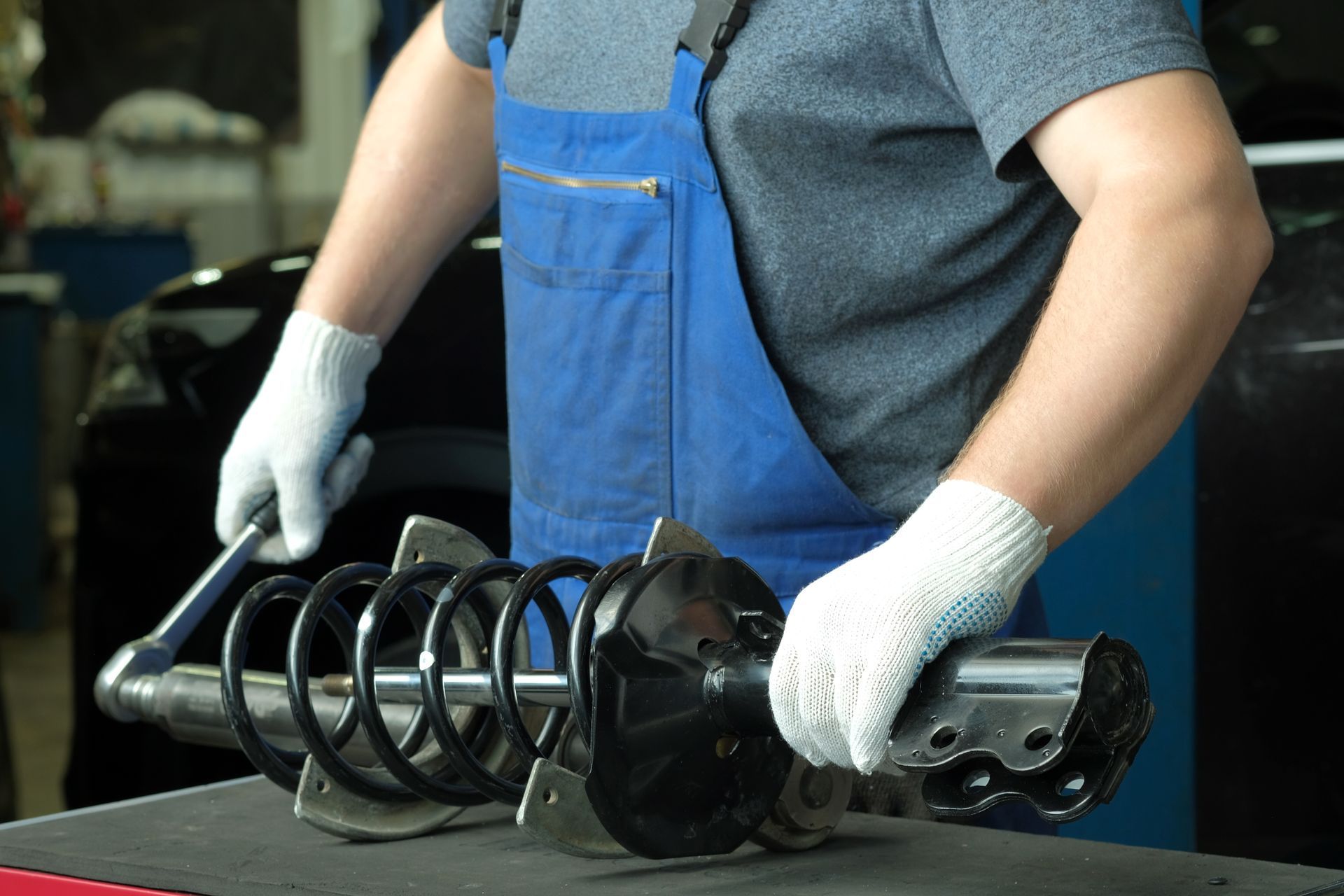
Worn shocks or struts are one of the first things a mechanic should check when a car keeps bouncing after bumps. These parts control spring movement and help the vehicle settle after an impact. As their performance declines, the suspension may move too freely.
Shocks and struts serve related purposes, but they are not identical parts. A shock absorber controls suspension movement, while a strut also forms part of the vehicle’s structural suspension assembly on many cars. The exact design depends on the make and model.
Wear can develop gradually through normal use. Rough roads, potholes, heavy loads, and damaged seals or internal parts may speed up the process. A car can still move under its own power with worn dampers, but that does not mean it is safe to keep driving normally.
Source: motorsvibe.com
Repeated bouncing
The car continues to rise and fall after crossing a bump instead of settling quickly.
Nose diving
The front of the car dips more than usual when you brake.
Excessive body roll
The car leans or sways more than expected when turning or changing lanes.
Uneven tire wear
The tread may develop cupped or scalloped patches as the tire repeatedly loses and regains contact with the road.
Visible fluid leakage
Wet, oily residue running down a shock or strut can indicate a leak, although a mechanic must confirm its source and severity.
How to Respond to Suspected Worn Shocks
Look at the car from a safe position and note any leaks, uneven ride height, or unusual tire wear. Do not crawl under a vehicle supported only by a jack or try to remove a strut yourself. Suspension assemblies can contain heavily loaded springs and require proper tools and procedures.
Arrange a suspension inspection if the car bounces repeatedly or shows other signs of worn dampers. A mechanic can inspect the parts, mounting points, tires, and related components before recommending repairs. Replacing a part based on bouncing alone may miss another fault.
Best next step
Ask for an inspection of the shocks or struts, mounts, bushings, springs, and tires rather than requesting a part replacement without a diagnosis.
2. Damaged or Worn Suspension Springs
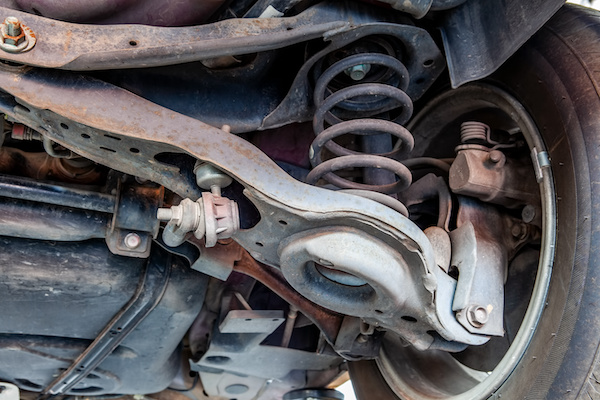
A damaged spring can make a car sit too low, lean to one side, or move abnormally over bumps. Springs support the vehicle’s weight and help absorb changes in road height. If a spring breaks, sags, or loses its intended strength, the suspension may no longer hold the car at its normal ride height.
Many passenger cars use coil springs, while some vehicles use leaf springs, torsion bars, or air springs. The type depends on the design. Age, corrosion, repeated heavy loads, and hard impacts can damage spring components.
A broken coil spring may produce a sharp clunk, a change in ride height, or tire clearance problems. A weakened spring may be harder to spot because the car can still appear nearly level. Springs can also fail alongside worn shocks or struts, so a full inspection matters.
Source: lirp.cdn-website.com
One corner sits lower
A clear difference in ride height can indicate a broken spring, an air suspension fault, uneven loading, or another damaged component.
Metallic clunks
A broken or displaced spring may make noise when the suspension moves.
Frequent bottoming out
The car may hit its suspension stops more often when driving over dips or carrying a load.
Can You Drive With a Broken Suspension Spring?
Do not continue normal driving if you suspect a spring has broken. A damaged spring can affect handling and may move into a position that interferes with a tire or nearby component. The risk depends on the failure and vehicle design, but the potential consequences are serious.
Park in a safe place and arrange professional inspection. If the car is leaning sharply, a tire appears obstructed, or a broken part is visible, use roadside assistance or towing rather than driving to a repair shop.
Avoid home repairs
Do not try to pull, cut, bend, or reposition a suspension spring. Repair work requires suitable equipment and safe procedures.
3. Incorrect Tire Pressure or Damaged Tires
Tire problems can make a car feel unusually harsh, floaty, shaky, or unstable. Tires are the first parts of the vehicle to meet the road, so their pressure and condition affect how bumps feel inside the cabin. Still, tire pressure alone is less likely to explain repeated suspension-style bouncing after every bump than worn shocks or struts.
Overinflated tires may make road impacts feel sharper because the tire has less flexibility. Underinflated tires can flex too much, build excess heat, and affect handling. A damaged tire may cause vibration, thumping, or a change in how the vehicle tracks along the road.
For U.S. drivers, the correct cold tire pressure is usually listed on the Tire and Loading Information label on the driver’s door area or in the owner’s manual. Do not use the maximum pressure printed on the tire sidewall as the normal target. The sidewall figure is not the same as the vehicle manufacturer’s recommended pressure.
Source: bryansgarage.com
Check all four tires
Use a reliable tire pressure gauge and compare each reading with the vehicle’s recommended cold pressure.
Look for damage
Check for bulges, cuts, exposed cords, unusual tread wear, and objects lodged in the tread.
Check the spare when applicable
Follow the vehicle manual for spare tire pressure and inspection requirements.
How to Check Tire Pressure Safely
Check the tires when they are cold, ideally before driving or after the car has been parked for several hours. Remove the valve cap, press the gauge onto the valve stem, and read the pressure. Add air or release a small amount as needed to match the recommended pressure, then check again.
If you have driven a long distance, the tires may be warm and the readings may be higher than cold readings. Do not let air out of warm tires simply to match the cold-pressure figure. Recheck them when cold and follow the vehicle manufacturer’s guidance.
If a tire has a bulge, exposed cords, a severe cut, or a sudden loss of pressure, do not treat it as a routine inflation issue. A damaged tire may fail, so arrange a safe replacement or professional assessment.
Use the correct pressure
The driver’s door label or owner’s manual is the right starting point, not a guess based on ride comfort.
4. Worn Bushings, Ball Joints, or Suspension Mounts
Worn bushings, ball joints, or suspension mounts can make a car feel loose and unstable. These parts connect suspension components and help keep them moving along the paths set by the vehicle’s design. When they wear or loosen, the suspension may shift in ways that affect steering, alignment, and ride quality.
Bushings are often made from rubber or similar materials that reduce vibration and allow controlled movement. Over time, they can crack, harden, or separate. Ball joints allow connected parts to pivot, while mounts hold components in place and manage movement between the suspension and the vehicle body.
A worn joint does not always cause obvious bouncing by itself. It may instead produce clunks, uneven tire wear, vague steering, or a feeling that the car moves sideways over bumps. More than one part can wear at the same time, especially on vehicles that have covered many miles or often travel over rough roads.
Source: kamphausautocare.com
Clunking over bumps
A loose or worn mount, bushing, or joint may knock when the suspension changes direction.
Loose steering feel
The car may wander, respond slowly, or feel less stable when you correct its direction.
Uneven tire wear
Movement in suspension joints can affect wheel alignment and cause the tread to wear unevenly.
Noise while turning
Some worn joints or mounts make noise when steering changes the load on the suspension.
Why These Parts Need a Professional Inspection
Some suspension joints can be checked only when the vehicle is lifted and the wheels or suspension are positioned in a specific way. A part may look intact but still have excessive play. A visual check from outside the car cannot confirm that every joint is sound.
If the car clunks, wanders, or feels unstable, ask a mechanic to inspect the suspension and steering together. A loose or failing joint may be more urgent than a simple ride-comfort issue, especially if steering control has changed.
Do not ignore sudden looseness
If the steering feels unpredictable or a wheel seems to shift, stop driving when safe and arrange professional assistance.
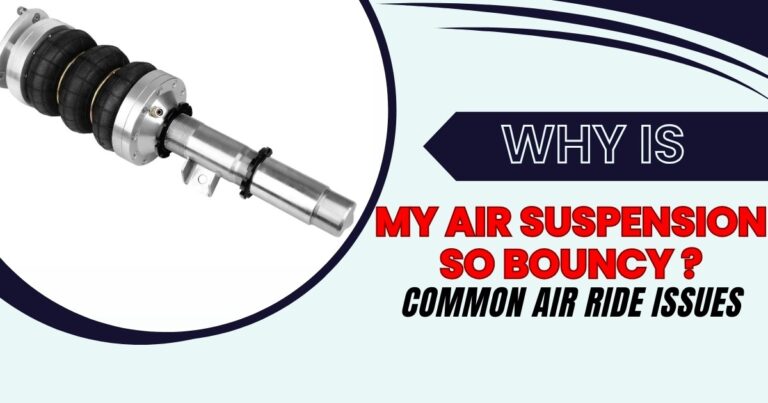
5. Problems With Air Suspension
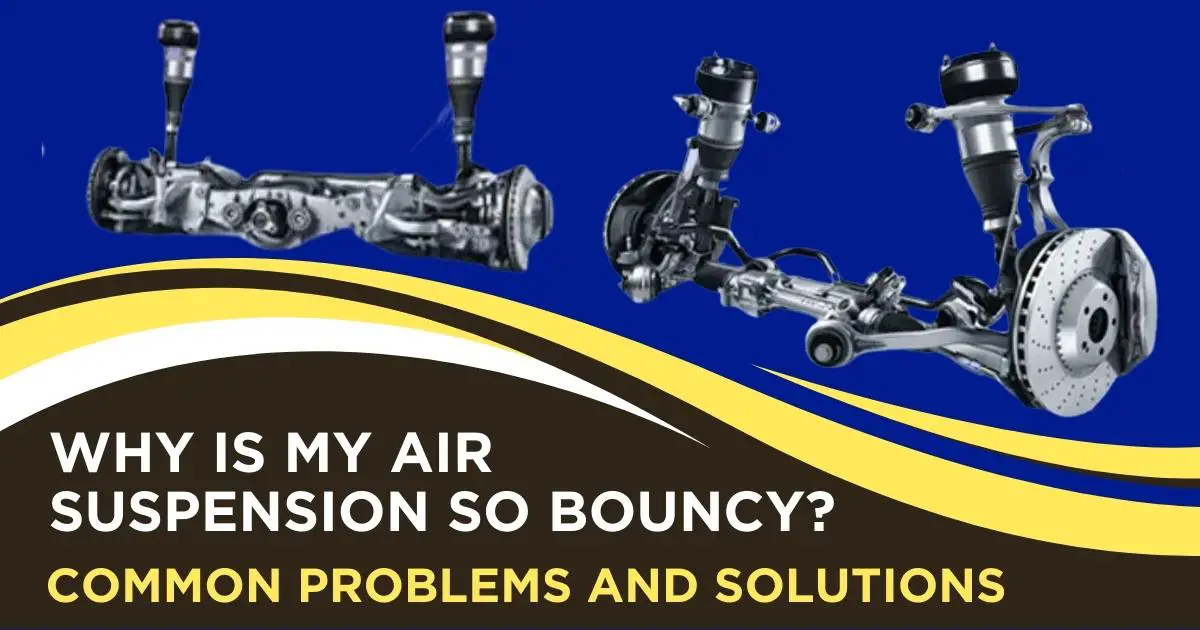
If your vehicle has air suspension, a leak or failing component may cause it to sit unevenly or ride poorly. Air suspension uses air springs and related controls to support the vehicle and, on some models, adjust ride height. Some systems also use electronically controlled dampers.
Air leaks, worn air springs, compressor problems, faulty height sensors, and damaged lines can interfere with normal operation. The exact symptoms depend on the design and the part that has failed. One corner may sag after the car sits overnight, or a warning message may appear on the dashboard.
Air suspension faults can create both soft and harsh ride symptoms. A car that sits too low may hit its suspension stops, while a damper fault may allow excessive movement. It is best to identify the cause before replacing expensive components.
Source: shiftthrill.com
Uneven ride height
One corner or one end of the vehicle sits lower than normal.
A compressor that runs often
Repeated compressor operation may suggest an air leak or another system problem, although some operation can be normal.
Suspension warning message
A dashboard warning may point to an air suspension or ride-height control fault.
A change after parking
The car may settle lower after being parked if an air spring or line leaks.
What Should You Do if the Car Has Air Suspension?
Check the owner’s manual for the meaning of any suspension warning and follow its safety instructions. Note whether the car sags after parking, whether the warning appears at startup, and whether the ride changes with vehicle load. These details can help the repair shop narrow down the fault.
Avoid repeatedly raising and lowering the suspension to hide a problem. Do not crawl beneath a vehicle that may lower automatically, and do not disconnect air lines or attempt to repair pressurized parts without the correct training and tools.
If the car sits very low, leans sharply, or handles poorly, arrange professional help. Some vehicles require a specific service mode or lifting procedure to protect the suspension during repair.
Useful information for the mechanic
Record the warning message, the corner that appears low, and whether the problem occurs after driving or after the car has been parked.
6. Too Much Weight or an Incorrectly Loaded Vehicle
A car may bounce or bottom out when it carries more weight than its suspension is designed to support. Heavy luggage, tools, cargo, or several passengers can compress the springs and reduce the remaining suspension travel. The problem may be more noticeable over dips and potholes.
Loading can also change how the car handles. Too much weight at the rear may cause the back of the vehicle to sag and the front to feel lighter. A load that shifts while driving can create sudden changes in balance and make the vehicle harder to control.
This does not mean every heavily loaded car will bounce excessively. The effect depends on the vehicle, the load, its placement, and the condition of the suspension. A car that begins to bounce after carrying a heavy load may have a loading issue, an existing suspension fault, or both.
Source: lirp.cdn-website.com
Review the load
Remove unnecessary cargo and place remaining items securely in the designated storage area.
Check the vehicle limits
Use the owner’s manual and vehicle labels to find the permitted passenger and cargo load.
Watch for sagging
If the vehicle remains low or bouncy after unloading, have the suspension inspected.
Can an Empty Car Still Bounce?
Yes. An empty vehicle can bounce because of worn dampers, damaged springs, tire issues, or loose suspension parts. Removing cargo is a useful check when the problem began after loading, but it is not a substitute for diagnosis if the symptom continues.
Never add weight to the trunk to force the car to sit lower or try to hide a suspension fault. Extra weight can increase stress on tires, brakes, springs, and other parts without fixing the underlying problem.
Compare carefully
If the ride changes after removing cargo, tell the mechanic what was loaded and how the vehicle behaved before and after unloading.
7. Wheel Balance, Alignment, or Damage From a Pothole
Wheel balance, alignment, and impact damage can cause shaking or unstable handling that feels like a bouncy ride. These problems are related, but they are not the same. Wheel balance concerns how evenly the wheel and tire rotate, while alignment concerns the angles at which the tires meet the road.
An out-of-balance wheel often causes vibration that becomes more noticeable at certain speeds. Poor alignment may cause the car to pull to one side or the tires to wear unevenly. A hard pothole impact can also bend a wheel, damage a tire, or harm a suspension component.
If the bouncing or vibration began immediately after striking a pothole or curb, do not assume that a simple alignment will solve it. The wheel, tire, steering, and suspension may need inspection first. A damaged wheel or tire can be unsafe even if the car still drives.
Source: bryansgarage.com
Vibration at a certain speed
Wheel imbalance or tire damage may cause vibration that changes with road speed.
Vehicle pulls to one side
Alignment problems, tire differences, brake issues, or suspension faults can cause pulling.
A new symptom after an impact
A pothole or curb strike can damage more than one part, so a full inspection may be needed.
When Is a Wheel Alignment Enough?
An alignment may help when incorrect wheel angles are causing pulling or uneven tire wear, provided the relevant parts are sound and adjustable. It will not repair a worn shock, broken spring, bent wheel, damaged tire, or loose suspension joint.
A shop should inspect the tires and suspension before or during alignment work. If a part is bent or worn beyond its limits, the shop may need to repair it before the wheels can be aligned correctly.
Ask for the cause
Request an explanation of the measured alignment condition and any damaged or worn parts found during inspection.
How to Diagnose a Bouncy Car Step by Step
Start with the safest and simplest checks, then move to a professional suspension inspection if the cause is not clear. You do not need to dismantle anything to gather useful clues. Your goal is to describe the symptom accurately, not to prove that a particular part has failed.
Do not perform a road test if the car has severe bouncing, unstable steering, a damaged tire, a broken spring, or a wheel that appears loose. In those cases, park in a safe place and arrange assistance. Safety comes before further troubleshooting.
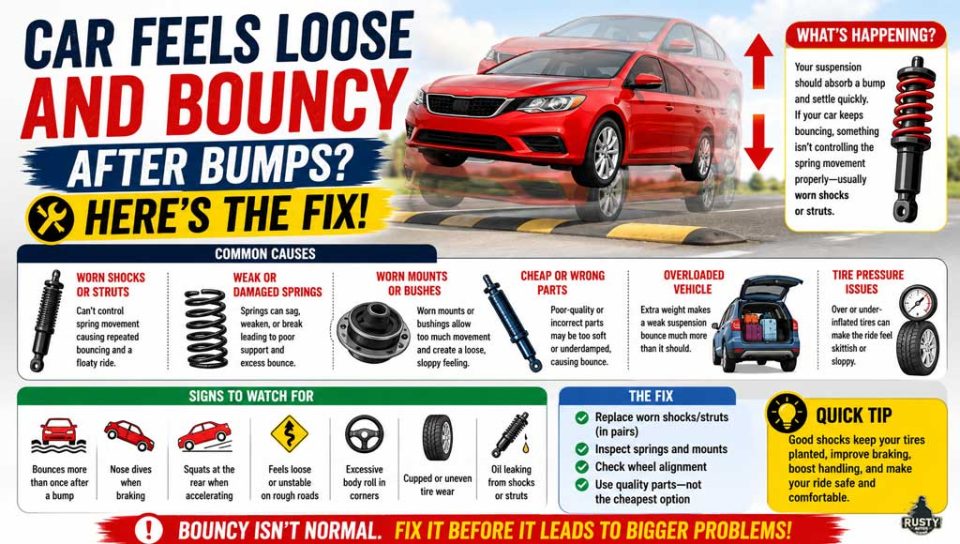
Source: rustyautos.com
Step 1: Identify when it happens
Note whether the bouncing occurs after bumps, at highway speeds, during braking, while turning, or after the car sits overnight.
Step 2: Check the tires
When parked safely, inspect the tires for low pressure, bulges, cuts, exposed cords, and uneven tread wear.
Step 3: Compare ride height
Look at the car from level ground to see whether one corner appears lower. Remember that an uneven surface or uneven cargo can affect the comparison.
Step 4: Look for visible warning signs
Check for obvious fluid leakage near visible suspension parts, a dashboard suspension warning, or a part that appears displaced. Do not reach under the car.
Step 5: Review recent events
Consider whether the symptom began after a pothole, tire change, heavy load, collision, or suspension repair.
Step 6: Book an inspection
If the symptom persists or the cause is unclear, ask a qualified mechanic to inspect the tires, wheels, dampers, springs, bushings, mounts, and steering joints as appropriate.
Should You Try the Bounce Test?
A traditional bounce test involves pressing down on a vehicle corner and watching how it settles after the pressure is released. Repeated movement may suggest weak damping, but the result is not a reliable diagnosis for every modern car. Suspension designs differ, and some faults will not show up during this check.
If you perform a simple check, do it only on level ground with the car parked, the parking brake set, and the engine off. Do not push on fragile body panels or place yourself near moving parts. If the vehicle is unusually low, damaged, or unstable, skip the test and arrange an inspection.
A car that settles quickly can still have a tire, joint, alignment, or other suspension problem. A bounce test should never replace a proper inspection when handling has changed.
Use the result as a clue
Repeated bouncing can support concern about damping, but it cannot identify the failed component on its own.
What Information Should You Give the Mechanic?
Describe the road surface, speed range, and part of the car where the bouncing seems strongest. Explain whether it happens over every bump or only after a particular impact. Mention any steering changes, warning lights, tire damage, or noises.
Ask the shop to explain its findings before approving repairs. A useful diagnosis should identify the affected parts, show how they relate to the symptoms, and explain whether other damaged components need attention.
Keep a short symptom record
Write down when the issue began, what makes it worse, and whether the ride changed after a tire service or suspension repair.
What the Symptoms Can Tell You
The timing of the bouncing can help narrow down the possibilities, although no single symptom proves which part has failed. Use the table below to organize what you notice before arranging an inspection. A mechanic will still need to check the vehicle to confirm the cause.
Repeated bouncing after a bump
Possible cause: worn shocks or struts, although spring or mounting problems may also contribute.
One corner sits lower
Possible cause: a broken spring, air suspension leak, damaged suspension component, or uneven load.
Steering wheel vibration
Possible cause: tire damage, wheel imbalance, a bent wheel, or a steering or suspension fault.
Clunking over rough roads
Possible cause: worn bushings, loose mounts, damaged joints, a broken spring, or another loose part.
Car leans or sways in turns
Possible cause: worn dampers, suspension or stabilizer components, tire issues, or a combination of faults.
Car dips sharply during braking
Possible cause: worn shocks or struts or another suspension problem. Brake condition should also be checked if stopping feels abnormal.
Vehicle sits low after parking
Possible cause: an air suspension leak or another ride-height problem on a vehicle equipped with a suitable system.
When Should You Stop Driving?
Stop driving as soon as you can safely do so if the car suddenly becomes hard to steer, leans sharply, makes a severe grinding or banging noise, or appears to have a broken suspension part. The same applies if a tire has a major bulge, exposed cords, or other severe damage.
If the car feels only mildly different and has no severe warning signs, arrange an inspection promptly and avoid unnecessary trips, high speeds, heavy loads, and rough roads until it has been checked. If you are unsure whether it is safe to move, roadside assistance is the safer choice.
Urgent warning signs
Severe instability, sudden ride-height changes, damaged tires, or suspected broken suspension parts call for stopping and arranging professional help.
How Much Can It Cost to Fix a Bouncy Car?
The repair cost depends on the failed part, vehicle design, local labor rates, and whether other components have been damaged. Checking tire pressure may cost nothing if you already have a gauge, while suspension repairs can cost much more when several parts need replacement. There is no single price that applies to every car.
A simple tire service, wheel balance, or alignment is usually a different repair from replacing shocks, struts, springs, or air suspension components. Parts and labor can also vary between compact cars, trucks, SUVs, and luxury vehicles. Ask the shop for an itemized estimate based on the actual diagnosis.
Replacing only the visibly damaged part may not always be the best option. Some components are commonly replaced in pairs when the manufacturer’s repair guidance or the condition of both sides supports that approach. The mechanic should explain whether paired replacement is needed and why.
Tire pressure adjustment
Often a low-cost first check, provided the tires are undamaged and simply need the correct pressure.
Wheel balance or alignment
May address specific vibration or wheel-angle problems, but neither service repairs worn dampers or broken suspension parts.
Shocks or struts
Cost depends on the vehicle, the design of the suspension, labor, and whether mounts or related parts also need attention.
Springs or suspension joints
The price depends on the damaged parts and the work needed to remove and install them safely.
Air suspension repair
May involve an air spring, line, compressor, sensor, damper, or control issue. Diagnosis is especially important before replacing costly components.
How to Avoid Paying for the Wrong Repair
Ask the mechanic to identify the part that failed and explain the evidence behind the diagnosis. If the recommendation is based only on the car feeling bouncy, ask whether the shop has checked the tires, springs, mounts, joints, and dampers. A symptom alone is not enough to justify every possible repair.
Request a written estimate that separates parts, labor, alignment if required, and any additional work. If the quote is high or the diagnosis is unclear, a second opinion can help you compare recommendations before approving non-emergency work.
Prioritize safety
Do not delay a repair that affects steering, tire integrity, suspension support, or vehicle stability simply to compare prices.
How to Prevent Excessive Bouncing in the Future
Routine checks can help you spot tire and suspension problems before they become more serious. You cannot prevent every worn part, especially when a car regularly travels over rough roads, but you can reduce avoidable stress and respond to warning signs early.
Use the vehicle’s maintenance schedule and pay attention to changes in ride quality. A car that suddenly begins to bounce after years of normal driving deserves a closer look, even if there is no warning light on the dashboard.
Check tire pressure regularly
Use the recommended cold pressure listed by the vehicle manufacturer. Check more often when temperatures change sharply or a tire may have lost air.
Inspect tires for wear
Look for uneven tread, cuts, bulges, and signs of impact damage. Ask a tire professional about unusual wear patterns.
Slow down for rough roads
Reduce speed safely before potholes, broken pavement, and speed bumps instead of striking them hard.
Stay within loading limits
Follow the vehicle’s passenger and cargo limits and secure items so they cannot shift during travel.
Address new noises early
Clunks, squeaks, rattles, and changes in steering can point to developing problems that deserve inspection.
Keep up with scheduled service
Have tires, steering, and suspension checked during routine maintenance or whenever symptoms appear.
Do Not Replace Parts Just Because of Mileage Alone
Shocks, struts, springs, and bushings do not all wear out at the same rate. Road conditions, vehicle weight, climate, corrosion, and driving habits affect their condition. Mileage can be a useful reason to inspect these parts, but it does not prove that a component has failed.
Follow the maintenance information for your exact vehicle and ask for an inspection when the ride changes. Replacing parts based on their condition and the manufacturer’s guidance is more useful than relying on a universal mileage rule.
Keep repair records
Save receipts and inspection notes so a technician can see which components were replaced and whether the same symptoms have returned.
Frequently Asked Questions
Q
Why does my car bounce up and down after hitting a bump?
Repeated bouncing after a bump often points to worn shocks or struts that no longer control spring movement well. Damaged springs, loose mounts, or other suspension faults can also contribute. If the movement is excessive or the car feels unstable, arrange a suspension inspection.
Q
Can low tire pressure make my car feel bouncy?
Low tire pressure can change how a car rides and handles, but it does not usually explain repeated suspension-style bouncing on its own. Check the tires when cold and inflate them to the vehicle manufacturer’s recommended pressure. If the ride still feels wrong, have the tires and suspension checked.
Q
Is it safe to drive a car that bounces a lot?
Excessive bouncing can reduce handling stability and may affect braking performance, so it should not be ignored. Stop driving if the car is hard to steer, leans sharply, has a damaged tire, or may have a broken suspension part. If the symptom is mild, arrange an inspection promptly and avoid unnecessary driving until the cause is known.
Q
Why does my car bounce more on the highway?
At highway speeds, worn shocks or struts, tire problems, wheel imbalance, and damage from a pothole may become more noticeable. Crosswinds, road grooves, and uneven pavement can also affect how a vehicle feels. If the car wanders, sways, or becomes difficult to control, slow down safely and arrange professional help rather than continuing at highway speed.
Q
Can bad shocks cause uneven tire wear?
Yes. Worn shocks or struts can allow excessive wheel movement, which may contribute to cupped or scalloped tire wear. Incorrect alignment, wheel imbalance, tire pressure problems, and worn suspension joints can cause or worsen uneven wear too. A mechanic should inspect the tires and related components before deciding what needs repair.
Q
Why does my car bounce on one side?
Bouncing or sitting lower on one side may indicate a damaged spring, worn damper, loose suspension part, or air suspension leak if the vehicle uses that system. Uneven cargo or a sloped parking surface can also affect how the car appears to sit. Check the vehicle on level ground, and arrange an inspection if the difference remains or the handling has changed.
Q
Will an alignment fix a bouncy car?
An alignment corrects wheel angles within the adjustments available for the vehicle. It may help with pulling or uneven tire wear, but it will not repair worn shocks, broken springs, damaged tires, or loose suspension joints. The underlying problem should be diagnosed before deciding whether an alignment is needed.
Q
Should shocks or struts be replaced in pairs?
Replacing shocks or struts in pairs on the same axle is often recommended when one has failed, because a large difference in damping between sides can affect handling. However, the right repair depends on the vehicle, component design, condition of the other side, and manufacturer guidance. Ask the mechanic to explain the recommendation for your car.
✦ Wrapping Up
Conclusion
If your car feels unusually bouncy, start by noticing when the problem occurs and whether other warning signs appear. Worn shocks or struts are a common cause, but damaged springs, tire problems, loose suspension parts, air suspension faults, and excessive loads can produce similar symptoms. A careful diagnosis is the best way to avoid replacing the wrong parts.
You can safely check tire pressure, look for visible tire damage, review the vehicle’s load, and note any change in ride height. Leave suspension disassembly and checks that require lifting the vehicle to a qualified professional. If steering feels unpredictable, the car leans sharply, or a tire or suspension part appears damaged, stop driving and arrange assistance.
💡 Key Takeaway
Check your tire pressure and visible tire condition first if it is safe to do so. Then arrange a suspension inspection if the car keeps bouncing, sways, dips sharply, makes clunking noises, or sits unevenly.