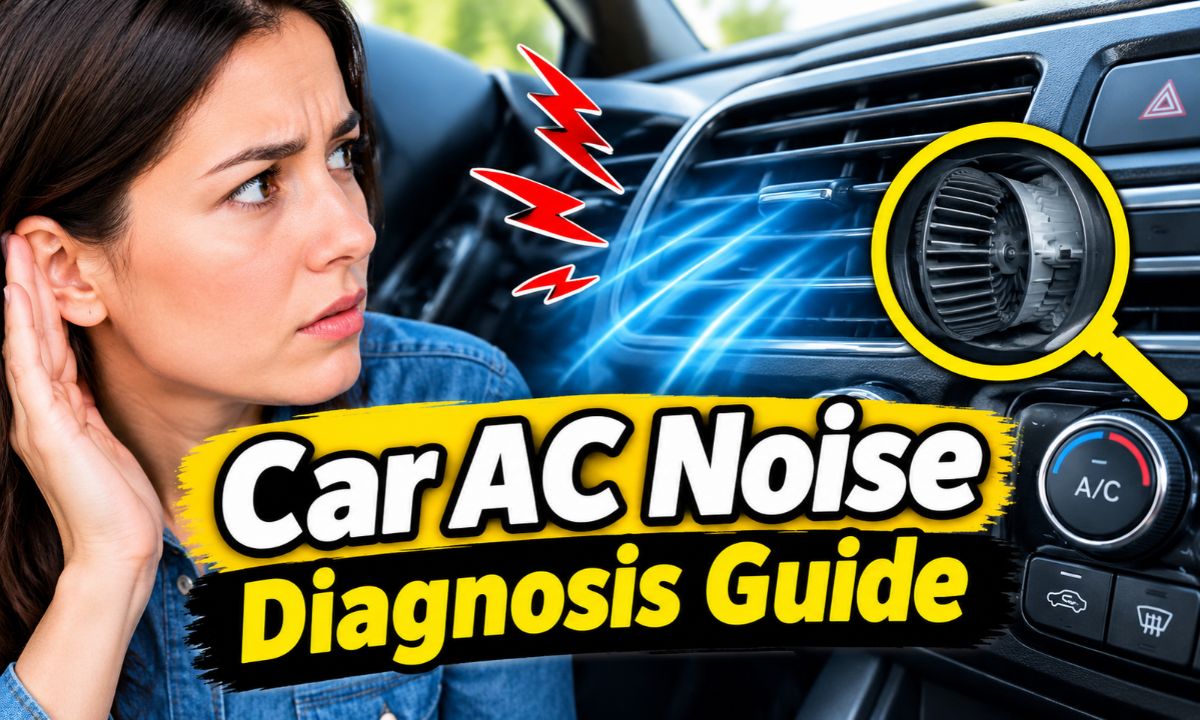
A noisy car AC may have a loose part, a worn blower motor, a compressor problem, or a normal refrigerant flow sound. Match the noise to when it happens, check for warning signs, and seek repair when needed.
On a hot summer day in the United States, a working car air conditioner can make a long drive through city traffic or across the highway much more comfortable. But when the AC starts clicking, rattling, hissing, squealing, or grinding, it can be hard to tell whether the sound is harmless or a sign of trouble. The key is to listen for when the noise starts and how it changes.
This Car AC Noise Diagnosis Guide Common Sounds Explained helps drivers narrow down likely causes without guessing at a costly repair. The same sound can come from more than one part, so noise alone cannot confirm a failed component. Simple checks can help you describe the problem, while a trained automotive technician can test the system and identify the actual fault.
A car AC system has several moving and pressure-controlled parts. The compressor moves refrigerant through the system, the condenser releases heat, and the evaporator absorbs heat from cabin air. A blower motor pushes that air through the vents, while doors and actuators direct the airflow where you want it.
Each part can make a different sound when it operates or develops a fault. Some sounds are part of normal operation. Others appear when a bearing wears, debris enters the blower, a belt slips, a mounting point loosens, or a component struggles to move.
The location of the sound helps narrow the search, but it does not prove which part has failed. Noise can travel through the dashboard, firewall, engine bay, and body panels. A sound that seems to come from the vents may begin elsewhere.
Source: carxplorer.com
Cabin airflow parts
The blower motor, fan wheel, cabin air filter, and air ducts can cause whirring, rattling, fluttering, or whistling sounds.
Engine-driven parts
The compressor, drive belt, pulleys, and tensioner may produce clicks, squeals, rattles, or grinding when the AC adds load.
Refrigerant circuit
Refrigerant moving through the system or pressure changing at a control device can create a brief hiss or gurgle.
Air distribution controls
Small electric actuators move doors inside the HVAC case. A faulty gear or stuck door can create repeated clicking behind the dashboard.
Why the Timing of the Noise Matters
The most useful clue is often the exact moment the noise begins. If the sound changes as you raise the cabin fan speed, suspect an airflow-related part first. If it appears when the AC compressor engages but the fan speed stays the same, the compressor drive or a related engine component deserves closer attention.
Noise follows fan speed
Check the blower area, cabin filter, and air ducts before assuming the compressor has failed.
Noise follows AC engagement
Consider the compressor, belt drive, cooling fan, and changes in engine load.
Noise follows a vent or temperature setting
A blend door or mode door actuator may be moving or struggling to reach its position.
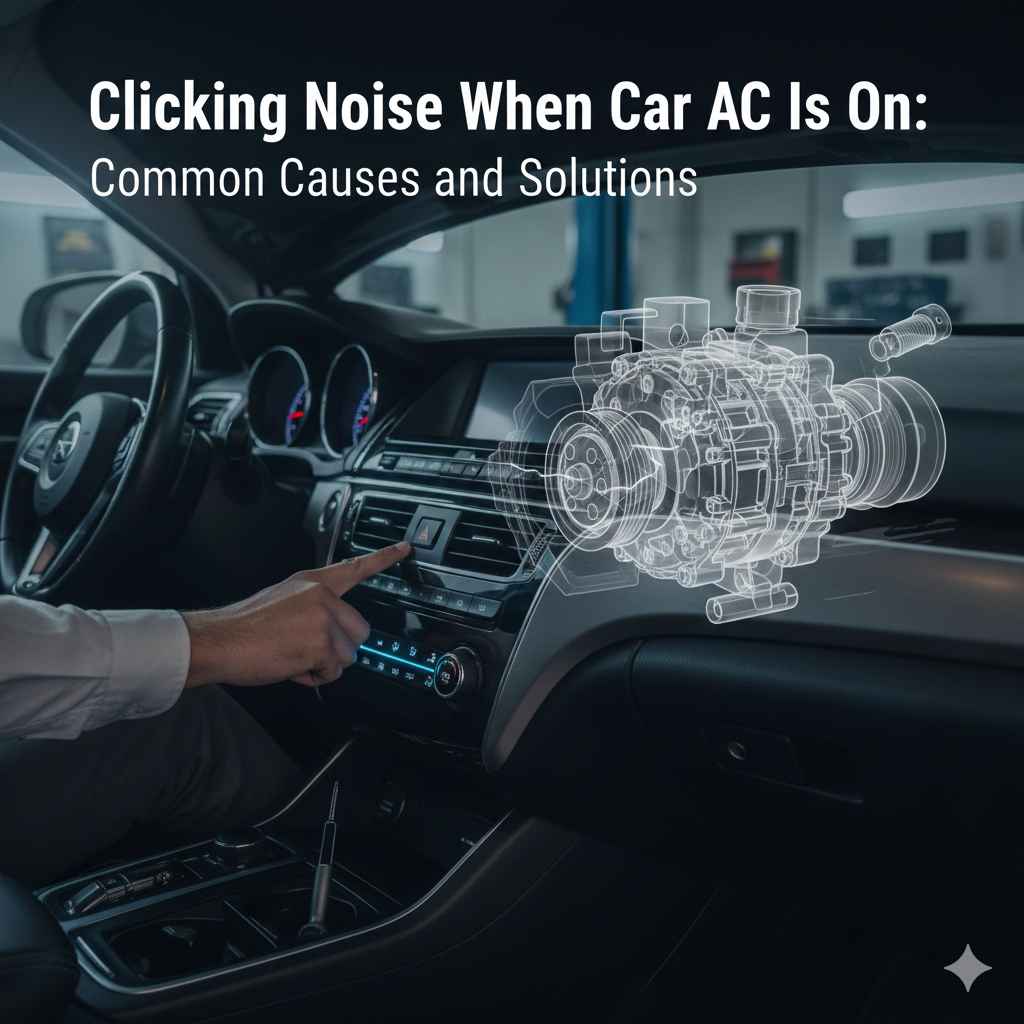
Car AC Clicking Noise: Normal Engagement or a Fault?
A single click when you turn on the AC can be normal. On many vehicles, a relay or compressor clutch makes a click as the system engages. Some newer systems use variable-displacement or electric compressors, so the exact sound and operating pattern depend on the vehicle.
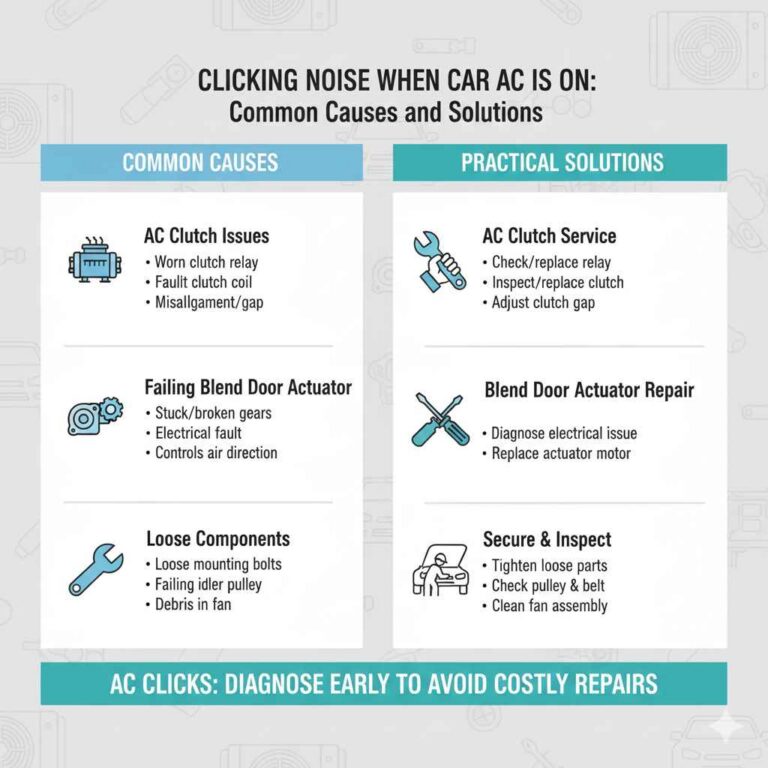
Repeated clicking is different. Rapid clicks from the engine bay may mean the compressor is repeatedly engaging and disengaging, although electrical controls and other components can create similar sounds. Clicking behind the dashboard may instead come from an actuator that moves an air door.
Pay attention to cooling performance as well as sound. If the cabin stays cool and the click occurs only once when the system starts, it may not require repair. If cooling fades, the click repeats often, or the engine belt area makes an abnormal sound, arrange an inspection.
Source: cdn.thedailyautomotive.com
One click at startup
Often normal relay or clutch operation, depending on the vehicle design.
Rapid clicks under the hood
May relate to repeated compressor control, an electrical issue, or a mechanical component. A technician should test the system before replacing parts.
Clicks behind the dashboard
May indicate a worn actuator gear, a jammed air door, or a control that cannot reach its intended position.
How to Narrow Down Repeated Clicking
Park safely, keep the engine bay closed to your hands, and note whether the clicks continue when the AC is switched off. If they stop when the AC is off, the sound may be linked to AC operation, but this does not identify the failed part. If clicking continues while changing vent modes or temperature settings, an HVAC actuator becomes a stronger possibility.
Check cooling
Record whether the air remains cold, turns warm, or changes temperature as the clicking starts.
Check the control setting
Notice whether changing the vent direction or temperature triggers the noise.
Avoid repeated cycling
If the compressor repeatedly clicks with poor cooling or other abnormal sounds, stop testing and arrange service.
Car AC Rattling Noise: Find the Likely Source
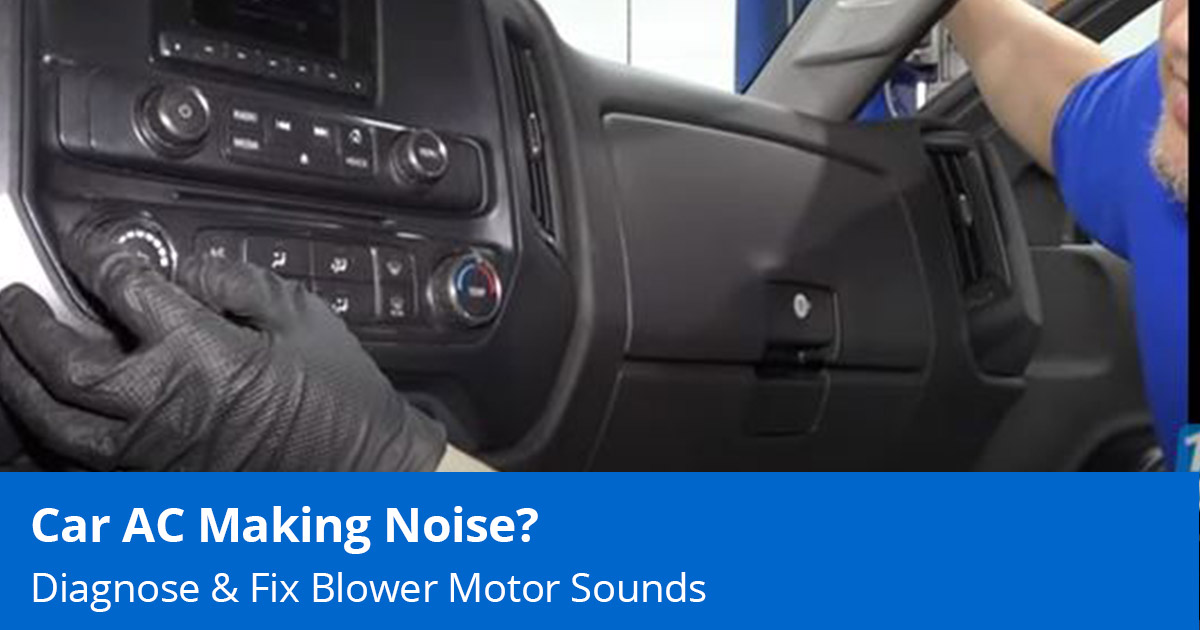
A rattling AC often points to something loose or something spinning unevenly. The cause may be as simple as a loose item in the cabin or debris near the blower fan. It can also come from a worn blower motor bearing, a loose dashboard panel, or a component in the engine bay.
Start by checking whether the rattle changes with cabin fan speed. A noise that grows faster or louder as the fan speed rises often points toward the blower assembly or debris in the airflow path. A rattle that appears mainly when the compressor engages may be linked to the compressor, its mounting, the belt drive, or another part affected by the extra engine load.
Do not assume a rattling compressor needs replacement. Loose brackets, damaged shields, or nearby parts can vibrate and sound similar. Proper diagnosis should identify the source before any component is changed.
Source: blog.1aauto.com
Debris in the blower area
Leaves, small bits of paper, or other debris can strike the fan wheel and create a repetitive flutter or rattle.
Loose trim or ducting
A dashboard panel or air duct may vibrate as airflow increases.
Worn blower motor
A damaged bearing or unbalanced fan wheel may cause vibration, rough humming, or rattling.
Engine-bay vibration
A loose bracket, belt-driven accessory, or cooling fan may rattle when the AC runs.
What You Can Check Without Taking Anything Apart
Turn the cabin fan to a low setting and then raise it one step at a time. If the rattle changes with the fan, turn the system off and inspect the cabin air filter only if the owner’s manual gives a safe, accessible procedure. A damaged or incorrectly seated filter cover may also vibrate.
Remove loose items from the glove box, door pockets, and dashboard storage areas. If the sound remains, do not reach through the vents or insert tools into the blower opening. A technician can inspect the fan wheel and housing without risking damage to hidden parts.
Rattle changes with fan speed
Focus on the blower motor, fan wheel, filter housing, and ducts.
Rattle begins with AC engagement
Have the compressor drive, mounting points, and nearby accessories checked.
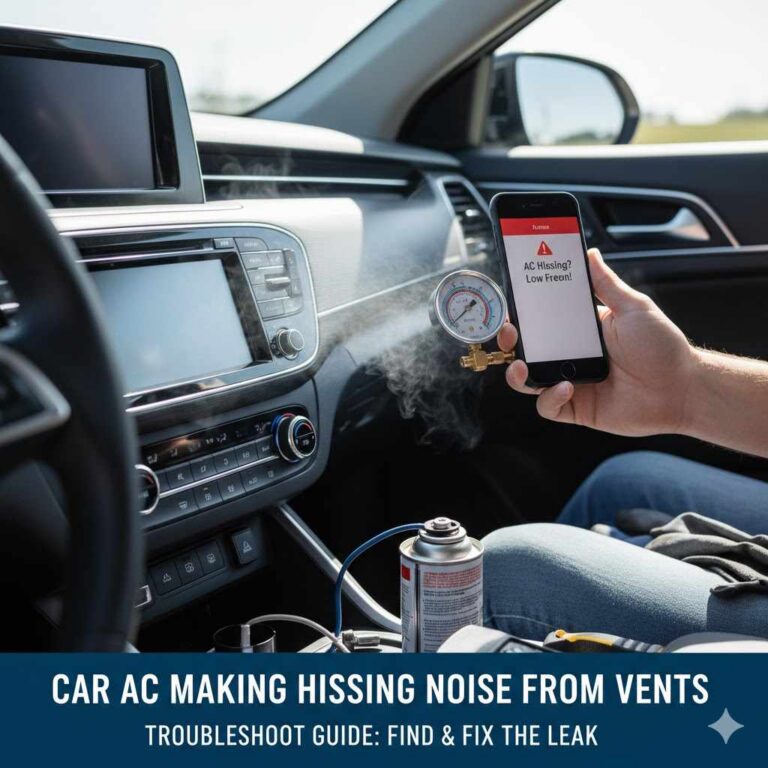
Car AC Hissing Noise: Is It a Refrigerant Leak?
A brief hiss after switching the AC on or off can occur as refrigerant pressure changes within the system. The expansion device may also produce a faint sound as refrigerant flows. These sounds are not enough on their own to prove that the system has a leak.
A persistent hiss, especially with weak cooling, deserves attention. Refrigerant loss can reduce cooling performance, but other faults can cause the same symptom. A leak may also occur at a hose, connection, condenser, evaporator, or seal, and its location is not always visible from outside the system.
Do not release refrigerant to test the noise or loosen a line to see whether pressure remains. Automotive refrigerant systems operate under pressure, and refrigerant can cause cold burns or eye injuries. A qualified technician can use approved leak-detection methods and service equipment.
Source: cdn.thedailyautomotive.com
Brief hiss after shutdown
May be part of normal pressure equalization, particularly if cooling remains normal and no other symptoms appear.
Steady hiss with poor cooling
May indicate a refrigerant flow issue, a leak, or another fault that needs testing.
Hiss with oily residue near a fitting
May justify a professional leak check, but residue alone does not confirm a refrigerant leak.
Why Adding Refrigerant Is Not a Reliable First Fix
Low refrigerant can reduce cooling, but a low charge usually means refrigerant has escaped or the system was serviced incorrectly. Adding more refrigerant without finding the cause can leave the leak unresolved and may result in an incorrect charge. Too much refrigerant can also harm system performance.
Ask the repair shop to check for leaks, verify the correct refrigerant type, and follow the vehicle manufacturer’s service procedure. Never mix refrigerants or rely on a pressure reading alone to decide how much refrigerant the system needs.
Best next step
Request leak testing and a proper diagnosis if the hiss persists or cooling has declined.
Car AC Grinding Noise: When to Stop Using the System
A grinding sound is more concerning than a light click or brief hiss. It may come from a failing blower motor bearing, a damaged fan wheel, a compressor problem, or another rotating part. The sound’s location and its relationship to engine speed or cabin fan speed help a technician narrow down the cause.
If grinding begins as soon as you raise the cabin fan speed, the blower assembly may be responsible. If it starts when the AC engages and seems to come from the engine bay, the compressor or belt-driven accessories need inspection. Other engine components can also make grinding sounds, so the AC may not be the true source.
Switch the AC off if the grinding is loud, sudden, or accompanied by vibration. If the sound continues with the AC off, the problem may involve a part that keeps operating independently of the AC request. If the engine also makes severe noise, shows a warning light, or develops a burning smell, pull over safely and seek help rather than continuing to drive.
Source: i.ytimg.com
Grinding from the vents
May point to a damaged blower motor, worn bearing, or fan wheel contacting its housing.
Grinding from the engine bay
May involve the compressor, a pulley, a belt-driven accessory, or another engine component.
Grinding with vibration or burning odor
Treat the combination as urgent and stop using the AC. Stop driving if the engine or belt system may be affected.
Can You Drive With a Grinding AC?
It depends on where the noise comes from and whether the fault affects other engine systems. A cabin blower fault may only affect airflow, while a seized compressor or damaged accessory drive can create more serious problems on some vehicles. A shared belt may drive important accessories, depending on the engine design.
Turning off the AC may reduce the load, but it does not guarantee that the vehicle is safe to drive. If the grinding continues, the engine overheats, a battery warning appears, or steering assistance changes, stop in a safe place and arrange roadside assistance.
Stop and seek help
Use this approach for severe grinding, smoke, a burning smell, overheating, or signs of belt failure.
Arrange prompt inspection
Do this for persistent grinding even if the vehicle still cools and drives normally.
Car AC Squealing or Whining Noise
A high-pitched squeal from the engine bay when the AC starts can point to a slipping drive belt, a weak belt tensioner, or a pulley problem. The compressor places an additional load on the engine, so a belt or pulley that is already worn may become noisy when the system engages.
A smooth, steady whine can have a different cause. Some compressor designs make an audible operating sound, and fan motors may produce a higher pitch as their speed rises. A new, loud, rough, or changing whine should not be dismissed as normal without checking the vehicle’s design and symptoms.
Listen for whether the pitch follows engine speed or cabin fan speed. A noise that tracks engine speed is more suggestive of an engine-driven part, while a sound that changes with blower speed points toward the cabin fan or airflow system. These are clues, not a final diagnosis.
Source: carserviceadelaidesa.com.au
Squeal when AC starts
May indicate belt slip, tensioner wear, pulley trouble, or a load-related issue.
Whine that rises with cabin fan speed
May come from the blower motor or airflow restriction.
Whine with poor cooling
May involve the compressor or refrigerant system and should be checked by a qualified technician.
Why You Should Not Spray a Belt to Stop the Squeal
Belt dressing and other sprays are not a sound diagnosis. They can contaminate surfaces, mask the symptom briefly, or fail to address a worn belt or faulty tensioner. Use the vehicle manufacturer’s inspection and replacement guidance instead.
Do not touch, press, or attempt to inspect a moving belt while the engine is running. A shop can inspect belt condition, tension, alignment, and pulley movement using the proper safety procedures.
Recommended action
Arrange an inspection if the squeal repeats, lasts more than a brief moment, or occurs with other accessory-drive symptoms.
Car AC Whistling Noise From the Vents
A whistle from the vents often relates to air moving through a narrow opening or past an obstruction. A clogged cabin air filter, a partly closed vent, a displaced filter cover, or a loose duct can change airflow and create a high-pitched sound. The blower may also become noisier when it works against a restriction.
Start with the simplest checks. Open the vents fully, change the fan speed, and see whether the whistle changes. If the owner’s manual shows how to access the cabin air filter, inspect it for heavy dirt, damage, or incorrect installation. Replace it with the correct type if needed and seat the cover properly.
A whistle that remains after these checks may come from a duct leak, an air door, or another HVAC part. If the sound seems to come from the engine bay instead of the cabin, do not assume it is an airflow issue. A technician can distinguish an air leak from a mechanical or refrigerant-related sound.
Source: i.pinimg.com
Whistle at high fan speed
Check for a dirty filter, blocked vent, poorly seated filter cover, or restricted duct.
Whistle that changes with vent direction
May relate to airflow through the ducts or the position of an air distribution door.
Whistle with weak cooling
May have a cause beyond airflow, so assess the cooling symptom separately.
When a New Cabin Filter May Help
A clean, correctly fitted cabin air filter can restore airflow when the old filter is clogged. It cannot repair a worn motor bearing, a damaged fan, or a refrigerant leak. If the noise began immediately after filter replacement, check whether the filter is facing the correct direction and whether the cover is fully secured.
Look for
Incorrect fit, debris around the filter housing, a loose cover, or a blocked air intake.
Avoid
Pushing tools or fingers deep into the duct or blower opening.
Car AC Humming or Buzzing Noise
A soft hum can be part of normal AC operation. The blower motor, cooling fans, and compressor can all produce a steady operating sound. The important question is whether the hum is new, unusually loud, rough, or linked to a change in cooling or airflow.
A hum that grows with the cabin fan may point toward the blower motor or an obstruction. A hum from the front of the vehicle may come from an electric cooling fan or compressor-related component. On some vehicles, the radiator or condenser fan runs when the AC is active, even when the engine is not overheating.
Buzzing can also come from a loose electrical connection, a relay, or a vibrating panel. Do not unplug electrical parts at random to identify the sound. If the noise is new or comes with intermittent cooling, warning lights, or repeated clicking, arrange a diagnostic check.
Source: carxplorer.com
Low, steady hum
May be normal if cooling and airflow remain consistent and the sound matches the vehicle’s usual operation.
Rough hum from the dashboard
May indicate blower motor wear, debris, or a vibrating panel.
Buzz with repeated switching
May point to a control, electrical, or compressor operation issue that needs testing.
Does the Sound Change When the AC Is Off?
Switch the AC off while parked safely and note whether the hum stops. On some vehicles, the cabin fan continues to run even when the AC compressor is not requested, so the fan control and AC control may need to be tested separately. If the hum continues, the sound may come from a part that remains active or from an unrelated vehicle system.
Hum stops with AC
The AC request may be triggering the noisy component, but further checks are needed.
Hum follows the blower
Focus on the cabin fan, filter housing, and airflow path.
Car AC Gurgling or Bubbling Noise
A gurgling or bubbling sound may come from refrigerant moving through the system, pressure changes, or moisture draining from the evaporator area. A brief sound during startup or shutdown may not indicate a fault. The vehicle’s design and the sound’s timing matter.
If gurgling is new, lasts a long time, or occurs with poor cooling, the system may need further checks. Refrigerant charge, metering devices, airflow, and other operating conditions can affect the sound. A blocked evaporator drain may cause water to collect in the HVAC case, sometimes leading to damp carpets or a musty smell rather than a distinct refrigerant sound.
Check for practical symptoms instead of trying to identify the fluid by sound alone. Look for reduced cooling, unusual moisture inside the cabin, or a persistent odor. If water collects on the passenger-side floor, have the drain and nearby HVAC components checked.
Source: dondodicarcustoms.com
Brief gurgle with normal cooling
May be related to normal fluid movement or pressure changes.
Gurgling with poor cooling
May justify an AC performance test and refrigerant-system inspection.
Gurgling with wet carpets
Have the evaporator drain and possible water leaks inspected.
Do Not Diagnose Refrigerant Level by Sound Alone
The amount of sound a system makes is not a reliable measurement of its refrigerant charge. Different system designs and operating conditions can produce different noises. A technician should verify performance and charge using the vehicle’s specified procedures and equipment.
Useful record
Note when the gurgle occurs, how long it lasts, whether the air stays cold, and whether moisture appears inside the cabin.
Quick Car AC Noise Diagnosis Table
Use the table below to organize your observations before booking a repair. The likely causes are starting points for diagnosis, not confirmed faults. Several components can create similar sounds, especially when noise travels through the vehicle body.
Source: cdn.thedailyautomotive.com
Clicking
A single click may be normal engagement. Repeated clicking may relate to an actuator, relay, compressor control, or another moving part.
Rattling
Often points toward debris, a loose panel, blower damage, or vibration around the compressor and belt drive.
Hissing
May be normal refrigerant flow or pressure equalization. A persistent hiss with weak cooling needs further testing.
Grinding
May indicate bearing, fan, compressor, or pulley damage. Stop using the AC and seek prompt inspection.
Squealing
May point to belt slip, a tensioner, a pulley, or another rotating component.
Whistling
Often relates to airflow restrictions, a filter cover, a duct, or an air door.
Humming or buzzing
May be normal operation or indicate a blower, fan, electrical, or vibration issue.
Gurgling
May reflect fluid movement or pressure changes. Persistent noise with poor cooling or cabin moisture needs inspection.
Choose the Next Check Based on the Trigger
A useful diagnosis starts with the condition that changes the sound. If the noise follows fan speed, begin with airflow-related checks. If it appears only when the AC engages, focus on the components activated by that request, while remembering that the compressor can change engine load and trigger noise from other parts.
Fan-speed change
Inspect the accessible cabin filter and check for loose items before requesting a blower inspection.
AC button change
Record the timing and cooling response, then request an inspection of the compressor system and related drive parts if needed.
Vent-mode change
Ask for an inspection of the air distribution doors and actuators.
Noise remains with AC off
Do not assume the AC is responsible. Have the engine, belt drive, cooling fan, and other possible sources checked.
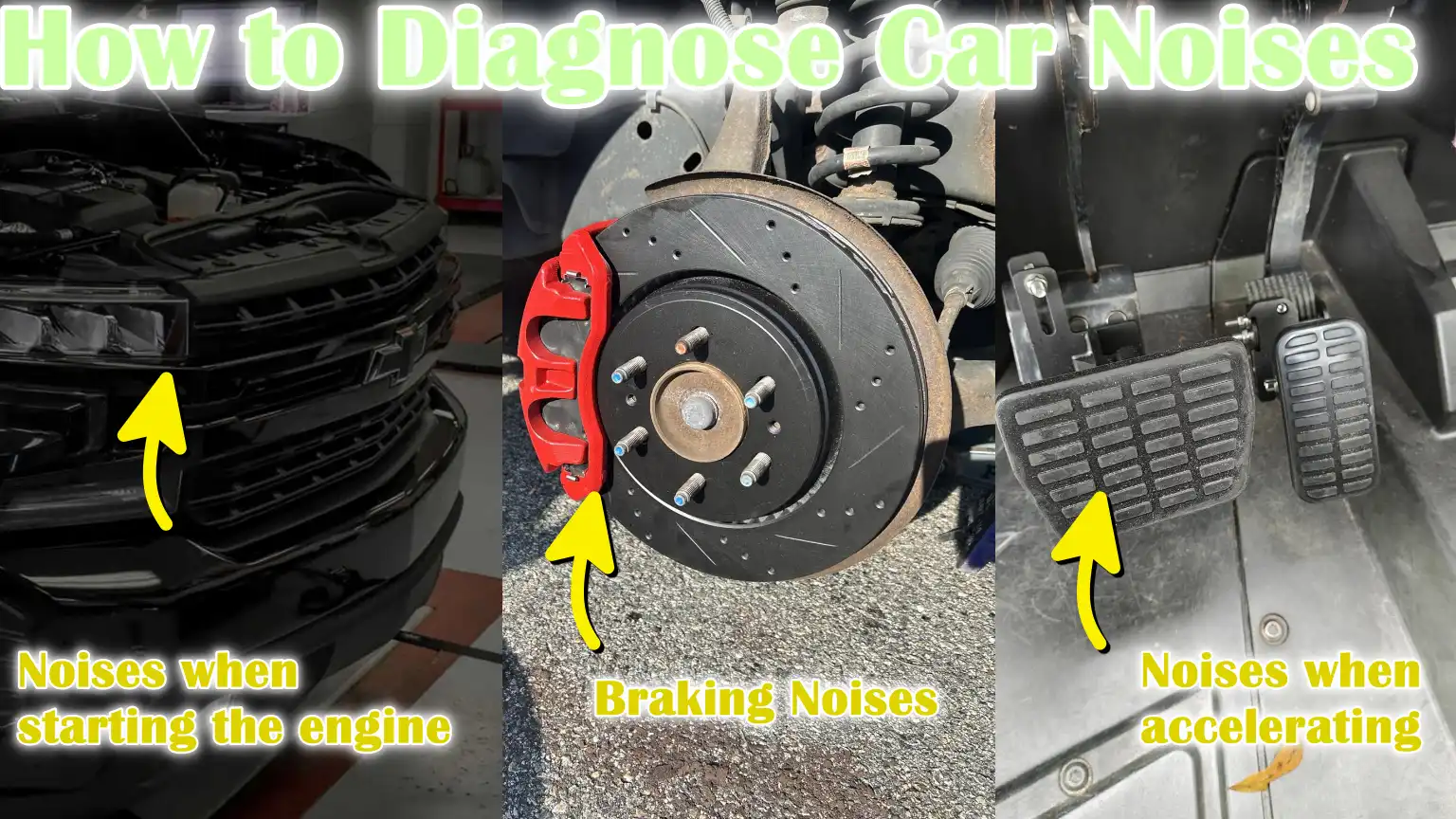
How to Diagnose Car AC Noise Step by Step
You can gather useful clues without opening the AC system or taking the dashboard apart. The goal is to describe the symptom clearly and identify whether it calls for urgent attention. Keep every check simple, and stop if the noise is severe or the vehicle shows warning signs.
Step 1: Park in a Safe Place
Choose a level, open area away from traffic. Set the parking brake and keep people, clothing, hair, and tools away from the engine bay. Never reach near a belt, pulley, compressor clutch, or cooling fan while the engine is running; electric fans can start unexpectedly.
Do not continue testing
Stop if you notice smoke, a burning smell, severe grinding, overheating, or a belt that appears damaged.
Step 2: Record When the Sound Starts
Note whether the sound begins with the engine startup, AC button, cabin fan, temperature control, or vent-mode change. Record whether it stops when you turn the AC off. This timeline is often more useful than trying to name the sound perfectly.
Useful details
Write down the outside temperature, whether the engine is cold or warm, the fan setting, and whether the car is parked or moving.
Step 3: Change One Setting at a Time
If no warning signs are present, compare the sound at low and moderate cabin fan settings. Then return the fan to a steady setting and switch the AC request off and on once. Change the vent mode or temperature setting only if needed to check for an actuator noise.
Do not repeatedly cycle a noisy compressor or run the system for long periods when it makes a harsh mechanical sound. If a test causes a new severe noise, stop and arrange professional help.
Fan speed changes the noise
The blower or airflow path becomes a stronger suspect.
AC engagement changes the noise
The compressor, belt drive, cooling fan, or another load-sensitive part may be involved.
Step 4: Check Easy, Safe Items
Remove loose objects from storage areas and make sure the vents are open. If the cabin filter is accessible according to the owner’s manual, check its fit and condition with the vehicle switched off. Do not remove covers that require special tools or expose moving or electrical parts.
If the filter is dirty
Replace it with the correct filter and fit the cover as instructed.
If nothing changes
Stop home checks and use your observations to guide a professional diagnosis.
Step 5: Record Cooling Performance
Note whether the air is cold, mildly cool, warm, or inconsistent. Record whether airflow is weak even when the fan is set high. These are separate symptoms: weak airflow may point to a filter or blower issue, while normal airflow with poor cooling may involve refrigerant flow, compressor operation, condenser airflow, or controls.
Weak airflow
Check the cabin filter and vent settings, then arrange a blower or airflow inspection if needed.
Strong airflow but warm air
Request a full AC performance diagnosis instead of assuming the system only needs refrigerant.
Step 6: Share the Findings With a Technician
Give the shop a clear description of the sound and the conditions that trigger it. If you can safely record a short audio or video clip from inside the cabin, it may help the technician understand the symptom, although recordings can change how a sound seems to travel.
Ask the technician to confirm the source before replacing parts. Depending on the symptoms, the inspection may include the blower assembly, actuator operation, belt and pulley condition, compressor controls, cooling fans, electrical supply, refrigerant charge, and leak testing.
Ask for the cause
Request the test results or physical finding that supports the diagnosis.
Ask about related damage
If a compressor or belt-driven part has failed, ask whether debris or damage could affect other components.
What Can Make Car AC Noise Worse?
Heat, dust, moisture, wear, and changes in system load can affect how an AC sounds. A vehicle that spends long periods in hot traffic may run its condenser fan often. Dusty roads and falling leaves can also contribute to filter or intake blockage, while age and wear can affect motors, bearings, belts, and actuators.
These conditions do not prove a fault. A loud AC in hot weather may be working harder because the system needs to remove more heat, while an unusual new grinding noise still needs attention regardless of the weather. Compare the sound with the vehicle’s normal operation and look for changes in cooling or airflow.
High outdoor temperatures
The compressor and cooling fan may work harder to remove heat, changing normal operating sounds.
Dust and debris
A dirty cabin filter or blocked air intake can reduce airflow and contribute to whistling or blower noise.
Age and wear
Motors, bearings, belts, tensioners, and plastic actuator gears can wear over time.
Recent repairs
A loose cover, incorrectly fitted filter, disturbed connector, or other installation issue may create a new sound after service.
When the Noise Starts After an AC Repair
If the noise begins right after service, contact the shop and explain what changed. The cause may be related to a disturbed component, incorrect installation, or a fault that was not part of the original repair. The timing is useful evidence, but it does not prove that the repair caused the issue.
Ask the shop to recheck the affected area and explain whether the new sound is expected for the vehicle. If cooling has declined or the system makes a severe mechanical noise, avoid further use until it has been assessed.
Bring the repair record
Include the work performed, parts changed, and date the noise began.
Common Mistakes When Diagnosing AC Noise
The biggest diagnostic mistake is replacing a part based on the sound alone. A clicking noise does not automatically mean the compressor is bad, and a hiss does not automatically mean refrigerant is leaking. Confirming the cause can prevent unnecessary parts and help avoid repeat repairs.
Assuming every sound means compressor failure
The blower, cooling fan, belt drive, actuator, and loose panels can all create sounds that seem related to the AC.
Adding refrigerant without testing
An incorrect charge can harm performance, and topping up does not repair a leak.
Ignoring weak airflow
A dirty filter or blower fault may be the main issue even when the AC still produces cold air.
Reaching into a running engine bay
Belts and fans can cause severe injuries. Observe from a safe distance and leave hands-on checks to a qualified person.
Continuing to use a grinding system
A failing rotating component may worsen or affect connected parts.
Replacing several parts at once
Without a confirmed diagnosis, this can increase repair costs and make it harder to identify the original fault.
Know When Home Diagnosis Has Reached Its Limit
Basic observation is useful, but it cannot measure refrigerant charge, confirm compressor performance, test every electrical control, or reveal hidden bearing damage. Those tasks may require scan tools, pressure and temperature measurements, approved leak detectors, and model-specific service information.
If the noise remains after safe checks, tell the repair shop what you heard and what changed it. A concise symptom record is more useful than guessing at a part and asking for it to be replaced.
Arrange professional diagnosis
Do this for persistent, worsening, unexplained, or cooling-related noises.
When Should You Take Your Car to a Mechanic?
Arrange a prompt inspection if the AC makes a new repeated click, persistent hiss, loud rattle, squeal, or grinding sound. The need is more urgent when the noise comes with weak cooling, vibration, a burning odor, visible belt damage, or electrical warnings. A mechanic can determine whether the issue is limited to the cabin HVAC system or affects engine-driven components.
Stop using the AC and pull over safely if you notice smoke, a severe burning smell, engine overheating, a sudden loss of steering assistance, or signs of belt failure. If the engine makes severe mechanical noise or a warning indicates a serious fault, shut it off when safe and arrange roadside assistance. Turning off the AC is not a guarantee that a damaged compressor or belt system is safe.
For a mild sound with normal cooling and no warning signs, a scheduled inspection may be reasonable. Keep track of when it occurs, and do not ignore a sound that becomes louder or more frequent.
Stop driving and seek help
Smoke, severe grinding, overheating, a burning odor, or loss of a key vehicle function calls for immediate safety action.
Book prompt service
Persistent noise with weak cooling, repeated compressor cycling, or a new belt-area squeal needs diagnosis.
Monitor briefly
A faint, brief operating sound with normal cooling may be harmless, but compare it with the vehicle’s usual behavior and consult the manual if uncertain.
What Does Car AC Noise Repair Usually Involve?
The repair depends on the confirmed source. A dirty cabin filter may need replacement, while debris in the blower housing may need careful removal. A worn blower motor, failed actuator, loose mount, damaged belt, or compressor fault calls for a different repair, so an accurate diagnosis matters before estimating the cost.
Refrigerant-system work requires additional care. A technician may need to check operating pressures and temperatures, inspect electrical commands, test for leaks, recover refrigerant with approved equipment, and recharge the system to the specified amount. The exact steps depend on the vehicle, refrigerant type, and fault.
Ask for an explanation of the findings and an estimate that separates diagnosis, parts, labor, and any required refrigerant service. If a major component has failed, ask whether the underlying cause has been identified and whether related parts need inspection.
Simple airflow issue
May involve filter replacement, removing accessible debris, or securing a loose cover.
Blower or actuator fault
May require component access, electrical checks, and replacement of a failed motor or actuator.
Belt or pulley problem
May require inspection of belt condition, alignment, tension, and the affected rotating part.
Refrigerant or compressor issue
May require performance tests, leak checks, electrical diagnosis, and model-specific AC service.
Questions to Ask Before Approving a Repair
A clear repair explanation should link the symptom to a finding. If the recommendation is to replace an expensive part, ask what test confirms the failure and whether another component could produce the same sound. This helps you understand the repair without trying to perform hazardous tests yourself.
What confirmed the fault?
Ask about the inspection result, measurement, or test that supports the diagnosis.
Could another part cause this sound?
Ask whether the belt drive, fan, mounting hardware, or controls were checked where relevant.
Will the repair address the cause?
For a failed compressor or contaminated system, ask whether related damage or debris must be addressed.
What should happen afterward?
Ask how the shop will verify that the noise is gone and cooling performance has returned to the required level.
Next-Question Gap Map
The most useful next questions follow the driver’s path from hearing a sound to deciding whether to keep using the AC, perform a safe check, or arrange repair. The priorities below are editorial judgments based on the practical consequences of the issue, not verified search-volume or ranking data. No live competitor-page comparison is claimed here.
Can I drive if the AC is making a grinding noise?
Reader stage: immediate safety decision. Basis: inferred next need. Reviewed competitor coverage: not checked. Benefit: explains when to stop and why switching off the AC does not guarantee safety. Evidence needed: vehicle-specific belt layout and professional inspection findings. Priority: high. Placement: grinding and urgent-repair sections.
Why does the noise change with fan speed?
Reader stage: initial diagnosis. Basis: inferred next need. Reviewed competitor coverage: not checked. Benefit: helps separate cabin airflow problems from AC engagement issues. Evidence needed: HVAC system operation and vehicle-specific diagnosis. Priority: high. Placement: diagnosis steps and quick reference table.
Does a hissing sound mean the AC has a refrigerant leak?
Reader stage: deciding on service. Basis: inferred next need. Reviewed competitor coverage: not checked. Benefit: prevents unnecessary refrigerant top-ups and unsafe handling. Evidence needed: manufacturer service procedures and approved leak-testing guidance. Priority: high. Placement: hissing section and FAQs.
Why did my AC start making noise after a repair?
Reader stage: follow-up after service. Basis: inferred next need. Reviewed competitor coverage: not checked. Benefit: helps the driver report a new symptom with useful context. Evidence needed: repair records and inspection of the affected components. Priority: medium. Placement: worsening-noise section.
How can I tell a blower motor problem from a compressor problem?
Reader stage: narrowing down the source. Basis: inferred next need. Reviewed competitor coverage: not checked. Benefit: reduces the risk of assuming every AC noise comes from the compressor. Evidence needed: sound timing, fan-speed response, compressor operation, and vehicle-specific tests. Priority: high. Placement: quick diagnosis table and step-by-step guide.
Frequently Asked Questions
Q
Why does my car AC make noise only when I turn it on?
The AC request activates or changes the operation of several parts, including the compressor system and, on many vehicles, the condenser fan. A worn belt, pulley, compressor component, or loose part may become noisy when the load changes. A single click can be normal, but a new squeal, repeated click, or grinding sound should be checked.
Q
Is a hissing noise from car AC normal?
A brief hiss during operation or shortly after shutdown may result from refrigerant flow or pressure equalization. A persistent hiss with weak cooling, repeated changes in performance, or other unusual symptoms needs inspection. Sound alone cannot confirm a refrigerant leak.
Q
Can a dirty cabin air filter make my AC noisy?
Yes. A clogged, damaged, or incorrectly fitted cabin air filter can restrict airflow and contribute to whistling or other airflow-related sounds. Check the filter only if the owner’s manual provides a safe access procedure. A filter will not fix a worn blower motor or a compressor fault.
Q
Why does my car AC click repeatedly but still blow cold air?
The clicking may come from an actuator, relay, or another component that operates while the AC is on. Some compressor control patterns also create audible changes, depending on the system design. Continued cooling does not prove that every component is healthy, so arrange an inspection if the clicking is new, frequent, or getting louder.
Q
Should I turn off my AC if it starts grinding?
Yes. Turn off the AC if it begins grinding, especially if the sound is loud or comes with vibration. If the noise continues, the engine overheats, smoke appears, or you notice a burning smell or loss of steering assistance, stop in a safe place and seek help. The source may affect more than the AC, depending on the vehicle.
Q
Can low refrigerant cause a noisy car AC?
Low refrigerant can affect cooling and may alter system operation, but it does not explain every AC noise. A hiss, click, whine, or rattle can have several causes. Have the system tested for leaks and correct charge rather than adding refrigerant based on sound alone.
Q
How much does it cost to fix a noisy car AC?
The cost depends on the cause, the vehicle, parts access, labor rates, and whether related damage is present. A filter or loose cover may be a simple fix, while a blower motor, belt-drive component, actuator, or compressor repair can require more labor and parts. Request a diagnosis and itemized estimate before approving the work.
✦ Wrapping Up
Conclusion
A car AC noise is easier to diagnose when you focus on the sound, its location, and the condition that triggers it. Clicking may be normal or point to a control issue, rattling often calls for an airflow or loose-part check, and hissing can be normal unless other symptoms suggest a fault. Grinding, severe squealing, smoke, or a burning smell deserves prompt attention.
Start with safe observations and simple checks, such as changing the cabin fan setting, checking accessible filter fit, and recording whether the noise stops when the AC is off. Do not open refrigerant lines or reach near moving engine parts. If the sound persists, worsens, or affects cooling, ask a qualified technician to confirm the cause before replacing parts.
💡 Key Takeaway
Write down when the noise starts, whether fan speed changes it, whether the air stays cold, and whether the sound stops when the AC is switched off. Share those details with a repair shop, and stop using the system if you hear severe grinding or notice smoke, overheating, or a burning smell.