Yes, blind spot mirrors are worth it for many drivers because they expand side visibility and help reveal vehicles hidden outside standard mirror views. However, they work best as an extra safety aid, not a replacement for proper mirror adjustment or shoulder checks.
Driving on American roads often means dealing with busy highways, crowded city streets, and fast-moving traffic. Whether you drive through Los Angeles, commute across Dallas, or travel on an interstate, changing lanes can be stressful when another car is hiding beside yours. Standard side mirrors do not show every area around a vehicle, which can make a quick lane change more difficult.
Blind spot mirrors offer a simple way to improve that view. These small curved mirrors attach to your existing side mirrors and show a wider area beside and behind your vehicle. They can help you notice motorcycles, cars, and other road users that may not appear in your regular mirrors. Still, their curved shape makes objects look smaller and farther away than they really are, so learning how to read them matters.
The main question is not whether these mirrors work. They can expand your field of view. The more useful question is whether that extra view makes driving easier for your vehicle, driving habits, and daily routes. This guide explains their benefits, drawbacks, costs to consider, correct setup, and situations where another safety feature may be a better choice.
Yes, blind spot mirrors are generally worth considering if you want a wider view of the areas beside your vehicle without paying for an electronic system. They are small, simple, and can provide useful information that a regular flat mirror may not show. For many drivers, the low purchase cost makes them a practical addition.
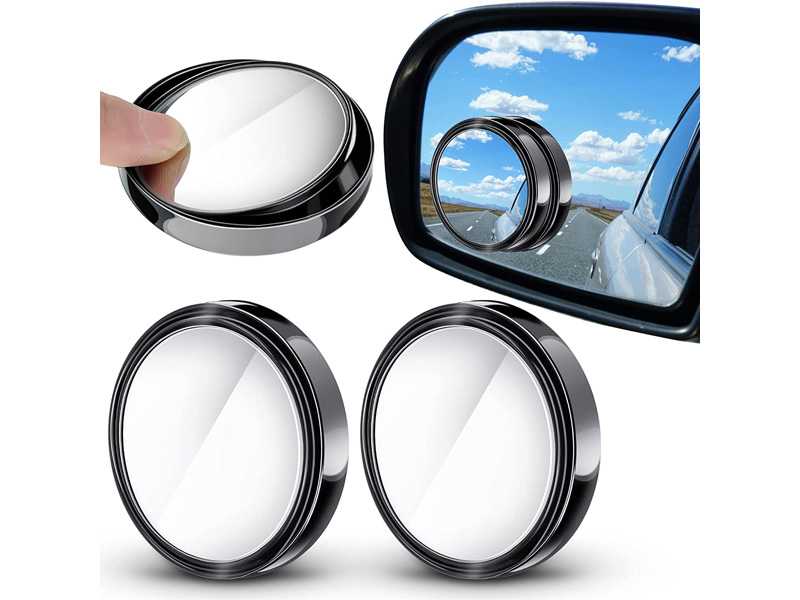
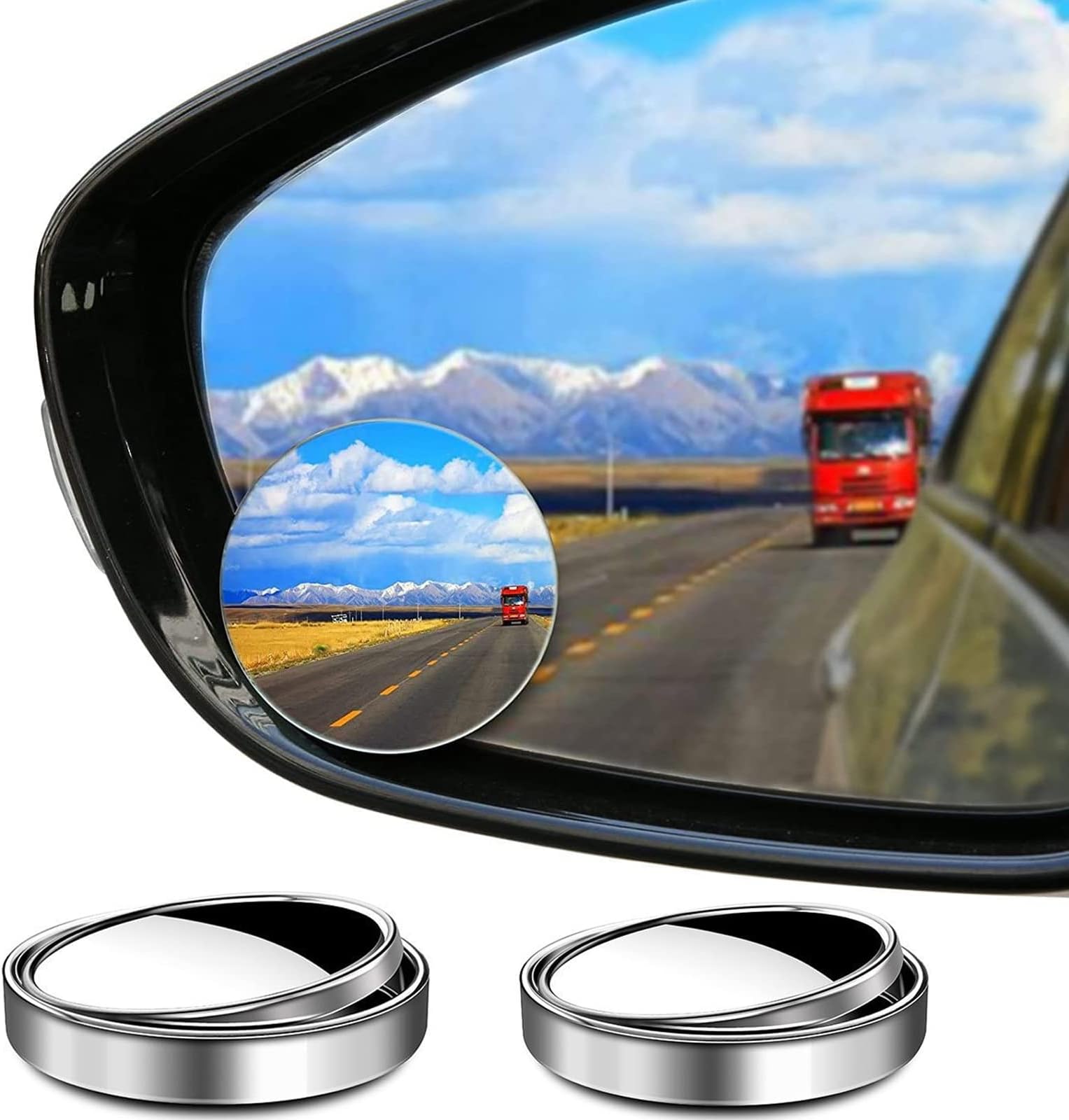
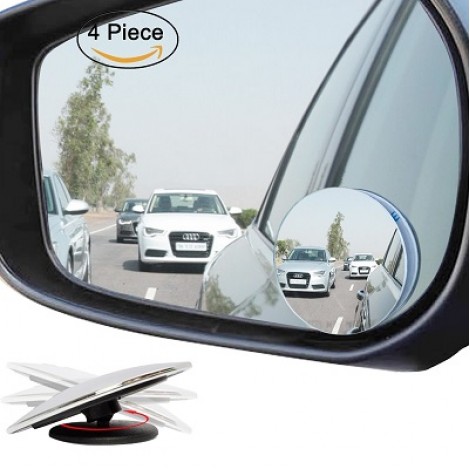
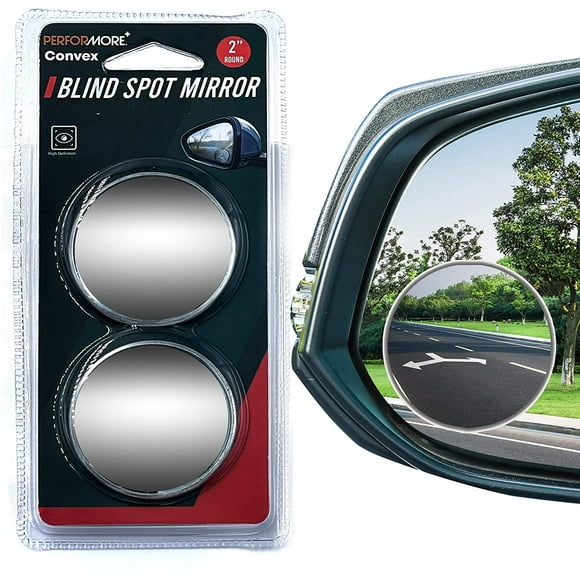
A blind spot mirror is a small convex mirror that attaches to an existing side-view mirror. Its curved surface reflects a wider area than a flat mirror of a similar size. This lets you see more of the adjacent lane and nearby traffic.
The biggest benefit is added awareness. For example, a vehicle may disappear from your regular side mirror as it moves alongside your car. A properly placed blind spot mirror may keep that vehicle in view for longer. This can give you another chance to notice traffic before moving into another lane.
However, added visibility does not mean complete visibility. A small mirror only shows the area covered by its reflection. It cannot show every angle around your vehicle, and its image can be difficult to read at first. You still need to check your surroundings before making a move.
The National Highway Traffic Safety Administration explains that vehicle blind spots can remain even when drivers use inside and outside mirrors. Its guidance also recommends adjusting mirrors to improve visibility and looking over your shoulder before changing lanes. A small add-on mirror should support these habits rather than replace them.
Source: chicmiky.com
Worth it for added visibility
The wider reflection can help reveal vehicles and motorcycles that are outside the normal side mirror view.
Worth it for the low cost
Most basic models are inexpensive compared with electronic blind spot monitoring systems.
Not a complete safety solution
A small mirror cannot remove every blind spot or confirm that a lane is clear.
Who Benefits Most From Blind Spot Mirrors?
Drivers who often travel on highways may find these mirrors useful because they deal with frequent passing traffic and lane changes. The extra view can help them notice a vehicle approaching from behind or traveling beside the car.
They can also help people who drive SUVs, pickup trucks, and vans. These vehicles may have larger side areas that are difficult to see with standard mirrors alone. A properly placed convex mirror can add another useful viewing angle.
New drivers may also like having an additional visual reference while learning to judge traffic. However, they should learn to use regular mirrors and shoulder checks first. A blind spot mirror should build better awareness, not create dependence on one small reflection.
Daily highway commuters
Extra side visibility can be useful during repeated lane changes and passing.
SUV and pickup owners
A wider view may help with areas that are harder to see from the driver’s seat.
Drivers of older vehicles
An add-on mirror can provide extra visibility when the car does not have electronic blind spot alerts.
How Do Blind Spot Mirrors Work?
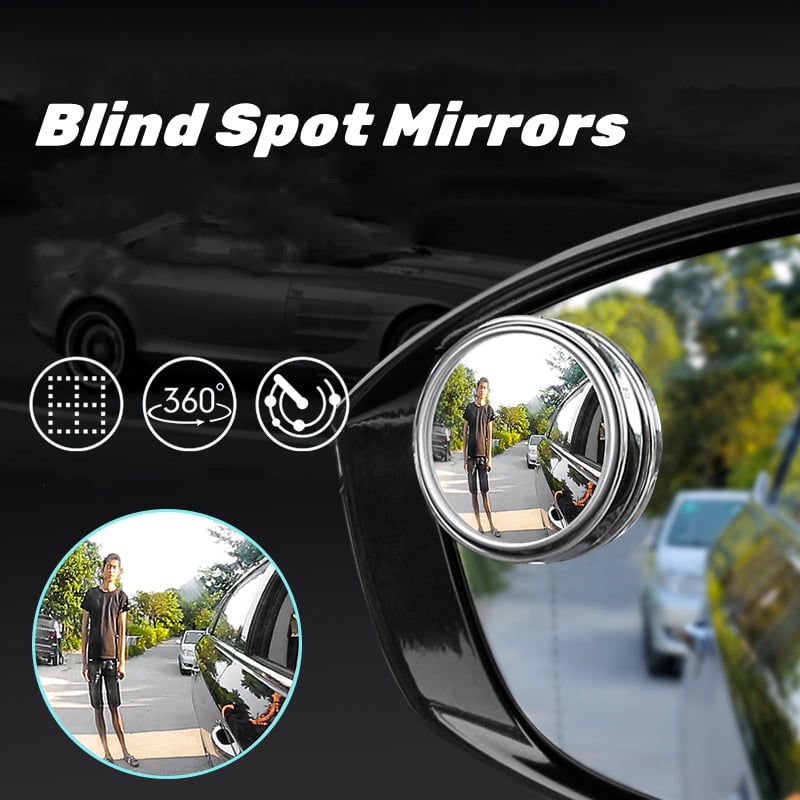
Blind spot mirrors use a curved reflective surface to show a wider area than a standard flat mirror. This design is called convex reflection. Instead of reflecting a narrow section of the road, the curved surface spreads the view across a larger angle.
Think of the difference between looking through a narrow window and looking through a wide window. The wide window lets you see more of the area around you. A convex mirror works in a similar way, although the image is smaller and its distance can be harder to judge.
Most aftermarket blind spot mirrors are round, oval, or rectangular. Some have adjustable joints that let you change their angle. Others use a fixed position and attach directly to the side mirror with adhesive.
When a car approaches from behind, its reflection may appear in your regular side mirror first. As it moves closer and enters the area beside your vehicle, the blind spot mirror may help keep it visible. The two mirrors work together to provide a broader view.
Source: amazon.ca
Wider viewing angle
The curved surface reflects more of the area beside and behind the vehicle.
Smaller reflected objects
Vehicles appear smaller than they do in a flat mirror, which helps fit more of the scene into the reflection.
Simple operation
Most models work through reflection alone and do not need electricity, sensors, or software.
Why Do Objects Look Farther Away?
A convex mirror bends the reflected image. This allows it to show a larger area, but it also makes objects appear smaller and farther away than they are. A car that looks like it has plenty of space may actually be quite close.
This is one of the most important things to understand before using a blind spot mirror. Do not judge whether you have enough room to change lanes based only on the size of a vehicle in the small mirror.
Use your regular side mirror to assess the traffic scene, check the inside mirror for vehicles approaching from behind, and turn your head to check the adjacent lane. The extra mirror is there to help you notice traffic, not calculate a safe gap.
Notice the vehicle
Use the convex mirror to identify traffic that may be outside your regular mirror’s view.
Check its position
Use the regular mirror and direct observation to understand where the vehicle is.
Judge the gap carefully
Never assume that a small reflected vehicle is far enough away for a safe lane change.
The Main Benefits of Blind Spot Mirrors
Blind spot mirrors offer several practical benefits, especially for drivers who regularly travel in heavy traffic. They improve the range of the side mirror view without requiring major changes to the vehicle. Their value comes from simple, extra visual information.
Although they cannot prevent every accident, they can help drivers notice nearby traffic sooner. Here are the main reasons many people choose to install them.
Source: passfaster.net
1. They expand side visibility
The most important benefit is a wider view of nearby lanes. A small convex mirror may show a vehicle that is outside the reflection of a regular flat side mirror.
2. They help with lane changes
Drivers can use the extra reflection to check whether another vehicle is traveling beside them. This is useful on busy highways where traffic may approach from several directions.
3. They can help reveal motorcycles
Motorcycles have a smaller visual profile than cars. A wider viewing area may help drivers notice one approaching or traveling beside the vehicle.
4. They are affordable
Basic stick-on models are generally much less expensive than replacing factory mirrors or adding an electronic monitoring system.
5. They are easy to install
Many models attach with adhesive backing. Drivers can usually install them without drilling holes, changing wiring, or visiting a repair shop.
6. They do not need power
A standard convex mirror works without batteries or an electrical connection. This makes it useful even when the vehicle is turned off or its electronic systems are unavailable.
7. They are useful for different vehicles
Depending on their size and shape, they can fit cars, SUVs, pickups, and some vans. Drivers should still check the mirror’s fit and viewing angle before buying.
Can They Make Highway Driving Easier?
Yes, they can make it easier to monitor traffic beside your vehicle. On a busy American interstate, cars may pass at different speeds while you prepare to change lanes. An extra reflection can help you notice a vehicle that is moving into your blind area.
This does not mean you can change lanes without looking over your shoulder. A mirror may fail to show a vehicle because of its position, the angle of the glass, or the shape of your car. Treat the extra view as one part of a full lane-change check.
Passing traffic
The mirror may help you keep track of a car moving alongside you.
Busy freeway entrances
It may offer another view of vehicles entering the lane beside you.
Heavy traffic
It can provide an additional visual check when several cars are close together.
Disadvantages of Blind Spot Mirrors
Blind spot mirrors have useful benefits, but they are not perfect. Their curved shape creates some limitations, and a poor installation can make them less helpful. Understanding these drawbacks will help you decide whether the extra mirror is right for your car.
The biggest concern is distance perception. A wide view is useful, but the reflected image does not show the exact size or distance of another vehicle. Drivers who do not understand this difference may make poor judgments during lane changes.
Source: goodcar.com
1. Objects appear smaller
A convex mirror reduces the apparent size of vehicles. This can make nearby traffic harder to judge.
2. Distance can be misleading
A vehicle may look farther away than it really is. Drivers must not use the small mirror alone to decide when to move into another lane.
3. They take up mirror space
An oversized add-on can cover part of the original mirror or make the main reflection harder to use.
4. They may create glare
Bright sunlight and headlights can make a small reflective surface uncomfortable to view at certain angles.
5. Adhesive can fail
Dirt, water, heat, poor surface preparation, and old adhesive can cause a mirror to loosen or fall off.
6. They need an adjustment period
Drivers who are used to flat mirrors may need time to understand the smaller reflections and changed viewing angle.
Can Blind Spot Mirrors Cause Confusion?
Yes. A driver who is not familiar with convex mirrors may mistake the apparent distance of another vehicle. A car that looks small in the extra mirror may be much closer than expected.
The National Highway Traffic Safety Administration has discussed the advantages and limitations of convex mirrors. Its guidance recognizes that these mirrors can expand the field of view, but their image distortion can affect distance judgments. The agency also explains that design requirements help limit distortion in certain vehicle mirrors.
After installing an add-on mirror, spend time learning what it shows while the vehicle is parked. Then observe its reflections during ordinary driving without making sudden movements. If the image makes it difficult to judge traffic, adjust the mirror or remove it.
Avoid rushed decisions
Do not make a sudden lane change because the extra mirror appears to show an open space.
Keep the original mirror useful
Make sure the add-on does not block an important part of the factory mirror.
Remove a distracting mirror
If glare, vibration, or a distorted reflection makes driving harder, stop using that mirror.
Blind Spot Mirrors vs. Regular Side Mirrors
Regular side mirrors and blind spot mirrors serve related but different purposes. A standard flat mirror gives a familiar view that helps drivers judge the position of nearby traffic. A convex add-on shows a wider area, but the reflected objects look smaller.
Neither type is a complete replacement for the other. The best approach is to use them together while keeping the inside rearview mirror and direct visual checks part of your routine.
Source: amazon.ca
Regular side mirrors
Provide a familiar view of nearby traffic and help drivers judge the position and movement of vehicles.
Blind spot mirrors
Provide a wider reflected view of areas that may not appear in the regular side mirror.
Shoulder checks
Provide direct visual confirmation of areas that may remain hidden from both mirror types.
Which Mirror Is Better for Judging Distance?
A regular flat side mirror is generally easier to use for judging the apparent size and position of vehicles. A convex mirror is better suited to detecting traffic across a wider area.
For example, when a car appears in your blind spot mirror, do not assume it is far away because it looks small. Check the regular side mirror and turn your head as appropriate before changing lanes.
This difference is why many drivers find a combination of the two mirror types more useful than relying on a single viewing surface.
For a familiar traffic view
Use your regular side mirror.
For a wider side view
Use the convex add-on mirror.
For direct confirmation
Check the lane with an appropriate shoulder glance.
How to Choose the Right Blind Spot Mirror
The right blind spot mirror should provide a useful viewing angle without blocking your factory mirror. You do not need the largest or most expensive model. Focus on its shape, size, adjustment options, glass quality, and attachment method.
Before buying, look at your existing side mirrors and think about the area you cannot see. A small round mirror may be enough for one vehicle, while a wider rectangular model may work better on another. The correct choice depends on your mirror shape and the view you need.
Source: woscher.com
Choose a suitable shape
Round, oval, and rectangular models are common. Pick one that fits your side mirror without covering too much of its original reflective area.
Check the adjustment range
An adjustable model may be easier to aim toward the area beside your vehicle.
Look for clear glass
The reflection should be easy to read and free from obvious defects, scratches, or uneven distortion.
Consider the mounting method
Adhesive models are simple to install, while clip-on options may be useful when you do not want a permanent attachment.
Check weather resistance
Choose a model designed for outdoor vehicle use so its housing and adhesive can handle normal exposure to rain and sunlight.
Round vs. Rectangular Blind Spot Mirrors
Round blind spot mirrors are compact and easy to place near an outer corner of a side mirror. They can provide a useful extra view without taking up much space. Their small size may also make them less distracting once properly adjusted.
Rectangular models can provide a different viewing shape and may suit wider side mirrors. However, a larger mirror is not automatically better. If it blocks too much of the original mirror, it may create a new visibility problem.
The best choice is the one that gives you the needed view while leaving the main mirror clear. Compare the actual viewing area rather than choosing by appearance alone.
Round models
Good for drivers who want a compact add-on near the outer edge of the mirror.
Rectangular models
May suit drivers who want a wider or differently shaped reflection.
Adjustable models
Useful when the mirror angle needs to be changed to suit the driver’s seating position.
Is an Adjustable Blind Spot Mirror Worth Buying?
An adjustable model can be worth the extra cost if you need to fine-tune its angle. Different drivers sit at different heights, and different vehicles have different mirror shapes. An adjustable joint can make it easier to aim the reflection at the area you want to monitor.
However, an adjustable feature is not essential for every driver. A fixed mirror can work well when its shape and placement provide the correct view. The important part is that the reflection remains useful from your normal driving position.
Choose adjustable glass
When you want more control over the viewing angle.
Choose fixed glass
When the mirror fits your vehicle and provides the required view without extra adjustment.
How to Install Blind Spot Mirrors Correctly
Correct installation is essential because even a good mirror can be unhelpful when it points in the wrong direction. The goal is to show an area outside the normal side mirror view without covering the main mirror.
Most adhesive models are easy to install at home. You will need the mirror, a clean cloth, and a suitable cleaner that will not damage the factory mirror coating or housing. Follow the product instructions because adhesive types and preparation methods can differ.
Source: drivrzone.com
Step 1: Park safely
Park on a level surface, switch off the vehicle, and make sure you have enough light to see the side mirror clearly.
Step 2: Clean the surface
Remove dust, oil, water, and dirt from the intended mounting area. Let the surface dry fully before attaching the mirror.
Step 3: Choose the position
Hold the mirror near the outer edge of the factory mirror and test different angles before removing the adhesive backing.
Step 4: Attach the mirror
Remove the protective film and press the mirror firmly onto the clean surface according to the manufacturer’s instructions.
Step 5: Adjust the angle
Sit in your normal driving position and aim the mirror so it shows the desired area beside your vehicle.
Step 6: Check the view
Make sure the original side mirror remains useful and the extra mirror does not create an obstructed or confusing reflection.
Where Should You Place a Blind Spot Mirror?
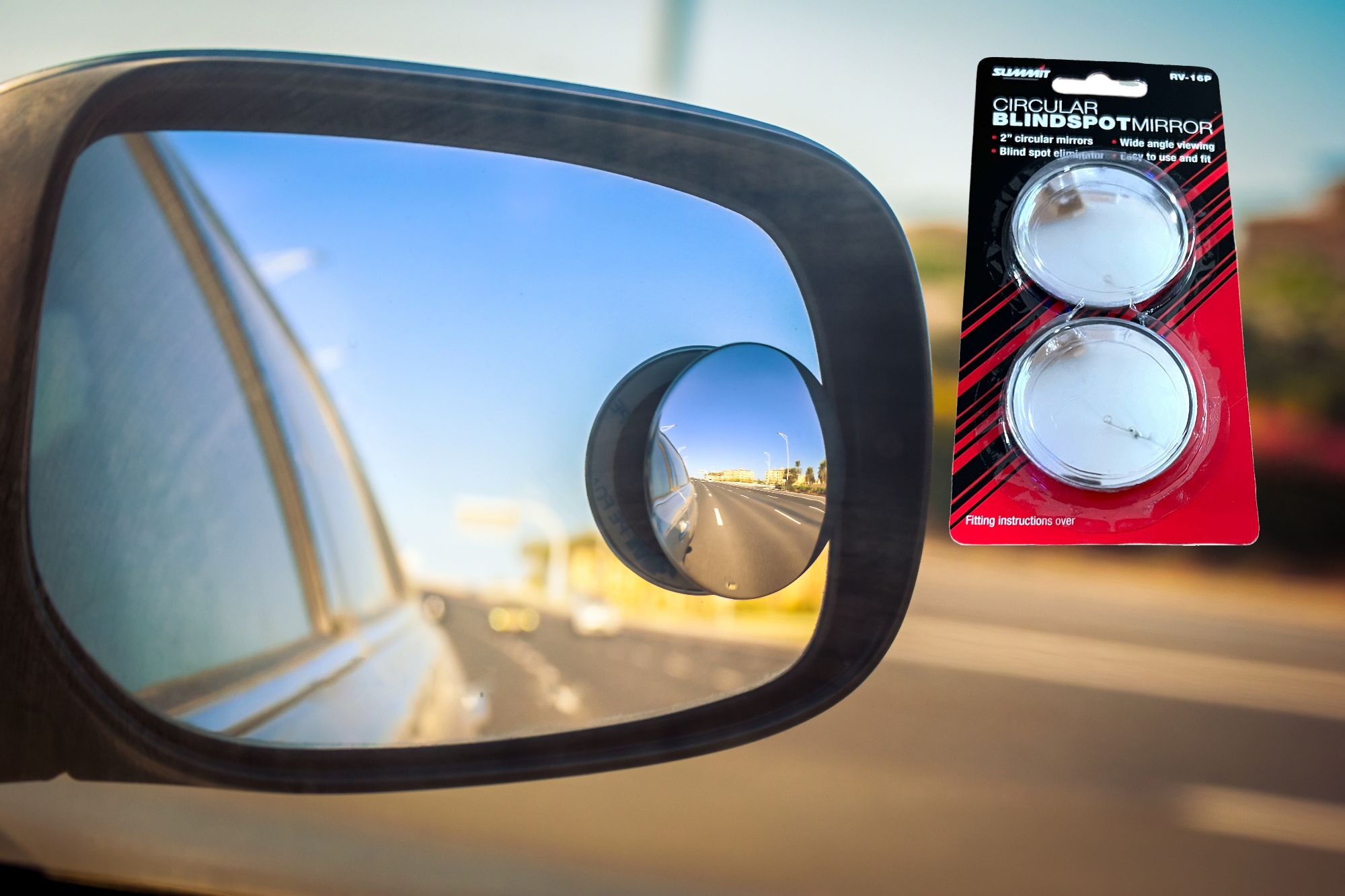
Many drivers place a small blind spot mirror near the outer edge of the factory side mirror. This position can help show traffic beside the vehicle while leaving most of the original mirror available for its normal purpose.
The exact position depends on the shape of your side mirror, your seating position, and the viewing area you want. There is no single placement that works for every car. Test the angle before attaching an adhesive model permanently.
Avoid placing the add-on where it blocks the main reflective surface or hides an existing factory warning indicator. If your vehicle has an integrated blind spot monitoring light in the side mirror, make sure the extra mirror does not cover it.
Start near the outer edge
This is a common position for viewing traffic beside the vehicle.
Check the driver’s view
Make sure you can see the reflection without moving your head into an uncomfortable position.
Keep the factory mirror clear
Do not cover a large part of the original mirror or any important warning indicator.
How Do You Know If the Mirror Is Positioned Correctly?
A correctly positioned blind spot mirror should show a useful area beside your vehicle that is not already fully covered by the regular mirror. You should be able to view it with a brief glance from your normal seating position.
A safe way to assess the reflection is to park in a suitable area and observe stationary objects at different positions around the vehicle. Do not use a moving vehicle or an unsafe road situation as an installation test.
After installation, check the view during normal driving in safe conditions. If the mirror shows mostly the side of your own car, adjust it outward. If the image is too far away from the area you want to monitor, change its angle or position.
Useful extra coverage
The reflection should show an area beside the vehicle that is not clearly visible in the standard mirror.
Clear main mirror
The original side mirror should still provide a useful view of the road.
Comfortable glance
You should be able to read the extra reflection without an awkward head movement.
Blind Spot Mirrors vs. Electronic Blind Spot Monitoring
Blind spot mirrors and electronic blind spot monitoring systems both aim to help drivers notice nearby traffic, but they work in different ways. A mirror gives you an additional reflected view. An electronic system uses sensors to detect certain vehicles and may provide a visual or audible warning.
Many newer vehicles offer factory blind spot monitoring as part of an advanced driver assistance system. Depending on the vehicle, the system may display a warning light in the side mirror or another location when it detects a vehicle in a monitored area.
An electronic system can be convenient because it may alert you without requiring you to study another reflection. However, its detection range and operation depend on the vehicle’s design. It may not detect every object in every situation.
A basic blind spot mirror is usually less expensive and does not require electrical power. It also provides a visible reflection rather than relying on a warning signal. The best choice depends on your vehicle, budget, and preferred driving habits.
Source: walmart.com
Blind spot mirror
A passive visual aid that expands the reflected viewing area. It is usually inexpensive and easy to install.
Electronic blind spot monitoring
A sensor-based system that detects certain nearby vehicles and alerts the driver. It may be built into the vehicle or available as an aftermarket system.
Shoulder check
A direct visual check that remains an important part of safe lane-change habits.
Should You Install Blind Spot Mirrors If Your Car Has Blind Spot Monitoring?
Not necessarily. If your car already has a reliable factory blind spot monitoring system and its standard mirrors provide a useful view, an extra mirror may offer limited additional value.
However, some drivers still prefer an extra visual reflection. It may provide another way to see traffic without waiting for an electronic warning. Before adding one, check whether it blocks the factory warning light or makes the original mirror harder to use.
Never treat either system as permission to change lanes without checking. Electronic sensors have detection limits, and a small convex mirror cannot show every part of the road.
Factory monitoring works well
You may not need an additional mirror unless you have a specific visibility problem.
You want another visual view
A small add-on may provide useful information if it does not obstruct the original mirror.
The warning light is covered
Move or remove the add-on mirror so the factory warning remains visible.
When Are Blind Spot Mirrors Most Useful?
Blind spot mirrors are most useful when a vehicle has a limited side view or the driver regularly encounters traffic beside the car. Their value is not the same for every driver. Some vehicles and driving conditions benefit more from the extra reflection than others.
Consider your normal routes and the type of vehicle you drive. If you often travel on highways, carry passengers, or drive a larger vehicle, a wider view may be helpful. If you rarely change lanes and already have excellent mirror coverage, the benefit may be smaller.
Source: flatsixes.com
Highway driving
They may help drivers notice vehicles approaching or traveling beside them at highway speeds.
Driving an SUV
A properly aimed convex mirror may provide another view of traffic alongside a larger vehicle.
Driving a pickup truck
They may add visibility when the truck’s side mirror coverage is limited.
Driving in busy cities
They may help reveal motorcycles, bicycles, and cars in crowded traffic.
Driving an older car
They can add a wider view without the cost of replacing the factory mirror system.
Are Blind Spot Mirrors Worth It for SUVs and Trucks?
They can be especially useful for some SUV and pickup owners. Larger vehicles may have different mirror positions, wider bodies, and areas that are harder to monitor from the driver’s seat.
A small convex mirror may help show vehicles beside the front doors or near the rear quarter of the vehicle. However, the correct setup depends on the body design. A blind spot mirror cannot show the entire length of a long vehicle or every area around a truck.
Drivers of large pickups should also consider whether their factory towing mirrors already provide additional visibility. Adding another mirror without checking the existing view may create clutter rather than improve it.
SUV owners
Look for a mirror that provides useful side coverage without blocking the factory reflection.
Pickup owners
Check whether the standard or towing mirrors already cover the area you want to see.
Van owners
Consider the vehicle’s side and rear blind areas. One small mirror may not cover all of them.
Are They Useful for New Drivers?
New drivers may benefit from having another visual reference while learning to monitor traffic. However, they should not become dependent on a blind spot mirror. Learning proper mirror adjustment, traffic awareness, and shoulder checks is more important.
A new driver should practice identifying vehicles in the regular mirror, extra mirror, and direct view. This helps build an understanding of how traffic moves around the vehicle.
Learn regular mirror use first
Understand what each factory mirror shows before adding another reflective surface.
Practice visual checks
Use the extra mirror as an additional aid while maintaining direct observation.
Avoid depending on one reflection
Always assess the full traffic situation before changing lanes.
Are Blind Spot Mirrors Legal in the United States?
A typical small blind spot mirror attached to an existing side mirror is not automatically illegal in the United States. However, vehicle mirror requirements and equipment rules matter. An add-on should not obstruct the required view, cover important equipment, or create a safety problem.
Federal Motor Vehicle Safety Standard No. 111 sets requirements for rear visibility and mirrors on new vehicles. It includes requirements for mirror performance and certain convex mirror designs. These rules are not a blanket approval of every aftermarket mirror or installation.
State vehicle inspection and equipment rules may also apply. If an add-on mirror covers a required reflective area or creates an obstruction, it could raise a compliance issue. Drivers should check the applicable rules in their state when they are unsure.
For a typical driver, the practical approach is simple: choose a suitable product, keep the original mirror functional, and make sure the extra mirror does not obstruct your view or any factory warning system.
Keep required mirrors functional
An add-on should not prevent you from using the factory mirror as intended.
Avoid obstructing warning indicators
Do not cover a factory blind spot monitoring light or other important mirror feature.
Check local requirements
Review your state’s vehicle equipment and inspection rules if you have concerns about a particular installation.
Do Blind Spot Mirrors Replace Required Side Mirrors?
No. A small aftermarket convex mirror should not be treated as a replacement for a required factory side mirror. It is an additional viewing aid, not a substitute for the vehicle’s required mirror equipment.
If your factory side mirror is cracked, loose, missing, or badly damaged, repair or replace it with a suitable mirror. Adding a small convex mirror does not correct a damaged or missing main mirror.
Damaged factory mirror
Have it repaired or replaced with a suitable part.
Missing factory mirror
Restore the required mirror equipment instead of relying on an add-on.
Common Blind Spot Mirror Problems and Solutions
A blind spot mirror should make your view clearer, not more confusing. If the reflection is poor, the mirror shakes, or the adhesive fails, check the installation before deciding that the product itself is useless.
Most basic problems involve incorrect placement, a dirty reflective surface, poor adhesive contact, or an unsuitable mirror size. Start with the simplest checks and avoid adjusting the mirror while driving.
Problem: The mirror shows too much of your car
Possible cause: The mirror is aimed too far inward. Adjust it outward while parked to show more of the adjacent area.
Problem: The reflection looks unclear
Possible cause: Dirt, moisture, scratches, or low-quality glass. Clean the mirror and inspect it for damage.
Problem: The mirror keeps falling off
Possible cause: Dirty glass, moisture, old adhesive, or poor surface contact. Remove it safely and follow the manufacturer’s installation instructions.
Problem: The mirror vibrates
Possible cause: A loose joint or weak attachment. Check the mounting hardware and replace a damaged unit.
Problem: The reflection is distracting
Possible cause: Incorrect positioning, excessive size, or glare. Adjust it or remove it if it interferes with safe driving.
How Do You Clean Blind Spot Mirrors?
Clean blind spot mirrors with a soft microfiber cloth and a suitable glass cleaner. Avoid rough towels and abrasive products that could scratch the reflective surface.
If the mirror has a plastic housing or special coating, check the manufacturer’s cleaning instructions before using chemicals. A gentle cleaning method is usually enough to remove road dust and water spots.
Check the adhesive and mounting joint during cleaning. If the mirror has become loose or damaged, repair or replace it before using the vehicle.
Use a soft cloth
A microfiber cloth helps remove dirt without scratching the surface.
Avoid harsh cleaners
Strong chemicals may damage certain plastic parts or coatings.
Inspect the attachment
Make sure the mirror remains firmly attached and does not move unexpectedly.
When Should You Avoid Using a Blind Spot Mirror?
A blind spot mirror is not useful if it makes your original mirror harder to read or creates a distracting reflection. Some vehicles have small side mirrors, unusual shapes, or factory features that leave little room for an extra attachment.
You should also avoid using a damaged mirror. Cracks, loose joints, cloudy glass, and unstable adhesive can affect the reflection. A mirror that moves while driving may distract you at the wrong time.
If you already have a well-adjusted mirror system and a factory monitoring feature that meets your needs, an aftermarket mirror may not provide enough extra value to justify installing it. There is no need to add equipment simply because it is available.
Your factory mirror is already crowded
An extra mirror may cover too much of the useful reflective area.
The reflection causes confusion
If you cannot judge the reflected scene comfortably, a different mirror or no add-on may be better.
The mounting surface is unsuitable
A damaged, curved, or unsuitable surface may prevent a secure installation.
The product is defective
Do not use a cracked or unstable mirror that creates a distracting reflection.
Blind Spot Mirror Buying Decision: Is It Worth the Money?
For most drivers who want a wider side view at a modest cost, a basic blind spot mirror is worth considering. You do not need a premium model simply to get the main benefit of a convex reflective surface.
Before buying, compare the cost of the mirror with the problem you are trying to solve. If your main concern is a small area beside the vehicle, a simple add-on may be enough. If you need a more complete visibility solution, you may need to review your factory mirrors or consider a vehicle with an electronic monitoring system.
The table below summarizes common situations and the type of solution that may make sense.
Best for a small budget
A basic adhesive convex mirror may provide extra visibility without a large expense.
Best for flexible positioning
An adjustable model may help you find a better angle for your vehicle.
Best for existing electronic safety features
A factory blind spot monitoring system may already provide the extra warning you need.
Which Option Makes Sense for Different Drivers?
The best choice depends on what your current mirror setup can show. A driver with an older sedan may need only a small convex mirror, while an SUV owner may want to test a larger adjustable model.
Drivers who are unhappy with the visibility of a damaged or poorly adjusted factory mirror should address that issue first. An add-on should never be used to hide a problem with the original equipment.
Older sedan
A small round mirror may be a practical low-cost addition.
SUV
An adjustable mirror may help provide a useful view beside the larger body.
Pickup truck
Check the existing mirror and towing mirror coverage before choosing an extra mirror.
Newer vehicle with electronic monitoring
An extra mirror is optional and should only be added if it provides a clear benefit.
Research Findings and Practical Evidence
The main benefit of convex mirrors is supported by research on their field of view. A 2020 paper published in the Journal of the Society of Automotive Engineers Malaysia examined circular convex blind spot mirrors. Its experimental setup found that mirror placement affected the viewing area, and the reported increase in field of view reached up to 211 percent under the study’s test conditions.
That result should be read carefully. The experiment used projected light and image processing to compare viewing areas. It was not a real-world crash study, and it does not establish that installing an add-on mirror reduces crashes by 211 percent.
NHTSA’s vehicle visibility guidance provides another important finding. It explains that drivers can reduce blind spots by adjusting outside mirrors to show more of the roadway. The agency still recommends looking over the shoulder before changing lanes.
NHTSA has also discussed the trade-off created by convex mirrors. Their wider view comes with image-size and distance-perception changes. This is why drivers should use the extra mirror to detect traffic rather than rely on it alone to judge a safe gap.
Together, these sources support a balanced conclusion: convex mirrors can expand visibility, but the usefulness of that extra view depends on placement, image quality, and correct driver behavior.
Documented research
A 2020 experimental study found that a circular convex mirror can increase the field of view, with placement affecting the result.
Official safety guidance
NHTSA recommends proper outside mirror adjustment and continued shoulder checks before lane changes.
Known limitation
Convex reflections make objects look smaller and can affect distance judgments.
What remains unproven
The available field-of-view result does not establish a specific reduction in real-world crashes from aftermarket blind spot mirrors.
Next Questions to Consider Before Buying
Before installing an extra mirror, think about the area you cannot see, the shape of your factory mirror, and the way you normally drive. These details help you avoid buying a product that adds little value.
The most useful next step is to adjust your factory mirrors correctly. Then identify whether a remaining visibility problem exists. If it does, test a suitable convex mirror and check that it provides a clear additional view without blocking your original mirror.
Can you improve visibility without buying anything?
Yes. Properly adjusted factory mirrors can reduce blind spots and may provide enough coverage for some drivers.
Does your vehicle already have blind spot monitoring?
If it does, check the system’s operation and make sure its warning lights are not blocked by an add-on mirror.
Do you drive a large vehicle?
Check the side and rear visibility needs of the vehicle before choosing the size and shape of an extra mirror.
Can you judge the convex reflection comfortably?
If the smaller image makes you uncomfortable or confused, choose a different setup or remove the mirror.
Frequently Asked Questions
Q
Do blind spot mirrors actually work?
Yes. Blind spot mirrors use a convex surface to expand the viewing angle of a standard side mirror. They can help drivers notice vehicles and other road users that may not appear in the original mirror.
Their effectiveness depends on correct placement and adjustment. They also make reflected objects look smaller, so drivers should not rely on them alone when judging distance or changing lanes.
Q
Are blind spot mirrors worth it for older cars?
Yes, they can be a practical addition to older cars that do not have factory blind spot monitoring. A small adhesive mirror can provide a wider side view without requiring an expensive electronic upgrade.
However, make sure the factory side mirror is properly adjusted and in good condition before adding another mirror.
Q
Should I put blind spot mirrors on both sides of my car?
Many drivers choose to install one on each side to get a similar extra view on both sides of the vehicle. This can make it easier to monitor traffic when changing lanes in either direction.
However, you do not have to install two if only one side has a visibility problem. Check both factory mirrors first and choose the setup that provides useful coverage without blocking the original reflections.
Q
Do blind spot mirrors make driving safer?
They may support safer driving by helping you notice traffic that would otherwise be outside your normal mirror view. This extra awareness can be useful during lane changes and when monitoring nearby vehicles.
However, a wider mirror view does not guarantee that an accident will be prevented. Proper mirror adjustment, safe following distance, shoulder checks, and careful decisions remain essential.
Q
Can blind spot mirrors replace shoulder checks?
No. A blind spot mirror cannot show every area around your vehicle. Its viewing range depends on its size, position, and angle.
Always check your mirrors and look toward the adjacent lane before changing lanes. The extra mirror should support your visual checks rather than replace them.
Q
Where is the best place to install a blind spot mirror?
The outer edge of the factory side mirror is a common starting point because it can provide a view of traffic beside the vehicle. However, the best position depends on the mirror shape and your normal seating position.
Test the reflection before attaching an adhesive mirror permanently. Make sure it does not block the main mirror or a factory warning indicator.
Q
Do blind spot mirrors work at night?
Yes. A standard convex mirror can reflect headlights and nearby vehicles at night. However, bright headlights and glare may make the reflection uncomfortable or harder to read.
Keep the mirror clean and properly adjusted. If the reflection creates excessive glare, change its angle or remove it.
Q
Are round or rectangular blind spot mirrors better?
Neither shape is automatically better. Round mirrors are compact and may fit well near the outer edge of many factory mirrors. Rectangular models may provide a different viewing shape and can suit some wider mirrors.
Choose the model that gives you a useful extra view without covering too much of the original reflective surface.
Q
Can blind spot mirrors fall off while driving?
Yes. Poor adhesive, dirt, moisture, heat, and an unsuitable mounting surface can cause an add-on mirror to loosen. A loose mirror may vibrate or fall off.
Clean and dry the surface before installation, follow the product instructions, and inspect the attachment from time to time. Replace a mirror that cannot remain securely attached.
Q
Are blind spot mirrors better than blind spot monitoring systems?
They serve different purposes. A blind spot mirror provides a wider visual reflection, while an electronic monitoring system uses sensors to detect certain nearby vehicles and provide warnings.
An electronic system may offer convenient alerts, but it also has detection limits. A simple mirror is usually less expensive and does not need electrical power. Neither option replaces proper observation before changing lanes.
✦ Wrapping Up
Conclusion
So, are blind spot mirrors worth it? For many drivers, yes. They offer an affordable way to expand side visibility and may help reveal cars, motorcycles, and other traffic that standard mirrors do not show. They are especially useful for people who regularly drive on busy highways or operate vehicles with limited side visibility.
Still, they have limitations. Their convex surfaces make vehicles look smaller and farther away, and poor placement can create a confusing reflection. They also cannot eliminate every blind spot or replace a proper shoulder check.
The smartest approach is to adjust your factory mirrors first. If you still have an area that is difficult to see, consider adding a small, clear, adjustable blind spot mirror. Install it carefully, keep the original mirror unobstructed, and learn how to read the extra reflection before relying on it during everyday driving.
A small mirror can add useful information, but safe driving still depends on the person behind the wheel. Use every available view, watch the traffic around you, and never move into another lane until you have confirmed that it is clear.
💡 Key Takeaway
Before buying a blind spot mirror, adjust your factory side mirrors correctly and identify any remaining blind areas. If an extra mirror would help, choose a clear model that fits without blocking the original mirror, install it securely, and always combine its reflection with regular mirror checks and a shoulder check before changing lanes.
1 thought on “Are Blind Spot Mirrors Worth It: Pros And Cons”





1 thought on “Are Blind Spot Mirrors Worth It: Pros And Cons”