
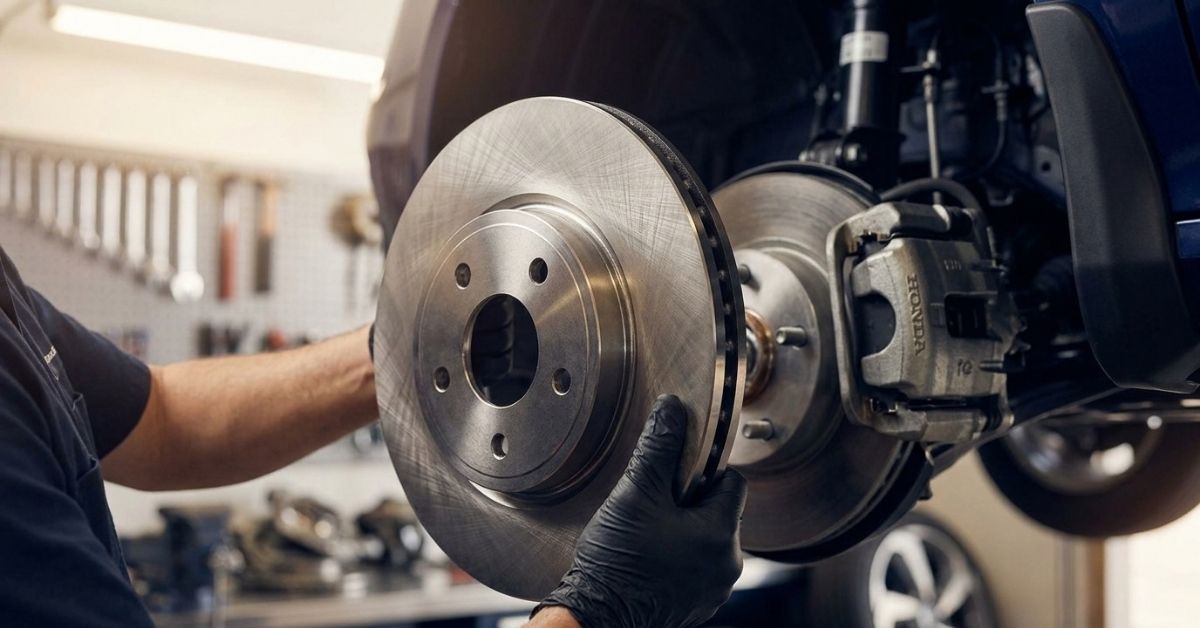
If you are asking, “Are Honda OEM rotors good?”, the short answer is yes. Honda Genuine rotors are a solid choice when you want the factory-spec part, correct fit, and predictable brake feel. Honda says its Genuine Parts come from the original equipment manufacturer and are designed for its vehicles.
But there is a catch I think is worth knowing. Good does not always mean best value. A quality aftermarket rotor can also work very well. So when I look at Honda OEM rotors, I care about more than the Honda name. I look at fit, rotor design, coating, price, pad choice, and who is doing the installation.
Are Honda OEM Rotors Good for Daily Driving?
For normal street driving, Honda OEM rotors make a lot of sense. They are made as direct replacements for specific Honda applications, rather than being a one-size-fits-many design. Current Genuine Honda listings show exact vehicle fitment, front or rear position, and replacement part numbers.
That matters more than it sounds.
A brake rotor has to fit the hub correctly. Its diameter, thickness, height, venting, and mounting surface all need to match the car. A rotor can look almost identical and still be the wrong part.
| What matters | Why I care |
| Correct fit | Helps prevent installation and clearance issues |
| Correct thickness | Keeps the brake system within its design range |
| Proper design | Matches the car’s caliper and brake setup |
| Consistent machining | Helps reduce vibration and uneven braking |
Honda also tells owners to use genuine replacement parts or their equivalent when brake maintenance is needed.
So yes, OEM rotors are a safe starting point. The bigger question is whether you need to pay the OEM price.
What Makes Honda OEM Rotors Different?
One thing I initially found confusing about OEM brake parts is the word OEM.
People often use it to mean “the same brand you can buy from an auto parts store.” That is not always true.
Honda Genuine Parts are sold as original Honda parts. Honda says Genuine Parts purchased from a Honda dealership have a 12-month warranty.
A separate aftermarket company may make a rotor that fits the same Honda. It may even be made by a company that supplies original equipment parts. But that does not automatically make the aftermarket rotor identical to the Honda-boxed part.
| Rotor type | What it means |
| Honda Genuine | Sold as a Honda Genuine replacement part |
| OES supplier part | Made by a supplier that may also produce OE components |
| Aftermarket | Designed to fit the Honda but sold under another brand |
This is why I would not assume that every rotor from an OE supplier is automatically identical to the Honda part.
The exact supplier can also vary by model, year, factory, and part number.
Are Honda OEM Rotors Better Than Aftermarket Rotors?
This is where the answer gets less simple.
Honda OEM rotors are not automatically better than every aftermarket rotor. They are simply a known quantity for the specific Honda application.
There are some very good aftermarket brake companies. Enthusiast discussions about Honda brakes often mention brands such as Akebono, Centric, Wagner, and others. But those are user experiences, not a universal test showing that one brand is better for every Honda.
I would look at it this way:
| If your priority is… | What makes sense |
| Exact factory replacement | Honda Genuine |
| Lower purchase price | Quality aftermarket |
| Easy fitment choice | Honda Genuine |
| Maximum value | Compare OEM with premium aftermarket |
The mistake is comparing a Honda OEM rotor with the cheapest rotor on the shelf.
That is not a fair comparison.
A bargain rotor and a premium coated aftermarket rotor can be very different products.
Why Rotor Fit Matters More Than the Brand Name
This is probably one of the most useful lessons when buying brake parts.
You can buy a well-known rotor brand and still have a bad experience if the part is wrong for the car.
Honda has changed brake designs during model generations. Owners and technicians have also reported cases where certain aftermarket rotors did not match later design changes on particular Honda applications.
So I would never order a rotor just because the website says:
“Fits Honda Civic.”
That is too vague.
Check the exact:
- Model year
- Trim
- Engine
- Brake package
- Front or rear position
- Part number
Honda Genuine listings themselves show why this matters. For example, one Honda front rotor is listed for specific Civic years and trims, while another fits a different group of Honda vehicles.
My Biggest Rotor-Buying Mistake
The easy mistake is searching by vehicle name only.
The better approach is to search by the exact OEM part number, then confirm the replacement part against the VIN or vehicle fitment data.
| Before ordering | What I would check |
| Vehicle | Year, model, trim |
| Position | Front or rear |
| Part | OEM part number |
| Design | Diameter, thickness, venting |
That extra minute can save you a very annoying return.
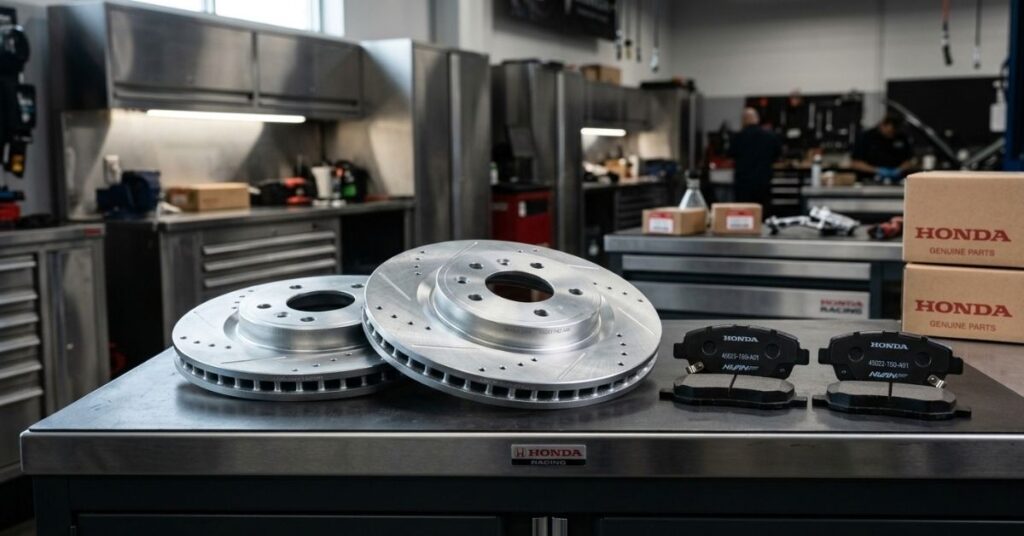
Do Honda OEM Rotors Last a Long Time?
They can, but I would not give you a mileage number and pretend it applies to every Honda.
Brake rotor life depends heavily on driving conditions.
City traffic is hard on brakes. So are hills, heavy loads, frequent hard stops, and long periods of low-speed braking. Climate matters too. Salt and moisture can create corrosion around the rotor and hub.
Even a rotor with plenty of thickness left can become unpleasant if corrosion, uneven wear, or brake vibration becomes a problem.
| Driving condition | Effect on rotor life |
| Mostly highway | Usually easier on brakes |
| Heavy city traffic | More heat and wear |
| Hills and heavy loads | More brake heat |
| Wet or salty climate | More corrosion risk |
So when someone says, “My Honda rotors lasted X miles,” I treat that as one person’s experience, not a service interval.
Do Honda OEM Rotors Rust?
Yes. Honda OEM rotors can rust.
This is one thing that can surprise people.
The braking surface naturally develops some surface rust when the car sits, especially after rain. That is usually scrubbed away after normal braking.
The more annoying rust is on the non-friction areas, such as the rotor hat and other exposed surfaces.
Some Honda rotors are sold with protective coatings, depending on the application. Enthusiast reports also document coated Honda rotors on certain models.
But I would not assume every Honda rotor has the same coating.
Always check the exact part.
Surface Rust vs. A Real Brake Problem
Not every rusty-looking rotor needs replacement.
| What you see | What it may mean |
| Thin orange film | Normal surface rust |
| Rust on unused outer edge | Common with age |
| Deep pitting | May require replacement |
| Uneven friction surface | Needs inspection |
The key is not to judge a rotor only by color.
Are Honda OEM Rotors Worth the Extra Money?
This is where I think the answer depends on the car and your priorities.
If the OEM rotor costs only a little more than a good aftermarket option, I can understand choosing Honda. You know the part number, fitment, and factory application.
But if the Honda rotor costs dramatically more, I would shop around.
Current Genuine Honda listings show why prices can vary. For example, Honda front and rear rotors listed for different applications can have MSRP figures around 129–151, while actual online dealer prices may be lower.
That means it is worth comparing the actual selling price, not just the dealer quote.
| Price situation | My approach |
| OEM is close to premium aftermarket | Consider OEM |
| OEM is much more expensive | Compare carefully |
| Cheap aftermarket only | I would be cautious |
| Unknown seller | Verify the part first |
A dealership labor quote can also make the total cost look much higher than the rotor itself.
Honda OEM Rotors vs Premium Aftermarket
For me, this is the more useful comparison than “OEM vs aftermarket.”
A premium aftermarket rotor from a reputable brake company may be a perfectly sensible choice. In fact, Honda owners frequently discuss good results with quality aftermarket brake parts.
The important word is quality.
I would rather compare a Honda Genuine rotor with a well-established premium rotor than with the cheapest generic option.
| Comparison | Honda Genuine | Premium aftermarket |
| Vehicle-specific fit | Yes | Usually, if correctly cataloged |
| Factory part number | Yes | Cross-reference available |
| Price | Often higher | Often lower |
| Options | More limited | More choices |
| Coating choices | Application dependent | Brand dependent |
There is no universal winner here. The exact Honda and exact aftermarket rotor matter.
What About Honda OEM Rotors With Aftermarket Pads?
This is another common question.
Yes, people commonly mix OEM rotors with aftermarket pads.
The key is choosing a pad that matches your driving needs and installing everything correctly. The rotor does not work alone. The pad compound, caliper, hardware, lubrication points, and installation all affect how the brake feels.
I would also avoid assuming that a more aggressive pad automatically means better braking.
Sometimes it simply means more dust, more noise, or a different pedal feel.
The Rotor and Pad Should Work as a Pair
When replacing brakes, I like to think about the complete friction system rather than buying the most expensive rotor.
| Part | What I would watch |
| Rotor | Fit, thickness, surface, corrosion |
| Pad | Compound, fit, noise, dust |
| Hardware | Proper fit and free pad movement |
There is also a practical reason to inspect the hardware. Honda/Acura owners and technicians have reported that poorly fitting aftermarket hardware can create problems, although those reports are individual experiences rather than a universal rule.
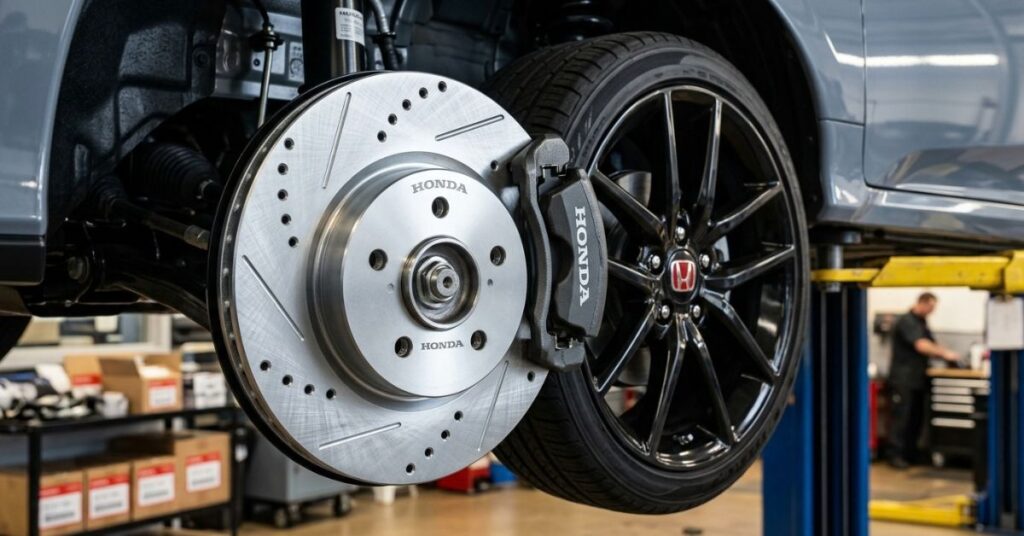
What Can Make Good Honda Rotors Feel Bad?
This is one of the easiest things to misunderstand.
A new rotor does not guarantee a perfect brake job.
A dirty hub face can prevent the rotor from sitting flat. Incorrect wheel installation can create problems. Sticking caliper hardware can cause uneven pad contact. Poor bedding can also affect the early feel of a new brake setup.
| Problem | What I would inspect |
| Steering wheel vibration | Rotor runout, hub, wheel installation |
| Uneven pad wear | Caliper and slide movement |
| Noise | Pad, hardware, and contact points |
| Rotor hot spots | Pad contact and brake operation |
So if brand-new Honda OEM rotors vibrate right after installation, I would not immediately blame the rotor.
The installation needs to be checked too.
Should You Buy Honda OEM Rotors or Aftermarket?
If I were standing at the parts counter, I would make the choice based on these factors.
For a newer Honda that I planned to keep for years, I would have no problem paying for Genuine Honda rotors if the price difference was reasonable.
For an older daily driver, I would compare the OEM price with a reputable premium aftermarket rotor. There is little point paying a huge premium simply because the box says Honda if a properly matched quality alternative costs much less.
Honda itself describes Genuine Parts as original equipment parts and says they are engineered for the vehicle.
When I Would Lean Toward Honda OEM
I would lean OEM when:
- Fitment is confusing.
- The vehicle has a specific brake design.
- The price difference is small.
- I want a factory replacement.
- I plan to keep the car for a long time.
- I want the simplest parts decision.
When I Would Compare Aftermarket
I would shop aftermarket when:
- OEM pricing is very high.
- A trusted brand costs much less.
- The application is common.
- I can verify the exact specifications.
- The seller has a good return policy.
A Simple Checklist Before Ordering Honda Rotors
Before spending money, I would run through this little checklist.
| Check | Why it matters |
| Exact year and trim | Honda brake setups can vary |
| VIN or part number | Helps confirm fit |
| Front/rear position | Rotors are not interchangeable |
| Rotor dimensions | Confirms the correct design |
| Coating | Useful for corrosion protection |
| Seller | Helps avoid questionable parts |
And one more thing: buy from a source you trust.
Counterfeit or incorrectly cataloged brake parts are not worth saving a few dollars on.
Genuine Honda parts are also covered by Honda’s stated 12-month warranty when purchased through a Honda dealership, according to Honda’s owner site.
Final Thoughts
So, are Honda OEM rotors good? Yes. They are a dependable choice when you want a factory-spec replacement and the correct fit for your Honda. I especially like the simplicity of using the exact Honda part number instead of guessing between dozens of aftermarket options.
But I would not say you must buy OEM. A quality aftermarket rotor can also be a sensible choice, especially when the price difference is large. The biggest lesson is to compare the exact parts, not just the brand name.
For me, the best brake purchase is the one that combines correct fit, good rotor quality, sensible pricing, and careful installation. The Honda logo on the box is useful, but it is only one part of the decision.
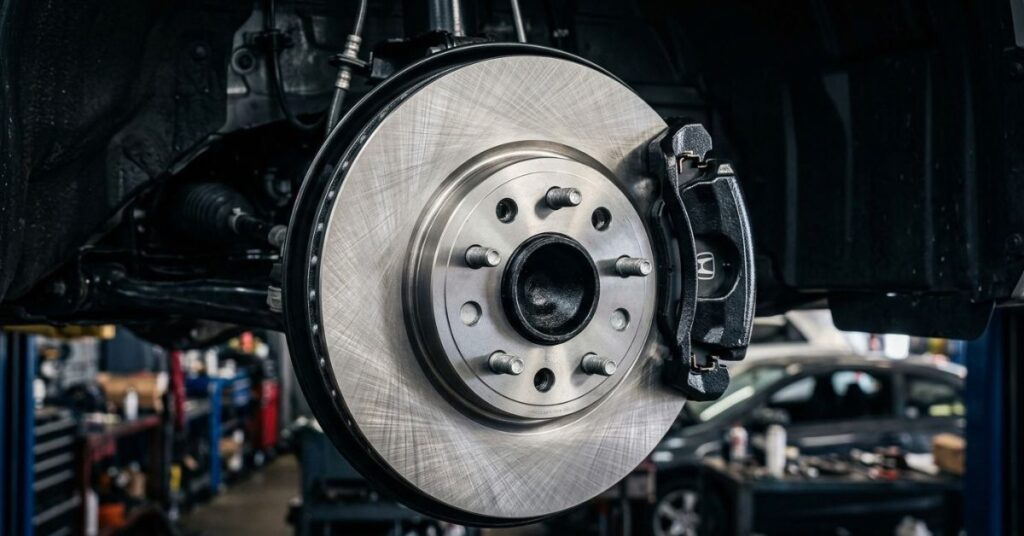
FAQ
Are Honda OEM rotors good for daily driving?
Yes, Honda OEM rotors are a solid choice for daily driving. They fit the car well and offer steady brake feel. Check the exact part number before you buy.
Are Honda OEM rotors better than aftermarket rotors?
Honda OEM rotors offer a factory-spec fit. A good aftermarket rotor can also work well. Compare the brand, fit, quality, and price before you choose.
How long do Honda OEM rotors last?
Honda OEM rotors can last for years, but brake life varies. City driving, hills, heat, and heavy loads can wear rotors faster than easy highway use.
Do Honda OEM rotors rust?
Yes, Honda OEM rotors can show surface rust after rain or long storage. Light rust is often normal. Deep rust, pits, or uneven wear need a closer check.
Are Honda OEM rotors worth the extra money?
Honda OEM rotors can be worth it when the price gap is small. If OEM costs much more, compare it with a trusted aftermarket rotor for your Honda.
To Get More About Home, Car Accessories Product You Can Visit Our Site. If You Found our Posts Helpful Leave a Comment Below