
**The best car charger adapter offers fast USB-C charging, useful ports, broad phone support, and a compact design for daily drives.**
Imagine driving to work on a busy Monday morning in the USA. Your phone battery sits at 12%, your navigation app is running, and you still need to make a few calls. You plug in your phone, but your old car charger takes too long to add power. That can turn a simple drive into a daily hassle. A good car charger adapter can make a big difference. It can power your phone, tablet, and other devices while you drive. In this guide, I compare three USB car chargers with different port counts and power ratings. I will help you find the best car charger adapter for your phone, family, and daily travel needs.
Table of Contents
Toggle🏆 Top 3 Products

USB C Car Charger, 4-Port 90W Super Fast Charging Adapter
Its four charging ports and listed 90W output make it a strong choice for drivers who need to charge several devices.
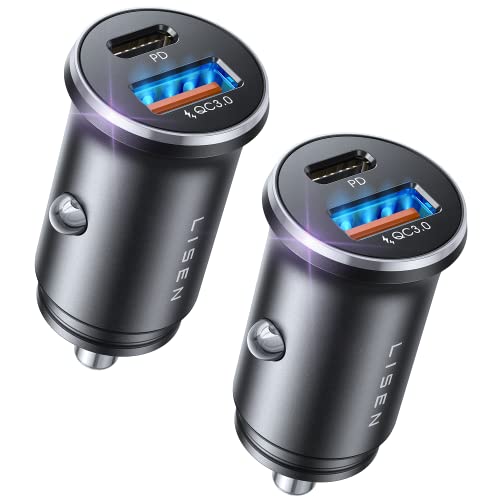
LISEN 69W USB C Car Charger, 2 Pack
The two-pack design offers a handy way to equip more than one vehicle or keep a spare charger ready.

3-Port 67W USB C Car Charger Adapter
It offers three charging ports and a mix of USB-C and USB-A connections for everyday device needs.
4-Port 90W USB-C Car Charger Adapter Review
The first product on my list is a four-port USB-C car charger with a listed total output of 90W. It has two USB-C ports and two USB-A ports. This setup gives drivers more ways to connect their devices. It can suit a family car, a shared vehicle, or a long road trip. Instead of relying on one charging connection, you can use the available ports for several devices.
I like the idea behind this layout because people now carry more than one device. You may have an iPhone, an Android phone, a tablet, or another USB-powered item in the car. Four ports give you more room to manage those needs. The listed 90W output also makes this model worth considering if charging speed matters. However, the total output does not mean every port delivers 90W at the same time. Check the port ratings and shared power details before you buy.
✅ Pros
- ✔ Four charging ports give you more connection options.
- ✔ Two USB-C ports support newer charging cable types.
- ✔ Two USB-A ports help support older USB cables.
- ✔ The listed 90W total output makes it appealing for higher-power charging needs.
- ✔ It can serve several passengers in one vehicle.
- ✔ It works with a wide range of device types when paired with the correct cable.
- ✔ It can reduce the need to carry several separate car adapters.
- ✔ The mixed port layout offers more flexibility for households with different phones.
- ✔ It is useful for road trips when passengers need access to power.
- ✔ It can support a phone and other compatible USB devices in the same car.
⚠️ Cons
- ✖ Four connected devices may need to share the available power.
- ✖ The maximum output of each port needs to be checked before purchase.
- ✖ It may take up more dashboard or console space than a simple one-port adapter.
- ✖ You may need extra charging cables for all four ports.
- ✖ A four-port charger can feel unnecessary for someone who only charges one phone.
- ✖ The listed total wattage alone does not confirm charging speed for every phone.
My Recommendation
I would put this model first for drivers who want one charger to handle several devices. Its four-port layout is its main advantage. The combination of two USB-C ports and two USB-A ports gives it useful flexibility for both newer and older cables. The listed 90W output also makes it an interesting option for people who care about charging power. I would consider it for family cars, shared vehicles, and regular road trips. Before buying, I would check the product listing for the exact power split when multiple ports are in use. That detail matters if you plan to charge several devices at once. For a driver who only needs to power one phone, a smaller adapter may make more sense. But if you want a flexible charging hub for your car, this is my leading choice among these three options. It has the broadest port selection in this comparison and offers a practical setup for different charging needs.
| Best For | Why |
|---|---|
| Families and passengers | Four ports give several people more ways to connect their devices. |
| Mixed USB devices | Two USB-C and two USB-A ports support different cable types. |
| Long road trips | The multiport design can help keep several compatible devices powered. |
LISEN 69W USB-C Car Charger 2-Pack Review
The LISEN USB-C car charger is a useful option for drivers who want a simple charging setup. This product comes as a two-pack and lists a 69W output. The two-pack format is a key part of its appeal. You can keep one charger in your main vehicle and use the other in a second car. You can also keep the spare ready for a family member or another driver.
This model focuses on USB-C charging rather than offering a large collection of ports. That can be a good fit if your main devices use USB-C cables. Modern phones and many tablets use this connection type, although cable and charging support vary by device. I also like the practical value of having two adapters in one purchase. If you often switch between vehicles, having a second charger can save time. Just check the port layout and power-sharing details on the listing before deciding.
✅ Pros
- ✔ The two-pack gives you two car charging adapters.
- ✔ The listed 69W output makes it worth considering for fast-charging needs.
- ✔ USB-C support suits many newer phones and tablets.
- ✔ You can keep one charger in each of two vehicles.
- ✔ The spare adapter can help another driver in your household.
- ✔ It offers a practical option for people who do not need four charging ports.
- ✔ It can reduce the need to move one charger between cars.
- ✔ The two-pack format may offer better convenience than buying two separate units.
- ✔ It suits drivers who mainly use USB-C charging cables.
- ✔ It can make a useful addition to a family car accessory kit.
⚠️ Cons
- ✖ A two-pack may be unnecessary if you only own one vehicle.
- ✖ The listed 69W output does not confirm the exact output supported by each device.
- ✖ It may not suit users who need several USB-A connections.
- ✖ You must check whether the available ports match your charging cables.
- ✖ The power output may change when more than one device is connected, depending on its design.
- ✖ A dedicated USB-C setup offers less cable flexibility than a charger with several port types.
My Recommendation
I recommend the LISEN two-pack for drivers who want a practical charging setup for more than one vehicle. Its biggest benefit is simple: you get two adapters instead of one. That can help if you own a car and an SUV, share driving duties, or often use a second vehicle. The listed 69W output also makes it worth a look if your phone supports compatible fast charging. I would check the exact port arrangement and power details before placing an order. This is especially useful if you plan to charge more than one device at once. I would not choose it just because the number 69W looks impressive. Your phone must support the right charging standard to use the power it can accept. If you mainly use USB-C devices and value having a spare charger, this LISEN option makes sense. It may not have the largest number of ports, but its two-pack format gives it a different kind of value.
| Best For | Why |
|---|---|
| Two-car households | The package includes two adapters for use in separate vehicles. |
| USB-C phone users | Its USB-C charging design suits many newer phones. |
| Drivers who want a spare | The second adapter gives you a backup or another place to charge. |
67W 3-Port USB-C Car Charger Adapter Review
This three-port car charger offers a useful middle ground between a basic single-port adapter and a larger multiport model. It lists a total output of 67W and includes two USB-C ports and one USB-A port. That combination can work well for drivers who use a mix of newer and older charging cables. You can connect compatible phones, tablets, and other USB devices without relying on just one port.
I find this layout appealing for everyday driving because it gives you room to charge more than one device. It can suit a couple who share a car or a driver who carries both a phone and a tablet. The USB-A connection also helps if you still have older cables in your glove box. Its listed output is lower than the 90W option in this guide, but wattage is not the only thing that matters. The right charger should match your devices, cable types, and daily needs.
✅ Pros
- ✔ Three charging ports offer room for multiple devices.
- ✔ Two USB-C ports support many newer charging cables.
- ✔ One USB-A port adds support for older USB connections.
- ✔ The listed 67W output makes it a useful option to compare.
- ✔ It offers a balanced port count for everyday driving.
- ✔ It can serve passengers who need to charge different devices.
- ✔ It can reduce the need to carry multiple car adapters.
- ✔ It may suit both newer phones and older USB-powered accessories.
- ✔ It provides more connection choices than a basic one-port charger.
- ✔ It can work well for daily commutes and family trips.
⚠️ Cons
- ✖ It has one fewer port than the four-port 90W option.
- ✖ The total 67W output may be shared between connected devices.
- ✖ The exact output of each USB-C and USB-A port needs checking.
- ✖ It may not meet the needs of people who charge four devices at once.
- ✖ Some newer devices may need a specific cable or charging standard for fast charging.
- ✖ The USB-A port may not offer the same charging performance as a compatible USB-C port.
My Recommendation
I would recommend this three-port adapter to drivers who want a balance of port choice and everyday convenience. It gives you two USB-C ports for newer devices and one USB-A port for older cables. That is a practical mix for many households. The listed 67W output also makes it worth considering if you want more than a basic low-power car charger. I especially like the idea of using it in a daily commuter car. You can connect your phone while leaving another port free for a passenger or another device. It does not offer as many connections as the four-port model, but many drivers will not need four ports. Before buying, I would confirm how the charger shares power across all three ports. I would also check whether your phone supports the charging standard it uses. If you want a simple, flexible adapter without an extra port that you may never use, this is a sensible option to compare.
| Best For | Why |
|---|---|
| Daily commuters | Three ports provide useful charging options for everyday travel. |
| Mixed cable users | Two USB-C ports and one USB-A port support different cable types. |
| Small families and couples | The three-port setup gives more than one person access to charging. |
Final Verdict: Which Should You Buy?
After comparing these three options, I would choose the 4-Port 90W USB-C Car Charger as the best overall car charger adapter. It offers two USB-C ports, two USB-A ports, and the highest listed total output in this group. The LISEN 69W two-pack is a strong choice for people with two vehicles or a need for a spare. The 67W three-port adapter is a practical middle option for everyday use.
The best car charger adapter should match your phone, cables, and daily driving needs. Check the port ratings and power-sharing details before buying. Choose a reliable fit, keep cables tidy, and enjoy easier charging on every drive.
FAQs Of best car charger adapter
Q What Is The Best Car Charger Adapter?
Q Is A 90W Car Charger Better Than A 67W Charger?
Q Can I Charge An iPhone And An Android Phone With The Same Car Charger?
Q Can I Use A Multiport Car Charger To Charge Several Phones At Once?
Q Does A Car Charger Adapter Drain The Car Battery?
Q Is USB-C Better Than USB-A For Car Charging?
Q Can I Leave My Car Charger Plugged In All The Time?
Q How Do I Know If My Car Charger Supports Fast Charging?