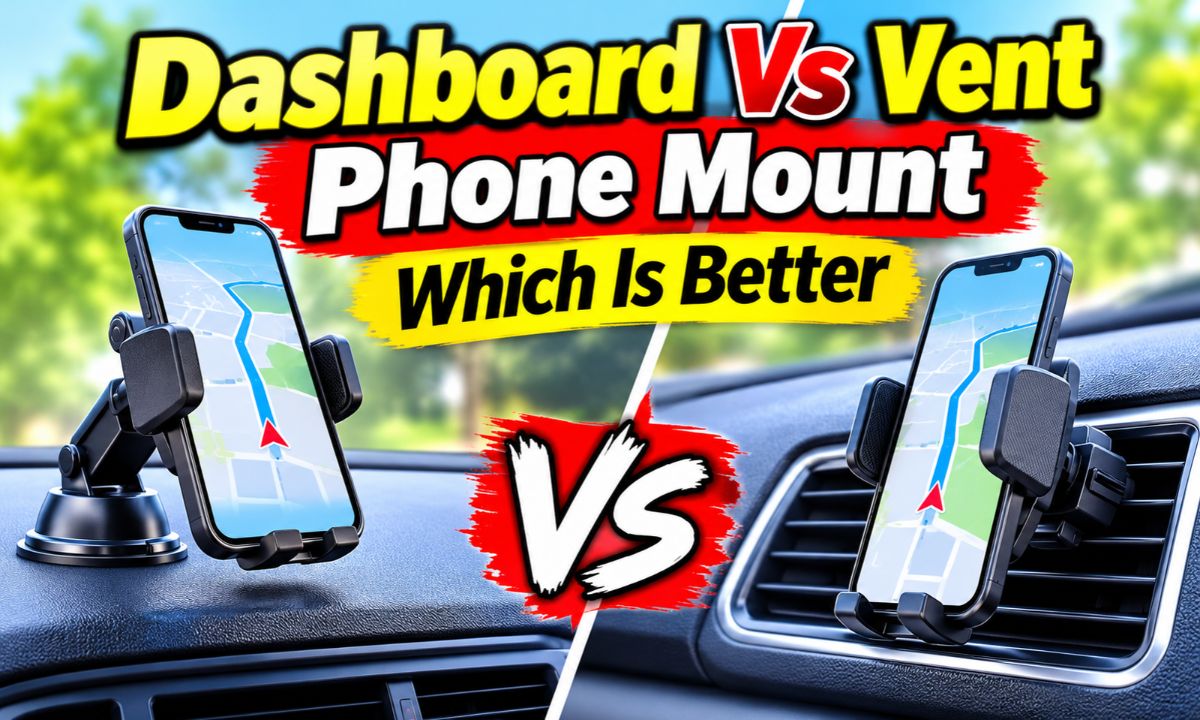
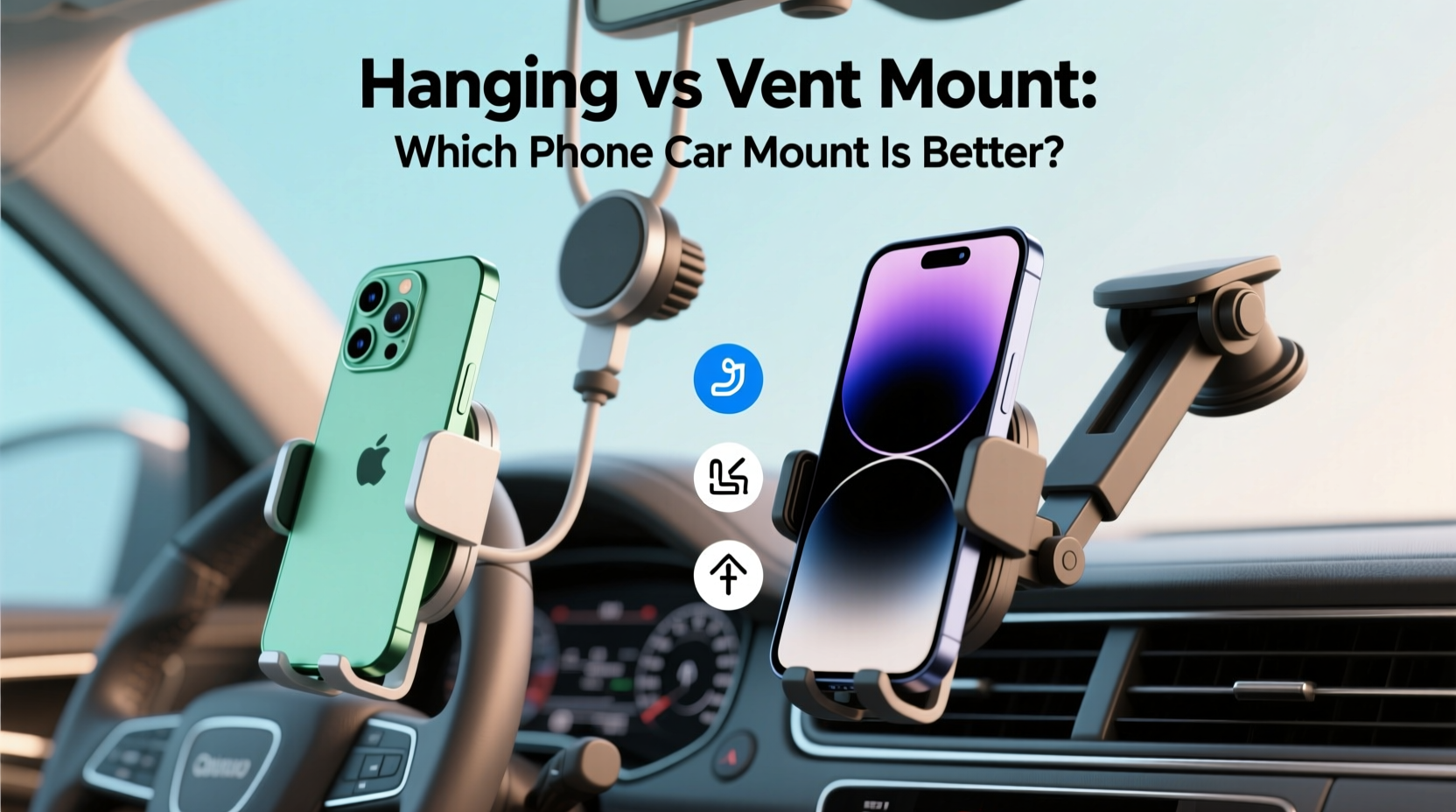
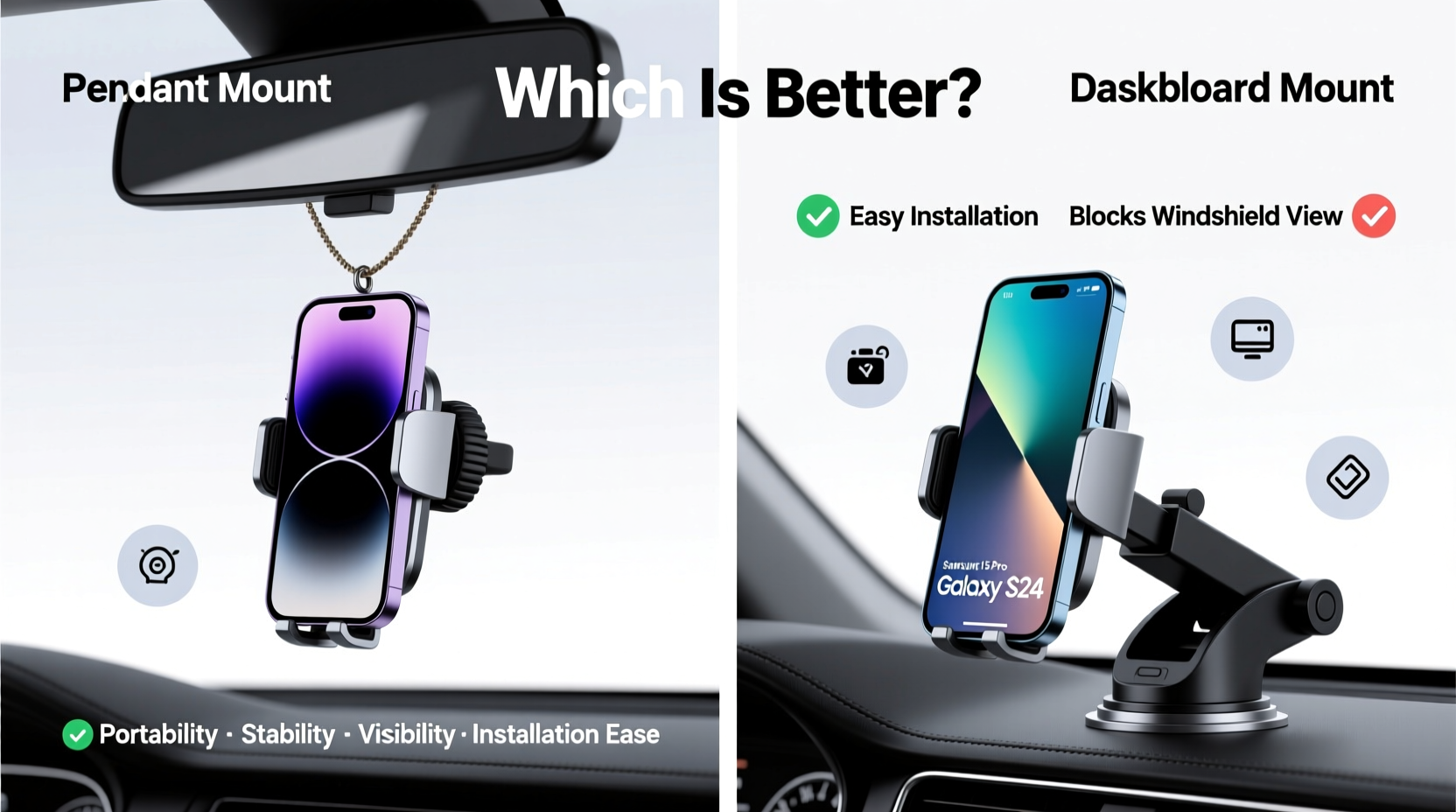
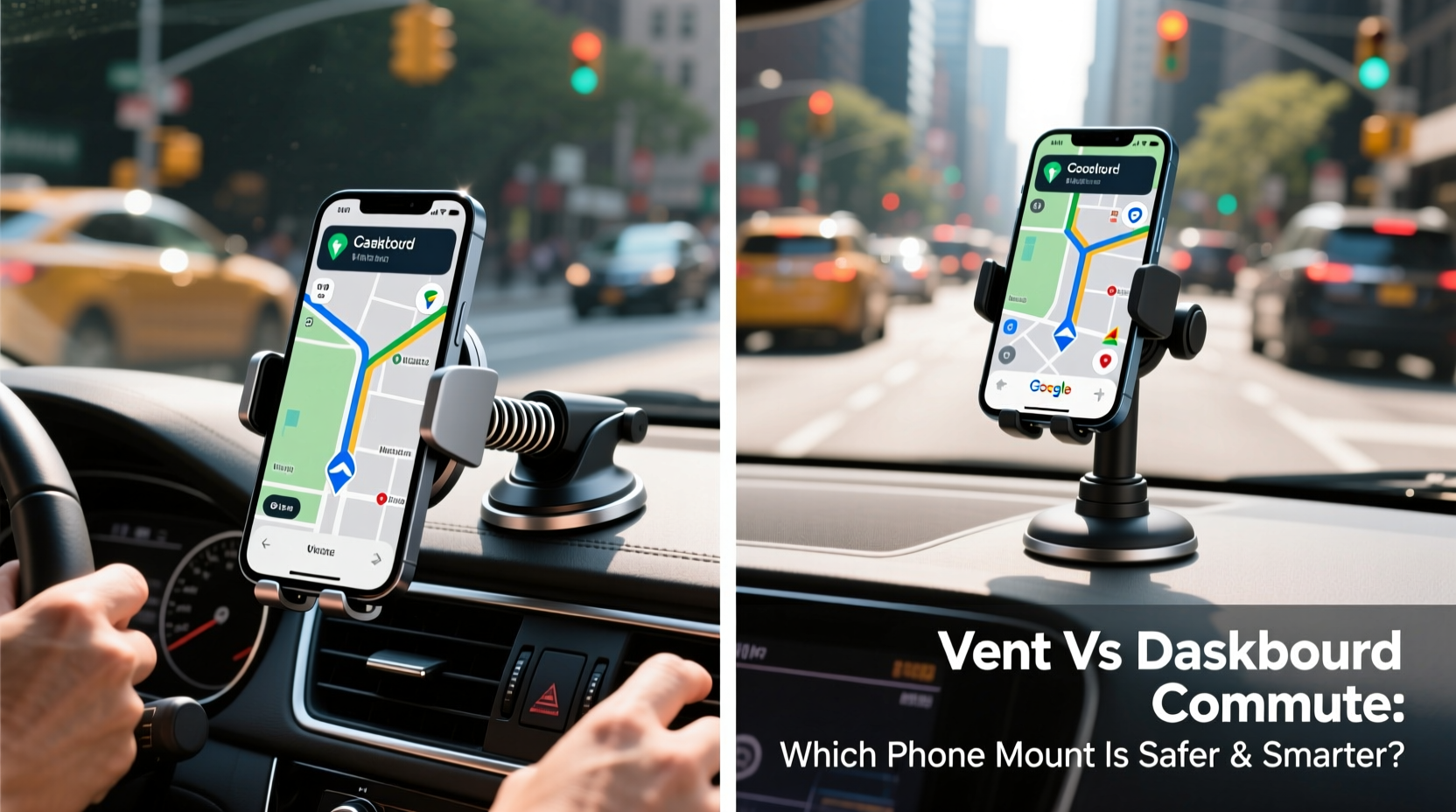
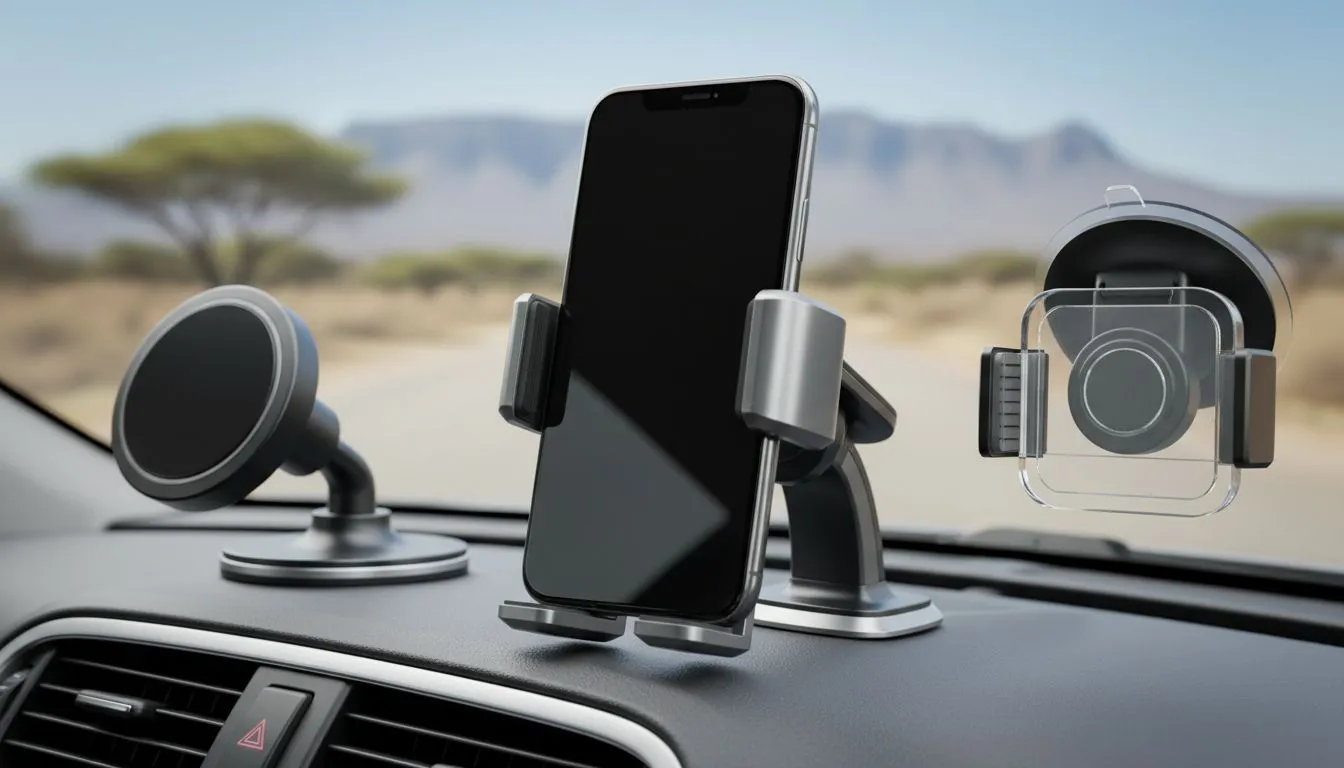
A dashboard phone mount is generally better for stability and larger phones, while a vent mount is better for quick installation, easy removal, and saving dashboard space.
Drivers across the United States use phone mounts for GPS navigation, hands-free calls, and music controls. Whether you drive a pickup in Texas, commute through busy streets in New York, or take long highway trips across California, a secure phone holder can make your daily drive easier. Two common choices are dashboard mounts and air vent mounts. Both keep your phone within reach, but they attach to your vehicle in very different ways.
A dashboard mount usually attaches with a suction cup, adhesive pad, or gel base. It can hold a phone in a fixed position without putting weight on the air vent. A vent mount clips onto the vehicle’s air conditioning vents. It takes up less dashboard space and is often easier to remove, but it depends on the strength and shape of the vent blades.
The better choice depends on your car’s interior, phone size, driving habits, and preferred screen position. A sturdy dashboard mount may work better for someone who uses navigation every day. A compact vent mount may suit a driver who wants a simple setup without attaching anything permanently to the dashboard.
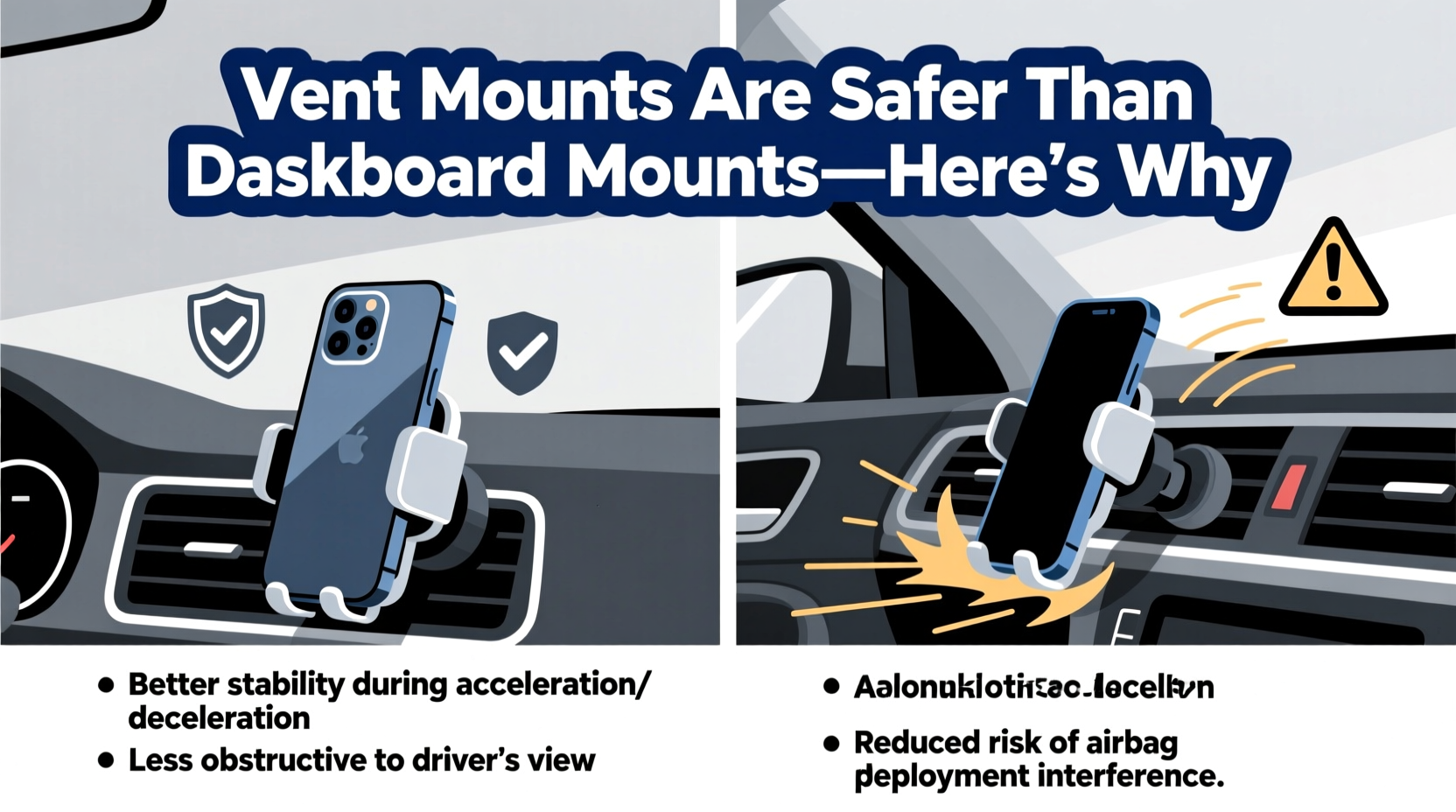
Neither design is automatically safer in every vehicle. The phone should remain outside the driver’s main view of the road, away from airbag deployment areas, and clear of important controls. This guide compares both styles so you can make a practical choice before buying.
The biggest difference is where each mount gets its support. A dashboard mount uses the dashboard as its base, while a vent mount relies on the vehicle’s air vent blades. This affects stability, installation, phone position, airflow, and long-term convenience.
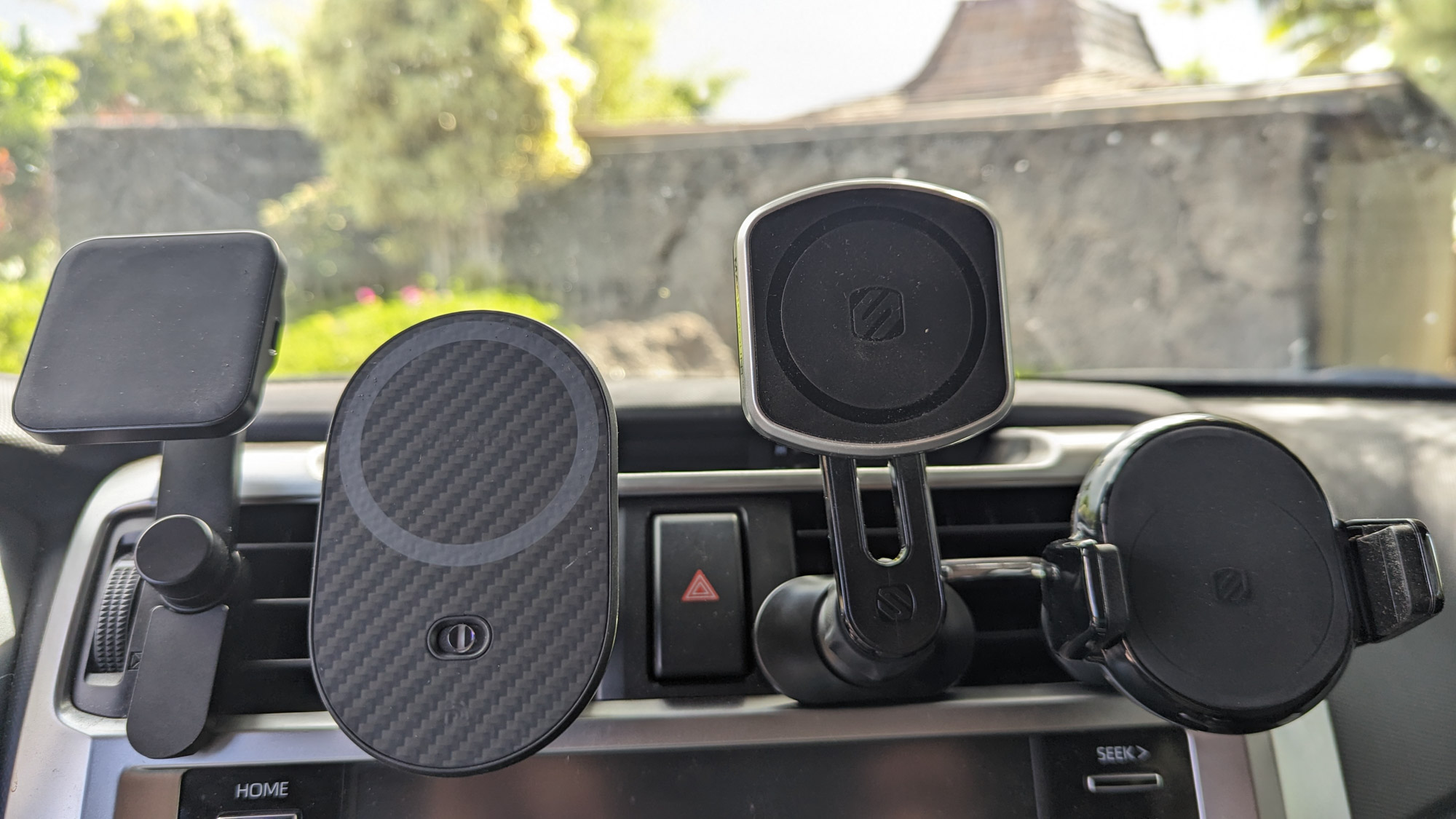
Dashboard mounts come in several designs. Some use a suction cup, others use an adhesive base, and some use a combination of a dashboard pad and suction cup. Vent mounts use clips, hooks, or adjustable locking systems to attach to the vent.
Both styles can hold phones securely when they are compatible with the vehicle and installed correctly. However, a strong phone grip cannot make up for a weak mounting surface or an unsuitable vent.
Source: carinterior.alibaba.com
Dashboard mount
Attaches to a suitable dashboard surface and offers more freedom to choose the phone’s position and viewing angle.
Vent mount
Clips onto an air vent and provides a compact installation without taking up a large area of the dashboard.
Main deciding factor
Choose based on the strength of the attachment point, available space, phone weight, and the driver’s ability to see the screen without losing focus on the road.
Quick Comparison Table
This table compares the main features of both mounting styles. The results describe typical designs, not every product on the market.
Stability
Dashboard mounts often have an advantage when attached to a suitable flat surface. Vent mounts depend on the strength and design of the vent blades.
Installation
Vent mounts are usually quicker to install. Dashboard mounts may need cleaning, careful positioning, and extra time for adhesive to set.
Airflow
Dashboard mounts leave the air vents free. Vent mounts can cover part of a vent and change the airflow.
Removal
Vent mounts are generally easier to remove. Adhesive dashboard mounts can leave residue or require careful removal.
Phone size
A well-supported dashboard mount may handle larger phones better. A vent mount needs a strong clip and compatible vent to support a heavier device.
Heat exposure
Vent mounts can expose phones to direct hot or cold air. Dashboard mounts avoid direct vent airflow but may expose phones to sunlight and cabin heat.
Dashboard appearance
Vent mounts keep the main dashboard surface clear. Dashboard mounts occupy some space and may leave an adhesive mark.
Advantages Of A Dashboard Phone Mount
A dashboard phone mount is a strong option for drivers who want a steady and adjustable place for their phone. It attaches to a compatible area of the dashboard and does not depend on the vehicle’s air vent blades.
This design can be useful during long drives, daily commuting, and regular GPS navigation. Once installed correctly, the base stays in one place while the phone holder lets you adjust the viewing angle.
Dashboard mounts also keep the air vents available for heating and cooling. This can be helpful in areas with very hot summers or cold winters, when drivers often need to use their climate controls.
Source: supervision.cl
Better support on compatible surfaces
A properly attached base can provide a firm foundation. It does not place the phone’s weight directly on a vent blade.
Flexible positioning
Many models have adjustable arms and rotating joints. These features let drivers find a useful angle without changing the mount’s base position.
Keeps vents available
The mount does not need to occupy an air vent, so the driver can direct heating or cooling air as needed.
Useful for larger phones
Some dashboard models have wider cradles and stronger support systems that suit larger phones. Always check the product’s stated size and weight limits.
Good for regular navigation
A fixed mounting position makes it easier to keep the phone in the same place each time you drive.
Suction Cup Vs Adhesive Dashboard Mounts
Suction cup and adhesive mounts both attach to the dashboard, but they work in different ways. A suction cup creates a seal against a compatible smooth surface. Some designs use a lever to improve the seal, while gel pads help the base grip certain surfaces.
An adhesive mount uses a sticky base to attach directly to the dashboard or to an included mounting pad. It can provide a more permanent installation, but moving it may be difficult. The adhesive may also leave residue or affect some dashboard finishes.
Before choosing either design, check the surface requirements in the product instructions. A textured or curved dashboard may not provide the contact needed for a secure seal. Do not assume that every suction cup works on every dashboard.
Choose suction when
You have a suitable smooth surface and may want to remove or reposition the mount later.
Choose adhesive when
You want a more fixed position and the mount is approved for your dashboard material.
Avoid both when
The dashboard surface is unsuitable, the location is near an airbag, or the mount interferes with your view.
Disadvantages Of Dashboard Mounts
Dashboard mounts are not ideal for every vehicle. A large mount may take up valuable space, and a poorly selected location can put the phone in the driver’s line of sight.
Adhesive bases can be difficult to remove. Suction cups may also lose their grip if the surface is dirty, uneven, or unsuitable. Heat and repeated installation can affect some mounting materials.
Another issue is dashboard design. Some modern vehicles have soft-touch finishes, curved panels, built-in displays, or unusual surface textures. These features can make it difficult to find a suitable mounting location.
Surface limitations
Not every dashboard can support a suction cup or adhesive base.
Possible residue
Some adhesive mounts leave marks or residue when removed.
Space requirements
A large base or adjustable arm may make a compact dashboard feel crowded.
Poor placement risks
A mount placed too high or too close to the windshield can interfere with visibility or an airbag deployment area.
Advantages Of A Vent Phone Mount
A vent phone mount is a practical choice when you want a compact holder that does not need an adhesive base. It clips onto a suitable air vent and holds the phone close to the dashboard.
Many drivers like this design because installation is simple. You can usually attach the clip, adjust its position, and remove it without leaving a permanent mark on the dashboard.
Vent mounts can also work well in rental cars or vehicles where you do not want to attach anything to the dashboard. However, the vent must be strong enough to support the phone and the mount.
Source: carinterior.alibaba.com
Simple installation
Most vent mounts attach with a clip, hook, or locking mechanism. They usually require fewer installation steps than adhesive dashboard mounts.
Easy removal
Many designs can be removed without leaving adhesive residue on the dashboard.
Saves dashboard space
The holder uses the air vent rather than taking up a separate area on the dashboard.
Convenient for temporary use
A removable design can be useful when changing vehicles or using a rental car.
Keeps the windshield clear
A vent mount does not need to attach to the windshield, although the phone must still be positioned where it does not obstruct the driver’s view.
Why Vent Mounts May Not Work In Every Car
The biggest limitation is vent compatibility. Some cars have thin horizontal blades, while others have vertical, circular, curved, or unusually shaped vents. A clip designed for one style may not fit another.
Vent strength also matters. A weak or flexible blade may move under the weight of a large phone. This can cause the screen to tilt, the holder to sag, or the phone to become loose on rough roads.
The position of the vent can create another problem. Some vents sit low on the dashboard, which may force the driver to look farther down to read navigation. A mount that places the screen too low is not a good choice simply because it fits.
Check vent shape
Make sure the clip is designed for the exact vent style in your vehicle.
Check blade strength
Avoid attaching a heavy phone to a vent blade that bends or moves easily.
Check screen position
The phone should be easy to glance at without blocking the road or requiring an awkward head movement.
Disadvantages Of Vent Phone Mounts
Vent mounts have a few drawbacks that become clear during daily use. They may block part of the airflow, make vent adjustment harder, and expose the phone to direct heat from the vehicle’s heater.
Hot air can raise a phone’s temperature. Smartphones may reduce performance, pause charging, or show a temperature warning when they become too hot. Direct cold airflow can also create an uncomfortable temperature difference in some conditions.
A vent mount may also be less stable when the vent blades are weak. A heavy phone, thick case, or charging cable can add weight and movement to the holder.
Blocked airflow
The mount may cover part of the vent and reduce the amount or direction of air reaching the cabin.
Direct heater exposure
Warm air can heat the phone, especially during cold-weather driving.
Vent damage risk
An incompatible or overtightened clip can place stress on delicate vent blades.
Limited angle adjustment
Some vent positions make it difficult to place the phone at a useful viewing angle.
Which Phone Mount Is More Stable?
A properly installed dashboard mount often provides better support than a basic vent clip, especially when carrying a large or heavy phone. Its base rests on the dashboard instead of relying on a small vent blade to hold the entire load.
However, this does not mean every dashboard mount is more stable. A poor suction seal, unsuitable dashboard texture, weak adhesive, or loose adjustable arm can cause movement. A well-designed locking vent mount may perform better than a poorly installed dashboard holder.
Road conditions also affect stability. Smooth city roads place different demands on a phone holder than rough rural roads, gravel roads, or roads with frequent bumps. The mount should keep the phone secure under the conditions in which you normally drive.
Source: carinterior.alibaba.com
For heavy phones
A compatible dashboard mount is often the better starting point because it does not place the device’s weight on the vent blades.
For lightweight phones
A vent mount can work well when the vent is sturdy and the clip is designed for its shape.
For rough roads
Look for a secure base, a firm phone cradle, and a short adjustable arm that limits movement.
For long trips
Choose a mounting system that remains secure without needing frequent adjustment.
How To Check Mount Stability Before Driving
Install the mount according to its instructions while the vehicle is parked. Attach the phone with its normal case and charging cable, since these can change the total weight and balance.
Gently check whether the base, clip, and adjustable joints move. Do not force a vent blade or pull hard on an adhesive base. If the mount shifts during a light check, it may not remain secure during normal driving.
Move the steering wheel through its normal range and check nearby controls. Make sure the phone does not cover the instrument panel, interfere with the gear selector, or restrict access to important switches.
Signs of a good fit
The base stays attached, the phone remains firmly held, and the screen does not sag after adjustment.
Signs of a poor fit
The mount slides, the vent blade bends, the phone tilts, or the holder blocks a control.
Dashboard Vs Vent Mount: Which Is Better For Phone Heat?
A dashboard mount usually has an advantage over a vent mount when the vehicle’s heater is running. A vent-mounted phone sits directly beside the airflow outlet, so warm air may blow onto the device.
Smartphones produce heat during demanding tasks such as navigation, video playback, wireless charging, and mobile data use. Direct sunlight or a hot vehicle interior can add more heat. Combining these conditions may cause a phone to become too warm.
Vent mounts can also direct cold air toward the phone during summer. This may help lower its temperature in some situations, but it does not make every vent-mounted setup ideal. Airflow, sunlight, charging, and phone activity all affect the result.
Source: carinterior.alibaba.com
Dashboard mount
Keeps the phone away from direct heater airflow, although the dashboard can become hot when exposed to strong sunlight.
Vent mount
Can expose the phone to hot or cold air directly from the climate system.
Wireless charging
Charging can add heat. Choose a compatible charger and follow the phone and mount manufacturer’s temperature guidance.
How To Reduce Phone Overheating In A Car
Keep the phone out of direct sunlight when possible. Use a shaded mounting position and avoid leaving the device in a parked vehicle during hot weather.
If you use a vent mount, redirect hot air away from the phone when running the heater. Some mounts allow the phone to sit beside the vent rather than directly in front of it.
If the phone displays a temperature warning, stop demanding tasks and charging when safe to do so. Let the device cool naturally. Do not place it in a freezer or use extreme cold to cool it quickly.
Reduce direct sunlight
Choose a shaded location that does not block the driver’s view.
Control heater airflow
Redirect warm air away from a vent-mounted phone.
Limit extra heat
Avoid unnecessary wireless charging and demanding background tasks when the device is already hot.
Which Mount Is Better For GPS Navigation?
For GPS navigation, the better mount is the one that keeps the screen readable with a brief glance while leaving the road clearly visible. A dashboard mount often offers more freedom to adjust the phone’s position, but a vent mount can work just as well when the vent is at a suitable height.
Drivers who use Google Maps, Apple Maps, or another navigation app should set their route before moving. Voice directions can reduce the need to look at the screen, which helps limit distraction.
A phone mounted too low can force the driver to look away from the road for longer. A phone mounted too high can obstruct the forward view. Neither location is ideal, even if the holder itself is strong.
Source: evezone.evetech.co.za
Choose a dashboard mount for
Vehicles with a suitable mounting area that allows the screen to sit in a convenient position without blocking the windshield view.
Choose a vent mount for
Vehicles with a well-positioned vent that holds the phone at a comfortable height.
Avoid
Any position that blocks the road, mirrors, instrument panel, or important controls.
A Simple Navigation Position Test
Park the vehicle in a safe place before adjusting the mount. Sit in your normal driving position and look through the windshield. Check whether the phone sits outside your main forward view.
Next, check whether you can read a navigation instruction with a short glance. You should not need to lean forward, turn your head far to one side, or reach across the cabin.
Finally, check the mirrors, dashboard instruments, steering wheel, and nearby controls. If the phone interferes with any of these, move it or choose another mounting location.
Good placement
The phone is secure, readable with a brief glance, and outside the driver’s main forward sightline.
Poor placement
The phone blocks part of the road, covers a warning light, or requires an awkward movement to see.
Which Mount Is Better For Different Types Of Drivers?
Your driving habits can help narrow the choice. Someone who commutes every day may value a fixed mounting position, while someone who changes vehicles may prefer a removable holder.
Phone size also matters. A large phone with a protective case puts more weight on the holder than a small device. A vent clip must support that weight without bending the vent blades.
The following recommendations are practical starting points. Always check the exact mount’s compatibility and your vehicle’s layout before buying.
Source: shuoweivip.com
Daily commuters
A dashboard mount can be useful when you have a suitable surface and want a consistent position for daily navigation.
Rental car users
A removable vent mount may be more convenient because it does not usually require adhesive installation.
Long-distance drivers
A dashboard mount may be preferable when it provides a stable position and keeps the air vents available.
Drivers with large phones
Consider a dashboard mount with a suitable weight rating and a strong phone cradle.
Drivers with limited dashboard space
A vent mount can save space if the vent is strong and positioned correctly.
Drivers with textured dashboards
A vent mount may avoid suction and adhesive problems, provided the vent is compatible.
What If Neither Mount Fits Your Car?
Some vehicles have dashboards that do not support suction cups and vents that cannot safely hold a phone. In that situation, forcing either mounting style is not a good idea.
A cup holder phone mount may provide another option. It uses the cup holder as its base and can offer adjustable height and angle. However, it may occupy a cup holder and could interfere with nearby controls or storage.
A vehicle-specific mounting system may also work. These products are designed around certain interior features, but compatibility must be checked against the exact vehicle model and year.
Cup holder mount
Consider this when the dashboard and air vents are unsuitable and a cup holder is available in a safe position.
Vehicle-specific mount
Look for a mounting system designed for the exact vehicle interior.
Built-in navigation
If your vehicle supports Apple CarPlay or Android Auto, its infotainment display may reduce the need for a separate phone mount.
How To Choose The Right Phone Mount Before Buying
Do not choose a phone mount based only on appearance or price. A good-looking holder can still be unsuitable for your car if its base does not fit the dashboard or its clip does not match the air vents.
Start by checking your phone’s dimensions and weight with its case attached. Then inspect the mounting area in your car. This simple check can prevent many compatibility problems.
Read the product instructions before ordering. Check whether the mount supports your phone size, whether it requires a metal plate or special case, and whether the manufacturer lists any limits on vent shape or dashboard material.
Source: lymphaire.co
1. Check phone compatibility
Confirm the holder supports your phone’s width, height, thickness, and weight with its usual case.
2. Inspect the mounting area
Look for a suitable flat dashboard surface or a sturdy air vent that matches the holder’s attachment design.
3. Check adjustment options
A rotating head and adjustable arm can help you find a comfortable viewing angle.
4. Review the attachment method
Understand whether the mount uses suction, adhesive, a clip, or a locking hook before purchasing.
5. Check charging needs
If you want wireless charging, confirm that the phone, case, and mount support the same charging standard.
6. Read the vehicle restrictions
Check your vehicle manual and applicable local rules for restrictions on mounting accessories near airbags, controls, and windows.
Magnetic Vs Clamp Phone Holders
The way a mount holds the phone is another important decision. Magnetic holders use a magnetic connection between the phone or its case and the mount. Clamp holders use adjustable arms to grip the phone from its sides.
Magnetic holders make it quick to attach and remove a phone. However, the phone or case must be compatible with the magnetic system. Some models need a separate metal plate or magnetic ring.
Clamp holders do not usually require a magnetic case or plate. They can support a wide range of phones, but the arms must fit the device correctly and should not press against important buttons.
Magnetic holder
Useful for quick attachment and removal when the phone or case is compatible with the mount.
Clamp holder
Useful for phones that do not support magnetic attachment or when you prefer a mechanical grip.
Wireless charging
Check charging compatibility separately. A magnetic connection alone does not guarantee wireless charging support.
Common Phone Mount Mistakes To Avoid
A phone mount should make driving more convenient, not create another problem inside the vehicle. Poor installation and careless placement can cause the holder to fall, damage interior parts, or interfere with safe driving.
Many problems happen because drivers focus on the phone holder but ignore the mounting location. A strong mount in the wrong place is still a bad setup.
Source: autosfreak.com
Installing near an airbag
Never place a mount where it could interfere with an airbag or become a hazard during deployment. Check the vehicle manual for airbag locations and warnings.
Blocking the windshield
Do not place the phone where it obstructs the driver’s forward view. Windshield and dashboard placement rules also vary by jurisdiction.
Forcing a vent clip
Do not force a clip onto a vent that is too thin, weak, curved, or otherwise incompatible.
Ignoring surface preparation
Clean and dry the dashboard as directed before installing a suction or adhesive base.
Using an unsupported phone size
Check the mount’s stated phone size and weight limits, including the weight of the case.
Adjusting the phone while driving
Set the viewing angle and navigation route before moving. Pull over safely if an adjustment is needed.
Leaving the phone in extreme heat
Avoid leaving a phone exposed to direct sunlight inside a hot parked car.
How To Install And Maintain Both Types Of Mounts
Correct installation helps a phone mount stay secure. Follow the instructions supplied with the exact model because suction cups, adhesive pads, and vent clips can have different installation requirements.
Check the mount regularly, especially after moving it or changing your phone case. Dust, loose joints, worn adhesive, and damaged clips can affect how well the holder works.
Steps For Installing A Dashboard Mount
First, choose a suitable location that does not block the road, instrument panel, controls, or airbag areas. Check your vehicle manual before attaching anything.
Clean the mounting surface according to the mount manufacturer’s instructions. Allow it to dry fully. Attach the suction cup or adhesive base as directed and give the adhesive the required setting time if the instructions specify one.
Attach the phone holder and adjust the arm. Place your phone in the cradle and check that the screen remains visible without blocking your view. Gently check the base and joints before driving.
Success check
The base stays in place, the arm does not sag, and the phone remains secure when you gently check the holder.
If it fails
Remove the mount according to its instructions, inspect the surface and attachment parts, and try another approved location or mounting style.
Steps For Installing A Vent Mount
Start by checking the vent design and the clip instructions. Select a sturdy vent blade that can support the phone without bending or moving excessively.
Attach the clip or hook as directed. Tighten the locking system only as much as the manufacturer recommends. Overtightening can damage the vent or the mount.
Attach your phone and check the angle. Make sure the phone does not cover nearby controls or block too much airflow. Test the setup while parked before using it on the road.
Success check
The clip stays secure, the vent blade does not bend, and the phone remains at the selected angle.
If it fails
Remove the clip without forcing the vent. Check compatibility and try a different suitable mounting option if necessary.
Simple Maintenance Tips
Clean the holder with a method approved by its manufacturer. Remove dust and debris from suction surfaces and check adhesive pads for signs of wear.
Inspect vent clips for cracks, loose joints, or damaged locking parts. Avoid using a damaged holder, even if it still appears to hold the phone.
If the phone starts moving during normal driving, stop using the mount until you find the cause. A loose holder should not be treated as a minor inconvenience.
Clean the base
Remove dirt that could interfere with suction or adhesion.
Inspect moving parts
Check adjustable arms, ball joints, clips, and locking knobs.
Check phone grip
Make sure the cradle or magnetic connection still holds the phone properly.
Final Comparison: Which One Should You Choose?
A dashboard phone mount is generally the better all-around choice when your car has a suitable mounting surface and you want a stable, adjustable phone position. It keeps the air vents free and does not place the phone’s weight on the vent blades.
A vent phone mount is a better practical choice when you want easy installation, quick removal, and a clean dashboard. It can also work well when the dashboard has a texture or shape that makes suction and adhesive mounting difficult.
The final decision should come down to fit rather than a general claim that one design is always better. A compatible vent mount can be more useful than a dashboard mount that keeps falling off. Likewise, a well-installed dashboard holder can be a better option than a vent clip that bends the blades.
Best overall for a suitable dashboard
Dashboard mount. It offers flexible positioning and keeps the air vents available.
Best for easy removal
Vent mount. It usually attaches and detaches without adhesive.
Best for large phones
A compatible dashboard mount with a suitable weight rating and firm cradle.
Best for a rental vehicle
A removable vent mount, provided the vent is strong and compatible.
Best for vehicles with weak vents
A suitable dashboard mount, provided the dashboard surface supports the attachment.
Frequently Asked Questions
Q
Is a dashboard phone mount better than a vent mount?
A dashboard phone mount is often better for stability, adjustable positioning, and supporting larger phones when the dashboard surface is compatible. It also keeps the air vents free. A vent mount is better for quick installation, easy removal, and saving dashboard space. The right choice depends on your vehicle and phone.
Q
Do vent phone mounts damage car air vents?
A compatible vent mount should not damage a sturdy vent when installed correctly. However, an unsuitable clip, excessive tightening, or a heavy phone can put stress on the vent blades. Avoid using a vent mount if the blades bend, crack, or move too easily.
Q
Can a dashboard phone mount fall off in hot weather?
Yes. Some suction cups and adhesive materials can lose their grip under unfavorable conditions, including high temperatures and unsuitable dashboard surfaces. Dirt, dust, and poor installation can also affect attachment. Choose a mount designed for your dashboard material and follow its installation instructions.
Q
Does a vent phone mount make a phone overheat?
It can contribute to overheating when hot air from the vehicle’s heater blows directly onto the phone. Sunlight, navigation, and charging can add more heat. Redirect warm airflow away from the device and follow the phone manufacturer’s temperature guidance.
Q
Which phone mount is better for a large or heavy phone?
A compatible dashboard mount is often the better starting point for a large or heavy phone because it does not rely on vent blades for support. Look for a firm base, a suitable weight rating, and a cradle designed for your phone. A vent mount should only be used if its manufacturer confirms compatibility with your phone and vent type.
Q
Are magnetic dashboard phone mounts safe for phones?
A properly designed magnetic phone mount is generally suitable for compatible modern smartphones. However, you should follow the phone and mount manufacturers’ instructions. Check whether your phone or case supports the magnetic system and whether the mount supports wireless charging if you need that feature.
Q
Can I use a phone mount in a rental car?
Yes, but a removable mount is usually more convenient. A compatible vent mount can avoid adhesive residue on the dashboard. You can also consider a cup holder mount if the vent design is unsuitable. Always check that the holder does not interfere with visibility or vehicle controls.
Q
Where should I place a phone mount in my car?
Place it where the screen is easy to glance at but does not block the road, windshield, mirrors, instrument panel, or controls. Keep it away from airbag deployment areas and follow your vehicle manual and applicable local rules. Check the final position while parked.
✦ Wrapping Up
Conclusion
When comparing a dashboard vs vent phone mount, the dashboard option usually wins for stability, adjustable positioning, and regular navigation use. It is especially useful for drivers with larger phones and a suitable dashboard surface. It also allows the vehicle’s air vents to work without obstruction.
A vent phone mount is a practical alternative for drivers who want a compact, removable holder. It can be a good fit for rental cars, smaller cabins, and dashboards that do not support suction or adhesive bases. Just make sure the vent blades are strong enough and the phone will not receive direct hot air.
Neither type is perfect for every vehicle. Before buying, check the phone’s weight, dashboard material, vent shape, and available mounting space. Most importantly, choose a position that keeps your view of the road clear and does not interfere with airbags or vehicle controls.
💡 Key Takeaway
If your dashboard has a suitable flat surface, start with a dashboard phone mount for a stable setup. If you prefer quick removal and have strong compatible vents, choose a vent mount instead. Install it while parked, check its stability, and make sure it does not obstruct your view.