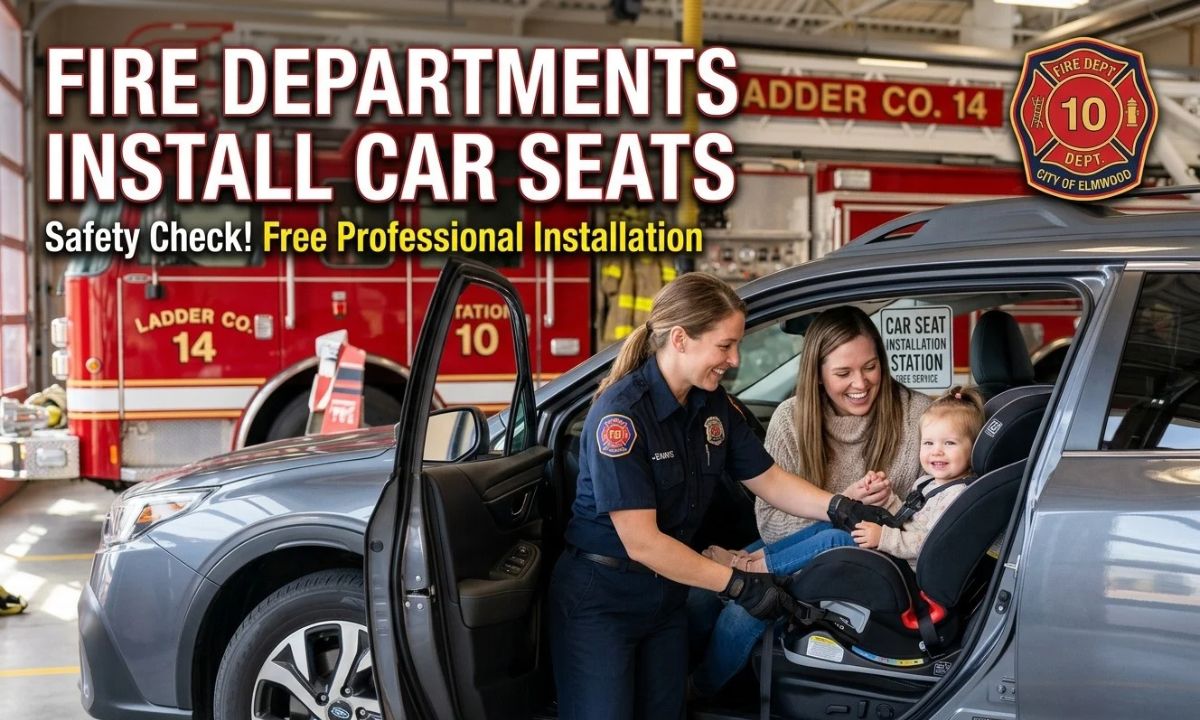
Yes, many U.S. fire departments offer car seat checks or installation assistance, but services vary by department. The safest way to find qualified help is to look for a nationally certified Child Passenger Safety Technician, or CPST.
For parents and caregivers in the United States, getting a child car seat installed correctly can feel harder than it looks. The seat, vehicle, harness, anchors, recline angle, and child all have to work together. That is why many communities use fire departments, police agencies, hospitals, and other local organizations to connect families with trained child passenger safety professionals.
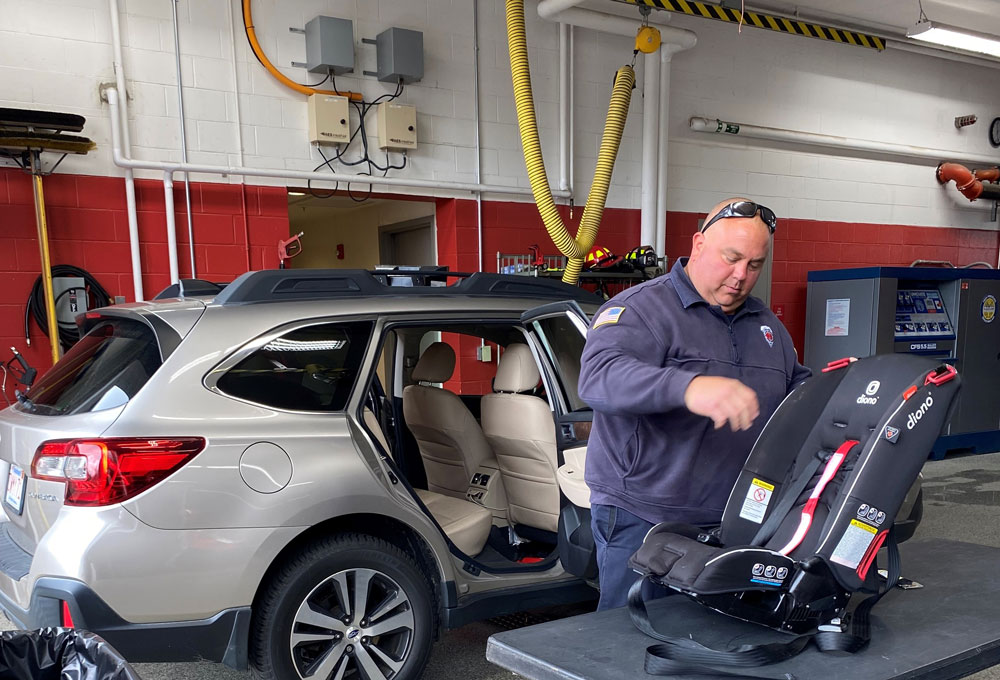
A fire station may offer a scheduled inspection, a community car seat event, or one-on-one help. Some departments may assist with the installation while others mainly check your work and teach you how to repeat it yourself. Do not assume every firefighter is a certified car seat technician. When possible, ask whether the person performing the check is a nationally certified Child Passenger Safety Technician.
Many fire departments across the United States participate in child passenger safety programs, but there is no single nationwide rule requiring every fire station to install car seats. A department may offer inspections, scheduled appointments, community events, education, or hands-on installation help.
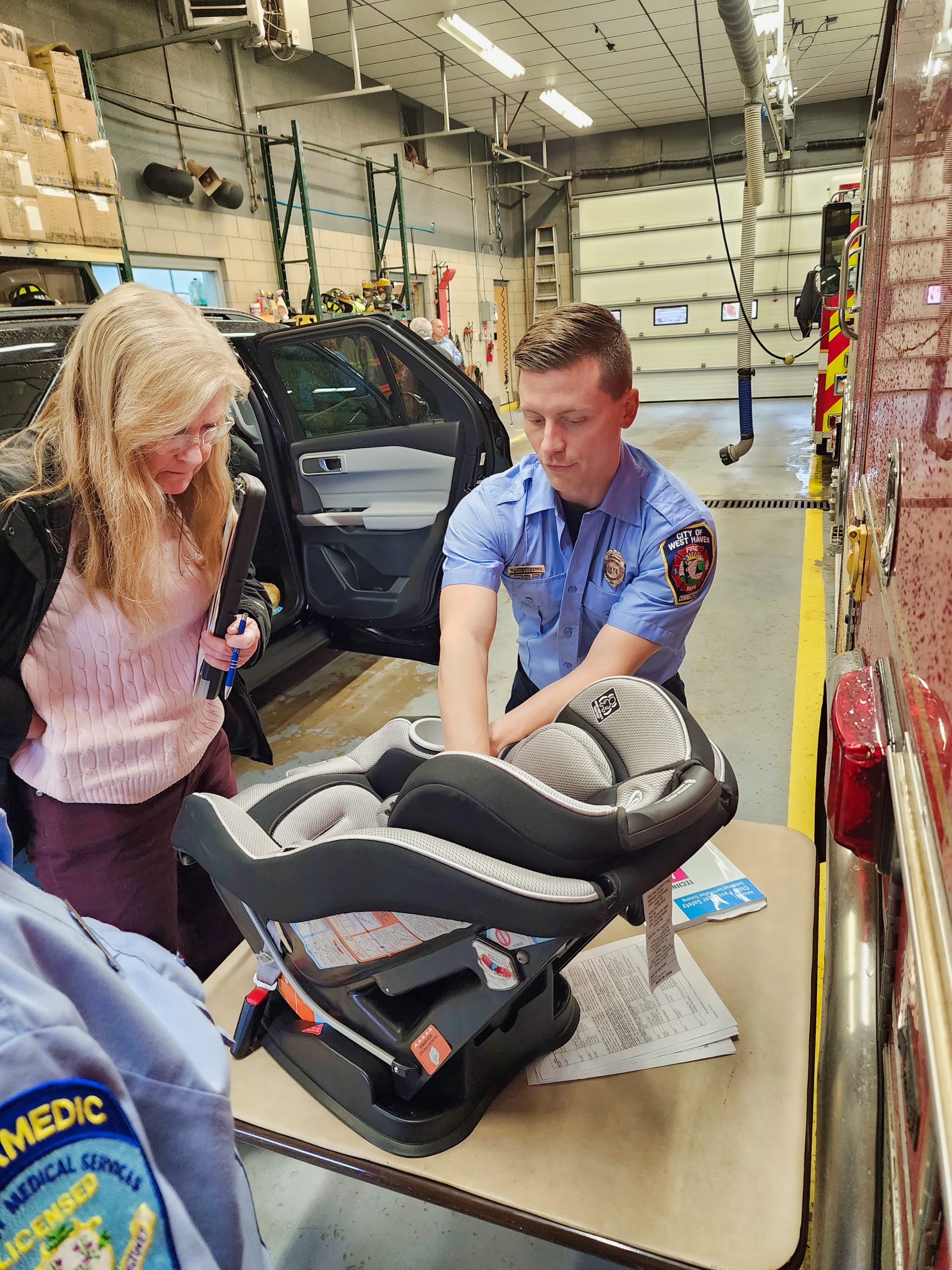
The difference matters because a car seat check is not always the same as a full installation service. A technician may ask you to install the seat while they watch, then correct problems and explain why the changes are needed. This approach helps you learn how to repeat the process correctly later.
NHTSA specifically notes that many local fire and police stations offer free car seat inspections. Because programs can change, call the department before driving over and ask what services are currently available.
Source: coralspringstalk.com
Inspection
A trained professional checks the seat and installation for common errors and explains corrections.
Hands-on help
Some programs provide direct assistance with installing the restraint or fitting the child.
Education
Many checks are designed to teach parents how to install and use the seat correctly rather than simply doing the job for them.
Why Services Differ From One Fire Department to Another
Fire departments have different staffing, training, schedules, and community programs. One station may have several certified technicians while another may not have anyone available for car seat checks. Some departments also participate in occasional safety events rather than offering appointments every week.
For that reason, the best approach is to confirm the service before visiting. Ask whether the person conducting the check is a certified Child Passenger Safety Technician and whether an appointment is required.
Call first
Confirm the service, schedule, appointment requirements, and whether the department checks your specific type of car seat.
Ask about certification
Ask whether a nationally certified Child Passenger Safety Technician will perform or supervise the check.
What Is a Certified Child Passenger Safety Technician?
A Child Passenger Safety Technician, commonly called a CPST, is trained to educate families about child restraints and provide hands-on assistance with car seats, booster seats, and seat belts. The national certification program includes classroom learning, hands-on skills work, testing, and a community seat check.
Certification is different from simply having experience with children or working for a fire department. A firefighter can be highly experienced and still not be a certified CPST. If you want a professional car seat inspection, ask specifically about CPST certification.
Certified technicians can also help explain why an installation needs to change. That matters because the goal is not just to make one installation look correct. Parents and caregivers need to understand how to use the restraint correctly on future trips.
Source: consumerauto.us
Trained for child restraints
CPSTs receive specialized training covering child restraints, vehicle systems, installation techniques, and child fit.
Hands-on assessment
Certification training includes practical work with car seats and vehicles, not just classroom instruction.
Parent education
A seat check should help the caregiver understand how the restraint works and how to use it correctly.
How to Verify a Technician
Ask the fire department, hospital, police agency, or safety organization whether the person conducting the inspection is nationally certified. You can also use the National CPS Certification program’s technician search to locate certified professionals and check available community resources.
Safe Kids Worldwide also maintains resources for finding car seat checkups, inspection stations, and certified technicians. Availability depends on the community, so you may need to search more than one option.
Use the certification directory
Search for a nationally certified technician through the National CPS Certification program.
Check Safe Kids resources
Look for local car seat checkups, inspection stations, and community events.
How to Find a Fire Department Car Seat Check
Start with your local fire department’s non-emergency phone number or official website. Ask whether the department offers child car seat inspections, installation assistance, or referrals to a certified CPST.
If the department does not offer the service, do not stop there. NHTSA and Safe Kids resources can help you find inspection stations and certified technicians in other community locations. Some technicians also provide virtual assistance, although an in-person inspection may be more useful when the installation or vehicle setup is complicated.
Before making an appointment, have your car seat and vehicle information ready. Tell the technician the child’s age, height, and weight when requested, and mention whether the child normally rides rear-facing, forward-facing, or in a booster.
Source: lebanonfiredept.com
Step 1: Contact the fire department
Ask whether certified child passenger safety services are offered and whether appointments are required.
Step 2: Search certified resources
Use national child passenger safety directories if your local station does not provide checks.
Step 3: Bring the right materials
Bring the car seat, vehicle, manuals, and any accessories that are part of the normal installation.
Step 4: Plan enough time
A useful seat check may involve questions, adjustments, installation changes, and hands-on teaching.
What to Bring to a Car Seat Inspection
Bring the car seat you actually use, not just a photo or model number. If possible, bring the vehicle where the child normally rides. Also bring the car seat manual and your vehicle owner’s manual because installation instructions can vary by seat and vehicle.
If the seat has been involved in a crash, has visible damage, is missing parts, or has an unknown history, tell the technician before attempting to install it. A technician can help identify whether the seat should be replaced or whether manufacturer guidance is needed.
Car seat
Bring the actual restraint so the technician can inspect its installation and condition.
Vehicle
Use the vehicle in which the child normally travels whenever possible.
Manuals
Bring both the car seat instructions and the vehicle owner’s manual.
What Happens During a Professional Car Seat Check?
A proper seat check looks at more than whether the car seat appears tight. The technician considers the child’s size and restraint type, the car seat instructions, the vehicle’s seating position, the installation method, and the child’s harness fit.
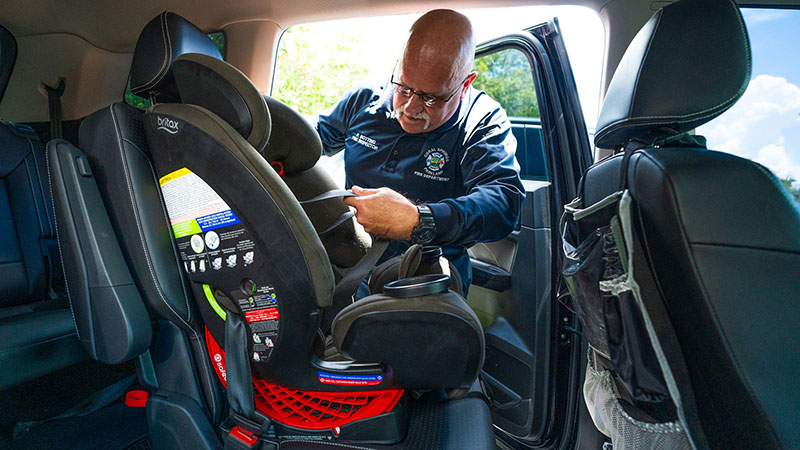
You may be asked to install the seat yourself while the technician observes. The technician can then point out problems such as an incorrect belt path, loose installation, incorrect harness routing, an incorrect recline angle, or a missing tether connection on a forward-facing seat when the manufacturers permit and require its use.
NHTSA says an installed car seat should not move more than 1 inch side-to-side or front-to-back when pulled at the belt path. The exact installation also depends on the instructions for the particular car seat and vehicle.
Source: whatsupwyoming.com
Seat position
The technician checks whether the chosen vehicle seating position and installation method are permitted by the instructions.
Installation tightness
The seat should be secured according to the manufacturer’s instructions and should not move more than 1 inch at the belt path.
Harness fit
The technician checks harness routing, snugness, and chest clip position for the child’s restraint.
Tether use
For forward-facing seats, NHTSA recommends using the tether with the permitted installation method when the car seat and vehicle manufacturers allow it.
Signs the Check Was Thorough
A useful inspection should involve the actual child restraint and vehicle, not just a quick visual glance. You should leave knowing what was changed and how to repeat the correct setup.
The technician should also be willing to explain the reason for important corrections. If you leave without understanding how to buckle the child or reinstall the seat later, ask questions before ending the appointment.
You understand the installation
You should know which belt path, anchors, recline setting, and other features apply to your seat.
You can fit the child
You should understand how the harness or vehicle belt should fit the child.
Car Seat Installation Mistakes to Check Before You Drive
The most useful thing you can do before a professional check is avoid assuming that a seat is correct simply because it feels tight. Read the car seat manual and vehicle owner’s manual together because the permitted installation method can vary between vehicles and restraints.
For example, NHTSA says a car seat should be installed using either the vehicle’s lower anchors or the seat belt, according to the manufacturer’s instructions. A forward-facing seat with a tether should have the tether connected and tightened when permitted by both the car seat and vehicle manufacturers.
The child’s harness also needs attention. Harness straps should lie flat and snug against the child, and the chest clip should be positioned at armpit level. Exact harness slot placement depends on whether the child is rear-facing or forward-facing and on the specific seat instructions.
Source: greeleytribune.com
Using the wrong belt path
Follow the exact belt path shown in the car seat manual for the installation direction you are using.
Leaving the seat too loose
Check movement at the belt path and follow the manufacturer’s installation instructions.
Skipping the tether
For a forward-facing seat, use the tether as directed by the car seat and vehicle manufacturers.
Loose harness straps
The harness should be snug enough that extra material cannot be pinched at the shoulder.
Incorrect chest clip position
NHTSA recommends placing the chest clip at armpit level.
Do Not Mix Instructions From Different Seats
Car seats are not interchangeable in how they install. Even two seats from the same manufacturer may have different requirements. The safest approach is to follow the instructions for the exact model and the owner’s manual for the exact vehicle.
If the instructions appear to conflict, stop and ask the manufacturer or a certified technician rather than guessing. A professional can help identify which installation methods are allowed for that particular combination.
Check the exact model
Use the manual and labels for the actual car seat instead of relying on a similar-looking model.
Check the vehicle
Vehicle seat belts, lower anchors, tether anchors, and seating positions can have specific requirements.
What If Your Fire Department Does Not Install Car Seats?
A fire department that does not offer car seat installation does not mean you are out of options. Look for a certified Child Passenger Safety Technician through the National CPS Certification program or a Safe Kids car seat checkup or inspection station.
NHTSA says certified technicians are available across the country and that many inspections are free. Some communities also offer virtual appointments. If you cannot find an appointment at a fire station, a hospital, health organization, police agency, or community safety event may provide another route to certified assistance.
When contacting another organization, ask exactly what service it provides. Some locations perform inspections only, while others offer appointments or hands-on installation assistance. Ask whether the service is free, whether you need an appointment, and whether you should bring your vehicle and child.
Source: dfd3.org
National CPS Certification search
Use the national certification program to locate certified technicians and available resources.
Safe Kids checkups
Safe Kids provides resources for finding car seat checkup events and inspection stations.
NHTSA inspection resources
NHTSA provides car seat guidance and tools for finding inspection assistance.
How to Choose Between a Fire Station and Another Inspection Location
The location matters less than the qualifications and service provided. A certified technician at a hospital, police department, community event, or other inspection station can provide the same type of specialized child passenger safety guidance.
If your installation is unusual or you have a specific concern, describe it when scheduling. Examples include installing multiple car seats, using a particular vehicle seating position, moving from rear-facing to forward-facing, or dealing with a seat that has been involved in a crash.
Prioritize certification
Look for a nationally certified CPST rather than choosing a location solely because it is nearby.
Explain special circumstances
Tell the technician about multiple seats, unusual seating positions, or other installation concerns before the appointment.
When Should You Get a Car Seat Checked?
A professional check can be useful whenever you install a new car seat, change vehicles, move a child into a different type of restraint, or are unsure whether the current setup is correct. It is also reasonable to seek help after you have made an installation change and want someone qualified to verify it.
You do not have to wait for a national safety event. Fire departments and other organizations may offer checks throughout the year, while Safe Kids and other community programs may schedule special events.
It is also worth checking the seat after reading a new manufacturer instruction, changing installation methods, or discovering that a part of the vehicle or restraint is different from what you expected. If the seat is subject to a recall, follow the manufacturer’s recall instructions rather than relying on a routine installation check.
Source: wjbf.com
New car seat
Have a new restraint checked if you are uncertain about its installation or fit.
New vehicle
A seat that worked in one vehicle may require a different permitted installation method in another.
Child changes
Growth and changes in restraint mode can affect harness position, fit, and installation requirements.
After a crash
Follow the car seat manufacturer’s crash guidance and ask for professional help if you are unsure whether the restraint should be replaced.
What to Do After the Inspection
Before leaving, make sure you understand the installation and child fit. If the technician has shown you a correction, repeat the step yourself so you know what to do later.
Register the car seat with its manufacturer if you have not already done so. Registration helps the manufacturer contact you about safety recalls and other important notices.
Repeat the key steps
Make sure you can install and tighten the seat yourself after the technician explains the correct method.
Register the seat
Use the manufacturer’s registration process so you can receive applicable recall and safety notifications.
Frequently Asked Questions
Q
Do all fire departments install car seats?
No. Fire department programs vary by location. Some offer car seat inspections or hands-on assistance, while others may refer families to a certified Child Passenger Safety Technician.
Q
Are fire department car seat checks free?
Many community car seat checks are free, but fees and appointment policies can vary. Call the department or inspection location first to confirm the current service and cost.
Q
How do I find a certified car seat technician?
Use the National CPS Certification program’s technician search or Safe Kids car seat checkup resources. You can also ask your local fire department, hospital, or police agency for a referral.
Q
Can a firefighter install my child’s car seat?
A firefighter can provide car seat assistance if trained and authorized to do so, but not every firefighter is a certified CPST. Ask whether a nationally certified technician will perform or supervise the check.
Q
How tight should a car seat be after installation?
NHTSA advises that the installed seat should not move more than 1 inch side-to-side or front-to-back when pulled at the belt path. Always follow the exact instructions for your seat and vehicle.
✦ Wrapping Up
Conclusion
Fire departments can be a valuable place to find car seat safety help in the United States, but services differ from one community to another. Some stations offer inspections and installation assistance, while others connect families with certified Child Passenger Safety Technicians.
The key question is not simply whether a fire station installs car seats. Ask whether the person checking the seat is a nationally certified CPST and whether the service includes hands-on education. If your local department does not provide the service, use NHTSA, Safe Kids, or the National CPS Certification program to find another qualified resource.
Bring the actual car seat and vehicle when possible, follow both manuals, and ask questions until you understand the installation and harness fit. A professional check is most useful when it leaves you confident that you can repeat the correct setup on your own.
💡 Key Takeaway
Call your local U.S. fire department and ask for a car seat inspection by a nationally certified Child Passenger Safety Technician. If the department does not offer one, search the National CPS Certification or Safe Kids resources for a nearby certified technician or inspection station.