
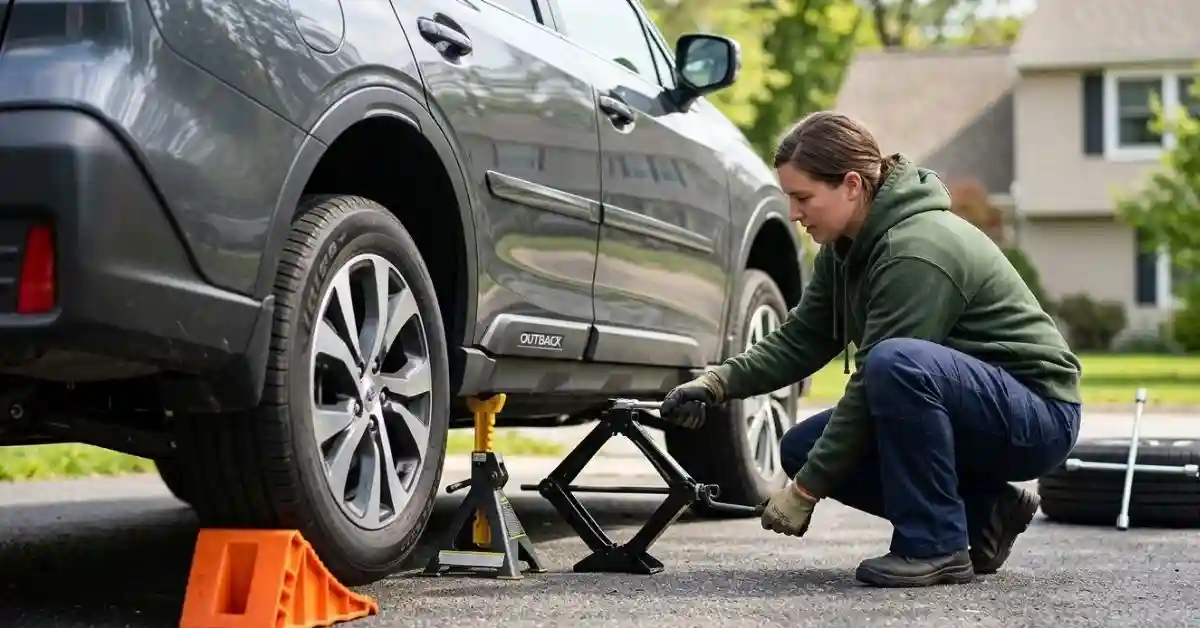
A scissor jack looks simple, but lifting a car is not a job to rush. I learned that the hard part is not turning the handle. The real issue is keeping the vehicle stable before, during, and after it is raised.
If you are learning how to use a scissor jack safely, focus first on the safety rules. Your vehicle owner’s manual should always come first because jack points and lifting limits can vary by vehicle. Never rely on a jack alone to support a vehicle while someone works underneath it.
Why Scissor Jack Safety Matters More Than Speed
A scissor jack is made to lift a vehicle at a specific lifting point. It is not a general support stand. If the ground is soft, the jack is placed in the wrong spot, or the vehicle can roll, the setup can become unsafe very quickly.
I used to think that a jack that looked solid was good enough. That is not a safe way to judge it. The surface, vehicle, jack point, weight, and setup all matter.
| Safety concern | Why it matters |
| Soft ground | The jack can sink or become unstable |
| Wrong jack point | The vehicle or body parts may be damaged |
| Vehicle movement | The jack can shift or tip |
| Overloaded jack | The jack may not safely support the load |
For that reason, vehicle manufacturers commonly call for a firm, level surface, wheel blocking, and the parking brake before raising a vehicle.
Check the Vehicle Manual Before Touching the Jack
This is one step I would never skip. The owner’s manual tells you where the approved lifting points are and may give specific instructions for your vehicle.
A jack that works with one car may not be suitable for another. Even two cars that look similar can have different lifting points.
Look for the Correct Jack Points
The lifting point is the area designed to accept the jack. Do not guess based on what looks strong underneath the car.
Toyota, for example, tells owners to place the jack at the specified jack point and make sure it is on a level, solid surface.
| What to check | What I would do |
| Jack point | Follow the owner’s manual |
| Jack capacity | Check the jack label or manual |
| Vehicle weight | Confirm the jack is suitable |
| Ground | Use a firm, level surface |
If you cannot identify the correct jack point, stop and ask an adult or qualified mechanic for help.
The Ground Is a Bigger Deal Than It Looks
One mistake people often overlook is the surface. A driveway may look flat while still having loose gravel, mud, soft soil, or a slope.
A scissor jack needs a stable base. A poor surface can make the whole setup less predictable.
Official vehicle guidance also stresses using a firm or hard, level surface before raising the vehicle.
Avoid Slopes and Soft Surfaces
Do not treat a hill, muddy shoulder, sandy area, or soft lawn as an acceptable place to lift a car.
| Surface | Safety concern |
| Level hard surface | Generally the intended type of surface |
| Gravel | Can shift under load |
| Soft soil | Jack may sink |
| Sloped ground | Vehicle movement risk increases |
If the car cannot be moved to a safe surface, roadside assistance is a much better choice than trying to improvise.
Keep the Vehicle From Moving
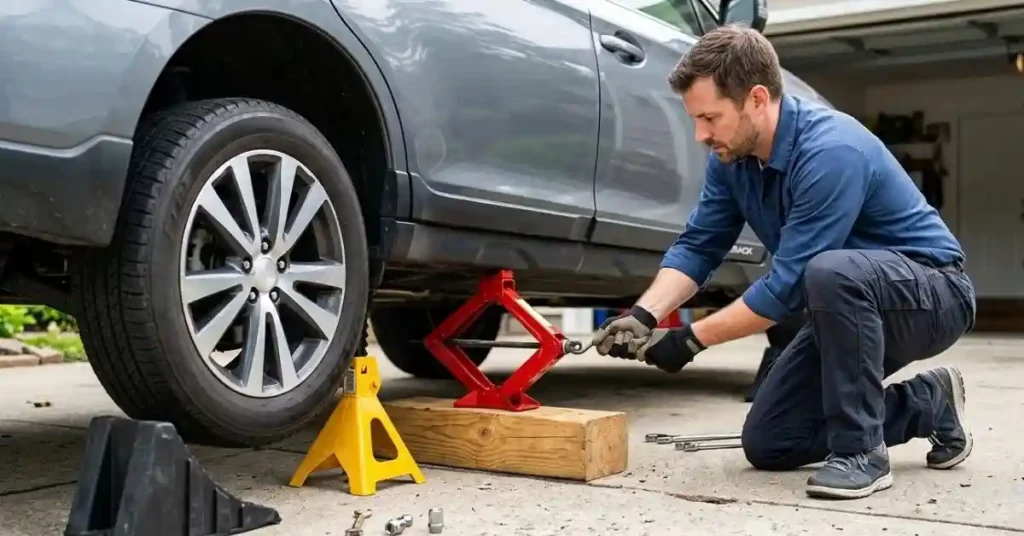
Vehicle movement is one of the biggest concerns during any jacking job.
The parking brake should be set, and the vehicle should be secured according to the instructions in its owner’s manual. Wheel chocks may also be required to help prevent movement. NHTSA documents and vehicle manuals repeatedly stress blocking wheels and preventing vehicle movement.
Do Not Leave People in the Vehicle
Passengers should not remain inside while a vehicle is being raised. One Ram owner’s guide, for example, specifically warns against having anyone sit in the vehicle while it is on a jack.
This is one of those small rules that is easy to forget when changing a tire in a hurry.
Never Work Under a Vehicle Supported Only by a Scissor Jack
This is the rule I would put in bold if I were making a garage safety checklist.
A scissor jack is not a safe substitute for proper vehicle support.
If work needs to be done underneath the vehicle, use the support method specified by the vehicle manufacturer and appropriate equipment. NHTSA safety material warns not to work under a vehicle supported only by jacks because a jack can slip or fall.
| Situation | Safe approach |
| Emergency tire change | Follow the vehicle manual |
| Inspection underneath | Use proper vehicle support |
| Repair underneath | Have a trained adult or mechanic handle it |
| Unclear lifting point | Stop and check the manual |
A scissor jack may be supplied with a car for emergency tire changes. That does not mean it should be used as a long-term support device.
Common Scissor Jack Mistakes I Would Avoid
Most mistakes are not caused by the jack handle itself. They happen because someone is rushing or assumes one vehicle works like another.
Mistake: Guessing the Jack Point
The underside of a car can have many strong-looking parts. That does not mean they are approved lifting points.
Use the location shown in the owner’s manual instead of guessing.
Mistake: Using a Random Piece of Wood
People sometimes try to solve an unstable surface with whatever material is nearby. That can create a new problem if the material moves, cracks, or changes the jack’s position.
If the ground is unsuitable, the safer choice is to stop and get proper help.
Mistake: Going Under the Car
This is the mistake with the greatest potential consequence.
A jack can lose stability. That is why manufacturer guidance warns against getting under a vehicle supported only by a jack.
| Mistake | Better habit |
| Guessing the lift point | Check the manual |
| Working on a slope | Move to a suitable surface |
| Leaving people inside | Keep everyone out |
| Going under a jack-supported car | Use proper support or a mechanic |
How to Tell When You Should Stop
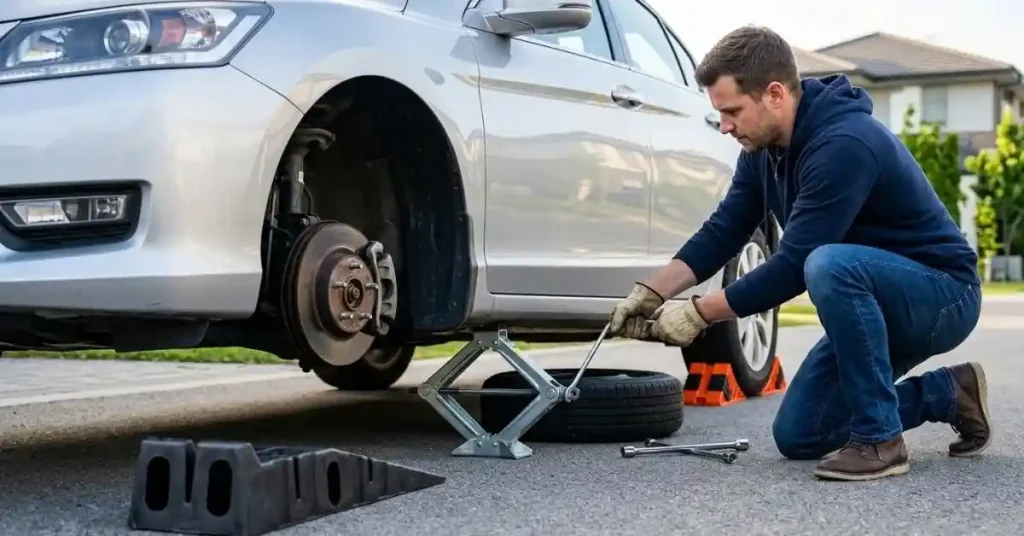
There is no prize for finishing a tire change when the setup does not feel right.
If anything looks unstable, stop. Do not try to “fix it” while the vehicle is raised.
Warning signs include:
- The vehicle moves unexpectedly.
- The jack does not sit as expected.
- The ground starts to sink.
- The lifting point does not match the manual.
- The jack appears damaged.
- The vehicle is on an unsafe slope.
- You are unsure about the correct procedure.
When in doubt, lower the risk by getting help rather than experimenting.
Scissor Jack vs. Proper Workshop Support
A scissor jack and a workshop lifting system serve very different purposes.
A small scissor jack is compact and useful for emergency situations when used as the vehicle maker intended. A workshop setup is designed for controlled lifting and support during repair work.
| Equipment | Main role |
| Scissor jack | Emergency vehicle lifting |
| Jack stand | Supporting a raised vehicle when appropriate |
| Vehicle lift | Professional repair and service |
The important point is that these tools are not interchangeable. A small emergency jack should not be treated like a professional workshop lift.
What I Learned About Jack Safety
The biggest lesson is that the jack itself is only one part of the safety picture.
The surface matters. The jack point matters. Vehicle movement matters. The condition of the equipment matters. Most of all, knowing when not to continue matters.
I also learned that confidence can be misleading. A car can look perfectly stable while sitting on a jack, but that does not make it safe to work underneath.
A Simple Safety Check Before Any Jacking Job
Before an adult or trained person starts, I would want these basic questions answered.
| Question | Safe answer |
| Is the surface firm and level? | Yes |
| Is the correct jack point known? | Yes |
| Is the jack suitable for the vehicle? | Yes |
| Can the vehicle move? | It has been secured as the manual requires |
| Does anyone need to go underneath? | No, unless proper support is in place |
If one answer is unclear, pause before continuing.
Final Thoughts
Learning how to use a scissor jack safely is less about learning a complicated trick and more about respecting the risks. Follow the vehicle owner’s manual, use the correct lifting point, prevent vehicle movement, and never rely on a jack alone to support a vehicle while someone works underneath it.
My biggest takeaway is simple: if you are unsure, do not guess. Ask a trained adult or mechanic for help. A few extra minutes are worth far more than taking a risk with a heavy vehicle.
FAQs About How to Use a Scissor Jack Safely
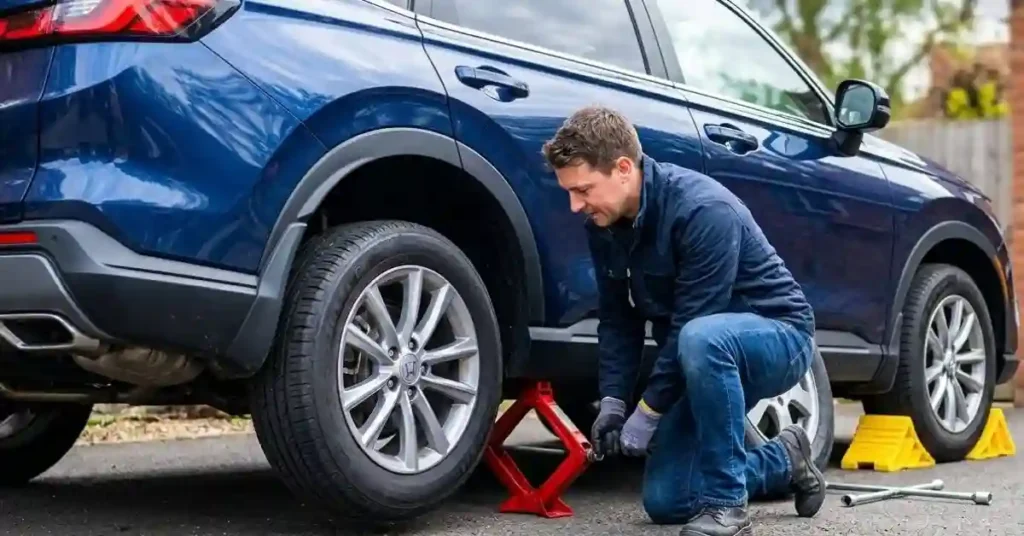
1. How do you use a scissor jack safely?
Use the car maker’s jack points and a firm, level surface. Set the brake and keep people clear. Never work under a car held only by a jack.
2. Can you work under a car with a scissor jack?
No. A scissor jack is not made to hold a car for work below it. Use proper support made for the car, or let a trained mechanic do the job.
3. Where should a scissor jack be placed?
Place it only at the jack point listed in your car’s manual. Do not guess. The wrong spot can harm the car or make the jack less stable.
4. Can a scissor jack be used on a slope?
No. A slope can let the car move or make the jack less stable. Use a firm, level surface. If you cannot, get help rather than take a risk.
5. What are common scissor jack safety mistakes?
Common errors include using the wrong jack point, lifting on soft ground, and going under the car. Always check the manual and use proper support when needed.
To Get More About Home, Car Accessories Product You Can Visit Our Site. If You Found our Posts Helpful Leave a Comment Below