
Using a coffee maker looks easy, and it is. Still, I learned that a few small steps can make a big difference in the taste of the coffee. The first few times I used one, I focused only on adding coffee and water. I soon found that the grind, water level, filter, and clean machine all matter.
In this guide, I’ll walk you through how to use a coffee maker in a simple way. I’ll also cover common mistakes, coffee-to-water ratios, cleaning, and a few tricks that can make your daily cup better.
How to Use Coffee Maker for the First Time
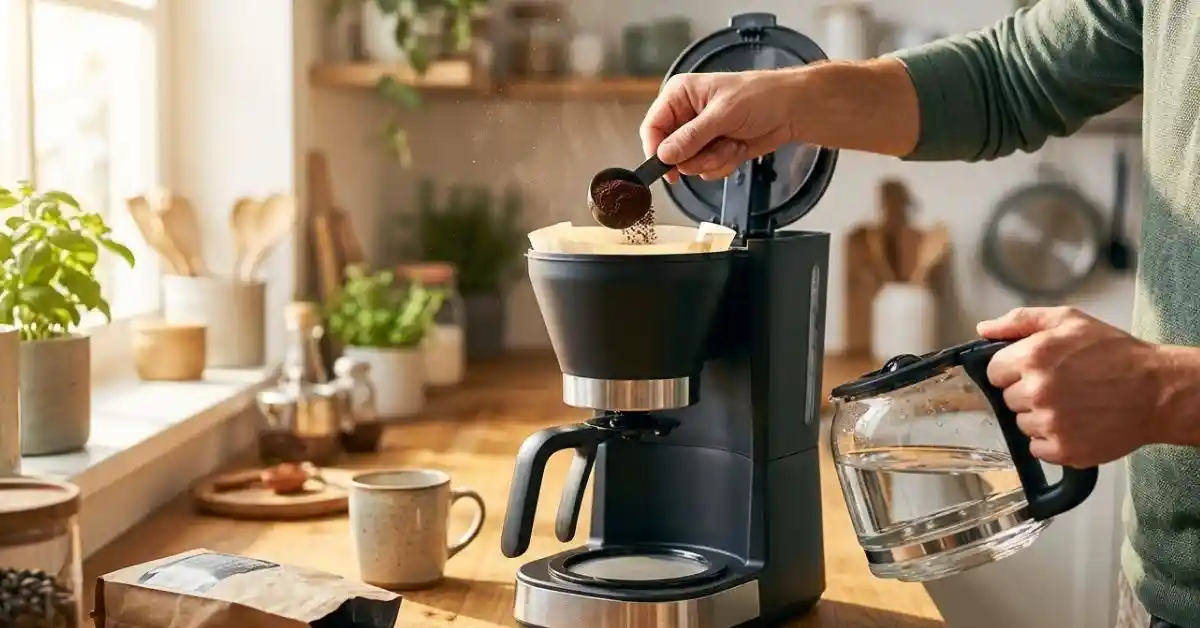
If you have a basic drip coffee maker, the process is quite simple. Add water, add ground coffee, place the filter, and start the machine. But doing each step in the right order helps prevent weak or bitter coffee.
Here is the basic process I use:
| Step | What to Do |
| 1 | Fill the water tank |
| 2 | Add a paper or reusable filter |
| 3 | Add ground coffee |
| 4 | Place the carafe |
| 5 | Turn on the coffee maker |
| 6 | Let the coffee finish brewing |
Before the first brew, I also like to check the maker’s manual. Some models have a special setup cycle. Others may need a quick rinse before use.
How Much Coffee Should You Use?
The amount of coffee depends on how strong you like it. A good starting point is about 1 to 2 tablespoons of ground coffee for every 6 ounces of water.
I prefer starting with less coffee. It is easier to add more next time than to fix a very strong pot.
| Water | Ground Coffee |
| 12 oz | 2–4 tbsp |
| 24 oz | 4–8 tbsp |
| 36 oz | 6–12 tbsp |
One thing that confused me at first was the word “cup.” A coffee maker’s cup is often smaller than a normal kitchen cup. So the numbers on the water tank may not match the cup you use at home.
What You Need Before Using a Coffee Maker
You do not need much to make drip coffee. Having the right few items makes the process faster and more consistent.
| Item | Why It Helps |
| Fresh coffee | Gives better flavor |
| Clean water | Keeps the taste fresh |
| Coffee filter | Holds the grounds |
| Measuring spoon | Keeps each brew even |
| Coffee mug | Ready for serving |
For daily use, I keep my coffee, scoop, and filters near the machine. It sounds minor, but it saves time on busy mornings.
Fresh water also matters more than I expected. If your tap water has a strong taste or smell, that taste can show up in the coffee.
How to Add Water and Coffee the Right Way
Once the machine is ready, fill the water tank to the amount you need. Try not to guess if the tank has clear markings.
Next, put the filter in the filter basket. Then add your ground coffee.
Do not pack the grounds down. Coffee needs water to move through the grounds during brewing.
Should You Use Hot or Cold Water?
For most standard drip coffee makers, use cold or room-temperature water. The machine heats the water as part of the brewing process.
Adding very hot water is not needed. It may also make the machine work in a way the maker was not designed for.
| Water Choice | My Take |
| Cold water | Best simple choice |
| Room-temp water | Fine to use |
| Very hot water | Usually not needed |
I stick with cold, clean water from the start. It keeps the routine simple.
How to Start a Coffee Maker
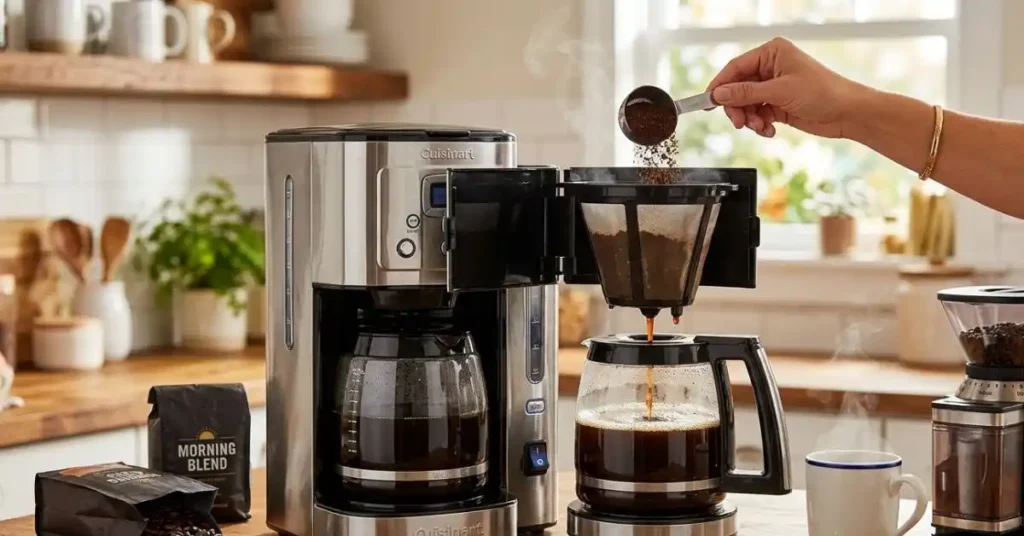
After adding the water and coffee, check that the carafe is sitting in its proper place. Then close the filter area and press the brew or start button.
Most drip coffee makers will do the rest on their own.
Do not remove the carafe too early unless your machine has a pause-and-serve feature. Some coffee makers can drip coffee while the pot is removed, which can make a mess.
What Happens During Brewing?
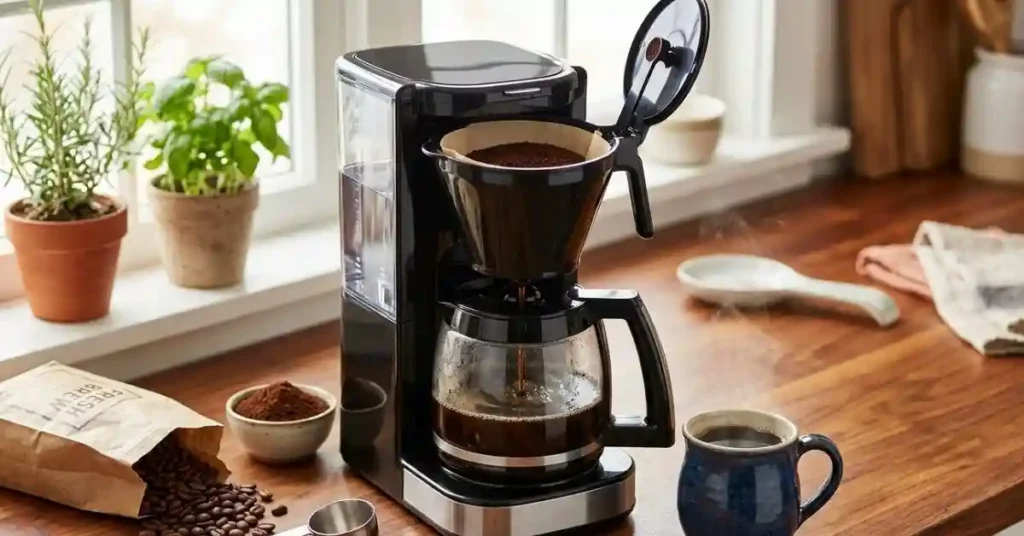
The machine heats the water and sends it over the coffee grounds. The brewed coffee then moves into the carafe.
| Brewing Stage | What Happens |
| Heating | Water gets hot |
| Brewing | Water passes through grounds |
| Collecting | Coffee flows into carafe |
The smell can be a good sign that brewing is nearly done. I usually wait until the machine stops before pouring the first full cup.
How to Make Coffee Taste Better
The machine itself is only part of the result. Coffee quality, grind size, water, and cleaning all play a role.
The biggest change I noticed came from using fresh ground coffee. You do not need expensive beans. Even a basic fresh coffee can taste better than old grounds.
Use the Right Coffee Grind
For a standard drip coffee maker, medium-ground coffee is usually a good place to start.
Coffee that is too fine may slow the water flow. Coffee that is too coarse may let water pass too fast.
| Grind | Possible Result |
| Too fine | Bitter or slow brew |
| Medium | Balanced starting point |
| Too coarse | Weak or thin coffee |
If your coffee tastes weak, do not instantly add a huge amount of coffee. Check the grind and water amount first.
Common Coffee Maker Mistakes I Would Avoid
A coffee maker is simple, but there are a few mistakes that can ruin a good brew. I have made some of these myself, especially when I was in a rush.
| Mistake | Better Approach |
| Too much water | Measure it first |
| Too many grounds | Start with a simple ratio |
| Dirty machine | Clean it often |
| Old coffee | Use fresher grounds |
| Wrong grind | Try medium grind |
Another easy mistake is leaving coffee on the hot plate for too long. The heat can change the taste and make the coffee seem harsh.
If I am not going to drink the whole pot soon, I prefer to pour it into a thermal carafe if my setup allows it.
How to Use a Coffee Maker Without Making Weak Coffee
Weak coffee is one of the most common complaints. The first thing I check is the coffee-to-water ratio.
If you use too much water with too little coffee, the result can taste thin. But adding lots of coffee is not always the answer.
Try these changes one at a time:
- Measure the water.
- Measure the coffee.
- Use medium-ground coffee.
- Use fresh grounds.
- Clean the machine.
- Brew a smaller batch.
Changing one thing at a time helps you learn what works with your machine.
Why Does My Coffee Taste Bitter?
Bitter coffee can have several causes. Very dark coffee, a fine grind, too much coffee, or an over-heated pot may all play a role.
I find it easier to adjust one part of the process rather than changing everything at once.
| Bitter Coffee Cause | Simple Fix |
| Very fine grind | Try a medium grind |
| Too much coffee | Use less |
| Old coffee on hot plate | Drink it sooner |
| Dirty machine | Clean and rinse it |
The goal is not to make the strongest coffee. The goal is to make coffee that tastes good to you.
How to Use a Coffee Maker With Ground Coffee
Ground coffee is the easiest option for most drip machines. Just make sure the coffee is meant for your type of brewer.
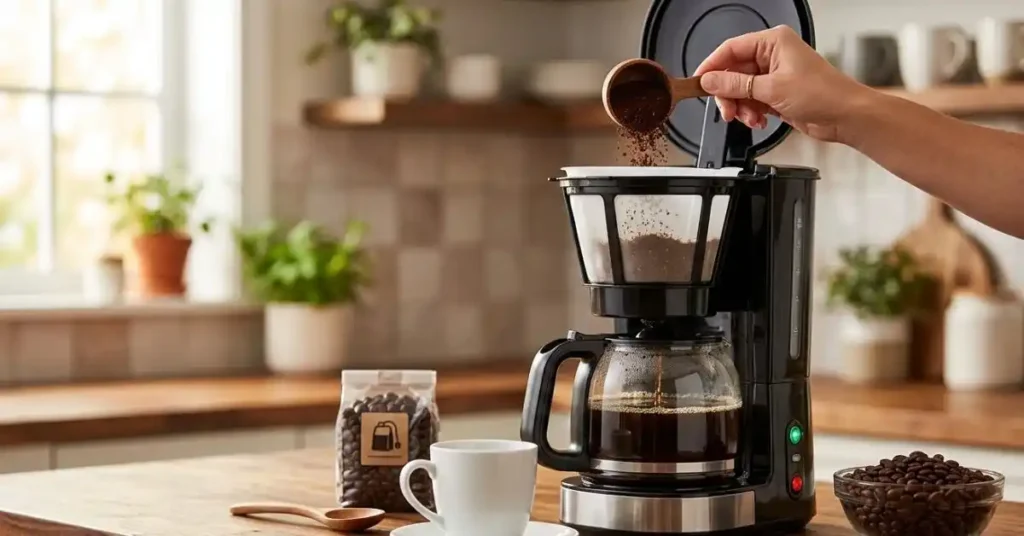
Put the filter in place first. Then add the ground coffee. Keep the coffee level even instead of making a tight mound.
If you use a reusable filter, check how fine your coffee should be. Some reusable filters let more fine particles pass into the cup.
That can give the coffee a slightly different texture.
How to Use a Coffee Maker With a Reusable Filter
A reusable coffee filter can save you from buying paper filters. It also changes the cleanup routine.
After brewing, let the filter cool enough to handle. Then empty the used grounds and rinse the filter well.
Do not let wet coffee grounds sit in the filter for hours. That can create a stale smell and make cleanup harder.
I learned that a quick rinse right after brewing is much easier than trying to clean dried grounds later.
How Often Should You Clean a Coffee Maker?
Regular cleaning is one of the easiest ways to keep coffee tasting good. Coffee oils and mineral deposits can build up inside the machine over time.
The filter basket and carafe should get regular washing. The inside of the machine may need a deeper cleaning based on how often you use it and the water you have.
| Part | Cleaning Habit |
| Filter basket | Rinse after use |
| Carafe | Wash often |
| Water tank | Keep clean and dry |
| Inside system | Descale as needed |
If your coffee suddenly tastes odd, cleaning the machine is one of the first things I would try.
What Is Descaling?
Descaling means removing mineral buildup from inside the coffee maker. This buildup can come from minerals in your water.
Many coffee makers have their own cleaning or descaling instructions. Follow the manual for the safest method.
Do not assume every machine should be cleaned in exactly the same way.
Can You Leave Water in a Coffee Maker?
I would avoid leaving old water in the machine for long periods. Fresh water is a better habit, especially if you use the machine every day.
At the end of the day, I prefer to empty unused water when practical. It keeps the next brew fresh and helps avoid stale water sitting in the tank.
If your machine’s manual gives different care instructions, follow those instructions.
How Long Can Coffee Stay in a Coffee Maker?
Fresh coffee tastes best soon after brewing. A hot plate can keep coffee warm, but the taste may change over time.
I usually treat the first part of the morning as the best time to enjoy the pot.
| Situation | What I Would Do |
| Drinking soon | Keep in carafe |
| Saving for later | Use a thermal carafe |
| Left all day | Make a fresh pot |
This is one of those small habits that made my coffee routine better. I stopped trying to keep one pot going all day.
What to Do If Your Coffee Maker Is Not Working
Sometimes the problem is simple. Before assuming the machine has failed, check the basics.
Make sure it has power. Check that the water tank has water. Make sure the carafe is in place and the filter basket is seated correctly.
| Problem | First Thing to Check |
| No coffee | Power and water |
| Slow brewing | Mineral buildup |
| Grounds in coffee | Filter placement |
| Overflow | Too many grounds |
If the machine still does not work, check the manual for your exact model. Avoid taking apart electrical parts unless the manufacturer says it is safe to do so.
My Simple Coffee Maker Routine
After using several types of coffee makers, I found that a simple routine works best. I do not try to make every cup perfect.
I use fresh water, a medium grind, and a measured amount of coffee. I keep the filter basket clean and avoid letting brewed coffee sit on the hot plate for hours.
My basic routine looks like this:
- Add fresh water.
- Place the filter.
- Add measured coffee.
- Check the carafe.
- Start the brew cycle.
- Wait for the cycle to finish.
- Pour and enjoy.
- Rinse the used parts.
That is really all you need for a good daily cup.
Final Thoughts on How to Use Coffee Maker
Learning how to use a coffee maker does not need to be hard. The basic steps are simple, but small details like the coffee grind, water level, filter, and machine care can change the result.
My biggest lesson is to keep the process simple. Measure your coffee and water, use fresh grounds when possible, and keep the machine clean. Once you find a ratio and routine you like, making coffee becomes almost automatic.
FAQ
1. How do you use a coffee maker for the first time?
Start with fresh water and ground coffee. Add a filter, place the carafe, and press brew. Check the manual first if your coffee maker needs a setup cycle.
2. How much coffee do you put in a coffee maker?
A good start is 1–2 tablespoons of ground coffee per 6 ounces of water. You can add more or less to match your taste and brew strength.
3. What type of coffee grind is best for a coffee maker?
Medium-ground coffee works well in most drip coffee makers. A fine grind may taste bitter, while a coarse grind can make weak coffee.
4. How do you clean a coffee maker?
Wash the carafe and filter basket often. Clean the inside as the manual says. Descale the coffee maker when mineral build-up starts to affect the brew.
5. Why does my coffee maker make weak coffee?
Weak coffee may come from too much water, too little coffee, or a coarse grind. Measure both and try fresh, medium-ground coffee for a better brew.
To Get More About Home, Home and Kitchen Product You Can Visit Our Site. If You Found our Posts Helpful Leave a Comment Below