
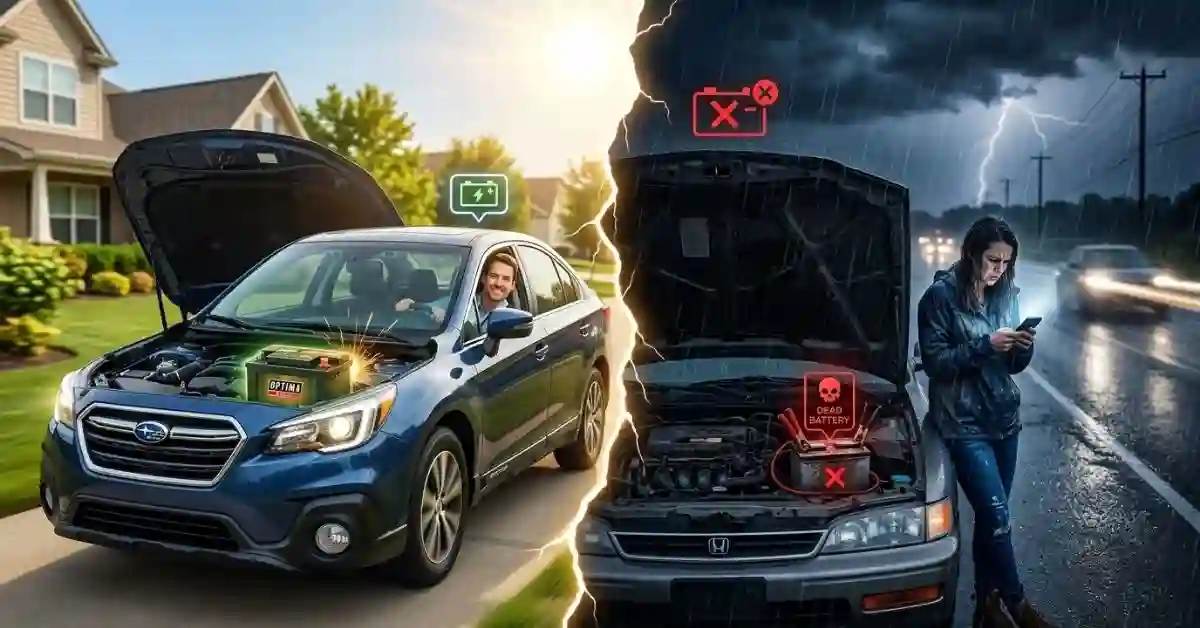
I used to think a car battery should be replaced only when it finally failed. That sounds logical, but it can leave you stuck at the worst time. A weak battery may still start the car for weeks, then suddenly refuse to crank.
So, should I replace my car battery before it dies? Yes, if the battery is getting old, shows signs of weakness, or fails a battery test. Replacing it early can help prevent a no-start problem. But a newer battery that tests healthy does not need to be changed just because of its age.
Should I Replace My Car Battery Before It Dies?
In most cases, replacing an old or weak battery before complete failure is a smart preventive step. The key is not to replace it based on age alone. I look at age, starting performance, battery test results, weather, and how the car is used.
A battery can seem fine during a warm afternoon and struggle badly on a cold morning. That is why waiting for the first complete failure is not always a good test of battery health.
| Battery condition | What I would do |
| New and tests healthy | Keep using it |
| Older but still strong | Test it often |
| Old with weak test results | Plan a replacement |
| Slow cranking or repeated failures | Replace it soon |
How Old Is Too Old for a Car Battery?
Many car batteries last around 3 to 5 years, but there is no fixed life span. Heat, short trips, deep discharges, poor charging, and long periods of sitting can shorten battery life.
I would pay closer attention once a battery gets into its later years. The exact age matters less than its current condition.
Why Waiting for a Dead Battery Can Backfire
The biggest problem is timing.
A weak battery may fail when you are:
- Leaving for work
- Shopping
- Traveling
- At an airport
- In a remote area
- Trying to start the car early in the morning
I have found that battery problems rarely choose a convenient moment. That alone makes preventive replacement worth considering when the battery is clearly near the end of its useful life.
Signs Your Car Battery May Be Near the End
The first warning is often not a dead battery. It is a small change in how the engine starts.
If the starter sounds slower than usual, I do not ignore it. A slow crank can point to a weak battery, though other problems can cause it too.
| Warning sign | What it may mean |
| Slow engine crank | Battery may be weak |
| Dim lights at start | Low battery power |
| Clicking when starting | Low charge or poor connection |
| Battery warning light | Charging system may need checking |
Other clues can include repeated jump-starts, electrical issues, or a battery case that looks swollen or damaged.
A bad smell around the battery is also a reason to have the system checked. I would not keep using a visibly damaged battery.
A Slow Start Is Easy to Miss
This is one mistake I made early on. When a car still starts, it feels like there is no problem.
But compare today’s start with how the car started a few months ago. If the engine now turns over more slowly, that change matters.
A Jump Start Does Not Fix a Weak Battery
A jump can get the car running. It does not prove the battery is healthy.
If the battery keeps needing jumps, I would test both the battery and charging system. The alternator, battery terminals, cables, or another electrical problem could be involved.
Can a Battery Test Tell You When to Replace It?
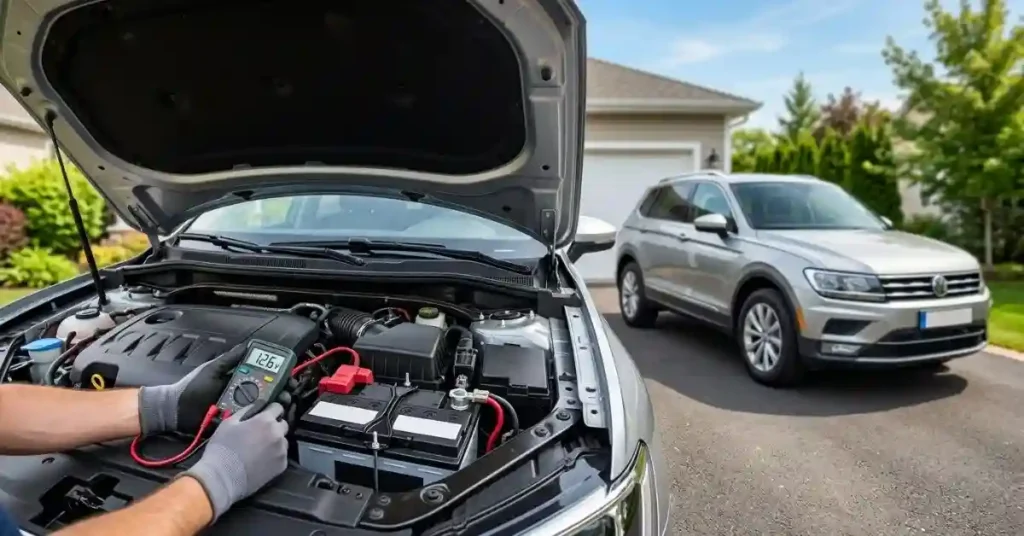
Yes. A proper battery test can give you much more useful information than age alone.
Many shops use an electronic battery tester to check the battery’s condition and starting ability. Some tests show the battery’s measured cold-cranking performance compared with its rated value.
| Test result | Practical meaning |
| Healthy | Usually safe to keep using |
| Weak or borderline | Watch it closely |
| Replace | Plan replacement |
I prefer this approach because it removes some guesswork. A four-year-old battery that tests well may still have useful life. A two-year-old battery that has been badly discharged may already be in poor shape.
Check the Charging System Too
A battery can keep going bad because the charging system is not doing its job.
If a new battery becomes weak soon after installation, I would not simply buy another battery. I would have the alternator, cables, terminals, and charging system checked.
This was another lesson I learned: sometimes the battery is the victim, not the root problem.
Should You Replace a Battery Based on Age Alone?
Not always.
Age is a useful warning sign, but it should not be the only reason to replace a battery. How the battery has been used matters just as much.
| Situation | What I would consider |
| 2-year-old battery, strong test | Keep it |
| 4-year-old battery, good test | Monitor it |
| 5-year-old battery, weak test | Replace it |
| Any age, damaged case | Get it checked promptly |
A car that sits for long periods can be hard on its battery. So can many short trips. The alternator may not have enough drive time to fully restore the energy used during starting.
When I Would Replace a Car Battery Early
There are a few situations where I would rather replace the battery before it leaves me stranded.
Before a Long Road Trip
A road trip is not the time to discover that an old battery has little reserve left.
Before a long drive, I would check the battery’s age and have it tested. If it is old and borderline, replacing it before the trip can remove one avoidable risk.
Before Extreme Weather
Very hot and very cold conditions can make battery problems more noticeable.
Cold weather makes the engine harder to crank. Heat can also speed up battery wear. So an older battery deserves extra attention before a season of harsh weather.
When the Battery Has Already Needed a Jump
One jump does not always mean the battery is finished. Maybe a light was left on.
But repeated jump starts are different. If there is no clear outside reason for the discharge, I would test the battery and charging system rather than keep waiting.
Common Car Battery Replacement Mistakes I Learned to Avoid
Battery replacement sounds simple, but a few small mistakes can create bigger problems.
| Mistake | Better approach |
| Replacing by age only | Test the battery first |
| Ignoring slow cranking | Treat it as an early warning |
| Blaming every issue on the battery | Check the charging system |
| Buying the cheapest match | Use the correct battery type and size |
Mistake: Choosing Only by Price
A battery must fit the car’s needs. Size, terminal position, capacity, and starting power all matter.
Some vehicles also need a specific battery type, such as an AGM battery. Cars with start-stop systems may have special battery requirements.
I would check the owner’s manual or the vehicle manufacturer’s specifications before buying.
Mistake: Ignoring the Battery Terminals
Dirty or loose terminals can cause starting trouble.
That can make a healthy battery look bad. If the battery test is good but starting remains poor, the connections deserve attention.
Mistake: Assuming a New Battery Solves Everything
A new battery should not be treated as a cure for every electrical problem.
If the alternator is weak, a cable has high resistance, or the car has an unusual parasitic drain, the new battery may also lose charge.
What Happens If You Keep Using an Old Battery?
Nothing may happen for a while. That is what makes an aging battery tricky.
You may get normal starts for months. Then one day the starter may only click.
The risk is not that every old battery will suddenly fail. The issue is that you have less control over when the failure happens.
| If you notice… | Do this next |
| Normal starts | Keep monitoring |
| Slower starts | Get a battery test |
| Repeated jump starts | Test battery and charging system |
| Swelling or damage | Stop ignoring the issue and seek service |
Is It Better to Replace a Car Battery Early or Wait?
There is a trade-off.
Replacing early costs money before the battery is completely dead. Waiting lets you use more of the battery’s remaining life. But waiting also increases the chance of an inconvenient no-start event.
For me, the decision comes down to how much risk I am willing to accept.
If a battery is old but tests strong, I would usually keep it and monitor it. If it is old, weak, and already showing warning signs, I would replace it before it fails.
Early Replacement Makes More Sense When…
I would lean toward preventive replacement when several warning signs appear together.
For example:
- The battery is several years old.
- Starting has become slower.
- A battery test shows weak performance.
- The car has needed more than one jump.
- I am about to take a long trip.
- The vehicle will face harsh weather.
- I cannot afford an unexpected no-start problem.
The more of these factors that apply, the less attractive it becomes to simply wait.
How to Make Your Car Battery Last Longer
Once I understood how much daily driving affects a battery, I changed a few habits.
Very short trips can put extra strain on the battery because the car may not run long enough to replace the energy used during starting. Leaving lights or accessories on can also drain it.
| Habit | Why it helps |
| Avoid repeated short trips when possible | Gives the charging system more time |
| Turn off lights and accessories | Reduces battery drain |
| Keep terminals clean | Helps maintain a good connection |
| Test an aging battery | Finds weakness before failure |
I also would not use a jump start as a regular maintenance plan. If the battery keeps going flat, find out why.
What About a Battery That Is Still Under Warranty?
A warranty can affect the timing of replacement.
If a battery is failing early, check its warranty terms before buying another one. Keep the receipt and battery details if you have them.
A warranty does not mean you should wait until the battery completely dies. If testing shows a problem, deal with it while you still have options.
My Simple Rule for Knowing When to Replace a Battery
I no longer use one rule such as “replace every four years.”
Instead, I use a simple three-part check: age, symptoms, and test results.
If the battery is old but healthy, I monitor it. If it is old and weak, I replace it. If the car has symptoms at any age, I test the whole starting and charging system before buying parts.
That approach saves me from replacing a good battery too early while also reducing the chance of getting stranded with a dying one.
Final Thoughts
So, should I replace my car battery before it dies? If the battery is old, weak, or showing clear warning signs, yes, replacing it before complete failure can be a sensible choice. If it is newer and passes a proper test, there is usually no need to replace it just because you are worried it might fail someday.
The biggest lesson I learned is simple: do not wait for a dead battery to be your first battery test. Watch how the car starts, know the battery’s age, test it as it gets older, and check the charging system when something seems wrong. That small bit of prevention can save a very annoying morning.
FAQ
1. Should I replace my car battery before it dies?
Yes, if the battery is old or weak. A battery test can show its health. Early replacement may help you avoid a sudden no-start problem.
2. How do I know when my car battery needs replacing?
Slow cranking, dim lights, and repeated jump starts can be signs of a weak car battery. A battery test can confirm if it needs replacement.
3. How long should a car battery last?
Most car batteries last about 3 to 5 years. Heat, short trips, and poor charging can shorten battery life, so test an older battery often.
4. Can a battery test tell me when to replace my car battery?
Yes. A battery test checks its starting power and health. If the result is weak, replacing the battery before it fails may be wise.
5. Should I replace my car battery before a long trip?
If the battery is old, weak, or shows warning signs, consider replacing it before a long trip. A quick battery test can help you decide.
To Get More About Home, Car Tools Product You Can Visit Our Site. If You Found our Posts Helpful Leave a Comment Below