
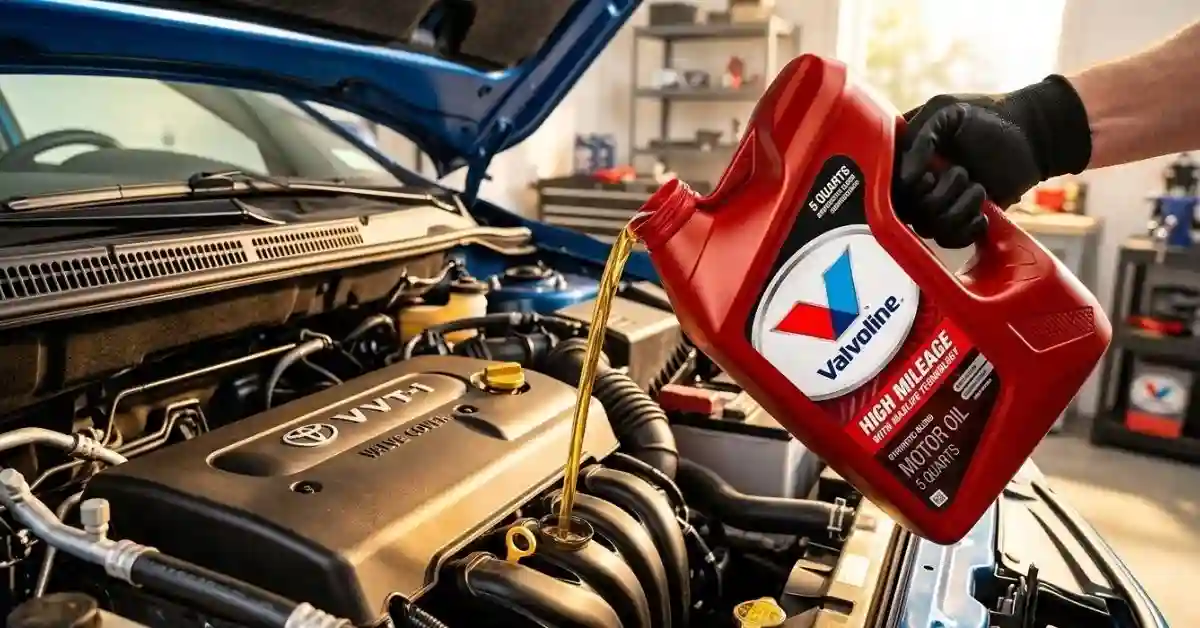
When I started researching Valvoline High Mileage Motor Oil Review topics, I noticed one thing right away. High-mileage oil is not just about the number on the bottle. The oil grade, engine age, seals, deposits, and vehicle maker’s oil spec all matter.
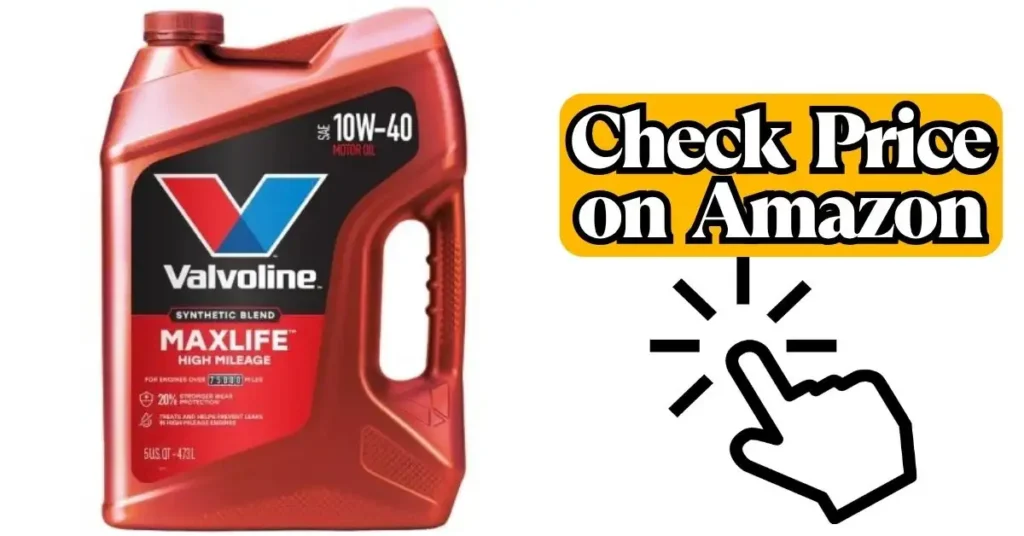
The product I looked at here is Valvoline MaxLife High Mileage Synthetic Blend in SAE 10W-40. Valvoline says this formula is made for engines with 75,000 miles or more. It uses seal conditioners, detergents, and anti-wear additives aimed at common issues linked with older engines.
I also learned that this is where many oil reviews get confusing. “High mileage” does not mean the oil is right for every older car. A car’s manual still matters. The correct oil grade and specification should come first.
What Is Valvoline High Mileage Motor Oil?
Valvoline MaxLife High Mileage is a synthetic blend motor oil made for higher-mileage engines. The 10W-40 version is one of the grades in the MaxLife High Mileage range. Valvoline says the line is designed for engines with more than 75,000 miles.
The idea behind high-mileage oil is simple. Older engines can develop worn seals, deposits, and higher oil consumption over time. Valvoline says MaxLife uses seal conditioners to help address leaks and oil consumption linked to aging seals.
Valvoline High Mileage Motor Oil at a glance
The basic product details are easy to understand once the different MaxLife formulas are separated.
| Feature | Valvoline MaxLife 10W-40 |
| Oil type | Synthetic blend |
| Viscosity | SAE 10W-40 |
| Intended mileage | 75,000+ miles |
| Main technology | MaxLife Technology |
| Main focus | Aging-engine concerns |
One detail I would not overlook is the word synthetic blend. This is not the same thing as Valvoline’s separate MaxLife full synthetic products. Valvoline sells both types, so checking the exact bottle and grade is important.
Why Does High Mileage Oil Matter?
As an engine gets older, its condition can change. Seals can become less flexible. Deposits can build up. Some engines may also begin to consume more oil.
That does not mean every high-mileage engine has these problems. This was one of the biggest points I found while researching the subject. Mileage alone cannot tell you the full condition of an engine.
Valvoline designed MaxLife around these aging-engine concerns. Its product information says the formula contains seal conditioners and extra detergents to help deal with leaks, oil consumption, sludge, and deposits.
What MaxLife Technology is meant to address
The name sounds complex, but the basic idea is not.
| Engine concern | MaxLife feature | Purpose described by Valvoline |
| Aging seals | Seal conditioners | Help reduce oil leaks and consumption |
| Deposits | Extra detergents | Help keep the engine cleaner |
| Wear | Anti-wear additives | Help protect engine parts |
| Friction | Friction-fighting additives | Help support engine performance |
These are product claims from Valvoline. They should not be read as a promise that the oil will repair a worn or damaged engine.
Valvoline High Mileage Motor Oil Review: The 10W-40 Grade
The 10W-40 part of the name is just as important as “High Mileage.”
Oil grades are not interchangeable simply because they come from the same product family. Different engines call for different viscosity grades.
This is where I think many online oil discussions go off track. Someone may say that a certain oil worked well in an old car. That does not prove the same grade is correct for another vehicle.
What 10W-40 tells you
The numbers describe the oil’s viscosity rating at different temperature conditions.
| Part of the grade | What it tells you |
| 10W | Cold-temperature viscosity rating |
| 40 | Higher-temperature viscosity rating |
The important point is not to choose 10W-40 just because an engine has high mileage. The vehicle maker’s specified grade should guide that choice.
That is especially important with newer engines. Some modern engines are designed around thinner oil grades for specific reasons, including fuel economy and engine design.
What I Found Interesting About the MaxLife Formula
The more I looked at the product information, the more I understood why Valvoline puts so much emphasis on seals and deposits.
An older engine can have very different needs from a newer one. The company says its MaxLife formula uses seal conditioners to help prevent and reduce leaks and oil consumption. It also says extra detergents help fight deposits and sludge.
Seal conditioners are a key part of the story
This is probably the most distinctive part of the product.
Valvoline says its seal conditioners can help restore flexibility to hardened or shrunken seals. The stated goal is to help reduce leaks and oil consumption.
But there is an important limit.
A motor oil is not a magic repair product. If an engine has a damaged seal, cracked component, or serious mechanical fault, changing oil does not automatically fix that problem.
That distinction matters when reading enthusiastic online reviews.
Detergents have a different job
The formula also includes extra detergents. Valvoline says these help fight deposits, sludge, friction, and corrosion.
I found this useful because “cleaning an engine” can sound vague. Detergent additives are better understood as part of the oil’s formulation. They are not the same as taking apart an engine and removing built-up deposits.
How Does Valvoline High Mileage Motor Oil Compare With Regular Oil?
This is one of the most common questions around high-mileage oil.
The key difference is the formulation goal. High-mileage oil is designed with older engines in mind. Regular motor oil may focus on the broader needs of engines across a wider range of mileage.
Valvoline’s MaxLife line specifically targets engines with 75,000 miles or more.
| Factor | High Mileage Formula | General Motor Oil |
| Target | Higher-mileage engines | Broader engine range |
| Seal conditioners | Included in MaxLife | Depends on product |
| Deposit control | Enhanced additives | Depends on product |
| Mileage focus | 75,000+ miles | Not necessarily mileage-based |
I would not call one type automatically better for every engine. The right choice depends on the vehicle’s required specification and condition.
Valvoline High Mileage Motor Oil vs Full Synthetic MaxLife
Another easy mistake is assuming every MaxLife bottle contains the same type of oil.
It does not.
Valvoline’s 10W-40 MaxLife product is listed as a synthetic blend, while the company also sells a separate MaxLife Full Synthetic High Mileage line.
Synthetic blend vs full synthetic
The distinction is worth keeping simple.
| Feature | MaxLife Synthetic Blend | MaxLife Full Synthetic |
| Base oil type | Synthetic blend | Full synthetic |
| High-mileage focus | Yes | Yes |
| Seal conditioners | Yes | Yes |
| Product family | MaxLife High Mileage | MaxLife Full Synthetic High Mileage |
The full synthetic line also has different performance claims and available grades. For example, Valvoline lists the full synthetic product with claims for stronger wear and sludge protection than its synthetic-blend version.
So I would never compare the two based only on the word “MaxLife.”
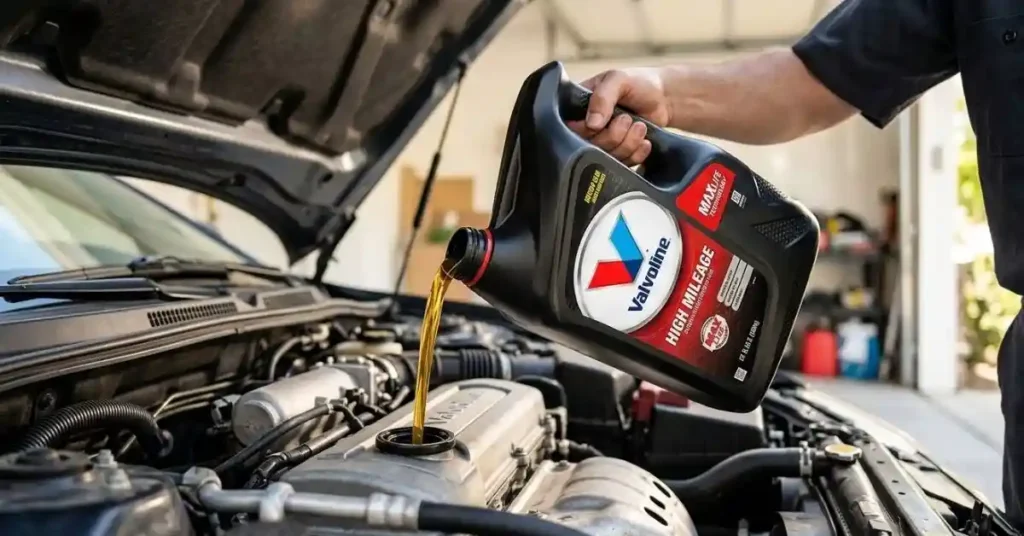
Common Mistakes I Found When Researching High Mileage Oil
The biggest mistakes are often simple ones.
People can focus so much on the mileage number that they forget the actual vehicle specification. I think this is the most important lesson from researching this product.
| Mistake | Better approach |
| Choosing oil only by mileage | Check the vehicle’s required oil grade |
| Assuming all MaxLife oils are identical | Check the exact formula |
| Treating oil as an engine repair | Separate maintenance from mechanical repair |
| Ignoring the API specification | Check the required specification |
| Comparing only by brand | Compare the actual grade and formula |
There is also a common belief that thicker oil is automatically better for an old engine. That is too simple.
An older engine does not automatically need 10W-40. The manufacturer’s specification still matters.
What API Ratings Mean on This Valvoline Oil
The API specification is another detail that deserves attention.
Valvoline’s current 10W-40 product page says this MaxLife formula meets or exceeds the requirements of API SQ, API SP, API SN with SN PLUS, and earlier applicable API and ILSAC gasoline categories.
Why the API label matters
The API mark gives consumers a way to understand whether an oil meets recognized performance requirements.
| Term | Simple meaning |
| API | American Petroleum Institute |
| API SQ | Current gasoline-engine service category listed by Valvoline |
| API SP | Earlier gasoline-engine service category |
Still, an API rating is only one part of the picture. A vehicle can have a specific manufacturer’s oil requirement beyond the general API category.
That is why I would treat the API information as a useful check, not the only check.
Can High Mileage Oil Stop an Oil Leak?
This question comes up constantly, and the honest answer needs some care.
Valvoline says MaxLife uses seal conditioners designed to help prevent and reduce oil leaks and oil consumption. It also says the conditioners can restore flexibility to hardened or shrunken seals.
But that does not mean every leak will stop.
| Situation | What to understand |
| Aging seal | Seal conditioners are part of the MaxLife design |
| Damaged component | Oil cannot be treated as a mechanical repair |
| Heavy leak | The cause needs proper diagnosis |
| Mild oil consumption | Product claims specifically address this concern |
This was one area where I found it especially important to separate “designed to help” from “guaranteed to fix.”
Those are very different claims.
Is Valvoline High Mileage Oil Only for Very Old Cars?
No. Valvoline positions MaxLife for engines with 75,000 miles or more, but its product information also says the synthetic-blend formula can provide benefits for high-mileage, new, and rebuilt engines.
That does not mean mileage is irrelevant. It simply shows that the formula is not described as being useful only for extremely old vehicles.
Still, I would not pick an oil based on mileage alone.
Mileage is only one piece of the picture
Engine design, required viscosity, manufacturer’s specification, operating conditions, and engine condition all matter.
| Factor | Why it matters |
| Mileage | Indicates how much use the engine has seen |
| Oil grade | Must match the vehicle’s requirements |
| Engine condition | Wear and leaks vary by vehicle |
| Manufacturer spec | May require specific standards |
This is probably the most useful lesson I can give from my research.
Valvoline High Mileage Motor Oil Review: What Stands Out
After going through the product details, I think the most notable part is the clear focus on aging-engine concerns.
Valvoline is not simply calling it “high mileage” and leaving it there. The company lists specific formulation features, including seal conditioners, detergents, anti-wear additives, and friction-fighting additives.
The product also sits in a useful middle ground within Valvoline’s range. It is a synthetic blend rather than a full synthetic, while still being specifically formulated for higher-mileage engines.
| Feature | What I Take From It |
| Synthetic blend | Different from MaxLife full synthetic |
| Seal conditioners | Central part of the formula |
| Detergents | Focus on deposits and sludge |
| 10W-40 grade | Must match the vehicle requirement |
| 75K+ focus | Built around higher-mileage engines |
I would also keep the marketing numbers in context. Valvoline’s claims about wear and sludge performance are based on its stated testing and industry comparisons. They are not a guarantee of a specific result in every car.
Where This Oil May Not Be the Right Match
This is the part that is easy to skip in a product review.
A product can have good specifications and still be wrong for a particular vehicle.
The biggest issue is the 10W-40 grade. If a vehicle maker specifies another viscosity, high mileage alone is not a good reason to change grades.
There are also newer MaxLife products with different formulations. Valvoline currently lists full synthetic high-mileage oils alongside its synthetic-blend MaxLife products.
So I would avoid the simple idea that “MaxLife is MaxLife.”
It is not.
My Biggest Lessons From Researching Valvoline High Mileage Motor Oil
The first lesson is that the label tells only part of the story.
At first glance, “High Mileage 10W-40” sounds like a very simple product. But once I dug into the specifications, I found several things worth checking: synthetic blend versus full synthetic, viscosity, API category, mileage range, and the exact formulation.
The second lesson is that high-mileage oil should not be treated like an engine repair product.
| What the oil is designed to do | What it should not be assumed to do |
| Support aging-engine needs | Repair major mechanical damage |
| Condition seals | Replace damaged seals |
| Help control deposits | Rebuild an engine |
| Provide wear protection | Guarantee a specific engine life |
That distinction makes a product review much more useful.
Valvoline High Mileage Motor Oil Review: Final Thoughts
After researching the current Valvoline information, I see the MaxLife 10W-40 as a product built around a clear idea: give higher-mileage engines a motor oil with additives aimed at common aging-related concerns. The synthetic-blend formula, seal conditioners, detergents, and anti-wear additives are the main points that stand out.
The biggest thing I would remember is that Valvoline High Mileage Motor Oil is not simply about having an old car. The exact oil grade and vehicle specification still matter. If those match, the product’s high-mileage formulation becomes much more relevant.
For me, that is the useful takeaway. Don’t choose motor oil by mileage, brand name, or a glowing review alone. Look at the exact formula and the vehicle’s requirements first. That small bit of checking can save a lot of confusion later.
To Get More About Home, Engine Oil Product You Can Visit Our Site. If You Found our Posts Helpful Leave a Comment Below