
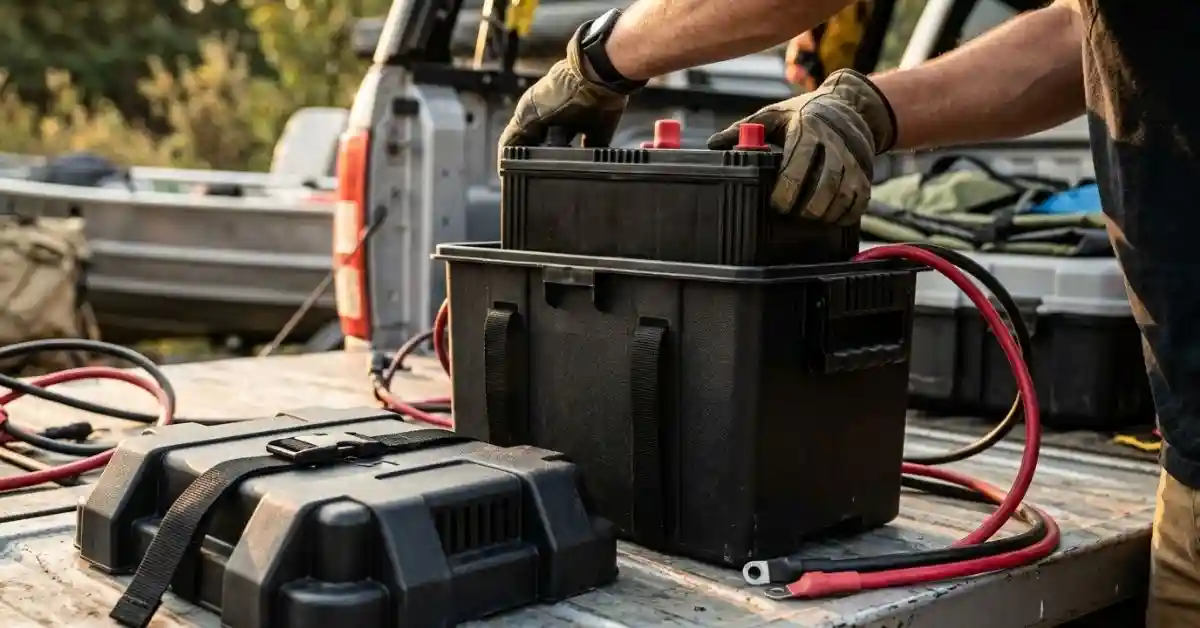
If you have ever moved a car, RV, boat, or deep-cycle battery, you know one thing fast: batteries are heavy, awkward, and easy to damage. That is where I learned why a simple battery box can be more useful than it first looks.
So, what is a battery box? It is a protective case that holds a battery in place and helps protect the battery, terminals, and nearby parts from damage. Some also help contain leaks, reduce movement, and make a battery easier to carry or connect.
What Is a Battery Box Used For?
A battery box is made to do more than just cover a battery. In real use, its main job is to keep the battery secure and protect people and nearby parts from common battery hazards.
I used to think the box was mainly for keeping dirt off the battery. That is only part of the story. A good box can help stop a battery from sliding, tipping, or making unwanted contact with metal objects.
| Battery box job | Why it matters |
| Holds the battery | Stops unwanted movement |
| Covers terminals | Helps prevent short circuits |
| Contains leaks | Helps protect nearby surfaces |
| Shields the battery | Reduces exposure to dirt and damage |
This matters even more in places where the battery moves with the vehicle. A boat can rock. An RV can bounce over rough roads. A portable power setup may get carried from one place to another.
A battery box gives that battery a defined, protected space instead of letting it sit loose.
How Does a Battery Box Protect a Battery?
A battery box surrounds much of the battery with a tough case. The lid can also cover the battery terminals.
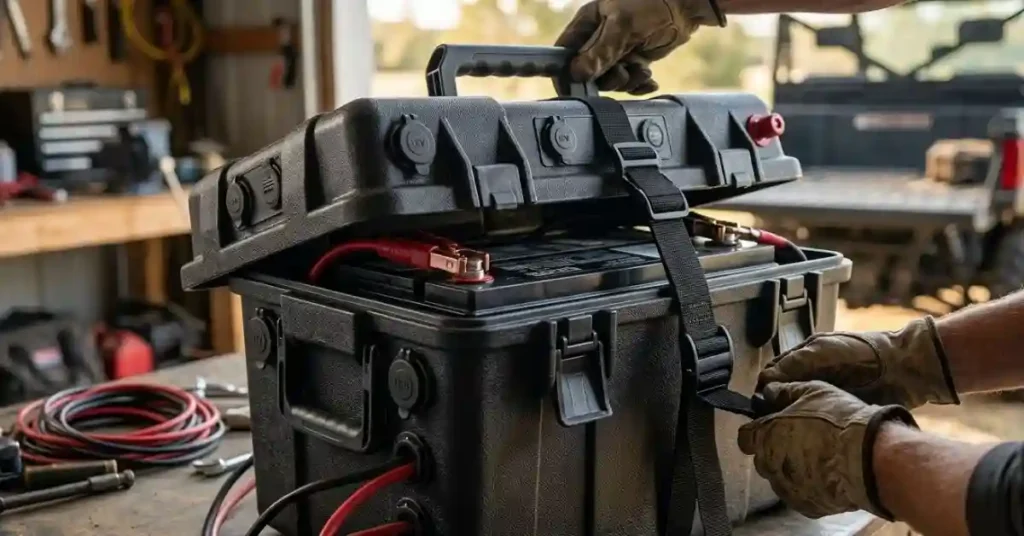
That can help prevent a loose tool or metal object from touching a terminal and causing a short circuit. Some boxes also have straps or mounting points that help hold the battery down.
The box itself is not magic, though. A box sitting loose on the floor is still a loose battery setup. The box needs to be secured when the application requires it.
What Does a Battery Box Look Like?
Most simple battery boxes look like a strong plastic container with a removable lid. The shape usually follows common battery sizes.
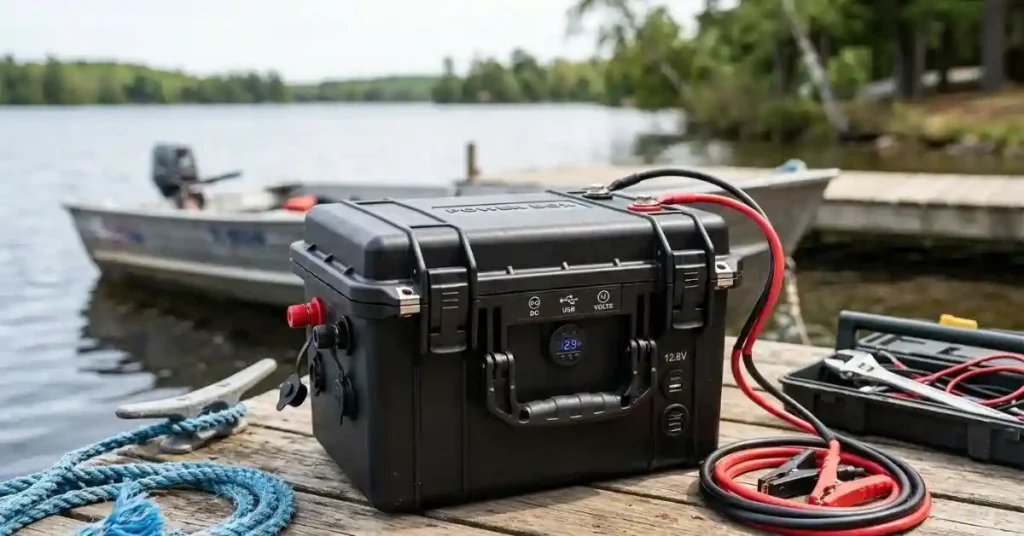
Some are very basic. Others are more like portable power stations, with outside terminals, USB ports, 12-volt outlets, fuses, switches, or voltage displays.
| Battery box type | Common use |
| Basic enclosed box | Car, boat, RV, deep-cycle battery |
| Marine battery box | Boats and wet outdoor areas |
| Portable power box | Camping and off-grid use |
| Battery enclosure | Solar, UPS, industrial systems |
This is one detail that confused me at first. The words battery box, battery case, and battery enclosure can mean different things depending on the application.
A small marine battery box is not the same thing as a large enclosure for an industrial battery pack.
What Is a Battery Box Made Of?
Most small battery boxes use tough plastic. Polypropylene and other durable plastics are common because the material needs to handle impact and, in some cases, corrosive battery electrolyte.
Larger battery enclosures may use steel, aluminum, or other engineered materials. Their needs are different because they may protect battery modules, wiring, sensors, cooling parts, and other electrical equipment.
Why Plastic Is Common
Plastic keeps the box fairly light and does not conduct electricity like metal.
That makes it useful around battery terminals. Still, not every plastic container is suitable for batteries. A random storage bin may not have the strength, fit, mounting points, or chemical resistance needed for the job.
| Material | Typical benefit |
| Heavy-duty plastic | Light and corrosion resistant |
| Steel | Strong and durable |
| Aluminum | Light and rigid |
The right material depends on the battery and where you plan to use it.
What Types of Battery Boxes Are There?
There is no single battery box for every battery. The best type depends on the battery size, chemistry, location, and purpose.
Marine Battery Boxes
Marine battery boxes are made for boats and similar wet environments. They often include a lid, mounting points, and a hold-down strap.
This setup helps keep a battery from sliding around as the boat moves. Marine battery boxes may also help contain an acid spill from a flooded lead-acid battery.
RV and Camper Battery Boxes
RV owners often use battery boxes for house batteries or auxiliary power batteries.
The box can protect the battery from dirt and accidental contact while keeping the installation neat. Some portable versions also give you external connection points.
Portable Battery Boxes
This type is where the idea gets more interesting.
A portable battery box can turn a loose 12V battery into a handy power source. Depending on the model, it may include USB ports, 12V sockets, Anderson-style connectors, fuses, switches, and a voltage display.
| Feature | Useful for |
| USB ports | Phones and small devices |
| 12V socket | Lights and small appliances |
| External terminals | Easy battery access |
| Fuse or breaker | Circuit protection |
I like this style when portability matters. You can move the battery and its connections as one unit instead of dealing with loose cables every time.
Does a Battery Box Need Ventilation?
This is one of the most important details to understand.
It depends on the battery type. Flooded lead-acid batteries can release hydrogen gas while charging. In applications where ventilation is required, the box needs suitable venting and a safe way to route gas.
Sealed battery types, such as many AGM batteries, have different ventilation needs. Lithium batteries also have different requirements.
| Battery type | Venting concern |
| Flooded lead-acid | Hydrogen gas can be released |
| AGM | Normally does not require the same vented setup |
| Lithium-ion | Follow the battery maker’s instructions |
I would not guess here. Battery chemistry matters.
A sealed plastic box may sound safer, but it is not automatically the right choice for every battery. Always follow the battery manufacturer’s installation instructions.
How Do You Choose the Right Battery Box?
The first mistake I would avoid is buying a box based only on the word “12V.”
Voltage does not tell you the physical size of the battery. A 12V battery can come in many shapes and sizes.
Check Battery Size First
Many automotive and marine boxes use battery group sizes such as Group 24, Group 27, and Group 31. The box should match the battery’s dimensions and group size.
| Check this first | Why |
| Battery length | Must fit inside |
| Battery width | Prevents a tight or loose fit |
| Battery height | Allows the lid to close |
| Terminal position | Prevents cable problems |
I learned the hard way that “almost fits” is not good enough. If the battery is too loose, it can move. If it is too tall, the lid may not close correctly.
Check the Box Features
Think about where you will use it.
For a boat, I would look for a strong lid, mounting points, and the right venting setup when needed. For camping, I might care more about handles, external connections, and a voltage display.
The box should match the job instead of simply having the most features.
Does a Battery Box Secure the Battery?
Not always.
This is a small detail that is easy to miss. A battery box can protect the battery, but the box itself may still need to be secured to the vehicle, boat, RV, or other structure.
A hold-down strap or mounting hardware can keep the box from moving. On boats, proper battery securing is especially important because rough movement can shift an unsecured battery.
| Situation | Better approach |
| Battery sits on a shelf | Use proper restraint |
| Boat installation | Use box and hold-down |
| Portable camping use | Secure during transport |
So, I would never treat the box alone as the whole safety system.
What Are Common Battery Box Mistakes?
Most problems are not caused by the basic idea of a battery box. They happen when the wrong box is used or the installation is rushed.
Mistake 1: Using a Random Storage Bin
A household storage bin may look strong enough. But it may not be made for battery use.
It may lack proper mounting points, terminal protection, or resistance to battery chemicals. Marine applications need even more care.
Mistake 2: Ignoring Battery Dimensions
A box can say “12V” and still be the wrong size.
Measure the battery before buying the box. Check the length, width, height, terminal layout, and manufacturer’s fit guide.
Mistake 3: Forgetting the Hold-Down
A box that slides around is still a problem.
For a moving vehicle or boat, secure the box to a solid mounting point.
Mistake 4: Blocking Needed Venting
If the battery requires ventilation, do not seal the setup without checking the manufacturer’s instructions.
This is especially important with flooded lead-acid batteries.
| Mistake | Better approach |
| Use any plastic bin | Use a purpose-built box |
| Guess the size | Measure the battery |
| Leave the box loose | Add proper restraint |
| Ignore battery chemistry | Follow battery instructions |
Can You Put a Lithium Battery in a Battery Box?
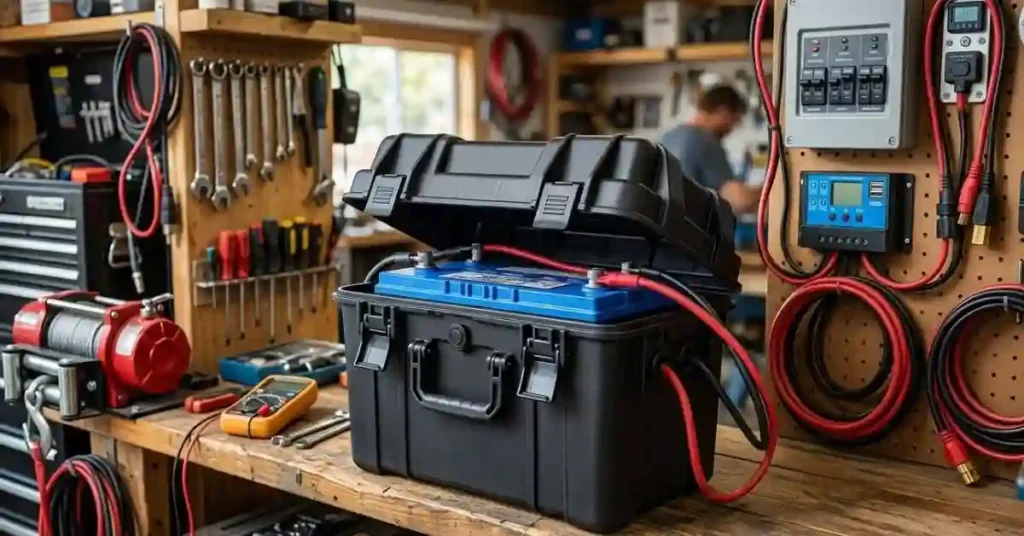
Yes, a battery box can be used with some lithium battery setups, but the box must suit the battery and installation.
Lithium battery systems can have different requirements from flooded lead-acid batteries. The enclosure may need to protect wiring, terminals, and battery management equipment while also allowing the system to operate within its designed temperature range.
For a simple 12V lithium battery, always check the battery maker’s instructions before choosing a sealed box.
What About AGM Batteries?
AGM batteries are commonly used in enclosed battery setups because they are sealed and do not normally require the same vented arrangement as flooded lead-acid batteries. Still, they need correct mounting and terminal protection.
The word “sealed” should not make us careless. A sealed battery is still a heavy electrical energy source.
How Do You Maintain a Battery Box?
Battery boxes need very little daily care. A quick check now and then can catch problems early.
I would look for cracks, loose straps, damaged mounting hardware, corrosion, and signs of acid leakage. Outdoor boxes also deserve a close look for sun damage and brittle plastic.
| What to inspect | What to look for |
| Box | Cracks or brittle plastic |
| Strap | Damage or looseness |
| Lid | Secure fit |
| Terminals | Corrosion or exposed connections |
If a box has serious cracks or chemical damage, replacing it is usually wiser than trying to make it work.
Is a Battery Box Really Necessary?
For some setups, a proper battery box is a very sensible safety feature. For others, a purpose-built battery tray or larger enclosure may be the better solution.
The key question is not simply, “Do I need a box?”
Ask instead:
Does my battery need protection, containment, terminal coverage, ventilation, or secure mounting?
For a marine battery, secure mounting and protection are especially important. For a portable battery, a box can also make the whole setup easier to carry and use.
Battery Box vs Battery Tray: Which Is Better?
A battery tray usually supports the battery from below, while a battery box surrounds more of the battery.
Neither is automatically better. The right choice depends on the battery, location, and safety requirements.
| Battery box | Battery tray |
| More enclosed | More open |
| Can cover terminals | Often needs separate terminal protection |
| Can contain some spills | Limited spill containment |
For a boat with a flooded lead-acid battery, I would favor a suitable box when it fits the installation requirements.
For some larger systems, an open tray or engineered enclosure may make more sense.
Final Thoughts
So, what is a battery box? It is a protective enclosure that helps hold a battery securely and shields it from movement, damage, spills, dirt, and accidental terminal contact. Some models also turn a basic battery into a portable power source.
The biggest lesson I took from looking at battery boxes is that the box should match the battery and the job. Check the size, battery chemistry, ventilation needs, terminal layout, and mounting method before you buy. A simple box can be useful, but the right fit and secure installation matter much more than fancy extras.
Frequently Asked Questions About Battery Boxes
1. What Is a Battery Box used for?
A battery box holds and protects a battery. It can help stop movement, cover the terminals, and contain some leaks. Choose one that fits your battery well.
2. Do I need a Battery Box for a car battery?
A Battery Box is not needed for every car battery. It can help protect the battery in a custom, RV, boat, or portable setup where the battery may move.
3. Can you put a lithium battery in a Battery Box?
Yes, but the Battery Box must suit the lithium battery and its setup. Check the battery maker’s guide for fit, heat, and vent needs before use.
4. Does a Battery Box need ventilation?
Some battery boxes need vents. Flooded lead-acid batteries can give off gas while they charge. Always follow the battery maker’s vent rules for safe use.
5. How do I choose the right Battery Box size?
Measure the battery’s length, width, and height first. Check the group size too. The box should fit well and leave room for the lid and cable posts.
To Get More About Home, Car Tools Product You Can Visit Our Site. If You Found our Posts Helpful Leave a Comment Below