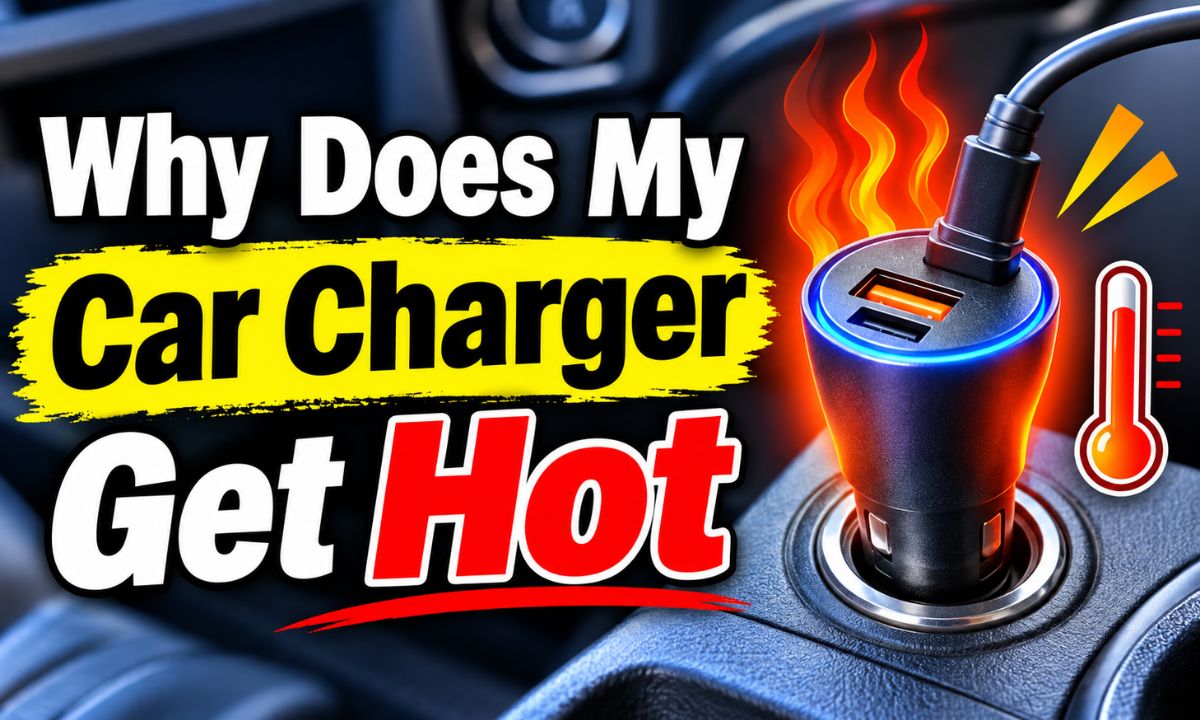
A car charger gets warm because it converts electrical power into usable charging power, but excessive heat can signal overload, poor contact, damage, or a faulty charger.
If you use a USB car charger during your daily commute, a road trip, or a drive to work in the United States, you may notice that the small adapter in your 12-volt outlet feels warm. This can be normal. A car charger changes the electrical power from your vehicle into the lower voltage needed by your phone, and some energy escapes as heat during that process.
However, a charger should not become so hot that you cannot comfortably touch it. A burning smell, melted plastic, smoke, crackling, discoloration, or repeated charging interruptions are warning signs. Stop using the charger if you notice any of them. The goal is to tell normal warmth apart from a possible electrical fault before it damages your phone, the outlet, or the vehicle.
Your car charger gets hot because it converts electrical energy into the form your phone or other device can use. This process is not perfectly efficient. Some energy becomes heat inside the charger instead of reaching the connected device.
Most modern USB car chargers contain electronic circuits that regulate voltage and current. Your vehicle’s electrical system supplies power through its 12-volt accessory outlet, while a USB charger reduces and controls that power for a phone, tablet, or other device.
The charger may feel warm when it works hard, especially during fast charging. However, heat should remain controlled. An adapter that becomes extremely hot, develops a strange smell, or shows physical damage needs immediate attention.
The important difference is between normal operating warmth and excessive heat. A warm outer case alone does not prove that a charger is defective. A combination of high temperature, unusual smells, damaged parts, or unstable charging is much more concerning.
Normal warmth
The charger feels slightly warm after charging for a while, works normally, and shows no signs of damage.
Possible overheating
The adapter becomes unusually hot, charging stops and starts, or the plastic housing changes color.
Immediate safety concern
Smoke, sparks, a burning odor, melted plastic, or crackling means you should stop using the charger.
How a USB Car Charger Produces Heat
A USB car charger contains a power converter. It changes the electrical supply from your vehicle into a regulated output that matches the connected device’s charging needs.
Electronic components inside the adapter resist some of the electrical flow and lose energy as heat. The amount depends on the charger design, power demand, conversion efficiency, and cooling conditions.
Think of the charger as a small electrical power station inside a compact plastic case. It has limited room to release heat. When it handles a high load for a long time, its temperature can rise.
Power conversion
The charger changes the voltage supplied by the vehicle into a suitable USB output.
Electrical losses
Some energy is lost as heat during conversion and regulation.
Heat buildup
A small housing, high power demand, or poor ventilation can make that heat more noticeable.
Is a Warm Car Charger Normal?
Yes, a mildly warm charger can be normal during use. This is especially true when your phone supports fast charging or when you connect more than one device to a multiport adapter.
There is no single safe touch-temperature limit that applies to every car charger. Designs, materials, power levels, and manufacturer specifications differ. Use the product’s instructions rather than relying on a universal temperature estimate.
Do not keep using an adapter simply because it still charges your phone. Heat combined with a burning smell, damaged housing, or unstable operation is a reason to stop.
Usually acceptable
Mild warmth with steady charging and no unusual smell, noise, or visible damage.
Needs attention
A noticeable increase in heat, repeated charging failures, or a loose connection.
Stop using it
Smoke, melting, sparks, burning odors, or a dangerously hot adapter.
8 Common Reasons Your Car Charger Overheats
Several issues can make a car charger hotter than expected. Some come from normal power demand, while others involve damaged parts or poor electrical connections.
Start with the simplest checks. Look at how many devices you connect, whether the charger fits firmly, and whether the cable or adapter shows signs of wear.
1. Fast charging creates more heat
Fast charging can increase the power handled by the adapter. Higher power demand can produce more heat, even when the charger works as designed.
2. You are charging several devices
A multiport charger may supply power to a phone, tablet, and other devices at once. The combined load can increase the heat produced inside the adapter.
3. The charger has poor electrical contact
A loose fit, dirty contact, or worn outlet can create resistance or an unstable connection. This can cause localized heating and intermittent charging.
4. The USB cable is damaged
A frayed, bent, crushed, or poorly made cable can cause charging problems and may contribute to excess heat at a connector.
5. The charger is defective
A failed internal component, poor solder joint, or damaged circuit can make an adapter overheat even when the connected device uses little power.
6. The charger has poor heat management
A compact design has limited space for heat to escape. An inefficient or poorly designed adapter may become hotter under the same load.
7. The car outlet is damaged
A worn socket, loose center contact, damaged side contacts, or wiring problem can create an unsafe connection.
8. The adapter is exposed to high cabin temperatures
A parked vehicle in direct summer sun can become very hot. A charger that starts in an already hot cabin has less room to shed additional heat.
Fast Charging and High Power Demand
Fast charging is a common reason an adapter becomes warm. A compatible charger can deliver more power than a basic USB adapter, which means its internal circuits may handle a greater electrical load.
Your phone also controls how much power it accepts. It may draw more power when its battery is low and reduce the rate as the battery fills or its temperature rises.
If the charger becomes mildly warm during fast charging but works steadily, this alone does not prove a problem. If it becomes excessively hot, stop using it and check the adapter’s instructions and condition.
What to check
Confirm that the charger and cable support your phone’s charging standard and that the adapter is rated for the connected load.
Dirty or Loose 12-Volt Outlets
Your car’s accessory outlet needs a firm electrical connection. Dust, debris, corrosion, wear, or a loose fit can interfere with that connection.
A poor connection may cause charging to stop and start. It can also create a localized hot spot at the contact point. This is different from the normal warmth produced inside a power converter.
Turn the vehicle off before inspecting the outlet. Remove the charger and look for visible debris, discoloration, or damaged contacts. Do not insert metal tools into the socket.
Warning sign
The adapter feels hot mainly near its metal tip, fits loosely, or loses power when the vehicle moves.
A Faulty or Low-Quality Charging Adapter
A car charger must control voltage, current, and heat inside a very small space. Poorly made components or a failed circuit can interfere with that job.
An adapter that becomes extremely hot with different phones and cables may have an internal problem. A new appearance does not guarantee good electrical quality.
Choose a charger from a reputable manufacturer. Check its rated output, supported charging standards, safety information, and compatibility with your device.
What to avoid
Do not buy an adapter solely because it advertises a very high wattage or has a low price. Check its specifications and manufacturer information.
How to Tell Whether Your Car Charger Is Too Hot
The best way to judge a hot charger is to look at its behavior and condition, not just whether it feels warm. A temperature change can be normal, but several warning signs point to a possible fault.
Never deliberately touch a charger that is smoking, melting, sparking, or giving off a burning smell. Disconnect power only if you can do so safely. If there is smoke or fire, move away and contact emergency services.
The adapter is mildly warm
It may be operating normally if charging is steady and there are no unusual smells, sounds, or visible defects.
The adapter is too hot to handle comfortably
Stop using it. Allow it to cool in a safe place and inspect it for damage before deciding whether it needs replacement.
The adapter smells like burning plastic
Stop using it immediately. A burning odor can indicate overheating insulation or an electrical component failure.
The charger or outlet has melted
Do not reconnect the adapter. The outlet may also be damaged and needs inspection.
Charging repeatedly disconnects
An unstable cable, poor contact, damaged adapter, or device issue may be responsible.
Check Where the Heat Is Coming From
The location of the heat can help narrow down the cause. Heat near the adapter’s body may come from its power-conversion circuits. Heat near the metal plug or socket may point to a contact problem.
A hot USB connector or cable end may indicate a damaged connector, poor fit, or a problem with the cable or device port. These clues do not identify the exact fault, but they help you decide what to inspect next.
Do not keep testing a part that has already shown signs of melting, smoke, or burning. Replace the damaged component and have the vehicle outlet checked if necessary.
Hot adapter body
Possible high load, poor heat management, or internal component failure.
Hot metal plug
Possible loose contact, worn socket, corrosion, or damaged plug.
Hot cable connector
Possible connector damage, cable failure, or a device-port issue.
How to Fix an Overheating Car Charger Safely
You can troubleshoot some charging problems without special tools. The safest method is to stop using a suspicious charger first, then check the cable, adapter, device, and vehicle outlet separately.
Do not open the adapter, bend its metal contacts, or try to repair its internal circuit. A small charger can still contain components that may cause burns, short circuits, or electrical damage.
Step 1: Disconnect the Charger if It Is Overheating
If the adapter is unusually hot, unplug it only if it is safe to do so. Avoid touching melted plastic, exposed metal, or any part that is smoking or sparking.
Let a warm adapter cool on a nonflammable surface away from paper, fabric, and other items that can burn. Do not cool it with water or place it in a refrigerator.
If the charger has melted into the outlet or cannot be removed safely, leave it alone and seek help from a qualified automotive technician.
Sign of success
The charger is disconnected, the area is safe, and no further heat or smoke is present.
Step 2: Inspect the USB Cable
Examine the cable from end to end. Look for cuts, exposed wires, crushed areas, bent connectors, loose plugs, and dark marks.
A damaged cable should be replaced. Do not wrap exposed wires with tape and continue using the cable as a long-term fix.
Use a compatible cable from a reliable source. A cable that supports the required charging power and data or charging standard is more suitable than an unknown cable.
Sign of success
The replacement cable has no visible damage and charging remains stable without unusual connector heat.
Step 3: Check the Car Charger Adapter
Look at the adapter’s housing, USB ports, and metal plug. Watch for cracks, discoloration, melted areas, loose parts, or a burnt smell.
Check the manufacturer’s rated input and output. Make sure the adapter is intended for your vehicle’s electrical system and that its output supports the connected device.
If the adapter has any sign of electrical damage, replace it. Do not open it to inspect the circuit board or attempt a home repair.
Sign of success
The adapter is undamaged, fits correctly, and operates within its manufacturer’s stated conditions.
Step 4: Inspect the 12-Volt Outlet
Turn off the vehicle and remove the charger before looking inside the accessory socket. Check for visible dirt, loose debris, rust, discoloration, or damaged contacts.
Do not use a knife, screwdriver, paper clip, or other metal object to clean the socket. If debris is stuck inside or the contacts appear damaged, ask a qualified technician to inspect it.
A charger that fits loosely or loses power when moved should not be forced into place. A worn outlet may need professional repair.
Sign of success
The socket is visibly undamaged and holds a compatible charger firmly.
Step 5: Reduce the Charging Load
If the charger has several ports, disconnect devices you do not need to charge. A phone and tablet drawing power at the same time may place a greater load on the adapter.
You can also stop using optional high-power accessories connected to the same adapter. Check the manufacturer’s total output rating because the advertised maximum for one port may not apply when several ports are in use.
If the charger still becomes excessively hot with one compatible device and an undamaged cable, stop using it and replace it or seek technical advice.
Sign of success
The charger handles the remaining device without abnormal heat or charging interruptions.
Step 6: Test with Known-Good Equipment
If there are no warning signs of electrical damage, you can narrow down the problem by changing one item at a time. Use a compatible, undamaged cable and a charger with known specifications.
A different charger can help identify whether the original adapter is the problem. However, do not test another charger in an outlet that has shown signs of melting, sparking, burning, or excessive heat.
If several compatible chargers become hot in the same outlet, the vehicle’s socket or wiring may need inspection.
Sign of success
The known-good charger works normally in an undamaged outlet with stable charging and no warning signs.
How to Find the Exact Cause of the Heat
A simple comparison can help you find the part causing the problem. Change only one component at a time so you do not confuse a cable fault with an adapter or outlet fault.
Do not perform these checks if the original charger or outlet has smoked, melted, sparked, or produced a burning smell. In that case, stop testing and replace or professionally inspect the affected parts.
The original charger gets hot with different cables
The adapter itself may be defective or unsuitable for the connected load.
Different chargers get hot in the same outlet
The vehicle outlet, its contacts, or its wiring may have a problem.
Only one cable causes trouble
The cable or its connectors may be damaged or incompatible.
Only one phone causes trouble
The phone’s charging port, battery temperature, charging behavior, or compatibility may be involved.
The charger heats up only with several devices
The combined power demand may be too high for the adapter’s shared output rating.
A Practical Troubleshooting Table
Use this table to match the symptom with the most useful next step. These are diagnostic clues, not proof of a specific failed component.
Hot adapter with one phone
Check the adapter rating, cable condition, and charging compatibility.
Hot plug near the socket
Stop using it and have the outlet inspected if the fit is loose or the contact is discolored.
Hot cable end
Replace the cable and check the phone’s charging port for damage.
Heat with several devices
Reduce the load and check the adapter’s total shared output rating.
Heat with multiple adapters
Have the vehicle outlet and related wiring inspected.
Can a Hot Car Charger Damage Your Phone?
Yes, a faulty or excessively hot charger can create risks for a connected phone. A charger that does not regulate its output correctly may expose the device to unsuitable electrical conditions.
Modern phones include charging-management circuits and temperature controls. These features help manage normal charging conditions, but they cannot make every damaged or poorly designed adapter safe.
Excess heat around the phone’s charging port can also damage the connector or affect charging reliability. If the phone displays a temperature warning, disconnect it and let it cool according to the manufacturer’s instructions.
Do not assume that a phone is safe just because it continues to charge. Stop using the adapter if it shows signs of overheating or physical damage.
Possible charging interruptions
The phone may reduce charging or stop charging when it detects an unsafe temperature.
Possible connector damage
Excess heat or a poor electrical connection can damage the phone’s charging port.
Possible battery heat
A hot cabin, demanding phone use, and charging at the same time can increase the phone’s temperature.
Possible electrical damage
A defective adapter may fail to regulate power as intended.
Why Your Phone May Get Hot Too
Your phone can become warm while charging because its battery and internal charging circuits produce heat. Navigation, video streaming, gaming, and mobile data use can add to the workload.
A phone mounted in direct sunlight on a hot dashboard may also heat up. The combination of sunlight, a warm cabin, and charging can make temperature management harder.
Move the phone out of direct sunlight when possible, stop demanding apps if it becomes unusually hot, and follow the phone maker’s temperature guidance.
Reduce phone workload
Close demanding apps and avoid intensive tasks while charging if the device is overheating.
Improve placement
Keep the phone away from direct sunlight and hot air vents.
Can a Car Charger Cause a Fire?
A damaged or defective car charger can create an electrical and fire hazard. The risk is more concerning when the adapter, cable, or outlet shows signs of overheating, melting, arcing, or damaged insulation.
Normal warmth does not mean a fire is about to start. However, smoke, sparks, a burning odor, or melted plastic should never be treated as ordinary charging behavior.
Stop using the affected equipment. If a fire starts, do not handle the charger or attempt to remove an energized device. Move away and contact emergency services.
Do not ignore a burning smell
It may indicate overheated plastic, insulation, or electronic parts.
Do not use a melted adapter
Melted parts can expose internal components and create a short-circuit risk.
Do not keep using a sparking socket
Sparking can indicate a damaged or unstable electrical connection.
Do not leave damaged charging equipment connected
Remove it from service and arrange a safe replacement or inspection.
What to Do if You See Smoke or Sparks
Stop the vehicle in a safe location if you are driving. Keep yourself and passengers away from the affected electrical equipment.
Do not touch a smoking adapter, exposed wire, or melted socket. If there is a fire, leave the vehicle and contact emergency services.
Do not reconnect the charger after the incident. Have the damaged equipment and vehicle outlet checked before using that connection again.
Immediate action
Prioritize personal safety, move away from smoke or fire, and contact emergency services when needed.
How to Choose a Car Charger That Runs Cooler
A well-designed charger with suitable power ratings and good heat management can reduce unnecessary heat. No charger is guaranteed to stay completely cool, since power conversion creates some heat.
Focus on verified specifications and compatibility rather than the highest advertised wattage. A charger should meet your phone’s needs without exceeding the adapter’s rated output or the vehicle outlet’s limits.
For daily use, a simple charger from a reputable manufacturer may be more suitable than an unknown high-output adapter. Read the instructions and check whether the manufacturer provides clear support and warranty information.
Check the power rating
Choose an output that matches your phone and charging needs. Confirm whether the advertised rating applies to one port or all ports combined.
Check charging compatibility
Look for support for the charging standard used by your phone and cable.
Check the input rating
Make sure the charger is designed for the voltage range of your vehicle’s accessory outlet.
Look for clear manufacturer details
Choose a product with a named manufacturer, clear specifications, instructions, and accessible customer support.
Avoid damaged or counterfeit products
Do not use an adapter with unclear labeling, poor construction, damaged contacts, or suspicious safety claims.
Does a Higher-Wattage Charger Always Get Hotter?
No. A higher maximum wattage does not mean an adapter always produces more heat. The actual heat depends on the power being delivered, the design of the converter, its efficiency, and the surrounding temperature.
A high-output charger supplying only a small amount of power may run cooler than a lower-rated charger operating near its maximum capacity. Product design matters as much as the number printed on the package.
Choose the output you need, not the largest number available. Also check the manufacturer’s instructions for any limits on using multiple ports at once.
Maximum rating
The highest output the manufacturer says the charger can provide under specified conditions.
Actual power use
The power the connected device draws at a particular point during charging.
Heat production
The energy lost inside the charger during power conversion and operation.
When Should You Replace the Car Charger?
Replace a car charger if it repeatedly overheats, smells burnt, has melted or cracked parts, sparks, or causes unstable charging. Do not wait for a complete failure when the adapter already shows signs of electrical damage.
A charger that becomes mildly warm but works as intended does not automatically need replacement. Check the manufacturer’s guidance and compare its behavior with the warning signs described above.
If a new, compatible charger also overheats in the same vehicle outlet, the problem may not be the adapter. A technician should inspect the socket, its contacts, and related wiring.
Replace immediately
The charger has melted, smoked, sparked, developed a burning odor, or exposed internal parts.
Replace after inspection
The charger repeatedly becomes excessively hot or stops working despite using a suitable cable and device.
Seek vehicle inspection
Several chargers show the same overheating symptoms in one accessory outlet.
Can You Repair a Hot Car Charger?
In most cases, replacing a faulty USB car charger is safer and more practical than repairing it. The adapter contains compact electronic parts that are not intended for casual home repair.
Opening the housing can expose small components and create a risk of electric shock, burns, or further damage. Do not bypass safety features or attempt to replace internal parts.
If the vehicle’s outlet is the source of the problem, have a qualified automotive technician inspect and repair it. Replacing the adapter alone will not correct a damaged socket or wiring fault.
Replace the adapter
Use a compatible, undamaged charger from a reputable manufacturer.
Repair the vehicle outlet professionally
Ask a technician to inspect a loose, burnt, corroded, or damaged accessory socket.
Common Mistakes to Avoid
Some quick fixes can make a charging problem worse. A car charger is a small device, but it connects directly to your vehicle’s electrical system and should be treated with care.
Avoid trying to make a damaged adapter work again. Replacing a low-cost faulty charger is usually a more sensible step than risking damage to the vehicle or phone.
Ignoring a burning smell
A burnt odor can be a warning of overheating insulation or failed components. Stop using the charger.
Using a damaged cable
A cable with exposed wires or bent connectors should be replaced, not patched for continued use.
Forcing a loose adapter into the socket
A poor fit can make electrical contact unreliable and may increase localized heating.
Cleaning the socket with metal tools
Metal objects can create a short circuit or damage the contacts. Have stuck debris removed safely.
Assuming every warm charger is defective
Some warmth is a normal result of power conversion. Judge the charger by its overall behavior and the manufacturer’s guidance.
Assuming a new charger cannot be faulty
New products can also be defective or unsuitable. Check the unit and stop using it if it shows warning signs.
Using the highest-wattage adapter without checking compatibility
The output must match the device, cable, charger specifications, and vehicle outlet requirements.
A Quick Safety Checklist for Everyday Charging
A few simple habits can help you spot problems before they become serious. Check your charging equipment from time to time, especially if you use the same adapter every day.
These steps do not replace the manufacturer’s instructions or a professional inspection. They are practical checks for normal use.
Before driving
Check the cable and adapter for cracks, exposed wires, loose parts, or signs of heat damage.
When connecting
Make sure the charger fits properly and that the cable connector is not loose.
During charging
Watch for repeated disconnections, unusual heat, strange sounds, or burning odors.
When the vehicle is parked
Follow the vehicle and charger instructions about accessory outlet use when the engine is off.
After a fault
Do not reuse melted, smoking, or sparking equipment. Replace it and inspect the outlet if needed.
Research Notes and Reader Question Gaps
The central reader need is to distinguish normal charger warmth from a possible electrical fault and identify the safest next action. This guide focuses on practical diagnosis rather than product rankings or unsupported temperature limits.
The strongest additional reader needs are identifying where the heat starts, checking whether the vehicle outlet is responsible, and understanding when to stop troubleshooting. These are inferred next needs based on the main troubleshooting task, not verified search-volume findings.
No live search-volume data, Search Console records, customer-support records, or verified People Also Ask dataset was supplied. No claim is made that these questions are trending or that a particular question appears in live search results.
Question: Is warmth normal?
Reader stage: Initial diagnosis. Basis: Inferred next need. Coverage: Answered in the opening and normal-warmth section. Benefit: Prevents unnecessary replacement while preserving safety warnings.
Question: Why is the metal plug hotter than the adapter body?
Reader stage: Troubleshooting. Basis: Inferred next need. Coverage: Answered in the heat-location section. Benefit: Directs attention to possible socket contact problems.
Question: Can a damaged charger harm a phone?
Reader stage: Risk assessment. Basis: Inferred next need. Coverage: Answered in the phone-safety section. Benefit: Explains why continued use is unwise.
Question: What if every charger gets hot in the same outlet?
Reader stage: Diagnosis and repair. Basis: Inferred next need. Coverage: Answered in the troubleshooting and replacement sections. Benefit: Helps identify a possible vehicle-side fault.
Question: When should I stop testing and seek help?
Reader stage: After a warning sign. Basis: Inferred next need. Coverage: Answered in the fire-safety and repair sections. Benefit: Prevents unsafe repeated testing.
Frequently Asked Questions
Q
Is it normal for a car charger to get hot?
Yes. A car charger can become mildly warm because its internal circuits convert your vehicle’s electrical supply into USB power. Fast charging and multiple connected devices can increase the heat.
However, an adapter that becomes extremely hot, smells burnt, melts, smokes, or sparks should not be used. Follow the manufacturer’s temperature and operating guidance.
Q
Why does my car charger get hot when charging my iPhone?
Your car charger may get warm because it is supplying power to the iPhone, especially during fast charging. The cable, adapter design, ambient temperature, and phone workload can also affect heat.
Check that the charger and cable support the phone’s charging requirements. If the adapter becomes excessively hot or smells burnt, disconnect it and replace it.
Q
Why does my car charger get hot when nothing is plugged in?
Some adapters draw a small amount of standby power when connected, depending on their design. This can produce a small amount of heat, but substantial heating without a connected device is not something to ignore.
Disconnect the adapter if it becomes unusually hot. Check its instructions and replace it if the behavior continues or if you notice a burning smell or visible damage.
Q
Can I leave a warm car charger plugged in overnight?
Follow the vehicle and charger manufacturers’ instructions. Some vehicle accessory outlets remain powered after the ignition is turned off, while others switch off. The behavior varies by vehicle.
Unplug the adapter when it is not needed, especially if you are unsure whether the outlet stays powered. Never leave a damaged or overheating charger connected.
Q
Why does my car charger get hot near the metal tip?
Heat near the metal tip may indicate a poor electrical connection, worn outlet contacts, corrosion, or a damaged plug. A loose connection can create localized heating.
Stop using the charger if the tip or socket becomes unusually hot. Do not bend the contacts or clean the socket with metal objects. Have the outlet inspected if the problem continues.
Q
Does a fast car charger produce more heat?
It can. A fast charger may handle more power than a basic adapter, and some energy is lost as heat during conversion. Actual heat depends on the power being delivered and the charger design.
A high maximum wattage does not automatically mean a charger will run hotter. Choose a compatible adapter and follow its stated operating limits.
Q
Should I unplug my car charger when it is not in use?
Unplugging it is a sensible habit, particularly if your vehicle’s accessory outlet stays powered after the engine is off. It also removes the adapter from service when you are not charging a device.
Follow your vehicle manual because accessory outlet behavior differs between models. Always disconnect a charger that shows signs of damage or overheating.
✦ Wrapping Up
Conclusion
A car charger can become warm during normal operation because it converts electrical power into a form your phone can use. Fast charging, multiple devices, and high cabin temperatures can increase the heat. Mild warmth alone does not mean the adapter is defective.
Excessive heat is different. A burning smell, smoke, sparks, melted plastic, or a hot electrical connection means you should stop using the charger. Check the cable and adapter, and have the vehicle outlet inspected if more than one charger shows the same problem.
The safest approach is to use a compatible charger from a reputable manufacturer, avoid damaged cables, and follow the instructions for both your vehicle and your device. Never open or attempt to repair an overheating adapter.
💡 Key Takeaway
If your car charger is unusually hot, disconnect it safely, stop using damaged equipment, inspect the cable and outlet without inserting metal tools, and replace the adapter or contact a qualified automotive technician as needed.