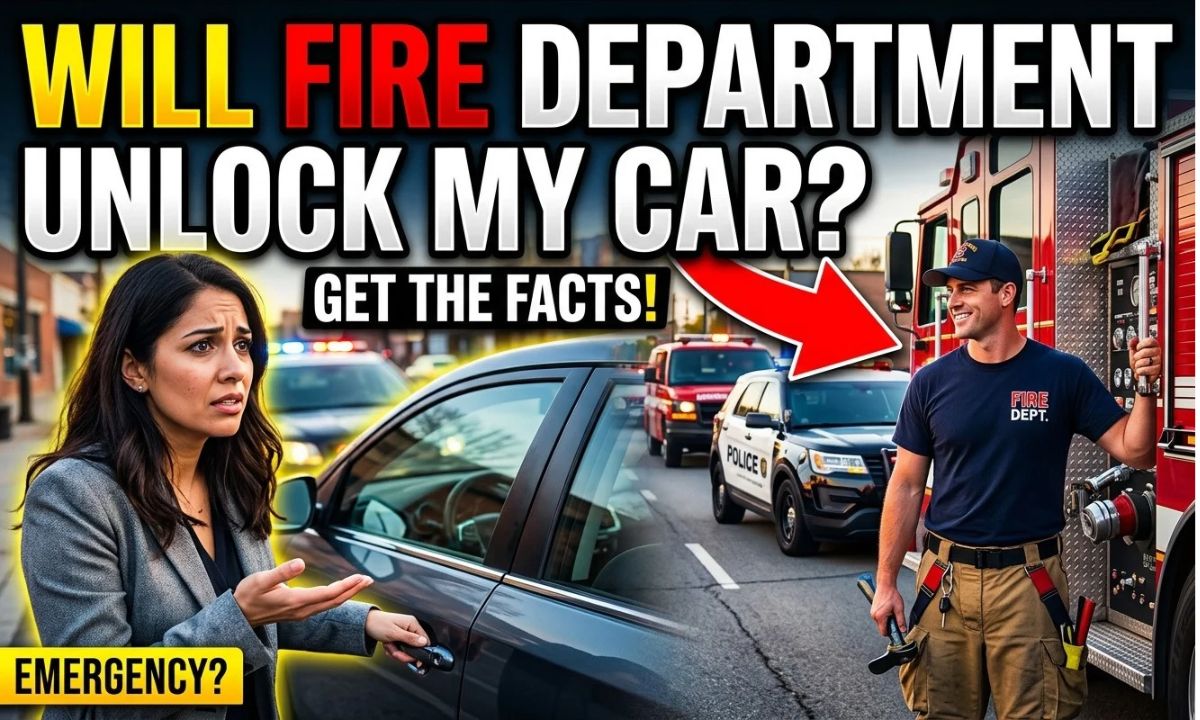
In the United States, a fire department may unlock a car when someone or an animal is in immediate danger, but a routine lockout usually is not a fire department service.
If you are standing beside your locked car in a U.S. parking lot or driveway with your keys sitting inside, do not assume the fire department will come open the door. Fire departments are primarily emergency services, and many departments reserve vehicle entry for situations involving an immediate threat to life, health, or safety.
Local policies can differ. Some departments may assist with certain vehicle lockouts, while others refer routine requests to a locksmith, roadside assistance provider, police agency, or towing service. The safest approach is to treat a simple lockout as a non-emergency unless a person, animal, medical need, or other urgent hazard changes the situation.
Usually, not for an ordinary lockout. Fire departments in the United States generally focus their crews and equipment on emergency calls, so accidentally locking your keys inside a car does not automatically mean firefighters will provide a lockout service.
The exact policy depends on the local fire department. Some agencies have specific vehicle lockout procedures, while others decline non-emergency requests and recommend a locksmith or roadside assistance service.
The key question is not simply whether the doors are locked. It is whether the situation creates an immediate safety problem that requires emergency intervention.
Source: firefighternow.com
Routine lockout
If you are safely outside the vehicle and only need your keys retrieved, a locksmith or roadside assistance provider is usually the appropriate option.
Emergency lockout
If a person or animal is trapped inside and faces an immediate danger, contacting emergency services may be appropriate.
Local policy matters
A department’s own rules determine whether firefighters respond to a particular vehicle lockout and what type of assistance they can provide.
Why Firefighters May Decline a Normal Car Lockout
Firefighters have a limited emergency response mission. Sending a crew to a routine lockout can also affect the availability of that crew for fires, medical calls, crashes, rescues, and other emergencies.
Modern vehicles can also be difficult to open without causing damage. A locked vehicle may have electronic locks, alarms, airbags, sensors, weather seals, or other components that make improvised entry risky.
Emergency priorities
Fire crews must remain available for calls where immediate intervention can protect people or property.
Vehicle damage
A forced entry attempt can damage glass, seals, trim, locks, wiring, or other vehicle components.
When Will Firefighters Help With a Locked Car?
Firefighters may respond when the locked vehicle creates an immediate threat to a person, animal, or safety. The most important factor is the urgency of the situation, not simply the fact that the keys are inaccessible.
For example, a child locked inside a vehicle on a hot day can face rapidly worsening conditions. A person experiencing a medical emergency may also require immediate access. In situations like these, waiting for a routine locksmith appointment may not be appropriate.
A vehicle running inside an enclosed or poorly ventilated space can create another serious concern because engine exhaust contains carbon monoxide. If a dangerous condition exists, tell the emergency call-taker exactly what is happening.
Source: thedailyautomotive.com
Child or vulnerable person trapped inside
Call emergency services when a child, elderly person, unconscious person, or otherwise vulnerable person is trapped and immediate help is needed.
Animal in distress
A pet trapped in a vehicle may require emergency assistance when heat, cold, lack of ventilation, or another condition creates an immediate danger.
Medical need
If urgently needed medication or a medical device is locked inside during an active medical problem, explain the circumstances to the emergency dispatcher.
Dangerous running vehicle
A running vehicle in an enclosed area can present an exhaust-related hazard and should be treated differently from a normal parked-car lockout.
What Should You Tell the Emergency Dispatcher?
Give the exact location of the vehicle and clearly describe the emergency. State whether a child, adult, animal, medication, or other urgent safety concern is inside. If the vehicle is running, mention that as well.
Follow the dispatcher’s instructions and remain available for questions. Do not exaggerate a routine lockout to obtain a faster response.
Location
Provide the street address, parking lot name, nearby landmark, or other information that helps responders find the vehicle quickly.
Immediate danger
Describe what is inside the vehicle and why the situation cannot safely wait for a normal automotive service.
What Tools Can Firefighters Use to Open a Car?
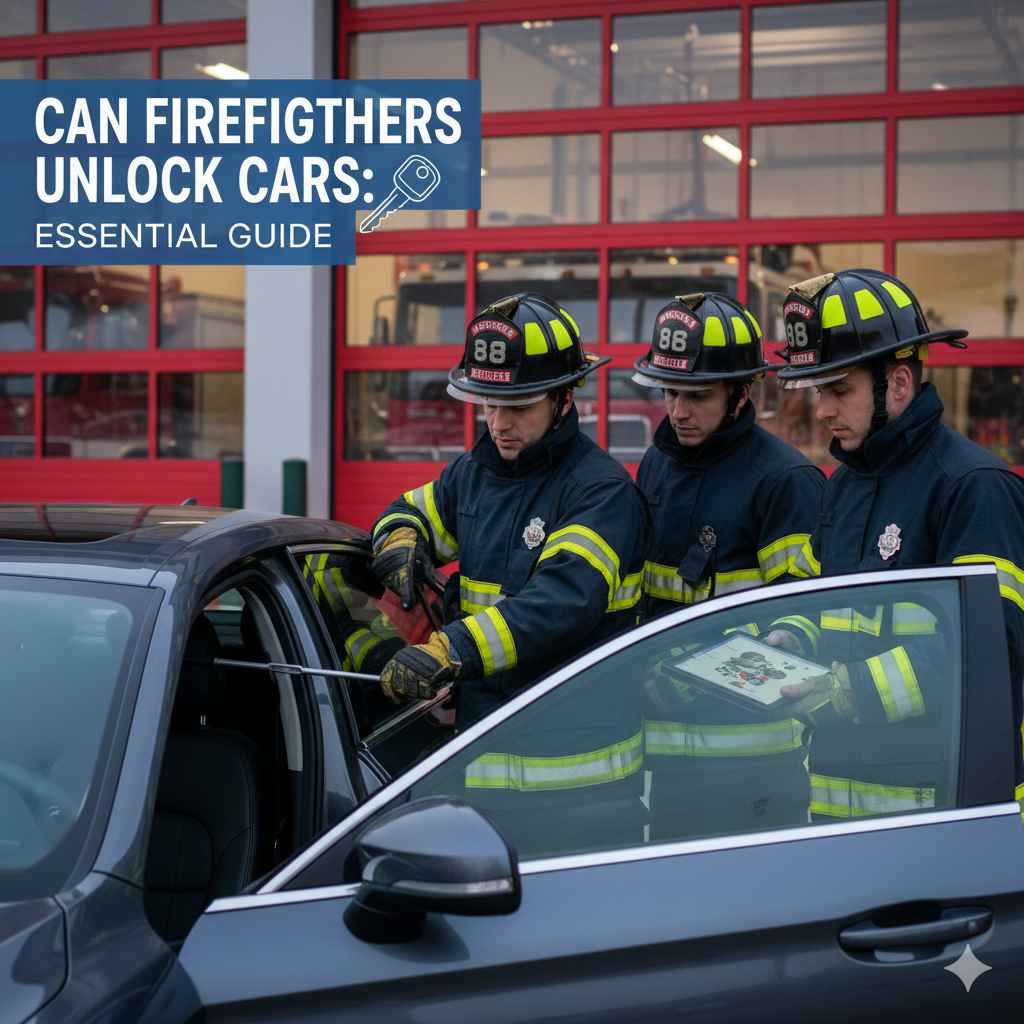
Firefighters have access to forcible-entry and rescue equipment, but the exact tools and techniques vary by department. When an emergency requires vehicle access, crews may first look for a way to enter without unnecessary damage.
Depending on the vehicle and circumstances, trained responders may use specialized vehicle-entry tools or other rescue equipment. If quick non-destructive entry is not possible and someone is in immediate danger, a forced-entry method may be necessary.
The goal in an emergency is safe and rapid access, not preserving every component of the vehicle. That is one reason a normal lockout should generally be handled by an automotive professional when no emergency exists.
Source: lockorunlock.com
Specialized entry equipment
Some fire departments carry tools that can create access to locked vehicles without immediately breaking glass.
Forced entry
When an urgent rescue cannot wait, firefighters may use a method that damages part of the vehicle to gain access.
Vehicle-specific limitations
The best entry method depends on the vehicle design, locking system, location of the occupant, and urgency of the incident.
Can Firefighters Open a Car Without Breaking the Window?
Sometimes. Emergency crews may attempt a less destructive method when conditions allow, but there is no guarantee that a locked car can be opened without damage.
If a life is at risk, preventing serious injury takes priority over avoiding cosmetic or mechanical damage. A window, lock, or other part may have to be damaged to reach the person quickly.
No guaranteed method
Vehicle designs differ, so a technique that works on one car may not work on another.
Emergency access comes first
When there is an immediate threat, responders may choose the fastest safe entry method available.
What Should You Do If You Are Locked Out of Your Car?
If nobody is in danger, start with simple and low-risk options. Check every door and the trunk, confirm whether a spare key is available, and look for roadside assistance through your auto insurance, vehicle manufacturer, automobile club, or another service you already have.
If those options are unavailable, contact a reputable automotive locksmith. Tell the locksmith the vehicle’s make, model, year, and your location. Ask about the estimated service cost before authorizing the work.
Avoid trying improvised entry methods that can damage the vehicle or its safety systems. Modern cars can contain wiring, airbags, sensors, weather seals, and electronic components near areas that may look safe to manipulate.
Source: carxplorer.com
Check all access points
Confirm that every door and the trunk are actually locked before arranging service.
Look for a spare key
A household member, trusted contact, dealer program, or secure spare-key location may solve the problem without forced entry.
Check roadside coverage
Your insurance policy, vehicle warranty, roadside plan, or automobile club may include lockout assistance.
Call a locksmith
A professional automotive locksmith is generally the more appropriate choice for a routine vehicle lockout.
What If Your Keys Are Locked in the Trunk?
Do not assume that the trunk can be opened safely by pulling seals or reaching through a gap. Many modern vehicles use integrated electronic locking systems and trunk designs that can make improvised entry difficult.
Check whether the vehicle has a remote unlocking service or whether a spare key can be brought to you. If not, roadside assistance or an automotive locksmith can determine the least damaging way to regain access.
Check remote services
Some vehicles offer manufacturer-supported remote unlocking through an approved connected service.
Avoid damaging seals
Pulling or cutting weather seals can create water leaks and other problems that cost more to repair than a professional lockout.
Should You Call 911 for a Locked Car?
A routine car lockout is not a reason to call 911. Emergency dispatch is intended for situations that require immediate police, fire, or medical assistance.
If someone is trapped inside the vehicle and faces an immediate danger, the situation is different. In that case, call 911 and explain the emergency clearly so the dispatcher can determine which responders are needed.
Do not call 911 simply because a locksmith is expensive, unavailable for a short period, or inconvenient. Using emergency resources for a routine lockout can delay assistance for people facing genuine emergencies.
Source: bdvfd.org
Routine lockout
Use roadside assistance, an automotive locksmith, or another appropriate non-emergency service.
Immediate danger
Call 911 when a person or animal is trapped and the circumstances create an urgent threat to safety.
Explain the facts
Tell the dispatcher what happened, where you are, who is inside, and what makes the situation urgent.
What If the Car Is Running With the Keys Inside?
A running vehicle does not automatically make every lockout an emergency. The surrounding circumstances matter. A vehicle running in an enclosed garage or another poorly ventilated area is more concerning because exhaust can accumulate.
If a child or animal is also inside, or another immediate hazard exists, explain that information when requesting emergency help. If the vehicle is safely outside and nobody is at risk, a routine automotive service may still be the appropriate solution.
Vehicle in an enclosed space
Treat a running vehicle in a garage or similarly enclosed location as a potential safety hazard.
Vehicle safely outside
If nobody is in danger and the car is safely parked, arrange normal lockout assistance rather than emergency response.
What Are the Biggest Mistakes to Avoid?
The most common mistake is treating every locked car as a fire department problem. A simple lockout is usually an automotive service issue, while an emergency lockout involves an immediate safety concern.
Another mistake is forcing the door open with household tools. Improper techniques can bend the door frame, damage weather seals, scratch paint, trigger alarms, or interfere with electronic components.
Never leave a child, vulnerable adult, or pet unattended in a vehicle while you search for a solution. If the person or animal is in immediate danger, seek emergency help rather than waiting for a routine service appointment.
Source: lebanonvfd.org
Do not exaggerate an emergency
Describe the actual circumstances so emergency dispatchers can assign the appropriate response.
Do not pry randomly
Improvised tools can cause expensive damage and may create additional safety problems.
Do not wait when someone is in danger
If a trapped person or animal is experiencing an immediate threat, contact emergency services promptly.
Do not assume every department follows the same policy
Local fire department procedures can differ, so the department serving your location is the best source for its specific policy.
How Can You Prevent a Future Car Lockout?
The easiest way to reduce the risk of another lockout is to keep a reliable backup plan. A spare key stored safely at home or with a trusted person can be useful, provided it is protected from unauthorized access.
You can also keep your roadside assistance information in your phone and know whether your insurance or vehicle manufacturer provides lockout assistance. For vehicles with connected services, learn how remote unlocking works before you need it.
Keep a spare key
Store a spare in a secure, practical location that is accessible when you need it but not exposed to theft.
Save assistance numbers
Keep your insurer, roadside assistance provider, and preferred locksmith information available before a lockout happens.
Learn your vehicle’s features
Understand whether your car supports remote unlocking or another manufacturer-approved access method.
Frequently Asked Questions
Q
Will the fire department unlock my car for free?
There is no single nationwide rule. Many U.S. fire departments limit vehicle entry assistance to emergencies, while some local departments may have different policies. Ask the department serving your area about its current procedure.
Q
Will firefighters unlock my car if my keys are inside?
Usually not when it is only a routine lockout. A locksmith, roadside assistance provider, or another automotive service is generally more appropriate unless someone inside the vehicle faces an immediate danger.
Q
Will the fire department unlock a car with a child inside?
A child trapped in a vehicle can make the situation an emergency, especially when heat, cold, illness, or another hazard is present. Call 911 and clearly explain the child’s condition and location.
Q
Will firefighters break a car window to get inside?
They may use forced entry when immediate access is necessary and a less destructive method is not practical. The method depends on the vehicle, the emergency, and the need to reach the occupant quickly.
Q
Who should I call if there is no emergency?
Try roadside assistance, your auto insurance provider, a vehicle manufacturer service, or a reputable automotive locksmith. These options are designed for routine vehicle lockouts and can help limit unnecessary damage.
✦ Wrapping Up
Conclusion
So, will the fire department unlock your car? In the United States, the answer depends on the local department and the circumstances, but a routine lockout usually is not an emergency fire service. Firefighters are more likely to intervene when a child, vulnerable person, animal, medical need, or serious safety hazard makes immediate access necessary.
If you are simply standing outside your locked vehicle, stay calm and use a spare key, roadside assistance, vehicle service, or automotive locksmith. If someone is trapped and in immediate danger, call 911 and explain exactly what is happening so emergency responders can determine the safest response.
💡 Key Takeaway
If nobody is in immediate danger, contact a locksmith or roadside assistance provider. If a person or animal is trapped and faces an urgent safety threat, call 911 and describe the emergency clearly.