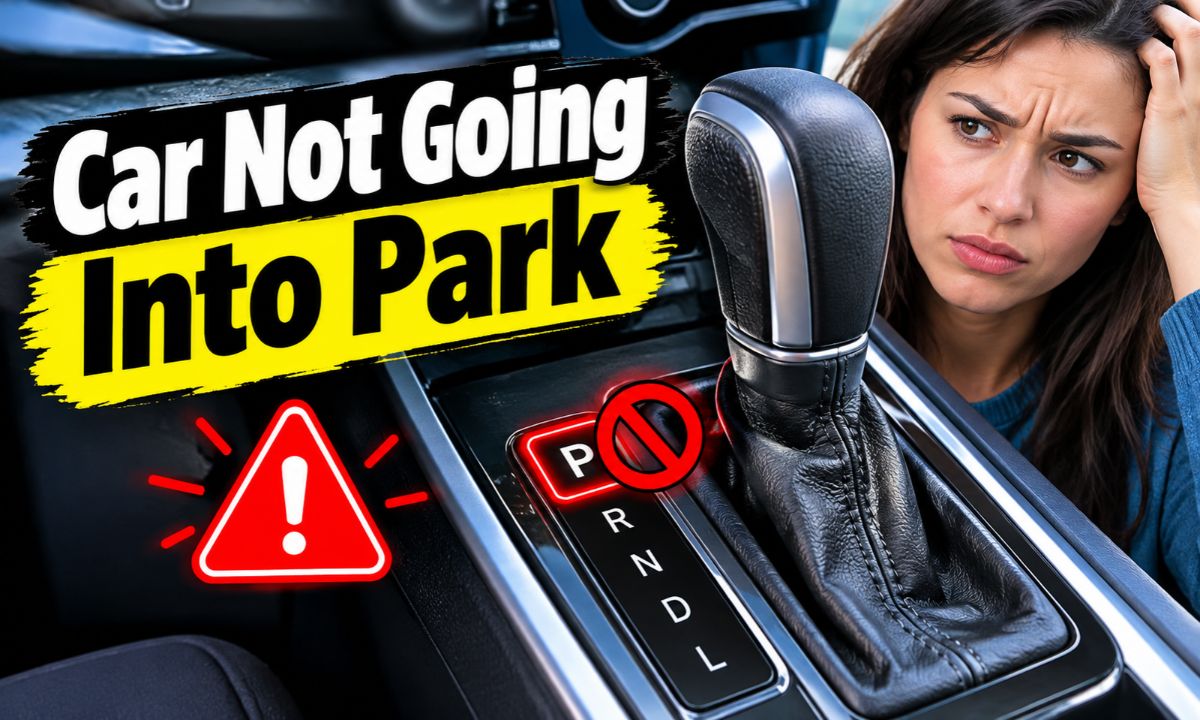
If your car will not go into Park, check the shifter, parking position indicator, and visible linkage problems, but secure the vehicle before troubleshooting.
For drivers across the United States, a car that will not shift into Park can turn an ordinary trip to the grocery store, work, or the driveway into a frustrating problem. The cause may be a misadjusted shift cable, a worn shifter, a damaged transmission parking mechanism, or an electronic fault. The correct fix depends on the vehicle’s design and the symptoms you notice.
Start by preventing the vehicle from rolling. Keep your foot firmly on the brake, apply the parking brake, and choose a safe, level location if the car can be moved without risk. Do not assume the transmission is in Park just because the gear selector appears to be in that position. If the dashboard indicator disagrees with the shifter, the vehicle moves unexpectedly, or the selector will not engage properly, stop driving and arrange professional assistance.
What Does It Mean When a Car Will Not Go Into Park?
A car that will not go into Park has a problem selecting or confirming the transmission’s Park position. In an automatic transmission, Park engages a mechanical parking mechanism, commonly a parking pawl, that helps prevent the transmission output shaft from rotating. The parking pawl is different from the parking brake, which acts through a separate braking system.
The problem can occur at several points between the driver’s hand and the transmission. The shift lever may move without moving the transmission selector, the linkage may be out of adjustment, or an internal component may fail to engage. Electronic gear selectors can also develop faults involving sensors, wiring, control modules, or actuators.
Some vehicles use a conventional mechanical lever, while others use a rotary dial, push-button selector, electronic joystick, or shift-by-wire system. This distinction matters because a cable adjustment procedure for one vehicle may not apply to another. Consult the owner’s manual for the specific selector and emergency procedures.
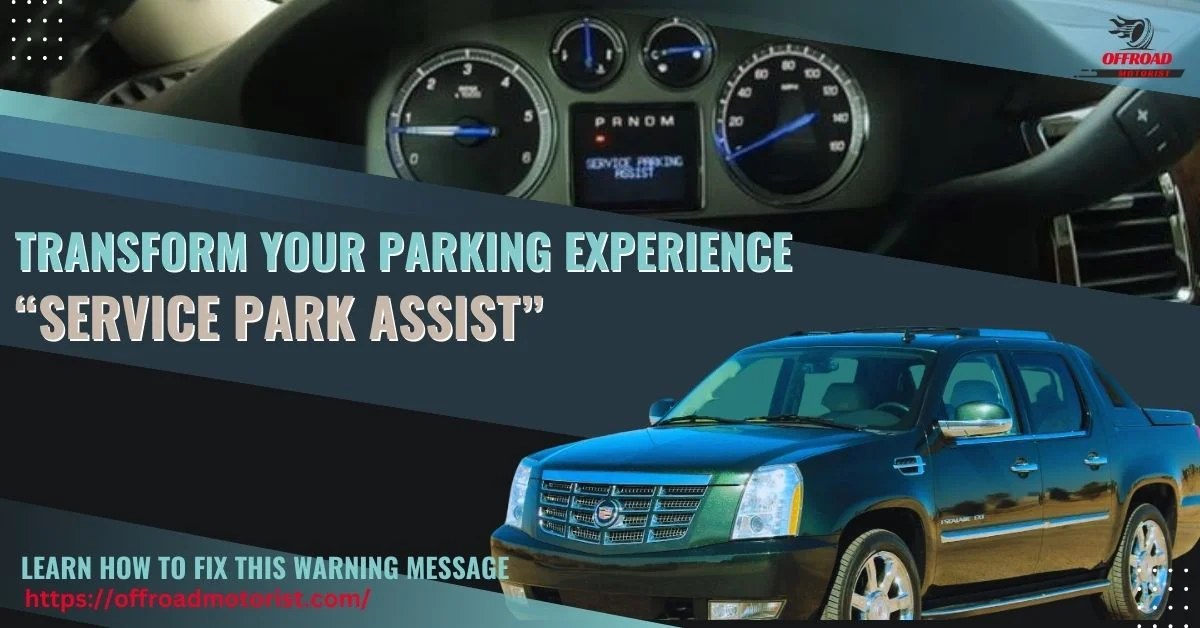
Source: offroadmotorist.com
The shifter will not move into Park
The selector may be obstructed, the shift mechanism may be damaged, or an interlock may be preventing movement.
The shifter reaches Park, but the dashboard shows another gear
A misadjusted shift cable, faulty transmission range sensor, electrical problem, or selector fault may prevent the vehicle from recognizing Park.
The dashboard shows Park, but the vehicle can still roll
The parking mechanism may not be engaging, or the displayed gear position may not reflect the transmission’s actual mechanical state. Secure the vehicle and do not rely on the indicator.
The vehicle displays a not-in-Park warning
The system may be detecting a mismatch between the selector, transmission position, or a related sensor. The warning alone does not identify which component has failed.
Why Park Is Different From Neutral
Neutral generally disconnects the engine’s drive from the wheels without mechanically locking the transmission output shaft. Park is designed to engage a parking lock. A vehicle in Neutral can roll freely on a slope unless the brakes hold it, so Neutral is not a safe substitute for Park.
The parking brake is another separate system. It should be applied whenever the vehicle is parked, especially on an incline, according to the owner’s manual. If the transmission will not enter Park, applying the parking brake is an essential precaution, but it does not repair the underlying fault.
Park
Uses a parking mechanism to help prevent drivetrain movement when properly engaged.
Neutral
Does not provide the transmission’s normal mechanical parking lock.
Parking brake
Uses the vehicle’s braking system to restrain movement independently of the transmission’s Park mechanism.
Safety First: What to Do Before Troubleshooting
Secure the vehicle before investigating why it will not shift into Park. A vehicle that is not mechanically secured can roll even when the selector appears to be in Park. The risk is greater on a driveway, roadside shoulder, sloped parking lot, or uneven surface.
If you are already on a public road or in an unsafe location, prioritize moving people away from traffic and contacting roadside assistance. Do not attempt repairs in an active traffic lane. If the car is in a garage, ensure adequate ventilation before running the engine; never run an engine in an enclosed space without proper exhaust ventilation.
Source: i.ytimg.com
Keep your foot on the service brake
If the vehicle is running and the selector is not reliably engaging Park, maintain control with the brake pedal while preparing to secure the car.
Apply the parking brake
Apply the parking brake according to the vehicle’s instructions. If it is electronic and reports a fault, follow the manual and request assistance rather than assuming it has engaged.
Avoid relying on wheel chocks alone in an unsafe location
Properly rated wheel chocks can provide additional protection on a safe, level work area, but they are not a substitute for a functioning parking brake or professional recovery.
Do not force the selector
Excessive force can break plastic shifter parts, damage cables, or worsen an internal transmission fault.
Keep clear of the underside
Never crawl beneath a vehicle supported only by a jack. Shift linkage inspections under the car should be left to a properly equipped technician unless the vehicle is safely supported using approved procedures.
When You Should Stop Immediately
Stop troubleshooting and call for assistance if the vehicle rolls after you select Park, the parking brake will not hold, the gear indicator changes unpredictably, the selector feels disconnected, or you hear severe grinding or clunking. These symptoms can indicate a fault that makes ordinary driving or parking unsafe.
If the car is parked on a slope and cannot be secured reliably, keep people away from its downhill path. Do not place yourself in front of or behind the vehicle to stop it from rolling. Request professional help.
Immediate danger
A vehicle that moves unexpectedly, cannot be held by its brakes, or is stranded in traffic requires a safe location and roadside assistance.
Possible mechanical damage
Grinding, repeated hard impacts, or a selector that suddenly becomes loose warrants stopping rather than repeated shifting attempts.
Common Reasons a Car Will Not Shift Into Park
The most useful first step is to identify exactly what happens when you move the selector. A lever that cannot move suggests a different fault from one that moves freely while the dashboard continues to display Reverse or Neutral. A car that reaches the Park position but still rolls requires particular caution because the parking mechanism may not be engaging.
The following causes are possibilities, not confirmed diagnoses. Vehicle model, selector design, warning messages, and recent repair history help determine which explanation is most likely.
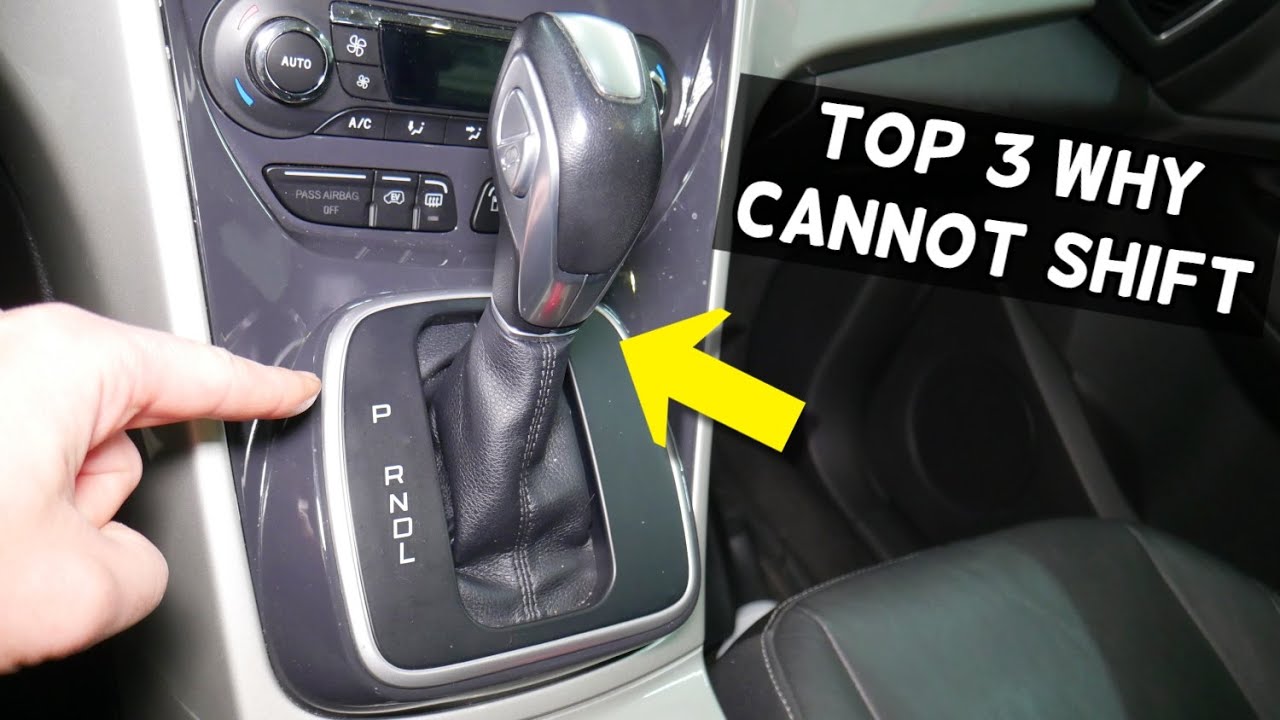
Source: i.ytimg.com
Damaged or misadjusted shift cable
A cable connecting the cabin selector to the transmission can stretch, slip out of adjustment, become damaged, or disconnect. The cabin lever may then fail to move the transmission into its intended position.
Faulty shifter assembly
Broken detents, worn pivot points, damaged bushings, or a loose selector mechanism can prevent the lever from reaching or holding the correct position.
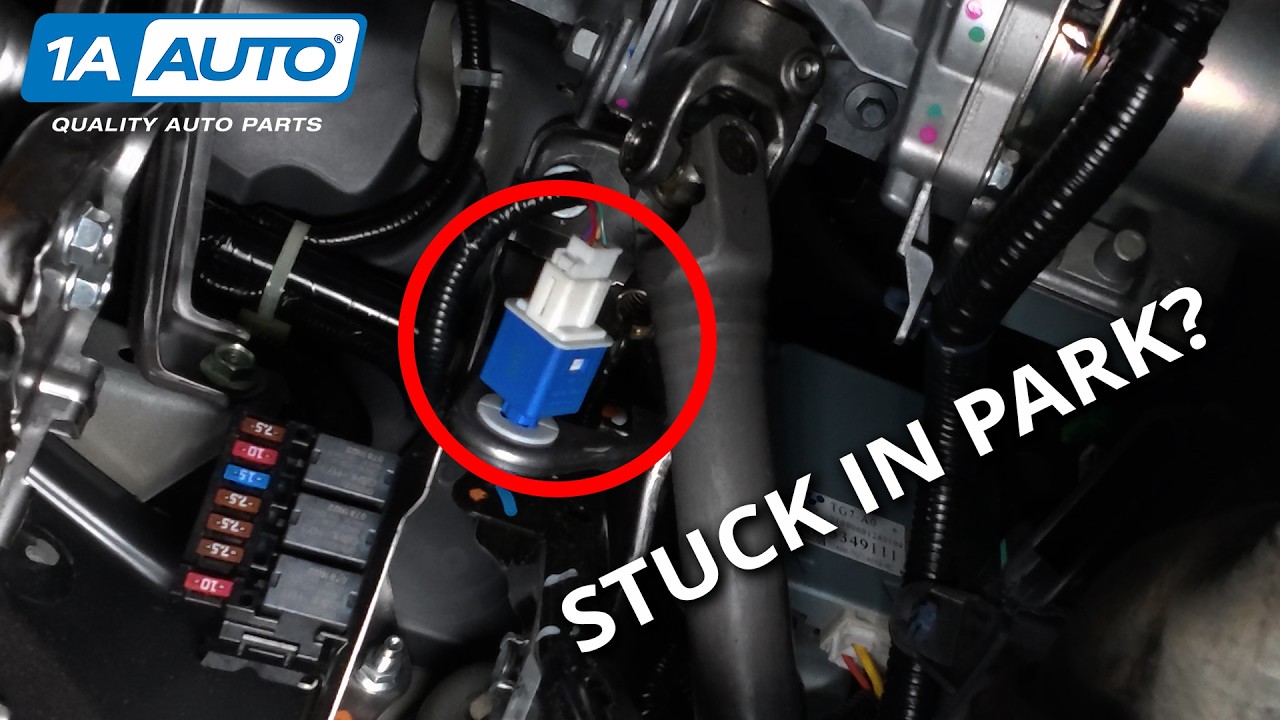
Shift interlock problem
An interlock may prevent movement when required conditions are not met. A fault in the brake switch, wiring, fuse, or interlock actuator can affect shifting, depending on the vehicle’s design.
Transmission range sensor fault
The range sensor or position switch helps report which gear is selected. A fault or misadjustment can cause the dashboard to show the wrong position or trigger a warning.
Internal parking mechanism damage
A worn, damaged, or obstructed parking pawl or related internal component may prevent the transmission from locking properly. This generally requires professional diagnosis.
Electrical or control system issue
Electronic selectors and shift-by-wire systems rely on power, sensors, actuators, and control logic. A low battery, wiring fault, module issue, or actuator failure may prevent a Park command from being completed.
Vehicle parked under drivetrain load
On some vehicles, parking on a slope without correctly applying the parking brake can load the parking mechanism. This can make shifting difficult or cause a sudden release when the selector moves. It does not explain every failure to enter Park.
Foreign object or physical obstruction
Coins, debris, a displaced trim piece, or an obstructed selector boot may interfere with a conventional shifter. Electronic selectors can have different failure modes and should be checked according to the manufacturer’s instructions.
How Recent Repairs Can Affect the Gear Selector
If the problem began immediately after transmission work, a shifter replacement, dashboard repair, battery replacement, or work near the center console, tell the technician. A disconnected cable, incorrectly installed bushing, disturbed connector, or uncompleted calibration may explain the timing.
A recent battery disconnect does not automatically mean the transmission is damaged. Some vehicles have specific relearn or initialization procedures, while others do not. Use the service information for the exact model instead of trying random reset procedures.
Record the timing
Note whether the issue started suddenly, after maintenance, following a collision, or after the vehicle was parked on a slope.
Save warning messages
Photograph dashboard warnings and note any diagnostic codes already obtained. These clues can help narrow the investigation.
Step-by-Step Troubleshooting Guide
Use a symptom-first approach to narrow the problem without dismantling the shifter or transmission. The safe checks below are intended for initial assessment, not for proving that the vehicle is mechanically secure. If the car cannot be secured, skip the remaining checks and request recovery.
Source: i.redd.it
Step 1: Check Whether the Shifter Actually Moves
With the vehicle secured and your foot on the brake, observe the selector without forcing it. If the lever will not move toward Park, note whether it feels firmly blocked, unusually stiff, or loose. If it moves through its normal range but the transmission does not respond, the issue may be farther along the shift mechanism.
Do not repeatedly cycle the selector if it makes grinding noises or behaves unpredictably. A selector that moves freely without the usual detents may have a broken or disconnected component.
Lever is firmly blocked
Consider an interlock fault, physical obstruction, selector mechanism problem, or a vehicle-specific operating condition.
Lever feels loose or disconnected
A damaged shifter, failed bushing, or disconnected cable may be involved.
Lever reaches Park normally
Check the dashboard indication and warning messages, but do not assume Park is engaged until the discrepancy is resolved.
Step 2: Compare the Selector With the Dashboard Indicator
Look at the gear-position display while moving the selector only if it is safe to do so. If the selector indicates Park but the dashboard shows Reverse, Neutral, or another gear, the transmission may not be receiving the correct mechanical command, or the position-sensing system may not be reporting it accurately.
A matching Park display is useful information but is not conclusive proof that the parking lock is functioning. If the vehicle can roll or displays an intermittent gear position, do not perform a test by releasing the brake on a slope.
Display disagrees with the lever
Arrange diagnosis of the linkage, range sensor, wiring, or electronic selector system.
Display flickers or changes unexpectedly
Record the behavior and warning messages. Electrical faults or a position-sensing problem may be involved.
Display shows Park but the car is not secure
Do not rely on the display. Keep the parking brake applied and arrange professional recovery.
Step 3: Check the Brake Pedal and Shift Interlock
Many automatic vehicles require the brake pedal to be pressed before the selector can leave Park. This system is designed to reduce unintended vehicle movement. Depending on the model, the interlock may also have a role in other selector operations, so the exact symptoms matter.
If the selector is stuck and the brake lights do not illuminate when the pedal is pressed, a brake-light switch, fuse, power supply, or wiring problem may be present. However, brake lights that work do not rule out every interlock fault, and a car that will not enter Park may have an unrelated mechanical problem.
Check the brake lights only from a safe position, such as with assistance from another person or by using a suitable reflection. Do not stand behind the vehicle in its possible path of movement. Consult the owner’s manual for the normal shift-interlock operation.
Brake lights do not work
Avoid driving until the brake-light fault is addressed. The same switch circuit may affect other vehicle functions, depending on the design.
Brake lights work but the selector remains stuck
The interlock actuator, wiring, selector assembly, or another mechanism may still be faulty.
Manual release procedure is needed
Use only the procedure specified in the owner’s manual, and only to move the vehicle to a safe state when the manual permits it. A release does not repair the cause or prove that Park will hold.
Step 4: Look for an Obvious Cabin-Side Obstruction
If your car has a conventional floor-mounted shifter, check for loose objects around the selector and visible trim that may physically block its travel. Do not remove covers, pry at the mechanism, or put fingers into moving parts while the vehicle is powered.
For electronic gear selectors, inspect only the visible controls and check the manual for messages or operating requirements. Do not assume that a rotary dial, button, or joystick works like a traditional mechanical lever.
Visible debris is present
Remove loose items only if they can be reached safely without disassembling the mechanism or activating the selector.
The shifter is physically damaged
Stop using it and arrange repair rather than forcing the selector into position.
Step 5: Consider Battery or Electrical Problems
Vehicles with electronic selectors may refuse or fail to complete a shift command when system voltage is low or a related circuit is faulty. Clues can include a weak start, multiple warning lights, a blank selector display, or other electrical functions behaving abnormally.
If you suspect a weak battery, use the vehicle’s approved diagnostic and jump-start instructions. Do not disconnect the battery as a universal reset; doing so may erase useful diagnostic information or require model-specific initialization. A healthy battery also does not rule out an actuator, wiring, sensor, or control-module problem.
Multiple electrical warnings appear
Have the battery, charging system, power connections, and relevant control systems checked.
The selector is blank or unresponsive
Follow the model-specific emergency instructions and contact roadside assistance if the vehicle cannot be secured.
Step 6: Check for Signs of a Shift Cable or Linkage Fault
A conventional automatic transmission may use a cable or linkage to connect the cabin selector with a manual lever on the transmission. If a cable stretches, a bushing breaks, or an attachment disconnects, the cabin lever and transmission position can stop matching.
Warning signs include a shifter that feels unusually loose, an indicator that does not match the selected position, or several gears that cannot be selected correctly. These symptoms are not unique to a cable problem, so they should guide diagnosis rather than be treated as proof.
Do not crawl under the vehicle to inspect the linkage unless you are trained and can support it using the manufacturer’s approved lifting and support procedures. A technician can inspect the cable attachments and verify whether the transmission’s manual lever reaches its correct detents.
Possible cable disconnection
Avoid driving. The transmission may remain in a different gear from the one indicated by the cabin selector.
Possible adjustment issue
A technician can verify the adjustment against the vehicle’s service specifications.
Step 7: Arrange Transmission and Diagnostic-System Inspection
If the basic checks do not reveal a safe, obvious cause, the next step is a professional diagnosis. A repair shop can scan the relevant control modules, inspect stored fault codes and live gear-position data, check the linkage, and test the selector or actuator according to the vehicle’s service procedures.
An internal transmission fault becomes more concerning when the selector and linkage operate correctly but Park will not engage, the vehicle rolls despite a Park indication, or abnormal mechanical noises occur. Confirming an internal fault may require additional testing; it should not be diagnosed from a warning light alone.
Request a targeted diagnosis
Ask the technician to check selector operation, linkage adjustment, range-sensor data, relevant wiring, and the parking mechanism as appropriate to the symptoms.
Ask before authorizing major repairs
Request the diagnostic findings and an explanation of why a cable, shifter assembly, sensor, actuator, or internal transmission repair is necessary.
Troubleshooting by Symptom: A Quick Diagnostic Table
Use this table to connect what you observe with the next sensible check. It is a preliminary guide, not a substitute for the vehicle’s service manual or a confirmed diagnosis.
Source: i.ytimg.com
Symptom: The shifter will not move toward Park
Possible causes include an obstructed selector, a damaged shift mechanism, or an interlock-related problem. Check the owner’s manual and visible cabin area; do not force the lever.
Symptom: The shifter moves, but the dashboard shows another gear
Possible causes include cable adjustment, disconnected linkage, a range sensor fault, or an electronic selector problem. Avoid driving and arrange diagnosis.
Symptom: The shifter feels unusually loose
A broken bushing, failed shifter component, or disconnected cable may be involved. Professional inspection is recommended.
Symptom: Park is displayed, but the car rolls
The parking mechanism may not be engaging or the displayed position may be inaccurate. Apply the parking brake if it functions and request a tow.
Symptom: A not-in-Park warning appears
The system may detect inconsistent position information or an incomplete shift. Record the warning and have the selector and related systems checked.
Symptom: Several electrical warnings appear at once
Low voltage, a power-supply fault, or a broader electrical problem may affect electronic shifting. Follow the vehicle’s approved battery and recovery procedures.
Symptom: Grinding or repeated clunking occurs
Stop shifting attempts. Mechanical damage or a loaded parking mechanism may be involved, and professional assessment is needed.
Which Checks Can You Perform Yourself?
A safe do-it-yourself check is limited to observation, reading the owner’s manual, checking visible cabin obstructions, recording warning messages, and noting whether the brake lights work. These checks can provide useful information without dismantling the vehicle.
Cable adjustment, selector disassembly, underbody inspection, electronic actuator testing, and internal transmission diagnosis require the appropriate tools, vehicle-specific procedures, and safety precautions. The dividing line is simple: if a check requires reaching into a mechanism, lifting the vehicle, bypassing a safety system, or guessing at wiring, leave it to a qualified technician.
Reasonable initial checks
Read the manual, inspect the cabin for visible obstructions, record the displayed gear and warning messages, and note the symptoms.
Professional checks
Inspect linkage and internal parts, test electronic circuits, adjust the transmission range system, and verify the actual Park engagement.
How to Park a Vehicle Safely When It Will Not Enter Park
If the vehicle will not enter Park, the safest response is to prevent movement and arrange repair rather than continue using it. The parking brake may help secure the vehicle, but whether it can hold safely depends on its condition, the slope, and the nature of the failure.
If the car is already in a safe location, keep the parking brake applied and follow the owner’s manual. If it cannot be held securely, do not leave it unattended where it could roll into people, traffic, or property. Call roadside assistance for help securing and recovering the vehicle.
Do not treat leaving the vehicle in Neutral with the parking brake as an acceptable long-term workaround for a failed Park mechanism. Even when a brake appears to hold, the underlying fault could make future parking unpredictable.
Source: i.ytimg.com
On a level driveway
Apply the parking brake if it works, keep the vehicle secured, and arrange repair before returning to normal use.
On an incline
Take extra precautions and do not trust a questionable parking mechanism. If the vehicle cannot be held reliably, keep clear of its path and request professional assistance.
In a parking garage or busy lot
Notify property staff if needed, keep people away from the vehicle’s potential path, and arrange a recovery method appropriate for the vehicle.
At the roadside
Prioritize personal safety, stay out of traffic, and contact roadside assistance or emergency services when the location creates an immediate danger.
Can You Drive With a Car That Will Not Go Into Park?
A car that cannot reliably engage Park should not be treated as safe for normal use. Even if it shifts into Drive or Reverse, a disconnected cable or faulty position sensor may cause gear selection to differ from the driver’s expectations. A problem affecting electronic shift control can also worsen or prevent a later shift.
The appropriate recovery method depends on the vehicle. Some vehicles require a flatbed tow, while others may permit a different method under specific conditions. Tell the towing operator the make, model, selector type, and whether the vehicle can shift into Neutral. Follow the manufacturer’s towing instructions to avoid transmission or drivetrain damage.
Do not test-drive to see whether the fault clears
Unpredictable gear selection or a failed parking mechanism can create a serious safety risk.
Explain the exact fault to the tow operator
Mention if the car cannot enter Park, cannot shift into Neutral, has electronic parking brakes, or has all-wheel drive.
Repair Options and Factors That Affect Cost
Repair costs depend on the failed part, vehicle design, labor rates, and whether internal transmission work is necessary. A visible cabin obstruction may cost nothing to remove, while a replacement shifter, cable, sensor, actuator, or transmission repair can involve parts, labor, and diagnostic time.
Without the vehicle’s make, model, year, symptoms, and confirmed diagnosis, a specific price would be unreliable. A shop’s estimate should separate diagnostic charges, parts, labor, required programming or adjustment, and any towing expense.
Source: offroadmotorist.com
Obstruction or minor adjustment
May require little work if the cause is accessible and no parts are damaged. Do not assume every shifting problem is a simple adjustment.
Shift cable or bushing replacement
The price depends on part availability, access, and the design of the vehicle’s linkage.
Shifter assembly repair
Costs can rise if the console must be disassembled or the replacement assembly contains integrated electronic components.
Range sensor or electrical repair
Diagnosis may include circuit testing, sensor adjustment, connector inspection, or control-system checks before a part is replaced.
Internal transmission repair
Can be substantially more involved because the parking mechanism may require transmission disassembly or replacement of internal components.
Questions to Ask Before Approving a Repair
A clear diagnosis helps prevent unnecessary parts replacement. Ask the shop to explain what test identified the failed component and whether other faults could produce the same symptom. If a major transmission repair is proposed, ask which findings establish that an external linkage, shifter, sensor, or control issue is not the cause.
What failed?
Request the name of the component and the evidence supporting the diagnosis.
Was the actual Park position verified?
Ask how the shop confirmed the relationship between the cabin selector, transmission position, and parking mechanism.
Does the repair include adjustment or programming?
Some components require model-specific setup, calibration, or verification after installation.
Is towing necessary?
If the vehicle cannot be secured or gear selection is unreliable, ask for a recovery recommendation that follows the manufacturer’s towing requirements.
Common Mistakes to Avoid
A few common troubleshooting mistakes can turn a manageable repair into a more serious safety or mechanical problem. The goal is to identify the symptom, protect the vehicle from rolling, and obtain a diagnosis without causing further damage.
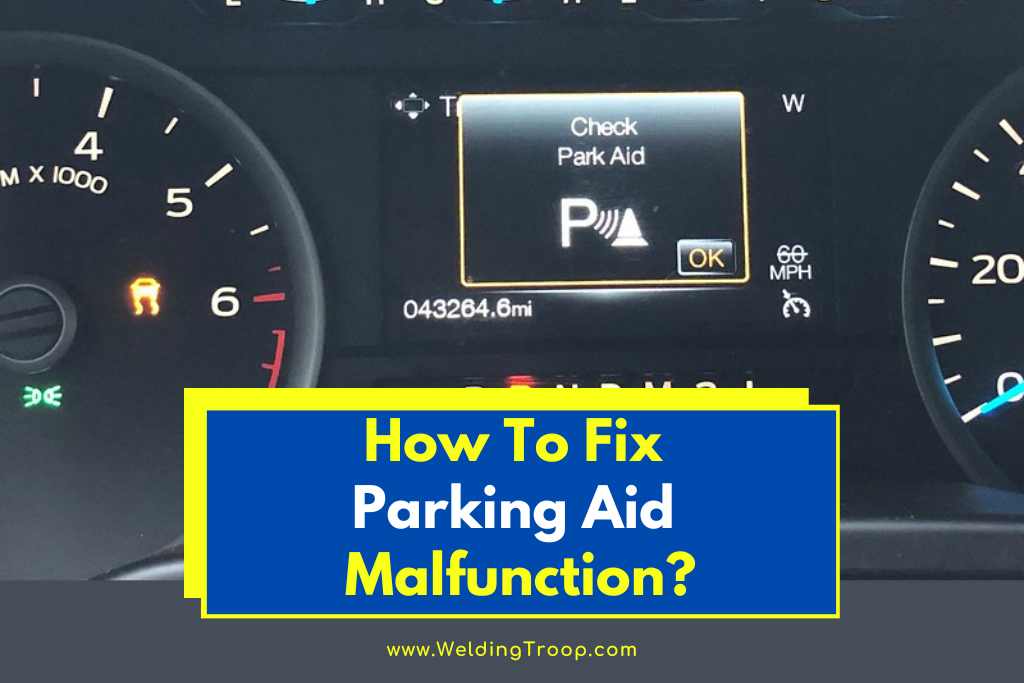
Source: weldingtroop.com
Forcing the shifter
A stuck or disconnected selector should not be forced. Doing so can damage the lever, cable, bushings, or internal components.
Assuming the dashboard display proves Park is engaged
The display reports a position or system state; it does not independently prove that the parking mechanism is holding the vehicle.
Replacing the brake switch without checking the symptoms
A brake switch can affect interlock operation on some vehicles, but it is not a universal cause of failure to enter Park.
Disconnecting the battery as a universal fix
A reset may not address a mechanical problem and can erase useful diagnostic information or introduce other initialization requirements.
Crawling underneath a vehicle supported by a jack
A jack alone is not an acceptable support system for working beneath a vehicle. Follow approved lifting and support procedures.
Continuing to drive because another gear works
A car may move normally despite a fault that makes gear selection unpredictable or prevents safe parking.
Assuming every vehicle has the same emergency release
Release procedures and electronic selector designs vary. Follow the exact owner’s manual instead of copying instructions for a different model.
Why Guessing at Parts Can Be Expensive
Several faults can produce similar symptoms. For example, a wrong gear display may result from linkage misadjustment, a position sensor, wiring, or a control issue. Replacing one part without testing may leave the original problem unresolved.
A useful repair decision follows the evidence: reproduce the symptom safely, inspect the appropriate components, read relevant diagnostic data, and verify the repair afterward. This approach is more reliable than replacing parts based only on a warning message.
Document the symptom
Write down the selected gear, dashboard indication, warning messages, and whether the issue is constant or intermittent.
Request test results
Ask for relevant diagnostic codes and the inspection findings that support the recommended repair.
How to Prevent Future Shifting Problems
Not every shifter or transmission fault can be prevented, but sensible parking habits and timely repairs can reduce avoidable strain and help reveal developing problems before they become more serious.
Follow the owner’s manual for parking, towing, maintenance, and selector operation. Report a selector that becomes stiff, loose, intermittent, or inconsistent instead of waiting for it to stop working completely.
Use the parking brake correctly
Apply it according to the owner’s manual, particularly on inclines, so the vehicle’s parking procedure does not rely solely on the transmission mechanism.
Avoid forcing the selector
Resistance or unusual movement is a reason to investigate, not to apply more force.
Address warning messages promptly
Repeated not-in-Park warnings, inconsistent gear displays, or interlock problems should be diagnosed before they become a parking or starting issue.
Maintain the battery and electrical system
For vehicles with electronic gear selectors, address battery and charging-system faults and keep electrical connections in good condition.
Mention new symptoms during service
Tell the technician about unusual noises, delayed gear selection, recent repairs, or selector behavior that has changed.
What to Record if the Problem Returns
Intermittent faults can be difficult to reproduce at a repair shop. Recording the conditions when the problem occurs can help the technician narrow the possibilities without repeatedly provoking a potentially unsafe failure.
Operating conditions
Record whether the problem occurs during a cold start, after driving, on a slope, or after the vehicle has been parked for a while.
Selector and display behavior
Note whether the lever moves, which gear the display shows, and whether a warning appears.
Recent maintenance
List recent battery work, transmission service, collision repairs, or work near the center console.
Research Scope and Next-Question Gap Map
This guide prioritizes safe symptom identification, the distinction between selector movement and actual Park engagement, and the decision to stop driving or request a tow. The explanations reflect general automatic-transmission and electronic-selector principles; they are not a vehicle-specific diagnosis.
A live comparison of competing pages, current manufacturer service bulletins, and model-specific repair procedures was not completed for this article. Therefore, no claim is made that a particular cause is the most common for every vehicle, and no current repair-price range or verified competitor coverage is asserted. For a specific diagnosis, the owner’s manual and service information for the exact vehicle are the appropriate next sources.
Question: Why does the dashboard say the car is not in Park?
Reader stage: during troubleshooting. Basis: inferred next need from a gear-position warning. Competitor coverage: not checked. Benefit: helps distinguish a position-sensing or linkage issue from actual parking-lock engagement. Evidence needed: vehicle-specific owner’s manual, diagnostic data, and service information. Priority: high. Placement: symptom table and diagnostic steps.
Question: Can I leave the car in Neutral with the parking brake on?
Reader stage: immediate safety decision. Basis: inferred next need when Park cannot be selected. Competitor coverage: not checked. Benefit: prevents treating a temporary restraint as a permanent repair. Evidence needed: vehicle manual and the actual condition of the parking brake and selector. Priority: high. Placement: safety and recovery section.
Question: Does a bad brake-light switch cause a car not to go into Park?
Reader stage: diagnosis. Basis: inferred from shift-interlock symptoms. Competitor coverage: not checked. Benefit: clarifies that the relationship depends on the vehicle and that a switch fault is not a universal explanation. Evidence needed: wiring diagrams, owner’s manual, and model-specific diagnostic procedures. Priority: medium. Placement: shift-interlock section.
Question: Does the car need a flatbed tow?
Reader stage: after deciding to stop driving. Basis: inferred from the need to recover a vehicle with uncertain gear selection. Competitor coverage: not checked. Benefit: helps prevent transmission or drivetrain damage during recovery. Evidence needed: the manufacturer’s towing instructions and drivetrain configuration. Priority: high. Placement: towing and recovery section.
Question: How much will a shift cable or transmission repair cost?
Reader stage: repair planning. Basis: inferred from the likely next decision after diagnosis. Competitor coverage: not checked. Benefit: explains why a confirmed diagnosis and itemized estimate are necessary before comparing prices. Evidence needed: local estimates for the exact vehicle and confirmed failure. Priority: medium. Placement: repair-cost section.
Recommended Next Research for a Vehicle-Specific Answer
The most useful follow-up is to identify the vehicle’s year, make, model, transmission or selector type, and exact symptom. The relevant owner’s manual and service information can then establish the correct interlock behavior, emergency procedures, towing method, diagnostic checks, and any model-specific service bulletins.
First
Record the vehicle details and the exact dashboard warning.
Next
Determine whether the selector is physically blocked, moves without changing the displayed gear, or reaches Park while the vehicle remains unsecured.
Then
Use manufacturer-specific service information or a qualified repair shop to confirm the fault before approving parts replacement.
Frequently Asked Questions
Q
Why won’t my car go into Park but will go into other gears?
A shift cable or linkage that is out of adjustment, a damaged shifter, a faulty range sensor, or a problem inside the transmission may prevent Park from engaging while other gear positions remain selectable. The exact cause depends on whether the selector moves normally, whether the dashboard reports the selected gear, and whether the parking mechanism actually holds the vehicle. Do not continue driving until the fault is assessed if Park cannot be relied upon.
Q
Can a bad brake-light switch prevent my car from shifting into Park?
A brake-light switch can affect shift-interlock operation on some vehicles, particularly when the selector is stuck in Park and the system cannot detect the brake pedal. However, a car that cannot enter Park may have a separate mechanical or electronic problem. Check the vehicle’s manual and brake-light operation, and do not replace the switch without confirming that it is responsible for the symptom.
Q
Why does my car say it is not in Park when the shifter is in Park?
The transmission may not be reaching the Park position, the shift cable may be misadjusted or disconnected, or a range sensor, wiring connection, or electronic selector system may be reporting the wrong position. The warning indicates a discrepancy or system condition, not a single confirmed failure. If the display and selector disagree, keep the vehicle secured and arrange professional diagnosis.
Q
Can I turn off my car if it will not go into Park?
The answer depends on the vehicle’s design. Some vehicles may allow the engine to be switched off while another gear is selected, while others may restrict shutdown or display a warning. Follow the owner’s manual and prioritize securing the vehicle with a functioning parking brake. Do not repeatedly operate the ignition or selector in an attempt to bypass an interlock. If the vehicle cannot be secured, request assistance.
Q
Can I drive a car that will not shift into Park?
You should not use the vehicle normally if it cannot reliably engage Park or if the selected gear is uncertain. A linkage or electronic control fault can cause the actual transmission position to differ from the driver’s expectation. Arrange professional inspection and towing when necessary, using the recovery method approved for the specific vehicle.
Q
How much does it cost to fix a car that will not go into Park?
The cost varies with the vehicle and the failed component. Removing a simple obstruction or making a verified adjustment may require little work, while replacing a shifter, shift cable, sensor, or actuator can cost more. Internal transmission repairs may be substantially more involved. Obtain a diagnostic assessment and an itemized estimate before approving repairs; without a confirmed cause and vehicle details, a reliable price cannot be given.
Q
Will a car roll if it is not fully in Park?
Yes. If the transmission’s parking mechanism has not engaged, the vehicle may roll, particularly on an incline. A dashboard Park indication does not guarantee that the mechanism is holding correctly. Apply the parking brake if it functions, keep people away from the vehicle’s path, and request assistance if the car cannot be secured.
✦ Wrapping Up
Conclusion
When a car will not go into Park, the problem may involve the shifter, shift cable, interlock, range sensor, electronic control system, or internal transmission components. The first step is to distinguish whether the lever is blocked, the gear display is incorrect, or the vehicle reaches the apparent Park position without actually holding. These symptoms help narrow the investigation, but they do not replace a confirmed diagnosis.
Keep the vehicle secured, avoid forcing the selector, and do not drive when gear selection or the parking mechanism is unreliable. Basic observations and the owner’s manual can help identify the next step, while linkage adjustments, electronic testing, and internal transmission repairs require the correct procedures and equipment.
💡 Key Takeaway
Apply the parking brake if it works, keep people clear of any possible rolling path, record the exact selector behavior and dashboard warnings, and arrange professional inspection or towing if Park cannot be confirmed. For a more specific troubleshooting plan, identify your vehicle’s year, make, model, and whether the shifter is stuck, the display shows the wrong gear, or the car still rolls in Park.