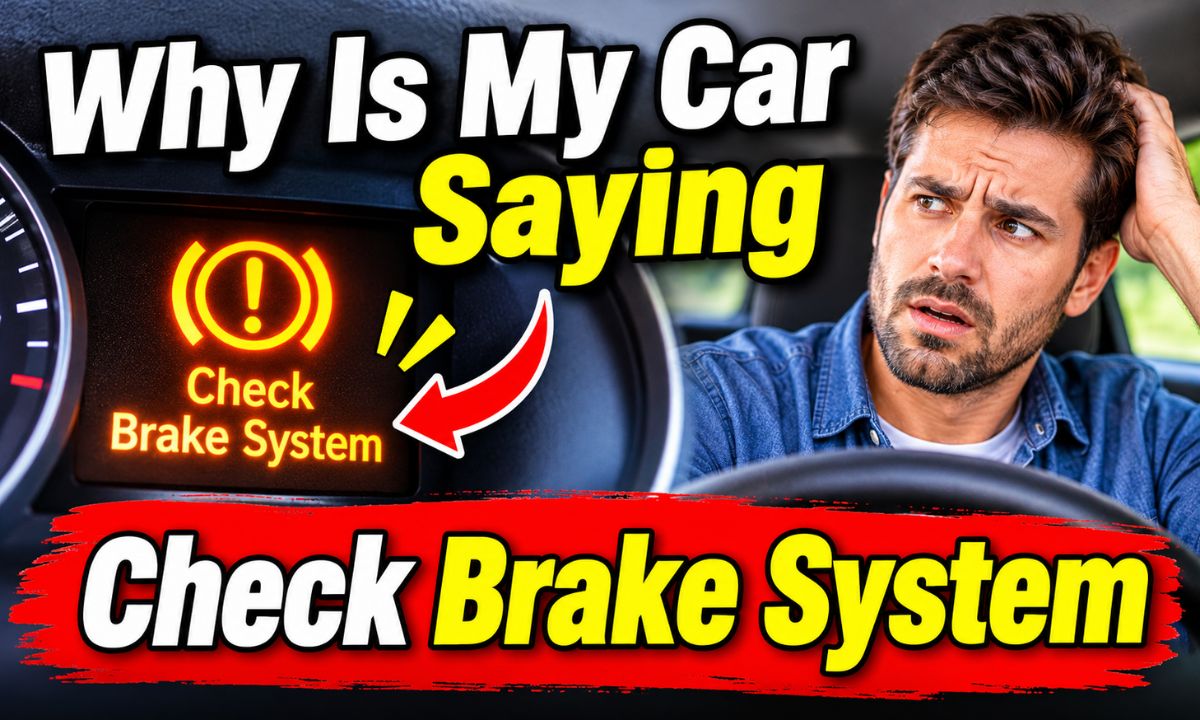
Your car may say Check Brake System because of low brake fluid, an engaged parking brake, worn brake parts, an ABS fault, or an electrical problem. Stop safely and check the warning before driving further.
If you see a Check Brake System message on your dashboard while driving on an American road, take it seriously. It may appear during your morning commute, on a highway, or while leaving your driveway. The message means your car has detected a condition that needs attention in its braking system.
The cause can be simple, such as a parking brake that has not fully released. However, it can also point to low brake fluid, a leak, a failed sensor, or a fault in the electronic brake system. Some of these problems can reduce your ability to stop safely.
Start by finding a safe place to stop. Check whether the parking brake is fully released and look for other warning lights. If the brake pedal feels soft, sinks toward the floor, or takes more effort than usual, do not continue driving. Arrange a tow or roadside help instead.
The exact meaning depends on your car’s make, model, year, and brake system. A Ford, Honda, Toyota, Chevrolet, or Mercedes-Benz may use a different message for a similar fault. Your owner’s manual is the best source for the exact warning and the steps approved for your vehicle.
Check Brake System is a warning that tells you the car has found a possible problem in one or more parts of its braking system. The system may monitor brake fluid, hydraulic pressure, wheel speed, brake pad wear, parking brake operation, and electronic brake controls.
The warning does not always mean the brakes have stopped working. Some cars can still brake normally when a sensor or an ABS part fails. But normal pedal feel does not prove that every safety feature is working.
Your regular brakes, anti-lock brakes, and electronic brake controls have different jobs. A fault in one area can affect another. This is why the exact message and the other warning lights matter.
Source: autoquarterly.com
Brake system
The main parts that slow and stop the car. These include brake pads, rotors, calipers, lines, fluid, and the master cylinder.
ABS
The anti-lock braking system helps keep the wheels from locking during hard braking. It can help the driver maintain steering control.
Electronic brake controls
These systems monitor and control parts of the brakes, including electronic parking brakes and brake force distribution on equipped cars.
Brake warning sensor
A sensor or switch can detect a condition such as low fluid or a parking brake that remains engaged.
Is Check Brake System the Same as Check ABS?
No. The messages can be related, but they do not mean the same thing. A Check Brake System warning can point to the main hydraulic brakes, parking brake, or an electronic brake fault. An ABS warning points more directly to the anti-lock system.
If both the red brake warning and the ABS warning appear at the same time, treat the situation as urgent. Some vehicles may also lose electronic brake force distribution. Your owner’s manual explains what the combination means for your model.
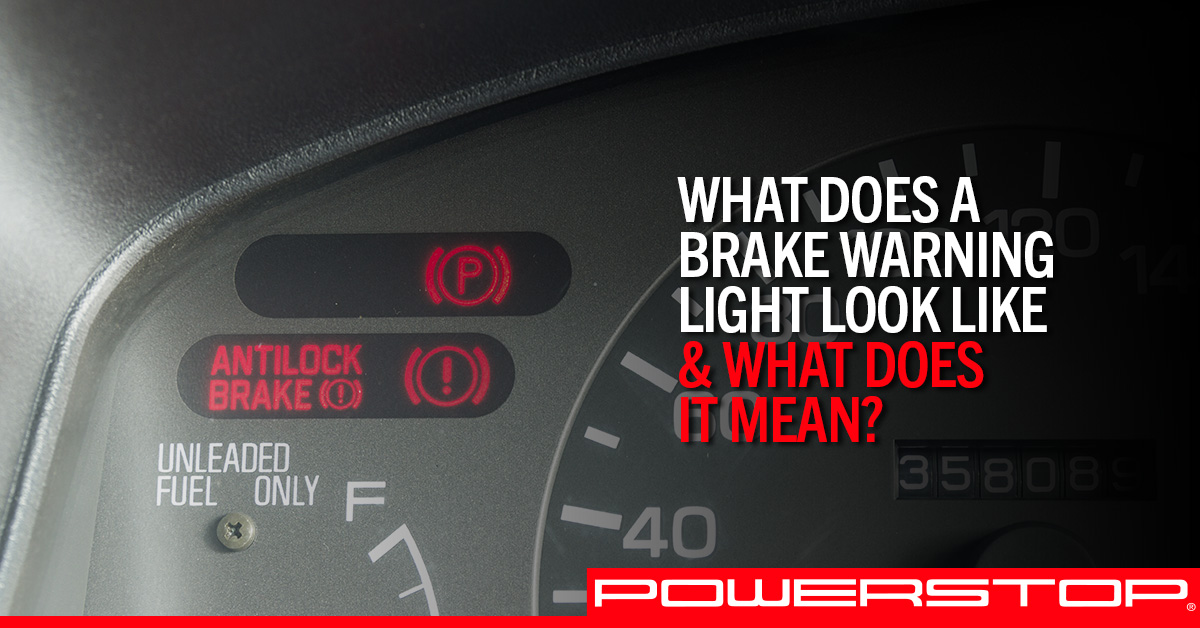
Red BRAKE warning
May indicate an engaged parking brake, low fluid, or a serious brake system fault.
Amber ABS warning
May indicate that the anti-lock function has a fault. Normal braking may remain, but anti-lock protection may be unavailable.
Brake and ABS warnings together
May indicate a fault that affects more than one braking function. Stop safely and follow the vehicle manual.
Why Is My Car Saying Check Brake System? 9 Common Causes
The warning can have several causes, and some are more serious than others. A visual check may help you spot a simple issue, but a proper inspection is often needed to find the exact fault.
The most useful starting points are the parking brake, brake fluid level, and pedal feel. After those checks, a mechanic may need to inspect the brake hardware, sensors, wiring, and control modules.
Source: saiautocare.com.au
1. Parking brake is not fully released
A partly engaged parking brake can keep the warning active. A faulty parking brake switch can also report that the brake is on when it has been released.
2. Low brake fluid
The reservoir level may fall as brake pads wear or when fluid leaks from the system. Low fluid can trigger the warning and may reduce braking performance.
3. Brake fluid leak
A damaged brake line, hose, caliper, wheel cylinder, or master cylinder can allow fluid to escape. A leak can reduce hydraulic pressure and make stopping unsafe.
4. Worn brake pads
Some vehicles use pad wear sensors to alert the driver when the pads need service. Other vehicles do not show a separate electronic pad warning.
5. ABS wheel speed sensor fault
A faulty sensor, damaged wire, or dirty sensor area can send incorrect wheel speed data to the ABS control unit.
6. Electronic parking brake problem
A failed switch, actuator, motor, or wiring connection can stop the electronic parking brake from applying or releasing as intended.
7. Weak battery or charging problem
Low system voltage can cause electronic control units to report faults. A weak battery may be involved when several unrelated warning lights appear together.
8. ABS module or hydraulic control fault
The ABS control module, pump, or hydraulic unit may have a fault that needs a compatible diagnostic scan and professional testing.
9. Brake fluid level sensor or wiring problem
A damaged connector, faulty reservoir float, or broken wire can trigger a warning even when the fluid level looks normal.
1. Parking Brake Not Fully Released
Check the parking brake first because it is one of the simplest causes to rule out. On a car with a hand lever, make sure the lever is fully lowered. On a car with a foot pedal, follow the release steps in the owner’s manual.
An electronic parking brake may use a button instead of a lever. Check the dashboard to see whether its indicator shows that the brake is still applied. Do not force the switch if it will not release.
Possible sign
The BRAKE light stays on after starting the engine, or the parking brake symbol remains visible.
What to do
Follow the normal release process. If the warning remains, have the parking brake switch or system checked.
2. Low Brake Fluid or a Leak
Brake fluid transfers force from the pedal to the brake parts at each wheel. When you press the pedal, hydraulic pressure moves the calipers or wheel cylinders so the pads or shoes can slow the wheels.
A low fluid level can turn on the warning. It may happen as the pads wear, because the caliper pistons move farther out and more fluid remains in the working parts of the system. However, a sudden or large drop can point to a leak.
Never assume that adding fluid is the full repair. A mechanic should inspect the pads, lines, hoses, calipers, and master cylinder to find the reason for the low level.
Possible signs
A low reservoir level, a soft pedal, a fluid mark near a wheel, or a warning that appears during turns or braking.
What to do
Do not drive if the fluid is below the minimum mark or the pedal feels abnormal. Arrange a professional inspection or tow.
3. Worn Brake Pads
Brake pads wear down each time they press against the rotors. Some cars have an electronic wear sensor that sends a signal when the pads reach a set wear point.
Other cars use a small metal wear tab that makes a high-pitched sound when the pad gets thin. A warning about brake pad wear is not always the same as a general Check Brake System message.
A technician should measure the pad thickness and inspect the rotors. Replacing pads without checking the rotors, calipers, and related parts may leave the real problem unresolved.
Possible signs
A pad wear message, squealing, grinding, or a change in braking feel.
What to do
Have the brake pads and rotors inspected. Grinding or poor stopping calls for immediate attention.
4. ABS Sensor or Module Fault
The ABS uses wheel speed sensors to track how fast each wheel turns. If a sensor sends bad data, the system may not be able to control brake pressure as designed during a hard stop.
Road dirt, damaged wiring, corrosion, a damaged sensor ring, or a failed sensor can cause trouble. A control module or hydraulic pump fault is also possible, but the warning alone cannot identify which part has failed.
A mechanic can scan the ABS control unit for fault codes and compare live wheel speed readings. This is more useful than replacing a sensor based only on a dashboard light.
Possible signs
An ABS light, traction control warning, or brake warning that appears with other electronic warnings.
What to do
Avoid hard driving and arrange a prompt scan. If the red brake warning also appears or braking feels different, stop and seek a tow.
5. Electronic Parking Brake or Battery Fault
Modern cars may use an electric motor to apply and release the parking brake. The system can report a fault if the motor, switch, wiring, or control unit does not respond as expected.
A weak battery or poor electrical connection can also cause unusual warning messages. This is more likely when the car struggles to start or several warning lights appear at once.
Do not assume a battery replacement will solve a brake warning. The vehicle may store a separate brake system fault that still needs diagnosis.
Possible signs
The parking brake will not release, a parking brake warning flashes, or several electrical warnings appear together.
What to do
Have the battery and charging system tested, along with the parking brake circuit. Follow the manual if the electric brake is stuck.
Is It Safe to Drive With a Check Brake System Warning?
Driving with this warning is not automatically safe, even if the car seems to stop normally. The message may point to a fault that is not easy to feel during ordinary braking.
A red brake warning deserves special care. The National Highway Traffic Safety Administration has published vehicle manual guidance warning that a red brake light can indicate low fluid or a hydraulic problem and that driving with a brake fault can be dangerous.
If you notice a change in pedal pressure, reduced braking, a fluid leak, or a warning that stays on after the parking brake is released, stop driving. Use roadside assistance or a tow service to move the car to a repair shop.
Source: s3.amazonaws.com
Stop driving now
The pedal feels soft, spongy, or sinks; the car takes longer to stop; fluid is leaking; the brakes make a severe grinding sound; or the red brake warning remains on.
Arrange urgent inspection
The ABS and brake warning lights appear together, the electronic parking brake will not release, or the car reports a brake system fault even though the pedal feels normal.
Do not treat the warning as harmless
A car that stops once may still have a fault that gets worse. Do not test the brakes at speed to see whether the message goes away.
What If the Brakes Feel Normal?
A normal pedal does not rule out a brake system problem. Some faults affect ABS or electronic stability functions without causing an obvious change during a gentle stop.
Read the owner’s manual and arrange a prompt inspection. If the warning is red, appears with another brake warning, or the manual tells you to stop, do not continue driving simply because the car feels normal.
Remember
Normal braking on one trip does not prove that the brake system will work correctly during an emergency stop.
What If the Warning Appears While Driving on a Highway?
Do not make a sudden turn or stop in a traffic lane unless an immediate emergency requires it. Keep a steady course, ease off the accelerator, and move toward a safe shoulder or exit when you can do so safely.
Use the brakes gently only as needed to control the vehicle. Once stopped in a safe place, switch on the hazard lights and call for help if the warning remains or any braking symptom is present.
Avoid
Hard braking tests, sudden lane changes, and continuing a long trip to reach a preferred repair shop.
How to Check a Check Brake System Warning Safely
You can perform a few basic checks without taking apart the brakes. These checks can help you describe the problem to a mechanic, but they do not replace a brake inspection.
Park on level, solid ground away from traffic. Set the transmission to Park or the correct gear, and secure the vehicle according to the owner’s manual. Never crawl under a car supported only by a jack.
Source: tukarbateri.com.my
Step 1: Read the exact dashboard message
Write down the message and note whether the brake, ABS, traction control, or parking brake symbol is also lit.
Step 2: Check the parking brake
Make sure the hand lever, foot pedal, or electronic parking brake is fully released using the normal procedure.
Step 3: Notice the brake pedal feel
If the pedal feels soft, sinks, travels farther than usual, or needs extra force, do not drive the car.
Step 4: Look for signs of a leak
From a safe standing position, look for wet fluid near the wheels or under the vehicle. Do not touch an unknown fluid or reach beneath the car.
Step 5: Inspect the brake fluid reservoir
Only if the car is safely parked and the owner’s manual permits it, locate the reservoir and read the MIN and MAX marks without opening the cap.
Step 6: Arrange a proper diagnosis
Give the mechanic the exact warning, other lights, recent repairs, and any change in braking behavior.
How to Check Brake Fluid
The brake fluid reservoir is usually in the engine compartment near the brake master cylinder. Its location can vary by vehicle, so check the owner’s manual before looking for it.
Many reservoirs are translucent, allowing you to see the fluid level without removing the cap. The level should be between the MIN and MAX marks when checked under the conditions stated in the manual.
If the level is below MIN, do not simply add fluid and assume the problem is fixed. Low fluid may be linked to worn pads or a leak, and a leak can cause serious loss of braking pressure.
Brake fluid type matters. Use only the grade listed by the vehicle maker. Mixing the wrong fluid or allowing dirt into the reservoir can damage the brake system.
Do not open a hot or unsafe reservoir
Follow the vehicle manual and avoid working near hot engine parts.
Do not overfill
The fluid should remain within the marked range. Overfilling can cause problems during service or when parts are replaced.
Do not ignore a low level
Have the cause checked before returning the car to normal use.
What a Brake Diagnostic Scan Can Find
A mechanic may use a scan tool that can communicate with the ABS and brake control modules. This can reveal stored fault codes and help narrow down the affected circuit or component.
A basic OBD-II reader often focuses on engine and emissions codes. It may not access the ABS, electronic parking brake, or other brake modules, so a scan that reports no engine codes does not prove the brakes are healthy.
The scan is only one part of diagnosis. The technician may also need to inspect wiring, measure brake pad wear, test the battery, check hydraulic pressure, and look for fluid leaks.
Useful information
Ask for the exact diagnostic trouble codes and the test results that support the repair recommendation.
Avoid guesswork
Do not replace an ABS sensor, module, or pump just because a warning light is on.
What Do Different Brake Warning Signs Mean?
The warning message, light color, and driving symptoms help narrow down the cause. However, dashboard symbols are not identical across all vehicles, so use this table as a general guide rather than a replacement for your owner’s manual.
A red brake warning usually needs more urgent attention than an amber ABS warning. The combination of lights can matter as much as the color of one light.
Source: i.pinimg.com
Use the warning pattern
Note which lights appear together, whether they flash, and whether the message appears at startup or while moving.
Brake Warning Signs and Possible Causes
Use the following table to understand what a symptom may suggest and how urgently it needs attention. No single symptom confirms a failed part.
Red BRAKE light stays on
Possible causes include an engaged parking brake, low brake fluid, or a hydraulic brake fault. Stop safely and check the manual.
ABS light stays on
An ABS sensor, wiring, control unit, or related component may have a fault. Arrange an inspection and avoid relying on anti-lock protection.
Brake and ABS lights appear together
A more serious shared brake control or distribution fault may be present. Stop safely and seek professional advice.
Brake warning flashes
The meaning depends on the vehicle. It may indicate an electronic parking brake or another brake control fault.
Squealing or grinding
Worn pads, damaged rotors, or another brake hardware problem may be involved. Grinding needs immediate inspection.
Soft or sinking pedal
Possible hydraulic pressure loss or air in the brake lines. Do not continue driving.
Does the Warning Appear Only When Starting the Car?
Some warning lights turn on briefly when you start the ignition. This is part of the dashboard bulb and system check. They should behave as described in the owner’s manual once the car starts and the parking brake is released.
If Check Brake System remains on after startup, do not assume it is just a normal check. A stored fault, low fluid, or electronic issue may need diagnosis.
Normal behavior
A brief light during the startup check that goes out as described in the manual.
Possible fault
A warning that stays on, returns while driving, or appears with unusual brake behavior.
Why Does the Check Brake System Message Keep Coming Back?
A warning that disappears and returns may point to an intermittent electrical fault, a fluid level close to the sensor threshold, or a problem that changes with temperature or movement. It does not mean the issue has repaired itself.
For example, a loose electrical connector may make contact at one moment and lose it after the car moves. A fluid level that is already low may also trigger a warning during a turn as the fluid shifts in the reservoir.
Source: c8.alamy.com
Loose or damaged wiring
A connector near a sensor or control unit may have corrosion, damage, or a poor connection.
Fluid near the minimum mark
Movement may cause the level sensor to detect a low condition at certain times.
Intermittent sensor fault
A sensor may work sometimes and fail under certain conditions.
Weak battery voltage
An unstable electrical supply may cause temporary electronic faults.
Unresolved stored fault
The warning may return because the underlying issue was not repaired, even if someone cleared the code.
Can Restarting the Car Clear the Warning?
Restarting the car may clear a temporary display message in some cases, but it does not repair a brake fault. If the warning returns, the system has detected the condition again or has retained a fault that needs attention.
Do not use repeated restarts as a way to keep driving. A brake warning should be checked even if it disappears after the engine is switched off and on.
Safe approach
Record the message, check the manual, and arrange diagnosis if the warning remains or returns.
How Much Does It Cost to Fix a Check Brake System Warning?
The repair cost depends on the failed part, the car, labor rates, and whether the fault has caused damage to other components. A warning message alone is not enough to give a reliable price.
A simple switch or wiring repair may cost less than a hydraulic control unit or a major brake repair. A leak can also become more costly if the car has been driven with low fluid or damaged parts.
Source: cartriple.com
Parking brake switch
The cost depends on whether the issue is a switch, adjustment, wiring, or a larger electronic parking brake fault.
Brake pads and rotors
The price depends on the axle, vehicle design, parts, and whether rotors or calipers also need service.
Brake fluid leak
The repair depends on the leaking line, hose, caliper, wheel cylinder, or master cylinder.
ABS sensor
The cost depends on sensor access, wiring condition, and whether the sensor is sold separately.
ABS module or pump
This can be a more involved repair because parts, programming, and brake bleeding may be required.
Battery or charging system
The cost depends on whether the problem is the battery, alternator, cable, ground, or another electrical component.
How to Avoid Paying for the Wrong Repair
Ask the repair shop to identify the fault before replacing parts. A written estimate should explain the diagnostic findings, the failed component, and any related work that is needed.
If a shop recommends a costly ABS module, ask whether it tested the wiring, power supply, grounds, sensors, and hydraulic unit first. A fault code can point toward a problem area, but it does not always prove that a particular part has failed.
Request a full brake inspection
The inspection should cover fluid level, leaks, pads, rotors, hoses, lines, calipers, and the parking brake.
Request brake system codes
Ask for the codes from the ABS and parking brake modules, where applicable.
Compare estimates carefully
Compare the same repair scope, parts quality, labor, and warranty terms rather than choosing only by the lowest price.
Common Mistakes to Avoid When This Warning Appears
A brake warning can make drivers feel rushed. But quick guesses can lead to a missed fault or an unnecessary repair. Use the warning as a reason to check the system, not as a reason to start replacing parts at random.
Source: powerstop.com
Ignoring the warning because the car still stops
Some brake faults are not easy to notice during normal driving. A system may lose ABS or another safety function before the driver feels a change.
Adding fluid without finding the cause
Low fluid may be caused by worn pads or a leak. Topping it up does not fix a leak or restore worn brake parts.
Using the wrong brake fluid
Different cars require different fluid grades. Check the exact specification in the owner’s manual or under the reservoir cap.
Clearing the warning without repair
A cleared code does not prove the brake system is safe. The fault may return as soon as the vehicle detects it again.
Replacing an ABS sensor without testing
A damaged wire, connector, or sensor ring can create similar symptoms. Proper diagnosis helps prevent wasted parts and labor.
Driving to see whether the light goes away
Do not test an uncertain brake system on public roads. Use a tow if the warning or symptoms indicate an unsafe condition.
Why Brake Maintenance Matters
Regular brake inspections can help catch worn pads, damaged rotors, leaks, and fluid problems before they become serious. Follow the maintenance schedule for your exact vehicle and adjust service to the conditions in which you drive.
Stop-and-go traffic, steep roads, heavy loads, and frequent towing can place extra demands on the brakes. If you notice a new sound, smell, vibration, or change in pedal feel, have the system checked rather than waiting for the next scheduled service.
Watch for changes
Pay attention to new noises, pulling, vibration, longer stops, or a change in pedal pressure.
Keep service records
Save inspection reports and repair details. These can help a technician identify repeat problems.
Does the Warning Mean You Need a New Brake System?
No. A Check Brake System warning does not automatically mean that the whole brake system needs replacement. The issue may be limited to a switch, sensor, connector, fluid level, worn pad, or a single damaged component.
A proper inspection helps separate a small electrical fault from a problem that affects hydraulic pressure or braking force. The repair should match the actual fault, not the wording of the dashboard message.
Source: autoquarterly.com
When Should You Visit a Brake Repair Shop?
Visit a qualified repair shop as soon as possible when the warning remains after the parking brake is released. Choose a shop that can inspect the hydraulic brakes and scan the vehicle’s ABS and electronic parking brake systems.
If the pedal feels abnormal, the fluid is below MIN, a leak is visible, or stopping power has changed, do not drive to the shop. Request roadside assistance or a tow.
Bring useful details
Share the car’s year, make, model, warning text, other dashboard lights, and when the warning first appeared.
Mention recent work
Tell the technician about recent brake pad changes, battery replacement, wheel work, or electrical repairs.
Ask for verification
After repair, ask the shop to confirm that the warning is gone and that the relevant brake functions have passed their checks.
Research Notes and Reader Question Gaps
This guide focuses on the main reader need: understanding a brake system warning and deciding what to do safely. The evidence review considered general brake warning explanations, repair guidance, and vehicle-specific safety instructions available at the time of writing.
The reviewed material included the AAA car maintenance guide, AutoZone’s brake warning explanation, PowerStop’s brake warning guide, and vehicle manual material filed with the National Highway Traffic Safety Administration. The pages cover common causes such as low fluid, parking brake faults, ABS issues, and electrical problems.
The strongest improvement is to connect each possible cause to a safe next step. A warning light should not be treated as proof of a failed sensor, and a normal-feeling pedal should not be treated as proof that the car is safe.
Source: saiautocare.com.au
Observed question: Can I drive with the warning?
The reviewed brake warning material addresses this concern, but vehicle manuals make the important distinction between a normal pedal, an abnormal pedal, and combined warning lights. This guide gives a clear stop-driving threshold.
Observed question: What causes a brake warning light?
The reviewed AAA, AutoZone, and PowerStop pages discuss common causes. This guide also separates hydraulic, mechanical, electronic, and sensor-related possibilities.
Inferred next need: Can I check the fluid myself?
A driver who sees a brake warning may want a simple inspection. This guide explains how to read the reservoir marks while warning against opening an unsafe reservoir or topping up without finding the cause.
Inferred next need: Will a basic code reader find the fault?
A reader may expect an engine code reader to scan every system. This guide explains why ABS and parking brake modules may require a compatible scan tool.
Inferred next need: How do I avoid unnecessary repairs?
The warning does not identify a failed component by itself. This guide recommends asking for diagnostic codes, test results, and an inspection before approving expensive parts.
Evidence Limits
The exact message and its meaning vary by vehicle. A general article cannot confirm whether a particular car is safe to drive or identify the failed component without its model-specific manual, diagnostic codes, and physical inspection.
No hands-on vehicle testing is claimed in this guide. Cost estimates are not presented as fixed prices because parts and labor vary by vehicle and repair location.
Best source for the exact warning
The owner’s manual and manufacturer service information for the specific vehicle.
Best source for the fault
A qualified technician’s inspection and brake-capable diagnostic scan.
Frequently Asked Questions
Q
Can I drive my car if it says Check Brake System?
Do not assume it is safe. If the warning is red, the pedal feels soft or sinks, fluid is leaking, or braking has changed, stop driving and arrange a tow. If the warning remains but the pedal feels normal, check the owner’s manual and arrange an urgent professional inspection. Some faults affect ABS or electronic brake functions without changing normal pedal feel.
Q
Can low brake fluid cause a Check Brake System message?
Yes. Many vehicles have a sensor that monitors the brake fluid level in the reservoir. If the level drops below the set point, the warning may appear. Low fluid can result from worn brake pads or a leak, so the cause must be checked before the car returns to normal use.
Q
Why does my Check Brake System warning come on and then go away?
An intermittent warning may be caused by a fluid level near the minimum mark, a loose connector, a faulty sensor, low battery voltage, or an electronic brake fault. The warning disappearing does not prove the problem is fixed. Record when it happens and arrange a diagnostic check.
Q
Will disconnecting the battery reset the Check Brake System warning?
Disconnecting the battery may affect stored electronic information, but it does not repair the underlying brake problem. It may also reset other vehicle settings or create additional issues. Do not disconnect the battery just to hide a brake warning. Have the fault diagnosed and repaired.
Q
Can worn brake pads trigger a Check Brake System warning?
Yes, on vehicles that use electronic brake pad wear sensors or connect pad wear information to the main brake warning system. Other cars may produce a separate pad wear message or a squealing sound instead. A brake inspection is needed to check pad thickness and rotor condition.
Q
Why does my car say Check Brake System after a battery change?
A low-voltage event, loose battery connection, incorrect installation, or a stored electronic fault may cause the message to appear. Some vehicles may also need a specific initialization procedure after battery service. Have the battery connections, charging system, and brake control modules checked.
Q
Can an ABS sensor cause a Check Brake System warning?
Yes. An ABS wheel speed sensor or its wiring can send incorrect information to the brake control module. The vehicle may show an ABS warning, a traction control warning, or another brake-related message. A compatible scan tool and sensor tests can help identify the actual cause.
Q
How do I turn off the Check Brake System warning?
The correct way is to repair the cause. First, check the parking brake and follow the basic safety checks in the owner’s manual. If the warning remains, have the brake system inspected and the relevant fault codes checked. Clearing the message without fixing the fault is not a safe solution.
✦ Wrapping Up
Conclusion
If your car says Check Brake System, it is asking you to pay attention to a part of the vehicle that protects you every time you drive. The cause may be a parking brake switch, low brake fluid, worn pads, an ABS sensor, or a more serious hydraulic or electronic fault.
Start with the safe checks: read the dashboard message, make sure the parking brake is released, and look at the brake fluid level only if it is safe to do so. Do not ignore a low level, visible leak, abnormal pedal, or red brake warning.
A professional brake inspection is the right next step when the message stays on or returns. Ask the technician to check the hydraulic system and scan the brake control modules before replacing parts. The goal is not simply to turn off the dashboard light. It is to make sure the car can stop as designed.
💡 Key Takeaway
If the brake pedal feels soft, sinks, or needs more force, or you see a fluid leak, stop driving and arrange a tow. Otherwise, check your owner’s manual, confirm the parking brake is released, and book a prompt brake system inspection.