
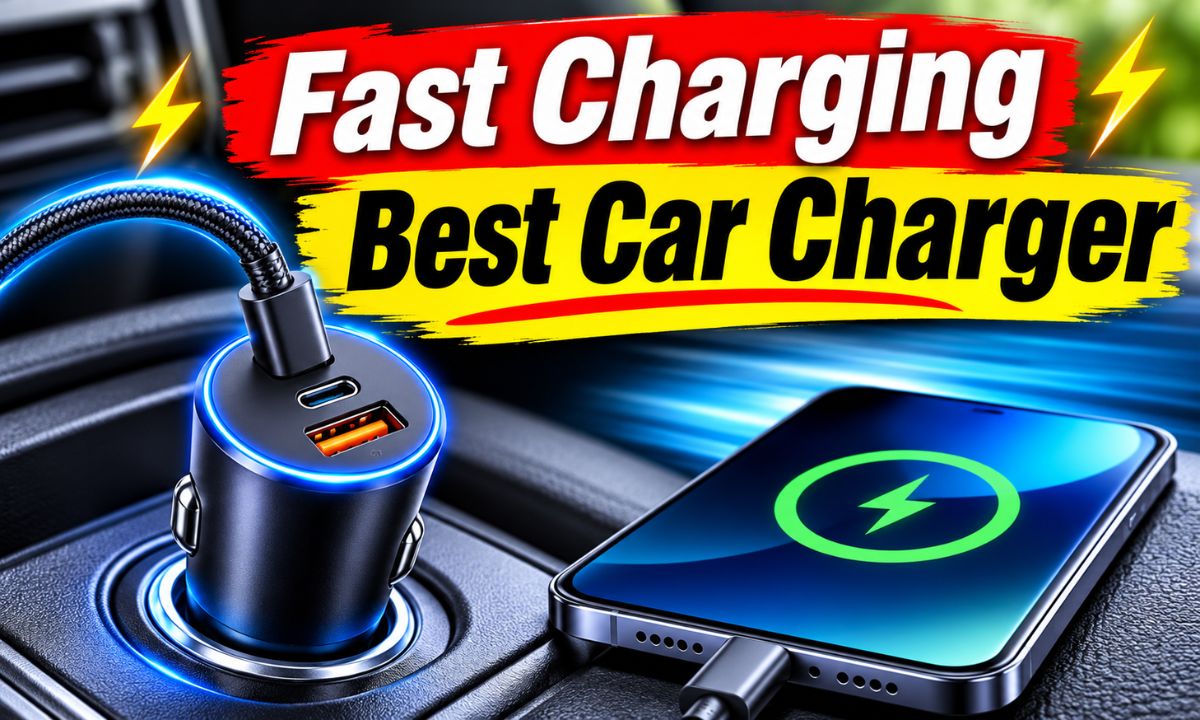
The best fast charging car charger combines strong USB-C power, useful ports, broad device support, and reliable charging.
Imagine driving to work on a busy Monday morning in the USA. Your phone battery sits at 12%, your navigation app is running, and you need to make a few calls before reaching the office. A slow car charger may not give you enough power during that short trip. The same problem can happen on road trips, family vacations, and daily school runs. I know how useful it is to have a charger that can keep up with a busy day. That is why I am comparing three options with 67W, 200W, and 48W charging claims. Each one offers a different mix of power, ports, and ease of use.
Table of Contents
Toggle🏆 Top 3 Products

67W 3-Port USB-C Super Fast Car Charger
Its three charging ports, 67W advertised output, and included USB-C cable make it a useful choice for daily driving.
FLYLEAD 200W GaN USB-C Car Charger
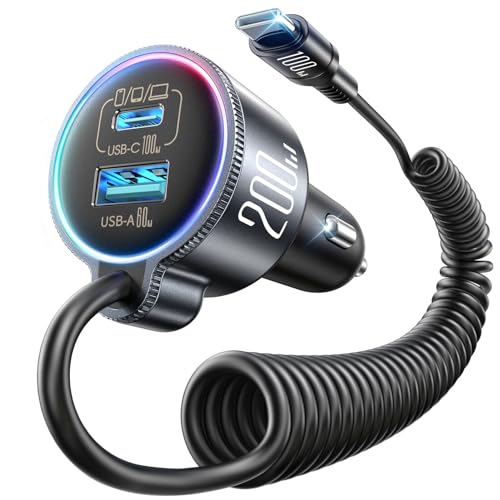
Its advertised 200W total output and 100W USB-C PD capability make it appealing for users with phones, tablets, and laptops.

48W USB-C Car Charger With Built-In Cable
Its built-in USB-C cable and advertised 30W fast charging offer a simple setup for compatible Samsung phones.
67W 3-Port USB-C Super Fast Car Charger
The 67W 3-Port Super Fast Type-C Car Charger is my first choice for drivers who need to charge more than one device. It advertises up to 67W of total charging power. Its three-port design gives users more room to connect their phones and other small devices. The package listing also includes a 3-foot USB-C cable, which saves you from buying one right away. This setup can work well for daily commutes, family trips, and long drives.
I like the idea of having several charging options in one small car accessory. A driver can keep a phone connected while a passenger charges another device, depending on the available power and port setup. The product title lists support for Samsung, iPhone, Android, and other devices. However, charging speed still depends on the phone, cable, and supported charging system. The advertised 67W is a maximum figure, not a promise that every connected device will receive that much power.
✅ Pros
- ✔ Advertises up to 67W of total charging output.
- ✔ Offers three charging ports for added convenience.
- ✔ Includes a 3-foot USB-C cable in the listed package.
- ✔ Supports a wide range of listed Samsung phone models.
- ✔ The product listing also names compatible iPhone models.
- ✔ Can reduce the need to carry several separate car chargers.
- ✔ Useful for drivers who travel with passengers.
- ✔ USB-C charging suits many modern phones and accessories.
- ✔ Its cigarette lighter plug design works with a suitable vehicle power socket.
- ✔ A practical option for daily commutes and longer road trips.
⚠️ Cons
- ✖ The 67W maximum output may be shared between connected devices.
- ✖ Not every phone can use the full advertised charging power.
- ✖ The included cable may not suit every device or charging need.
- ✖ The product title does not clearly explain the exact power split across all three ports.
- ✖ Users who need laptop charging should confirm the supported output before buying.
My Recommendation
I would choose this charger for everyday driving and regular phone charging. Its three ports offer more flexibility than a basic single-port adapter. The included cable is another useful benefit because you can start charging without searching for a separate USB-C cable. It makes sense for drivers who use navigation, music, calls, and other phone features during a trip. It is also a good fit for families who want to charge more than one device in the car. Before buying, I would check the exact output for each port and make sure it matches the fast-charging needs of my phone. If you want a balanced charger without focusing on laptop power, this 67W model deserves a close look.
| Best For | Why |
|---|---|
| Daily Commuters | The 67W advertised output and three-port design make it useful for regular phone charging. |
| Families and Passengers | Multiple ports provide more ways to charge devices during shared trips. |
| Samsung and iPhone Users | The product listing names a wide range of compatible phone models and includes a USB-C cable. |
FLYLEAD 200W GaN USB-C Car Charger
The FLYLEAD 200W Car Charger is the high-power option in this comparison. Its product title advertises 200W of total output and up to 100W through USB-C Power Delivery. It also uses GaN technology, which stands for gallium nitride. This type of charging technology helps make compact power devices possible. The charger is listed for phones, tablets, and laptops, so it may appeal to people who carry several types of devices.
I would pay close attention to this model if I often travel with a laptop. A strong USB-C PD connection can help power compatible laptops while also charging smaller devices. The listing names MacBook Pro, MacBook Air, Samsung Galaxy, iPhone, Pixel, and iPad devices. Still, the 200W figure needs careful reading. It does not mean that one phone receives 200W. The actual power depends on the individual port, connected devices, vehicle power supply, and charging standards they support.
✅ Pros
- ✔ Advertises a high total output of up to 200W.
- ✔ Lists USB-C Power Delivery output of up to 100W.
- ✔ Uses GaN technology for its charging design.
- ✔ Designed for charging phones, tablets, and compatible laptops.
- ✔ The product title names MacBook Pro and MacBook Air support.
- ✔ Lists compatibility with several Samsung Galaxy models.
- ✔ Also names iPhone and Google Pixel devices.
- ✔ Can suit users who carry several electronic devices.
- ✔ Offers a useful option for long-distance drivers and business travelers.
- ✔ Its high advertised output gives it a clear advantage for power-hungry devices when the port specifications support them.
⚠️ Cons
- ✖ The 200W maximum does not mean one connected device receives 200W.
- ✖ The exact power allocation across all ports needs to be checked before purchase.
- ✖ Some laptops may need more power than the charger can provide.
- ✖ A compatible USB-C cable is important for high-power charging.
- ✖ Its high advertised output may be unnecessary for people who only charge one phone.
- ✖ The actual charging speed depends on the vehicle socket and device requirements.
My Recommendation
I recommend considering the FLYLEAD charger if you want more power options than a basic phone charger can provide. It stands out because its listing advertises 100W USB-C PD and a 200W total output. That makes it interesting for drivers who carry a compatible laptop, tablet, and phone. It may also suit people who work from their vehicles or take long business trips. However, I would check the detailed output table before placing an order. Confirm that the port you plan to use can provide enough power for your laptop. Also check whether the charger needs a particular cable to reach its advertised speed. For users who need more than phone charging, this is the most ambitious option in the group.
| Best For | Why |
|---|---|
| Laptop Users | The listing advertises up to 100W USB-C PD for compatible laptops. |
| Business Travelers | Its high advertised total output makes it worth considering for several electronic devices. |
| Multi-Device Users | It is designed for a mix of phones, tablets, and other USB-powered equipment. |
48W USB-C Car Charger With Built-In Cable
The 48W Super Fast Car Charger is a simple choice for people who want an attached cable. Its product title advertises 48W of total charging power and a built-in USB-C cable with up to 30W fast charging. It lists support for several Samsung Galaxy models. This design can make daily charging easier because you do not need to bring a separate USB-C cable for the built-in connection. It may be a useful choice for drivers who want a basic setup.
I like the convenience of a charger that keeps its cable close at hand. It can help reduce loose cables in the center console or glove box. The listed Samsung compatibility also makes it worth considering for Galaxy users. However, I would not assume that every phone will charge at the same speed. The device must support the charger’s charging standard, and the built-in cable must meet its needs. Its advertised 30W USB-C charging figure is more important to check than the overall 48W title.
✅ Pros
- ✔ Advertises up to 48W of total charging output.
- ✔ Includes a built-in USB-C charging cable.
- ✔ Lists up to 30W fast charging through its Type-C cable.
- ✔ Reduces the need to carry a separate cable.
- ✔ Names several Samsung Galaxy phone models as compatible devices.
- ✔ Suitable for drivers who prefer a simple charging setup.
- ✔ Can help keep the center console less cluttered.
- ✔ Useful for daily commutes and short trips.
- ✔ Offers a straightforward alternative to chargers with several loose accessories.
- ✔ The attached cable is convenient when you need to connect a phone quickly.
⚠️ Cons
- ✖ The built-in cable may not suit devices that use a different connector.
- ✖ The cable cannot be replaced as easily as a separate charging cable.
- ✖ Its 30W advertised USB-C output may not meet every high-power charging need.
- ✖ The product title focuses heavily on Samsung compatibility.
- ✖ It may offer less flexibility than a charger with several separate ports.
- ✖ The actual charging speed depends on device support and power conditions.
My Recommendation
I would consider this model if I wanted a simple charger for a compatible Samsung phone. Its main advantage is the built-in USB-C cable. You do not have to search for a loose cable every time you get into your car. That small detail can make daily use easier, especially when you travel often. The advertised 30W charging capability also gives it a clear role in this comparison. It is not the strongest option for laptop charging or large multi-device setups. Still, it may be a sensible choice for people who mainly need to keep one phone powered during a commute. Check your phone’s charging requirements before buying so you know what speed to expect.
| Best For | Why |
|---|---|
| Samsung Galaxy Owners | The product listing names several Galaxy models and advertises up to 30W USB-C charging. |
| Drivers Who Want Less Clutter | The built-in cable removes the need to carry a separate cable for its USB-C connection. |
| Daily Phone Charging | Its 48W advertised total output makes it a practical option for regular phone use. |
Final Verdict: Which Should You Buy?
After comparing these three options, I would choose the 67W 3-Port USB-C Car Charger as the best overall pick for most everyday drivers. It offers a useful mix of power, three charging ports, broad listed device support, and an included 3-foot USB-C cable. The FLYLEAD 200W model is a better option to investigate if you need high-power USB-C charging for a compatible laptop. The 48W model is a convenient choice for Samsung users who prefer a built-in cable.
The fast charging best car charger is the one that matches your phone, vehicle, and daily routine. Check the charging standards, port output, and cable rating before buying. A good match can make every commute and road trip easier.
FAQs Of fast charging best car charger
Q What is the fast charging best car charger?
Q Is a 67W car charger better than a 48W car charger?
Q Can a 200W car charger charge a laptop?
Q Does a fast car charger damage a phone battery?
Q Can I charge two phones at the same time with a car charger?
Q Why is my fast car charger charging slowly?
Q Do I need a special cable for USB-C fast charging?
Q Is a built-in cable better than a separate USB-C cable?
Q Can I leave my car charger plugged in all the time?
Q Which car charger is best for Samsung Galaxy phones?