Wait at least 24 hours before using most adhesive car mounts. Some products need 12 hours, while others require 48 to 72 hours for a stronger bond. Always follow the instructions for your specific mount.
If you just installed a phone mount in your car, it can be tempting to put your phone on it right away. You may need it for GPS directions on your next drive across town or a long trip on an American highway. However, using the mount too soon can cause the adhesive to loosen or fail.
Most adhesive car mounts need time to form a strong bond with the dashboard. For many mounts that use 3M-style adhesive pads, waiting 24 hours is a sensible minimum. Some adhesive systems continue to gain strength for up to 72 hours, so a longer wait may help when the manufacturer recommends it.
The exact time depends on the adhesive, dashboard material, temperature, and installation method. A clean, dry, smooth surface helps the adhesive stick well. Applying firm pressure during installation also helps it make good contact with the dashboard.
This guide explains how long to wait, why curing time matters, and how to install your mount correctly. You will also learn what to do if the mount feels loose, how cold or hot weather affects the bond, and when it is safe to attach your phone.
How Long Should You Wait Before Using An Adhesive Car Mount?
You should generally wait 24 hours before using an adhesive car mount. This gives the adhesive time to settle and form a stronger connection with the dashboard. It also reduces the risk of the mount coming loose when you attach your phone.
However, 24 hours is not a universal rule. Some mounts use special adhesive pads that allow use after a shorter period, while others need more time. Check the installation guide that came with your product before deciding.
For example, an Arkon dashboard mounting disk with a self-adhesive backing instructs users to wait 24 hours before applying pressure. A CARMOUNT dashboard product lists different waiting periods in different parts of its help guide, including 12 hours for maximum adhesive strength and 30 minutes in its installation steps.
These differences show why the product’s own instructions matter. If the instructions are unclear, waiting a full 24 hours is a cautious choice for a typical adhesive dashboard mount.
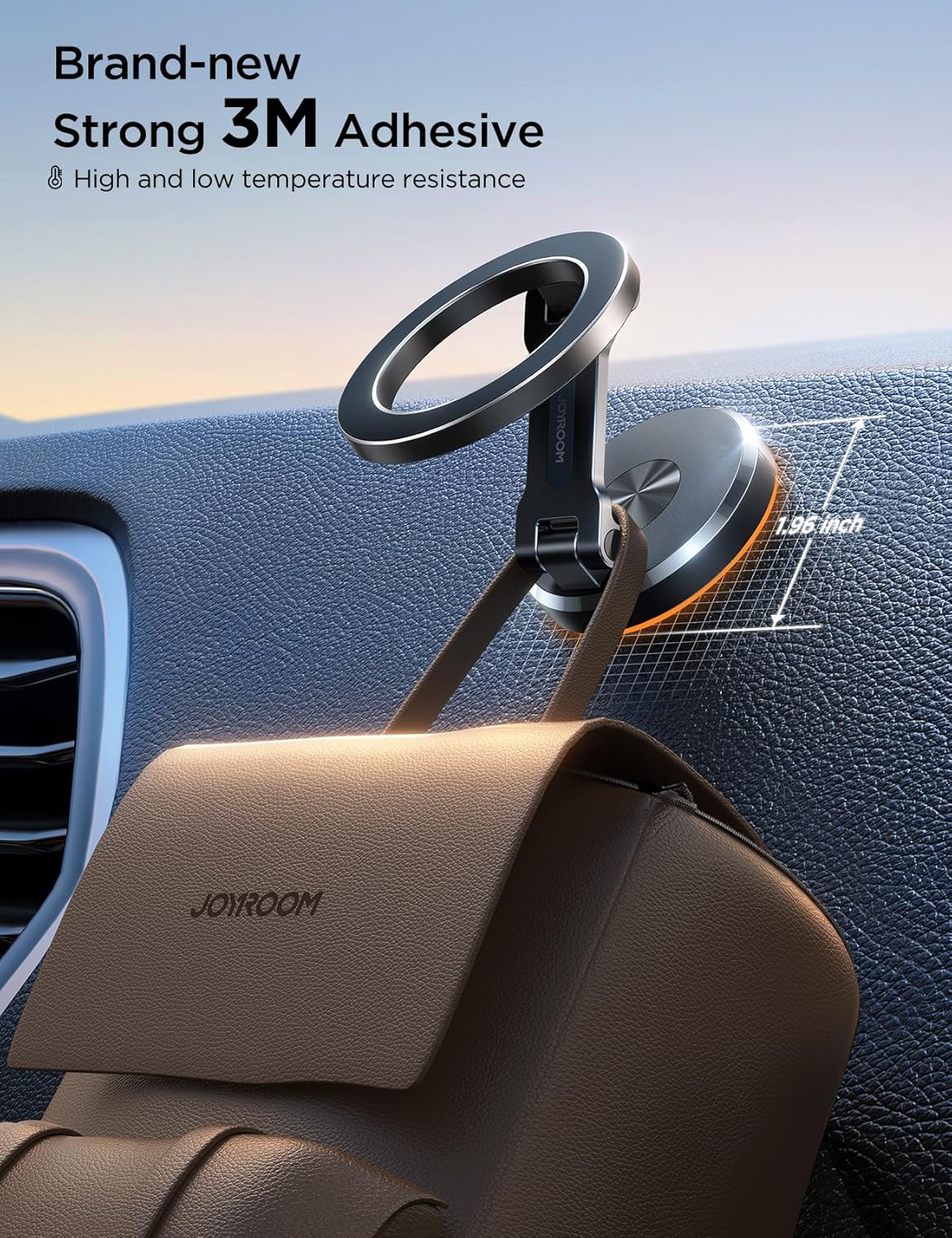
Source: amazon.com
30 minutes
Some specially designed adhesive mounts permit use after a short waiting period. Use this time only when the manufacturer clearly approves it.
12 hours
Some adhesive systems recommend this period before use or state that it helps the adhesive reach maximum strength.
24 hours
A common waiting period for adhesive dashboard pads and mounting disks. It is a practical minimum when the instructions do not give another clear time.
48 hours
Some manufacturers recommend a longer period to let their adhesive bond develop before adding a device.
72 hours
Certain 3M VHB adhesive applications can continue gaining strength for up to 72 hours at room temperature.
Why Is 24 Hours A Good Waiting Period?
Adhesive tape does not always reach its strongest bond as soon as you press it onto a surface. Pressure-sensitive adhesives need close contact with the material beneath them. Over time, the adhesive spreads into tiny surface details and builds a stronger connection.
3M explains that many of its VHB tapes reach about 50% of their ultimate bond strength after 20 minutes, around 90% after 24 hours, and approximately 100% after 72 hours at room temperature. These figures apply to the stated VHB tape conditions, not every car mount adhesive.
This is why waiting can make a real difference. The mount may feel secure shortly after installation, but that does not prove the adhesive has reached its intended strength.
Can You Use The Mount After Just One Hour?
It is best not to use a typical adhesive car mount after only one hour unless its manufacturer specifically allows it. Early adhesion may hold the empty mount in place, but the added weight of a phone can place extra stress on the bond.
A phone can also move as the car turns, brakes, or passes over bumps. Those forces may pull or twist the adhesive base before it has developed enough strength. Give the adhesive the recommended time rather than judging it by how firmly it feels when touched.
What Affects The Adhesive Car Mount Curing Time?
Several factors affect how quickly an adhesive car mount develops a secure bond. The type of adhesive is one of the biggest factors, but the dashboard surface and surrounding conditions also matter.
A mount installed on a clean, flat dashboard under suitable room-temperature conditions may bond more reliably than one placed on a dusty, cold, or heavily textured surface. Even a strong adhesive can struggle when the surface does not allow enough contact.
Understanding these factors helps you decide whether the standard waiting period is enough or whether you should address the installation conditions first.
Source: manuals.plus
Adhesive type
VHB tape, foam tape, gel adhesive, and nano-style adhesive pads do not all behave in the same way. Their recommended waiting periods can differ.
Dashboard material
Smooth, compatible surfaces generally provide better contact. Rough, soft, oily, or highly textured surfaces can make bonding more difficult.
Temperature
Cold conditions can slow adhesive flow. Very hot conditions may also affect the installation process or dashboard material.
Moisture
Water or moisture on the dashboard can interfere with proper contact between the adhesive and the surface.
Installation pressure
Firm, even pressure helps the adhesive contact the dashboard. Weak or uneven pressure can leave areas with poor adhesion.
Does Cold Weather Affect Adhesive Curing?
Yes. Cold weather can slow the bonding process for many pressure-sensitive adhesives. The adhesive may become firmer and may not spread across the dashboard surface as easily.
This can be a concern during winter in states such as Minnesota, Michigan, Wisconsin, and New York. If your car has been sitting outside overnight, the dashboard may be too cold for a good installation.
Park the car in a sheltered area and let the interior return to a suitable temperature before installing the mount. Follow the adhesive manufacturer’s minimum application temperature rather than trying to warm the dashboard with a strong heat source.
If you applied the mount in cold conditions, do not assume that a normal 24-hour wait will always produce the same result as a proper room-temperature installation.
Before installation
Allow the dashboard and adhesive pad to reach the temperature recommended by the manufacturer.
During the waiting period
Keep the mount undisturbed and avoid exposing it to sudden temperature changes.
Before use
Check the installation instructions to see whether the cold conditions require a longer wait or a fresh installation.
Does Hot Weather Make The Adhesive Set Faster?
Heat can affect how quickly some adhesives develop a bond, but this does not mean you should use a car heater or direct sunlight to speed up the process. Each adhesive has its own temperature limits.
A parked car in the summer can become extremely hot, especially in places such as Arizona, Texas, Nevada, and Florida. A dashboard exposed to strong sunlight may become much hotter than the surrounding air.
Some 3M VHB technical guidance describes faster bond development under controlled elevated-temperature conditions. That is a specific application process, not permission to heat a newly installed car mount in a parked vehicle.
The safest approach is to install the mount within the temperature range stated by its manufacturer. Let it bond naturally and avoid adding unnecessary heat.
Does A Textured Dashboard Need More Time?
A textured dashboard can make adhesive installation more difficult because the adhesive may not touch enough of the surface. Small gaps can reduce the contact area and weaken the bond.
Some car mount manufacturers provide a separate dashboard pad or mounting disk for uneven surfaces. These accessories create a flatter area for the mount, but they still need to be compatible with the dashboard material.
A VANMASS mounting guide, for example, recommends pressing its dashboard pad for more than one minute and allowing a resting period before use. It also advises waiting at least 24 hours after placing the pad.
Do not assume that a longer wait will fix an incompatible or very uneven surface. Choose an approved mounting location and accessory first.
How To Install An Adhesive Car Mount Correctly
A good installation starts before you remove the adhesive backing. Choosing the right location and preparing the dashboard can help the mount stay in place for a long time.
You do not need many tools for this job. Most installations require a clean microfiber cloth, a suitable cleaning product, and the adhesive mount or mounting disk.
Before starting, read the product instructions. Some manufacturers include alcohol wipes, while others recommend a specific cleaning method. Do not use a cleaner that could damage your dashboard finish.
Source: manuals.plus
What you need
Your adhesive car mount, a clean microfiber cloth, the approved cleaning solution, and the manufacturer’s installation instructions.
What to avoid
Dashboard shine sprays, oily cleaners, wet surfaces, loose dust, and surfaces that the mount manufacturer does not approve.
Step 1: Choose A Safe Mounting Location
Choose a flat, stable area of the dashboard where the mount will not block your view of the road. Make sure you can see the screen without reaching too far or turning your head away from traffic.
Never place the mount over an airbag cover or in an airbag deployment area. A phone mount can become a hazard if an airbag deploys against it.
Check your vehicle owner’s manual if you are unsure about airbag locations. Also make sure the mount does not block controls, vents, or important warning lights.
Good location
A flat dashboard area that is easy to reach and does not obstruct your forward view.
Poor location
A curved, soft, dusty, oily, or heavily textured surface that does not support the adhesive.
Unsafe location
An airbag deployment zone or any place that interferes with safe vehicle operation.
Step 2: Clean The Dashboard
Clean the selected area before applying the adhesive. Dust, skin oils, dashboard polish, and other residue can create a barrier between the adhesive and the surface.
Use the cleaning method approved by your car mount manufacturer. Some adhesive makers recommend an isopropyl alcohol and water mixture for suitable surfaces. Others provide their own cleaning pad.
Do not spray cleaning liquid directly into dashboard switches, screens, seams, or vents. Apply the cleaner to a cloth when appropriate and wipe only the intended mounting area.
Let the surface dry completely before moving to the next step. Even a small amount of moisture can affect the initial bond.
Remove dust
Wipe away loose dirt and particles with a clean cloth.
Remove residue
Use a suitable cleaner to remove grease or old dashboard product buildup.
Allow drying
Wait until the surface is completely dry before applying the adhesive.
Step 3: Apply The Adhesive Pad
Remove the protective backing without touching the exposed adhesive with your fingers. Skin oils and dust can reduce the quality of the bond.
Carefully position the mount over the selected area. Once the adhesive touches the dashboard, avoid moving it around to find a better position.
Press the base firmly and evenly against the surface. Follow the pressure and hold-time instructions supplied with your mount. Some products call for about 30 seconds, while others recommend holding the base for one minute or longer.
Make sure the entire adhesive area makes contact with the dashboard. Avoid pressing only the center while leaving the edges loose.
Step 4: Leave The Mount Alone
Once the mount is attached, leave it undisturbed for the recommended curing period. For most standard adhesive dashboard mounts, use 24 hours as the minimum when the manufacturer does not provide a different instruction.
Do not attach your phone, hang a cable from the mount, or repeatedly test its strength during this period. Each extra pull or movement can disturb the developing bond.
If your instructions recommend 48 or 72 hours, follow that longer period. The goal is to give the adhesive enough time to develop the strength needed for normal driving.
Step 5: Test The Mount Before Driving
After the waiting period, inspect the adhesive base before attaching your phone. Look for lifted edges, gaps, cracks, or signs that the pad has shifted.
If the base appears firmly attached, follow the manufacturer’s instructions for attaching the phone holder or suction-cup pedestal. Do not use excessive force to test the bond.
Place your phone in the holder while the vehicle is parked. Check that the phone sits securely and that the mount does not move under normal handling.
If the base shifts, stop using it. Remove and reinstall it according to the manufacturer’s instructions rather than trusting a weak bond.
Signs of success
The base sits flat, the edges remain attached, and the mount does not move during normal phone placement.
Signs of failure
The adhesive peels up, the base slides, or the holder tilts under light pressure.
Adhesive Car Mount Waiting Time By Adhesive Type
Different adhesive systems have different bonding needs. A standard double-sided mounting tape may have a different waiting period from a high-strength VHB tape or a reusable gel-style pad.
The table below gives practical guidance for common mounting systems. These are general reference points, not replacement instructions for a specific product.
Source: manuals.plus
Standard double-sided adhesive
Many products recommend waiting around 24 hours before adding the phone or applying a load.
3M VHB tape
Some VHB applications reach approximately 90% of ultimate bond strength after 24 hours and approximately 100% after 72 hours at room temperature.
Gel adhesive pads
The required time depends on the product. Some dashboard pads require 24 hours or longer before use.
Nano adhesive mounts
Some products allow use after 30 minutes, while others recommend 12 to 24 hours. Check the exact instructions.
Comparison Of Common Adhesive Mounting Systems
Use this comparison to understand why one mount may need more time than another. The adhesive material and the surface it bonds to both affect the result.
Standard adhesive tape
Typical planning period: 24 hours. Best suited to compatible, clean, and flat surfaces.
VHB adhesive tape
Typical planning period: 24 to 72 hours for bond development, depending on the tape and conditions.
Gel dashboard pad
Typical planning period: Follow the product guide, often 24 hours or more for dashboard installation.
Special nano adhesive
Typical planning period: Product-specific. Some manufacturers state 30 minutes or 12 hours.
Why Does The Type Of Adhesive Matter?
An adhesive is not simply a sticky layer that works the same way on every surface. Its chemical makeup, thickness, and ability to flow all affect how it attaches to the dashboard.
For example, VHB tape uses a pressure-sensitive adhesive that develops stronger contact over time. A reusable gel-style pad may depend more on surface contact and the condition of its gel layer.
This means you should not transfer the waiting time from one mount to another. A 30-minute instruction for one special product does not prove that a different adhesive mount is ready after the same period.
Common Mistakes That Can Make An Adhesive Car Mount Fail
A car mount can come loose even when you wait the recommended amount of time. The problem may be poor surface preparation, an unsuitable dashboard, or an installation mistake rather than the waiting period itself.
Finding the cause is better than simply pressing the mount back into place. Once an adhesive pad loses contact or becomes contaminated, it may not hold the same way again.
Source: amazon.sa
Using the mount too early
Adding a phone before the adhesive develops enough strength can disturb the bond.
Skipping surface cleaning
Dust, oil, wax, and dashboard polish can prevent the adhesive from making good contact.
Touching the adhesive
Handling the sticky surface can transfer oils and dirt that affect adhesion.
Installing on a curved surface
A curved dashboard can leave gaps beneath the adhesive base.
Moving the mount after placement
Repeated repositioning can weaken or contaminate the adhesive.
What If Your Adhesive Car Mount Falls Off?
First, remove your phone and stop using the mount. Do not drive with a loose holder that could fall into the footwell or interfere with vehicle controls.
Check the adhesive pad for dust, hair, oil, cracks, or other damage. Also inspect the dashboard for polish, uneven texture, or a surface coating that may prevent a strong bond.
If the adhesive has been removed or contaminated, replacing it is usually better than trying to reuse it. Some products include replacement pads, while others require a new mounting base.
Clean the mounting area again using an approved method. If the dashboard material is unsuitable, choose another approved mounting location or a different type of holder.
Loose adhesive edge
The surface may have been dirty, uneven, or poorly prepared. Do not simply press the same contaminated pad back down.
Entire mount falls off
The adhesive may be incompatible with the dashboard, damaged, or applied under unsuitable conditions.
Mount moves after phone placement
The base may not have enough contact area or the adhesive may not support the device load.
Can You Reuse An Adhesive Car Mount Pad?
Some adhesive pads are designed for one-time installation. Once removed, their original bonding strength may be reduced, even if they still feel sticky.
Other products use washable gel or nano-style adhesive that the manufacturer says can be cleaned and reused. These products need their own care instructions.
Do not wash a VHB tape pad or ordinary double-sided adhesive tape unless the manufacturer specifically allows it. Replace damaged or single-use adhesive with the correct replacement part.
If your mount includes an extra adhesive disk, use that part rather than adding household glue or another unapproved tape.
Why Does My Adhesive Mount Keep Coming Loose In Summer?
High cabin temperatures can affect the adhesive and the dashboard material. A car parked in direct sunlight can become much hotter than the outside air.
If the adhesive is not rated for the conditions, heat may reduce its ability to hold the mount in place. A soft or aged dashboard can also make bonding less reliable.
Check the mount’s temperature limits and surface compatibility. If the manufacturer does not approve the dashboard material, a longer waiting period may not solve the problem.
How To Know When Your Adhesive Car Mount Is Ready
The best way to know when your car mount is ready is to combine the manufacturer’s waiting time with a visual inspection. Do not rely only on how sticky the base feels when you touch it.
Adhesive strength develops over time, and a mount can feel attached before it reaches its intended holding strength. Follow the full recommended waiting period even when the base appears secure.
Source: manuals.plus
Check the edges
Look for peeling, lifted corners, or gaps between the adhesive and the dashboard.
Check the base
The base should sit flat without visible movement or sliding.
Check the mounting surface
Look for signs of dust, moisture, or dashboard damage around the adhesive.
Check the instructions
Confirm that the complete recommended curing period has passed.
Should You Pull On The Mount To Test It?
Avoid strong pulling or twisting tests. They can damage the adhesive or start peeling an otherwise sound mount from the dashboard.
A better approach is to inspect the base and follow the manufacturer’s approved installation check. Once the waiting period has passed, attach the holder as directed while the vehicle is parked.
If the base shifts during normal assembly or light handling, stop. Do not attach your phone until you have corrected the problem.
Can You Drive While The Adhesive Mount Is Curing?
You can generally drive the vehicle while the adhesive cures if the mount is safely installed, the adhesive is not being disturbed, and the vehicle remains safe to operate. However, leaving the car parked during the initial bonding period can reduce movement and accidental contact.
Do not attach your phone or use the mount before the recommended time has passed. Also avoid touching the mount, adjusting its arm, or placing objects against it.
If the mount is in a position where passengers may bump it or the driver’s movement may disturb it, leave the vehicle parked until the bond has developed.
What Should You Do If You Need Your Phone For A Trip?
If you need navigation before the adhesive has cured, use a different approved phone holder. A vent-mounted holder or another compatible mounting system may work, depending on your vehicle and the product instructions.
You can also use your vehicle’s built-in navigation system or ask a passenger to manage directions. Avoid holding or adjusting your phone while driving.
Waiting for the adhesive is a small inconvenience compared with dealing with a phone that falls from the dashboard while you are on the road.
Frequently Asked Questions
Q
Can I use my adhesive car mount after 12 hours?
Yes, but only if the manufacturer specifically recommends 12 hours or less for your mount. Some adhesive systems allow earlier use, while others need a full 24 hours or longer. If the instructions are unclear, wait at least 24 hours.
Q
Is 24 hours enough for a 3M adhesive car mount?
For many 3M-style mounting applications, 24 hours is a useful minimum. However, 3M states that many VHB tapes reach approximately 90% of their ultimate bond strength after 24 hours and approximately 100% after 72 hours at room temperature. The exact result depends on the tape and the surfaces being bonded.
Q
Can I put my phone on the mount immediately after installation?
No, not unless the product instructions specifically allow immediate use. Adding the weight of your phone too soon can disturb the adhesive before it has developed enough strength. Wait for the recommended period before attaching your device.
Q
Should I leave my car in the sun while the adhesive cures?
No. Direct sunlight can make the dashboard very hot and may affect the adhesive or dashboard material. Let the adhesive cure under suitable conditions recommended by the manufacturer. Do not use direct sunlight or a heater to speed up the process.
Q
Does an adhesive car mount need 72 hours to cure?
Not every adhesive car mount needs 72 hours. Some products are ready after 30 minutes, 12 hours, or 24 hours. However, some 3M VHB adhesive applications continue gaining strength for up to 72 hours. Follow the instructions for your exact adhesive.
Q
Can I use an adhesive car mount on a leather dashboard?
Only if the mount manufacturer specifically approves that surface. Many adhesive mounts are designed for smooth, firm surfaces and may not bond reliably to leather, soft-touch coatings, or textured dashboard materials. Some adhesives can also damage the finish when removed.
Q
What happens if I use the car mount too early?
The adhesive may peel, slide, or lose contact with the dashboard. The mount may fall when you attach your phone or drive over bumps. If this happens, stop using it and inspect the adhesive. Replace damaged or contaminated pads instead of trusting a weak bond.
✦ Wrapping Up
Conclusion
Most adhesive car mounts should sit undisturbed for at least 24 hours before you use them. This gives the adhesive time to develop a stronger bond with the dashboard and reduces the risk of the mount coming loose when you attach your phone.
However, the exact waiting period depends on the adhesive and the mounting surface. Some products allow use after 30 minutes or 12 hours, while certain 3M VHB applications continue gaining strength for up to 72 hours.
For the best result, choose a safe and compatible dashboard location, clean and dry the surface, apply firm and even pressure, and follow the manufacturer’s instructions. Avoid using the phone holder too early or trying to speed up the process with direct heat.
A little patience during installation can help prevent a loose mount and protect your phone while driving. If the adhesive does not hold after the recommended waiting period, check the surface and replace the adhesive if needed.
💡 Key Takeaway
Install your adhesive car mount on a clean, dry, compatible dashboard surface, press it firmly, and wait 24 hours before attaching your phone unless the manufacturer specifies a different period. For some VHB adhesive systems, allow up to 72 hours for full bond development.